
Chapter 2
Lily cried the moment I tried to hold her during our first supervised visit.
The sound went straight through me.
She reached toward the visitation monitor, a kind middle-aged woman named Mrs. Harris, and turned her face away from mine.
“It’s okay, sweetheart,” I whispered. “Daddy’s here.”
But she didn’t understand.
To Lily, I was almost a stranger.
The visitation room had beige walls, faded carpeting, and a plastic bin filled with children’s toys. A clock ticked loudly above the door while Mrs. Harris recorded observations on a clipboard.
I sat on the floor and offered Lily a colorful stacking toy.
She pushed it away.
I tried peekaboo. I sang the lullaby that used to make her smile. I even made the ridiculous duck noises that once sent her into fits of laughter.
Nothing worked.
At the end of two hours, Rebecca came to collect her.
Lily immediately stretched out her arms toward her mother.
Rebecca looked at me with an expression I couldn’t bear to interpret.
I drove home feeling as though I’d lost my daughter all over again.
The custody battle soon consumed everything.
Jeffrey explained that we needed records of my attempts to find Lily, documentation of my support, and proof that I could provide a stable home.
He also warned that the court would consider Lily’s relationship with both parents, her daily routines, and the circumstances of Rebecca’s move.
Meanwhile, Rebecca requested temporary child support.
The court ordered me to pay $750 a month while the case was pending.
I didn’t object to supporting my daughter. What hurt was sending money every month while struggling to see her for four hours a week.
Between child support, attorney fees, travel expenses, and the investigator’s bill, my savings disappeared.
I volunteered for extra hospital shifts.
Soon, I was surviving on little sleep and too much coffee.
One morning, while preparing medication, I reached for the wrong vial.
My supervisor, Linda Parker, noticed before anything reached the patient.
“Jason, stop,” she said firmly.
I looked at the label and felt sick.
“You’re right. I’m sorry.”
Linda guided me into a private office.
“What’s happening with you?”
I tried to tell her I was fine.
But when she asked again, everything came pouring out.
I told her about Rebecca, Lily, the court hearings, and the way my daughter had cried when I tried to hold her.
Linda listened quietly.
Then she said, “You’re an excellent nurse, Jason. But right now you’re exhausted, and that puts you and your patients at risk.”
“I need the money.”
“You also need rest. Take some leave. We’ll help you make a plan.”
I lowered my head.
For months, I’d believed that working harder was the only way to keep fighting.
Linda helped me understand that Lily needed a healthy father, not one who destroyed himself trying to prove his devotion.
I took several days off and began adjusting my schedule.
That weekend, my mother called.
“Jason, I owe you an apology,” she said.
My throat tightened.
Mom had initially suggested that maybe Rebecca needed space and that I should avoid making things worse.
She’d meant well, but those words had hurt.
“I should have listened to you,” she continued. “I thought this was a disagreement between two young parents. I didn’t understand how completely you’d been shut out.”
“I just want Lily back in my life, Mom.”
“I know, sweetheart. And I want to help.”
At the next supervised visit, Mom came with me.
Mrs. Harris agreed that having Lily’s grandmother present might help her feel more comfortable.
Mom sat on the carpet and began singing an old lullaby.
Lily watched her.
Then she crawled closer.
I sat beside Mom, quietly joining the song.
For several minutes, Lily moved between the toys and her grandmother. Then she reached toward my hand.
Her tiny fingers wrapped around my index finger.
I almost stopped breathing.
It lasted only a moment.
But it was the first time she’d willingly reached for me since Rebecca disappeared.
After that, I approached every visit differently.
I stopped trying to make Lily remember me immediately.
Instead, I focused on helping her feel comfortable.
I sat on the floor, let her choose the toys, and followed her curiosity.
Sometimes she crawled away.
Sometimes she smiled.
And little by little, the fear disappeared.
During our fifth visit, she knocked down a tower of blocks I’d built.
I made an exaggerated face of surprise.
Lily laughed.
Then she looked at me and said a word that brought tears to my eyes.
“Dada.”
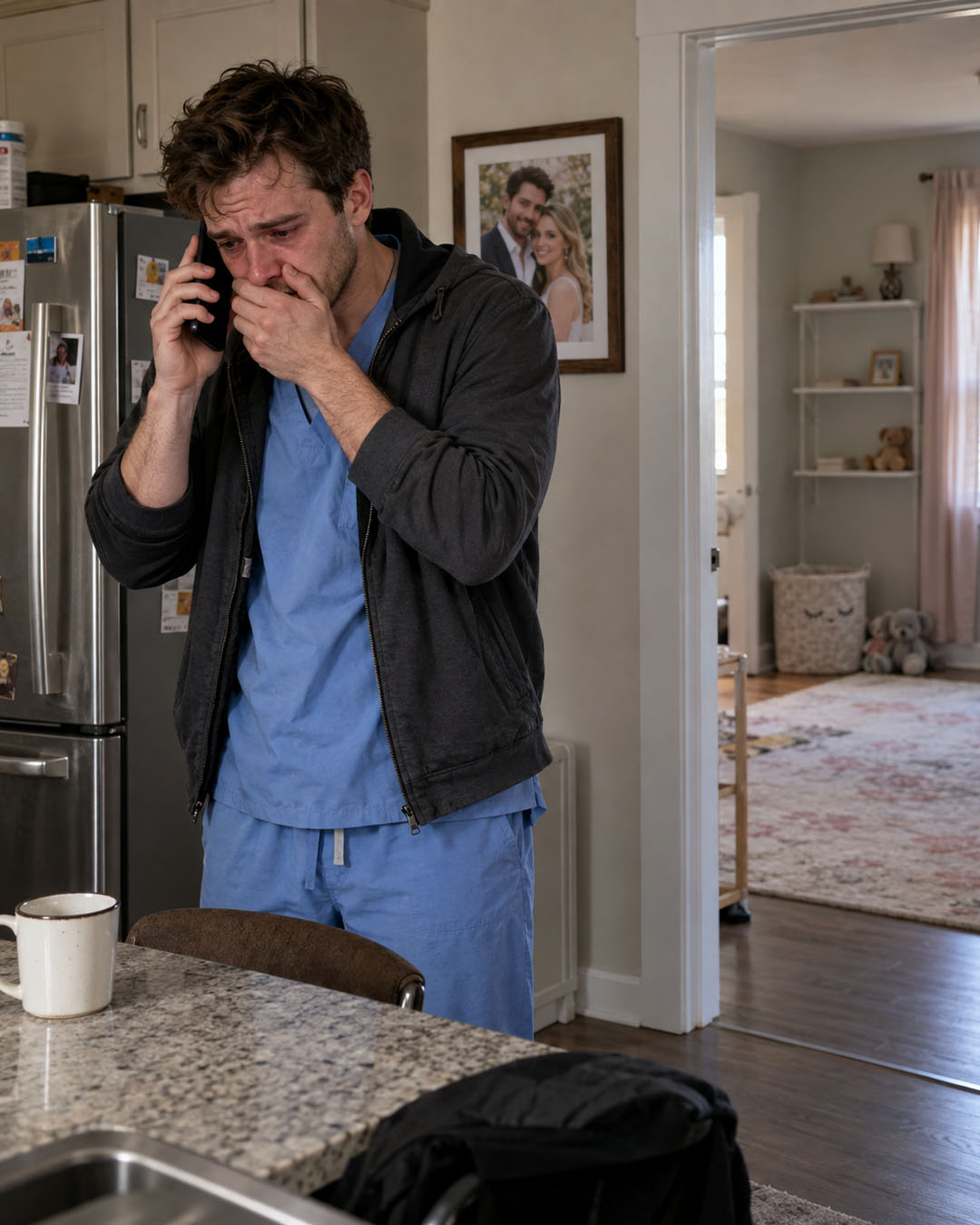
I pressed my hand against my mouth.
She reached for another block.
“Dada,” she repeated.
Mrs. Harris smiled and continued writing.
For the first time in months, I drove home with hope instead of despair.
Meanwhile, Jeffrey had begun looking more closely at Keith.
Thomas Reed discovered that Keith had been involved in several troubled relationships. Public court records showed that two former partners had sought protective orders, though not every allegation had resulted in a formal finding.
He had also been involved in a previous family dispute in which a former partner accused him of trying to interfere with her relationship with her child.
Those allegations required careful verification.
Jeffrey reminded me that rumors weren’t evidence and that Keith’s past alone couldn’t determine Lily’s future.
But then Rebecca’s younger sister, Allison, contacted him.
She wanted to speak privately.
Allison told Jeffrey that Keith monitored Rebecca’s phone and frequently insisted on being present when she spoke with relatives.
“He answers questions for her,” Allison explained. “Even when we’re just asking how she’s doing.”
She also described hearing Keith raise his voice when Lily cried.
Once, according to Allison, he struck a dining table so forcefully that the dishes rattled.
“Becca looked frightened,” she said. “And afterward, she kept apologizing for him.”
Rebecca’s mother independently reported similar concerns.
When Jeffrey shared the information with me, my anger turned into something else.
Fear.
I’d been so focused on the possibility of losing my daughter that I hadn’t fully considered what life inside that house might be like.
Jeffrey requested a more detailed assessment of the household.
The court appointed a psychologist, Dr. Megan Swanson, to evaluate the parenting circumstances.
During my sessions, she asked difficult questions.
Why had my relationship with Rebecca failed? How would I arrange child care during hospital shifts? Could I support Lily’s relationship with her mother if custody changed?
I answered as honestly as possible.
“I’m not claiming to be a perfect father,” I told her. “I made mistakes in my relationship. I worked too many hours, and sometimes I was too tired to recognize how overwhelmed Rebecca felt.”
Dr. Swanson nodded.
“And what would you do differently?”
“I’d listen sooner. Ask for help sooner. But I would never shut Rebecca out of Lily’s life the way I’ve been shut out.”
She wrote something down.
I left wondering whether I’d said enough.
Then the home assessment from Arizona arrived.
The social worker documented damaged walls, reports of loud arguments, and Rebecca’s difficulty speaking privately while Keith was present.
None of it proved that Lily had been physically harmed.
But it raised serious concerns about the emotional environment surrounding her.
When Jeffrey read me the report, I sat quietly for a long time.
Then I asked the only question that mattered.
“Can we get her somewhere safer?”
Chapter 3
The January hearing changed everything.
Dr. Swanson testified that my interactions with Lily had been patient and appropriate, and that our bond was developing steadily.
She also described concerns about Rebecca’s decision to relocate without arranging contact between Lily and me, along with the troubling dynamics observed in Keith’s household.
Her recommendation was cautious but clear.
Lily needed meaningful, continuing relationships with both parents, and my parenting time should increase.
The judge granted me unsupervised visits every Saturday from nine in the morning until five in the afternoon.
When I heard the decision, I lowered my head.
Eight hours.
Eight ordinary hours with my daughter.
The following Saturday, I arrived at the exchange location ten minutes early.
Rebecca stepped out of her car carrying Lily in a pink winter coat.
Lily saw me.
Her face brightened.
“Dada!”
She reached toward me, and I lifted her into my arms.
Rebecca watched silently.
“Five o’clock,” she said.
“I’ll be here.”
I buckled Lily into her properly installed car seat and drove to a nearby park.
We spent the morning walking, watching birds, and playing on the toddler swings.
Lily laughed whenever I pushed her gently.
“More, Dada!”
I smiled so hard my cheeks hurt.
There was no monitor, no clipboard, and no one telling me when I could hold her.
Just my daughter and me.
After lunch, we returned to my apartment.
I’d prepared a little bedroom area with a crib, toys, and a bookshelf.
Lily examined everything with delight.
“Mine?” she asked, pointing toward a stuffed elephant.
“Yes, sweetheart. That’s yours.”
She hugged it tightly.
Watching her explore her new surroundings, I understood that what I’d missed wasn’t simply the right to call myself her father.
I’d missed ordinary parenthood.
Meals, naps, spilled juice, lost socks, and bedtime stories.
All those small moments that create a childhood.
Over the following weeks, Lily became increasingly comfortable with me.
We visited parks and the children’s museum. We made handprints with washable paint, built towers from blocks, and read the same picture books again and again.
Sometimes she became tired and fussy.
Once, she refused her afternoon nap and cried so hard that I worried I was doing everything wrong.
I sat beside her, spoke softly, and let her settle before trying again.
Eventually, she curled against me and fell asleep.
I carried her to the crib, placed her safely on her back, and stood nearby for a moment.
It wasn’t an extraordinary parenting achievement.
But to me, it meant everything.
I was learning to comfort my child through difficult moments, not just entertain her when she was happy.
Then another accusation arrived.
A child protective services investigator contacted me after someone reported that Lily had returned from a visit with an unexplained bruise.
My heart sank.
I cooperated fully, showed the investigator my home, and provided records of our activities.
Jeffrey helped obtain documentation from Lily’s daycare.
The records showed that she had fallen while playing before my scheduled visit, and Rebecca had signed the incident report.
The investigation closed without a finding of abuse or neglect.
I was relieved, but exhausted.
“I can’t keep living like this,” I told Jeffrey.
“I know,” he replied. “But keep your focus on Lily. Let the records speak for themselves.”
By March, more troubling information had emerged about Rebecca’s household.
Keith had lost his job.
Her longtime friend, Haley, reported that Rebecca had confided in her about Keith’s angry outbursts and controlling behavior.
The Arizona home assessment raised similar concerns.
When settlement discussions began, Rebecca’s attorney proposed that Lily remain primarily in Arizona while I received expanded visits.
I refused.
“I want her to have her mother,” I told Jeffrey. “But I don’t believe that house is safe or stable enough right now.”
We proposed an arrangement in which Lily would primarily reside with me, while Rebecca would have regular parenting time in an appropriate environment.
Rebecca rejected it.
At the settlement meeting, she sat across from me with her arms folded.
“You can’t expect me to abandon Keith,” she said.
“I’m not telling you whom to love,” I answered. “I’m asking you to put Lily’s needs first.”
“Keith loves her.”
“Then he should understand that she needs a peaceful home and a relationship with both her parents.”
Rebecca turned away.
For a moment, I saw something beneath her anger.
Exhaustion.
The woman I’d once loved looked frightened and uncertain, though I couldn’t know exactly what she was thinking.
I wanted to ask whether she was okay.
But our attorneys were already discussing the next hearing, and I knew the courtroom wasn’t the place to resolve our failed relationship.
The final custody hearing took place in late April.
That morning, I wore the same navy suit I’d planned to wear at our wedding rehearsal dinner.
Mom straightened my tie before we entered the courthouse.
“Whatever happens,” she whispered, “I’m proud of the father you’ve become.”
I squeezed her hand.
Jeffrey presented the records of my efforts to locate Lily, the visitation reports, the child-care arrangements I’d established, and the professional assessments.
He also presented the Arizona home study and relevant testimony from those who had personally observed Keith’s behavior.
When I took the witness stand, my hands trembled.
Jeffrey asked, “Mr. Miller, why are you seeking primary custody of your daughter?”
I looked toward the judge.
“Because I want to raise her,” I said. “Not just see her on weekends. I want to make her breakfast, help her with homework someday, and be there when she’s sick or frightened.”
I swallowed.
“I can’t recover the months we lost. But I can make sure Lily knows her father never stopped loving her.”
Rebecca’s attorney questioned my work schedule and whether I could manage full-time parenting.
I explained the arrangement I’d made with the hospital, the licensed daycare near my apartment, and Mom’s willingness to help.
“I’m not going to raise her alone,” I said. “I’ll have support, just like many working parents do.”
Rebecca testified next.
She spoke about feeling lonely after Lily’s birth and said my hospital shifts had left her overwhelmed.
Listening to her, I remembered nights when I’d come home tired and assumed everything was fine because she hadn’t complained.
Maybe I’d missed signs that she was struggling.
But struggling didn’t justify disappearing with our daughter.
When Jeffrey asked why she hadn’t arranged any communication between Lily and me, Rebecca became quiet.
“I thought leaving was best,” she said.
“For Lily or for you?” he asked.
She began to cry.
The judge reminded everyone that the issue wasn’t which adult had suffered most, but what arrangement would best serve the child.
After reviewing the evidence, she announced her decision.
Lily would primarily reside with me.
Rebecca would receive regular supervised parenting time while she addressed the concerns identified during the evaluation, with opportunities to request changes when circumstances improved.
Keith was not to interfere with court-ordered exchanges or parenting arrangements.
I stared at the judge.
For several seconds, I couldn’t understand the words.
Then Jeffrey leaned toward me.
“Jason,” he whispered, “you can bring your daughter home.”
I covered my face.
Mom started crying beside me.
Across the courtroom, Rebecca sat motionless.
I didn’t feel victorious when I looked at her.
I felt the weight of everything our daughter had endured because two adults had failed to protect her from their conflict.
A week later, I met Rebecca at the designated exchange location.
She held Lily close, whispering into her hair.
Then she kissed our daughter and handed her to me.
“Please take care of her,” she said.
“I will.”
Rebecca looked at me with tears in her eyes.
“Jason, I know you don’t believe me, but I do love her.”
“I believe you,” I replied. “I just wish we’d handled things differently.”
Lily reached toward my face.
“Daddy, home?”
I held her close.
“Yes, sweetheart. We’re going home.”
That evening, Mom came over and made chicken noodle soup.
After dinner, I gave Lily a bath, put her in pajamas, and read three picture books.
She kept asking for the one about a little bear who couldn’t find his way home.
When I finished the story, she placed her tiny hand on my cheek.
“Again, Daddy.”
I read it again.
And when she finally fell asleep, I sat in the rocking chair beside her crib, listening to her gentle breathing.
For nearly a year, that room had been painfully empty.
Now my daughter was sleeping inside it.
I leaned forward and whispered, “I’m here, Lily. And tomorrow morning, I’ll still be here.”
Chapter 4
Life with Lily wasn’t the peaceful fairy tale I’d imagined during those lonely months.
It was better than that.
It was real.
There were spilled bowls of cereal, sleepless nights when she had a cold, and mornings when she refused to wear anything except her favorite yellow sweater.
My living room filled with toys.
The refrigerator became covered with daycare artwork, and my laundry basket seemed permanently full of tiny socks.
I loved every exhausting minute.
Mom visited twice a week, and Lily adored her.
At work, Linda arranged a more predictable schedule that allowed me to manage daycare pickups and appointments.
My coworkers, who’d watched me struggle through the custody battle, celebrated every photograph I brought in.
One afternoon, Linda looked at a picture of Lily covered in spaghetti sauce and laughed.
“That’s the happiest I’ve seen you in a long time.”
I smiled.
“Me too.”
Rebecca continued attending her supervised visits.
At first, our exchanges were awkward.
She sometimes cried when the visits ended, and I recognized the pain in her expression because I’d experienced something similar.
I reminded myself that Lily loved her mother.
Whatever had happened between us, I didn’t want our daughter to grow up believing she had to choose sides.
When Lily turned one, I planned a small birthday party.
Mom baked a cake with pink frosting. My sister drove in from Indiana, and several families from Lily’s daycare came over.
Rebecca was permitted to attend during an arranged parenting-time period.
She arrived carrying a wrapped present.
For a moment, we stood awkwardly in the doorway.
Then I stepped aside.
“Come in. She’s in the living room.”
Lily spotted her and squealed.
“Mommy!”
Rebecca knelt and opened her arms.
Watching them embrace, I felt something unexpected.
Relief.
Lily was happy to see her mother.
She didn’t understand court orders or custody disputes, and she shouldn’t have to.
During the party, Rebecca behaved respectfully.
She played with Lily, spoke politely with Mom, and helped clean up some wrapping paper.
Before leaving, she stopped beside me.
“Thank you for inviting me.”
“She’s your daughter, too.”
Rebecca looked down.
“I know things are complicated.”
“They are.”
She hesitated.
“I hope someday we can talk without attorneys.”
I glanced toward Lily, who was laughing as she attempted to feed cake to a stuffed elephant.
“Maybe we can start by talking about what she needs.”
Two weeks later, Rebecca proposed using a court-approved co-parenting communication app.
Jeffrey agreed that it would provide structure and help us keep discussions focused on Lily.
We began sharing information about meals, naps, doctor visits, and developmental milestones.
The messages were short and practical.
But gradually, the hostility faded.
Rebecca sent a reminder about Lily’s favorite lullaby.
I shared a photograph of Lily proudly stacking six blocks.
For the first time since she’d left Ohio, we were communicating as parents rather than opponents.
Several months later, Rebecca made an important change.
She ended her relationship with Keith.
Her mother confirmed that she’d moved into a small apartment back in Ohio, found steady employment, and continued counseling.
Rebecca also completed the parenting requirements recommended during the custody proceedings.
When her attorney petitioned for expanded parenting time, the court reviewed her progress.
Eventually, she was approved for unsupervised daytime visits.
The first one took place at a park halfway between our homes.
Rebecca looked nervous when I arrived.
“I packed her snacks,” I said, handing over Lily’s bag. “She’s been asking for strawberries lately.”
“Thank you.”
I watched her buckle Lily into the car seat.
Then I stepped back.
Four hours later, Rebecca returned exactly on time.
Lily was cheerful and carried a little paper bag containing a cookie shaped like a butterfly.
“Look, Daddy!”
I admired the cookie.
“That’s beautiful, sweetheart.”
After settling Lily into my car, Rebecca turned toward me.
“Jason, can I say something?”
I nodded.
She took a shaky breath.
“I owe you an apology. A real one.”
I said nothing.
“I was overwhelmed after Lily was born. I felt alone, and Keith made me believe I could start over without dealing with any of my problems.”
She wiped her eyes.
“But none of that gave me the right to take Lily away from you.”
I looked at her carefully.
“No, it didn’t.”
“I let him convince me that you were the problem. And when you tried to find us, I treated you like an enemy.”
Her voice broke.
“I was wrong.”
For a long moment, neither of us spoke.
Then I said, “You took away time I’ll never get back, Becca. There were months when I didn’t know whether Lily was healthy or safe.”
“I know.”
“I don’t think I’ll ever completely forget that.”
“I’m not asking you to.”
She looked toward my car, where Lily was happily examining her cookie.
“I just want to be a better mother than I was during all of this.”
I took a slow breath.
“Then keep showing up for her.”
Rebecca nodded.
“I will.”
As I drove home, I realized that forgiveness didn’t have to mean pretending the past hadn’t happened.
Sometimes it meant allowing someone the opportunity to make better choices without surrendering the boundaries that protected your child.
Chapter 5
The following spring, Lily was a lively toddler who considered every puddle an invitation and every closed cabinet a personal challenge.
She loved picture books, peanut butter toast, and the bright red tricycle Mom had bought her.
Every morning, she called for me from her bedroom.
“Daddy! Wake up!”
I’d hurry down the hallway, pretending to be surprised that the sun had come up.
She would laugh and reach toward me.
Those ordinary mornings became the happiest part of my life.
Rebecca continued following the parenting schedule.
She lived independently, maintained her job, and attended Lily’s appointments whenever possible.
We still had disagreements.
Sometimes we differed over bedtime routines or what snacks were appropriate.
But we learned to discuss those things without turning every decision into a battle.
Lily seemed to understand that she had two homes and two parents who loved her.
She didn’t need to know every painful detail of how that arrangement had come about.
Not yet.
One Saturday afternoon, I found an old photograph while organizing a closet.
It showed Rebecca and me sitting on our apartment couch shortly after Lily was born.
Rebecca was smiling tiredly, her hair pulled back, while I held our sleeping newborn against my chest.
I stared at the photograph for a long time.
There had been real love between us once.
We’d laughed together, dreamed together, and imagined growing old beneath the same roof.
I couldn’t pretend those memories were false simply because the relationship had ended badly.
But I also couldn’t wish myself back into that life.
Too much had changed.
That evening, after putting Lily to bed, I called Mom.
“Do you think people can really change?” I asked.
She was quiet for a moment.
“Some can. Some don’t. And sometimes we don’t know until they’ve shown us over time.”
I looked toward Lily’s bedroom.
“I keep thinking about everything Becca did.”
“Of course you do.”
“Sometimes I wonder whether being civil with her means I’m letting her get away with it.”
Mom’s voice softened.
“Jason, you fought to protect your daughter. The court made its decision. Rebecca has responsibilities she must continue to meet. You don’t have to punish her every day to prove that what happened was wrong.”
I leaned back in my chair.
“I guess I never looked at it that way.”
“Your job now is to raise Lily. Let the past teach you, but don’t let it raise her for you.”
After we hung up, I sat quietly with those words.
Over the following months, I began rebuilding the financial security I’d lost during the custody battle.
I paid off the remaining legal bills, started contributing regularly to savings, and opened an education fund for Lily.
The hospital offered me a supervisory position with more predictable hours.
I accepted.
For the first time in a long while, I could imagine a future that wasn’t organized around court dates and legal expenses.
Then, on a warm Sunday morning, Rebecca sent me a message through the co-parenting app.
“Lily asked me yesterday why Mommy and Daddy don’t live together. I told her we both love her, but we have different homes. I hope that was okay.”
I read the message twice.
Then I replied.
“That was exactly right. Thank you.”
A few minutes later, she wrote back.
“I want her to know this was never her fault.”
I felt my throat tighten.
“Me too.”
That afternoon, I took Lily to a park near our apartment.
The trees were covered in fresh green leaves, and the air smelled of freshly cut grass.
Lily ran toward the swings, her little sneakers flashing against the pavement.
“Push me, Daddy!”
I lifted her into the toddler swing and fastened the safety strap.
Then I pushed gently.
She threw her head back and laughed.
“Higher!”
I smiled.
“A little higher, sweetheart.”
For several minutes, I watched her enjoy the simple pleasure of moving through the sunshine.
I remembered the empty nursery, the unanswered phone calls, and the motel parking lot outside Phoenix.
I remembered sitting in the visitation center while my own daughter cried because she no longer recognized me.
And I remembered the first time she reached for my finger.
The first time she called me Dada.
The first night she slept in her own room at my apartment.
So many moments had once seemed impossible.
Now they were part of our everyday life.
After the swings, we sat together on a bench while Lily ate small pieces of banana.
She leaned against my shoulder.
“Daddy?”
“Yes, sweetheart?”
“You love Mommy?”
The question surprised me.
I looked down at her thoughtful little face.
“Mommy and Daddy both love you very much.”
She considered that.
Then she asked, “You love me?”
I put my arm around her.
“More than all the stars in the sky.”
She smiled.
“Big stars?”
“Every single one.”
She giggled and rested her head against my chest.
I held her close, listening to the distant sound of children playing.
I knew someday she’d ask more difficult questions.
She might want to know why her mother left, why I’d spent so long trying to find her, and why our family didn’t look like the families she saw in storybooks.
When that day came, I would answer honestly and gently, in a way she was old enough to understand.
I wouldn’t ask her to carry my anger.
I wouldn’t make her feel guilty for loving her mother.
And I would never let her believe she had been anything less than wanted.
Because being a father wasn’t about winning a courtroom battle.
It wasn’t about proving I was better than Rebecca or proving Keith was wrong.
It was about showing up.
When Lily was sick. When she was frightened. When she needed encouragement, comfort, patience, or a steady hand to hold.
It was about loving her through the ordinary days as faithfully as I’d fought for her through the extraordinary ones.
That evening, I carried a sleepy Lily into our apartment.
She’d fallen asleep during the short ride home, one hand still clutching her little stuffed elephant.
I changed her into pajamas, tucked her safely into bed, and kissed her forehead.
For a moment, she opened her eyes.
“Daddy?”
“I’m here.”
“You stay?”
I smiled through sudden tears.
“Yes, sweetheart. I’ll be right here when you wake up.”
She closed her eyes again.
I stood in the doorway, listening to the quiet sounds of home.
There had been a time when I feared I’d spend the rest of my life looking at photographs of a daughter I wasn’t allowed to know.
Now she was sleeping a few feet away, secure in the knowledge that her father would be there in the morning.
I couldn’t change what had happened.
I couldn’t recover the months we’d lost or erase the pain we’d both endured.
But I could give Lily something more important than a perfect past.
I could give her a dependable future.
And as I turned off the hallway light, I finally understood that the greatest victory wasn’t bringing my daughter home.
It was making sure she would always know she belonged, that she was loved, and that she never had to earn her place in my heart.
THE END. ⚠️ All characters and events are fictional. Do not imitate or apply them in real life. 😌😌😌


