
Chapter 2
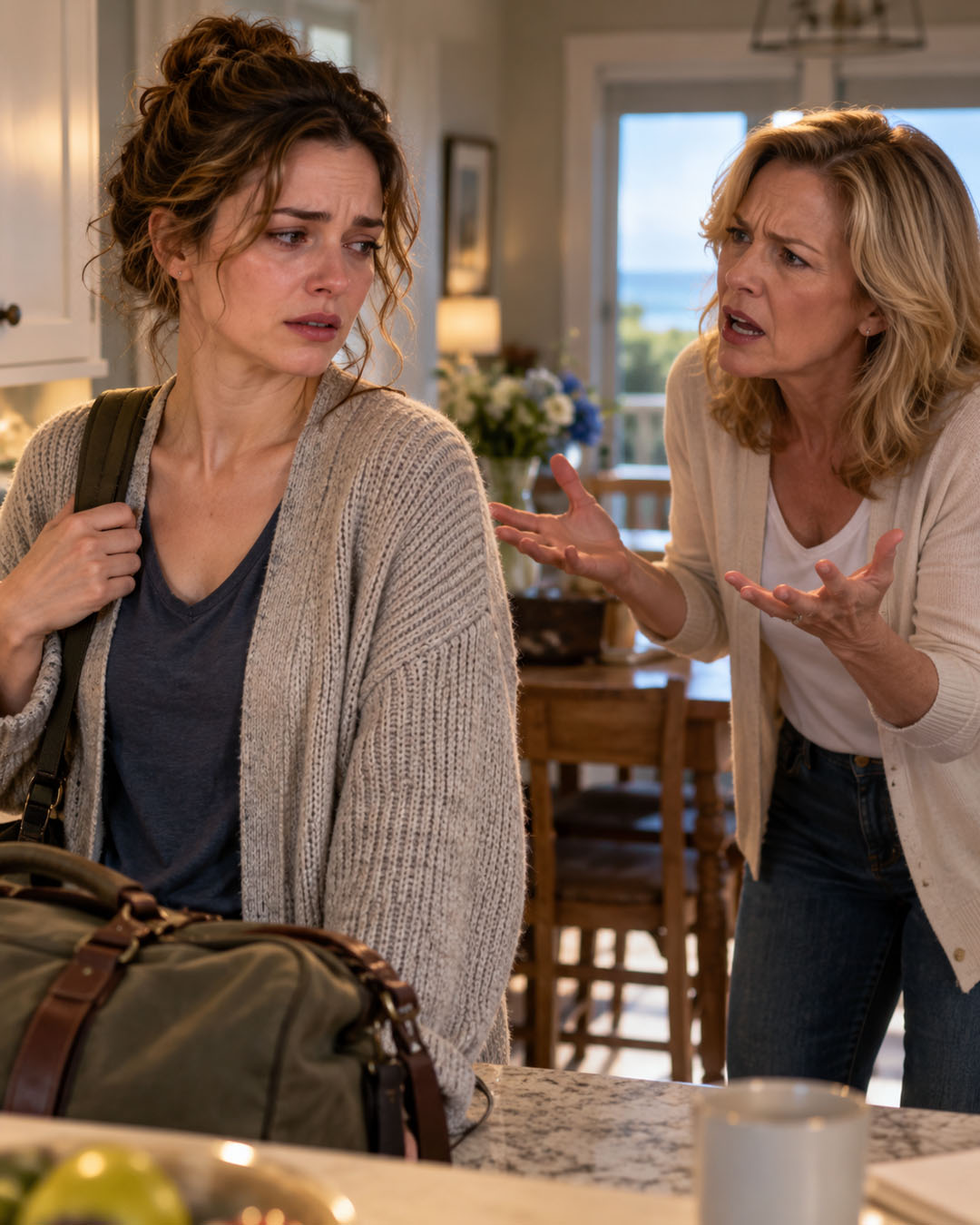
I called my mother that evening, expecting concern. What I heard instead was anger.
“Where have you been?” she demanded before I could say hello. “Your father and I have been worried sick!”
“I went to the coast, Mom. I needed a vacation.”
“Without telling anyone?”
“I’m thirty-two. I didn’t realize I needed permission.”
“Don’t get smart with me, Stella. Your aunt Carol saw your car at the station, and when she couldn’t reach you, she called me. Now half the family thinks something terrible happened.”
I closed my eyes. Aunt Carol had apparently mistaken my car for someone else’s, but explaining that seemed pointless.
“Mom, when did you first notice I wasn’t around?”
Silence.
Then she said, “That’s not the point.”
“Do you remember what happened last Monday?”
“What happened?”
“It was my birthday.”
For several seconds, I heard nothing but her breathing.
“Oh, Stella.”
“Yes, Mom. Oh.”
She immediately began explaining how busy she’d been. Emily was changing jobs. Michael needed advice about refinancing his house. Dad had another doctor’s appointment.
I had heard variations of the same excuses for years.
“I’m not asking you to explain,” I said. “I just wanted you to know I’m home and perfectly fine.”
I ended the call before she could argue.
The following morning, four new voicemails arrived. The first contained an apology. The second asked why I hadn’t reminded her. By the fourth, my mother’s voice had turned sharp.
“You deliberately disappeared to embarrass me! Now your relatives think I’m a terrible mother. You’ve made me look awful!”
There it was.
Not sadness over forgetting her daughter.
Not curiosity about how I had spent my birthday.
Concern about her reputation.
I didn’t respond.
Two days later, Aunt Carol called.
“Your mother is telling everyone you’re having some kind of emotional crisis,” she said. “I thought I’d better hear your side.”
“I took a four-day vacation, Aunt Carol. That’s all.”
“That’s what I figured.”
I told her about the birthdays, the missed milestones, and the years spent watching my parents celebrate everything Michael and Emily accomplished while barely acknowledging my own achievements.
When I finished, Carol sighed.
“I’ve noticed it for a long time, honey. Your mother always treated Emily like she was fragile and you like you were made of steel.”
“I wasn’t made of steel.”
“I know. And I’m sorry I didn’t say something sooner.”
Her kindness nearly broke me.
Within a week, other relatives began calling. Apparently, Mom had been describing my vacation as a deliberate attempt to humiliate her.
My cousin Lauren, who had already sent me birthday flowers, was furious.
“She’s making you sound like a runaway teenager,” she said over coffee. “All you did was go to the beach.”
“I know.”
“Then don’t apologize for it.”
Three weeks later, we gathered to celebrate my grandmother’s eighty-fourth birthday.
I considered staying home, but Grandma Eleanor had always treated me with kindness. I couldn’t imagine missing her celebration.
When I arrived, she was sitting near the kitchen window, wearing a lavender cardigan.
“There’s my beautiful girl!”
She opened her arms, and I hugged her tightly.
“I heard about your trip,” she whispered. “Was the ocean lovely?”
“It was.”
“Good. Every woman deserves a little peace.”
My mother arrived shortly afterward. She acknowledged me with a stiff nod before turning away.
Throughout lunch, I endured uncomfortable glances and conversations that stopped whenever I entered the room.
Michael finally approached me beside the dessert table.
“You know, we would’ve planned something for your birthday if you’d just reminded us.”
I looked at him.
“Michael, you’re forty years old. Mom still makes your favorite chocolate cake every birthday. Has anyone ever needed to remind her?”
He looked away.
That afternoon, Grandma pulled me aside.
“Your mother says you’ve been behaving selfishly.”
I lowered my eyes.
“I didn’t mean to cause trouble.”
Grandma took both my hands.
“Listen carefully. Taking care of yourself isn’t selfish. And asking to be remembered isn’t asking too much.”
Tears filled my eyes.
“I just wanted them to remember without being told.”
“I know, darling.”
She squeezed my hands.
“You were never invisible to me.”
That night, Mom sent another message.
“You made Grandma’s party uncomfortable. I’m disappointed in you.”
I typed one reply.
“I came to celebrate Grandma. Nothing more.”
Then I turned off my phone.
For the first time, I understood something important. My mother could be disappointed in me without my having done anything wrong.
I began spending more time on photography, a hobby I’d loved since college. During my coastal trip, I’d photographed an elderly woman sitting alone on a bench, watching the waves.
There was something extraordinary about the quiet dignity in her face.
That photograph inspired an idea.
I began creating a portrait series called “Seen,” featuring women over fifty who had rebuilt their lives after divorce, widowhood, retirement, or years of putting everyone else first.
I wanted to capture the dignity of people the world sometimes overlooked.
Meanwhile, the silence from my parents continued.
Then Grandma called one Sunday.
“Stella, I’m having dinner at your parents’ house next weekend,” she said. “I’d love it if you came.”
I hesitated.
“Grandma, you know how things have been.”
“I do. But there are some things this family needs to hear, and I’m tired of everyone pretending otherwise.”
I agreed to go.
I didn’t know that dinner would expose a truth my mother had been avoiding for most of my life.
Chapter 3
My parents’ house looked exactly as it always had. The white porch railing needed painting, the rosebushes lined the walkway, and the dining room smelled of rosemary chicken.
I arrived carrying flowers for Grandma.
Mom was in the kitchen with Emily. Neither seemed pleased to see me.
“Hello, Stella,” Mom said stiffly.
“Hi, Mom.”
Dad appeared from the hallway and gave me an awkward hug. Michael was already seated in the living room, talking about work.
I sat beside Grandma and listened to her describe the tomatoes she’d managed to grow despite the unusually cool summer.
For a little while, everything felt ordinary.
Then we sat down for dinner.
Dad asked about my photography project.
“It’s going well,” I said. “I’m hoping to arrange a small exhibition next year.”
“That’s nice,” he replied.
Mom reached for the gravy.
“Your father and I are thinking about taking a vacation ourselves. Somewhere quiet, where people don’t make a spectacle of everything.”
The table grew silent.
I set down my fork.
“Is that supposed to be about my trip?”
Mom gave an exaggerated sigh.
“If the shoe fits.”
“Margaret,” Dad warned.
“No, Robert. I’m tired of pretending nothing happened. Our daughter disappeared without telling anyone, ignored our calls, and let everyone believe we’d done something terrible.”
“I didn’t tell anyone to believe anything,” I answered. “I went on vacation.”
“You wanted us to feel guilty!”
“I wanted to spend my birthday somewhere I felt happy.”
Mom’s cheeks reddened.
“And now everyone thinks I’ve been neglecting you!”
I looked straight at her.
“Have you ever considered that maybe the reason they’re asking questions is because you forgot my birthday three years in a row?”
“After everything I’ve done for you!”
“I’m grateful for what you’ve done, Mom. But gratitude doesn’t mean pretending you haven’t hurt me.”
She pushed back her chair.
“You always were too sensitive.”
Something inside me finally gave way.
“Do you remember my college graduation?” I asked.
She blinked.
“Of course.”
“You missed it because Emily was upset about her boyfriend. Do you remember when I opened my design studio? You promised to come to the celebration, but Michael needed help moving furniture.”
“Those were different circumstances.”
“And when I bought my first house, you didn’t visit for six months. But when Emily rented her apartment, you helped her decorate every room.”
Emily stared down at her plate.
Mom looked furious.
“Are we going to review every little thing I’ve ever done wrong?”
“No,” I said quietly. “I’m trying to explain why I stopped expecting you to show up.”
Grandma Eleanor laid her napkin beside her plate.
“Margaret, sit down.”
Something in her voice stopped everyone.
Mom reluctantly lowered herself into her chair.
“I’ve listened to enough,” Grandma continued. “Stella isn’t inventing these things. I’ve watched this happen for years.”
“Mother, please.”
“No. You need to hear this.”
Grandma looked around the table.
“Stella became the easy child. She did well in school, worked hard, paid her own way, and rarely complained. So everybody decided she didn’t need attention. Meanwhile, every little problem Emily or Michael had became a family emergency.”
My eyes filled with tears.
Grandma turned toward my mother.
“You have two daughters, Margaret. But for years, you’ve acted as though only one needed a mother.”
Nobody spoke.
Dad stared at his plate.
Michael looked ashamed.
Emily began crying.
Finally, Dad cleared his throat.
“Your grandmother’s right, Stella. I should’ve done better.”
Michael nodded.
“I knew things weren’t fair. I just never wanted to get involved. I’m sorry.”
Emily wiped her cheeks.
“I didn’t realize how much attention I was taking away from you.”
I reached across the table and touched her hand.
“You didn’t ask to be treated differently.”
Mom remained silent.
When I left, Grandma walked me to the door.
“Don’t expect everything to change overnight,” she whispered. “But never apologize for telling the truth.”
The following week, I received a handwritten letter from her.
She told me she admired the woman I’d become and regretted that I’d spent so many years feeling overlooked.
I read it three times before placing it in my desk drawer.
Over the next several months, small changes began.
Emily called one evening and admitted she’d spent years enjoying our mother’s attention without questioning why I received so little.
“I want us to actually be sisters,” she said. “Not just people who see each other at Thanksgiving.”
We started having dinner together twice a month.
Michael surprised me by calling to ask about my business. Later, he told me he’d confronted Mom about the way she treated me.
“She accused me of taking your side,” he admitted.
“What did you say?”
“That families aren’t supposed to have sides when somebody’s been hurt.”
A few weeks afterward, Dad appeared at my front door with coffee and a box of donuts.
We sat at my kitchen table while he struggled to find the right words.
“I convinced myself you didn’t need much from us because you were always so capable,” he finally said.
“But I did need you, Dad.”
His eyes filled.
“I know that now.”
He reached across the table and held my hand.
“I can’t change what happened. But I can change how I behave from here on.”
For the first time in years, I believed someone in my family genuinely wanted to understand me.
Mom, however, remained silent.
Then one rainy Thursday, nearly four months after my birthday, a message appeared on my phone.
“Stella, I’d like to talk. Just the two of us. Can you come Sunday?”
I stared at those words for several minutes.
Despite everything, part of me still wanted my mother.
So I replied that I would come.
Chapter 4
Sunday afternoon, I drove to my parents’ house beneath a sky heavy with clouds.
Dad opened the door and hugged me.
“She’s in the living room,” he said. “Take your time.”
Mom sat on the couch with her hands folded in her lap. Without the usual bustle of cooking or organizing something, she seemed strangely uncertain.
“Hello, Stella.”
“Hi, Mom.”
I sat across from her.
For a while, neither of us spoke.
Finally, she drew a shaky breath.
“I’ve been thinking about what happened at dinner. About what your grandmother said. And what your father and Michael have been trying to tell me.”
I waited.
“I was wrong.”
Those three words startled me.
Mom looked toward the window.
“When Emily was little, she needed help with everything. She was anxious, always getting herself into trouble, always wanting reassurance. You were different. You could handle things.”
“That didn’t mean I didn’t need you.”
“I know.”
She wiped her eyes.
“I think I liked being needed. Emily made me feel important. And when you became independent, I took it personally. Instead of being proud of you, I told myself you didn’t care whether I was involved.”
I felt a painful tightness in my chest.
“Mom, I waited for you at my college graduation until almost everyone had gone home.”
She covered her mouth.
“I remember.”
“I kept looking toward the doors. Every time somebody walked in, I thought it might be you.”
“I’m so sorry.”
“And the birthdays weren’t really about cake or presents. I just wanted to know you thought about me when I wasn’t standing right in front of you.”
Mom began crying.
“I understand that now. I treated your independence like permission to stop paying attention. And when you finally got tired of it, I made your pain about my embarrassment.”
For years, I had imagined hearing an apology like this.
But now that it had come, I discovered that forgiveness wasn’t something I could simply switch on.
“Thank you for saying that,” I told her. “But things can’t go back to the way they were.”
She nodded.
“I don’t expect them to.”
“I need you to respect my decisions. I need to be able to disagree with you without being accused of humiliating you. And I need to know that when you apologize, you actually mean to change.”
“I’ll try.”
“Trying has to mean doing something different.”
Mom looked down at her hands.
“I’ve started seeing a counselor,” she admitted. “Your father encouraged me. I have a lot to work through.”
I hadn’t expected that.
“I’m glad,” I said.
She reached for a tissue.
“Do you think we can start again?”
I considered the question carefully.
“We can’t start over. But maybe we can start from here.”
It wasn’t a perfect reconciliation. We didn’t embrace and pretend every painful memory had vanished.
We simply agreed to take things slowly.
In the months that followed, Mom occasionally slipped into old habits. Sometimes she made excuses or tried to turn an uncomfortable conversation toward her own feelings.
But something had changed.
When I told her she’d hurt me, she began learning to listen instead of defending herself.
Dad called every Sunday. Michael showed up to help me repair my back porch. Emily became one of my closest friends.
And Grandma continued writing letters, even though she lived only fifteen minutes away.
My photography project also grew.
I photographed a retired schoolteacher who had opened a bookstore at sixty-eight, a widow learning to paint after forty years of marriage, and a former nurse who had taken her first solo vacation at seventy-one.
Their stories reminded me that a person’s life could begin changing at any age.
Nearly a year after my trip to the coast, a gallery in downtown Portland offered to exhibit my portraits.
I could hardly believe it.
On opening night, the gallery filled with neighbors, friends, local artists, and several of the women I’d photographed.
Lauren arrived carrying flowers.
Grandma Eleanor came in wearing her favorite pearl necklace, holding Dad’s arm.
Michael and Emily stood near the entrance, proudly telling strangers I was their sister.
Even Mom came.
She stayed quietly toward the back, studying the photographs without drawing attention to herself.
Near the end of the evening, she approached me carrying a small gift bag.
“I brought you something,” she said.
Inside was an old photograph in a simple wooden frame.
It showed me at seven years old, sitting at our family’s upright piano with my hair in pigtails. I was smiling proudly, my little fingers resting on the keys.
I remembered the afternoon immediately.
I’d learned an entire song and played it for my grandmother while Mom prepared dinner.
“I found this in the attic,” Mom said. “I remember how happy you were that day.”
I stared at the little girl in the photograph.
“Grandma clapped so loudly I thought the neighbors could hear.”
Mom smiled through her tears.
“You practiced for weeks. I should have told you how proud I was.”
I looked up.
“You were proud?”
“Very proud. I just didn’t know how to show it the way you needed.”
She paused.
“I’m proud of you now, Stella. Not because of this exhibition. Because of the woman you’ve become.”
I hugged her.
It was brief, gentle, and real.
We still had work to do. But for once, I wasn’t the only one trying.
A few days later, my thirty-third birthday arrived.
I woke to sunlight spilling across my bedroom floor and the smell of fresh coffee.
At eight o’clock, Dad called.
At eight fifteen, Michael sent a ridiculous singing birthday message.
Emily showed up at ten with flowers and insisted on taking me to lunch.
Grandma had mailed a card with a twenty-dollar bill tucked inside, just as she’d done when I was little.
And Mom?
She had called the previous week to ask whether I’d like to have dinner together on my birthday. When I said I’d already made plans with friends, she simply said she hoped I’d have a wonderful time.
That morning, she sent one quiet message.
“Happy birthday, sweetheart. I love you. I’m grateful you’re my daughter.”
I smiled and answered, “Love you too, Mom.”
Then I put my phone away and got ready for the day.
That evening, I celebrated with friends at a little restaurant overlooking the Willamette River.
There was laughter, good food, and a vanilla cake with buttercream frosting.
The same kind I’d eaten alone three years earlier.
Only now, the table was crowded with people who wanted to be there.
As Lauren lit the candles, I thought about that lonely woman sitting at her kitchen table, wondering why she wasn’t worth remembering.
I wished I could reach back through time and tell her what I knew now.
She had never needed to become more successful, more helpful, or more agreeable to deserve love.
She had always been enough.
The following spring, I returned to Cannon Beach for a weekend. Ruth still ran the little inn, and Charlie still slept beside the fireplace.
When I told her how my life had changed, she listened with a pleased smile.
“Looks like you found your way home,” she said.
I thought about my family, my friends, my photographs, and the peaceful life I was learning to build.
“In a way,” I answered. “But I think the most important thing was finally finding my way back to myself.”
That evening, I walked along the beach as the sun disappeared beyond the Pacific.
The waves rolled in just as they had on my thirty-second birthday, steady and indifferent to the worries of the world.
But I was different.
I no longer measured my worth by who remembered me, who praised me, or who showed up when I needed them.
I appreciated the people who loved me, welcomed the ones willing to change, and understood that my happiness was also my responsibility.
I had learned that forgiveness didn’t require forgetting, that boundaries didn’t mean abandoning love, and that being strong didn’t mean never needing anyone.
Most importantly, I had learned that I didn’t have to disappear to prove I deserved to be seen.
I had always belonged in my own life.
And this time, I intended to live every moment of it.
THE END.
⚠️ All characters and events are fictional. Do not imitate or apply them in real life. 😌😌😌

