Chapter 2
Wednesday morning began like every other workday.
My alarm went off at five, I showered, made coffee, and left for the Duke Energy yard shortly before six.
Camille was still asleep.
By the time I returned home that evening, Weston had already confirmed that the financial changes we discussed were being handled.
The joint credit facilities I was authorized to close had been closed, and the automatic payment from my personal account to Pinehurst had been canceled.
I didn’t feel particularly victorious.
I simply felt that I had stopped agreeing to finance a marriage that my wife had already abandoned emotionally.
Camille, meanwhile, seemed to be enjoying herself.
She spent most of the afternoon texting someone, occasionally laughing at her phone. Around six, she dressed carefully, put on a necklace I’d given her for our tenth anniversary, and announced she was meeting some friends for dinner.
I didn’t ask who.
At 7:15, Pinehurst called.
A woman from the billing department explained that the monthly payment for Mrs. Harlo’s care had been declined.
“Mr. Beckett, we currently have an outstanding balance of $4,500. Could you provide another payment method?”
“I’m sorry, but that account is no longer my responsibility. You’ll need to speak with her daughter, Camille Beckett.”
There was a pause.
“Is there a number we can reach her at?”
I gave them Camille’s cell number.
The woman thanked me, and I wished her a good evening.
I made a sandwich, cleaned the kitchen, and settled into the living room with a book.
My phone started vibrating around eight.
Camille’s name appeared repeatedly.
I let it ring.
Then came the messages.
Where are you?
Why aren’t you answering?
What happened to the cards?
Call me immediately.
Eventually, I picked up.
“What did you do?” she demanded.
Her voice was sharp, and I could hear restaurant conversations behind her.
“Good evening to you, too.”
“My card was declined! Right in front of everybody!”
“That’s unfortunate.”
“And Pinehurst just called about Mom’s payment. They said you’ve stopped paying!”
“I made some financial changes.”
“You can’t do that without discussing it with me!”
“I believe I can, actually. They’re my personal accounts.”
Her voice softened.
“Nolan, Mom needs that facility. They’re saying they may have to review her placement if we can’t arrange payment.”
“Then you’ll need to make arrangements.”
“I don’t have $4,500 a month!”
“I understand.”
“I haven’t worked in twelve years!”
That statement stayed with me for a moment.
She said it as if it were an argument in her favor.
I thought about the twelve years of expenses I’d covered, the classes she’d taken, the vacations, the clothes, and every time she’d told me she needed something to feel fulfilled.
“Camille, yesterday you told me you had found your soulmate. I think it’s reasonable that you start making arrangements for your own financial life.”
“Are you punishing me because of Thatcher?”
“No. I’m responding to what you told me about our marriage.”
“We can work this out together.”
“Can we? Because yesterday you seemed pretty certain you wanted something different.”
She went silent.
Then she said, almost whispering, “You’re making me look terrible.”
I looked at the book in my lap.
“I haven’t told anyone anything.”
She hung up.
Two hours later, she came home looking exhausted. Her purse landed on the kitchen counter with a thud.
“Thatcher had to pay for dinner,” she said.
I looked up.
“How did that go?”
“Don’t start.”
“I’m just asking.”
She stared at me.
“You need to turn the cards back on. And you need to call Pinehurst. Mom can’t be moved somewhere else.”
“Your mother needs care. I agree. But you need to decide how you’re going to provide for it.”
“We’re married!”
“Were you thinking about that when you told me you’d found someone else?”
She took a breath and changed tactics.
“Nolan, I know you’re hurt. I understand that. Maybe I’ve made mistakes, but we can work through this. Perhaps if you’d been more emotionally available, I wouldn’t have felt so alone.”
I stared at her.
“So now this is my fault?”
“I’m saying we both contributed to where we are.”
“I worked overtime to pay for this house. I covered your expenses. I paid for your mother’s care. I supported every hobby you wanted to pursue. What exactly was I supposed to do differently?”
She looked away.
“That’s not what I mean.”
“Then what do you mean?”
She didn’t answer.
I went upstairs.
For the next several days, Camille tried everything.
She called her sister in Raleigh for money. She contacted old friends and attempted to open a bank account of her own. She even tried applying for a credit card, only to discover that her credit score was in the low 400s.
She had never paid much attention to our finances because I’d always handled them.
Apparently, there were reasons for that.
On Thursday evening, my friend Reese stopped by.
We had worked together for twelve years before he moved into a supervisory position. He was the sort of friend who could make a bad day feel manageable with a pizza and a few sarcastic remarks.
“So let me get this straight,” he said, settling onto the couch. “Your wife met a guy named Thatcher three weeks ago, decided he’s her soulmate, and expected you to keep paying for everything?”
“That’s about right.”
“What does this guy do again?”
“Creative consultant.”
Reese stared at me.
“Does he consult creatively, or is he creatively unemployed?”
I laughed for the first time in days.
Then Camille walked through the front door.
She stopped when she saw Reese.
“Didn’t know you had company.”
“Reese stopped by.”
He lifted his pizza slice.
“Hey, Cam. How’s the soulmate situation?”
Her face tightened.
She grabbed her purse and walked back outside without saying another word.
Reese watched the door close.
“Well,” he said, “that went beautifully.”
I shook my head.
But Friday evening brought something more serious.
Camille was sitting at the kitchen table when I came downstairs. Her eyes were red, and she looked as though she’d been rehearsing what to say.
“I talked to Thatcher today,” she said.
“And?”
“He thinks we moved too quickly.”
I leaned against the counter.
“Does he?”
“He says I should focus on my family situation first. Get things settled. Then we can see where things go.”
I waited.
“He needs some space,” she added.
“Of course.”
“Don’t say it like that.”
“Like what?”
“Like you knew this would happen.”
I looked at her.
“Camille, you met this man three weeks ago. You called him your soulmate. Now that your life has become inconvenient, he’s asking you to handle everything yourself.”
“He’s supporting me emotionally.”
“From a distance, apparently.”
She stood up.
“You’re being cruel.”
“No. I’m being honest.”
She went upstairs, and I heard the bedroom door close.
Monday morning, I signed the divorce papers in Weston’s office before heading to work.
By lunchtime, a process server had delivered them to our house.
My phone rang ten times.
I didn’t answer.
When I returned that evening, Camille was waiting in the living room with a folder full of printed legal articles.
“North Carolina is an equitable distribution state,” she announced. “I’m entitled to a fair share of what we built together.”
“You’re welcome to discuss that with your attorney.”
“I want half the house, half your retirement, and spousal support.”
“The house was mine before we married.”
“That doesn’t mean anything!”
“It means we’ll let the lawyers determine what applies.”
She stared at me.
“You’re planning to leave me with nothing?”
“You told me you wanted a different life. I’m not going to pretend otherwise.”
Her eyes filled with tears.
“Nolan, please. I made a mistake. I got confused. We can go to counseling.”
“Yesterday, you were threatening me with lawyers. Today, you want counseling.”
“I love you.”
“Then why did you spend three weeks telling another man he was your soulmate?”
She looked down.
I waited for an apology.
It never came.
Instead, her expression hardened.
“Fine. If that’s how you want to play it, I’ll take you for everything. The house, your retirement, everything you’ve got. I’ll make you regret this.”
I watched her grab her keys.
Then I called Reese.
“She’s going to fight.”
He didn’t sound surprised.
“Then you’d better make sure you know everything there is to know about your finances.”
Chapter 3
Reese gave me his cousin Kendall’s number.
Kendall was a forensic accountant who specialized in financial disputes. She had the kind of reputation that made people nervous when she asked to see their bank statements.
I called her that evening.
She listened to the situation, explained what records she’d need, and began reviewing everything I provided.
Four days later, she called.
“Nolan, your wife has a credit card you don’t know about.”
I sat down at my desk.
“What?”
“An account opened eighteen months ago. Different bank. The statements were sent to a P.O. box across town.”
“How much?”
“Just under $11,000 in outstanding charges.”
I rubbed my forehead.
“What kind of charges?”
“Cash advances, hotels around Charlotte, several expensive restaurants, and a jewelry store. There’s also a pattern of transactions on Tuesday and Thursday afternoons.”
“Can you identify who she was meeting?”
“Not conclusively from financial records alone. But the timing is interesting.”
She explained that the account had been used regularly for at least eighteen months.
Thatcher had only appeared in Camille’s story three weeks earlier.
That meant the beginning of whatever was happening in my marriage was much older than I’d been told.
“Can you document everything?”
“Already done. I’ll send you the complete report.”
When we hung up, I sat quietly for a long time.
Eighteen months.
For eighteen months, I’d been working overtime, paying for Camille’s hobbies, covering household expenses, and making sure her mother received proper care.
Meanwhile, she’d been maintaining an entirely separate financial life.
The next morning, I gave everything to Weston.
He reviewed the documents carefully.
“Don’t contact her about this,” he advised. “We’ll handle it through the proper legal process.”
Camille hired an attorney from an expensive office in South Charlotte.
Within a week, he sent Weston a six-page demand letter.
According to the letter, Camille was the financially vulnerable spouse who had sacrificed her career for the marriage. It described my decision to change the financial arrangements as economic abuse and claimed I’d abandoned her elderly mother as an act of retaliation.
She wanted the house, half my retirement savings, ongoing spousal support, and continued payments for Pinehurst.
Weston read the letter twice.
Then he leaned back and laughed.
“Her attorney doesn’t know about the other account, does he?”
“Apparently not.”
“Well, this should be interesting.”
Mediation was scheduled for three weeks later.
Camille moved temporarily into her sister’s house in Raleigh.
For the first time in months, I could walk through my own home without feeling like I was entering a room where someone was waiting to criticize me.
I started sleeping better.
I returned to running in the mornings, something I’d abandoned because I was always too tired or too busy dealing with another household problem.
But the quiet didn’t erase everything.
One evening, Reese came over with Chinese takeout.
“You nervous about mediation?”
“Not really.”
“Then what’s bothering you?”
I set down my chopsticks.
“Fifteen years, Reese. I thought I knew her. I knew what she liked, what made her happy, what she was afraid of. I thought we had something solid.”
He listened without interrupting.
“Maybe I was stupid.”
“Don’t do that.”
“Do what?”
“Blame yourself because someone else lied to you.”
I looked at him.
He continued.
“Some people are very good at presenting the version of themselves they want you to believe. That doesn’t make you stupid for trusting them.”
I nodded.
The next morning, we arrived at the mediation office downtown at ten.
The conference room had gray walls, uncomfortable chairs, and coffee that tasted like it had been sitting on a heating plate since the previous administration.
Camille arrived wearing a new professional outfit and enough makeup to suggest she’d spent considerable time preparing.
Her attorney was a large man with an expensive watch and the confident manner of someone who expected to leave with a substantial settlement.
Weston sat beside me.
Kendall had brought several thick folders.
Camille’s attorney spoke first.
He described her as a devoted wife who had sacrificed her professional ambitions to support her husband’s career. He argued that she had been left financially helpless and that my sudden decision to withdraw support had placed her in an impossible position.
He spoke about the years she had spent maintaining our home.
He spoke about her mother’s illness.
He even described her emotional connection with Thatcher as a desperate attempt to find the affection she had supposedly been missing.
I listened without interrupting.
When he finished, Weston opened his folder.
“Thank you. I think we should review the financial history before discussing settlement.”
He began with twelve years of bank statements.
Mortgage payments. Insurance. Utilities. Groceries. Vehicle expenses. Medical bills. Tuition for Camille’s various classes.
Every major household expense had been covered by my earnings.
Then came the employment records.
Camille had worked during the first three years of our marriage. After leaving her administrative position, she hadn’t earned a regular paycheck for twelve years.
Her attorney nodded as though this supported his argument.
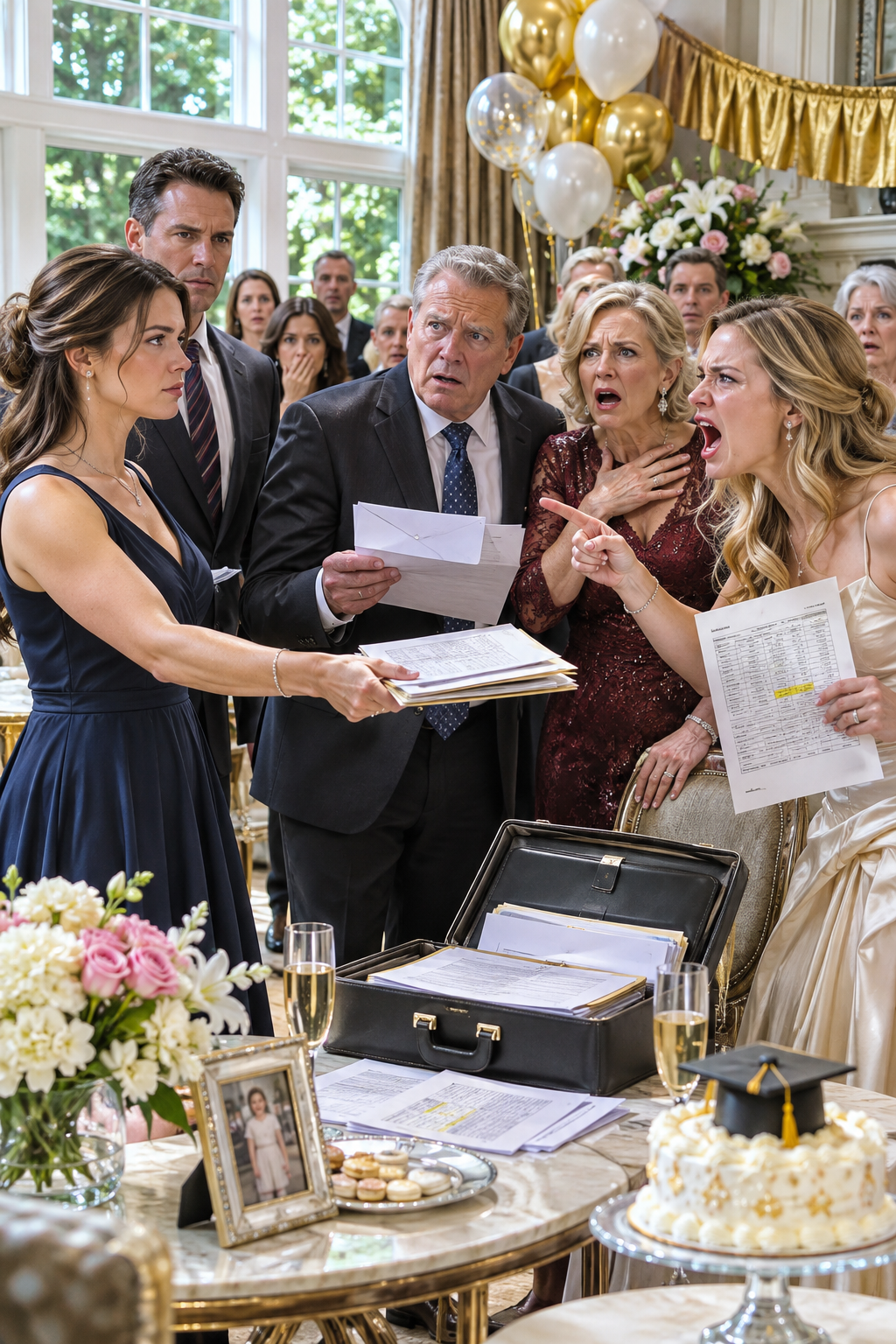
Then Weston placed another folder on the table.
“This account may be relevant to your client’s financial circumstances.”
The first page contained the credit card application.
Camille’s signature was clearly visible.
Her attorney frowned.
“What is this?”
“A credit card opened eighteen months ago under your client’s name. The mailing address is a P.O. box, not the marital residence.”
Camille went completely still.
Weston continued.
“The current balance is approximately $11,000. We’ve documented cash advances, hotel charges, restaurant visits, and jewelry purchases.”
Her attorney turned toward her.
“Is this your account?”
She whispered something.
“I beg your pardon?”
“Yes.”
He looked down at the statements.
Then back at her.
“My client was not aware of this account,” he said cautiously.
Weston slid another page across the table.
“These statements show seventeen months of minimum payments. The payments were made from an account bearing your client’s name.”
Kendall finally spoke.
“And there’s more.”
She opened her folder and explained that the transactions showed a repeated pattern.
Tuesday and Thursday afternoons.
The same general areas of Charlotte.
Several charges coincided with times Camille had claimed to be attending yoga classes.
Kendall had also obtained records showing that Camille hadn’t attended those classes during much of the relevant period.
Her attorney asked to see the supporting documentation.
Kendall passed it across.
Camille’s face had gone pale.
“This is ridiculous,” she said. “You can’t just invade my privacy!”
Weston remained calm.
“These records were obtained and presented through the appropriate legal process. We’re discussing financial conduct during the marriage, not making assumptions about your private life.”
The room became very quiet.
Camille grabbed her attorney’s arm and whispered urgently.
He looked at the papers again.
Then he requested a recess.
Chapter 4
The two of them stepped into the hallway.
The door closed, but the room wasn’t completely soundproof.
I could hear Camille’s voice rising and falling. Her attorney sounded increasingly frustrated.
I didn’t try to listen.
Instead, I looked down at my hands.
They were the same hands that had carried Camille’s luggage through airports, repaired things around the house, and held hers when her mother first received the dementia diagnosis.
I wondered when our marriage had become something that needed to be investigated with bank statements and transaction histories.
Fifteen years of shared memories reduced to folders on a conference table.
When they returned fifteen minutes later, her attorney looked like a different man.
“My client is prepared to negotiate a reasonable settlement.”
Weston nodded.
“That’s a good place to begin.”
The negotiations took another two hours.
There were arguments about the house, retirement accounts, personal property, and support payments. Camille’s attorney attempted to preserve some of her original demands, but the evidence made that increasingly difficult.
The premarital ownership of the house was documented. My retirement savings were supported by years of employment records. The financial history showed that I’d covered the overwhelming majority of household expenses.
The hidden credit card also complicated the story her attorney had presented.
In the end, the agreement was straightforward.
Camille would receive her personal belongings and $3,000.
I would retain the house, my retirement accounts, and the remaining property.
There would be no ongoing spousal support and no claim against the house.
It was a clean break, subject to the final divorce paperwork and the terms of the agreement.
Camille signed without looking at me.
Her hand trembled slightly as she moved through the pages.
When everything was finished, we walked outside.
Her attorney left quickly, probably relieved to put the entire matter behind him.
Camille stopped me near the steps.
“You ruined me,” she said quietly.
I looked at her.
“No, Camille. I didn’t.”
“You took everything.”
“I kept what was mine. You made your own decisions.”
She shook her head.
“After fifteen years, you could have shown some compassion.”
I thought about that.
“I showed you compassion for fifteen years. I just stopped confusing compassion with unlimited responsibility.”
She looked away.
I walked to my truck and drove home.
Two months after the divorce became final, my life had settled into a rhythm I hadn’t experienced in years.
I went to work, came home, cooked dinner, and slept.
Summer storm season kept our crew busy. There were long shifts restoring power after thunderstorms, but I no longer dreaded returning to a house filled with tension.
I started running before sunrise.
Nothing extraordinary. A few miles through the neighborhood before the Charlotte humidity became unbearable.
I lost fifteen pounds without really trying.
Reese came over most weekends. We’d grill burgers, watch football, and argue about sports the way we always had.
One Saturday, while flipping burgers, he asked if I was dating anyone.
“Not yet.”
“Good. Give yourself time.”
“Planning to become my relationship counselor?”
“Absolutely not. I have enough problems of my own.”
We laughed.
Then he became serious.
“You know what I learned from my first marriage?”
“What?”
“When someone shows you who they are, believe them. Don’t spend years explaining away what they’re showing you.”
I thought about Camille.
For years, she’d told me she was bored, unfulfilled, and looking for something more meaningful.
I’d believed that if I provided enough comfort and freedom, she’d eventually find whatever she was searching for.
Maybe I should have listened more carefully.
Kendall stopped by one evening with some final accounting paperwork.
During the conversation, she mentioned that she’d heard about Camille’s mother.
“She was transferred from Pinehurst,” Kendall said.
“Where?”
“County Place. One of the state-supported facilities.”
I felt something tighten in my chest.
“Is she doing okay?”
Kendall shrugged.
“Camille couldn’t keep up the payments. Pinehurst gave her sixty days to arrange another payment source, but she couldn’t manage it.”
I looked down at the paperwork.
Camille’s mother had always been kind to me. She sent birthday cards, remembered my favorite Christmas cookies, and hugged me whenever we visited.
She hadn’t asked me to pay her bills.
She probably hadn’t even understood who was covering them.
“That’s hard on her,” I said.
“It is.”
Kendall paused.
“But Camille made her choices.”
I knew she was right, yet the situation didn’t feel simple.
For a few days, I considered sending money anonymously to the new facility. I could afford it, and her mother hadn’t done anything wrong.
But I ultimately decided against it.
I couldn’t keep making myself the invisible solution to problems created by someone who had treated my support as an entitlement.
Still, I hoped her mother was receiving decent care.
A few weeks later, I saw Camille at a gas station off Providence Road.
She was driving an old Honda Civic I’d never seen before.
I was filling my truck at the pump beside her when she looked up.
Our eyes met.
For a second, neither of us moved.
Then she looked away and returned to her car.
I finished pumping gas and drove home.
I thought that was the end of our story.
I was wrong.
Chapter 5
It was a Tuesday evening in late August.
I’d just finished a fourteen-hour shift after a transformer failure in Myers Park had knocked out power to several streets.
By the time I pulled into my driveway, my back hurt, my shirt was soaked with sweat, and all I wanted was a shower and whatever leftovers I could find in the refrigerator.
But there was a car parked in my driveway.
An old Honda Civic.
The same one I’d seen at the gas station.
Camille was leaning against the driver’s door with her arms folded.
She looked thinner than I remembered. Her hair wasn’t styled the way it used to be, and the clothes she wore were simple and worn.
When I stepped out of my truck, she pushed away from the car.
“Nolan.”
I stopped.
“We need to talk.”
“We really don’t.”
“Please. Five minutes. That’s all I’m asking.”
I looked at her for a moment.
She seemed nervous, almost frightened.
“I drove two hours from Raleigh,” she added.
I gestured toward the porch.
“Five minutes. Starting now.”
We sat on opposite ends of the porch steps.
The evening air was warm, and somewhere down the street a lawn mower was still running.
Camille stared at her hands.
“I screwed up,” she said.
I didn’t respond.
“Not just a little. I made a huge mistake, and I know you don’t owe me anything. But I need you to hear me out.”
“The clock is running.”
She took a shaky breath.
“Thatcher is gone.”
I nodded.
“Completely gone. He moved on to someone else about a week after mediation. Another married woman, apparently. I found out he’d been doing this for a while.”
I looked at her.
“That’s unfortunate.”
“I know what you’re thinking.”
“I’m not thinking much about him.”
She wiped her eyes.
“He wasn’t who I thought he was. He talked about being genuine and living simply, but everything was different when things became difficult. He didn’t want responsibility. He wanted the exciting part. The attention. The feeling that somebody thought he was special.”
I remained silent.
“Mom is at County Place now,” she continued. “It’s terrible, Nolan. The staff is overwhelmed. Sometimes she doesn’t recognize me. I visit whenever I can, but I can’t afford to move her somewhere better.”
She looked up.
“I’m working at Target now. Fourteen dollars an hour. I’m staying with my sister and sleeping on her couch.”
I wasn’t sure what she expected me to say.
She continued before I could respond.
“I was wrong about everything. About Thatcher. About what I thought I wanted. About you.”
Her voice cracked.
“You were good to me. Better than I deserved. I didn’t appreciate it because I was bored, and I convinced myself I was missing out on some extraordinary life.”
She moved a little closer.
“I thought I deserved something more exciting. Someone who understood me in a way nobody else could. I thought you were too ordinary to make me happy.”
I looked toward the street.
“And now?”
“Now I understand what I had.”
She began crying.
“Nolan, I want to come home. I want us to start over. We can go to counseling. We can take things slowly. I know I’ve hurt you, but people make mistakes. I can change.”
I let the silence stretch.
She waited.
Then I asked, “Camille, do you know what I’ve been doing for the last two months?”
She shook her head.
“Sleeping eight hours a night.”
She looked confused.
“Eating meals I actually enjoy making. Running every morning before work. Seeing Reese without checking my phone every five minutes because I think another household emergency is about to happen.”
I paused.
“For the first time in fifteen years, I wake up without feeling exhausted before my day even begins.”
Her expression changed.
“I can give you that again.”
“No, you can’t.”
“Why not?”
“Because I don’t want to go back.”
She stared at me.
“I’ve changed, Nolan.”
“Have you?”
“Yes.”
I leaned forward.
“Then tell me something. When you came here tonight, did you come because you finally understood what you did to me? Or because Thatcher disappeared, your financial situation collapsed, and you needed somewhere safe to land?”
Her mouth opened.
No answer came.
“That’s what I thought.”
“That’s not fair.”
“Isn’t it?”
“I admitted I was wrong!”
“You admitted you were wrong because your other plan didn’t work out.”
She shook her head.
“You’re being cruel again.”
“No. I’m asking you to be honest. If Thatcher had taken you away to some wonderful life, would you be sitting on my porch tonight asking for another chance?”
She looked down.
I didn’t need her to answer.
“If he’d given you everything you wanted, you wouldn’t be here. You’d be living that fantasy and I’d still be the man you told me couldn’t understand your soul.”
Tears rolled down her cheeks.
“I didn’t mean to hurt you.”
“But you did.”
“I was confused.”
“You were making decisions for eighteen months. You opened a secret credit card. You hid the statements. You went to hotels. You built a life outside our marriage while I kept paying for the life we shared.”
She covered her face.
“I know.”
“And when you finally told me about Thatcher, you still expected me to pay every bill as though nothing had changed.”
“I know, Nolan.”
“Do you?”
She nodded.
I leaned back against the porch railing.
“Here’s something else. I’m not even angry anymore.”
She looked up.
“I was angry for a while. I was furious, actually. But now I mostly feel relieved.”
“Relieved?”
“Yes.”
“Fifteen years, and that’s all you feel?”
“No. Fifteen years of memories don’t disappear. But I finally understand something I should have understood a long time ago.”
I looked directly at her.
“I was doing all the work to keep our life together. You were enjoying the benefits, and I thought that was what being a good husband meant. I never realized how much of myself I was giving away.”
She started to speak.
I raised my hand gently.
“You found someone you thought was better. You expected me to stay in the background, keep everything paid for, and wait until you decided what you wanted. You treated me like a backup plan.”
“I never thought of you that way.”
“Maybe not consciously. But that’s exactly how you treated me.”
She didn’t argue.
For a moment, I saw the woman I’d married all those years ago. The young woman who used to laugh at my terrible jokes, who once danced with me in the kitchen while dinner burned on the stove.
I felt sadness.
Not longing.
Not regret.
Just sadness for what we’d become.
“You know,” she whispered, “I really thought you’d forgive me eventually.”
“Why?”
“Because you always did before.”
That sentence told me more than anything else she’d said that evening.
I had always forgiven her.
I’d paid the bills, solved the problems, accepted the apologies, and kept moving forward.
She had mistaken my willingness to forgive for an unlimited willingness to tolerate anything.
“That’s the difference now, Camille. I can forgive you without inviting you back into my life.”
She wiped her cheeks.
“So that’s it?”
“Yes.”
“You’re just going to let me leave like this?”
“I’m not making you leave. You’re free to go.”
She stood up.
For a moment, her expression hardened.
“You’re going to end up alone, Nolan. Nobody wants to spend their life with someone as cold as you.”
I stood and brushed some dust from my work pants.
“Maybe. But I’ll be alone in my paid-off house, with my bills handled and my peace intact.”
She stared at me.
“You’re pathetic.”
“Could be.”
I pointed toward her car.
“You’re blocking my driveway. Pull forward about ten feet so I can get my truck inside.”
She looked at the car, then back at me.
Something in her expression finally seemed to collapse.
“I really thought this would work,” she muttered.
“What would?”
“This conversation. I practiced it on the drive here. I had everything planned out. I thought if I explained how much I’d suffered, you’d understand.”
I didn’t know what to say.
She looked at the ground.
“I thought you’d still want to take care of me.”
There it was.
Not love.
Not accountability.
Not even a genuine desire to rebuild what we’d lost.
She had come looking for the same safety net she’d spent years assuming would always be there.
“I know you did,” I said quietly.
She walked to her Honda and got inside.
I pulled my truck forward to give her room.
As she backed out, she lowered the window.
“You’re making a mistake, Nolan. You’ll regret this.”
I gave her a small smile.
“Drive safely, Camille.”
She accelerated down the street.
I watched her taillights disappear before carrying my work bag inside.
The house was quiet.
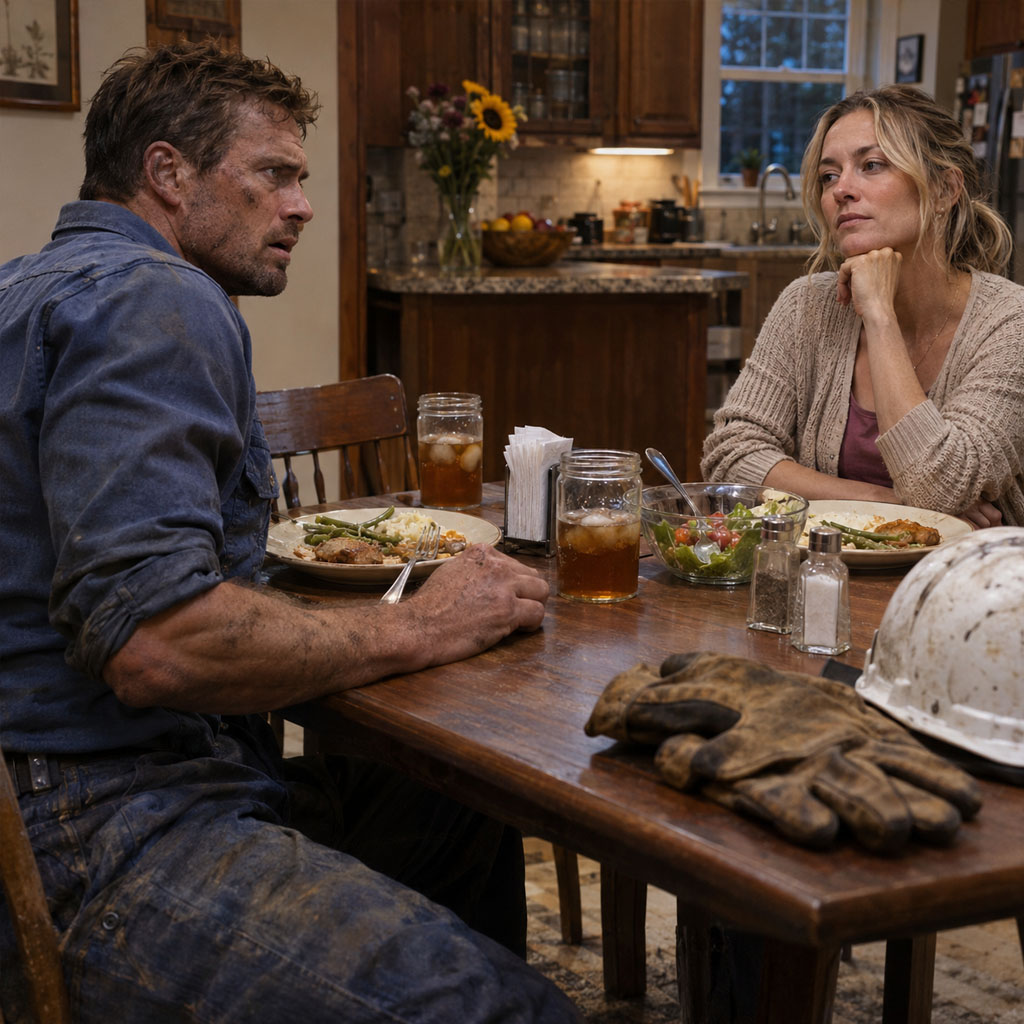
I showered, warmed up some leftovers, and sat at the kitchen table.
For the first time in a long while, I noticed how peaceful the room felt.
The same kitchen where she’d announced that she’d found her soulmate.
The same table where I’d sat listening to her explain how money meant nothing to the man she’d chosen over me.
I thought about her mother, about the years we’d shared, and about the life I had once imagined growing old in.
I couldn’t pretend none of it had mattered.
Fifteen years is a long time to love someone.
But it isn’t a reason to spend the rest of your life accepting treatment that slowly destroys your sense of worth.
Camille had gone searching for a man who promised her a life without material concerns, emotional complications, or ordinary responsibilities.
She found out that promises are easy when someone else is paying the bills.
Thatcher disappeared when the fantasy became inconvenient.
I lost my marriage, but I also recovered the parts of my life I’d neglected while trying to keep someone else happy.
And perhaps that was the most important lesson of all.
Being a good husband doesn’t mean agreeing to everything. Loving someone doesn’t mean sacrificing your dignity. And supporting the people you care about shouldn’t require you to become invisible.
Sometimes, the hardest thing a person can do is stop rescuing someone who has no intention of changing.
I turned off the kitchen light, checked the locks, and headed upstairs.
There was no one waiting to criticize me.
No argument waiting to happen.
No unexpected bill I needed to solve before breakfast.
Just a quiet house and a good night’s sleep.
For once, that was more than enough.
THE END.
⚠️ All characters and events are fictional. Do not imitate or apply them in real life. 😌😌😌