Chapter 2
For a moment, I thought I had misunderstood her.
My father’s older brother was Uncle Russell, a long-distance truck driver who lived in Indiana. I remembered him visiting at Christmas, bringing inexpensive presents and telling funny stories about the places he’d traveled.
He had always been friendly toward me.
But I had never imagined anything improper between him and my mother.
“What did you just say?” I asked.
Mom wiped her eyes with a tissue.
“I made a terrible mistake when your father and I were newly married. Russell and I became involved for a short time. Your father discovered it shortly after I learned I was pregnant.”
Dad stared at the desk.
“I knew there was a possibility you weren’t mine,” he said.
I felt the room tilt.
“What?”
“We didn’t know who your biological father was,” Mom explained. “The timing made it difficult to be certain.”
I looked from one face to the other.
“Then why didn’t you find out?”
Dad finally raised his eyes.
“Because I didn’t want to know.”
He explained that after discovering the affair, he had agreed to remain married on one condition: they would never investigate my paternity.
He had convinced himself that if nobody confirmed the truth, he could move forward.
Mom had accepted the arrangement because she desperately wanted to save her marriage.
But their marriage had never truly recovered.
For eighteen years, Dad had looked at me and wondered whether I was his brother’s daughter. Mom had lived with guilt and resentment, and neither of them had confronted what their uncertainty was doing to me.
“I tried to love you,” Dad said quietly. “But sometimes I’d look at you and remember what happened.”
My hands turned cold.
“So every time you looked at me, you saw Mom’s affair?”
He didn’t answer.
“Every birthday you forgot? Every school event you missed? Every time you told me I wasn’t good enough?”
Mom covered her face.
“We didn’t realize how much it affected you.”
I stared at her.
“How could you not realize?”
She began crying harder.
Dad shifted uncomfortably.
“Rebecca, you have to understand. Russell was always irresponsible. He never finished college and moved from job to job. When you struggled with school or weren’t interested in sports, I couldn’t help comparing you to him.”
I nearly laughed.
Not because it was funny.
Because the explanation was so absurd that my mind struggled to accept it.
“You thought I might be Uncle Russell’s child because I didn’t play basketball?”
Dad looked ashamed.
“I know how it sounds.”
“Do you? Because I don’t think you do.”
I remembered Adam’s trophies lined across the living room mantel. I remembered Dad telling friends his son had inherited his intelligence and competitive spirit.
I remembered being told that I was too sensitive, too quiet, too ordinary.
Now I understood.
My father had apparently interpreted every difference between Adam and me as evidence that I didn’t belong to him.
And my mother had allowed it.
I looked directly at her.
“You knew I was being treated differently.”
She nodded slowly.
“Yes.”
“And you never stopped him?”
“I was afraid,” she whispered. “Every time I tried to discuss it, we argued. I thought eventually things would improve.”
I felt tears rising, but I refused to look away.
“You were afraid of an argument, so you let your daughter grow up thinking she was unwanted?”
Mom sobbed.
Dad reached toward her, then stopped.
For years, I had imagined that discovering the reason for their behavior would somehow make my childhood easier to understand.
Instead, it made everything worse.
Then Dad cleared his throat.
“There’s another part of this,” he said.
I waited.
“Last month, we found out something about Russell.”
According to Dad, Uncle Russell’s wife, Carol, had mentioned during a family gathering that Russell had been diagnosed with a condition affecting his fertility when he was a young man. They had never had children, and Carol had assumed the family already knew why.
The disclosure made my father question the story he had believed for decades.
He contacted Russell, who confirmed that doctors had told him he was very unlikely to father a child.
Then Dad arranged for genetic testing.
He explained that he had submitted a sample and that, after contacting me indirectly through Melissa, he hoped I would eventually agree to provide one.
I stared at him.
“You haven’t actually confirmed I’m your daughter?”
His expression faltered.
“Not yet. But the medical information makes it very likely.”
I sat back in my chair.
An infertility diagnosis didn’t establish paternity, and neither did resemblance, grades, or athletic ability. After eighteen years of neglect based on an assumption, I wasn’t about to accept another assumption as fact.
“If you want the truth,” I said, “we need an actual paternity test.”
My parents agreed immediately.
For the first time in my life, they seemed eager to establish that I belonged to them.
That hurt more than I expected.
Because I had belonged to their family all along, regardless of whose DNA I carried.
The call ended after nearly an hour.
I closed the laptop and sat motionless.
Jonathan came into the room and knelt beside my chair.
“How are you doing?”
I looked at him.
“They thought I was someone else’s child.”
His expression softened.
“And they treated me like I was a mistake.”
Jonathan wrapped his arms around me.
I cried harder than I had in years.
Not because I missed my parents.
Because the little girl who had spent her childhood searching for something wrong with herself had finally discovered that the problem had never been hers.
A week later, after arrangements were made through an accredited testing service, I provided a cheek-swab sample.
My father submitted his sample separately.
The results arrived several days afterward.
I opened the report while sitting at our kitchen table with Jonathan.
The conclusion was unmistakable.
Richard Whitmore was my biological father, with a reported probability of paternity greater than 99.9 percent.
I read the statement three times.
Then I laughed.
It wasn’t a happy laugh.
It was the sound of twenty-five years of confusion collapsing into one cruelly simple answer.
My father had spent my entire childhood resenting me because he feared I wasn’t his daughter.
And I had been his daughter all along.
I called Melissa and told her.
She was silent for several seconds.
Then she said, “Rebecca, even if the result had been different, you never deserved how they treated you.”
I knew she was right.
But holding that report made me realize something even more painful.
My parents hadn’t neglected me because they lacked the truth.
They had neglected me because they had chosen not to face it.
Chapter 3
When my parents received their copies of the test results, they called Melissa almost immediately.
They wanted another conversation.
This time, they promised there would be no secrets.
I hesitated for several days before agreeing.
Part of me wanted to hear my father acknowledge what he had done. Another part feared that hearing his apology would awaken the same desperate hope I had carried as a child.
Jonathan noticed my anxiety.
“You don’t have to forgive them just because they’re sorry,” he reminded me.
“I know.”
“And you don’t have to make a permanent decision right now.”
I appreciated that he didn’t tell me what to do.
The second video call began with my father holding the genetic report.
“Rebecca,” he said, “you’re my daughter. There’s no doubt anymore.”
I watched his face.
“Yes,” I answered. “That’s what the test says.”
His eyes filled with tears.
“I made a terrible mistake.”
Mom sat beside him, clutching a tissue.
“We both did,” she whispered.
Dad told me he had spent the past month remembering things he wished he could change. He mentioned missed birthdays, forgotten school concerts, and the day he had refused to attend a father-daughter event because Adam had a baseball practice.
I remembered that evening.
I had been eleven, wearing a pale-blue dress Mom bought on clearance. I sat on my bed waiting for Dad to get home.
When he finally arrived, he told me he was too tired.
I went to the dance with my friend’s father, who kindly made sure I wasn’t left standing alone.
For years, I had tried to forget that embarrassment.
Now Dad was apologizing for it.
“I was angry with your mother,” he said. “And I let that anger affect how I treated you.”
“You didn’t just let it affect things,” I replied. “You made me carry it.”
He nodded.
“You’re right.”
For a moment, I thought he might truly understand.
Then Mom leaned forward.
“We want to make things right, sweetheart. We want you to come home for a visit. We want to meet Jonathan properly and finally get to know our granddaughter.”
I felt my shoulders tense.
Lily.
Of course they wanted to meet Lily.
My parents had never met her in person. They knew she existed because Melissa had told them after she was born, but I had never sent photographs or invitations.
Mom began talking about holidays.
“We could have Christmas together,” she said eagerly. “Adam would love to meet his niece. Your father has already been looking at toys for her.”
Dad nodded.
“We’ve missed so much, Rebecca. We don’t want to lose any more time.”
I looked at them for a long moment.
“You missed those years because of the decisions you made,” I said. “And now you’re asking me to act as though none of it happened.”
Mom shook her head.
“Of course not. We understand you’re hurt.”
“Do you?”
“We’re apologizing,” she replied.
“I hear that. But what are you apologizing for?”
Her expression became confused.
“For everything.”
“That’s not an answer.”
Dad leaned forward.
“Rebecca, we’re trying.”
I took a breath.
“When I was eight, I made you a Father’s Day card. I spent hours drawing our family standing beside a lake. You looked at it, thanked me, and left it on the kitchen counter.”
Dad stared at me.
“The next morning, I found it in the recycling bin.”
His face changed.
“I don’t remember that.”
“I do.”
Mom covered her mouth.
“When I was fourteen,” I continued, “I won a regional writing award. The ceremony was an hour away, and you told me it wasn’t worth the drive because Adam had a game.”
Tears ran down her cheeks.
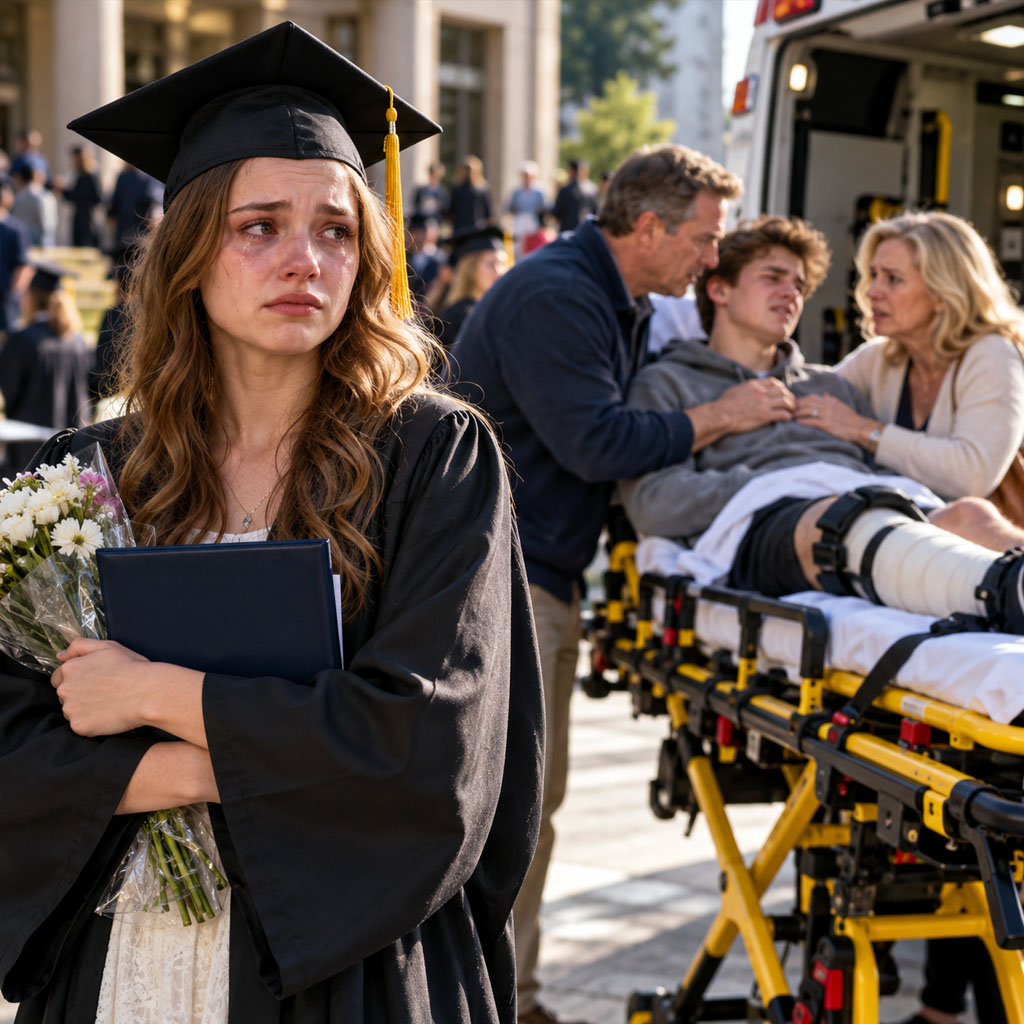
“And when I graduated from high school, neither of you showed up. I stood outside watching everyone else take pictures with their parents.”
Dad lowered his head.
“That was unforgivable.”
“Then why did you spend the next several weeks telling me I was selfish for being upset?”
Neither answered.
I looked at the two people whose approval I had sought for eighteen years.
“I don’t need you to tell me you love me now because a test proved I’m Dad’s biological daughter. I needed you to love me when I was five. When I was ten. When I was eighteen.”
My voice shook.
“And if that test had shown Uncle Russell was my father, would I still deserve an apology?”
Dad looked startled.
“Of course.”
“Then why did you need the test before you could recognize what you’d done?”
He opened his mouth, then closed it.
That silence told me more than his promises.
My parents were ashamed, but I wasn’t convinced they fully understood the harm they had caused.
Mom began pleading.
“Rebecca, please don’t shut us out again. We’re getting older. We don’t know how many years we have left.”
I felt the familiar pull of guilt.
For a moment, I was twelve again, standing in the kitchen with a forgotten birthday cupcake, trying to convince myself I should be grateful for what I received.
Then I heard Lily laughing in the next room.
She was playing with Rachel and had apparently decided her stuffed rabbit needed a bath in an empty mixing bowl.
The sound brought me back to the present.
“I understand you want another chance,” I told my parents. “But I can’t promise that. And I’m not ready to introduce you to my daughter.”
Mom’s expression hardened.
“Rebecca, she’s our granddaughter.”
“She’s my child.”
“We have a right to know her,” Dad insisted.
“No,” I said quietly. “You have an opportunity to build trust if I decide that’s appropriate. That’s different from a right.”
Mom began crying again.
“I can’t believe you’re punishing us like this.”
There it was.
The accusation I had heard my entire childhood.
I was selfish whenever I needed something. Ungrateful whenever I was disappointed. Cruel whenever I refused to make their lives easier.
I looked at my mother.
“I’m not punishing you. I’m protecting my peace and my daughter’s well-being.”
Dad’s voice sharpened.
“So that’s it? We make mistakes, and you never let us forget them?”
I felt something inside me settle.
Eighteen years.
He still called them mistakes.
A mistake was forgetting to buy milk or arriving late to dinner.
What they had done was a pattern of choices repeated throughout my childhood.
“I gave you the opportunity to explain,” I said. “I listened. But I need you to understand that an explanation doesn’t erase what happened.”
Mom shook her head.
“You’re being cruel.”
I closed my eyes briefly.
Then I answered.
“I’m sorry you feel that way. But I’m ending this conversation.”
I disconnected the call.
For several minutes, I sat staring at the blank computer screen.
Jonathan entered quietly.
“Are you okay?”
I shook my head.
“No. But I think I will be.”
He sat beside me and held my hand.
That evening, after Lily was asleep, I told him something I had never said aloud.
“I always believed that if my parents finally explained why they didn’t love me, the answer would make everything better.”
Jonathan listened.
“But now I know why,” I continued. “And it doesn’t make any of it easier.”
He reached for my hand.
“Maybe the explanation was never going to heal you,” he said. “Maybe it only confirms that you weren’t the problem.”
I thought about that for a long time.
He was right.
For eighteen years, I had tried to become the daughter my parents wanted.
But they had never truly been judging me.
They had been judging a secret they were too frightened to confront.
Chapter 4
The morning after our second call, messages began arriving from relatives I hadn’t heard from in years.
Some were kind.
My Aunt Carol, Russell’s wife, sent a thoughtful note saying she was sorry my childhood had been so painful. She explained that Russell’s medical condition had never been a family secret deliberately kept from anyone, but neither she nor Russell had realized how much uncertainty surrounded my birth.
Other messages were less understanding.
One aunt told me I should forgive my parents because they had suffered enough. A cousin suggested I was making the situation unnecessarily difficult.
My grandmother on my mother’s side called and said, “Rebecca, parents aren’t perfect. Someday you’ll understand when your own child is grown.”
I looked across the room at Lily, who was building a tower out of colorful wooden blocks.
“I already understand something, Grandma,” I replied. “Children shouldn’t have to prove they deserve kindness.”
She became quiet.
I gently explained that I wouldn’t discuss the matter further, then ended the call.
Over the following weeks, I blocked several numbers and filtered messages that only repeated demands for reconciliation. I didn’t make public accusations or post private family details online.
I simply wanted to live my life.
But the revelations had stirred up memories I thought I had buried.
I remembered standing outside Adam’s bedroom, listening to Dad congratulate him for earning a place on the junior varsity basketball team.
I remembered Mom staying awake all night sewing a costume for Adam’s school play while telling me she didn’t have time to help with mine.
I remembered Christmas mornings when he received expensive gifts and I received practical items chosen without much thought.
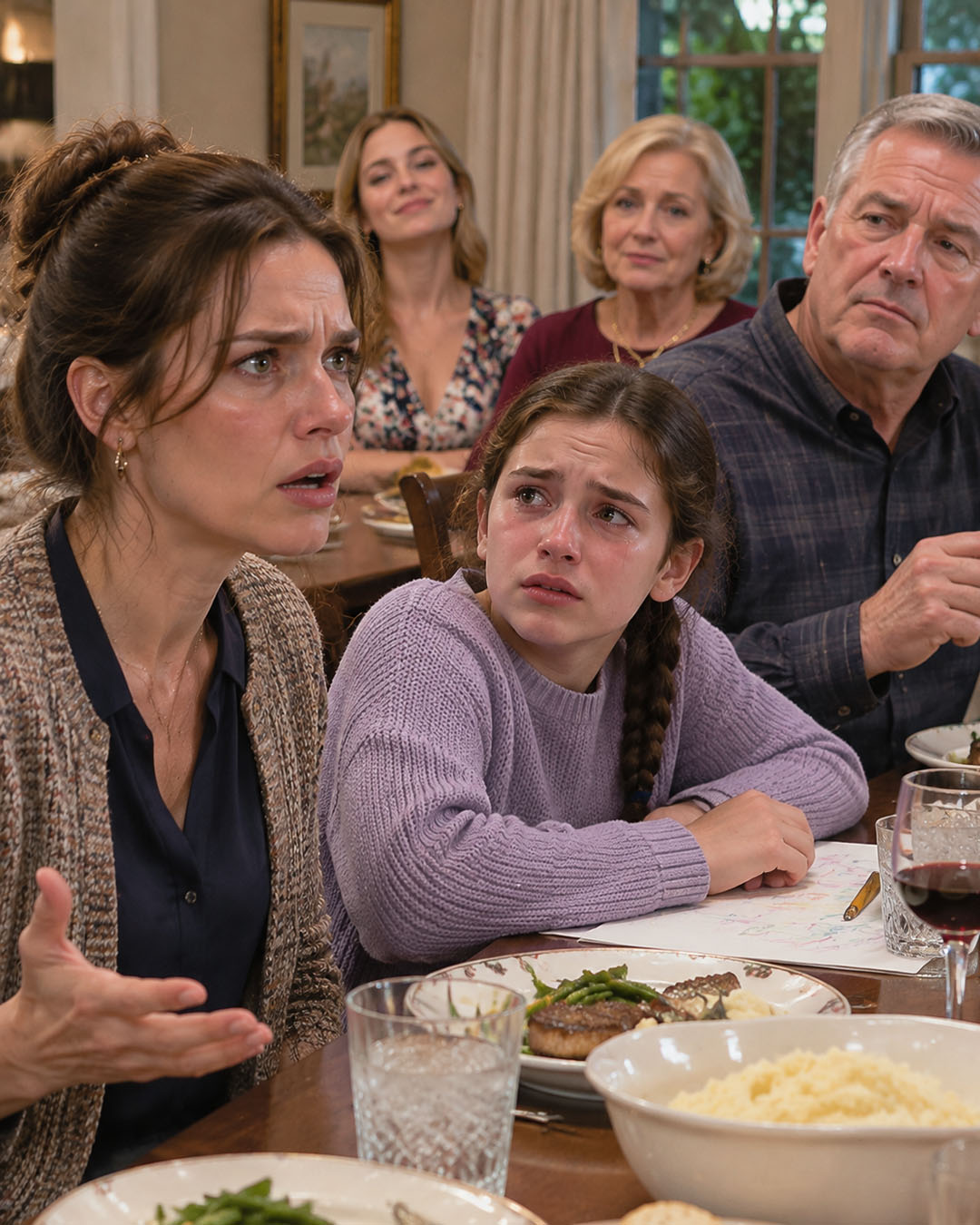
Most of all, I remembered the feeling of being invisible at the dinner table.
There were nights when I spoke only a handful of words because nobody asked about my day.
I had once believed those memories proved I was unworthy of attention.
Now I understood they reflected my parents’ failures, not mine.
Still, understanding didn’t immediately remove the pain.
I found a counselor who specialized in family relationships and childhood emotional neglect. During our first appointment, I told her that I felt foolish for still being affected by events that had happened years earlier.
She listened carefully.
“Rebecca, you spent your childhood learning that love depended on whether other people approved of you,” she said. “Those beliefs don’t disappear simply because you’ve learned they were unfair.”
We spent months examining the patterns I carried into adulthood.
I apologized too quickly. I became anxious when Jonathan seemed distracted. I sometimes worried that a disagreement meant he would stop loving me.
He had never given me a reason to fear that.
But old wounds could make ordinary moments feel threatening.
One evening, Jonathan came home exhausted after a difficult day at school. He was unusually quiet during dinner, and I immediately worried I had done something wrong.
“Are you upset with me?” I asked.
He looked surprised.
“No, sweetheart. I’m just tired.”
I realized how often I asked that question.
Jonathan reached across the table.
“You don’t have to earn a good evening with me,” he said. “Sometimes I’m just tired. That’s all.”
I began crying before I could stop myself.
He moved his chair beside mine and held me until I felt calmer.
Gradually, I learned to recognize the difference between a memory and the present moment.
My marriage wasn’t my parents’ marriage.
Jonathan wasn’t my father.
And Lily would never be responsible for repairing the mistakes adults had made before she was born.
That last lesson became especially important.
One afternoon, Lily knocked over a glass of juice while helping me set the table. The juice spilled across the kitchen floor, soaking her socks.
She froze.
Her eyes widened, and she looked at me as though something terrible might happen.
For one brief second, I remembered being six years old and spilling milk at breakfast.
Dad had sighed angrily and told me I couldn’t do anything right.
I remembered spending the rest of that morning afraid to speak.
Then I looked at Lily.
“It’s okay, sweetheart,” I said. “Accidents happen.”
I grabbed a towel and handed her another.
“Want to help Mommy clean it up?”
She nodded seriously.
Together, we wiped the floor.
When we finished, she hugged my leg and said, “Love you, Mommy.”
I knelt and wrapped my arms around her.
“I love you too, baby.”
In that moment, I understood something that changed how I viewed my own childhood.
I didn’t have to become a perfect mother.
I simply had to be a mother who cared enough to listen, apologize when necessary, and make sure my child knew she was loved.
Love didn’t require perfection.
It required showing up.
Months passed, and my parents continued sending occasional messages through Melissa.
To her credit, she never pressured me.
One afternoon, she called to say Dad had asked whether she could send him a photograph of Lily.
“I told him that wasn’t my decision,” Melissa said. “I wanted you to know.”
“Thank you.”
She hesitated.
“He sounded genuinely sad.”
I looked down at the family photo sitting on my desk.
Jonathan was holding Lily on his shoulders, and I was laughing beside them.
“I believe he’s sad,” I said. “But sadness doesn’t automatically mean someone is ready to change.”
Melissa sighed.
“I know.”
I asked her to stop passing along messages unless there was a genuine emergency.
She agreed.
For the first time, I stopped waiting for news about my parents.
I returned my attention to the people who were actually part of my daily life.
Our daughter began preschool.
Jonathan received recognition for his work with struggling students.
I completed additional training at my job and received a promotion.
We planted flowers in the backyard and bought an old wooden swing for the porch.
Little by little, our house became the home I had dreamed of when I was a lonely teenager.
Then one evening, Adam contacted me.
Unlike our parents, he hadn’t been involved in the secret. He was only fifteen when I left Ohio, and although we hadn’t remained close, I had never considered him responsible for the way we were raised.
He sent me a simple message.
“Rebecca, I heard what happened. I’m sorry. I didn’t know any of it.”
I stared at the screen.
Then I replied.
“You were a child too, Adam. I don’t blame you.”
We began exchanging occasional messages.
He was twenty-two now, finishing college and working part-time. He admitted that he had always known our parents treated us differently, but he hadn’t understood why.
“I thought you just didn’t like being around us,” he confessed during a phone call.
I felt a familiar sadness.
“I wanted to be around you,” I said. “I just couldn’t keep living that way.”
He was quiet.
“I wish I’d understood sooner.”
“So do I.”
We didn’t suddenly become close siblings.
Seven years of separation couldn’t disappear in one conversation.
But we began speaking honestly, and that was something we had never really done before.
Adam asked whether he might eventually meet Lily.
I told him we could discuss it once we had spent more time rebuilding our relationship.
He accepted that without argument.
His response surprised me.
For years, I had feared that setting boundaries meant losing everyone connected to my childhood.
Now I was discovering that healthy relationships could respect limits without treating them as rejection.
As Thanksgiving approached, Melissa invited us to spend the holiday at her house.
Rachel prepared the turkey, Jonathan made his famous sweet potato casserole, and I brought two pies.
Adam sent a friendly holiday message.
My parents sent a card.
I didn’t open it until the following day.
Inside was a short handwritten note from Mom.
“We are sorry for the years we cannot give back. We hope someday you’ll believe that.”
I read it twice.
For the first time, there were no demands, no accusations, and no requests to see Lily.
Just an acknowledgment.
I placed the card in a drawer beside the others.
I didn’t respond.
Maybe my parents were finally beginning to understand.
Maybe they weren’t.
Either way, I no longer felt responsible for guiding them toward that understanding.
Chapter 5
A year after the first phone call from Melissa, our family spent a beautiful Saturday afternoon at a park near our home.
The weather was warm but pleasant, and the mountains looked blue in the distance. Jonathan was pushing Lily on a swing while I sat beneath a tree with a paperback novel.
Lily kept shouting, “Higher, Daddy!”
Jonathan pretended to consider her request very seriously.
“Are you sure, Miss Lily? This swing is already traveling at an impressive speed.”
She giggled.
“More!”
I smiled as I watched them.
For years, I had believed happiness would come only after I finally understood why my parents had treated me so differently.
I imagined that someday they would offer the perfect explanation, and every painful memory would suddenly make sense.
Instead, the truth had been messier.
My mother had betrayed my father’s trust. My father had chosen uncertainty rather than confronting the possibility of another man’s child. Together, they had allowed suspicion and resentment to shape the way they raised me.
They had turned an adult betrayal into a child’s burden.
And when a genetic test finally confirmed that my father was indeed my biological parent, they wanted to begin again.
But parenthood didn’t begin with a laboratory report.
It began when a child was born and needed someone to love her.
My father had been given that opportunity twenty-five years earlier.
So had my mother.
They had lost eighteen years of chances to show me tenderness, encouragement, and respect.
I couldn’t return those years to them.
More importantly, I couldn’t give those years back to the little girl I had been.
But I could decide what happened next.
I could build relationships based on trust instead of fear. I could raise my daughter without making her responsible for my emotions. I could love my husband without constantly questioning whether I deserved his affection.
And I could allow myself to be happy without first receiving permission from people who had spent my childhood withholding it.
Lily came running toward me, her curls bouncing around her face.
“Mommy, look!”
She held out a tiny yellow flower.
I accepted it as though she had brought me the most precious gift in the world.
“It’s beautiful,” I said.
She beamed.
“For you!”
I kissed her forehead.
“Thank you, sweetheart.”
She climbed onto my lap and leaned against my chest.
For a moment, I held her close and listened to the ordinary sounds of the park.
Children laughing.
A dog barking somewhere nearby.
Jonathan calling that he had brought snacks.
It was such a simple afternoon.
Yet I knew I would remember it long after the details of my parents’ confession had begun to fade.
I looked down at my daughter.
She would make mistakes.
She would disappoint me sometimes, just as every child eventually disappoints a parent in small, ordinary ways.
She might choose a career I didn’t understand or fall in love with someone whose interests were different from mine.
She might never be an outstanding athlete or a straight-A student.
None of that would change what she meant to me.
I would love her because she was Lily.
Not because she looked like Jonathan.
Not because she inherited my abilities.
Not because she accomplished enough to deserve affection.
Simply because she was my daughter.
That was what my parents had never understood.
A child’s worth is not determined by the circumstances of her birth, her achievements, or the mistakes adults make around her.
I had spent eighteen years feeling unwanted because two people confused their own unresolved pain with my identity.
For seven more years, I had carried the belief that something about me was fundamentally wrong.
But the truth was simple.
I had never been the problem.
My parents’ discovery had not magically repaired our relationship, and it hadn’t erased the sadness of my childhood. I still had difficult days, and I still sometimes wondered what life might have been like if things had been different.
But those questions no longer controlled me.
As Jonathan sat beside us on the grass, Lily reached for his hand and then mine.
“Family hug!” she announced.
He laughed and wrapped his arms around both of us.
I closed my eyes.
For a moment, I thought about the young girl who had stood outside her high school graduation, searching desperately for familiar faces in a crowd.
If I could have spoken to her then, I would have told her that her parents’ absence wasn’t proof that she was unworthy of love.
I would have told her that someday she would walk into a home where someone was genuinely glad to see her.
Someone would remember her birthday.
Someone would ask about her day and listen to the answer.
And a little girl with curly hair would run into her arms, trusting completely that she would always be welcomed there.
Most of all, I would have told her that she didn’t need to spend the rest of her life earning a place in a family that had failed to appreciate her.
She would build a beautiful family of her own.
I opened my eyes and looked at Jonathan.
“What are you thinking about?” he asked.
I smiled.
“How lucky I am.”
He kissed my forehead.
“We’re lucky too.”
Lily giggled and demanded another hug.
I held them both a little tighter.
My parents had spent eighteen years wondering whether I truly belonged to them.
A simple test finally gave them the answer they wanted.
But the greatest discovery of my life had nothing to do with DNA.
It was learning that love should never require a child to prove she deserves it.
I was Richard Whitmore’s biological daughter.
I had always been.
Yet being his daughter had never guaranteed that he would act like a loving father.
And now, after everything, I no longer needed his approval to know who I was.
I was Rebecca.
I was a wife, a mother, a friend, and a woman who had survived a lonely childhood without allowing it to define the rest of her life.
I had found love.
I had found peace.
And I had finally found my way home.
THE END.
⚠️ All characters and events are fictional. Do not imitate or apply them in real life. 😌😌😌