
Chapter 2
Helen was my mother’s older sister, recently retired after decades as a regional bank manager. She was practical, private, and almost impossible to pressure—which had never stopped my family from trying.
She also adored Ruby.
During Mom’s knee surgery recovery, Ruby and I had visited several times a week. I brought groceries after work, changed sheets, made dinner, and cleaned the kitchen while Ruby sat beside Grandma watching their favorite quiz show.
One afternoon, Ruby had helped Mom search for her glasses.
“You put them under the couch cushion,” Ruby told her.
Mom frowned. “Why would I do that?”
“You said you were keeping them somewhere safe.”
Mom found them beneath the cushion and whispered, “Don’t tell your grandfather.”
Ruby laughed so hard she nearly dropped her homework.
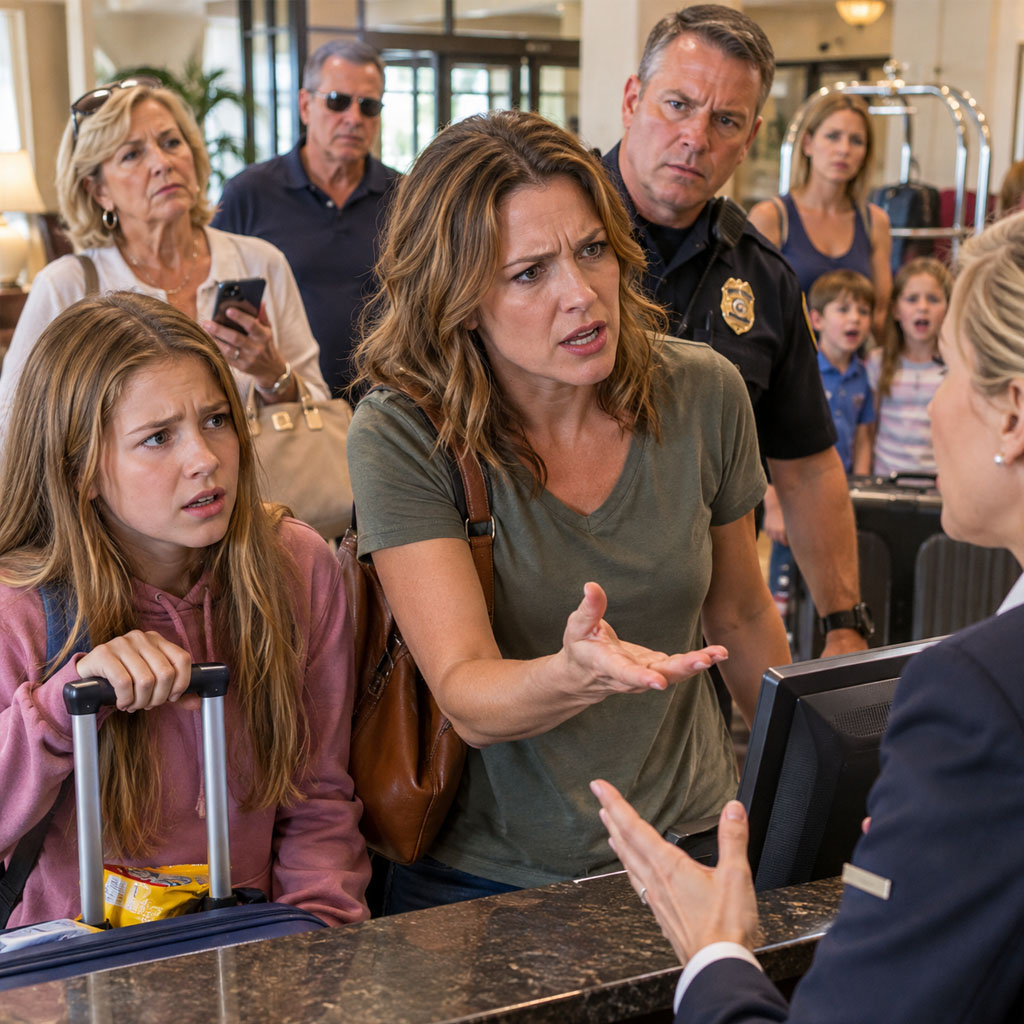
Those were the memories running through my head as I stood in that hotel lobby.
My mother hadn’t failed to recognize Ruby.
She had chosen not to.
There had always been clues about how my family ranked people according to usefulness.
My sister Erin needed help with an electric bill? Mom called me.
Erin’s kids needed new shoes? Dad reminded me that I had a better job.
“You’re the one we can rely on,” he would say.
It sounded like a compliment until I realized it usually came with a dollar amount.
My husband, Patrick, and I were comfortable, but we had worked for that stability. We had a mortgage, retirement plans, a daughter, and ordinary expenses. Still, my family treated our financial security like a community account.
A year earlier, I had begun saying no.
Not dramatically.
Just no.
That was apparently enough to make me selfish.
Helen had noticed the same pattern.
Once, while Ruby was teaching her how to take bird pictures with her phone, Dad walked into the room and announced, “Helen, you need to pick up Erin’s kids from their friend’s house.”
Helen lowered her phone.
“You could have asked.”
“You’re retired,” Mom replied.
As if retirement meant the rest of us had inherited her calendar.
Helen still went because the children were already waiting, but afterward she told Ruby they would finish photographing the bird another day.
And they did.
That was the difference with Helen. If she told Ruby she would call, she called. If she said they would go somewhere, they went. She listened when Ruby spoke instead of waiting for an opportunity to give her a task.
A few weeks before the hotel trip, the entire family had been having dinner when Helen mentioned wanting a quiet seaside vacation.
Mom immediately decided she had always wanted the same thing.
Then the real subject surfaced.
Four years earlier, Helen had loaned my parents and Erin $100,000 to help purchase and renovate Erin’s beauty salon.
They had repaid $20,000.
The remaining $80,000 was due three months after our vacation.
Helen had already offered generous terms.
“I’ll give you more time,” she said. “And I’ll reduce part of the balance. We can go over the numbers during the trip.”
Erin put down her fork.
“Wouldn’t it just be easier to forgive the whole thing?”
Helen stared at her.
“All $80,000?”
“Well, yeah. I mean, you don’t need it.”
Helen’s expression hardened slightly.
“I have plans for my money too.”
Dad leaned forward. “It would take an enormous burden off everybody.”
Everybody, apparently, meant everyone except Helen.
Ruby interrupted from the end of the table.
“Aunt Helen, are we still going to take pictures?”
Helen turned toward her.
“Absolutely.”
Then she faced the adults again.
“I offered more time and a reduction. That is my offer.”
They already had a yes.
They simply wanted a more expensive yes.
After Mom recovered, she suggested the four-night hotel vacation. She promised Ruby swimming, breakfast downstairs, and evenings watching their quiz show together.
“A thank-you trip,” she called it.
When Mom offered to handle reservations, I agreed to pay for two rooms—mine and my parents’.
Then she asked me to pay for a third room so Erin and her kids could come.
“No.”
“Julia, you can afford it.”
“I’m paying for two rooms.”
“It would be nice for Erin to spend time with Helen.”
I knew exactly what kind of time they wanted.
It had an $80,000 price tag.
Eventually Mom said she would “work everything out.”
Apparently, working everything out meant giving my room to Erin and assuming I would quietly pay for another one.
Back in the lobby, Helen walked toward us.
“What’s happening?”
Mom rushed forward.
“Helen, come over here. There’s been a misunderstanding.”
“That isn’t what I heard.”
Mom froze.
Helen turned to the security officer.
“Julia is my niece. Ruby is her daughter. And this woman”—she pointed toward Mom—“is my sister.”
Just like that, we existed again.
Mom’s voice dropped. “You don’t understand the whole situation.”
“I heard enough.”
Helen looked at Ruby, then at our luggage.
“Where are you staying?”
I hated how small my answer sounded.
“I don’t know yet.”
Helen had her own room, but I wasn’t putting Ruby into another temporary arrangement. I called nearby hotels until I found a small inn with a room available for all four nights.
When we arrived, Ruby stood beside the car while I opened the trunk.
“Should we leave our bags in here?”
“Why?”
“In case Grandma finds our room.”
I swallowed.
“We’re staying here, sweetheart. We have our own room.”
Inside, I paid again.
Apparently, that had been my family’s entire backup plan.
Julia can afford it.
Ruby unpacked slowly, lining her shoes beneath a chair. I called Patrick and explained everything. I kept my voice steady until he asked, “How’s Ruby?”
I looked at her.
“Quiet.”
After the call, I sent my parents a simple message requesting repayment of the $1,200 they had used for Erin’s room.
No accusations.
No speech.
Just the amount.
They didn’t respond.
That evening, Ruby held up the dress she had planned to wear to dinner.
“Does Grandma still want to watch our show?”
I sat beside her on the bed.
“We’re not going back tonight.”
Ruby folded the dress carefully.
I wanted to storm back to that hotel and say everything I had swallowed for twenty years.
Instead, I sat beside my daughter while she tried to understand how someone could love her on Sunday and deny knowing her on Friday.
Chapter 3
Helen met us the next morning for a walk near the inn.
Ruby had already found a photograph to show her.
“It’s a bird,” she explained.
Helen squinted at the screen. “Where?”
“By the branch.”
“That tiny blur?”
“It moved.”
“That is exactly what a blurry bird would claim.”
Ruby smiled.
It was the first real smile I had seen since the lobby.
Then my father’s SUV pulled into the parking area.
He stepped out as if we were late for something.
“Come on. Everyone’s having breakfast at the hotel.”
Nobody moved.
He looked at Helen.
“We can go over the loan figures afterward. Erin is waiting. Julia can take the kids swimming.”
A complete morning had been assigned to us without a single person being asked.
Helen slipped her phone into her purse.
“I’m walking with Julia and Ruby.”
“The arrangements are already made.”
Ruby started closing her bird photo.
I touched her hand.
“Leave it open. You were showing Aunt Helen.”
Dad glared at me.
“Why do you always make everything difficult?”
“I’m not taking Ruby back to that hotel so everyone can pretend yesterday didn’t happen.”
“Nobody said that.”
“You just assigned me to watch Erin’s children. You haven’t even asked how mine is doing.”
His eyes flicked toward Ruby.
She looked at the ground.
“We’re trying to have a family vacation,” he said.
Helen shook her head.
“Thank you for coming, but we won’t need a ride.”
Dad’s jaw tightened.
“You promised us more time on that loan.”
“I remember exactly what I promised.”
He waited as though she owed him another sentence.
When none came, he got back into his SUV and drove away.
We went walking.
Ruby pointed out where she had seen the bird the day before. Helen studied trees as seriously as if they were conducting scientific research. For almost an hour, the morning belonged to something harmless.
Later, while Ruby talked with Patrick on the phone, Helen stood beside me outside the room.
“I was awake half the night thinking about what your mother said.”
I said nothing.
“I meant my offer about the loan. More time. A reduction. I would have done it.”
“I know.”
Helen looked through the doorway at Ruby.
“Your mother let that child sit beside her for weeks while she recovered. Then she looked at a security officer and said she’d never met her because acknowledging her would mean admitting what they did with your room.”
My throat tightened.
“They’ll say I caused a scene.”
“I was there.”
Those four words almost broke me.
I was there.
Someone had witnessed it.
Someone wasn’t asking me to soften the truth until my parents could live comfortably with what they had done.
Helen took out her phone.
“I’ve made a decision.”
She opened an email addressed to my parents and Erin.
Her previous offer was withdrawn.
No extension.
No reduction.
The $80,000 would be due according to the existing loan agreement.
She showed me the message.
“Is this too harsh?”
I shook my head.
“It’s your money. Your decision.”
She sent it.
Two hours later, Mom called.
“You need to talk to Helen.”
Not How is Ruby?
Not Are you all right?
Not I’m sorry.
Straight to my assignment.
“I already spoke with her.”
“Then you know what she’s done.”
Dad’s voice came from the background. “She gave us her word.”
“She offered you new terms. Nothing had been signed.”
Mom ignored that.
“You’ve made her choose sides.”
“She heard you herself.”
“You have another hotel room now. You’re perfectly comfortable.”
A bed somewhere else did not erase what she had said to my child.
“You denied knowing Ruby.”
“We are not talking about that.”
Of course not.
That part had only hurt my daughter.
Erin came onto the phone.
“What are we supposed to do? I can’t come up with $80,000.”
“You’ll have to work that out with Helen.”
“That’s all you have to say?”
I almost laughed.
For years, I had been expected to fix problems I had not created.
Now, because I refused, I was cruel.
I ended the call.
The next morning, Helen canceled our planned outing by text.
My parents and Erin had found her at breakfast.
When she tried to leave, they followed her.
When she returned to her room, they waited nearby.
Every time she came out, someone approached her about the loan.
She had repeatedly asked them to stop.
I called immediately.
“Do you want to leave the hotel?”
“No. I paid for this room. I want to stay where I booked. I just want to open my door without having another financial meeting.”
“I’m coming over.”
Ruby watched me grab my purse.
“Are we going back there?”
“We’re going to help Aunt Helen. We’re not joining their vacation.”
“Do we have to stay?”
I crouched beside her.
“No. We leave together whenever we want. You and me.”
At the hotel, I found my parents and Erin surrounding Helen at a terrace table.
Mom was leaning forward.
“We’ll leave when this is settled.”
Helen looked exhausted.
“I’ve already told you my decision.”
Dad folded his arms.
“You only need to keep your promise.”
Ruby moved closer to me at the sound of his voice.
I bought her a lemonade from the café and seated her at a table where I could see her clearly.
“I’m right over there.”
She nodded, holding the glass with both hands.
I walked onto the terrace.
“Helen, do you want this conversation?”
“No.”
Mom turned sharply.
“This is between sisters.”
“She has asked you to leave her alone.”
“You don’t understand what we’ve been discussing.”
“I understand the word no.”
Erin pushed back her chair.
“We can’t just ignore what happens to my business.”
My hands were shaking.
The day before, my father had pointed toward an exit and demanded that his granddaughter leave.
Now nobody was apparently allowed to walk away until the three of them got what they wanted.
I looked at Helen.
“Do you want them to stop approaching you?”
“Yes.”
I went directly to the front desk and asked for the hotel manager.
Chapter 4
The manager came onto the terrace with another staff member.
He approached Helen calmly.
“Ma’am, would you like the other guests to remain at your table?”
Mom immediately answered.
“What she means is—”
The manager held up one hand.
“I’m asking her.”
For some reason, that almost made me laugh.
Even a question about Helen’s wishes had apparently required my mother’s interpretation.
The manager repeated himself.
Helen sat straighter.
“No. I would like them to leave me alone.”
He nodded.
Then he faced my parents and Erin.
“You need to leave this table, and you need to stop approaching this guest after she has asked you not to.”
Dad looked offended.
“I paid to stay in this hotel.”
That caught my attention.
He had paid?
I had paid for his room.
Apparently, money changed ownership the moment it entered the family.
“You may use your room and hotel facilities,” the manager said. “But you cannot continue unwanted contact with another guest.”
“She’s my sister,” Mom protested.
Helen’s voice was quiet.
“And I have told you no.”
Dad looked at the second staff member, then at the manager.
Finally, he stood.
Mom and Erin followed.
For once, my parents were the people being told where they could not stay.
Mom waited until we were away from the table before turning on me.
“Are you pleased with yourself? You humiliated us in front of hotel employees.”
“Helen asked you to stop before I spoke to anyone.”
“She is my sister. Families handle their own problems.”
I looked across the lobby at Ruby.
The day before, she had called this woman Grandma and received nothing in return.
Now family was sacred again because my mother needed leverage.
“She gets to say no,” I said. “So do I.”
Mom’s face changed.
“You’re my daughter.”
That hurt more than I wanted it to.
She could say it so easily now.
Yesterday, when acknowledging me would have cost her a hotel room, I was a stranger.
Today, when she needed compliance, I was her daughter.
“I’m not teaching Ruby that being family means tolerating anything relatives choose to do.”
Erin started crying.
“You know what this means for my salon?”
Helen answered before I could.
“My decision has not changed.”
She told the manager that she wanted no more approaches from them. He assured her staff would be aware.
Then I took Ruby’s hand.
Helen came with us.
“I’ll spend the afternoon at your inn,” she said.
The three of us left together.
Over the next three months, the crisis my family had insisted I should solve became theirs to handle.
My parents and Erin tried refinancing the salon loan. The terms available to them were more expensive than they could manage.
Eventually, Erin sold the business.
After other obligations and transaction costs were paid, $55,000 remained.
My parents contributed another $25,000 from their savings.
Helen received her full $80,000.
Erin no longer owned the salon.
My parents no longer had the savings they had expected Helen to protect by forgiving their debt.
They understood those losses perfectly.
What they still did not seem to understand was Ruby.
By then, I had sent a final written demand for the separate $1,200 they owed me for the hotel room I never received.
Paying Helen did not settle their debt to me.
Eventually, we had a video call.
Mom and Dad sat together on their couch. Erin joined from her apartment.
She spoke first.
“You know I lost my business, right?”
“I know.”
“I built that place.”
“You also borrowed money for it.”
Dad leaned toward the camera.
“We had to use $25,000 of our savings.”
“That was money you owed Helen.”
“She was going to give us more time.”
Mom stared into the camera.
“Are you satisfied now, Julia?”
That was when I realized they could account for every dollar.
The salon.
The loan.
Their savings.
My $1,200.
Nobody had asked about the cost that mattered most to me.
Not once had anyone said Ruby’s name.
I put my phone on the table so they wouldn’t see my hand trembling.
“This call is about the money I sent for our room. $1,200.”
Mom frowned.
“We just paid $80,000.”
“To Helen. You still owe me.”
Dad picked up his phone and began tapping.
A few seconds later he said, “There.”
I checked my bank account.
The transfer had arrived.
“I received it.”
Mom’s shoulders relaxed.
“Good. Now we can put this whole thing behind us. Bring Ruby over this weekend.”
I stared at her.
Apparently, returning stolen room money automatically restored grandparent privileges.
“No.”
Her face hardened.
“We paid you.”
“You returned money you owed me.”
“So what else do you want?”
There it was.
She believed every injury had an invoice.
I spoke slowly.
“I don’t want anything else.”
“Then bring her over.”
“No.”
“Julia—”
“I’m not arranging a visit.”
I didn’t yell.
I didn’t threaten them.
I didn’t demand an apology they clearly weren’t ready to understand.
I simply ended the conversation.
They had finally returned my money.
They had not returned the vacation Ruby had packed for.
They could not return the moment she had stepped toward her grandmother with complete confidence and heard that she was a stranger.
Some things could be reimbursed.
Others had to be protected from happening again.
Chapter 5
A few weeks later, Helen came to our house to take Ruby to a nature preserve.
Patrick opened the door while I finished making coffee.
“What time do you want to head out?” he asked.
“Would 11 work?” Helen said.
“Eleven works.”
That was the entire planning meeting.
Nobody assigned Helen an extra child.
Nobody informed me I was babysitting someone else’s kids.
Nobody treated another person’s time like family property.
Ruby appeared from the hallway holding her phone.
“Aunt Helen, look.”
Helen put down her purse.
“What have we got?”
“I think it’s a sparrow.”
Helen studied the photograph.
“That looks too big to be a sparrow.”
“It was close to the camera.”
“So was my finger that time you complained.”
“You covered half the picture.”
“My finger was part of the composition.”
Ruby laughed.
A full, careless laugh.
Then she took the phone back and zoomed in on the bird’s beak.
“No, look at the shape right here. That’s why I think it’s a sparrow.”
Helen leaned closer and listened.
I stood beside Patrick and watched them argue about a bird.
That ordinary moment nearly brought me to tears.
Ruby wasn’t trying to guess which answer would make an adult happy.
She wasn’t checking whether somebody else needed her chair.
She wasn’t wondering whether she belonged.
She was simply an 11-year-old girl defending her opinion about a blurry bird to an adult who genuinely wanted to hear it.
I still grieved the vacation she had expected.
I still remembered her standing beside our car at the inn, asking whether we should leave the suitcases packed in case Grandma found our room.
I knew one good afternoon would never erase that.
But healing, I learned, did not always arrive as forgiveness.
Sometimes it arrived as clarity.
For years, I had mistaken usefulness for love.
My parents called me dependable when they wanted money. They called Helen generous when they wanted her to forgive a loan. They welcomed Ruby when her company pleased them, then pushed her aside when someone else wanted her seat.
At the hotel, they finally made the pattern impossible to excuse.
When recognizing us became inconvenient, my mother erased us.
When my father wanted order restored, he pointed toward the exit.
When they needed me to influence Helen, suddenly I was their daughter again.
The lesson I wanted Ruby to learn was not that families should never disagree.
Families disagree all the time.
The lesson was that love does not require you to disappear.
Being related to someone does not give them unlimited access to your money, your time, your dignity, or your child.
And saying no does not make you cruel simply because another person dislikes the consequences.
At 11 o’clock, Helen and Ruby headed for the door.
“Do you have snacks?” I asked.
Ruby lifted her little canvas bag.
“Obviously.”
Helen looked at me.
“She packed enough for an expedition.”
“I like options,” Ruby said.
Patrick opened the door for them.
“Have fun.”
Ruby stepped outside, then turned back.
“Mom?”
“Yeah?”
“I’ll show you the pictures when we get home.”
“I want to see every one.”
She smiled.
Then she ran down the walkway after Helen.
I watched until they reached the car.
There was no dramatic reconciliation with my parents that afternoon. No surprise apology appeared in my mailbox. No perfect speech repaired everything.
Real consequences are rarely that tidy.
My sister had to rebuild her career. My parents had to live with less savings than they expected. Helen had her money back, but she also carried the disappointment of discovering how quickly generosity could become entitlement.
And I had a daughter who now understood that when someone hurt her, I would not ask her to smile and return simply to keep the adults comfortable.
Maybe someday my parents would truly understand what they had done.
If they did, we would decide what came next based on their actions, not their demands.
Until then, I was finished purchasing peace for people who kept sending me the bill.
Ruby came home that afternoon with thirty-seven photographs.
Most were leaves.
Several were blurry.
One contained half of Helen’s finger.
Ruby insisted that one was evidence.
Helen called it artistic expression.
They argued about it in my kitchen while Patrick made sandwiches, and I listened to my daughter laugh.
For the first time since the hotel, I realized I was no longer thinking about the room we had lost.
I was thinking about what we had finally stopped giving away.
Our peace.
Our boundaries.
And my daughter’s certainty that she deserved to be recognized, respected, and loved without having to earn her place.
THE END.
⚠️ All characters and events are fictional. Do not imitate or apply them in real life. 😌😌😌

