
Chapter 2
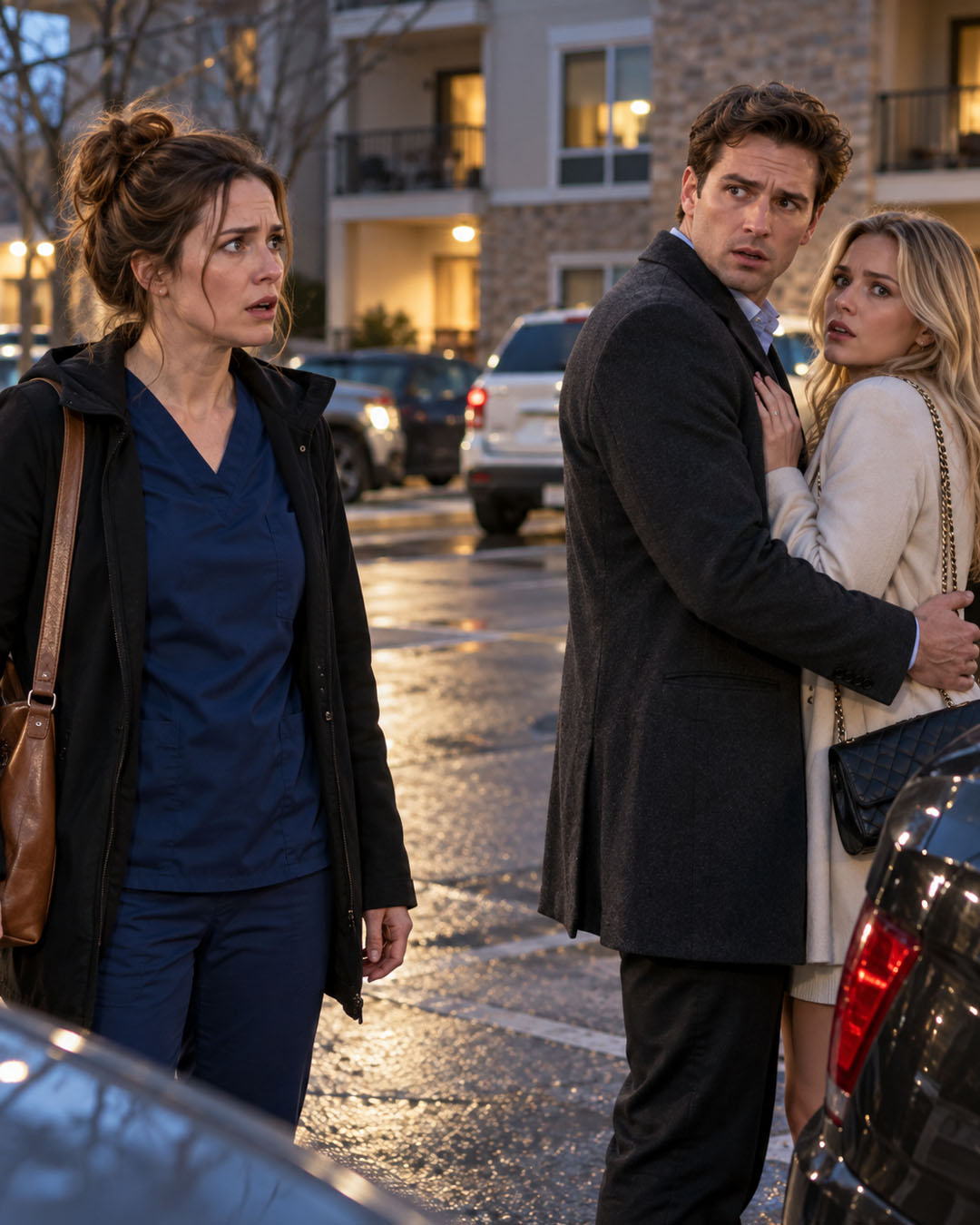
“You had a doctor’s appointment,” I said.
Owen blinked, clearly unprepared for that response.
“Yes.”
“What did they tell you?”
Tessa looked between us.
Owen swallowed.
“They want more tests. There are some things they’re concerned about.”
“How concerned?”
“I don’t know yet.”
He looked suddenly older than he had that morning.
“The doctor said they need to see more before they can tell me anything definite.”
I nodded.
“Then listen carefully. Get the full imaging they recommend. If they offer to scan your chest and pelvis, do it. Don’t postpone it because you’re upset, busy, embarrassed, angry, or because you think waiting a week won’t matter.”
Tessa frowned. “Why are you talking to him like that?”
“Because I know what I’m talking about.”
Owen stared at me.
“Raina, I need to explain.”
“No, you don’t.”
His mouth closed.
I looked at Tessa properly for the first time.
She was 23, according to the messages. Pretty, nervous, and still wearing my wrap as though she had borrowed a costume from someone else’s life.
“I’d like that back.”
She glanced down. “What?”
“The wrap.”
Owen stepped forward. “Raina—”
“It belongs to me.”
Tessa flushed and pulled it from her shoulders.
I took it.
Then I looked at my husband.
“I found the folder.”
His face changed.
“What folder?”
“All of it, Owen.”
He went still.
“The messages with Brooke. My work schedule. The photos. Wisconsin Dells. The money. Every transfer from our joint account.”
Tessa slowly removed her hand from his arm.
“I have copies,” I continued. “And I spoke to an attorney.”
Owen’s voice dropped. “You went through my phone.”
I almost laughed.
“You used my hospital schedule to plan dates with another woman, and your concern is that I went through your phone?”
“That’s not what I meant.”
“We’re getting divorced.”
Tessa lifted her chin.
“I’ll stay with him,” she said softly.
I turned toward her.
She looked sincere.
That was the saddest part.
She believed herself.
“I hope you do,” I said.
She seemed startled.
I meant it.
Whatever Owen had done to me, if the doctors were right, he was walking into something brutal.
“I’m not telling him to follow up because I want him back,” I said. “I’m telling him because medical care should never become a weapon in somebody else’s marriage.”
Owen stared at me.
I handed him the cashmere wrap.
“Actually, keep this downstairs. I don’t want it in the apartment tonight.”
Then I walked inside.
My hands did not shake until I reached the elevator.
Even then, they only trembled once.
I changed the door code upstairs and called my attorney, Margaret Bell.
I had consulted her three weeks earlier after finding discrepancies in our bank statements. At the time, I had not known about Tessa.
I had simply learned that money was missing.
Margaret listened without interrupting while I explained everything.
“You documented the messages?”
“Sixty-three photos.”
“The transfers?”
“Three years of statements.”
“The schedule?”
“Yes.”
She gave a low whistle.
“You’re organized.”
“I work in radiology.”
“What does that have to do with divorce?”
“We document everything.”
For the first time in two days, I smiled.
Owen called six times that night.
I did not answer.
Brooke texted from a number I had not blocked yet.
I hope you’re happy. You’ve always hated our family.
I blocked that number too.
Then I made scrambled eggs and turned the television louder than Owen liked it.
The apartment felt strange.
Empty, but not lonely.
There is a difference.
Loneliness asks you to fill a room.
Peace allows you to hear yourself inside it.
Two days later, Margaret called.
“Owen has retained counsel.”
“I expected that.”
“He isn’t contesting the separation.”
That surprised me.
“Nothing?”
“Not at the moment.”
I sat down at the kitchen table.
“Did he say why?”
There was a pause.
“His attorney mentioned medical treatment.”
The expanded imaging had confirmed that Owen’s condition was more serious than the preliminary studies suggested.
He began treatment in December.
I did not ask for details.
That surprised people later.
They assumed that because I worked in health care, I would somehow keep track.
But Owen’s body was no longer my responsibility.
His life was still valuable.
His care was still important.
It simply was not mine to manage.
Tessa went with him to his first appointment.
Then the second.
By the fourth, she stopped appearing.
In January, I learned through attorneys that she had moved back to Wisconsin.
She changed her number.
Later, I heard she had sent Owen one final message.
I love you, but I can’t do this. I’m sorry. I’m only 23.
The great romance that had apparently justified fourteen months of lies lasted less than six weeks under the weight of ordinary suffering.
I did not feel triumphant.
There are things you imagine will feel like justice until you see them happen.
Then they simply feel sad.
The divorce was finalized in February.
The $7,500 Owen had transferred to Brooke was counted against his portion of our assets. Other unexplained withdrawals were examined as well.
There was even an argument over the cashmere wrap.
Margaret placed my dated receipt beside one of Owen’s messages mentioning Tessa wearing it.
“That should settle that,” she said.
It did.
When I left the courthouse, I expected some dramatic sense of freedom.
Instead, I sat in my car with both hands on the steering wheel and cried for twenty minutes.
Not because I wanted Owen back.
I cried because a marriage is not only the person you lose.
It is Christmas mornings that will never happen, trips you planned but never took, jokes nobody else understood, the dining table you chose together, and the version of yourself who believed the future had already been decided.
Then I wiped my face and drove home.
My life was waiting.
Chapter 3
In March, Owen’s mother called.
I almost ignored the unfamiliar number.
Something made me answer.
“Raina?”
Sylvia sounded older.
Not older by months.
Older by years.
“We’d like to see you.”
“We?”
“Raymond. Brooke. Me.”
I said nothing.
“Just once,” she continued. “Please. There are things we need to talk about.”
I nearly refused.
Then I realized I still had things I wanted to say too, and I would rather say them once than keep repeating them in my head for the next decade.
We met at a diner near the hospital.
Raymond’s hair had turned nearly white.
Sylvia looked tired.
Brooke wore no makeup and kept staring at her coffee.
The woman who had once entered my apartment criticizing my furniture seemed to have disappeared.
Sylvia reached toward my hand when I sat down.
I placed mine in my lap.
“Tell me why you asked me here.”
She took a breath.
“It’s Owen.”
“I assumed.”
“Treatment has been difficult.”
I waited.
“We’re overwhelmed,” Raymond said.
He looked ashamed of the word.
Sylvia continued.
“You understand hospitals. Doctors listen to you. You understand the terminology. We were hoping maybe you could help oversee things. Even part-time.”
I looked at her.
She hurried on.
“We would pay you.”
For several seconds, no one spoke.
I remembered the first call I had received from Sylvia after Owen and I separated.
She had told me that perhaps if I had been “more nurturing,” he would not have looked elsewhere.
Raymond had suggested I was using the divorce to punish a sick man.
Brooke had called me cold.
Now they wanted to hire me.
“No,” I said.
Sylvia’s eyes filled.
“Raina, please.”
“I won’t be involved in Owen’s care.”
“But you know how to help him.”
“Yes.”
The word hung there.
I reached into my bag and removed an envelope.
“That’s why I made this.”
Inside was a list of local resources: palliative-care specialists, patient advocates, caregiver support groups, transportation services, counseling programs, and the contact information for a hospital social worker I trusted.
Sylvia opened it with shaking hands.
“These people can help you navigate what’s coming,” I said. “The social worker at the top is excellent. Call her Monday morning.”
Raymond stared at the paper.
“You did this for us?”
“No. I did it because frightened families deserve directions, even when I don’t want to travel the road with them.”
Brooke began to cry.
Quietly.
For once, she did not perform her emotions for an audience.
I looked at her.
“Brooke.”
She raised her eyes.
I took the cashmere wrap from my bag and placed it on the table.
The mascara mark was still on the cuff.
I had never cleaned it.
Her face crumpled.
“I want you to have this.”
She recoiled. “I don’t want it.”
“I know.”
“Then why?”
“Because you need to remember what small choices become.”
She stared at me.
“You introduced them. You gave him my schedule. You accepted money from our account to cover for him. You helped turn deception into a routine.”
“I know.”
“You thought it was harmless because nobody was bleeding and nobody was calling the police.”
Brooke pressed a hand to her mouth.
“I’m sorry.”
I believed she was.
That did not mean I owed her forgiveness on demand.
“I hope you become someone who is sorry before the damage instead of afterward.”
She nodded as tears rolled down her face.
Raymond leaned forward.
“Raina, she knows she made mistakes.”
“So did Owen.”
“He’s very sick.”
“I know.”
“Doesn’t that change anything?”
“Yes,” I said. “It changes what your family is facing. It does not change what happened.”
His eyes dropped.
“There is something I want all three of you to understand. I told Owen to get the additional imaging. I made sure he knew not to delay. I gave you these resources. I have done everything my conscience requires.”
I stood.
“But I will not sacrifice the rest of my life to prove that I am a good person.”
Sylvia began crying.
I picked up my purse.
“The number you need is at the top of the list.”
Then Brooke said, “Raina?”
I stopped.
She touched the cashmere wrap.
“Did you ever hate us?”
I thought about it.
“No.”
Her eyes widened.
“That would’ve required too much of me.”
I left the diner.
Outside, the snow along the curbs had begun melting into gray rivers. The air smelled like wet pavement and early spring.
I drove downtown.
Then, without planning to, I walked into the department store where I had once bought the cashmere wrap.
On the second floor, I found a navy coat.
Long.
Tailored.
Expensive.
I put it on.
The woman in the fitting-room mirror looked tired, but no longer diminished.
For years, every unnecessary purchase had required justification.
Would Owen think it was too much?
Would his family make a comment?
Should the money go toward savings?
Was I being selfish?
That afternoon, I looked at the price tag once.
Then I bought the coat.
I wore it out of the store.
Chapter 4
That spring, I began discovering how much of my marriage had been built around avoiding someone else’s displeasure.
I ran again.
I cooked foods Owen disliked.
I took a weekend trip with two friends and did not consult anyone’s calendar except my own.
I played music on Saturday mornings.
I stayed late at dinner without checking my phone.
The apartment became quieter.
Then the quiet became beautiful.
One night my friend Dani linked her arm through mine after dinner and said, “I’m glad you’re still you.”
I knew what she meant.
For months, people had asked whether I was angry.
Of course I was.
But anger was never the most dangerous thing I felt.
The dangerous thing was the temptation to let Owen’s choices redefine my character.
People sometimes imagine morality as something we practice when life is fair.
It isn’t.
Character becomes visible when fairness disappears.
There had been six minutes in the hospital break room after Dr. Yousef warned me about Owen’s scan when I seriously considered silence.
Six minutes.
I pictured saying nothing.
Letting Owen postpone the appointment.
Letting him behave as though time were unlimited.
After what he had done, nobody could have blamed me for refusing to help.
But I would have blamed myself.
Not because I loved him.
Not because marriage vows still bound me.
Because if I used another human being’s medical danger as punishment, I would carry that choice long after Owen disappeared from my life.
I refused to let betrayal purchase that much of me.
Months later, during a late hospital shift, I sat with an older patient’s family after a scan brought difficult news.
The husband looked at me with frightened eyes.
“What happens now?”
I explained the next steps.
I gave them the names of people who could help.
I answered the questions I was allowed to answer and found someone who could answer the ones I could not.
When I finally left the room, I caught my reflection in the dark glass of the hallway.
I was wearing the navy coat.
For a moment, I thought about the gray coat Brooke had stolen.
The cashmere wrap Tessa had worn.
All those objects I had once treated as evidence of what had been taken from me.
Then I realized something.
None of them mattered anymore.
Owen’s illness did not make his betrayal acceptable.
His betrayal did not make his life worthless.
Brooke’s remorse did not erase what she had done.
My compassion did not require reconciliation.
Those truths could exist together.
That was the lesson I had nearly missed.
People will sometimes ask you to choose between being kind and having boundaries, as though kindness means handing the knife back to the person who cut you.
It does not.
Sometimes kindness is giving someone the number of a good social worker and then walking away.
Sometimes forgiveness is simply deciding you no longer want revenge.
And sometimes dignity is buying yourself the coat you kept saying you could not justify.
I heard occasionally about Owen through people we both knew.
Treatment was hard.
His parents stayed involved.
Brooke, to her credit, eventually became the family member who attended appointments and kept notes.
Perhaps guilt matured into responsibility.
Perhaps she finally learned that loving someone is more than helping them get what they want.
I never contacted her to ask.
I did not need the ending of their story in order to continue mine.
By summer, I was sleeping through the night.
By fall, I renewed my lease alone.
At Christmas, I volunteered for a hospital shift as I often had before, but this time I did not do it because someone else expected me to.
I did it because I wanted my coworker, whose grandchildren were visiting from Arizona, to go home.
Near midnight, I stepped outside with a cup of coffee.
Snow was falling across Minneapolis.
I pulled my navy coat tighter around myself.
A year earlier, I had believed losing my marriage meant losing the life I had built.
I was wrong.
I had lost a husband.
I had lost trust.
I had lost money, time, and a future I once thought belonged to me.
But I had not lost the most important thing.
I had not allowed someone else’s betrayal to decide what kind of woman I would become.
That realization was worth more than revenge ever could have been.
I finished my coffee and went back inside.
A patient was waiting.
Someone was frightened.
Someone needed steady hands.
And mine were steady.
They had been steady in the parking lot.
Steady in the attorney’s office.
Steady when I placed that list of resources on a diner table.
They were steady now because they finally belonged entirely to me.
The navy coat still hangs by my door.
It fits perfectly.
I used to think strength meant enduring whatever people handed you without making a scene.
Now I know better.
Strength is knowing what you will carry, what you will return, and what you will leave behind.
And sometimes the most powerful thing a person can say is not “I forgive you,” or even “I’m leaving.”
Sometimes it is simply this:
I will not become worse because you treated me badly.
THE END.
⚠️ All characters and events are fictional. Do not imitate or apply them in real life. 😌😌😌


