Chapter 2
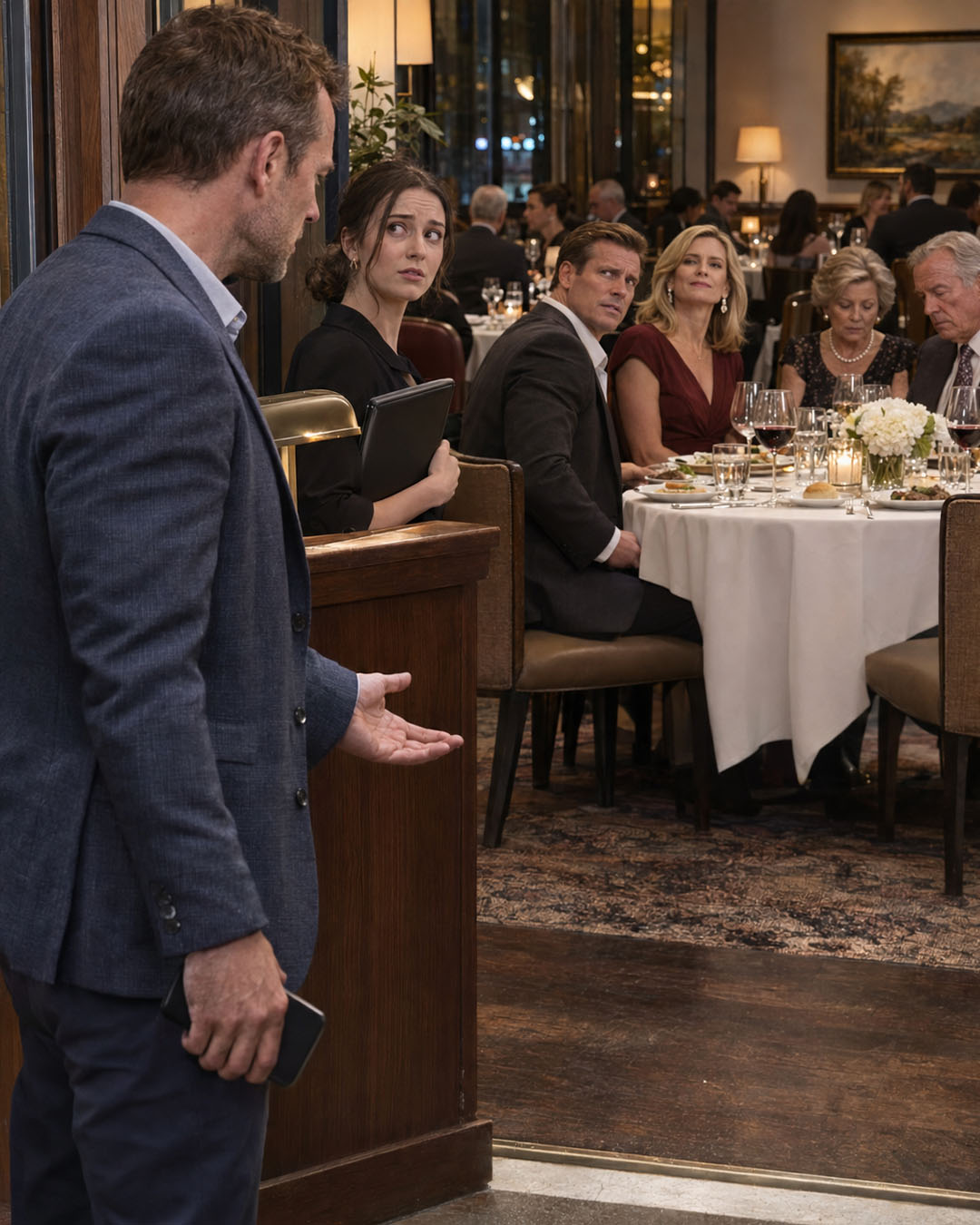
I followed Daniel toward the back of the restaurant, still trying to understand what was happening.
The booth was tucked beside a large window overlooking the downtown street. It was easily the nicest seating area in the entire dining room. There was enough room for six people, although Jake and I were the only ones expected to use it.
Daniel pulled out our chairs and handed us the menus.
“Mr. Callahan will stop by shortly,” he said. “Please enjoy yourselves.”
Jake sat down and looked around.
“Dad, what just happened?”
I laughed.
“Apparently, somebody remembers me.”
A few minutes later, the owner appeared. Arthur Callahan was a friendly man in his late fifties with a round face, thinning hair, and an unmistakable enthusiasm for good food.
“Chris Morgan!” he said, extending his hand. “It’s been ages.”
We shook hands.
Arthur explained that he’d been thinking about expanding the restaurant several years earlier. He had approached me for financial advice after hearing about my consulting work from a mutual acquaintance.
He’d been considering a second location and needed help evaluating the investment.
I’d reviewed his numbers, explained the risks, and suggested a more conservative financing strategy. I hadn’t charged him because I liked the man and believed he was making a genuine effort to build something worthwhile.
He eventually opened the second location successfully.
“You saved me from making an expensive mistake,” Arthur said. “I haven’t forgotten that.”
I told him he didn’t owe me anything.
He waved his hand.
“Tonight, you’re my guest. Both of you.”
He turned toward Jake.
“And what would the young man like?”
Jake smiled.
“Whatever my dad orders.”
Arthur laughed.
“Good answer. We’ll take care of you.”
When he walked away, I noticed Greg staring from across the room.
His table was positioned so that he could see our booth without turning his chair. I caught his eyes briefly before he looked away.
Daniel returned with two glasses.
One contained champagne for me. The other was sparkling cider for Jake.
“Compliments of the house,” he said.
Jake leaned toward me.
“Are we sure we’re not accidentally attending somebody else’s anniversary?”
I laughed.
“Just enjoy your dinner.”
Arthur sent over a bottle of vintage red wine a few minutes later. Then, after learning Jake loved chocolate, he arranged for the pastry chef to prepare a special chocolate soufflé that wasn’t even listed on the menu.
Jake was having the time of his life.
We ordered steak and salmon, talked about his upcoming science project, and discussed the guitar lessons he’d been taking. For once, I wasn’t worrying about whether we were making someone uncomfortable simply by being there.
Across the room, Greg was becoming increasingly distracted.
His son kept glancing toward our booth. Linda’s mother looked over several times. Linda whispered something to Greg, who nodded without taking his eyes off us.
I wasn’t trying to attract attention.
I was simply enjoying dinner with my son.
Halfway through the meal, Jake excused himself to use the restroom.
A moment later, Greg appeared beside my table.
He stood there with his hands in his pockets and a smile that looked more like a warning.
“Nice table,” he said.
“Yeah. Arthur was kind enough to arrange it.”
Greg looked around.
“Interesting.”
I gestured toward the empty chair.
“Want to sit?”
“No. I just wanted to make sure you didn’t feel excluded earlier.”
I put down my fork.
“You mean when you told us there wasn’t room at a table with eight place settings?”
He shifted his weight.
“Well, the headcount changed. You didn’t technically RSVP.”
“I wasn’t invited.”
He gave a little laugh.
“It wasn’t that formal. We just assumed people would understand it was a small family gathering.”
I looked directly at him.
“I am family, Greg. So is Jake.”
His expression tightened.
“Linda had some concerns about the seating arrangements. Her parents aren’t exactly spontaneous people. You know how these things are.”
I nodded slowly.
“Of course. It was easier to leave us standing at the door.”
He glanced toward his table.
“Anyway, glad you found somewhere to sit. We’re doing cake soon. You can swing by if you want.”
Then he walked away.
I sat quietly for a moment.
It wasn’t the rejection itself that bothered me anymore. It was the fact that he still expected me to pretend it hadn’t happened.
When Jake returned, he didn’t notice anything unusual. He dug into his dessert and started telling me about a song he wanted to learn on guitar.
Then Greg’s twelve-year-old daughter approached our booth.
She was a quiet girl, much more thoughtful than her father sometimes seemed to realize.
“Hi, Uncle Chris.”
“Hey, sweetheart. Everything okay?”
She looked over her shoulder, then placed a small envelope on the table.
“Dad said to give you this.”
I opened it.
Inside was a generic party favor bag containing a few plastic keychains, a printed thank-you note, and a Polaroid photograph of the anniversary gathering.
Greg and Linda were standing with their children and Linda’s parents.
Everyone was smiling.
Everyone was included.
Except Jake and me.
I looked at the photograph for several seconds.
Jake leaned over.
“Wow. They really made sure we weren’t in that one.”
His voice was light, but I could hear the hurt beneath it.
I placed the photograph back in the envelope.
“Don’t worry about it, buddy.”
We finished our dinner, thanked the staff, and left a generous tip.
As we were preparing to leave, Arthur approached.
“Leaving already, Chris?”
“Big day tomorrow. But thank you. Really. You’ve been wonderful.”
He waved away my thanks.
“Happy to do it. Oh, before I forget, your brother’s card has already been charged for the group.”
I frowned.
“My brother’s card?”
“Yes. The reservation was under Greg’s name. We normally put everything on one tab unless someone requests separate checks.”
I stared at him.
“How much?”
Arthur mentioned the total.
$2,600.
The entire anniversary dinner, including the wine, appetizers, special desserts, and tip.
All charged to Greg’s card.
I stood there, thinking.
I hadn’t ordered anything under Greg’s name. I hadn’t asked to be included in his reservation. He had specifically told me there was no room for us.
Yet the restaurant had assumed Jake and I were part of his party.
I could have corrected the mistake immediately.
I could have paid for our dinner separately.
But I thought about the empty chairs, the party favor photograph, and the way Greg had looked at his own nephew as though he were an inconvenience.
I thanked Arthur again and left.
On the drive home, my phone started vibrating.
Greg was calling.
Chapter 3
I let it ring.
A text appeared a moment later.
“Did you know the restaurant charged the entire bill to my card?”
Another message followed.
“Chris, answer me.”
I showed Jake the screen.
He whistled.
“That’s a lot of money.”
I put the phone down.
“We’ll deal with it tomorrow.”
When we arrived home, I helped Jake get ready for bed. He was still talking about the soufflé and how cool Arthur had been.
Before he went upstairs, he stopped in the hallway.
“Dad?”
“Yeah?”
“Did I do something wrong tonight?”
That question hurt more than anything Greg had said.
I crouched slightly so we were eye to eye.
“No, buddy. Not one thing. Sometimes people make choices that have nothing to do with you. Don’t ever confuse somebody else’s behavior with your worth.”
He nodded.
“Okay.”
I watched him disappear upstairs.
Then I sat alone in the living room.
I wasn’t particularly angry about the dinner bill. Greg had made the decision to exclude us while allowing the restaurant to charge everything to his card. The confusion was his responsibility to resolve with the restaurant.
But I knew what was coming.
The next morning, I woke up to six missed calls and a family group chat full of messages.
Greg was furious.
“Unbelievable. You show up uninvited, take advantage of the restaurant, and leave me with a $2,600 bill.”
Linda joined in.
“Chris, that was incredibly disrespectful. You made our anniversary about yourself.”
Greg sent another message.
“I want the full amount reimbursed today.”
I read everything without responding.
The more I thought about it, the less interested I became in explaining myself.
Any answer I gave would be twisted into another accusation.
Within hours, Greg removed me from the family group chat.
Jake was removed, too.
That was the part I couldn’t ignore.
My son had done nothing except arrive at a dinner after his uncle had told us we could come. Yet Greg had decided he didn’t deserve to remain in the family conversation either.
Then the calls started coming from extended relatives.
My aunt Teresa wanted to know why I’d embarrassed Greg. A cousin asked whether I’d deliberately ordered expensive wine knowing Greg would pay. Even a relative in Ohio who hadn’t spoken to me in two years suddenly had a strong opinion.
One person claimed Greg had told them I’d shown up drunk and demanded free food.
Another said Linda’s mother had described me as rude and confrontational.
I patiently explained what happened.
Some relatives believed me. Others changed the subject. Most simply stayed quiet.
I could understand that people didn’t want to get involved in family disagreements, but I couldn’t understand how easily they accepted Greg’s version without asking me what had happened.
A few days later, Jake came home from school looking irritated.
His cousin, Greg’s son, had apparently told several classmates that Jake and I had been kicked out of a fancy restaurant for behaving badly.
I felt my temper rise.
I wanted to call Greg immediately.
Instead, I asked Jake a question.
“Do you believe what your cousin said?”
Jake rolled his eyes.
“Dad, I was there. You didn’t even complain when they brought your steak out a little overcooked.”
I laughed despite myself.
“Fair enough.”
For the next several months, we heard almost nothing from Greg’s household.
Jake wasn’t invited to his cousin’s birthday party. We received no Thanksgiving invitation. Christmas passed without a phone call.
I still bought presents for Greg’s children because they were innocent in all of this. I wrapped everything carefully and mailed the packages.
They came back unopened.
A sticky note had been attached to one box.
“Not necessary.”
I stood in the hallway holding the returned package.
That was when I finally understood that I had been trying to preserve a relationship that the other side had already abandoned.
I stopped explaining myself.
I stopped asking for invitations.
I stopped trying to make every family gathering comfortable for Greg.
Instead, I put that energy into my own life.
My consulting work grew. I took on larger clients, expanded my services, and doubled my revenue within six months.
Jake and I started a Sunday tradition.
Every weekend, we’d try a different restaurant. Sometimes it was a little diner near the water. Other times it was a steakhouse or a small Italian place we’d never visited.
We talked about school, music, sports, and whatever was happening in our lives.
No awkward family photos. No pretending to enjoy someone’s company. No wondering whether we were welcome.
Jake started a band with two classmates and earned a scholarship to a summer music program.
One evening, while sitting on the couch tuning his guitar, he looked at me.
“You know, Dad, I actually like our life better this way.”
I smiled.
“Why’s that?”
He thought for a moment.
“Because we don’t have to pretend.”
I didn’t have an answer.
I simply nodded.
For the first time, I realized that maybe the family I had been trying so hard to hold together wasn’t the family Jake needed.
We were doing just fine on our own.
Then, early the following spring, I had lunch with a new client named Elise, who owned a boutique real estate investment firm.
We were reviewing a portfolio when she casually mentioned my brother.
“Is Greg still with Larchmont Legal?”
I looked up.
“Yes. Why?”
She hesitated.
“He came by our office last week. Wanted to pitch us some legal services. Said you had recommended him.”
I felt my stomach tighten.
“I didn’t recommend him.”
Elise raised an eyebrow.
“That’s what I suspected.”
Then she told me something that made it clear the restaurant incident hadn’t been the end of Greg’s behavior.
He had been using my name to get meetings with clients, and he was telling people that I was overwhelmed, financially stretched, and unable to handle larger portfolios.
He was trying to take the professional credibility I’d spent years building.
This time, I wasn’t going to let it pass.
Chapter 4
I asked Elise exactly what Greg had said.
She explained that he’d presented himself as someone who could step in whenever my consulting firm became too busy to handle a client’s needs. He described me as a good person, but suggested that I was struggling to manage my growing workload as a single father.
He had even brought up the anniversary dinner.
According to him, I’d embarrassed the family by showing up uninvited and refusing to pay for an expensive meal.
I thanked Elise for telling me.
Then I went back to my office and started documenting everything.
I contacted several people in our professional network who had mentioned Greg recently. Their stories were remarkably similar.
He’d told one client that I’d passed on a contract. He’d told another that I was scaling back. He’d approached a third and suggested that my business was becoming too difficult for me to manage.
In every case, he used my name to open a door for himself.
This wasn’t a misunderstanding.
It was a pattern.
I started keeping a detailed record of every incident, including emails, messages, dates, and the names of people who had heard his claims.
I wasn’t interested in starting a public feud. I simply wanted the facts organized in case I needed them.
I also made some changes to my own business.
I rebranded my consulting firm under a new name, removing my surname from the website. I hired a part-time assistant and began building relationships with clients who valued honest work more than impressive appearances.
One of those clients was a technology startup looking for a law firm to handle contracts, intellectual property, and confidentiality agreements.
The founder asked whether I knew anyone reliable.
I immediately thought of a small firm led by a sharp attorney named Priya Shah.
I’d met Priya at a networking event the previous year. She wasn’t interested in impressing people with expensive suits or grand promises. She asked practical questions and gave direct answers.
I introduced her to the startup.
Within three weeks, she’d secured them as a full-time client.
Greg had spent years building his reputation around being the most important person in the room.
Priya simply did the work.
Meanwhile, Jake and I continued building our own life.
His music channel, where he posted guitar lessons and covers, began attracting viewers. We learned basic editing together, experimented with microphones, and occasionally spent entire Saturday afternoons trying to get the sound right.
He gained thousands of subscribers.
I was proud of him, not because of the numbers, but because he was discovering something he genuinely loved.
Then an unexpected email arrived.
It was from Malcolm, Linda’s father.
The subject line simply read: “Coffee.”
I almost deleted it.
Malcolm had been sitting at Greg’s anniversary dinner the night we were turned away. He’d watched the entire exchange and hadn’t said a word.
His message was brief.
“Chris, I’ve been thinking about that evening. I owe you a conversation. If you’re willing, I’d appreciate the chance to meet. My treat.”
I stared at the screen.
What could he possibly want now?
Still, curiosity got the better of me, and I agreed.
We met the following week at a quiet café on the east side of Savannah.
Malcolm looked older than I remembered. His hair had thinned, and his hands trembled slightly as he stirred his coffee.
He didn’t waste time.
“I owe you an apology.”
I waited.
“That evening at Verde, the way Greg treated you and Jake was wrong. I should have said something. I was sitting right there, and I did nothing.”
I appreciated the honesty, but I wasn’t ready to forgive him automatically.
“Why now?”
He nodded as if he’d expected the question.
“Linda told us afterward that you had shown up unexpectedly, made a scene, and tried to get the restaurant to cover your meal. But I wasn’t completely satisfied with that explanation.”
He took out his phone.
“The restaurant owner sent me something after I contacted him.”
He showed me the security footage from the entrance and dining area.
It showed Jake and me arriving, approaching Greg’s table, and being turned away.
It showed me smiling, taking my son’s shoulder, and walking toward the entrance.
There was no argument.
No raised voice.
No scene.
Malcolm looked at me.
“You handled that better than I would have.”
I shrugged.
“I didn’t want my son remembering his uncle’s anniversary as the night his father lost his temper.”
Malcolm nodded.
Then he explained why he’d really contacted me.
Greg had recently approached him about an investment venture involving real estate development. He’d suggested that I was backing the project and had already agreed to participate financially.
Malcolm wanted to verify the claim.
I laughed.
“I haven’t invested a dollar in anything Greg is doing.”
“That’s what I thought.”
He leaned forward.
“My daughter loves her husband. But I’m not blind, Chris. I’ve watched him operate for years. He cares too much about appearances and not enough about the people around him.”
He paused.
“If you ever need someone willing to stand behind your work, I’d like you to know I’m available.”
I thanked him.
For the first time, someone from Greg’s immediate circle had acknowledged what was happening.
A few weeks later, Malcolm called again.
He was helping organize a major industry event at a luxury hotel in downtown Savannah. The gathering would bring together business owners, real estate developers, attorneys, and financial professionals.
He wanted me to participate in a panel discussion about trust, leadership, and professional relationships.
I agreed.
Then he mentioned something else.
Greg would also be attending.
Larchmont Legal was pursuing a major contract with a development group Malcolm partially advised. Greg had been working hard to secure the relationship and had positioned himself as the firm’s leading representative.
Malcolm hadn’t told him I would be speaking.
I understood why.
He wanted the event to proceed naturally.
I wasn’t interested in ambushing my brother or creating a scene. But I also wasn’t going to hide because he might be uncomfortable seeing me succeed.
On the morning of the event, Jake came with me.
He had a school break, and I thought it might be good for him to see what his father did professionally.
As we stood in the hotel lobby, he adjusted his jacket and looked around.
“Pretty fancy place.”
I smiled.
“Try not to spill anything.”
He laughed.
“Can’t promise that.”
We entered the conference hall.
Greg was already there, surrounded by colleagues and potential clients. He looked polished as always, wearing an expensive suit and speaking with the confidence of someone accustomed to being admired.
He noticed me near the entrance.
His expression changed.
For a moment, he seemed unsure whether to approach.
Then he walked over with that familiar half-smile.
“Chris. Didn’t know you’d be here.”
“Surprise.”
He glanced at Jake.
“Didn’t realize they were letting everybody attend these things.”
I didn’t respond.
A staff member approached and handed me a microphone.
“Mr. Morgan, you’re the third speaker. We’re ready for you.”
Greg looked at the microphone, then at me.
His smile disappeared.
Chapter 5
The panel had four speakers, each given ten minutes to discuss leadership and long-term professional relationships.
Greg was first.
He took the stage confidently, speaking about strategic thinking, client trust, and the importance of family values in business.
He talked about building relationships that lasted decades.
He talked about integrity.
He even mentioned how a person’s reputation was their most valuable asset.
Jake leaned toward me and whispered, “Does he know what those words mean?”
I had to suppress a laugh.
When Greg finished, the audience applauded politely. He stepped down and returned to his seat.
Then it was my turn.
I walked onto the stage, adjusted the microphone, and looked across the room.
I hadn’t prepared a speech filled with financial figures or impressive business terminology.
Instead, I began with a personal story.
“Last year, my teenage son and I went to a family anniversary dinner. We arrived expecting to spend an evening with relatives. Instead, we were told there wasn’t room for us.”
A few people shifted in their seats.
I continued.
“There were empty chairs at the table. There were enough place settings for everyone. But someone decided that my son and I didn’t belong there.”
I paused.
“At first, I thought it was just an unpleasant family moment. But afterward, I realized it had taught me something important about leadership.”
I looked around the room.
“People often talk about values when they’re standing on a stage or sitting in a boardroom. But your real character isn’t measured by what you say when everyone is watching. It’s measured by how you treat people when you think there will be no consequences.”
The room grew quiet.
I spoke about the importance of building relationships on mutual respect, being honest about limitations, and refusing to use another person’s reputation for personal gain.
I never mentioned Greg’s name.
I never accused him of anything.
I simply described what I’d learned from rebuilding my professional life after a difficult period.
“I spent too many years trying to earn a seat at tables where I wasn’t wanted. Eventually, I realized I could spend that energy building something better. The people worth working with don’t need you to shrink so they can feel important.”
I glanced toward Jake.
“Real success isn’t about having the biggest house, the most impressive title, or the most expensive dinner. It’s about building a life where the people around you know they matter.”
When I finished, the applause was sincere.
Greg didn’t look at me as I stepped off the stage.
During the networking session afterward, Malcolm approached with a man named Richard Bennett, the chief executive of a major real estate development group.
The company was preparing several high-end residential projects and needed both financial and legal advisory services.
Richard had been considering Larchmont Legal.
Greg had spent months pursuing the contract.
Malcolm introduced us.
“Richard, I’d like you to meet Chris Morgan. He’s the kind of professional you want advising your leadership team.”
Richard shook my hand.
“We’ve heard good things about your work.”
We talked for nearly twenty minutes.
I explained my approach to portfolio evaluation, risk management, and long-term financial planning. I didn’t exaggerate my experience or promise results I couldn’t guarantee.
Richard seemed impressed.
Before leaving, he asked whether I would be willing to meet with his team the following week.
I agreed.
That meeting eventually turned into a major consulting contract.
Greg found out.
He contacted Richard several times, but the responses became increasingly brief. Eventually, he received a formal message explaining that the development group had decided to work with another advisory team.
He had lost the opportunity.
But that wasn’t the only problem waiting for him.
Around the same time, a junior partner at Larchmont Legal named Dana submitted a formal complaint to the firm’s leadership.
She had become concerned about Greg’s habit of exaggerating professional connections and claiming referrals that had never been made.
Some of the claims involved my name.
She had seen emails in which Greg suggested I was referring clients to him, even though I had never authorized those statements.
The firm opened an internal investigation.
Several other questionable referrals came to light. There were also instances in which Greg had used client names and professional relationships without permission to strengthen his pitches.
His reputation began to unravel.
He wasn’t disbarred, and he wasn’t publicly accused of a criminal offense. But the investigation had serious professional consequences.
The firm eventually required him to step down from his partnership position.
Larchmont Legal issued a carefully worded statement about restructuring leadership and restoring confidence in its professional relationships.
Publicly, Greg described it as a career transition.
Privately, people understood that he’d lost the position because his own conduct had damaged the firm’s credibility.
Linda tried to protect their image.
She posted vague messages about toxic relationships, personal growth, and the importance of protecting one’s peace.
But invitations became less frequent.
Some clients moved their business elsewhere.
The people who had once surrounded Greg at every networking event suddenly seemed to have somewhere else to be.
I didn’t celebrate.
I simply continued working.
Then something unexpected happened within the family.
Rachel, the cousin who had originally told me about the anniversary dinner, contacted me.
“Chris, I owe you an apology,” she said. “I heard what Greg had been telling people, and I believed him. I shouldn’t have.”
I thanked her.
A few other relatives reached out, too. Not everyone apologized, but enough people acknowledged that they had misunderstood what happened.
Even Greg’s children began questioning some of the stories they’d heard.
One afternoon, Jake showed me a message from his cousin.
“My dad’s been acting weird lately. I think he got caught doing something shady. You and your dad were always cooler anyway.”
Jake read it twice, then grinned.
“Guess the truth eventually gets around.”
I smiled.
“Sometimes it takes a while.”
We never received a direct apology from Greg.
Not a phone call.
Not a message.
Not even an acknowledgment that he’d treated us unfairly.
Then, several months later, a small envelope arrived in the mail.
There was no return address.
Inside was the Polaroid from the anniversary dinner.
The same photograph Greg’s daughter had handed me that evening.
Only now, two faces had been scratched out.
Greg’s and Linda’s.
There was no note.
I stared at the picture for a long time, then placed it in a drawer.
I didn’t know who had sent it, and I didn’t need to know.
Some things don’t require an explanation.
Life continued.
Jake’s music channel passed 50,000 subscribers. He played his first local show, and I stood near the front of the audience, watching him perform with his band.
I remembered the boy who had once asked why his uncle never remembered his birthday.
Now he stood under the lights, smiling, playing music he loved.
Afterward, he found me in the crowd.
“Did you like it?”
I pulled him into a hug.
“You’re going to have to get used to me being your biggest fan.”
He laughed.
I expanded my consulting business, hired two new associates, and began traveling again. I visited Italy and Japan, and even spent a weekend in Paris.
Not to impress anyone.
Not to prove anything to Greg.
Simply because I could.
I also stopped measuring my life against the people who had spent years making me feel less important.
I used to think family meant keeping everyone happy, even when it meant swallowing your feelings and accepting disrespect.
I thought being the younger brother meant making allowances for the older one. I thought being a good father meant giving Jake every opportunity to maintain relationships with relatives, even when those relationships hurt him.
I understand things differently now.
Family should never require a child to feel unwanted. Respect should never depend on someone’s income, job title, or social standing. And love should never be something you have to beg for.
Greg thought excluding me from one dinner would remind me of my place.
Instead, it reminded me that I had spent too much of my life trying to occupy a place someone else controlled.
I didn’t need his invitation.
I didn’t need Linda’s approval.
And Jake certainly didn’t need to grow up believing his worth depended on whether his uncle remembered to buy him a birthday present.
That night at Verde, Greg thought he was showing everyone who belonged at his table.
What he actually showed us was who he was.
And I finally stopped confusing his approval with my value.
These days, Jake and I still have our Sunday dinners. Sometimes we invite friends. Sometimes it’s just the two of us at a little restaurant by the water.
We laugh, talk about music, and make plans for the future.
There’s always room at our table.
And nobody has to earn their seat.
THE END.\
⚠️ All characters and events are fictional. Do not imitate or apply them in real life. 😌😌😌