My Parents Took My Passport So I Couldn’t Leave The Country—Customs Officer Recognized Me Anyway
The night before my flight to Paris, I opened my lockbox and found my passport missing. Mom didn’t deny taking it. “Your brother’s engagement comes first,” she said. Days later, I uncovered an IRS notice and company papers bearing my forged signature—documents making me sole owner of my parents’ failing business. I replaced my passport and headed for the airport anyway. Then Mom pointed me out to federal officers, screaming, “That’s the thief!” One officer opened my passport and froze.
### Part 1: My stolen passport exposed a much deeper family betrayal
My name is Ethan Mercer, and at twenty-eight years old, I had spent three years measuring my life in burns, knife cuts, and sixteen-hour shifts. My parents owned a catering company outside New Orleans, and although they called it a family business, there was nothing equal about it. My father, Robert, handled clients and loved introducing himself as the founder. My mother, Diane, managed appearances, especially among the wealthy families she desperately wanted to impress. I did everything else. I ordered food, negotiated with vendors, cooked entire events, cleaned equipment, handled payroll spreadsheets, and sometimes slept three hours before doing it again. My younger brother, Chase, meanwhile, had perfected the art of contributing absolutely nothing while somehow being celebrated for it.
For three years, I had been secretly preparing to leave. I had been accepted into a culinary management program in Paris, and every extra dollar I earned from legitimate private catering work went into savings. By late August, I had more than forty thousand dollars, two packed suitcases, an apartment reservation, and a plane ticket leaving the following morning. I remember standing in my childhood bedroom that Tuesday night, listening to cicadas scream outside the window while I opened the small steel box where I kept my documents. My birth certificate was there. My Social Security card was there. My passport was gone.
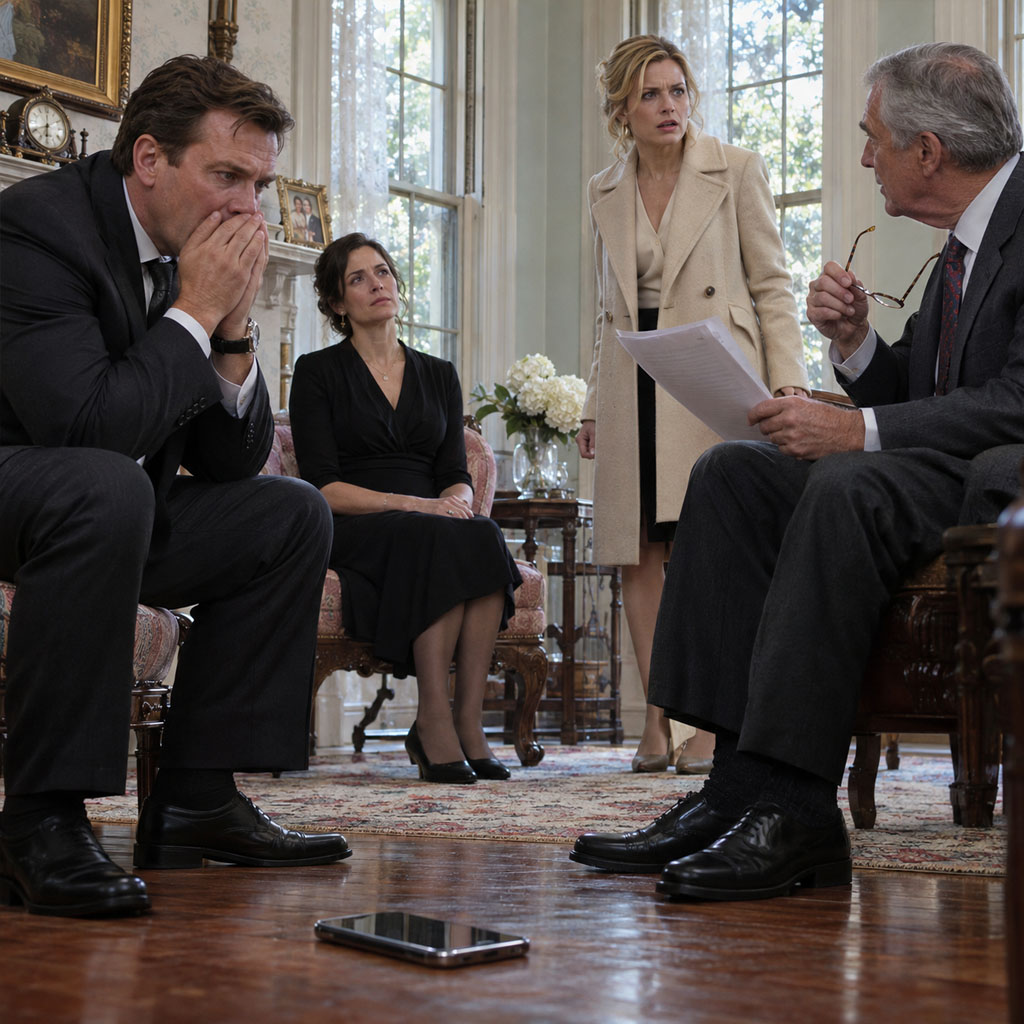
I searched everywhere even though I already knew what had happened. I dumped drawers onto the floor, checked coat pockets, pulled boxes from beneath my bed, and finally stormed downstairs. Diane stood at the kitchen island in a silk robe, drinking coffee as calmly as if nothing unusual had happened. Robert was in the doorway to his office with his arms crossed. I barely recognized my own voice when I asked, “Where is my passport?” Diane took another sip before answering. “You’re not leaving.” Robert added, “Chase’s engagement party is next month. We need you here. You can go to France another time.” I stared at them. “You stole a federal document because you need free catering?” Diane’s expression hardened. “Watch your tone. You live in our house. You work in our company. Family comes first.”
That sentence had controlled my entire life. Family comes first had meant Chase receiving a car while I covered vendor bills. It had meant Robert taking credit when an event succeeded and blaming me when his promises exceeded our budget. It had meant Diane telling me that I was “strong enough to handle more” whenever Chase needed money, attention, or rescue. This time I did not argue. I went upstairs and locked the door. The next morning, I watched the flight I was supposed to be on cross the Atlantic on a tracking app. I felt something inside me go quiet. They believed they had broken me. Instead, they had finally exhausted the part of me that still wanted their approval.
Three nights later, I opened my banking app. A pending transfer for fifteen thousand dollars appeared on an old savings account Diane still had legal access to from when I was a teenager. The destination memo read: Chase Engagement Expenses. I stared at the screen until the anger became something colder. At seven the next morning, I drove to the bank, stopped the transaction, closed the joint account, and transferred everything I owned into a new account that only I controlled. Then I returned home and acted defeated. I tied on my apron. I chopped onions. I listened while Diane discussed imported flowers for Chase’s party as if she had not just attempted to take years of my life savings.
But the missing passport still bothered me. Why steal it instead of simply threatening me? Why had Robert become so nervous every time I mentioned Europe? Two nights later, after everyone was asleep, I slipped into his home office. Robert kept corporate documents inside a locked steel cabinet, and after years of working in that house, I knew exactly where he kept the spare key. I expected to find my passport.
Instead, I found an envelope from the IRS addressed personally to me.
The notice referred to unpaid payroll obligations connected to Mercer Hospitality LLC. That made no sense. I was an employee. Robert and Diane owned the company. At least, that was what I had believed. I opened the corporate binder beneath it and found an amended operating agreement dated two years earlier. My parents’ ownership percentages had been reduced to zero. My name appeared beside one hundred percent.
Then I saw the signature.
My signature.
Except I had never signed it.
I photographed every page with shaking hands. Suddenly the stolen passport made sense in a way that terrified me. My parents had transferred a collapsing company into my name without telling me. They had been using my creditworthiness and clean financial history as protection while unpaid taxes and vendor debts accumulated. If I left, their unpaid labor disappeared. Worse, the person officially connected to the company’s liabilities would also disappear.
Me.
At six the next morning, I met my cousin Maya at a coffee shop thirty miles away. Maya worked as a forensic accountant and had spent years dealing with businesses whose owners believed paperwork could hide anything. She studied the photographs without interrupting me. Then she asked for my identifying information and made several calls through proper channels.
An hour later, she returned to the table looking more disturbed than before.
“Ethan,” she said quietly, “your mother didn’t just take the passport.”
My hands tightened around my coffee.
“What did she do?”
“Someone claiming to be you reported it stolen.”
For a moment, I could hear nothing except the espresso machine hissing behind the counter.
Maya leaned closer. “Your old passport has been invalidated. If you had found it and tried using it anyway, security could have stopped you.”
I stared through the window at cars moving along the highway.
Diane had not hidden my passport.
She had tried to turn the airport itself into another locked door.
And that was the moment I stopped planning an escape.
I started planning an ending.
### Part 2: I secretly dismantled the company they put in my name
Maya introduced me to a corporate attorney named Grant Keller, a man whose voice was so calm that it made every frightening thing he said sound inevitable. I gave him the operating agreement, tax notices, bank records, payroll information, and photographs of my forged signature. Grant explained that we needed to separate two issues: the fraud that had placed the company in my name and the immediate legal authority the public records currently appeared to give me. We began filing formal notices, preserving evidence, contacting the appropriate agencies, and preparing to shut down operations before my parents could create additional obligations under my identity. I also began the emergency process of replacing my passport using documentation showing that I had not personally reported the original lost.
The timing mattered because Chase’s engagement party was four days away. Two hundred guests were expected at an expensive country club. Diane had promised a lavish menu. Robert had promised premium service. Chase had promised his wealthy future in-laws that our family was practically local royalty. None of them seemed concerned that the business barely had enough available cash to cover ordinary expenses. Their solution, apparently, had been me. My labor. My credit. My savings. My future.
So I stopped protecting them from reality.
I cancelled purchases I had personally guaranteed. I refused to extend my own credit for new inventory. I documented the food already owned by the company and left anything legitimately belonging to the business untouched, but I would not use a single dollar of mine to rescue an event I had never agreed to fund. The walk-in refrigerator grew emptier by the hour. Our assistant chef noticed and reported me to Robert, who stormed through the kitchen demanding to know why deliveries had slowed. “Cash-flow problem,” I told him. “You should talk to the owner.” He glared at me, missing the meaning entirely.
That afternoon, Diane entered carrying a sheet of yellow paper. She placed it in front of me while I was cleaning a prep table. Her handwritten agreement stated that I would transfer my personal savings into the company to cover “family obligations.” At the bottom was a blank signature line. “Sign it,” she said. I looked from the paper to her face. “Why?” Her expression became impatient. “Because you have lived here for years, Ethan. Do you think housing is free? Do you think food is free? Chase has one engagement party. You can contribute something after everything we’ve done for you.”
I almost laughed. Instead, I folded the paper and put it into my apron pocket. “No.” Diane reached toward me. “Give that back.” I stepped away. “You wrote it for me. I’m keeping it.” For the first time, I watched genuine uncertainty move across her face. She was used to anger because anger could be punished. She understood guilt because guilt could be manipulated. Calmness frightened her.
That night Robert discovered a false itinerary I had intentionally left where he would snoop. It showed me flying to Chicago the afternoon of the engagement party. From my upstairs window, I later watched him park his large SUV behind my sedan until I could not back out. He stood in the driveway looking up toward my room with the satisfaction of a man closing a cage.
He had no idea Maya was collecting me at three in the morning.
Before leaving, I walked into the commercial kitchen one final time. The stainless steel surfaces reflected the weak light beneath the range hood. I remembered being nineteen and working through my first overnight event because Robert had overbooked staff. I remembered being twenty-three and cooking thirty hours straight after a scheduling disaster. I remembered every time Diane had told me Chase needed more because I could “handle hardship.”
I removed my apron, folded it neatly, and placed it on the prep table. Beside it, I left the unsigned yellow paper.
Then I walked out.
At eight that morning, Grant submitted the final documents necessary to halt operations and begin resolving the company’s legal status. The business accounts were restricted while the fraud allegations and ownership records were examined. Robert woke believing he could buy his way out of the catering disaster. Instead, he discovered that cards connected to the company no longer worked normally and the business he had secretly pushed into my name had become a legal problem he could no longer ignore.
According to Maya, chaos followed almost immediately. Diane opened the walk-in refrigerator and realized no miraculous shipment was coming. Chase reportedly dropped a coffee mug and started yelling about what his future in-laws would think. Robert tried several emergency catering companies before discovering that replacing a two-hundred-person custom event with several hours’ notice would cost far more than he could access.
Then he found my fake Chicago itinerary.
And made the worst decision of his life.
Robert called airport authorities and reported that I had taken company money and was attempting to flee. He gave them my description, luggage information, and the Chicago departure he believed was real. What he apparently did not understand was that once he described an alleged financial crime involving a departing passenger, his accusation could be checked against records.
By noon, Maya and I were sitting in a diner near the international terminal. She looked at her phone and pushed it toward me.
“Your father reported you.”
I read the message twice.
“Does that stop me from flying?”
“It means you need to be prepared to answer questions.”
I looked toward the airport through the restaurant window. After everything my parents had done, I suddenly understood something almost funny.
They kept believing authorities would automatically believe whoever spoke loudest.
They had raised me under that rule.
Robert shouted, and everyone obeyed.
Diane cried, and everyone surrendered.
Chase complained, and someone rescued him.
But airports did not operate like the Mercer household.
Neither did banks.
Neither did federal agencies.
And neither did I anymore.
My replacement passport was inside my jacket. Copies of the business records were encrypted and backed up. Grant already had everything. Maya had everything. Even if my parents somehow stopped me from boarding that afternoon, they could no longer bury what they had done.
I checked my watch and stood.
“Ready?” Maya asked.
“I’ve been ready for three years.”
She drove me to international departures and helped unload my suitcases. I entered the terminal alone, surrounded by rolling luggage, departure announcements, and hundreds of strangers moving toward destinations my parents could not control.
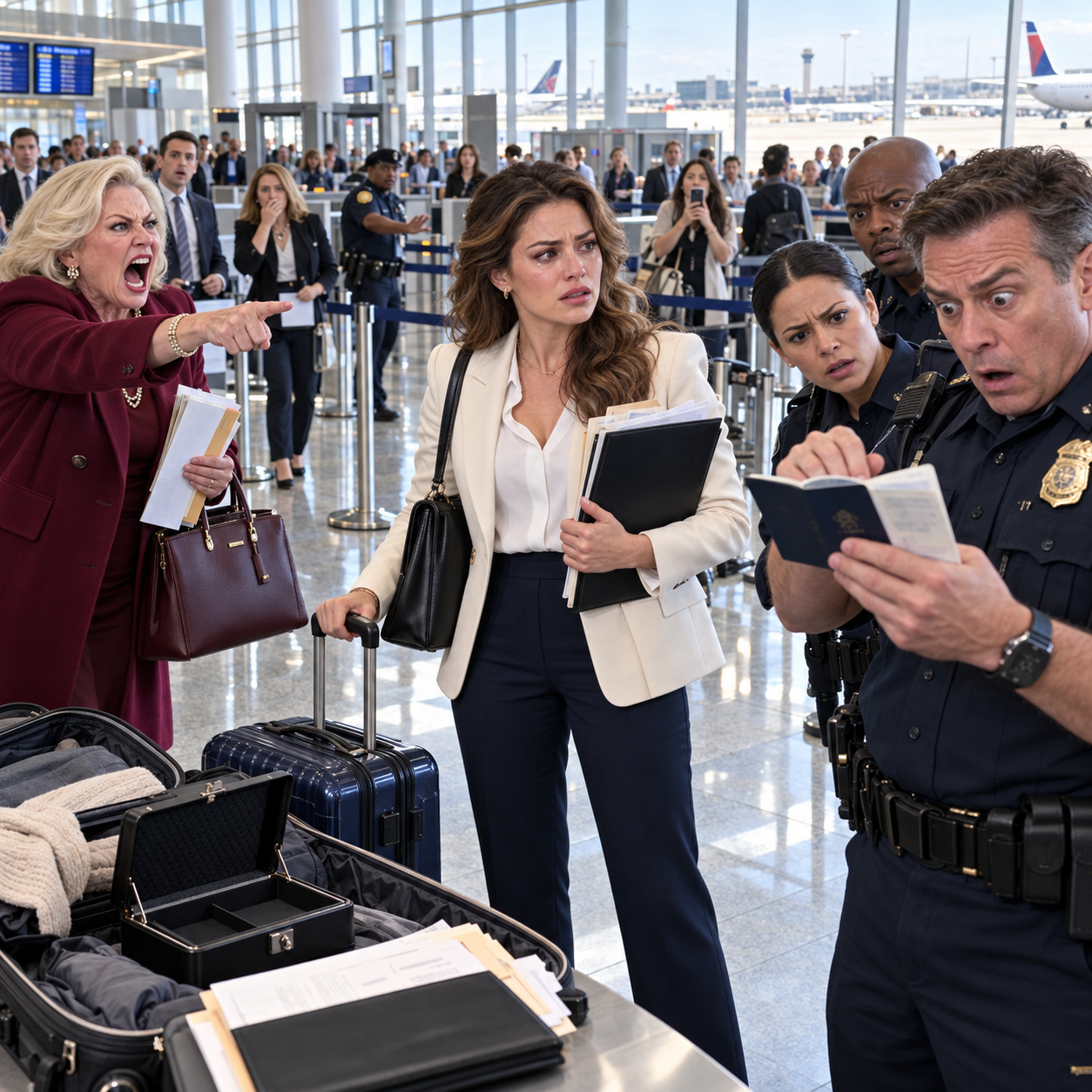
I had almost reached security when someone screamed my name.
I turned.
Robert and Diane were running toward me.
Behind them came airport police.
And behind those officers were two uniformed federal officers from the international screening area.
Diane pointed at me and shouted, “That’s him! That’s the thief!”
People stopped walking.
Robert demanded that the officers search my luggage.
One federal officer stepped closer, took my passport, and opened it.
He looked at the photograph.
Then he looked at me.
His expression changed.
“Ethan Mercer?”
I knew his face too.
And suddenly, so did I.
### Part 3: The customs officer remembered exactly what my parents forgot
The officer’s name was Daniel Hayes. Two years earlier, his agency had organized a memorial dinner honoring several officers who had died in service. My father had aggressively pursued the contract, then understaffed the entire event because he wanted the largest possible profit margin. Forty-eight hours before the dinner, everything was collapsing. I worked almost without sleep, rebuilt the service plan, called in favors from vendors, and personally supervised every plate leaving the kitchen. Officer Hayes had entered the kitchen afterward, shaken my hand, and thanked me for refusing to let a memorial become a disaster.
Now he stood in the airport holding my replacement passport while my parents demanded my arrest.
“You handled the memorial dinner,” he said.
“Yes, sir.”
Robert immediately interrupted. “That has nothing to do with this! He stole from my company.”
Hayes turned toward him. “Sir, step back and let us determine what happened.”
The simplicity of that sentence seemed to stun my father. Robert had spent decades equating volume with authority, but Hayes did not raise his voice. He did not need to. Robert stepped back.
Hayes asked me directly whether I had taken business funds. I unlocked my phone and showed him the records documenting my private work and the movement of my own savings into an account solely under my control. “The money they’re referring to is mine,” I said. “My mother attempted to move fifteen thousand dollars from an old joint account into an engagement fund. I stopped the transfer and moved my remaining money.”
Robert shouted, “He shut down the company!”
“Yes,” I said. “Because according to records my parents filed without my knowledge, I was listed as its sole managing member.”
That finally silenced him.
I gave Hayes the encrypted drive and explained that my attorney had copies of everything: the forged operating agreement, the tax correspondence, my signature comparison, bank records, and the filings disputing the transfer. Diane suddenly began crying. She told the officers I was angry, unstable, and trying to punish my family over an argument.
I reached into my jacket and unfolded the yellow paper.
“This was written by my mother two days ago.”
Hayes read it.
The crying became quieter.
“It says I had to transfer my personal savings to cover my brother’s event or leave their house immediately. I refused. After that, my father blocked my car in the driveway.”
Diane’s face changed. “That isn’t what happened.”
I looked at her. “Then explain the passport.”
For the first time since arriving, she said nothing.
Hayes glanced at the replacement booklet in his hand, and I continued. “My original passport disappeared from a locked box in my bedroom. Someone later reported it stolen while claiming to be me. I did not make that report. I filed documentation explaining the impersonation when I requested this replacement.”
The officer beside Hayes began taking notes more carefully.
Robert’s expression finally cracked. “She was protecting him,” he said.
Diane spun toward him. “Robert!”
That single sentence changed everything.
Hayes looked at my father. “Protecting him from what?”
Robert began backtracking, insisting he meant protecting me from making a reckless decision. Diane told him to stop talking. Chase, who had apparently arrived behind them sometime during the confrontation, stood near the edge of the crowd in his expensive suit, looking as though he wanted to disappear.
Then he did something none of us expected.
He blamed our parents.
“You told me Ethan changed his mind about Paris,” he said. “You said he volunteered to stay for the party.”
Diane stared at him.
Chase continued, louder now. “You told everyone he wanted to help.”
I almost felt sorry for him. Almost.
Hayes returned my passport but retained copies of the evidence through the proper process. My parents were not dramatically sentenced in an airport concourse, because real investigations do not work that way. But their false report had created an official record, and the accusations surrounding the passport and business documents were referred for further investigation. Airport police escorted Robert and Diane away for questioning while additional statements were taken.
I remained near the checkpoint.
Chase approached me after they were gone. His face looked gray.
“Ethan.”
I zipped my jacket.
“I didn’t know about the passport.”
“Okay.”
“I didn’t know they put the company in your name.”
“Okay.”
He swallowed. “My engagement party is destroyed.”
I stared at him.
Even then, after everything, that was where his mind went.
His party.
Not my stolen identity. Not my money. Not three years of labor. Not our parents attempting to use law enforcement against me.
I picked up my carry-on.
“Goodbye, Chase.”
He followed me two steps. “You’re seriously leaving?”
“Yes.”
“What am I supposed to do?”
I almost answered angrily. Instead, I gave him the same words our parents had used whenever they dumped responsibility onto me.
“You’ll figure it out. You’re strong.”
Then I walked away.
My flight departed that afternoon.
When the aircraft lifted above Louisiana, I looked through the window and watched roads become lines, houses become specks, and eventually everything I had known disappeared beneath clouds. I expected triumph. Instead, I felt exhausted.
Freedom was quieter than revenge.
Paris did not magically erase what happened, either. During my first weeks there, I woke before dawn convinced I had missed a catering delivery. I flinched whenever my phone rang from an American number. I kept checking my passport because part of me still expected Diane to appear and take it again.
But slowly, my life became mine.
I studied restaurant finance, supply chains, staffing systems, menu engineering, and luxury hospitality. Professors noticed that pressure did not rattle me. Of course it didn’t. I had spent years cooking while Robert screamed, Diane manipulated, and Chase demanded.
For once, the same survival skills that had trapped me started building something.
Meanwhile, Grant and Maya handled developments back home. Investigators examined the disputed company records. Tax authorities reviewed previous filings. Creditors discovered that the glamorous Mercer business had far fewer resources than Robert had implied. The catering operation collapsed.
Chase’s fiancée ended the engagement after her family learned enough about the financial chaos to want no part of it.
Diane blamed me.
Robert blamed me.
Chase blamed everyone.
Six months after I left, my uncle called from a number I did not recognize.
“Your parents have lost almost everything,” he said. “At some point, Ethan, family has to forgive.”
For a second, I wondered whether guilt could still reach me across an ocean.
Then Maya sent me something interesting.
My uncle had been trying to buy the liquidated kitchen equipment cheaply for his own business.
His sudden passion for forgiveness had a price tag.
I blocked him too.
I believed that would finally be the end.
It wasn’t.
The following spring, a thick envelope arrived at my Paris apartment.
My parents were suing me.
And this time, they wanted two hundred thousand dollars.
### Part 4: Their final lawsuit ended the family I had already left
The lawsuit claimed I had abandoned my responsibilities to Mercer Hospitality, deliberately damaged the company, and caused catastrophic financial losses by leaving before Chase’s engagement event. Robert and Diane wanted damages exceeding two hundred thousand dollars. Reading the complaint was surreal. The people who had forged documents to make me responsible for their company were now arguing that because those documents existed, I had been obligated to save them.
A year earlier, receiving legal papers from my parents would have sent me into panic. Instead, I photographed every page and sent everything to Grant with one sentence: “Please end this.”
He called me twenty minutes later.
“Gladly.”
Grant’s response forced their attorney to confront evidence my parents apparently had not fully disclosed: the disputed signatures, the tax notices, Diane’s handwritten demand for my savings, the passport report I denied making, the attempted transfer from my personal funds, and years of employment records showing how much work I had performed for compensation far below what my responsibilities suggested. He also made clear that if my parents intended to litigate the entire history of the business, we were prepared to litigate all of it.
Their lawsuit disappeared almost as quickly as it arrived.
Their attorney withdrew from the aggressive position once the evidentiary dispute became obvious, and my parents dropped their claim rather than risk broader discovery and additional exposure. Grant later told me, “People sometimes confuse intimidation with leverage. They aren’t the same thing.”
That sentence stayed with me.
My parents had intimidated me my entire childhood.
They controlled meals, money, transportation, housing, approval, and eventually even my passport.
But control only works while the other person believes disobedience is impossible.
Once I stopped believing that, their entire system became fragile.
Over the next two years, I heard about the consequences only through Maya because I refused direct contact. Robert and Diane lost the catering business permanently. Their social circle shrank. Friends who loved attending expensive dinners became strangely unavailable once there were no dinners left to attend. Chase eventually found regular employment and discovered that managers did not care whose son he was. None of those outcomes brought me the dramatic satisfaction I had once imagined. Mostly, they confirmed something simpler: consequences did not require my participation.
I did not need revenge every morning.
I just needed distance.
Paris gave me that distance.
I completed my program near the top of my class and earned an internship with an acclaimed restaurant group. The work was demanding, but it was demanding in a clean way. If I made a mistake, someone corrected the mistake instead of attacking my character. If I succeeded, someone said, “Good job,” rather than explaining why my success now obligated me to rescue someone else.
Eventually I was offered a management position.
Then another opportunity followed.
On the morning of my graduation ceremony, I opened a white box on my bed. Inside was a tailored chef coat given to me by the team I had been working with. My name was embroidered across the chest beneath my new title.
Executive Chef Ethan Mercer.
I ran my hand across the fabric and remembered another piece of white cloth.
My old apron.
Frayed edges. Grease stains. Burn marks. Folded carefully on a stainless steel table beneath my mother’s unsigned demand for my money.
The two garments belonged to different versions of me.
A knock sounded at the apartment door.
Maya stood outside holding a bottle of wine and grinning.
“You actually came,” I said.
“You think I’m missing this after everything?”
I hugged her harder than I expected.
Maya had never once told me to forgive my parents. She never asked me to understand them, rescue them, or remember that “they were still family.” She simply helped me see the facts and trusted me to decide what kind of life I wanted afterward.
That evening, after graduation, we sat on my balcony overlooking the glowing windows and rooftops below. My phone vibrated on the table.
Unknown Louisiana number.
I ignored it.
A voicemail appeared.
I ignored that too.
Maya glanced toward the screen. “Want me to delete it?”
I picked up the phone myself.
“No.”
I blocked the number.
Then I deleted the voicemail without listening.
That was the answer everyone back home kept demanding from me.
Would I ever forgive them?
Maybe forgiveness means something different to different people. I no longer spent my days imagining Robert miserable or Diane embarrassed. I did not need Chase to suffer for me to succeed. Their lives simply no longer belonged inside mine.
But reconciliation?
No.
There would be no Christmas reunion. No emotional airport embrace. No invitation to Paris. No second chance to prove they had changed.
They had taken my passport because they believed they owned the direction of my life.
They had reached for my savings because they believed my labor belonged to them.
They had put their failing company in my name because they believed I existed to absorb consequences meant for them.
And when I finally walked away, they tried to use police officers, lawyers, guilt, and extended family to pull me back.
Love should never require surrendering your identity.
Family should never need a hostage.
Two years after they tried to stop me from leaving America, I stood on a Paris balcony with my own apartment behind me, my own career ahead of me, and my valid passport resting safely in a locked drawer that nobody else could open.
I raised my glass toward the skyline.
For years, I had thought freedom would feel like winning an argument against my parents.
I was wrong.
Freedom was realizing I no longer needed to argue with them at all.
They could keep telling their version of the story.
They could tell people I was selfish.
They could say I abandoned them.
They could blame me for the business, the engagement, the investigation, the debt, and every uncomfortable consequence that followed.
None of it could reach me anymore.
Because the most important thing my parents ever taught me was something they never intended me to learn.
A locked door only keeps you trapped while someone else controls the key.
And now the key was mine.
THE END!
Disclaimer: Our stories are inspired by real-life events but are carefully rewritten for entertainment. Any resemblance to actual people or situations is purely coincidental.