“She’s Powerless In My Court. Prepare The Detention Writ!” The Judge Laughed, Dipping His Pen To Sign Away My Liberty. I Sat In Unbroken Discipline. Suddenly, The Courtroom Doors Slammed Back. Special Agents Surrounded The Bench, Unsealing A Grand Jury Dossier Directly Before Him. “Step Away From That Gavel. You Are Under Federal Indictment For High-Level Extortion.” His Pen Snapped.
Judge Roland Keene laughed when I refused to surrender my dead father’s land. My older brother sat behind me, staring at the floor while the judge threatened to put me in jail for contempt. I didn’t argue. I asked the court reporter to preserve every word and walked out with my father’s property still in my name. Three weeks later, a retired courthouse employee sent me a sealed envelope containing thirteen property records. Every family on that list had lost something, and my father’s name appeared where it shouldn’t have.
Part 1: The Judge Who Thought Grief Made Me Easy to Break
The first time Judge Roland Keene threatened to put me in jail, I was still wearing the black dress I’d bought for my father’s funeral. It was a Thursday afternoon in September, and the courthouse smelled of floor polish, burned coffee, and the damp wool coats people had carried through an unexpected rainstorm. Keene sat above me in Courtroom 4B, turning a silver pen between his fingers while his clerk arranged documents that supposedly proved I owed more than three hundred thousand dollars. My older brother, Colin, sat in the second row, watching his shoes as though whatever happened next had nothing to do with him.
“Ms. Bennett, you’re thirty-eight years old,” Keene said, consulting a document in front of him. “Surely you’re old enough to understand that property ownership comes with obligations.” I told him I understood perfectly, but that I had never seen the alleged loan agreement or received the tax notices cited in the petition. His smile widened, and he asked whether I intended to waste the court’s time disputing authenticated records. When I requested an evidentiary hearing, he laughed and said, “You’re powerless in my court, young lady, and the sooner you accept that, the easier this will be.”
The bailiff standing beside the exit looked uncomfortable, but he didn’t move. Keene gave me seven days to execute a proposed settlement transferring my father’s property to Ashbrook Holdings, a company whose name meant nothing to me, and warned that refusal could result in contempt sanctions. I asked the court reporter to preserve the entire exchange, including the judge’s remarks about my supposed powerlessness. Keene’s expression changed slightly, but he dismissed the hearing before I could ask another question.
Outside, Colin hurried after me beneath the limestone courthouse columns. “Mara, just sign it,” he said, pulling his jacket collar against the rain. “Dad’s gone, and you’re making this harder than it needs to be.” I looked at the brother who had carried our father’s coffin beside me eleven days earlier and asked how he could recommend surrendering sixty-four acres without even questioning the debt. He said nothing, which troubled me more than an argument would have.
My father, retired Sergeant Major Walter Bennett, had purchased that land outside Hawthorn County, Virginia, in 1998 with money he’d saved through nearly thirty years in the Army. There was a white farmhouse with uneven porch steps, an equipment barn that always smelled of cedar shavings, two fishing ponds, and a long meadow bordered by red oaks. To most people, it was an aging rural property waiting to be developed. To my father, it was the place where he planned to build a rehabilitation retreat for veterans who needed somewhere quiet to recover, learn practical skills, and feel useful again.
He’d spent his final three years drawing plans on yellow legal pads and meeting with former soldiers who wanted to volunteer. He envisioned small accessible cabins, a greenhouse, a workshop, and enough open land that nobody would feel confined by another institutional hallway. His own military retirement hadn’t been easy, and he knew how quickly a person could become isolated after leaving a life organized around duty and shared purpose. The project was unfinished when a heart attack took him at seventy-one.
I had been living outside Washington, D.C., working as a senior forensic auditor for the Department of Justice. Before that, I’d served eight years in Army logistics, where I learned that missing equipment and suspicious contracts were rarely accidents once the numbers stopped making sense. My work involved tracing financial transactions, reviewing procurement fraud, and reconstructing records people hoped nobody would examine carefully. I had handled complicated investigations involving millions of dollars, but nothing prepared me for sitting at my father’s kitchen table with his reading glasses still beside the newspaper.
Colin, three years older than me, had remained in Virginia. He operated a small construction supply business, attended church with his wife, Meredith, and had always been considered the dependable child because he lived fifteen minutes from our father. I visited when I could, called every Sunday, and spent my vacations repairing fences or helping Dad organize paperwork for his veterans project. Colin used to joke that I could find an accounting discrepancy from three counties away but couldn’t remember where Dad kept the spare tractor key.
At the funeral, Colin held my hand while the honor guard folded the American flag. When the officer placed it in my arms, my brother whispered, “We’ll take care of everything together.” I believed him because grief made ordinary promises sound permanent. By the following week, I would discover how little that promise meant.
The first suspicious envelope arrived six days after the burial. It contained a petition filed by Ashbrook Holdings asserting that my father had guaranteed a commercial loan whose outstanding balance, with fees and interest, exceeded $286,000. Attached documents claimed he had also failed to satisfy several years of property-related assessments, bringing the alleged obligations to nearly $320,000. The petition sought a court order enforcing the claimed debt through a transfer of the property.
The paperwork looked official, with stamped dates, recording references, and a process server’s sworn statement declaring that my father had received notice months earlier. But the supposed loan agreement described him as the managing partner of a development venture I’d never heard him mention. My father had been meticulous about money, the sort of man who wrote down the cost of replacement tractor bolts in a spiral notebook. The idea that he had secretly borrowed a quarter of a million dollars without keeping the loan documents in his files made no sense.
I called the county treasurer’s office before doing anything else. A patient woman named Denise confirmed that the regular property taxes were current and that no delinquent balance appeared in the public tax account. When I asked about the additional assessments, she said they were associated with a redevelopment district and would have to be researched separately. Her tone changed when I mentioned Ashbrook Holdings, and she directed me to the courthouse without explaining why.
That afternoon, I opened my father’s filing cabinet. Insurance policies, military retirement statements, equipment receipts, and property tax records were arranged in labeled folders, exactly where they’d always been. There was no commercial loan agreement, no correspondence from Ashbrook, and no evidence that Dad had agreed to sell the land. The only unusual document was a folded county development map, its proposed highway corridor marked in red pencil.
A handwritten note beside our property caught my attention.
“Do not authorize access until original ownership claims are verified.”
The handwriting was Dad’s, and the date was eighteen months earlier.
At first, I assumed he had been negotiating an ordinary right-of-way agreement. Then I noticed several neighboring parcels circled in blue, with surnames written beside them. I recognized one of those names from a woman who used to sell preserves at the farmers market.
When I called her number, her daughter answered and told me the woman no longer owned her house.
“Judge Keene took it,” she said. “Just like he took the others.”
I sat down at the kitchen table, listening to the refrigerator hum beside my father’s untouched coffee mug.
For the first time, I wondered whether the claim against his estate had anything to do with his debts at all.
Part 2: The Families Who Had Already Lost Everything to the Same Judge
I spent the following weekend at my father’s dining room table, surrounded by county records and a legal pad covered in names. The laptop’s charging cable stretched across a stack of old newspapers, and every few hours I walked to the kitchen to refill coffee I rarely finished. By Sunday evening, I had identified twelve properties transferred through proceedings involving Ashbrook Holdings or companies connected to the same registered agent. Nine had belonged to elderly people, and eight had changed hands within a year of their owners dying or entering long-term care.
The figures were disturbing because the debts followed a pattern. Properties worth between $250,000 and $900,000 had supposedly secured loans that the owners’ surviving relatives couldn’t explain. Interest, penalties, and legal fees accumulated until the debts appeared impossible to settle, and the same small group of attorneys handled most of the proceedings. In every case, Judge Keene had signed the crucial order, and a buyer associated with Ashbrook acquired the land far below its assessed value.
I recognized the mechanics of the scheme before I understood its reach. Someone was using manufactured debt claims and manipulated court procedures to acquire valuable properties from families too overwhelmed or financially vulnerable to fight. The county’s proposed technology corridor connected almost every parcel, which meant the land would become considerably more valuable once the infrastructure project received approval. My father wasn’t an isolated target; he was one of the last remaining obstacles.
On Monday morning, I drove to see Irene Bell, the daughter of the farmers market woman. Irene lived in a rented duplex behind a grocery store, where ceramic birds decorated the windowsills and a portable heater clicked beneath the kitchen table. She was sixty-three, with swollen knuckles and the tired expression of someone who had spent years explaining the same injustice to people who didn’t want to hear it. When I told her about my father’s case, she stopped stirring her tea.
“My mother lived on that property for fifty-one years,” she said. “She didn’t borrow money against the house, and she certainly didn’t borrow it from a company she’d never heard of.” Irene had hired an attorney, but he withdrew after a disciplinary complaint was filed against him over an unrelated case. By the time she found another lawyer, Keene had approved a disputed order authorizing the transfer, and the proceeds barely covered the claimed debt. Her mother had spent her final months in Irene’s spare bedroom, asking every morning whether the peach trees had survived.
Irene brought out a cardboard box filled with court notices, legal bills, and photographs. One picture showed her mother sitting on a farmhouse porch, holding a basket of peaches beside a younger version of my father. I turned it over and found a date from the previous autumn, only months before Dad became seriously ill. He’d written a note beneath it: “Mrs. Bell says the papers were never served.”
“Your dad was trying to help us,” Irene said. “He visited three times and asked for copies of everything.” I asked why he hadn’t told me, and she hesitated before saying he didn’t want me dragged into a local fight where the people responsible controlled the courthouse. Before I left, she placed a manila folder in my hands containing copies of affidavits and court orders. “He said somebody would eventually look closely enough,” she told me. “I thought he was just trying to make us feel better.”
That afternoon, I visited the clerk’s public records office. A young employee printed docket summaries and land transfer indexes, but several underlying documents were missing from the available electronic files. When I asked to inspect the original paper returns of service, she explained that those records required authorization from court administration. I requested the procedure in writing, which made her glance nervously toward a glass-walled office behind the counter.
The next morning, my request was denied by a court administrator named Sylvia Morrow. She spoke in the polished, impatient manner of someone who had mastered bureaucratic obstruction without ever raising her voice. She insisted the records were being preserved for pending litigation and suggested that I direct future inquiries through legal counsel. When I asked whether the same restriction applied to all the Ashbrook cases, she replied, “Your family’s disagreement with a lawful court ruling doesn’t entitle you to inspect everyone else’s private affairs.”
I thanked her and wrote down her exact words after reaching my car. The distinction mattered because many of the documents were presumptively public, and no formal sealing orders appeared on the docket. Someone had introduced a rule that seemed designed to prevent comparisons between cases. I had seen that tactic before in investigations where individual transactions appeared defensible until they were placed side by side.
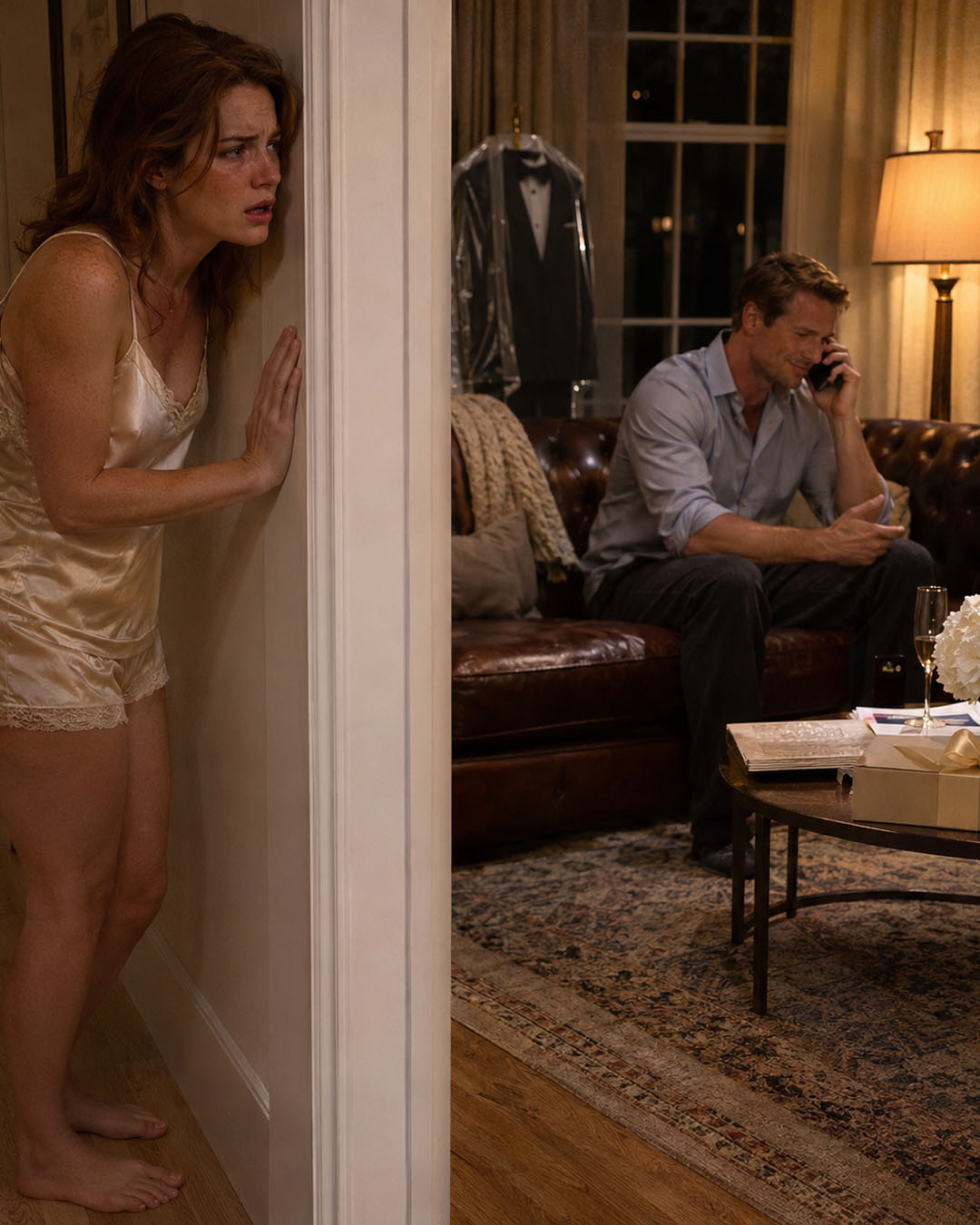
That evening, Colin arrived at the farmhouse carrying groceries and an expression of forced cheerfulness. He filled the refrigerator, asked whether I’d eaten, and complained about the amount of paperwork on the dining table. When I mentioned Irene Bell and the other properties, he started putting away dishes that were already clean. I asked whether Dad had ever discussed Ashbrook Holdings with him, and he answered too quickly.
“No. Why would he?”
“Because his name is on an agreement with them, and you were handling most of his local business.”
Colin shut the cabinet harder than necessary. “Dad talked to every developer in the county at some point, Mara. He wanted funding for that veterans project, and funding doesn’t grow on trees.” I asked whether he’d seen a loan agreement, and he told me I was interrogating him like a criminal. He left the groceries behind and drove away without saying goodbye.
I wanted to believe his behavior came from exhaustion and grief. His business had been struggling, and he had spent months helping Dad through hospital appointments while I worked in Washington. But the more I considered the conversation, the harder it became to ignore how carefully he’d avoided answering my question. I pulled our father’s development map from the drawer and studied the small road marked along our eastern boundary.
It was a narrow strip of gravel, barely wide enough for two vehicles to pass, but it connected the county highway to the proposed commercial development. Without access through our property, the developer would need a costly alternate route across several privately owned parcels. An independent transportation report estimated that obtaining the alternative access could delay construction by almost three years. Suddenly, the urgency of the court proceedings made more sense.
On Wednesday, I received a call from a retired courthouse records supervisor named Janice Holliday. She’d heard about my visit through a former colleague and asked whether I was Walter Bennett’s daughter. When I confirmed it, she told me my father had come to her the previous year with questions about altered filing dates. She wouldn’t discuss details over the telephone, but said she still had copies of documents that hadn’t been properly indexed.
We met two days later in the parking lot of a public library. Janice was a small woman with silver hair, sensible shoes, and the cautious manner of someone who’d spent thirty years working around powerful people. She gave me a sealed envelope and made me promise to examine the documents before calling her again. I opened it at home, expecting more suspicious foreclosure orders.
Inside were thirteen case summaries, an old scheduling log, and a photocopied memorandum from Judge Keene’s chambers.
The memorandum instructed court staff to expedite certain property cases before a pending redevelopment announcement. It included a handwritten list of landowners who were to be treated as “noncooperative.”
My father’s name appeared at the bottom, but it was the name written immediately above his that made my hands go cold.
Colin Bennett.
Part 3: My Brother Had Signed Something He Never Wanted Me to See
I called Janice Holliday before sunrise, forgetting for a moment that most people didn’t consider six fifteen an appropriate time to discuss courthouse records. She answered on the fourth ring, sounding as though she’d already been awake for hours. When I asked why Colin’s name appeared on the memorandum, she told me the list contained people who had resisted the redevelopment company’s proposed agreements. “Your brother wasn’t always cooperating with them,” she said, and the distinction made me sit upright.
According to Janice, Colin had attended two meetings with county officials the previous winter. The first involved a voluntary access agreement for the road across my father’s property, but the second concerned a proposed financial arrangement between Ashbrook Holdings and our family. Janice remembered Colin arguing with someone in the hallway outside Keene’s chambers, although she couldn’t hear what was said. After that meeting, his name disappeared from the later internal scheduling notes, while Dad’s remained.
I asked Janice whether she would speak with an attorney, and she agreed as long as someone explained what protections were available to her. She had retired rather than continue working under Sylvia Morrow, whom she described as fiercely loyal to Keene. Before ending the call, she warned me that the judge had personally intervened in ordinary administrative decisions for years. “People complained in private,” she said. “But a complaint doesn’t mean much when the person receiving it owes the judge his job.”
I returned to Washington that afternoon to see Evelyn Park, an attorney I’d known since we both worked on a government contract dispute years earlier. Evelyn had a small practice handling civil litigation and financial fraud, and she possessed the irritating habit of noticing the problem everyone else had overlooked. She spread my documents across a conference table, removed her glasses, and asked why the purported loan contract was missing its original funding records. I told her that was exactly what I wanted to know.
“Even if Walter signed a valid loan agreement, there should be evidence that money changed hands,” she said. “A promissory note isn’t proof that the lender actually provided the funds.” She pointed to the settlement papers Keene wanted me to sign, which included a broad release extinguishing claims against Ashbrook and several unnamed affiliated entities. More troubling, the agreement required confidentiality about the underlying financial arrangements. “They’re not simply collecting a debt,” Evelyn concluded. “They’re buying your silence along with the land.”
She agreed to represent me and immediately prepared objections to the proposed order, discovery demands, and a request to preserve the relevant court and corporate records. She also warned that Keene might refuse to give us a meaningful hearing, forcing an appeal or emergency application to a higher court. I could afford legal representation, but Irene Bell and many of the other families had spent their savings merely trying to obtain records. That difference bothered me more with every conversation.
When I returned to Hawthorn County, Colin was waiting in the farmhouse driveway beside his silver pickup. He said Meredith was worried about my obsession with the lawsuit and that people at church were already talking. I asked him to come inside, poured two cups of coffee, and placed Janice’s memorandum between us. He stared at his name for a long time before asking where I’d gotten it.
“You were negotiating with Ashbrook before Dad died,” I said. “Why didn’t you tell me?”
Colin rubbed his forehead and admitted he had discussed an access agreement with Grant Ralston, the president of the company developing the industrial corridor. Ralston had offered to pay Dad for a permanent roadway easement, and Colin believed the money could finance the first cabins for the veterans center. But Dad rejected the proposal after discovering what had happened to neighboring owners. Colin insisted the disagreement had ended there.
I asked whether he had received any money from Ralston or Ashbrook. His eyes moved toward the window, where rainwater was dripping from the gutters I’d helped Dad install. He said he’d received a consulting advance for evaluating construction materials, nothing connected to Dad’s property. When I asked the amount, he told me it was private business information.
“Then explain why a company claiming Dad owed them money was paying you,” I said.
He stood up so quickly that his chair scraped the floor. “You weren’t here when Dad needed someone, Mara. You came down on holidays and acted like fixing a fence made you understand everything.” I wanted to remind him about the medical bills I’d paid, the trips I’d made between assignments, and the months Dad had insisted he didn’t need help. Instead, I asked him one final question: “Did you sign anything using Dad’s authority?”
Colin went quiet.
For several seconds, I heard nothing but the rain and the ticking wall clock. Then he said he’d signed an acknowledgment related to the access negotiations while Dad was recovering from surgery. He insisted that a power of attorney authorized him to handle business matters and that Ralston’s lawyers had explained the paperwork. He left before I could ask to see the acknowledgment, and I knew from his expression that he was withholding far more than he had admitted.
That night, I searched Dad’s legal files again. Beneath an insurance folder, I found a document revoking the limited financial power of attorney he’d given Colin during an earlier hospitalization. It was dated four months before the purported acknowledgment, witnessed, notarized, and accompanied by a letter from Dad’s attorney confirming delivery of the revocation. Colin had been copied on the letter.
I photographed everything and called Evelyn. She told me not to confront my brother again until we had obtained the disputed documents through proper channels. A revoked power of attorney didn’t automatically prove criminal intent, she explained, but using it knowingly to obtain money or surrender property rights would be serious. She asked me to preserve the originals and make a timeline of every transaction involving Colin.
The following morning, I informed my supervisor about the personal connection to the suspected fraud. Although my professional experience allowed me to recognize the financial patterns, I couldn’t use my government position to investigate my own inheritance or obtain restricted records. My supervisor arranged for me to step away from unrelated investigative assignments while the matter was reviewed, and I made a formal referral supported by the evidence available to me as a private individual. That decision protected the integrity of any criminal investigation, even though it left me feeling as though I’d surrendered the one advantage I possessed.
Two days later, I sat in a federal office in Richmond across from Special Agent Tessa Moreno, an FBI financial crimes investigator I’d worked with on an earlier public corruption matter. Tessa listened without interrupting while Evelyn and I explained the disputed loan, the property transfers, and the apparent misuse of court authority. She examined the map, the affidavit dates, and the records from Irene Bell’s case before closing the folder. Then she asked whether my father had ever spoken to a federal investigator about the redevelopment project.
“Not that I know of,” I said. “Why?”
Tessa exchanged a glance with another agent seated beside her. She explained that she couldn’t discuss confidential investigative matters, but that her office was already examining irregularities involving development financing in the region. My documents had supplied connections their existing records hadn’t established. She asked us to preserve everything, avoid discussing the referral publicly, and let the investigative team verify the evidence independently.
As Evelyn and I stood to leave, Tessa asked me to stay for one more question.
“Did your father ever tell you why he suddenly stopped attending the county planning meetings?”
I told her he’d said he didn’t trust the people running them.
Tessa looked down at the file again. “We have reason to believe he was threatened, Mara. And we’re trying to determine who made the threat.”
Part 4: The Money Trail Reached Places the Judge Had Tried to Hide
For the next three weeks, I lived between the farmhouse and Evelyn’s office, trying to separate what I knew from what I suspected. There were mornings when I felt like the careful investigator I’d trained myself to become, and evenings when a glimpse of Dad’s boots beside the back door reduced me to tears. The federal investigation moved on its own timetable, which meant I received few updates and couldn’t see much of the evidence agents were collecting. Meanwhile, Keene’s court continued treating Ashbrook’s petition as an ordinary debt dispute.
Evelyn filed a motion challenging the authenticity of the financial documents and requesting discovery concerning the alleged loan. Ashbrook responded with a thick brief accusing me of harassment, obstruction, and an effort to frustrate legitimate economic development. Its lawyers argued that my father’s estate had benefited from a financing arrangement and that the company was merely enforcing contractual rights. They attached a photograph of Dad standing beside Grant Ralston at a county planning event, as though a handshake proved the existence of a debt.
The photograph bothered me because I remembered the evening it was taken. Dad had called afterward, irritated that Ralston spent the entire meeting discussing how much the property would be worth once bulldozers arrived. “That man thinks every piece of land is empty until someone puts a warehouse on it,” he complained. He hadn’t mentioned a loan or the possibility of taking money from Ralston, and I wondered how an ordinary public photograph had ended up presented as evidence of a private business relationship.
Keene denied our initial discovery request without a hearing. His written order described the requested information as irrelevant to a previously established obligation, although the obligation itself remained contested. Evelyn sought review by the Virginia Court of Appeals and filed an emergency application to prevent any transfer before the authenticity of the disputed documents could be examined. The process was expensive and exhausting, precisely the sort of burden that had forced other families into surrender.
Irene Bell called one afternoon after receiving a notice from Ashbrook’s attorneys. They had warned her that discussing her mother’s case with third parties could expose her to litigation because she had signed a confidential settlement. She was frightened, particularly because her husband required regular medical care and they had little money left. Evelyn connected her with an independent attorney, who explained that a confidentiality clause couldn’t lawfully prevent her from reporting suspected crimes to federal authorities.
When I visited Irene afterward, she was sitting at her kitchen table sorting photographs into envelopes. She told me she’d spent years feeling foolish for trusting a lawyer who promised to save her mother’s home. Then she asked whether I genuinely believed anyone would hold Keene accountable. I wanted to tell her everything would be made right, but I understood that nobody could restore the final months her mother had spent worrying about losing the place she’d loved. “I think the records will eventually speak for themselves,” I said, and she nodded as though that was all she dared believe.
Janice Holliday contacted me again near the end of October. She had remembered a box of old administrative calendars she’d taken home while cleaning out her office, mostly harmless notes from years when the courthouse had been renovating its records system. She found entries showing private meetings between Keene, Ralston, and county redevelopment officials on dates immediately preceding several contested property orders. The calendars couldn’t prove what had been discussed, but they helped identify potential witnesses and contradicted public statements claiming those men rarely met.
I gave copies to Tessa through the evidence process she’d established. She called later to ask about a meeting listed for January 17, eight months before Dad’s death. I remembered that date because it was the morning Dad called me from his truck, furious about a closed-door discussion he’d been told was a public planning session. He said someone had offered him money to stop asking about the families whose properties were being taken.
“Did he say who made the offer?” Tessa asked.
“No. But he said he’d rather let the fields grow weeds than accept it.”
A week later, I learned that several federal subpoenas had been served on financial institutions and companies involved in the redevelopment project. I didn’t know what investigators had obtained, and Tessa made clear that I wasn’t entitled to confidential information merely because my father’s estate was affected. But I could see the practical consequences in Hawthorn County. Ralston abruptly canceled two public appearances, a county finance officer resigned, and Ashbrook began pressing Evelyn for a quick settlement.
The offer arrived by courier on a rainy Friday. Ashbrook proposed paying me $95,000 in exchange for an immediate transfer of the property and a comprehensive release of claims against the company, its agents, and associated public officials. Its lawyers characterized the amount as a generous accommodation to spare me further legal expenses. Evelyn read the document twice before looking up at me.
“They’re offering you cash for land they insist already belongs to them,” she said. “And they’re demanding that you release people who aren’t even parties to this case.” I asked whether we should reject it immediately, but she recommended preserving the offer and responding through counsel without unnecessary commentary. I agreed, although the number bothered me because it was barely more than the estimated cost of one accessible cabin for Dad’s veterans center.
That evening, Meredith called and asked me to meet her privately. We sat in a nearly empty diner beside the interstate, where a waitress kept refilling our cups beneath fluorescent lights. Meredith looked thinner than she had at the funeral, and she twisted her wedding ring while telling me Colin’s business had nearly collapsed the previous year. He’d been behind on payroll, suppliers were threatening lawsuits, and their second mortgage was close to default.
“Grant Ralston gave him forty-eight thousand dollars,” she said. “Colin told me it was an advance for construction consulting.”
I asked when he’d received it, and she gave me a date from February. The payment had arrived two weeks after Dad’s attorney delivered the notice revoking Colin’s power of attorney. Meredith said she had discovered additional documents in their home office and was frightened because Colin refused to explain why Ashbrook’s lawyers were communicating with him directly. She had brought photocopies, but wanted me to promise I wouldn’t use them to hurt her marriage.
“I can’t promise that,” I told her. “Not if he helped take Dad’s land or somebody else’s home.”
She began crying quietly, folding a napkin into smaller and smaller squares. I didn’t reach across the table because I wasn’t sure whether she needed comfort or wanted me to change my answer. Eventually, she pushed the copies toward me. The first was a consulting agreement; the second was a notarized statement that supposedly confirmed Dad had authorized the access agreement.
The third document was a letter from Grant Ralston’s private attorney.
It stated that Colin’s outstanding financial obligations would be forgiven once the Bennett property was successfully transferred to Ashbrook Holdings.
Beneath that promise was a sentence I read three times.
“Continued cooperation regarding the remaining acquisitions is an essential condition of this arrangement.”
I looked up at Meredith, suddenly understanding why my brother had been so determined to make me sign.
He wasn’t simply hiding a payment from our father.
He was still working for the people trying to take our land.
Part 5: My Father Had Discovered the Scheme Before He Died
I slept badly after meeting Meredith, and by morning I had made a decision I couldn’t take back. I called Colin and told him I knew about the consulting money and the debt forgiveness agreement. He didn’t deny either one, which hurt more than his previous evasions. Instead, he asked whether Meredith had given me the paperwork, and the bitterness in his voice told me what he considered the real betrayal.
“She was scared,” I said. “She thought you might be involved in something criminal.”
“She should have trusted me.”
“Is that what you told Dad when you used his revoked power of attorney?”
He started explaining that Ralston’s attorneys had assured him everything was legal. The money, he said, had been an advance against construction work that would eventually benefit the entire county. He claimed he hadn’t known Ashbrook intended to enforce a manufactured debt, and that he’d tried to stop the process once Dad objected. When I asked why he’d continued cooperating after the funeral, he said he was protecting his family from financial ruin.
I remembered being twelve years old and watching Colin teach me how to ride a bicycle down our gravel driveway. He’d run beside me with one hand on the seat, promising not to let go until I was ready. For years, I had considered him the person who would stand beside me if the world turned hostile. Now he was sitting in his truck somewhere, telling me that preserving his business justified sacrificing everything our father had worked to build.
“Colin, you watched that judge threaten me,” I said. “You knew the debt was questionable, and you told me to sign anyway.”
“I thought it was the only way to keep you out of jail.”
“No. You thought it was the only way to keep yourself out of trouble.”
He breathed heavily into the phone before saying I couldn’t understand the decisions he’d been forced to make. I told him I’d spent most of my adult life watching people justify dishonest choices as necessities until the consequences reached somebody they loved. Then I ended the call and blocked his number for the rest of the day. I wasn’t ready to decide what our relationship would become, but I knew it couldn’t continue on the terms he’d chosen.
Evelyn reviewed Meredith’s documents and preserved them for potential production through appropriate legal channels. With Meredith’s consent, she arranged for federal investigators to receive copies directly and interview her independently. The agents were particularly interested in the clause requiring Colin’s continued cooperation with additional acquisitions. It suggested that Ralston’s payments were part of an ongoing arrangement rather than an isolated dispute over Dad’s land.
The next development came from a source I hadn’t anticipated. A retired county transportation engineer named Leonard Price called Evelyn after hearing that the proposed access route through our property was being challenged. Leonard had helped prepare early feasibility reports for the technology corridor, and he believed the county had concealed material financial risks from the public. He wanted to speak with someone outside Hawthorn County because his previous complaints had been ignored.
We met at Evelyn’s office, where Leonard unfolded several oversized engineering drawings across the conference table. He showed us how the redevelopment project depended on a roadway connecting the proposed industrial site to the interstate interchange. Our land provided the cheapest route, but the corridor also crossed properties that had been transferred through Keene’s court during the preceding five years. Leonard said the original project budget treated those acquisitions as voluntary purchases, even though some owners had contested the transactions.
I asked why the distinction mattered to the county’s financing. Leonard explained that the project relied in part on a federally supported infrastructure funding package, with certifications regarding lawful site control and relocation expenses. If officials had falsely represented disputed or coerced acquisitions as voluntary, they could have concealed liabilities from lenders and government agencies. He couldn’t prove who had authorized those representations, but he’d retained copies of the original engineering estimates after leaving county employment. The difference between the public budget and his earlier figures was almost fourteen million dollars.
For the first time, I understood why the financial pressure extended beyond the value of Dad’s land. Keene and Ralston weren’t merely acquiring property cheaply; they were helping create the appearance of a development project that had already secured the necessary land through legitimate negotiations. Every successful forced transfer made the official schedule look more dependable. Every person who resisted threatened to expose the false assumptions beneath a much larger financing arrangement.
Leonard pointed to a proposed access road and a nearby stream that passed through Dad’s lower pasture. The original environmental assessment identified sensitive groundwater conditions that required further testing before certain industrial uses could be approved. A later public version had omitted that recommendation and described the same area as presenting no significant concerns. Dad had participated in a community review meeting about those changes, and Leonard remembered him demanding to know who had authorized the revision.
“He was very specific,” Leonard said. “He asked for the original sampling reports, not a summary written by somebody in a county office.” The meeting became contentious, and Dad eventually walked out after Ralston accused him of trying to obstruct jobs and economic growth. Leonard said several landowners approached Dad afterward, including Irene Bell’s mother. They were worried about their homes, their wells, and a court system that seemed unwilling to hear their complaints.
As Leonard spoke, I remembered the boxes of maps Dad had stored above the workshop. I had assumed they were old construction plans for his veterans center, but now I recognized the red pencil marks on some of the county documents. That afternoon, I climbed the narrow stairs into the workshop loft, where the air smelled of dust, sawdust, and motor oil. Beneath a tarp, I found a wooden drafting case labeled “Hawthorn Road Study.”
Inside were meeting notes, correspondence with engineers, and copies of statements from property owners who believed they’d been pressured into surrendering their land. Dad had organized them by date, with handwritten questions in the margins and paper clips joining documents he thought belonged together. There was also a letter he’d drafted to the state judicial conduct commission, describing a pattern of suspicious proceedings involving Judge Keene. The letter had never been mailed, but its supporting materials showed he’d done far more research than anyone had realized.
At the bottom of the case lay a small notebook containing addresses and brief accounts of conversations with affected families. One entry described a private meeting Dad had attended with Keene and Ralston. The judge allegedly suggested that the veterans center could receive substantial financial support if Dad stopped questioning the redevelopment acquisitions. When Dad refused, he wrote that Keene had warned him about the consequences of becoming an obstacle to the county’s future.
I took the notebook downstairs and sat on the porch until the light began fading behind the trees. It was painful to imagine Dad facing those men alone, especially during the months when his health had been deteriorating. He had believed in the legal system and spent his life teaching me that authority carried responsibility. The possibility that someone had exploited that faith, then waited for his death to complete the property seizure, made me feel physically ill.
Three days later, Tessa asked Evelyn and me to meet her at the federal office. She told us investigators had independently verified enough of the financial and document trail to expand their inquiry, but she couldn’t disclose the status of any potential charges. She also warned that people involved in the alleged scheme might become more aggressive as official scrutiny increased. Any attempt to intimidate witnesses or manipulate records, she said, needed to be documented and reported immediately.
The warning proved timely. On Monday, Keene scheduled another compliance hearing concerning my refusal to execute Ashbrook’s proposed settlement. The notice threatened coercive sanctions, including confinement, and gave us less than two weeks to prepare. Evelyn filed additional objections, but the judge refused to continue the hearing while our appellate application remained pending.
Then a document arrived from Ashbrook that changed the nature of the dispute. It was a certified copy of the supposed acknowledgment Colin had signed on Dad’s behalf, complete with a notarized statement asserting that Dad had approved the agreement in person. The date was March 6, and the notary’s signature belonged to a legal assistant who worked for Ralston’s attorney.
I checked Dad’s medical records and found the hospital’s appointment log for that morning.
At the exact time the acknowledgment claimed Dad had been sitting in Ralston’s office, he was undergoing a cardiac procedure in Richmond.
The signature beneath his name wasn’t merely unauthorized.
Someone had fabricated an entire meeting, and Judge Keene had already relied on that document in court.
Part 6: At 2:15, the Courtroom Stopped Belonging to Judge Keene
The morning of the compliance hearing, I arrived at the courthouse twenty minutes before Evelyn. A cold November wind swept scraps of paper along the sidewalk, and a maintenance worker was struggling to remove wet leaves from the courthouse steps. I had slept only four hours, but my mind was unusually clear. I carried a plain leather folder containing the certified records Evelyn planned to use, Dad’s notarized revocation, and a copy of the hospital appointment log.
Tessa had called the previous evening to confirm that I’d received no new threats. She reminded me that the FBI couldn’t promise an outcome or direct how I handled my civil case, and that Evelyn remained responsible for advising me about the hearing. I understood her caution because my professional experience had taught me how easily an investigation could be compromised by a witness acting beyond her role. Whatever happened inside Courtroom 4B, I intended to remain truthful, preserve the record, and refuse to sign something I knew was based on false representations.
Evelyn found me near the security checkpoint, fastening the buttons of her navy coat. She’d received notice that our emergency application was under review, but no stay had yet been issued. That meant Keene could attempt to proceed, although any unlawful order would give us additional grounds for relief. She touched my arm and asked whether I was prepared for him to be hostile.
“I’ve seen what he did to the other families,” I said. “I’m prepared for him to try.”
The gallery was fuller than at the first hearing. Irene Bell sat near the back with her husband, while Leonard Price occupied a seat beside a local reporter who had been covering disputes over the redevelopment project. Janice Holliday stood near the wall, holding a folded newspaper with both hands. I also saw Colin sitting beside Grant Ralston, who wore an expensive gray suit and kept glancing at his phone.
That sight hurt more than I expected. Colin had told Meredith he wanted to repair our relationship, yet he’d come to court alongside the man trying to seize our inheritance. He looked at me once, then turned toward the bench. I decided not to waste another minute wondering whether he might finally choose to stand beside me.
Keene entered at two o’clock, followed by his clerk and a court officer carrying a stack of files. His black robe hung neatly over a crisp white shirt, and he greeted the attorneys with the exaggerated politeness of a man who believed the room revolved around him. When the hearing began, he announced that he’d reviewed our objections and found no reason to reconsider the court’s earlier directions. Evelyn immediately requested that he address the newly obtained evidence regarding the disputed acknowledgment.
“Counsel, this court has already spent considerable time on your client’s allegations,” Keene said. “We are not reopening every matter because Ms. Bennett has decided that ordinary documentation is insufficient.”
Evelyn explained that the purported acknowledgment described a meeting my father couldn’t possibly have attended. She offered the hospital record and asked that the notary and the alleged lender’s representatives be examined under oath. Keene interrupted before she finished, declaring the evidence untimely and accusing us of attempting to derail a lawful settlement. When Evelyn objected to that characterization, he warned her that further interruption could result in sanctions.
I watched Ralston lean toward Colin and whisper something. My brother’s face was pale, and he kept squeezing his hands together beneath the bench. For a moment, I wondered whether he knew something I didn’t. Then Keene ordered me to approach the lectern.
“Ms. Bennett, I want an answer from you directly,” he said. “Are you going to execute the conveyance documents prepared pursuant to this court’s order?”
Evelyn rose to object to the premise of his question, but Keene waved her down. I stood with my hands resting lightly on either side of the lectern and told him I would comply with lawful orders, but I would not sign a document transferring property based on an alleged debt whose supporting records had been materially challenged. I added that the supposed authorization had been signed after my father revoked Colin’s power of attorney. The judge’s expression hardened when I mentioned my brother.
“Your family disputes are irrelevant,” he said. “The lender has presented documentation, and you have repeatedly resisted resolution.”
“Your Honor, the document says my father appeared at an office in Hawthorn County while hospital records place him in Richmond,” I replied. “I’m asking for an opportunity to establish the truth before the court orders the transfer of his land.”
Keene leaned back and looked toward the gallery. “Do you hear this, ladies and gentlemen? We’re apparently expected to disregard the court’s findings because this woman thinks she knows better than everyone who has reviewed the case.” Nobody laughed. Irene Bell gripped her husband’s hand, and the reporter lowered his pen for a moment before continuing to write.
The judge lifted his gavel. “Ms. Bennett, you have spent months defying this court. Your conduct is contemptuous, and I’m prepared to order your confinement until you comply.”
Evelyn immediately objected, pointing out that refusing to sign a disputed settlement wasn’t automatically contempt and that an appropriate hearing with procedural protections would be required. Keene ordered her to sit down. When she persisted, he directed the clerk to prepare detention paperwork and announced that I could avoid custody by signing the conveyance agreement before leaving the courtroom.
The bailiff standing near my table looked toward the clerk, uncertain whether he was about to be asked to take me into custody. Keene noticed the hesitation and snapped, “Officer, you will carry out this court’s instructions when they are issued.” The bailiff straightened but didn’t approach. I felt my pulse beating beneath my collar, although my voice remained steady.
“Your Honor, for the record, are you saying I must surrender my father’s property to Ashbrook Holdings or be detained?”
“That is the consequence of continued defiance.”
“And you’re refusing to hear evidence that the authorization was fabricated?”
“I am refusing to entertain another delay.”
The court reporter’s fingers moved rapidly over her stenotype machine. Keene dipped a fountain pen into the small inkwell beside his docket, a habit I’d noticed during our earlier hearing. He seemed to enjoy signing documents ceremonially, as though the weight of his signature carried more importance than the lives affected by it. He pulled a prepared order toward him and glanced at the clock.
It was 2:14 p.m.
Evelyn stood again and asked that the court stay enforcement until the appellate court could consider the disputed evidence. Keene shook his head, then looked directly at me with the same expression he’d worn during our first encounter. “She’s powerless in my court,” he said to the room. “And I’m finished allowing her to pretend otherwise.”
He put the pen against the paper.
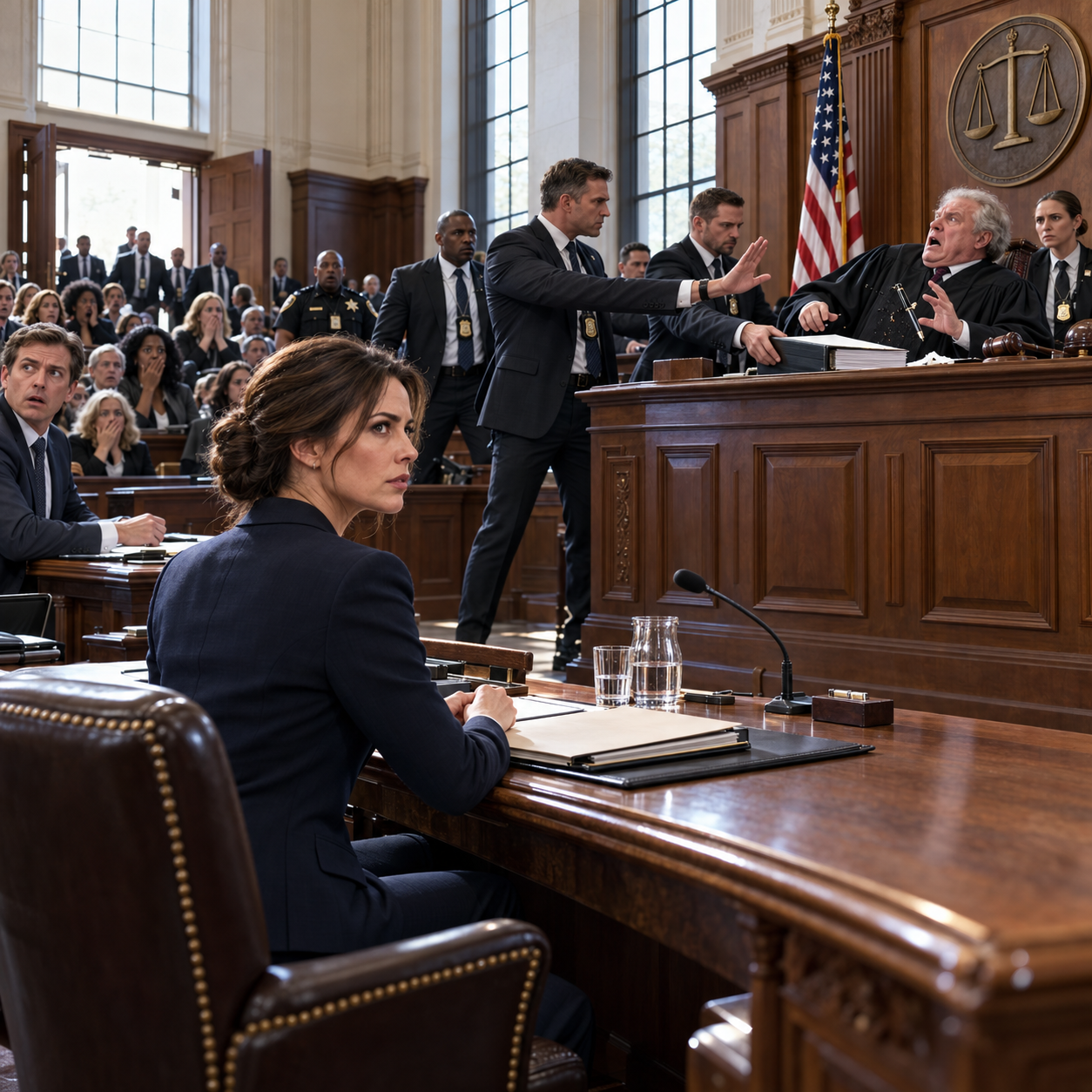
At 2:15, the rear courtroom doors opened.
Three FBI special agents entered with two deputy United States marshals. They were followed by a courthouse security supervisor who had evidently been expecting them, and the sudden movement drew every eye in the room. Nobody shouted or drew a weapon, but the change in atmosphere was immediate. Keene looked up from his order, irritated at first and then visibly alarmed.
Special Agent Tessa Moreno walked down the center aisle carrying a sealed document folder. She stopped just inside the bar, identified herself, and informed Keene that federal agents were there to execute an arrest warrant issued by the United States District Court. One marshal positioned himself beside the bench while the other remained near the courtroom entrance. The bailiffs stepped aside after a quiet instruction from their supervisor.
Keene rose so abruptly that his chair rolled backward against the wall. “What is the meaning of this?” he demanded. “I am conducting a judicial proceeding.”
“Judge Keene,” Tessa said, “a federal grand jury has returned an indictment charging you in connection with a scheme involving fraudulent property acquisitions, bribery, and extortion under color of official right. The indictment has been unsealed, and we have a warrant for your arrest.”
The room went silent except for the hum of the ventilation system. Keene stared at her badge, then toward the clerk, as though someone in the courthouse could correct an administrative misunderstanding. His pen remained trapped between his fingers, and when he tried to set it down, the cap came loose and rolled across the desktop. A line of dark ink spread over the unsigned detention order.
“This is outrageous,” he said. “You cannot simply interrupt my courtroom.”
Tessa didn’t argue about his authority. She directed him to step away from the bench and comply with the marshals, who explained that he’d be taken before a federal judicial officer. Keene glanced toward Ralston, searching for some reassurance, but the developer had stopped looking at him. For the first time since I’d encountered Roland Keene, nobody in the room moved merely because he wanted them to.
As the marshals escorted him through the side exit, a federal prosecutor approached Evelyn and confirmed that the indictment and associated proceedings would be available through the federal court. The prosecution was independent of my civil case, and nothing about Keene’s arrest automatically resolved the disputed title. Still, Evelyn placed a hand on my shoulder, and I realized I had been holding my breath.
Irene began crying quietly in the back row. Janice sat down as though her legs had finally given out, and the reporter hurried toward the hallway to call his editor. I remained at the lectern, looking at the unsigned order that had nearly been used to confine me. The power Keene wielded over so many frightened people had not disappeared, but someone outside his control was finally examining what he’d done with it.
Then I heard a chair scrape behind me.
Colin was moving toward the rear exit, his coat hanging over one arm. Before he reached the doors, an agent stepped into his path and spoke to him in a low voice. My brother stopped, looked directly at me, and slowly raised his hands as the agent produced another arrest warrant.
I had known Colin was hiding something.
I hadn’t known the federal government was prepared to charge him with helping run the scheme.
Part 7: The Evidence Inside the Judge’s Office Was Worse Than We Imagined
I didn’t speak to Colin when federal agents escorted him from the courthouse. He looked at me once as he passed, his expression twisted with fear and disbelief, but I couldn’t find a single word worth saying. Meredith was standing near the security checkpoint when they brought him into the lobby, and I watched her press both hands over her mouth. A federal agent gently guided her away from the crowd while Colin was taken through a separate exit.
Outside, the courthouse steps were filling with reporters, curious employees, and people who’d heard about the arrest through calls and text messages. Evelyn kept me from being drawn into questions about evidence or possible convictions, reminding me that the criminal proceedings had only begun. She released a brief statement confirming that we would continue contesting the fraudulent claim against my father’s property. Then she drove me home because my hands were shaking too badly to trust myself behind the wheel.
For the next several days, Hawthorn County seemed to exist in two different realities. Local officials issued statements emphasizing that an indictment was an accusation rather than a finding of guilt, while people who’d lost property in Keene’s courtroom began contacting the FBI. Some were angry, some frightened, and others simply wanted someone to explain whether they might recover anything. The courthouse reassigned Keene’s pending matters to other judges, and a judicial review process began examining orders connected to the disputed acquisitions.
The federal indictment named Keene, Grant Ralston, Colin, and two additional individuals involved in the land transactions. Prosecutors alleged that the defendants had participated in a scheme to obtain properties through false financial claims, deceptive filings, and payments disguised as consulting compensation. Some charges concerned wire fraud and conspiracy, while others focused on payments and benefits allegedly received by Keene in exchange for abusing his judicial position. The document also described conduct that had occurred long before my father became involved.
I read the indictment three times at Evelyn’s office, struggling with the difference between what I had suspected and what investigators believed they could prove. Colin was accused of helping secure signatures and property information, arranging meetings with vulnerable owners, and providing documents later used to support false debt claims. His role wasn’t limited to one desperate business decision. According to the indictment, he had assisted the scheme for more than eighteen months.
The following week, search-warrant inventories and court filings began revealing what investigators had discovered. Federal agents had searched Keene’s chambers and private office under judicially authorized warrants, collecting electronic records, correspondence, and financial materials stored outside the ordinary court system. A locked fireproof cabinet contained a set of private accounting ledgers that tracked land acquisitions using parcel numbers, initials, and payment percentages. The records weren’t self-explanatory, but investigators matched entries against bank transactions, deeds, and communications obtained through lawful process.
As the evidence developed, the pattern became clearer. Ashbrook Holdings had acted as an acquisition vehicle, purchasing disputed properties and transferring them to development-related entities after the legal challenges were exhausted. Funds then moved through several businesses, including a consulting company associated with Keene’s family. Prosecutors presented evidence that some payments ultimately covered personal expenses, travel, and luxury purchases that the judge’s legitimate income couldn’t reasonably explain.
More damaging than the money were the communications showing that Keene knew certain claims were unreliable. Messages from Sylvia Morrow, his court administrator, described missing service records and inconsistencies in sworn statements. Rather than insisting those problems be resolved, Keene allegedly directed staff to move the cases forward and restrict access to specific administrative files. When staff members questioned the instructions, they were reminded that their employment depended on following court procedures as their supervisor interpreted them.
Sylvia eventually obtained her own attorney and agreed to cooperate with investigators. Her testimony would later explain how ordinary paperwork had become a weapon against people with limited resources. Notices were misdirected, hearings were scheduled with inadequate time to respond, and disputed filings were treated as established facts before owners could challenge them. No single action explained every loss, but together they created a process designed to exhaust resistance.
I had expected the financial records to be the worst evidence. Instead, it was a series of internal emails concerning my father that I couldn’t stop thinking about. They showed Ralston’s representatives repeatedly discussing Walter Bennett as an obstacle to the road project and criticizing his efforts to organize affected property owners. One email, written months before Dad died, noted that the family would likely become more cooperative if the decision passed to his heirs.
Another communication identified Colin as the preferred contact because he was “financially motivated and easier to work with.”
I sat across from Evelyn with that sentence printed in front of me. For years, I’d believed Colin and Dad had the ordinary disagreements that came with running a family business, arguments over money, timing, and what the property should become. Now I understood that strangers had studied those disagreements and used them to identify the weakest point in our family. Colin had allowed his financial problems to become leverage, and once he accepted the first payment, he kept giving them more.
The most conclusive evidence concerned the alleged loan agreement. A forensic examination found that the electronic document had been assembled after my father’s death, using material copied from legitimate family records. The signature image originated from an older authorization document, and investigators identified files Colin had provided to Ralston’s attorney. The underlying debt had never been funded; no legitimate loan proceeds had reached Dad or his estate.
I remembered the first day I opened the court envelope, wondering whether my father had made a financial commitment he’d been embarrassed to discuss. For months, that possibility had hung over me, adding uncertainty to every decision I made. Learning that he’d never borrowed the money brought relief, but it also exposed how deliberately the defendants had exploited his death. They had created an obligation he couldn’t challenge and then tried to make me responsible for satisfying it.
The criminal case developed over the following months, and I gave testimony about the records I’d discovered, the threats made in court, and the disputed family documents. Prosecutors questioned my professional background and my relationship with the defendants, and I answered carefully without pretending my personal involvement made me impartial. I was a victim and a witness, not the prosecutor, judge, or lead federal investigator. My responsibility was to explain what I actually knew and identify the evidence supporting it.
During that period, Meredith separated from Colin. She moved into a small apartment near her sister and continued cooperating with investigators through her attorney. We spoke occasionally, usually about practical matters involving records or property, and I never blamed her for decisions Colin had concealed from both of us. When she apologized for not recognizing what was happening sooner, I told her she had been the one person in that house willing to bring the truth into the open.
Colin eventually requested a meeting with me through his attorney. Evelyn advised against discussing the facts of the criminal case, but after the lawyers arranged appropriate boundaries, I agreed to a brief conversation. We met in a conference room with a scratched wooden table, where my brother sat wearing an inexpensive blue shirt instead of the work clothes I’d known all my life. He looked older than his forty-one years.
“I never thought it would go this far,” he said.
I studied him, remembering all the opportunities he’d had to stop. “You knew Dad revoked your authority. You knew the debt wasn’t real, and you knew Keene was threatening me.”
Colin lowered his eyes. “At first, I thought Ralston could help me save the business. Then I owed them favors, and every time I tried to get out, they reminded me what I’d already signed.” He said he had been ashamed, that he’d convinced himself the road project would eventually bring enough money to make everyone whole. Then he admitted that he’d known my father was investigating the property transfers long before the funeral.
“Did Dad know you were helping them?” I asked.
Colin nodded.
“He confronted me. He said if I didn’t stop, I’d lose more than the business.” My brother wiped his face and stared at the table. “He told me to come clean while there was still time. I thought he was exaggerating.”
I asked why he hadn’t told me after Dad died, when we were standing together beside the grave. Colin said he was afraid I’d turn him in. I understood the fear, but it didn’t explain why he’d allowed me to walk into Keene’s courtroom alone, why he’d urged me to sign away the property, or why he’d kept cooperating afterward. Fear might explain the beginning of his silence; preserving his own interests explained the rest.
He asked whether I could ever forgive him.
“I don’t know what forgiveness would mean when you kept making choices that hurt other people,” I said. “But I’m not going to pretend we can go back to being the family we were.”
He began crying, and for a moment I felt the old instinct to comfort him. Then I remembered Irene Bell’s mother asking about her peach trees from a bedroom she never wanted to live in. I stood up, told him I hoped he would finally tell the complete truth, and left without embracing him.
Two months later, Colin entered a guilty plea to conspiracy to commit wire fraud and agreed to cooperate in the remaining prosecution. His admissions helped establish the use of fraudulent property documents and the purpose of payments he’d received. They also confirmed that the scheme had operated through relationships of dependency, professional influence, and carefully disguised financial obligations. What happened in Courtroom 4B hadn’t been a sudden abuse of power; it was the visible edge of something that had been operating quietly for years.
Near the end of the investigation, Tessa called to tell me that certain older records could finally be discussed. She asked me to visit the federal office because the material concerned my father personally. I expected another statement or document he’d given to a county official. Instead, she showed me a redacted complaint submitted to federal investigators eight months before his death.
The complainant’s name was Walter Bennett.
Dad had reported suspected fraud involving the county redevelopment project, the property acquisitions, and unusual judicial intervention. His complaint had contributed to the earliest stages of the federal inquiry, although agents hadn’t yet obtained enough independent evidence to establish the full conspiracy. He’d provided names of affected families and requested that investigators protect vulnerable property owners from retaliation.
I stared at his signature at the bottom of the document. The familiar slant of the letters brought back every birthday card, school permission slip, and handwritten note he’d left for me over the years. I’d believed I was finishing a fight he hadn’t known how to begin.
But Dad had already taken the first step.
And the people who tried to take his land had been afraid of what he’d started long before they ever met me.
Part 8: I Kept My Father’s Land, but I Never Took My Brother Back
Fourteen months after Keene’s arrest, I returned to Richmond to attend the closing days of his federal trial. The courtroom was larger and brighter than Courtroom 4B, with plain wooden furnishings and windows that overlooked the city rather than the courthouse parking lot. Keene sat beside his attorneys wearing a dark suit that made him look like an ordinary middle-aged defendant. He no longer controlled who could speak, what evidence would be heard, or when the proceedings would end.
The prosecution presented financial records, testimony from cooperating witnesses, internal communications, and evidence from victims whose properties had been transferred through the disputed proceedings. Defense attorneys challenged witness credibility, attacked the government’s interpretation of payments, and argued that judicial decisions should not be mistaken for criminal conduct merely because people disagreed with them. Those were questions the jury had to consider seriously, and I was grateful the case was being tested through a process Keene hadn’t permitted his own victims to receive.
Irene Bell testified about her mother’s property. She described the notices they hadn’t received, the mounting legal expenses, and the day she realized the farmhouse was no longer theirs. She didn’t speak dramatically, but her voice faltered when she explained how her mother continued asking about the peach orchard after moving into Irene’s duplex. Several jurors watched her closely as she described the old kitchen window and the view across the fields.
Leonard Price testified about the development budget and the discrepancies between early engineering assessments and later funding representations. Janice Holliday explained the unusual handling of court records, while Sylvia Morrow described directions she’d received from Keene’s chambers. Colin also testified under his cooperation agreement, admitting that he’d supplied documents and facilitated transactions he understood were dishonest. He never looked toward me while answering questions about Dad.
When the prosecution introduced the fabricated loan agreement, I felt the same cold anger I’d experienced upon discovering it. The document had once appeared official enough to frighten me into questioning everything Dad had told me about his finances. Now experts explained how its component files had been assembled and how the purported debt lacked any genuine funding transaction. The piece of paper intended to take our property had become evidence against the people who created it.
After deliberating, the jury convicted Keene on multiple federal charges, including conspiracy, wire fraud, and extortion-related offenses. Ralston had previously entered a plea agreement after reviewing the evidence against him, while other participants faced separate proceedings. The convictions didn’t erase the damage, but they established that the wrongdoing was criminal rather than merely aggressive business conduct. For the families who’d spent years being told their concerns were misunderstandings, that distinction mattered.
At sentencing, Keene received a substantial federal prison term, followed by supervised release and financial penalties. The court also ordered restitution under the applicable law, although the amount recoverable from the defendants would remain subject to complicated proceedings. Ralston received a prison sentence for his role, and several of the companies involved faced asset forfeiture and civil claims. Colin was sentenced to thirty months in federal prison after the judge considered his cooperation and the harm he’d helped cause.
I attended Colin’s sentencing but didn’t speak on his behalf. He had submitted a letter expressing remorse and acknowledging that financial pressure did not excuse what he’d done. When he saw me sitting behind the attorneys, he gave a small nod. I returned it because we were still two people who had grown up in the same farmhouse, but I didn’t approach him afterward.
Some relatives thought I was being unnecessarily harsh. An aunt called to remind me that our father had always taught us to look after each other, and a cousin suggested that Colin had suffered enough. I told them they were free to maintain whatever relationship they wanted with him, but they didn’t get to decide what I owed him. He’d had years to choose honesty and had repeatedly chosen to protect himself at the expense of people who trusted him.
My relationship with Meredith remained different. She had begun rebuilding her finances, found steady work with a regional medical supplier, and moved into an apartment with windows overlooking a small community garden. We sometimes met for lunch when I visited Richmond, and our conversations gradually stopped revolving around the criminal case. I respected the way she’d acknowledged what she knew without trying to defend the indefensible.
The recovery of my father’s property followed a separate legal process. Once the fabricated debt was exposed, Evelyn successfully sought relief from the disputed orders, and Ashbrook’s claim against the estate was dismissed. Because title to our land had never been validly transferred, we avoided the complications faced by families whose properties had passed through several purchasers. The appellate proceedings and related civil claims ended with the estate’s ownership protected and the fraudulent encumbrances cleared.
For the other families, justice was considerably less simple. Some recovered property through negotiated settlements or successful challenges to the original transactions. Others received compensation from available assets and restitution proceedings, but couldn’t reclaim homes that had already been demolished or incorporated into larger developments. Irene’s mother’s farmhouse had been torn down, and no court order could put it back where it belonged.
That knowledge kept me from celebrating Keene’s conviction as though it had solved everything. A prison sentence could punish the people responsible, but it couldn’t return birthdays spent in old kitchens or restore the sense of security those families had lost. The legal victories mattered, particularly because they prevented more fraudulent transfers, yet the consequences of the scheme would remain long after the defendants completed their sentences. I learned to hold relief and grief at the same time.
The county redevelopment project also changed. The original financing structure was suspended while independent auditors reviewed the land acquisitions, public representations, and environmental assessments. Revised plans removed several disputed parcels from the construction schedule and required additional groundwater testing and public review. Some development eventually resumed under different oversight, but the proposed road through our property was abandoned.
I remember the day Evelyn called with confirmation that the final disputed lien against Dad’s estate had been released. I was standing beside the equipment barn, watching a pair of bluebirds argue over the nesting box Dad had mounted years earlier. She explained the recording information, told me the remaining administrative steps were complete, and asked whether I wanted her to mail the original documents or keep them at her office temporarily. I asked her to send them because I wanted to place them in Dad’s filing cabinet myself.
When the envelope arrived, I carried it into his study. His old desk still held a small brass lamp, a wooden ruler, and a framed photograph of the two of us standing beside an Army transport truck when I was seventeen. I filed the court documents beneath the property deed, where they belonged, and put the revocation of Colin’s power of attorney into a separate folder. For the first time since the funeral, the files felt like ordinary family records rather than evidence of a battle.
There was still the matter of Dad’s unfinished veterans center. For several months, I’d avoided thinking about it because protecting the land had consumed so much of my energy. Once the legal pressure eased, I began calling the former service members, nonprofit organizers, and local contractors who had discussed the project with him. Many remembered his plans and were eager to help, although they warned that building a proper rehabilitation retreat would require sustainable funding, insurance, accessibility planning, and professional management.
I didn’t want to turn the property into a monument to my father’s suffering or make promises I couldn’t keep. Instead, I established a nonprofit organization with an independent board that included veterans, a rehabilitation specialist, an experienced nonprofit administrator, and a local financial adviser. We worked with an attorney to ensure the land would be used for the mission Dad envisioned, with safeguards against future unauthorized transfers. I contributed a portion of my savings, and we raised additional funds through private donations and legitimate community grants.
Our first project wasn’t a row of beautiful cabins or a grand opening ceremony. It was repairing the existing workshop and converting part of it into a safe, accessible space for woodworking classes and small support gatherings. We installed new lighting, widened the entrance, repaired the roof, and bought equipment suitable for people with varying physical abilities. A retired Army mechanic volunteered to oversee the practical instruction, and a local therapist helped us develop programs appropriate for participating veterans.
Irene Bell attended the first community workday. She arrived carrying a small peach sapling in the back of her car, explaining that she’d grown it from a cutting taken from her mother’s orchard before the property was cleared. She asked whether we had room for it somewhere near the farmhouse. I showed her a sunny patch of ground beside the fence, where the soil drained well and Dad used to plant tomatoes.
We dug the hole together while volunteers worked on the workshop behind us. Irene held the sapling upright as I filled the space around its roots, and we pressed the soil down with our boots. She stood quietly for a moment, brushing dirt from her hands. Then she said, “Mom would have liked knowing something from that place is growing here.”
I couldn’t think of a better reason to preserve the land.
By the following summer, the workshop was hosting regular activities, and two accessible cabins were under construction. We weren’t operating the full retreat Dad had imagined, but we had a realistic budget, experienced partners, and a plan that didn’t depend on one person doing everything. I remained involved with financial oversight and fundraising while a qualified program director managed daily operations. I also resumed professional work, choosing assignments that didn’t create conflicts with the ongoing recovery proceedings.
Colin wrote from prison several times. His first letter was mostly an apology, but later letters included memories of Dad, questions about the farmhouse, and requests to know whether the veterans center had opened. I read them without responding for several months. Eventually, I sent one letter explaining that the property was secure, the nonprofit was operating, and I was not prepared to rebuild our relationship.
I told him I hoped he would use his sentence to understand the consequences of his choices, not merely regret being caught. I also made clear that he would have no role in managing the property, the nonprofit, or Dad’s estate. It wasn’t an attempt to hurt him; it was a boundary I needed to live peacefully. I mailed the letter and stopped checking the mailbox with a sense of obligation.
The last time I heard about Keene, it was through a newspaper article discussing additional civil settlements arising from the property scheme. His attorneys were still contesting some financial findings, and several victims remained involved in complicated recovery proceedings. I read the article over breakfast, folded the paper, and went outside to meet a contractor about installing an accessible path between the workshop and the pond. There was no pleasure in picturing Keene in prison, but I no longer felt that his fate required my attention.
One September afternoon, almost two years after Dad’s funeral, I stood on the farmhouse porch watching a group of veterans finish a woodworking session. Laughter drifted from the open workshop doors, mixed with the buzz of an electric saw and the smell of freshly cut pine. Near the fence, Irene’s peach tree had grown several feet taller, its leaves moving in the light breeze. The new cabins were visible beyond the meadow, their windows reflecting the late afternoon sun.
I took Dad’s old folding chair from the porch and sat where he used to sit after mowing the fields. For years, I’d believed that winning meant proving someone had underestimated me, exposing a secret advantage, or forcing an arrogant man to recognize my authority. What happened in Keene’s courtroom taught me something different. The most important evidence wasn’t the work I’d done for the federal government; it was the trail of wrongdoing that ordinary people had been trying to bring into the open for years.
Keene lost his authority because he used it to protect a criminal arrangement. Ralston lost his business and freedom because he treated vulnerable families as obstacles to profit. Colin lost my trust because he repeatedly chose money and self-preservation over honesty, even when he still had opportunities to stop. Their consequences came from decisions they had made, not from any title I possessed.
I still missed the brother I’d grown up with. Sometimes I remembered him running beside my bicycle or bringing groceries after Dad’s funeral, and I felt the ache of knowing those memories would never make our relationship safe again. I didn’t need to erase the good years to acknowledge the harm that followed. I could remember that he had loved me once and still decide that he would not be part of my future.
As the sun dropped behind the oaks, a veteran named Daniel walked up the porch steps carrying a wooden birdhouse he’d completed during the afternoon class. He asked whether he could hang it near the pond because he’d noticed several birds nesting around the old fence posts. I told him Dad would have approved of the idea, and we went together to find a suitable tree. Daniel spoke about how much he appreciated having somewhere to spend a few hours without appointments or expectations, and I listened as we walked across the grass.
After he left, I stood beside the pond, watching the last sunlight move across the water. My father had spent his final years fighting to protect a piece of land, but he’d never wanted the land to be the whole story. He wanted it to offer people a place where they could recover their confidence, build something useful, and begin again without having to prove their worth to anyone.
I looked back toward the farmhouse, the workshop, and the first two cabins standing beyond the meadow. The road the developers wanted to build would never cut through those fields, and no judge could make me sign away what Dad had left us.
For the first time in a long while, I wasn’t thinking about the courthouse, the trial, or the people who had betrayed us.
I was thinking about the work we’d do tomorrow.
And that was the future my father had been trying to protect.
THE END!
Disclaimer: Our stories are inspired by real-life events but are carefully rewritten for entertainment. Any resemblance to actual people or situations is purely coincidental.