“She Can’t Fly In A Storm!” My Sister Shouted. The Medevac Crew Asked Me To Take The Controls Anyway. “Our Pilot Is Bleeding Out,” They Said. I Recognized Three Faint Clicks On His Open Radio. My Sister Called It Static. I Shook My Head. “He’s Not Asking For Help. He’s Warning Us About The Landing Zone.” The Truth Involved A Mission They Were Never Supposed To Hear About.
My sister laughed when I told her the medical helicopter outside was approaching the wrong side of the mountain. She called me a failed pilot in front of our parents and an airport full of stranded passengers, and neither of them defended me. I didn’t argue. I simply answered when the injured pilot asked for me by my old military call sign. Two days after we brought his helicopter down, a photograph arrived that made me wonder whether the storm had been our greatest danger.
## Part 1
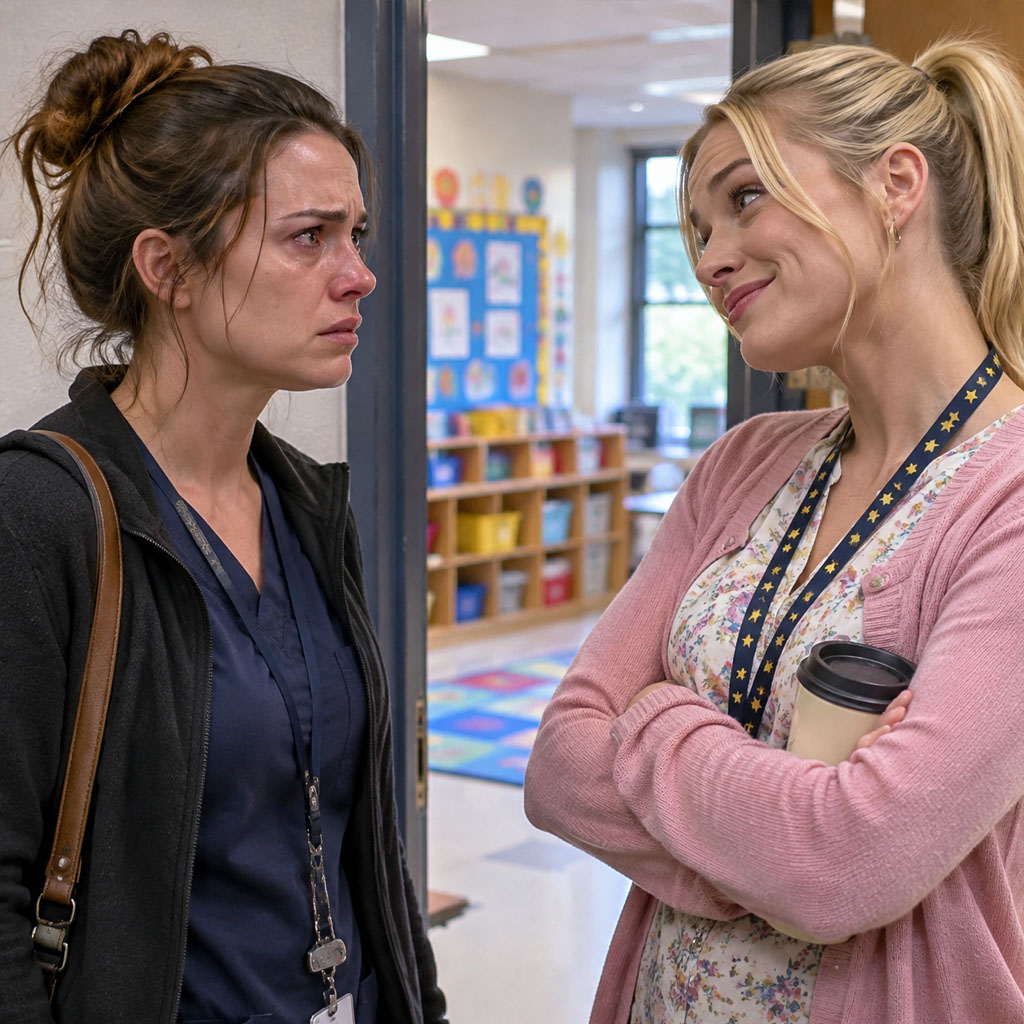
The first thing my sister Delaney said when she saw my flight jacket was, “Please tell me you aren’t wearing that to the family dinner.” We were sitting in the departure lounge at Cape Alder Regional Airport on the North Carolina coast, surrounded by passengers whose afternoon flights had been canceled because of Tropical Storm Iris. Rain hammered the windows hard enough to make the aluminum frames tremble, and the overhead lights flickered whenever the wind pushed against the building. I had been awake since four that morning, helping secure aircraft at the maintenance hangar, and the last thing I cared about was whether my faded olive-green jacket embarrassed her.
“It’s warm,” I said, pulling the zipper higher.
“It’s October, Rowan, not Antarctica.” Delaney adjusted the cuff of her expensive cream-colored blazer and glanced toward our parents, apparently expecting them to appreciate the joke. “You’re thirty-two years old, and you still dress like you’re fixing lawn equipment.”
My father, Martin Harker, stared at the departure board while my mother, Joelle, gave me an apologetic smile that vanished the moment Delaney looked her way. I had seen that expression my entire life. My mother hated confrontation, especially when it involved the daughter who paid for expensive Christmas presents and liked reminding everyone how much money she made.
We were supposed to fly to Chicago for my grandmother’s eighty-fifth birthday celebration, a trip Delaney had organized down to the restaurant reservations and matching luggage tags. She worked as a senior director of corporate partnerships for Breakwater Development Group, a company involved in waterfront redevelopment projects along the southeastern coast. Her job involved negotiating contracts, entertaining executives, and convincing rooms full of influential people that she knew exactly what she was doing. She was excellent at it, and somewhere along the way, she had decided that anyone whose accomplishments couldn’t be measured by a salary or a business card wasn’t particularly accomplished.
I taught flying lessons, inspected aircraft, and repaired engines at a small airfield seven miles from Cape Alder. According to Delaney, that meant I had wasted my engineering degree and settled for being the family disappointment. She never asked why I had left the Army or why several older pilots addressed me with an unusual kind of respect. My parents had stopped asking questions about my military service after I came home, and I had stopped offering answers.
“Maybe you can get us a private plane,” Delaney suggested, watching another cancellation appear on the board. “You must have connections with somebody who owns a little propeller toy.”
“Nobody sensible is flying a light airplane through this,” I answered.
She laughed loudly enough that two nearby passengers turned around. “Listen to her, suddenly she’s the voice of aviation safety.”
My father sighed. “Girls, we’re all tired.”
I turned back to the weather display on my tablet, where the approaching storm showed an ugly spiral of precipitation crossing the coastal ridge north of the airport. Iris had weakened before reaching North Carolina, but its sustained winds and violent gusts were still dangerous, particularly around the narrow valley separating the airfield from the ocean. Cape Alder had only one instrument-equipped runway and a small emergency helicopter landing area near its southern service road. In ordinary weather, the terrain was manageable; in conditions like these, the ridge created wind patterns that could overwhelm even experienced crews.
I knew that valley better than the people who had designed the airport’s newest approach diagrams. During my last year in uniform, I had spent six months helping evaluate coastal evacuation routes for military and civilian emergency aircraft. After leaving active duty, I had continued studying the local terrain, initially because it gave me something productive to do when I couldn’t sleep. There were places on that ridge where the wind changed direction so suddenly that an aircraft could lose altitude before the pilot understood what had happened.
At 3:42 p.m., a sharp electronic tone interrupted the announcements. The departure monitors switched to an emergency advisory, and I saw the operations coordinator, Ellis Durant, hurry out of his office carrying a radio. He was usually a cheerful man who knew every airport employee by name, but his face had the tight, bloodless look of someone receiving terrible news. Two security officers moved toward the operations counter as a strained voice emerged from the speaker.
“Cape Alder operations, Harbor Four-Two declaring an emergency. Medical transfer inbound. Pilot injured. Request immediate coordination with regional approach control.”
Conversations stopped across the lounge. A little boy abandoned his coloring book, and a woman near the vending machines pressed her telephone against her chest. Through the rain-streaked windows, the runway lights looked like blurred red and white reflections on black glass.
Delaney leaned toward our mother. “Somebody really needs to close this airport.”
I stood and moved closer to the operations counter, where an aircraft tracking display showed a helicopter northeast of the field. Its reported altitude was changing irregularly, and its projected course carried it toward the northern ridge instead of the protected southern approach. The helicopter was moving into terrain where the storm’s southeasterly winds would be pushed over the bluff and descend unpredictably on the other side.
“Has approach control warned them about the ridge?” I asked.
Ellis barely glanced up. “They’re working the emergency now.”
“The north side isn’t safe in this wind.”
“Rowan.” Delaney had followed me, apparently determined to prevent another embarrassment. “Leave these people alone.”
I watched the moving symbol on the display and felt an old sensation return, a cold concentration I hadn’t experienced in years. There was no room for pride or anger when an aircraft was in trouble. There was only the aircraft, the conditions, and whatever information could keep the people inside alive.
Another transmission came through, this time from a younger man struggling to keep his breathing steady. “Harbor Four-Two, copilot speaking. Aircraft controllable, but we’re encountering severe turbulence. Captain Beck has a head injury and cannot maintain the controls. We have a critical patient aboard, limited visibility, and unreliable navigation indications.”
Ellis grabbed his microphone and relayed the report to the approach controller. Beside me, a ground crew supervisor began calling the airport rescue unit. I asked whether the helicopter had received the latest local wind observation, but before anyone could answer, three short clicks sounded from the radio.
I stopped breathing for a moment.
The clicks came again, evenly spaced, followed by silence. I remembered hearing that exact pattern through a different headset, years earlier, while sitting beside a frightened young pilot in a dark valley thousands of miles from North Carolina. It wasn’t an official aviation distress code, and I knew that nobody listening had any reason to recognize it.
Delaney rolled her eyes. “Now the radio’s broken too.”
“That’s not interference,” I said.
She folded her arms. “Of course you would know.”
I looked at Ellis. “Can you ask the injured pilot whether he’s deliberately keying his microphone three times?”
Ellis hesitated, then repeated my question to the controller, who passed it to the helicopter. For several seconds, nothing happened except the low hiss of the radio and the distant rumble of thunder. Then three more clicks broke through, followed by a hoarse voice that made my stomach tighten.
“Cape Alder, this is Beck. Need… Kestrel. Find Kestrel.”
I knew that voice, although I hadn’t heard it in almost five years.
Delaney looked confused. “Who’s Kestrel?”
The injured pilot spoke again, forcing the words through obvious pain. “Former Captain Rowan Harker. She knows the southern corridor. Do not commit us to the north approach.”
Ellis slowly turned toward me.
My sister laughed once, uncertainly. “There must be another Rowan Harker.”
“No,” I said. “There isn’t.”
Ellis stared at the embroidered insignia on my jacket, then at the emergency information flashing across his monitor. “Captain Harker, are you the Army pilot who worked with Chief Warrant Officer Hollis Beck?”
“Yes.”
His expression changed from confusion to sudden relief. “Then we need your help immediately.”
Behind him, the aircraft’s altitude indicator dropped again, and the copilot’s frightened voice returned.
“We’ve lost the ridge on our display. I need someone to tell me where we are.”
I reached for the headset Ellis offered, but Delaney stepped between us.
“Absolutely not,” she snapped. “She can’t fly in a storm. You’ll get those people killed.”
And for the first time in my life, the person standing in front of me wasn’t my older sister.
She was simply an obstacle between me and a crew that needed help.
## Part 2
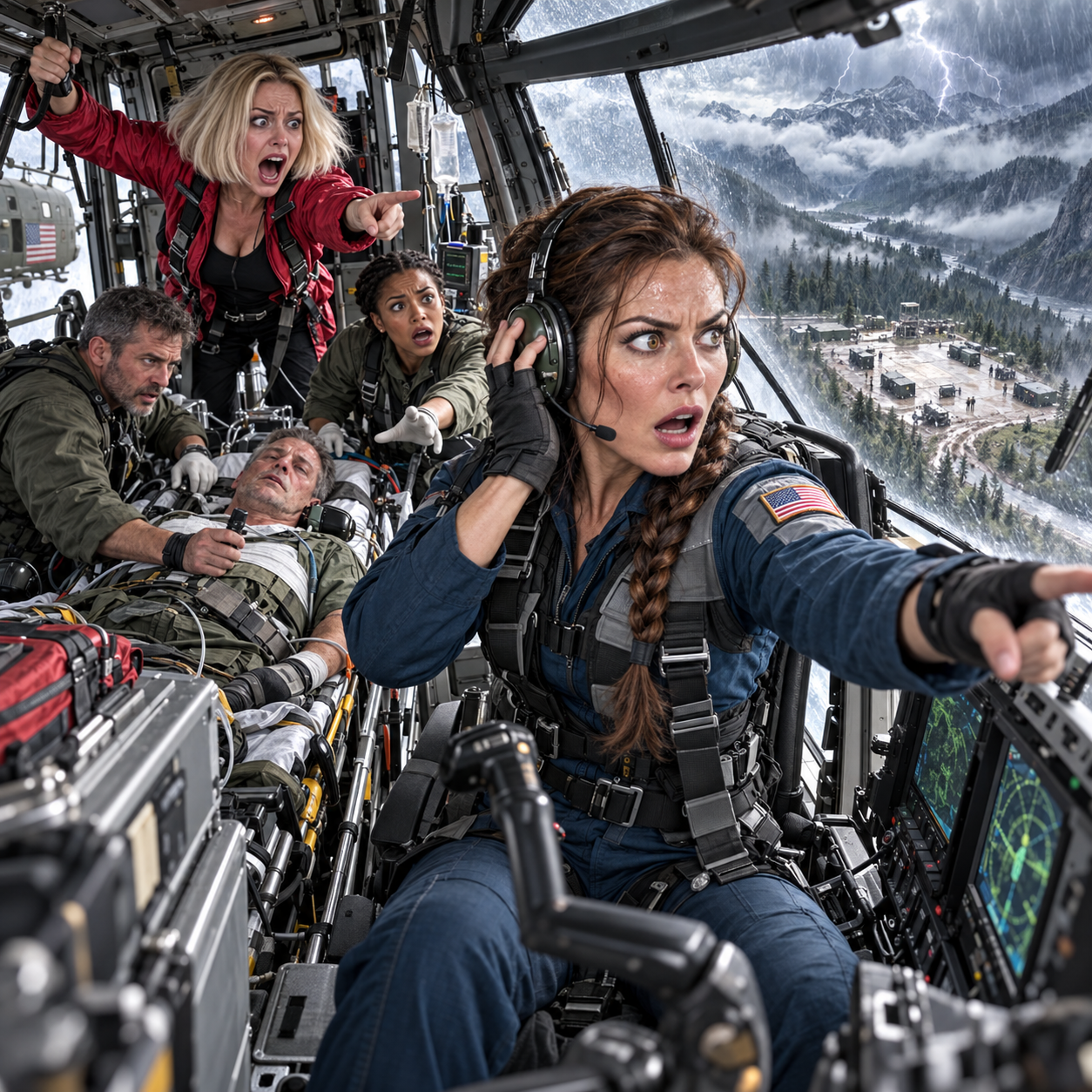
Ellis moved around Delaney without touching her and pointed toward the security officer beside the counter. “Please keep this area clear,” he said, then looked directly at me. “What do you need, Captain?” I told him I wasn’t there to replace the air traffic controller, and that every decision still had to be coordinated through the people responsible for the aircraft. What I could provide was local terrain knowledge, weather observations, and a familiar voice for two pilots whose judgment was being tested to its limit.
“Get the latest wind readings from the south field, confirm the landing area’s lighting, and have somebody check the access road,” I said, adjusting the headset. “I also need the copilot’s instrument readings and position, not an estimate from somebody watching the tracking display.” Ellis immediately began assigning those tasks while the approach controller established a direct communication link. Behind me, Delaney was arguing with a security officer, but I had already stopped listening.
“Harbor Four-Two, this is Kestrel at Cape Alder operations. Nolan, can you hear me?”
A sharp breath came over the radio. “Rowan?”
“That’s right. Tell me what’s working.”
“Attitude instruments are good. Satellite navigation is intermittent. We’re holding altitude, but the gusts are pushing us toward the ridge.” His voice cracked, and I recognized it immediately as the voice of a man trying not to imagine what would happen if his hands slipped.
Nolan Price had been a newly qualified helicopter pilot when I first met him overseas, all nervous energy and misplaced confidence. I had spent months teaching him to distrust shortcuts, double-check his instruments, and never let embarrassment dictate a flight decision. I remembered one night when he had refused to admit he was disoriented until our aircraft came dangerously close to a canyon wall. He survived because another pilot recognized the problem early, and afterward he promised me he would never confuse pride with competence again.
“You’re not going to solve the whole storm,” I told him. “Your job is to keep the helicopter under control while we get you a safe option.”
“Beck keeps trying to talk.”
“Tell him I heard his clicks.”
A faint sound came through the headset, followed by two deliberate microphone taps. During our deployment, Hollis Beck had invented a crude system of microphone signals for situations when speech was impossible or dangerous. Three clicks meant there was a threat the other crew member hadn’t recognized; two meant the warning had been understood. It was simple, imperfect, and never intended to replace normal communication, but Hollis knew I would remember it.
I asked Nolan to describe what had happened before his captain was injured. He explained that the helicopter had been transferring a seriously hurt utility worker from an isolated emergency clinic to the regional trauma center when a violent downdraft struck near the northern ridge. Hollis had been thrown against equipment inside the cockpit despite his restraints, injuring his forehead and leaving him barely able to speak. Their intended destination had been a hospital farther inland, but worsening visibility and Hollis’s condition had forced them to divert toward Cape Alder.
“Why did dispatch send you to the north side?” I asked.
“That’s the preferred arrival route on the packet they gave us.”
I looked at Ellis, who was searching for the local approach advisory. “The preferred route in normal conditions,” I said. “Not necessarily in this storm.”
Nolan hesitated. “Our dispatch information says the southern landing area has no operational lights and the access road is closed.”
That made no sense. I had inspected the southern landing lights myself three weeks earlier, and although some equipment needed maintenance, the landing area had been available for emergency use. I asked Ellis to verify the current status, and he telephoned the airport maintenance supervisor while the controller worked with Nolan on a safe course away from the highest terrain. Within a minute, Ellis covered the receiver with his palm and whispered that nobody had officially closed the southern landing area.
“Then why does his paperwork say it’s closed?” I asked.
Ellis had no answer.
Outside, the wind shrieked across the terminal roof, and the emergency lights on the airport’s rescue truck began rotating. I could hear Nolan struggling through another gust, his breathing becoming ragged as several warnings sounded in the cockpit. I kept my voice level, asking him to report his altitude, heading, and airspeed while the controller provided the next instructions.
“Remember what you taught me about the horizon?” Nolan asked suddenly.
“That your body can lie to you.”
“Mine’s telling me we’re upside down.”
“Then trust the instruments that are functioning, and tell the controller exactly what you’re seeing.”
He acknowledged, and for a few seconds the radio carried nothing but breathing and the engine noise beneath it. The controller instructed him to maintain a safe altitude while turning away from the ridge, using radar assistance and the helicopter’s instruments rather than trying to descend through the weather. I described the valley’s wind behavior and suggested the southern approach as a possible alternative once the aircraft was positioned safely. Nobody was pretending that I could see through the storm or guarantee the outcome, but the information gave Nolan something useful to work with.
A woman from the airport rescue crew appeared beside Ellis and confirmed that the southern landing surface was clear of aircraft. Its lights had just been switched on from the local maintenance panel, and the rescue vehicles were moving toward the pad. The controller reviewed Nolan’s position and approved the revised approach, while I explained where the valley opened toward the airfield and where it narrowed unexpectedly.
“There’s a water tower west of the service road,” I said. “It’s marked on your chart, but the ridge behind it can make the distance deceptive. Don’t start looking for the pad until the instruments and controller put you in a position where you can safely see it.”
Nolan answered with a shaky laugh. “You still sound like you’re grading my check ride.”
“Then give me something worth passing.”
I heard him exhale, and the tightness in his voice eased slightly. He reported a stable heading, then another wind shift, followed by the first glimpse of the airport’s southern perimeter lights. The controller continued feeding him position information as the helicopter descended toward a height from which Nolan could make a visual approach. Through the terminal glass, I saw the rescue truck’s lights move toward the southern service road and stop.
For one terrible second, Nolan’s voice vanished beneath a burst of radio interference. Then he returned, shouting that the helicopter had been struck by another powerful gust. The controller instructed him to discontinue the descent if he couldn’t maintain control, but Nolan reported that he still had the landing surface in sight and enough control to continue. I gripped the edge of the counter until my fingers hurt.
“Hollis,” I said into the microphone, “if you can hear me, stay still and let Nolan fly.”
Two clicks answered.
The helicopter appeared through the rain as a dark shape moving sideways against the runway lights. Its nose shifted, the fuselage corrected, and then the aircraft hovered briefly over the marked landing surface before settling heavily onto the concrete. Water exploded outward beneath the rotor wash, and Nolan announced that they were down with the engines still running.
I closed my eyes for half a second, then asked for confirmation that the crew and patient were safe. Nolan answered that they were intact, but the medical attendant needed immediate help transferring the patient. The rescue coordinator reported that the ambulance had stopped at the southern service entrance because a newly installed security barrier blocked the road.
Ellis stared at the telephone in his hand. “That gate was supposed to stay open for emergency vehicles.”
A fire officer requested authorization to remove the obstruction, and the rescue coordinator immediately approved the action. I watched the firefighters hurry toward the locked barrier while the helicopter’s rotors continued turning in the rain. Every minute mattered for the injured patient, yet the people trying to reach him had been stopped by something that should never have existed.
Then Ellis read the identification printed across the barrier on the maintenance camera.
BREAKWATER DEVELOPMENT GROUP.
My sister’s company.
And the report authorizing that gate had been approved under her name.
## Part 3
The firefighters cut through the chain in less than three minutes, but those minutes felt longer than the entire approach. I watched the ambulance finally reach the helicopter as the medical crew prepared to transfer the injured utility worker. By the time the patient was loaded and moving toward the hospital, another ambulance had arrived for Hollis, who was conscious but disoriented. Nolan remained with the aircraft until the engines were shut down, his hands trembling so badly that a ground technician had to help him unfasten his harness.
Only then did I remove the headset.
The terminal was strangely quiet. A few passengers applauded when Ellis announced that the helicopter had landed safely, but most stood silently, watching the emergency vehicles disappear into the rain. My father approached me first, looking as though he had aged several years in the past twenty minutes.
“Rowan,” he said, “what exactly did you do in the Army?”
I looked at him. “I flew helicopters, Dad.”
“I know that, but I never understood…”
“You never asked.”
He flinched, and I regretted the sharpness of my voice for a moment. Then I remembered how many family dinners I had spent listening to Delaney explain my supposed lack of ambition while my father quietly changed the subject. When I returned from my final deployment, I had tried to tell him what my last assignment had involved, but he’d said the military was behind me now and I should focus on finding a proper career.
My mother touched my elbow. “Honey, we’re proud of you.”
I wanted to believe her. Instead, I asked why she hadn’t said anything when Delaney insisted I was incapable of helping. My mother glanced at my sister, who stood near the departure board making an urgent telephone call, and answered with the same phrase she had used throughout my childhood.
“You know how Delaney gets when she’s stressed.”
That was the moment I understood that even an emergency landing couldn’t change the rules of our family. Delaney could humiliate me publicly, and everyone would explain her behavior as an unfortunate consequence of pressure. If I objected, the conversation would become about my reaction rather than what she had done.
Ellis interrupted before I could answer. He needed my help documenting the conditions that had affected the helicopter’s diversion, and he wanted me to speak with the airport safety manager when the immediate emergency ended. I agreed, then asked him to preserve the dispatch information, the landing-area maintenance records, and the security camera footage showing the blocked road.
“Is there a problem with the gate?” my father asked.
“I don’t know yet,” I said. “But emergency crews shouldn’t need cutting equipment to reach a designated medical landing area.”
Delaney ended her call and approached us with a carefully controlled expression. “I heard that,” she said. “The gate is part of an approved construction project, and nobody should be making accusations before the facts are established.”
“I haven’t accused anyone.”
“You’re already acting like this is some investigation.”
“An ambulance was delayed because a road was locked.”
She glanced toward Ellis. “There are procedures for emergencies, Rowan. You can’t expect every private contractor to anticipate every possible disaster.”
I stared at her, trying to reconcile that statement with the woman who had once cried because a hotel concierge hadn’t delivered her luggage quickly enough. The inconvenience of a delayed suitcase had apparently deserved more sympathy than a critically injured man waiting for an ambulance. Ellis said the airport would review the matter through its established safety process, and Delaney immediately seemed relieved that somebody had used official language.
Our flight to Chicago was canceled for the night. My parents arranged a hotel room near the airport, while Delaney announced that she needed to return to her office because the construction gate had somehow become a public relations issue. She asked whether I wanted a ride, sounding almost offended when I declined.
I spent the evening in the maintenance office, helping Ellis reconstruct the timeline from the radio recordings and available weather reports. The helicopter had never been scheduled to land at Cape Alder, which meant its crew had depended heavily on the diversion information provided during the emergency. That information included an outdated operational notice describing the southern landing area as unavailable, even though airport personnel had continued maintaining it for medical emergencies.
“Who issued the notice?” I asked.
Ellis found the document in the airport’s electronic records. It had been submitted as part of a construction coordination package by Breakwater Development Group, then incorporated into the briefing materials used by a regional dispatch contractor. The airport had accepted the notice without identifying the conflict between the construction paperwork and its own emergency response plan.
I read the document twice. A temporary restriction on routine vehicle access had somehow been interpreted as a complete closure of the southern medical landing area. Nobody had reconciled the difference, and the mistake had remained in the system for almost six months.
“Delaney handles corporate partnerships,” I said. “She isn’t an aviation safety specialist.”
“Her name appears on the construction coordination correspondence,” Ellis answered. “That doesn’t tell us whether she prepared the technical information.”
I appreciated his restraint. I had spent enough years investigating aviation incidents to know that a name on a document was a starting point, not proof of responsibility. Still, I remembered an argument with Delaney the previous spring, when she’d asked me whether the airport’s southern access road was really necessary.
She had been sitting at our parents’ kitchen island, scrolling through architectural drawings on her laptop. I told her the road provided emergency vehicle access to the helicopter pad and needed to remain usable during construction. She responded that developers couldn’t halt an entire project because somebody might need a helicopter someday.
At the time, I assumed she was simply being dismissive. Now, remembering the ambulance trapped behind the gate, her words made me uneasy.
Two days later, I visited Hollis at the regional hospital. He had suffered a concussion and a painful shoulder injury, but his doctors expected him to recover. When I entered his room, he was sitting upright, struggling to open a packet of crackers with one hand.
“Still rescuing people who refuse to follow instructions?” he asked.
“Still making life difficult for your copilots?”
He grinned, then looked down at his bandaged hand. “I thought Nolan was going to lose the aircraft over that ridge.”
“You gave him a warning.”
“I knew he’d recognize the clicks, but I needed somebody who understood what was wrong with the route.” Hollis paused and studied me. “You wrote that hazard assessment years ago, didn’t you?”
I nodded. Shortly after leaving the Army, I had worked with the county to document terrain hazards around Cape Alder, including the northern ridge and the importance of keeping the southern emergency landing area available. The assessment was supposed to guide development near the airfield and prevent construction from interfering with emergency operations.
Hollis looked troubled. “Then somebody should explain why the briefing package we received said the opposite of what your assessment recommended.”
Before I could answer, my telephone vibrated.
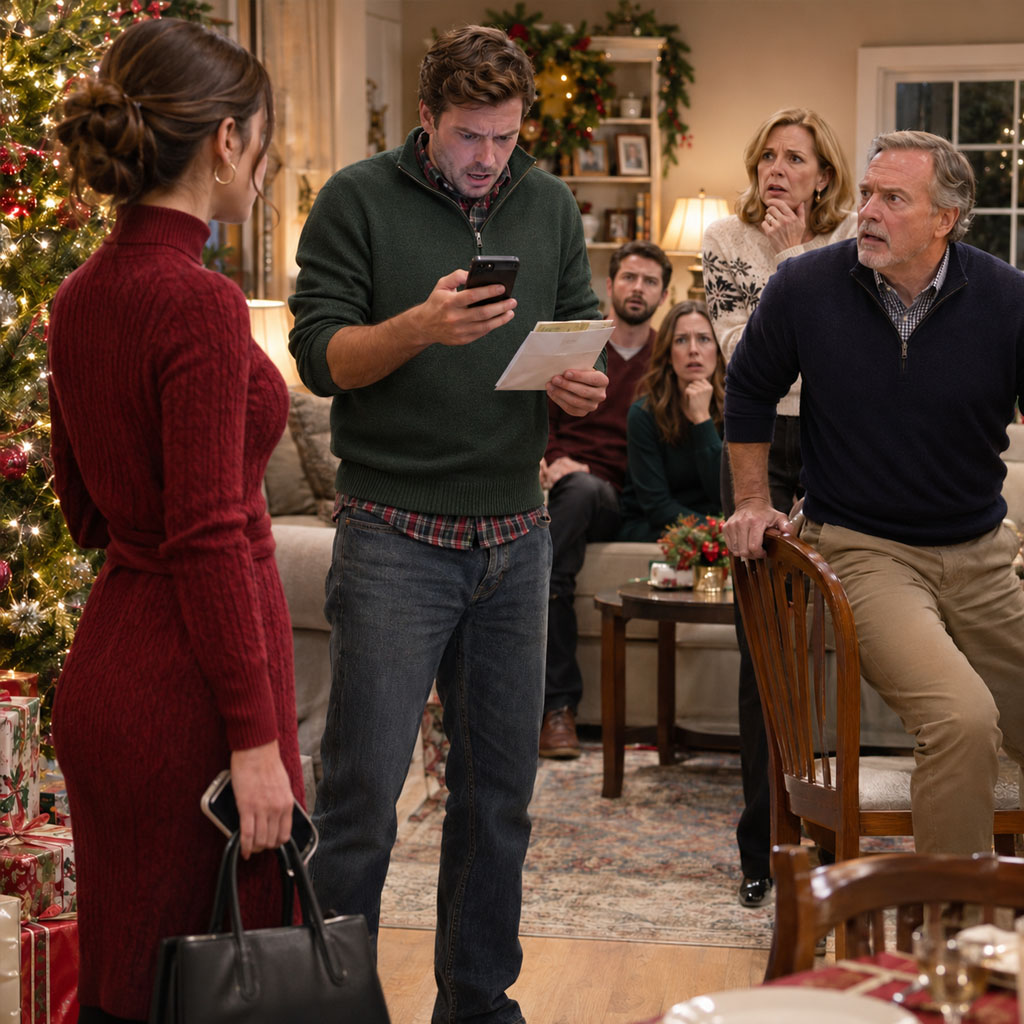
The message came from an unfamiliar number, accompanied by a photograph of a construction document lying beside a weathered metal gate. Beneath the photograph was a short note.
“I worked on the southern access project. You need to see what they filed under your name.”
I enlarged the image and felt my mouth go dry.
At the bottom of the approval sheet was my signature.
Except I had never signed it.
## Part 4
The woman who sent the photograph was named Hadley Cross, a thirty-eight-year-old construction compliance coordinator who had resigned from Breakwater six weeks earlier. She agreed to meet me at a diner outside Cape Alder, where the electricity had finally been restored and the parking lot still smelled of wet pine needles. I arrived with copies of my original aviation assessment and a notebook, expecting an argument or an attempt to draw me into somebody else’s employment dispute. Instead, Hadley placed a thick envelope on the table and said, “I should have brought this to the county months ago.”
She had supervised portions of the southern access road project before being reassigned after repeated disagreements with Breakwater management. According to her, the original construction agreement required the emergency road to remain usable or have an approved alternate route available at all times. The developer could temporarily restrict ordinary traffic, but the emergency access provisions were not optional. Hadley had warned her supervisor when a subcontractor installed the locked gate without providing emergency responders with an approved way through it.
“What happened when you raised the issue?” I asked.
“They told me the aviation consultant had approved the revised plan.”
“Which consultant?”
Hadley pointed to my name on the photograph. “You.”
I opened the envelope and found a series of meeting notes, inspection photographs, and printed email exchanges. The earliest documents showed a normal construction planning process, with engineers discussing drainage, vehicle access, and temporary barriers. The tone changed after the county requested additional confirmation that the airport’s emergency landing area would remain accessible during the waterfront development.
Breakwater needed that confirmation to keep its construction schedule. Delaney had been responsible for coordinating the county’s questions with the company’s consultants, and several messages showed her pushing people to finish the paperwork before a scheduled financing review. One email contained a sentence that made my skin go cold.
“Rowan’s prior aviation assessment provides sufficient support. Attach her acknowledgment to the revised access plan and move this forward.”
I turned the page. Someone had extracted my signature from a document I’d completed three years earlier and placed it on a new approval sheet. The original document concerned safe operating procedures near the ridge and specifically recommended preserving southern emergency access; the revised sheet represented me as having reviewed changes I had never seen.
Hadley watched my reaction carefully. “I challenged it because the dates didn’t make sense. Your signature appeared before the final gate design existed.”
“Did Delaney know?”
Hadley slid another email toward me. “She approved the final package after I raised that exact concern.”
I sat there with the documents spread between our coffee cups, remembering every conversation in which Delaney had called my work insignificant. She had used my aviation credentials when they helped her secure a project approval, then treated those same credentials as worthless when acknowledging them might have complicated her career. It wasn’t merely hypocrisy; her decision had allowed an inaccurate safety record to move through offices that trusted the information they received.
“Why are you telling me this now?” I asked.
Hadley stared through the diner window. “My brother is a paramedic. He was on the ambulance that couldn’t reach your helicopter.”
For a long moment, neither of us spoke. Then she explained that she had already given the county’s safety office the records she had retained through legitimate company correspondence, along with her earlier objections. She wasn’t asking me to keep them secret or make promises; she wanted me to know why investigators might contact me and why my name appeared on documents I hadn’t authorized.
I spent the following week assembling my own records. My old assessment was preserved in the county aviation archive, complete with its original date, diagrams, and recommendations. The flight school also had a copy of the professional correspondence showing that I had never accepted the revised consulting assignment. Ellis provided the official process for submitting information to the airport safety review, and I delivered a signed statement explaining exactly what I had and had not approved.
The investigation quickly expanded beyond one locked gate. County personnel discovered that the airport, the developer, and the dispatch contractor had been operating with different descriptions of the southern landing area. The construction company’s restrictive notice had never been properly reconciled with the airport’s emergency procedures, leaving a dangerous contradiction that had persisted through multiple planning reviews. The weather and Hollis’s injury had created the immediate crisis, but the paperwork had made a safe diversion harder to identify when the crew needed it most.
Delaney called me the evening after investigators contacted Breakwater. I was replacing a worn fuel hose on a training airplane when my telephone began vibrating across the workbench. I ignored the first two calls, but on the third I answered because I wanted to hear what she had to say.
“Do you understand what you’ve done?” she demanded.
“I gave the county documents showing I hadn’t approved your access plan.”
“You’ve turned a construction misunderstanding into a major investigation.”
“An emergency road was locked, and the dispatch information was wrong.”
“Nobody died, Rowan.”
I set my wrench down. “That doesn’t make it acceptable.”
Her breathing sharpened. She accused me of enjoying the attention, said I had always resented her success, and suggested that I was using a dangerous flight to embarrass her professionally. I listened until she said something that made me realize we were no longer discussing only the airport.
“You know Mom and Dad are depending on this project,” she said. “If you destroy the agreement, you’re hurting them too.”
I went home that evening and asked my parents what she meant. My father sat at the kitchen table with a folder of property documents, while my mother stood beside the sink, twisting a dish towel between her hands. Neither looked surprised to hear my question.
Years earlier, my grandfather had left my father a narrow parcel of coastal property near the airport. It wasn’t valuable by itself, but Breakwater needed it to complete the waterfront development, and Delaney had negotiated an agreement that would provide my parents with enough money to pay off their remaining mortgage and strengthen their retirement savings. The final payment depended on the project clearing its remaining approvals.
“Why didn’t you tell me?” I asked.
My father looked exhausted. “Because every time somebody mentioned the development, you started talking about safety concerns.”
“Because there were safety concerns.”
“We trusted Delaney to handle the business side.”
I looked from him to my mother. “Did you know she was using my name?”
My mother began crying. She admitted that Delaney had asked about an old aviation report and that she had helped locate a copy in the boxes I’d stored at their house. Delaney told her the document was already public information and would save the company from paying for an unnecessary duplicate review.
“Did she tell you she was going to put my signature on a new document?”
My mother shook her head. “Not exactly.”
“Then what did she tell you?”
My father answered before she could. “She said the paperwork was a formality, and the project was too important to delay.”
I stared at the people who had raised me, remembering how often they’d told me to stop making things difficult for my sister. They hadn’t merely preferred her version of events because she was successful. They had accepted the benefits of her decisions while refusing to examine the risks those decisions created.
My father reached across the table. “Rowan, we need you to understand what’s at stake for this family.”
I moved my hand away. “I understand exactly what’s at stake.”
Two days later, a county investigator called to tell me that Breakwater’s revised access plan had cited another document bearing my name. It wasn’t the gate approval, and it wasn’t my old terrain assessment. It was a statement claiming I had personally inspected the southern medical landing area and confirmed that emergency access could be suspended during construction.
The inspection date was six months after I had stopped consulting on the project.
And it was the same week I had been hospitalized hundreds of miles away following a military veterans’ aviation conference.
This time, there could be no possible misunderstanding about whether I had been there.
## Part 5
The county’s preliminary findings were released six weeks after the storm, and they were considerably more serious than Delaney had expected. Investigators concluded that the construction project had failed to maintain the emergency access arrangements required by its approval, that inaccurate information had circulated among agencies responsible for aviation operations, and that documents bearing my name had been submitted without evidence of my authorization. They referred the disputed signatures for further examination and required the developer to suspend work affecting the airport access corridor until an acceptable safety plan was approved.
Breakwater placed Delaney on administrative leave while it conducted its own review. Within another month, her employment had ended, although the company declined to discuss the details publicly. The developer also replaced the project management team and agreed to pay for corrective access work, revised emergency procedures, and an independent examination of the affected aviation information.
I learned most of this from official correspondence rather than the news. A local reporter called twice, hoping I would describe the confrontation with my sister in the airport lounge, but I declined an interview focused on our family. I had no interest in becoming a recognizable face attached to a dramatic story that reduced everything to an argument between two women.
What mattered was that the emergency road reopened permanently, its access arrangements were documented, and the airport established a procedure to verify changes before passing them to medical aviation dispatchers. The county also required a review of other construction activities near emergency facilities, recognizing that an approval sitting in a filing cabinet was useless if the people responding to an emergency didn’t know what it required. Those changes weren’t glamorous, but they addressed the failures that had nearly cost several people their lives.
Hollis called the morning the first corrective inspection was completed. He was recovering well, although his doctor hadn’t yet cleared him to return to flying, and he sounded deeply offended by the amount of paperwork involved. Nolan had returned to ground training while his employer reviewed the flight and the conditions surrounding the diversion.
“Ever consider that we should have stayed in the Army?” Hollis asked.
“Only when civilian paperwork starts looking familiar.”
He laughed, then grew quiet. “There’s something I haven’t told you.”
I leaned against the hangar doorway and watched a student pilot carefully inspect the landing gear of a small training airplane. “What is it?”
“That utility worker we were carrying? His name is Gideon Marsh. He’s got two daughters, eight and eleven.” Hollis paused. “His wife wrote the entire crew a letter, and she asked me to make sure you received a copy.”
I didn’t answer immediately. I had spent years trying not to think too closely about the people we’d transported during military missions, because every successful extraction reminded me of the ones we hadn’t completed. I knew too well that being part of a rescue didn’t guarantee anyone a happy ending.
“He’s recovering,” Hollis continued. “Still has a long road ahead, but the doctors are optimistic.”
I sat down on an overturned toolbox. For the first time since the storm, I let myself feel the relief I had been holding at a distance. Gideon’s daughters hadn’t lost their father, Nolan hadn’t lost his first captain, and Hollis would likely get another opportunity to complain about the next generation of pilots.
Three days later, I visited Gideon at the rehabilitation center. His wife, Amity, met me near the entrance carrying two paper cups of coffee and a small envelope decorated with colored-pencil drawings. She told me her daughters had argued over which picture should go on the front of their thank-you card.
One showed a helicopter under enormous purple clouds. The other showed a woman standing beside an airplane with a smile so wide it occupied most of her face.
“The girls don’t know much about flying,” Amity said, looking embarrassed. “They just know somebody helped bring their dad home.”
I accepted the drawings and thanked her. We talked for nearly an hour, mostly about ordinary things: school lunches, the cost of physical therapy, and the difficulty of keeping two energetic children entertained while their father recovered. She didn’t ask about my rank, my military records, or the argument with my sister.
That conversation meant more to me than anything people had said at the airport.
My parents contacted me repeatedly during the investigation. At first, their messages were full of practical concerns about the property agreement and whether Breakwater would complete the purchase. Then the language changed, becoming more emotional as they realized I wasn’t answering every call.
My mother wrote that our family had been through enough and deserved a chance to heal. My father said he regretted how he’d handled the situation and wanted to talk in person. Neither initially mentioned the report, the signature, or the years they had allowed Delaney to treat me like an embarrassment.
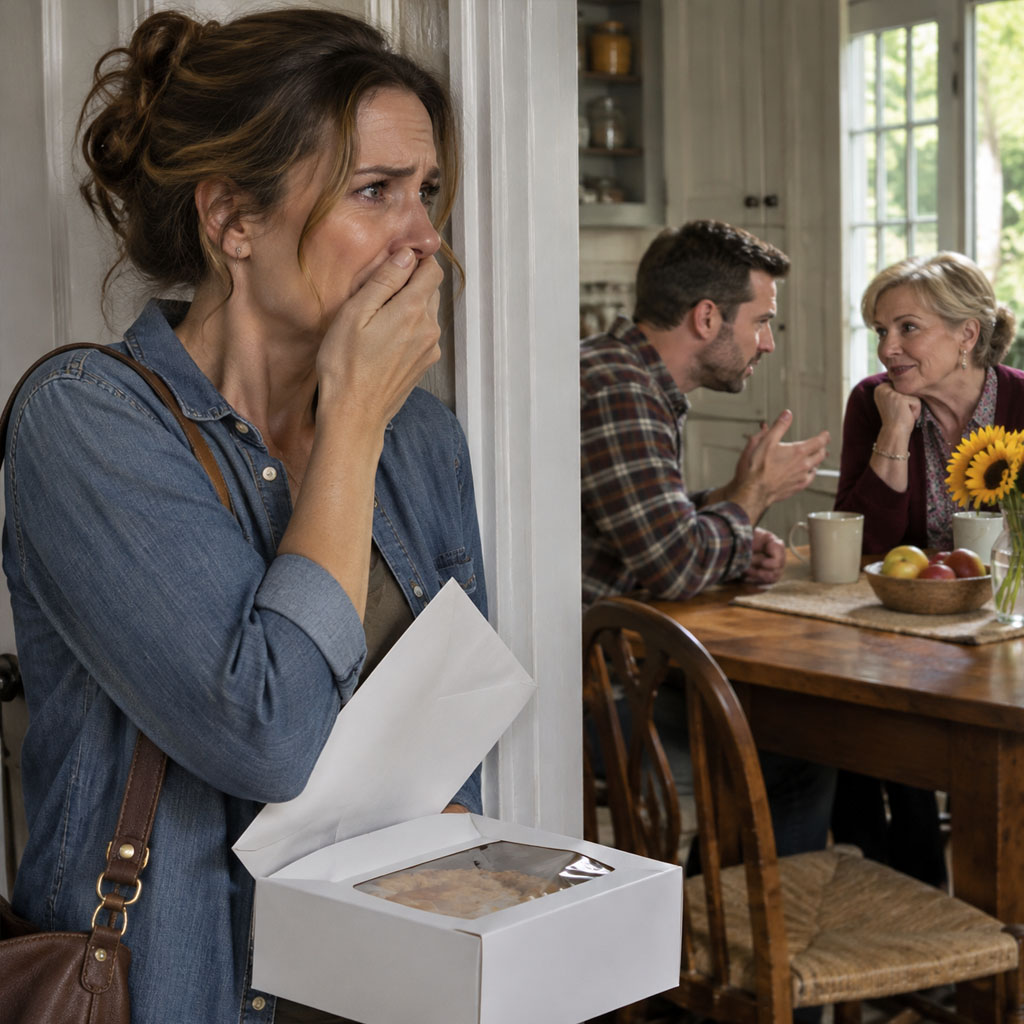
Eventually, I agreed to meet them at a coffee shop halfway between our homes. My mother arrived with red eyes and a homemade lemon cake, the same peace offering she’d used after childhood arguments. My father carried a folder of photographs from my military graduation, apparently hoping to remind me of happier times.
“I should have paid more attention to what you were doing,” he admitted. “You were trying to tell us things, and I didn’t listen.”
I appreciated that he finally understood part of the problem, but I couldn’t pretend his realization erased what had happened. My parents had chosen not to question Delaney because trusting her was convenient and because her decisions promised them something they wanted. They hadn’t intended to endanger anyone, yet their refusal to examine the situation had helped her avoid accountability.
“I don’t want to spend the rest of my life arguing with you,” I told them. “But I also don’t want to go back to pretending everything is fine whenever Delaney hurts somebody.”
My mother wiped her cheeks. “She’s your sister.”
“I know.”
“She lost her job.”
“She lost her job because of decisions she made, Mom. I didn’t make those decisions for her.”
My father looked down at his hands. “What happens to us now?”
I considered the question carefully. I still loved my parents, but love no longer meant allowing them to decide how much disrespect I should tolerate. I told them I was willing to rebuild a limited relationship with them, slowly, if they could respect my boundaries and stop making excuses for Delaney. I wasn’t promising that things would return to normal, and I certainly wasn’t promising forgiveness on anyone else’s timetable.
Delaney’s apology arrived by email two weeks later. It was almost three pages long, beginning with descriptions of the pressure she had experienced at work and ending with an account of how the investigation had affected her professional reputation. Somewhere in the middle, she acknowledged that using my previous assessment had been wrong.
She still described the additional signature as an administrative mistake, and she never directly addressed how she’d humiliated me during the emergency. She explained that she had always been afraid of failing, that our parents expected so much from her, and that she’d sometimes treated me badly because I seemed content with things she couldn’t understand.
I read the message twice. Then I replied with three sentences.
“Delaney, I hope you take responsibility for what happened and make better decisions in the future. I am not willing to continue our relationship, and I don’t want further contact. Please respect that.”
I sent it and returned to work.
There was no dramatic confrontation afterward. She didn’t appear at my doorstep demanding another chance, and I didn’t attend family gatherings organized to force a reconciliation. Over time, my parents learned that invitations involving Delaney would receive a polite refusal, not an argument.
My relationship with them remained cautious. We sometimes met for breakfast, and my father gradually began asking genuine questions about my students and the airplanes I maintained. When he tried once to suggest that Delaney had suffered enough, I ended the conversation and left.
He didn’t bring it up again.
The following spring, Cape Alder Regional Airport invited me to help develop a joint training program for civilian helicopter crews, flight instructors, and emergency responders. I accepted a part-time advisory role while continuing to teach at the airfield. The program focused on practical decisions: knowing when to divert, understanding local terrain, maintaining reliable emergency information, and recognizing how administrative mistakes could become dangerous operational problems.
I liked teaching people who wanted to learn. I liked the smell of fresh coffee in the maintenance office, the sound of an engine starting smoothly after a difficult repair, and the nervous excitement of students preparing for their first solo flights. Those ordinary things had brought me peace long before my family understood that a meaningful life didn’t need to look impressive from the outside.
One bright morning in April, Nolan arrived at the airfield with Hollis, both carrying helmets and enormous cups of coffee. Hollis had been cleared to return to flying under his employer’s procedures, and Nolan was completing additional training before resuming medical transport duties. They had come to participate in our first emergency aviation workshop.
“Captain Harker,” Nolan called as I approached. “Permission to complain about the weather?”
I glanced toward the clear blue sky. “Denied.”
Hollis laughed and handed me a familiar headset. Its black foam cushions were worn, and a small scratch crossed the side where somebody had dropped it years earlier.
“Found this in my old equipment bag,” he said. “Thought it belonged somewhere useful.”
I turned it over in my hands, remembering the storm, the three clicks, and the frightened voice asking whether I could hear him. I also remembered Delaney standing in front of me, insisting that I had no business helping.
For years, I had allowed my family’s opinion to shape how I described my own life. I’d minimized my accomplishments, avoided discussing my experience, and convinced myself that being quiet was the easiest way to keep the peace. But peace purchased by making myself smaller had never really been peace.
I placed the headset on the training table and walked toward the waiting students.
A young woman near the front raised her hand and asked whether I had ever been afraid while flying in terrible weather. I thought about all the times my hands had shaken after landing, all the mistakes I’d studied, and the people whose trust had made me more careful rather than more confident.
“Of course,” I told her. “Being afraid doesn’t mean you can’t do the job. It means you need to understand the risks, prepare properly, and know when the safest decision is not to fly.”
She nodded and began writing.
Outside, the morning sunlight stretched across the runway, illuminating the windsock turning gently in the breeze. A student airplane taxied past the hangar, its pilot carefully following the instructions she’d spent weeks learning. Hollis stood beside me for a moment, watching the small aircraft make its way toward the departure end of the field.
“Not a bad life you’ve built here, Rowan,” he said.
I looked at the students, the maintenance hangar, and the open sky beyond the runway.
“No,” I answered. “It’s a good one.”
And for the first time, I didn’t feel the slightest need to prove that to anyone.
THE END!
Disclaimer: Our stories are inspired by real-life events but are carefully rewritten for entertainment. Any resemblance to actual people or situations is purely coincidental.