“So What Do They Call You Up There, Sky Taxi?” My Sister’s Fiancé Laughed. “Dustoff Two-Three,” I Replied. His Father Froze. “Devil’s Elbow? Six Years Ago?” “Yes, Sir.” The Retired Army Colonel Set Down His Knife. “I Was In That Gorge. The Voice On My Radio… You?”
At my sister’s engagement dinner, her fiancé raised his bourbon and asked whether the Army gave ambulance pilots little sirens for their helmets. Fifty guests laughed while my sister stared at her untouched dinner. I answered with two words and a number. His father, a retired Army colonel, dropped his knife. Six years earlier, I had been the last voice he heard before losing consciousness in a frozen ravine. Forty-eight hours after that dinner, a stranger called me about another mountain road—and a warning somebody had deliberately ignored.
## Part 1: The Joke That Silenced the Table
The first thing I noticed about the Vale family’s mountain lodge was how carefully everything had been arranged to look effortless. Fresh pine branches lined the enormous stone fireplace. White candles flickered between crystal glasses, and a caterer moved through the dining room carrying plates that probably cost more than my monthly truck payment. Outside, January snow buried the Vermont mountains beneath a white curtain. Inside, fifty people had gathered to celebrate my younger sister’s engagement to a man who had spent eighteen months making jokes at my expense.
My name is Mara Ellison. I’m thirty-four, a chief warrant officer three in the Vermont Army National Guard, and I fly medical evacuation helicopters. Most people hear that and picture a helicopter landing beside a hospital. They don’t picture the preparation, the difficult weather decisions, or the sick and injured strangers whose lives sometimes depend on whether a crew can reach them. I stopped trying to explain my job to people who weren’t interested years ago. Unfortunately, Graham Vale wasn’t satisfied with not understanding it. He seemed determined to convince everyone else it wasn’t worth understanding either.
My sister, Elise, was twenty-nine and worked as a hospice nurse outside Burlington. We had lost our mother when I was fifteen and Elise was ten. A ruptured aneurysm had taken her away between breakfast and lunch, leaving our father to manage a struggling dairy farm and two daughters who didn’t know what to do with grief. Five years later, Dad suffered a stroke. I was away at Army flight training, and Elise was preparing for college. I came home to sell the remaining cattle, negotiate with creditors, and arrange care for a man who could no longer remember how to fasten his own shirt.
Elise never asked me to sacrifice anything. That made me want to give her more. I filled out scholarship applications with her over the phone, sent money whenever I could, and drove through winter storms to attend the important moments in her life. She eventually became the kind of nurse who remembered patients’ grandchildren and knew when families needed someone to sit beside them without speaking. Watching her build a life around compassion made me proud in a way military promotions never quite managed. When she met Graham at a hospital fundraiser, I wanted desperately for him to be the person she deserved.
Graham was thirty-five, handsome in a polished, expensive way, and the founder of Vale Ridge Properties, a company specializing in luxury mountain homes. He drove a spotless black SUV, wore watches with complicated faces, and had a habit of mentioning the number of people on his payroll. His company had pledged a substantial donation toward expanding the hospice’s family-support program. Elise told me about that contribution before she told me what he looked like. At first, he was thoughtful. He brought her dinner after late shifts, remembered her favorite coffee, and listened when she talked about difficult days. At least, that’s what I saw then.
The first warning came over dinner at a restaurant in Burlington. Graham asked what I flew, and when I said medical evacuation Black Hawks, he smiled. “So you’re basically an ambulance driver with a better view.” I explained that our missions included emergency transport, disaster response, and other authorized rescue operations. He nodded as though indulging a child. “Still, it’s nice that the military has something for people who don’t want the combat stuff.” Elise corrected him immediately. He apologized, then repeated the joke to a waiter ten minutes later. I noticed the waiter didn’t laugh until Graham looked directly at him.
By Thanksgiving, the jokes had become a routine. Graham liked telling people his father, Colonel Nathaniel Vale, had served in the “real Army,” while my job belonged to the transportation department. He interrupted me whenever someone asked about flying. Once, he called a helicopter mechanic “the guy who changes the oil” and seemed surprised when I told him mechanics were among the people I trusted most with my life. Elise confronted him afterward. He promised to do better. For several weeks, he did. Then another audience appeared, and the performance started again. I began wondering whether he enjoyed the jokes or simply enjoyed watching other people tolerate them.
The engagement dinner was held at Ashbrook Lodge, the Vales’ private property near Stowe. Elise had invited me early because she wanted help arranging photographs of our parents on a memorial table. She wore a cream-colored dress and our mother’s pearl earrings. I wore a navy dress and simple silver necklace, with my dark hair pinned back. Nathaniel greeted me near the entrance, tall and silver-haired, his left hand resting lightly on a walking cane. His wife, Caroline, stood beside him. When I introduced myself, the colonel held my handshake a moment longer than expected. “Elise tells me you’re an aviator,” he said. “Yes, sir.” He studied my face. “Have we met?” I told him I didn’t believe so.
Graham began drinking before dinner. During the appetizers, he introduced me to a contractor as “our family’s airborne taxi service.” During the main course, he interrupted my answer to a question about winter flying. When Elise asked him privately to stop, his smile vanished for just long enough that I saw something unpleasant underneath. “Don’t embarrass me in my own house,” he whispered. Then he kissed her forehead as a server approached. I watched Elise straighten her napkin with both hands. I had seen that careful movement before, whenever she was trying not to cry.
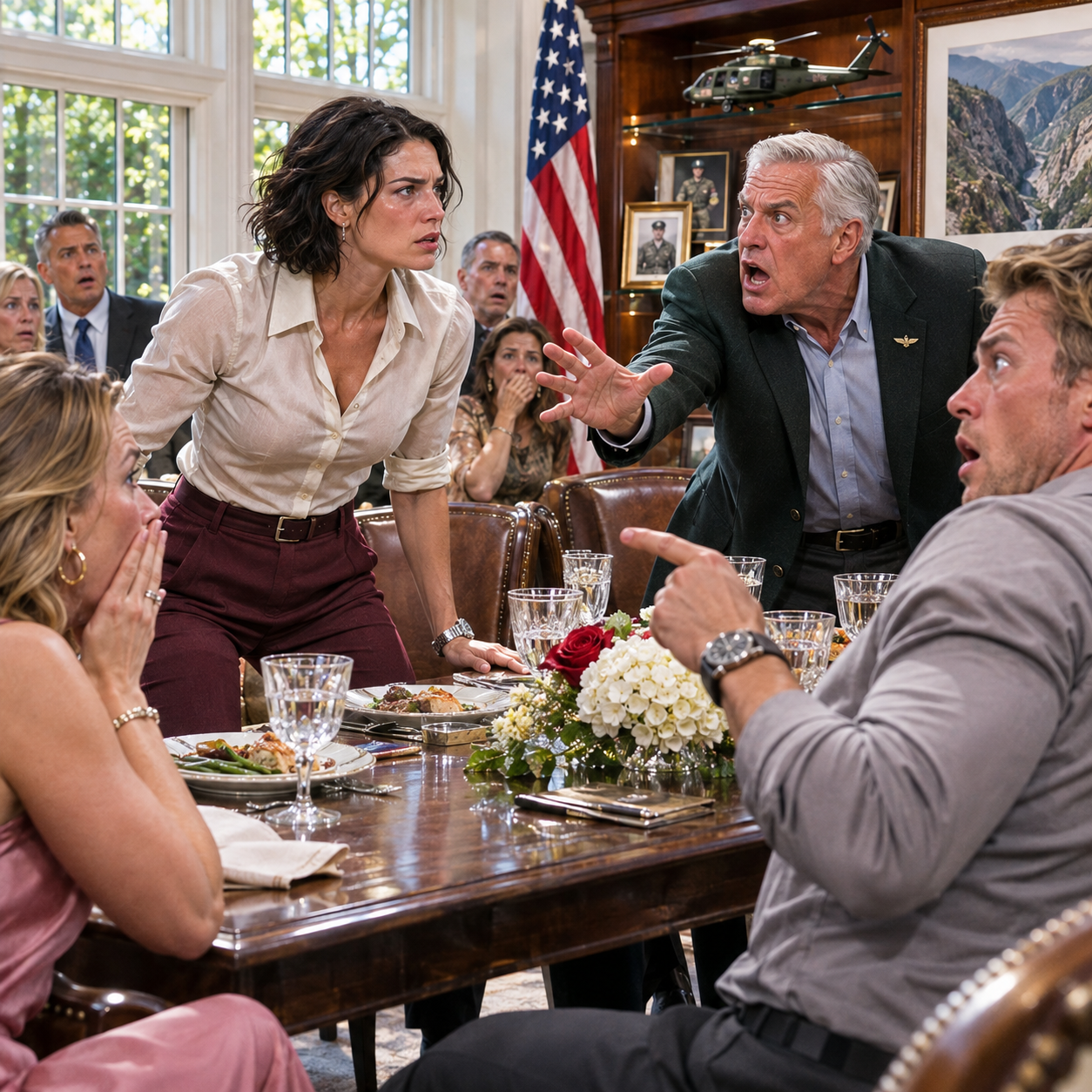
Dessert arrived shortly after nine. Graham stood, tapped his glass, and announced that he had one final question for his future sister-in-law. “Apache pilots get impressive names, right? Reaper, Viper, all that stuff.” He pointed toward me with his bourbon. “What do they call you, Mara? Sky Taxi? Meals on Wheels? Do they give ambulance pilots little sirens for their helmets?” Several guests laughed. Elise said his name sharply. Graham ignored her. “Come on, don’t be sensitive. It’s a legitimate question. What’s your call sign?”
I looked past him toward the head of the table. Nathaniel had stopped cutting his dinner roll. Something about his expression made me answer with a call sign I hadn’t used in six years.
“Dustoff Two-Seven.”
The knife slipped from his fingers and struck the china. Then the colonel looked at me as though he had just heard a voice from the dead.
“Chief Ellison,” he whispered, “were you flying over Sawtooth Bend the night of February seventeenth?”
## Part 2: The Man on the Other End of the Radio
Nobody moved. Graham remained standing, his glass raised halfway toward his mouth, while Nathaniel pushed his chair backward with a sound that seemed impossibly loud in the silent room. Caroline reached for his arm, but he barely noticed. His attention never left my face. “February seventeenth,” he repeated. “Six years ago. There was a military transport accident near Sawtooth Bend. An aircraft came through the storm.” I felt the familiar pressure behind my ribs that arrived whenever somebody mentioned that night. “It wasn’t an aircraft accident, sir,” I said carefully. “A truck went off the road. We brought the driver out.”
Nathaniel pressed his palm against the tablecloth. “You kept asking about a green pickup.” The words made my stomach tighten. I remembered a broken radio transmission, a man’s voice fading beneath the noise of rotor blades, and a story about an unfinished truck. I hadn’t thought about that particular conversation in months. “A Ford,” I said. “His father’s old Ford.” Nathaniel swallowed. “He told you he hadn’t finished restoring it.” I nodded. Caroline made a small sound beside him. Then her husband asked the question that changed the entire evening. “Were you the woman who told him to keep his eyes on the dashboard light?”
For a moment, I couldn’t answer. I remembered why I had said it. The man had been trapped upside down, frightened, cold, and increasingly confused. I wanted him to concentrate on something he could still see while we worked toward him. “Yes, sir,” I finally said. “I told him the light meant he wasn’t alone.” Nathaniel gripped the back of his chair. “And you said you were staying on the radio until someone reached me.” His voice broke on the final word. I had been looking at a stranger when I walked into that dining room. Now I was looking at the man we had lifted from a wrecked truck.
Graham gave a short, uncomfortable laugh. “Dad, you’re making it sound like some kind of movie.” His father turned toward him. “Sit down, Graham.” There was no anger in his voice, which somehow made the instruction more serious. Graham lowered himself into his chair. Nathaniel remained standing, struggling to compose himself. After a moment, Caroline helped him sit. She had tears on her cheeks, but she kept one hand firmly around his. Across the table, Elise stared at me with a bewildered expression. She knew I had flown dangerous missions. She didn’t know the details of that rescue. I had never described the night to her.
Nathaniel took a folded piece of paper from his wallet. It had softened with age and carried the faint blue lines of a hospital notepad. He spread it on the table. Three statements were written in uneven block letters: KEEP THE LIGHT ON. FINISH THE FORD. DUSTOFF 27. “I wrote those down during rehabilitation,” he explained. “There were days when I couldn’t remember what I had eaten, but I remembered that voice.” Caroline looked at the paper. “He used to wake up calling for the helicopter,” she told me. “Sometimes he thought he was still in the truck.” I didn’t know where to put my hands.
Nathaniel had been visiting a cold-weather training facility that February. He was an active-duty colonel nearing retirement, and the forecast had deteriorated throughout the afternoon. His driver recommended staying overnight. The installation’s transportation office advised against unnecessary travel. Nathaniel decided he could make the drive himself. “I had driven in snow all my life,” he said. “I thought experience made me exempt from caution.” He paused to look toward the windows, where snow was collecting against the glass. “There was a closure sign before Sawtooth Bend. I went around it. I told myself the road crew was being overly careful.”
He remembered the rear tires losing traction and the terrible sensation of the steering wheel becoming useless. The truck struck the guardrail, broke through a damaged section, and rolled down a wooded slope. Nathaniel woke upside down, pinned by the steering column. His left leg was fractured, and he had serious internal injuries. The emergency locator on his military radio helped responders establish his approximate position, but the storm had made access extraordinarily difficult. Road crews couldn’t clear the lower approach. Ground rescuers reached the upper road but couldn’t descend safely through the unstable snow. Aviation units had already declined the mission because conditions exceeded their operating limits.
“I was angry when they said they couldn’t reach me,” Nathaniel admitted. “Imagine that. I’d ignored a closure, wrecked my vehicle, and endangered everyone who had to come looking for me. Yet I was angry because other people wouldn’t take risks on my schedule.” His fingers tightened around the paper. “Later, I understood those crews had made responsible decisions. Nobody owes you their life because you’ve been foolish with yours.” I appreciated him saying that. Medical aviation is full of hard decisions, and sometimes the most disciplined thing a crew can do is refuse a flight. We had not launched that night because we were braver than everyone else.
Graham shifted impatiently. “But obviously someone finally came.” Nathaniel looked at him. “Someone did. After the weather changed enough to make a carefully planned rescue possible.” He turned back toward me. “Your dispatcher told me there might be another delay. I thought she was preparing me to die. Then a different voice came on the radio.” He closed his eyes. “She didn’t promise anything she couldn’t guarantee. She asked me to describe what I could see. She kept talking while the helicopter searched for a safe approach.” I could almost hear the static again. “That was me,” I said.
Nathaniel lowered his eyes. “There were things I said over that radio that I’d never told another person. I was certain I wouldn’t see Caroline again. I told that stranger I had wasted too many weekends at work and too many evenings being proud of things that didn’t matter.” Caroline covered her face. “Then she asked what I would do if I got home.” He looked at me. “I told her about the Ford. And she made me describe every part I’d bought for it.” A few guests smiled through their tears. Graham didn’t. He seemed to be calculating how the room had slipped away from him.
I told Nathaniel that the rescue belonged to the entire crew, and that I was grateful he had survived. He nodded, but he wasn’t finished. “I spent six years trying to remember your voice,” he said. “And tonight my son invited you into my home, made you the evening’s entertainment, and mocked the very job that kept me alive.” Graham’s expression hardened. “I already said I was joking.” Nathaniel looked at him steadily. “No. You haven’t apologized at all.”
Elise pushed her chair back. She was trembling, but her voice remained clear. “Graham, I need to speak with you.” He leaned toward her and hissed something I couldn’t hear. Whatever it was made her face go white. She stood anyway. As they passed behind my chair, I heard him say, “Don’t forget what my company has done for your hospital.” For the first time, I understood that my sister’s silence might have cost her much more than I knew.
## Part 3: Twenty Minutes Above the Darkness
Elise disappeared into the hallway with Graham. I wanted to follow her, but Nathaniel asked one more question before I could stand. “Chief, would you tell everyone what happened from the helicopter?” I hesitated. There were people in that room who had spent their entire lives around the military, but there were also guests who had never been close to an emergency more serious than a highway accident. I didn’t want to turn a frightening night into an exciting dinner story. Then I looked at Caroline, whose hands were still shaking around her husband’s hospital note, and realized she deserved to know what had brought him home.
At the time, I was twenty-eight and newly qualified to fly certain demanding missions under the supervision of experienced aviators. Our pilot in command that night was Chief Warrant Officer Caleb Otero, a quiet man from New Mexico who trusted weather reports more than his own confidence. Sergeant Tessa Park was our crew chief, responsible for monitoring critical aircraft systems and managing the hoist. Staff Sergeant Julian Soto was our flight medic. He had the calm expression of someone who had seen more suffering than he cared to discuss. The four of us were on duty when dispatch reported a missing military vehicle beyond Sawtooth Bend.
The initial weather report was terrible. Visibility was poor, winds were unpredictable, and icing conditions posed a serious threat. Caleb reviewed the information and told dispatch we couldn’t safely launch. That was the first decision our crew made, and I still believe it was the most important. We spent the next hour coordinating with emergency management, studying terrain maps, and listening for updates from responders near the crash. Then the heaviest band of snow moved east. Conditions at a possible approach route improved enough for us to consider a mission within our aircraft’s operating limits. We received authorization, reviewed our escape routes, and took off.
The mountains looked different through night-vision goggles. Familiar ridgelines became dark shapes without depth, and the few lights below seemed suspended in empty space. Caleb handled the aircraft while I monitored navigation, power, communications, and terrain. Tessa watched for hazards from the cabin. Julian checked his equipment for the third time, securing everything that could shift during a difficult hover. Nobody made speeches about saving a colonel. We didn’t even know his name. We knew only that a person was trapped in a vehicle, losing strength, and waiting for help that might not arrive in time.
When I established radio contact, Nathaniel could barely finish a sentence. His breathing was shallow and his words occasionally ran together. I asked him to describe his surroundings. He told me the truck was upside down and the dashboard lights were glowing. I asked what color they were, whether he could move his hands, and whether he could hear rescuers nearby. He kept apologizing for causing trouble. I told him our job was to get him help, not judge how he had arrived there. Then he said he was tired, so I asked about something he wanted to do when he got home.
“My father’s Ford,” he murmured. “Been sitting in the garage forever.” I asked him what year. He said 1969. I asked whether it ran. He said not properly, because he kept ordering parts and never finding time to install them. I told him that sounded like a project worth finishing. He laughed weakly and began describing the green paint his father had chosen. I listened for changes in his breathing between his answers. Every response gave us information about his condition, but it also reminded him that someone was still there. I kept returning to the same instruction: look at the dashboard light, keep talking, stay with us.
The truck was lying against a cluster of rocks below the road, partially sheltered from the wind by a narrow stand of trees. Ground rescuers had identified a possible approach but couldn’t reach the vehicle quickly with their equipment. Caleb made one reconnaissance pass and rejected the first position because the terrain and gusts left insufficient clearance. We repositioned above a more sheltered opening. Even there, the aircraft moved beneath us as air curled around the ridge. Tessa evaluated the hoist path while I watched our power margin and the obstacles near our tail. We knew exactly what conditions would require us to abandon the approach.
Julian descended with his medical bag and cutting tools secured to his harness. Tessa guided the cable while Caleb held the aircraft steady, making constant corrections. I relayed information between dispatch, rescuers, and the crew. Below us, Julian reached the wreck and confirmed Nathaniel was pinned. A ground rescuer worked toward him from the slope, carrying additional equipment. The extraction took longer than expected because the crushed steering assembly had trapped Nathaniel’s leg. During those minutes, I could hear Julian giving instructions over the radio, measured and clear, while Nathaniel occasionally answered my questions with a confused word.
A sudden gust pushed snow across our windscreen, obscuring the rocks below. Caleb adjusted our position and warned that we might have to break away. Tessa acknowledged him without taking her eyes off the cable. I checked the instruments, then watched the clearing return. Nothing about that moment felt heroic. I remember the smell of warmed plastic in my flight helmet, the pressure of my harness against my shoulders, and the terrible effort of keeping my voice ordinary. I wanted Nathaniel out of the truck. I wanted Julian safely back inside. More than anything, I wanted every member of our crew alive when the mission ended.
Eventually, Julian freed Nathaniel, stabilized him, and prepared him for the hoist. Tessa brought them aboard separately as the crew coordinated every movement. The second Nathaniel was secured inside, Caleb climbed away from the slope and followed our planned departure route toward the hospital. Julian began treatment immediately. Nathaniel briefly regained enough awareness to ask whether we had reached the road. I told him he was in the helicopter and that we were taking him somewhere warm. He didn’t answer. We landed at the trauma center, handed him over, completed our records, and prepared the aircraft for another mission.
When I finished telling the story, Nathaniel sat with his head bowed. I explained that the dispatcher, ground rescuers, maintenance personnel, Caleb, Tessa, and Julian deserved as much recognition as I did. “I was only one person on that crew,” I said. Nathaniel looked up. “You were the person I could hear,” he replied. “That mattered.” Across the room, Caroline was crying openly. Several guests came over quietly to thank me. Their gratitude felt awkward, but I accepted it because refusing seemed unkind. Then I noticed Elise standing in the doorway. Graham was nowhere beside her.
She came to me, took my hand, and asked if we could go outside. On the covered porch, away from the guests, she finally said what had been troubling her. Graham hadn’t merely reminded her about the hospice donation. He had threatened to withdraw the remaining pledge if she embarrassed him publicly again. Worse, she had discovered something troubling about one of his company’s winter construction projects. She had been afraid to ask questions because a worker’s family was already struggling. “There’s an incident report,” she whispered. “And Mara, I don’t think the man who got hurt was ever supposed to see it.”
## Part 4: The Warning Nobody Wanted to Read
For a while, neither of us spoke. Snow drifted beyond the porch railing, and somewhere inside the lodge, a burst of laughter sounded strangely normal. Elise wrapped both hands around her elbows. I asked her what had happened to the injured worker. She explained that three weeks earlier, a carpenter named Simon Calder had been seriously hurt at one of Graham’s developments. His wife, Beth, had organized a small community fundraiser to help with medical expenses. Elise knew the family through a volunteer group. Graham had told her Simon wasn’t employed by Vale Ridge and that the accident occurred after the construction site had closed for the day.
Then Elise saw an email Graham had forwarded while asking her to proofread material for a company charity event. Buried beneath the scheduling details was a message from his operations manager concerning the site access road. A weather advisory had required the road to remain closed until it could be inspected and treated. Someone had ordered the construction crew to use it anyway. “I asked Graham about it,” Elise said. “He told me I didn’t understand how construction works.” She swallowed. “Then he said the Calder family would get help if they stopped making everything difficult.” I watched her struggle with what those words implied.
“Have you spoken to Beth?” I asked. Elise nodded. She had offered to connect the family with a legal assistance organization, but Beth was frightened that pursuing the matter would cost Simon future employment. The company had disputed whether he qualified for coverage under its workers’ compensation policy. Meanwhile, Graham continued telling potential investors that his firm had an exceptional safety record. None of that proved every suspicion Elise had, and I told her we needed to distinguish what she knew from what she feared. She agreed immediately. She wasn’t asking me to accuse anyone. She was asking whether she had been wrong to stay quiet.
I thought about the closure sign Nathaniel had driven past six years earlier. I thought about our dispatcher explaining that conditions were too dangerous, and Caleb refusing to move until we had a workable plan. Then I looked at my sister. “You can’t make Graham tell the truth,” I said. “But you can stop helping him avoid the questions.” Elise nodded slowly. Tears gathered in her eyes, though her expression was becoming steadier. She told me this wasn’t the first time Graham had treated someone else’s hardship as an inconvenience. He complained about hospice aides taking breaks, blamed restaurant workers for understaffing, and called concerned employees disloyal. She had explained away each incident because he could also be generous when he wanted to be.
“I kept telling myself the good parts were the real person,” she admitted. “And the ugly parts were stress.” I asked her whether she wanted to go home. She looked toward the dining room window, where Graham stood talking animatedly to two guests, already trying to reclaim the evening. “Yes,” she said. “But first I need to tell him why.” I offered to accompany her, and she shook her head. She wanted me nearby, not speaking for her. I understood. Elise had spent years being the younger sister I protected. She was now a grown woman learning that protecting herself might require disappointing people.
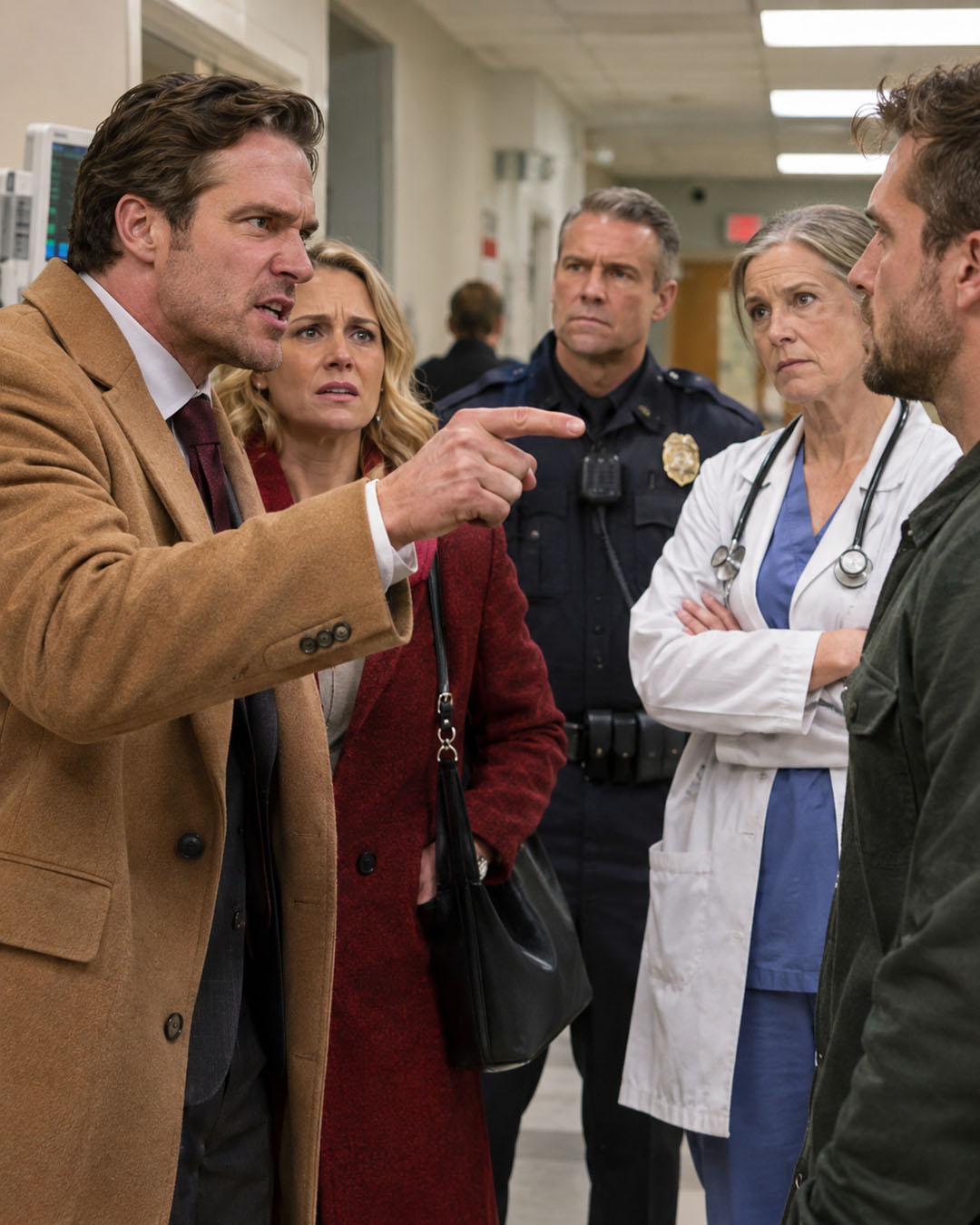
Inside, Graham was furious. He accused Elise of ruining their engagement celebration and claimed his father’s emotional reaction had made everyone unreasonable. When Elise told him she wanted to postpone the wedding, he stared at her as though she had suggested canceling a business appointment. “Over a few jokes?” he demanded. “Over how you treat people,” she answered. “And because I can’t trust the answers you give me.” His eyes flicked toward me. “So this is your sister’s doing.” I remained by the doorway. Elise stepped directly into his line of sight. “No, Graham. This is mine.”
Nathaniel entered before the argument escalated. Graham immediately appealed to him, insisting the entire situation had been blown out of proportion. His father listened without interrupting. Then he said something I didn’t expect. “I taught you to admire authority and accomplishment. I didn’t teach you enough about responsibility.” Graham scoffed. Nathaniel continued. “That may explain how you learned to speak this way. It doesn’t excuse you for continuing at thirty-five.” Graham’s face reddened. He accused his father of choosing a stranger over his own son. Nathaniel answered quietly, “I’m choosing not to lie to you anymore.” Graham walked out, slamming the study door behind him.
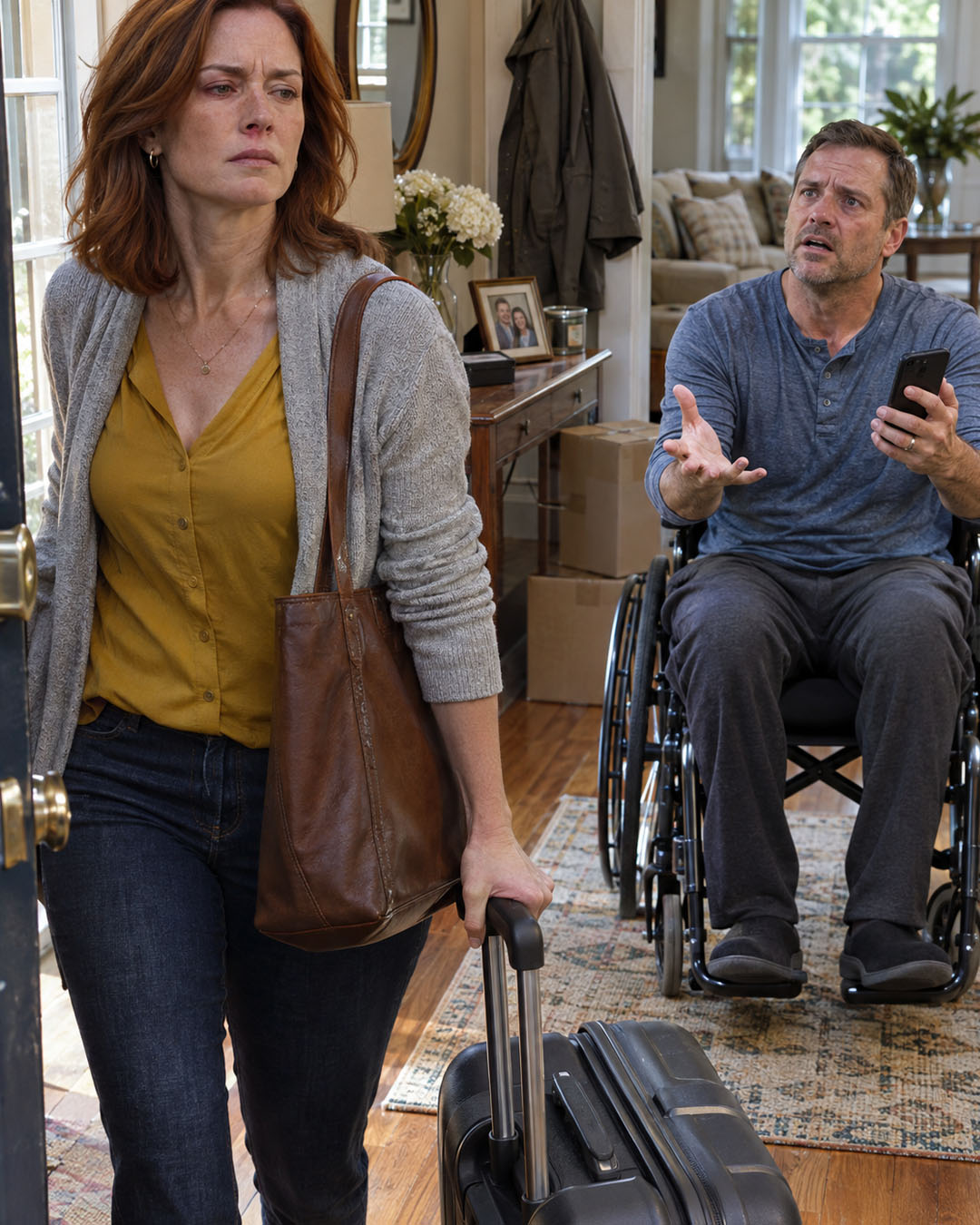
By morning, the storm had trapped most of the guests at Ashbrook Lodge. Elise returned the engagement ring to Graham in the library. I wasn’t present, and she later told me she was glad. She wanted the decision to belong entirely to her. Graham offered apologies, explanations, and promises to attend counseling. When that failed, he mentioned the hospice pledge again. Elise told him the hospital’s development office could communicate directly with his company about its commitments. Her patients were not bargaining chips in their relationship. She gathered her suitcase, thanked Caroline for her hospitality, and came home with me when the road reopened.
For the next two days, Elise stayed in my spare bedroom, alternating between relief and grief. She loved Graham. That didn’t disappear simply because she had learned something painful about him. She missed the man who brought soup after her shifts and resented the man who humiliated people when he felt insecure. I didn’t ask her to stop missing him. We cooked dinner, watched terrible television, and talked about practical things: retrieving belongings, canceling wedding arrangements, and notifying relatives. Nathaniel called once to apologize personally. Elise thanked him but said she needed distance from the entire family.
Forty-eight hours after the dinner, my phone rang while I was checking maintenance paperwork at the aviation facility. The caller introduced himself as Evan Mercer, the operations manager whose email Elise had seen. He explained that he had obtained my number from a mutual community contact after hearing what happened at the lodge. He wasn’t calling about the engagement. He was calling because Simon Calder had been injured on a road Evan had explicitly ordered closed. “Graham told us to finish the delivery,” he said. “I refused, so he went around me.” Evan had kept copies of the warnings, the equipment logs, and the messages that followed the accident.
I asked why he was telling me rather than an investigator. Evan said he had already contacted an attorney, but he feared the company would pressure witnesses into changing their accounts. After the engagement dinner, Graham had called him and demanded that he sign a revised report. Evan refused. I told him I couldn’t investigate a private construction accident, but I could help him find the appropriate channels for reporting safety concerns. He thanked me, then added one detail that made the situation feel disturbingly familiar. The weather advisory had included a specific instruction against using the access road. Graham’s written response was only four words: “We can handle it.” Nathaniel had nearly died believing much the same thing.
## Part 5: The People Who Came Back
I didn’t ask Evan to send me his documents. I wasn’t a safety investigator, and I had no intention of turning my military position into leverage against Graham. I advised him to preserve the original records, speak with his attorney, and cooperate with the appropriate authorities. Then I called Elise and told her what he’d said. She listened without interrupting. When I finished, she sat quietly for a moment before answering. “I thought I was leaving because I couldn’t marry someone who was cruel to you,” she said. “Now I think I was leaving because I’d spent too long pretending his cruelty had boundaries.”
The consequences unfolded slowly, as real consequences usually do. Evan’s records became part of a formal workplace safety investigation. Simon Calder retained an attorney, and Beth finally had someone explaining the difference between what Vale Ridge claimed and what the available records showed. Graham’s business partner, who had attended the engagement dinner, began reviewing earlier project decisions. Several investors postponed negotiations involving a new mountain development. None of those things happened because Nathaniel made an angry phone call or because I possessed an impressive military title. They happened because Graham had left behind written instructions, ignored objections, and expected people to protect him afterward.
Three months later, the state investigation identified serious safety failures surrounding the road closure and the company’s handling of the incident. The dispute over Simon’s employment status continued separately, but his attorney obtained records that strengthened his claim. Beth told Elise that the family finally had a plan for managing their expenses. Graham resigned from day-to-day leadership of Vale Ridge while the company reorganized its operations. I heard through mutual acquaintances that he considered the scrutiny unfair. Perhaps he did. What mattered was that people who had been expected to remain silent were finally allowed to give their own accounts.
Elise, meanwhile, returned to work and began rebuilding the parts of her life she’d allowed Graham to influence. She moved into a small apartment near the hospital, painted the kitchen blue, and bought a ridiculous yellow armchair she had wanted for years. She stopped checking Graham’s social media accounts. When his company formally withdrew the unfulfilled portion of its hospice pledge, she helped the hospital’s development team organize a community fundraiser. They replaced the immediate funding gap through smaller donations from people who cared about the program without expecting personal favors in return. On the evening the campaign reached its target, Elise called me crying. This time, she sounded happy.
Graham wrote to both of us. His letter to me was three pages long, filled with reflections about insecurity, resentment, and the pressure of growing up beneath his father’s reputation. He admitted that my quiet confidence had made him feel inadequate. Instead of dealing with that feeling, he had tried to make my work seem small. He said he was seeking professional help and wanted to become someone who treated others better. I believed he might mean it. I also believed he had meant some of his earlier apologies before repeating the same behavior. I placed the letter in a drawer and continued with my life. Forgiveness wasn’t a duty I owed him.
Elise received a separate letter asking whether they might try again someday. She read it, folded it, and put it away. When I asked how she felt, she said she hoped Graham became a better man, but she no longer wanted to be the person waiting for that transformation. I thought that was one of the bravest things I’d ever heard her say. We had spent so much of our childhood trying to save what remained of our family that letting go sometimes felt like failure. Elise had finally discovered that loving someone didn’t require surrendering her judgment. She didn’t need another relationship to prove she was moving forward.
In May, Nathaniel contacted me with a different kind of request. He wanted to visit our aviation facility and thank the entire crew who had rescued him. He had obtained permission through the proper channels, and he hoped I could help coordinate the reunion. Caleb was still flying, although he complained about his knees every time he climbed into a helicopter. Tessa had moved into an aviation maintenance leadership position in Connecticut. Julian was training flight medics in North Carolina. All three agreed to come. I hadn’t realized how badly I wanted to see them together until I stood in the hangar watching them arrive.
Nathaniel came with Caroline on a bright Saturday morning. He walked with his cane, but his expression was lighter than I remembered. For several minutes, he simply looked at the four of us. Then he began to speak. He told us how ashamed he’d been of ignoring the road closure, how the accident had changed his understanding of leadership, and how difficult it had been to confront the people who had witnessed him at his most helpless. He admitted he could have identified our crew through official channels much sooner if he’d made a determined effort. “I told myself I was respecting your privacy,” he said. “Some of that was true. But some of it was pride.”
Caleb stepped forward and shook his hand. “Sir, we were glad to bring you home.” Nathaniel nodded, then thanked Tessa for keeping the hoist operation safe, Julian for his medical care, and Caleb for making the decisions that allowed the rescue to proceed. When he turned toward me, he hesitated. “I remember your voice more clearly than I remember the crash,” he said. “You gave me something to concentrate on when I was ready to give up.” I smiled. “You gave me a detailed explanation of a Ford pickup’s transmission, sir. I was beginning to think you’d never stop talking.” For the first time since we’d met, his laughter came easily.
Then Caroline opened the hangar door and pointed toward the parking area. Outside stood a restored 1969 Ford pickup, painted deep forest green with a cream-colored roof. Its chrome reflected the afternoon sunlight. Nathaniel told us he’d finally finished the restoration with help from a local mechanic and an old friend of his father’s. He had spent years using work as an excuse to avoid a project that reminded him of someone he’d lost. After the engagement dinner, he decided he was finished postponing the things that mattered. He invited each of us to sign the inside of the glove compartment door, where he’d left a small square of unfinished metal.
Caleb signed first, followed by Tessa and Julian. I signed last, writing my name and our old call sign beneath it. Nathaniel studied the signatures for a long time. He didn’t mention Graham until we were preparing to leave. Then he told me his son was finally learning that being criticized wasn’t the same as being mistreated, and that earning trust required more than an apology. “I love him,” Nathaniel said. “But I can’t keep protecting him from the consequences of his decisions.” I told him I hoped Graham learned something useful. I meant it. I simply didn’t need to be present for the lesson.
That summer, Elise and I took a weekend trip to the farm where we’d grown up. The farmhouse belonged to another family now, but the owners graciously let us walk along the old fence line. The barn had been repainted, and the maple tree beside the driveway was taller than I remembered. Elise brought a photograph of our parents and tucked it into her jacket pocket while we wandered through the fields. We talked about childhood chores, terrible school lunches, and the time Dad tried to repair our kitchen sink and flooded half the house. Eventually, Elise slipped her arm through mine.
“Do you ever wish things had been easier?” she asked.
“Sometimes,” I admitted. “But I don’t wish we’d become different people.”
She smiled at that. For years, I had measured success by whether my sister was safe, whether the bills were paid, and whether I could make it to the next emergency without letting anyone down. Standing beside her that afternoon, I understood that Elise no longer needed me to carry her life for her. She needed a sister who would trust her to make difficult choices, then answer the phone when she wanted to talk. I could do that. In fact, I thought I might finally be getting good at it.
I returned to flying the following Monday. My uniform was the same, my responsibilities were the same, and I still spent more time reviewing weather briefings and maintenance records than doing anything remotely exciting. Sometimes a mission ended with a safe landing and a relieved family. Sometimes we couldn’t launch, and the disappointment followed us home. Sometimes we transported a patient and never learned what happened afterward. That uncertainty remained part of the work. So did the knowledge that every successful mission depended on dozens of people whose names would never appear in a newspaper.
A few weeks later, I was helping a younger pilot prepare for her first demanding medical evacuation assignment. She asked whether flying wounded people ever made me feel less important than aviators assigned to combat missions. I considered the question carefully. Six months earlier, I might have offered a sarcastic answer about fancy helicopters and expensive taxis. Instead, I told her that every military specialty carried its own responsibilities, and comparison was a poor substitute for competence. Then I explained what Caleb had taught me: the mission wasn’t about proving we were brave. It was about making disciplined decisions that gave everyone the best chance of coming home.
That evening, after the aircraft was secured and the paperwork completed, I found a photograph waiting on my phone. Nathaniel had sent it with Caroline’s permission. It showed the green Ford parked outside their garage, its hood raised and a toolbox resting on the front bumper. Beneath the photograph was a short message: “Drove it fifty miles today. Dad would have loved it.” I sat looking at the picture longer than I expected. Six years earlier, I had asked a frightened stranger to tell me about a truck because I needed him to keep talking. I had never imagined I would someday see the finished thing.
I sent back a simple reply: “Glad you made it home, sir.”
Then I put my phone away and went to meet Elise for dinner. She was waiting at our favorite little restaurant, laughing at something the waitress had said. When she saw me, she waved with the same enthusiastic smile she’d given me every time I came home from training when we were young. I walked toward her without thinking about Graham, the engagement dinner, or the people who had once mistaken quietness for weakness. They were part of our history now, but they no longer had a claim on our future.
I never became famous for the rescue at Sawtooth Bend. I didn’t need to. Caleb still taught younger pilots, Tessa kept aircraft safe, Julian trained medics, and I continued answering calls whenever the mission and conditions allowed. Nathaniel had another chance to enjoy his family, and Elise had the freedom to build a life on her own terms. That was enough for me.
Because the most important thing I learned in the Army wasn’t how to impress a room full of strangers. It was how to recognize when somebody needed help, do my part without demanding credit, and know when the right thing was to hold on—or finally let go.
THE END!
Disclaimer: Our stories are inspired by real-life events but are carefully rewritten for entertainment. Any resemblance to actual people or situations is purely coincidental.