Chapter 2
The fall itself wasn’t dramatic.
My knee gave way, my hand missed the railing, and I landed hard enough to frighten myself but not hard enough to cause a serious injury.
The frightening part came afterward.
My leg didn’t respond normally.
For several months, I’d had pain in both knees, weakness in my hips, and occasional numbness I blamed on stress and long hours at work.
That morning changed everything.
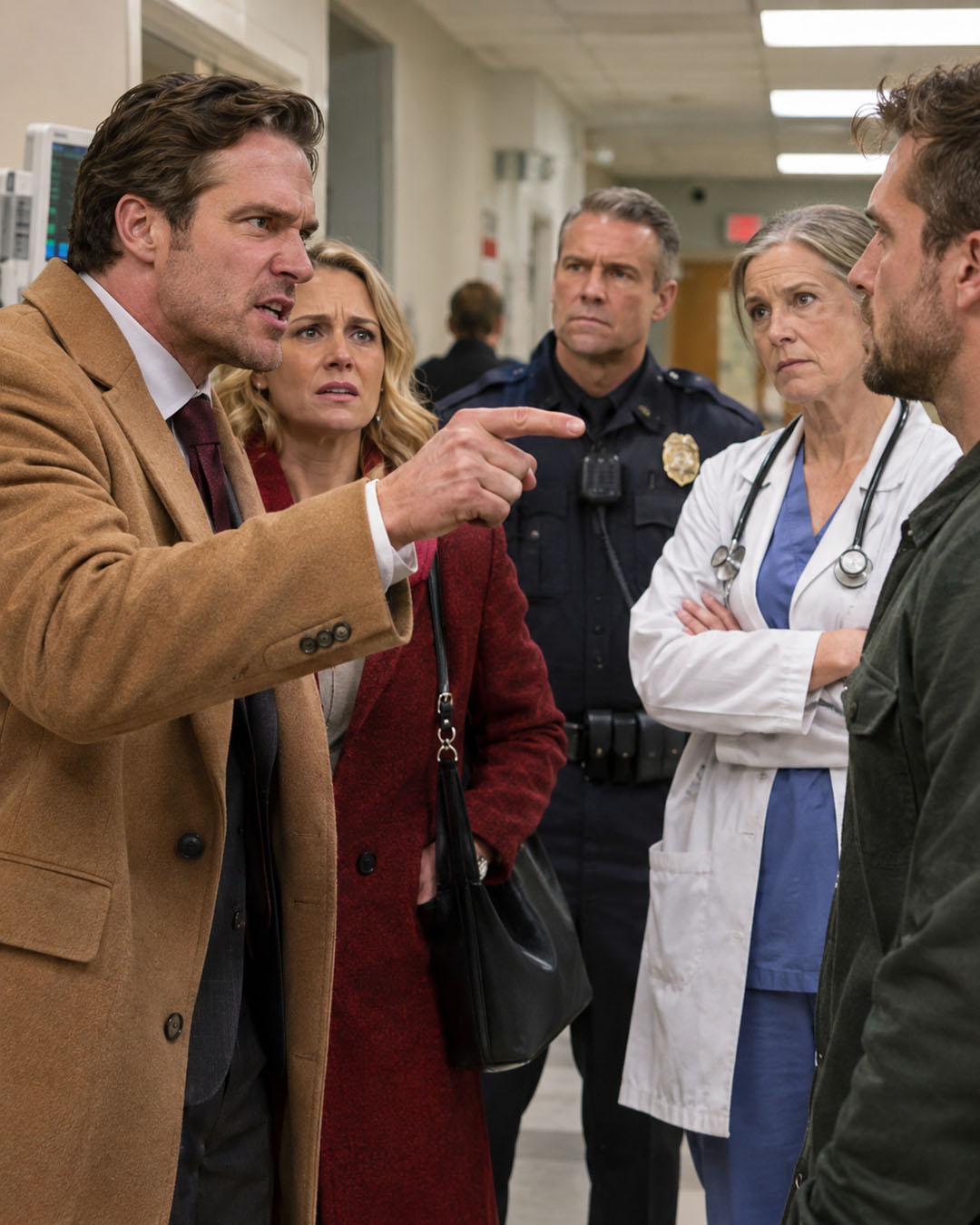
After weeks of appointments, imaging, blood work, and specialist visits, a neurologist sat across from me and explained that I had a progressive condition affecting my mobility.
“We can treat symptoms and work to preserve function,” he said.
“Preserve?”
“We don’t know exactly how quickly this will progress.”
“Am I going to stop walking?”
He hesitated.
“You should prepare for the possibility that you may eventually need a wheelchair, at least part of the time.”
I left his office shaking.
For three years I had defended my choices by telling myself that no one understood what caregiving had done to me.
Now I was facing the possibility of becoming the person who needed care.
I called two friends.
One said she was sorry but had grandchildren staying with her.
Another offered to drive me to an appointment “sometime,” then changed the subject.
My boyfriend from the year before was gone. We had broken up partly because he kept asking uncomfortable questions about Emily.
“You talk about losing your family like something that happened to you,” he once said. “But didn’t you leave them?”
I ended the relationship soon afterward.
Now, sitting alone in my apartment with a cane leaning against the couch, I thought of Mark.
No one would understand mobility problems better.
And whatever had happened between us, seventeen years had to mean something.
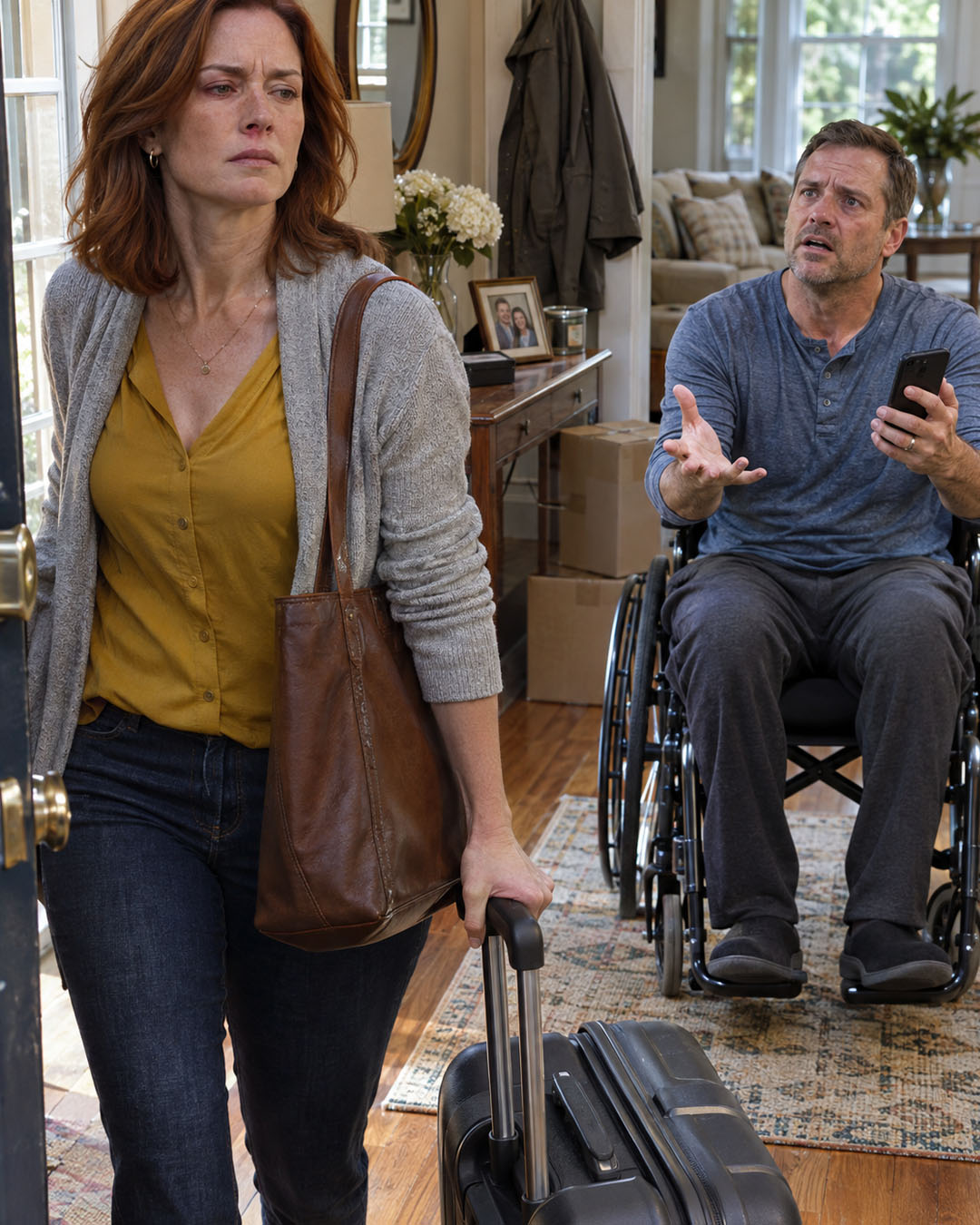
I drove to our old house on a Saturday afternoon.
When the front door opened, I stared.
Mark was standing.
He leaned heavily on a cane, and his right leg dragged slightly when he stepped, but he was upright.
For several seconds, I couldn’t speak.
“What are you doing here?” he asked.
“You’re walking.”
“Some.”
“I didn’t know.”
“You haven’t asked in a long time.”
The words landed harder than his tone.
I told him about my diagnosis.
To his credit, he listened without interrupting. He asked sensible questions about treatment, physical therapy, insurance, and whether I’d spoken to a social worker.
Then I asked the question that mattered most.
“Where’s Emily?”
His expression changed.
“At work.”
“She’s working?”
“Part-time. She’s eighteen now, Karen.”
Of course she was.
I had sent birthday messages every year. Christmas messages too. Most received no answer.
“I want to see her.”
“I told her you’re sick.”
“And?”
“She doesn’t want to see you.”
I stared at him.
“I’m her mother.”
“She knows.”
“Three years, Mark. She’s still doing this after three years?”
He lowered himself carefully into a chair.
“For you, it was three years. For her, it was every morning.”
“That isn’t fair.”
“No. A lot of it wasn’t.”
I left angry.
Over the next several weeks, I called Emily repeatedly.
Finally she agreed to meet me at a coffee shop.
One hour, she wrote. After that, respect what I decide.
She arrived in jeans and a university sweatshirt.
She looked older than eighteen.
I stood and opened my arms.
She stopped several feet away.
“Please don’t.”
I sat again.
“Okay.”
She ordered nothing.
“What do you want, Mom?”
I told her everything.
The pain.
The weakness.
The treatments.
The possibility of losing more mobility.
Her expression barely changed.
“I’m scared,” I said.
“I believe you.”
“I need my family.”
Her eyes lifted.
“That’s why you’re here.”
“Because I miss you.”
“You’ve had three years to miss me.”
“That isn’t fair.”
“Do you want to know what happened after you left?”
I started to answer.
She didn’t let me.
“Two months after you moved out, Dad fell trying to transfer from his chair in the bathroom.”
I went still.
“I found him on the floor.”
“Emily—”
“He was crying because I had to see him like that. I couldn’t get him up. I ran next door in my pajamas and woke Mr. Henderson.”
I looked down.
“For months, I slept with my bedroom door open because I was afraid I wouldn’t hear Dad if he fell.”
“I didn’t know.”
“You didn’t ask.”
I felt defensive immediately.
“Your father had friends helping.”
“Sometimes.”
She continued.
“I quit theater.”
“You loved theater.”
“I know.”
“You never told me.”
“When? In the birthday messages you sent twice a year?”
“That isn’t fair.”
She laughed once, without humor.
“You keep saying that.”
I felt heat rise into my face.
“I was exhausted too, Emily.”
“I know.”
“I had worked twelve-hour days.”
“I know.”
“I took care of your father for six months.”
“And then you left.”
Her voice didn’t rise.
That made it worse.
She told me how Mark’s old coworker helped him find remote work. How neighbors brought groceries. How friends drove him to rehabilitation when they could.
Then she said, “Dad asked you for money for therapy.”
I knew what was coming.
“I couldn’t keep supporting him forever.”
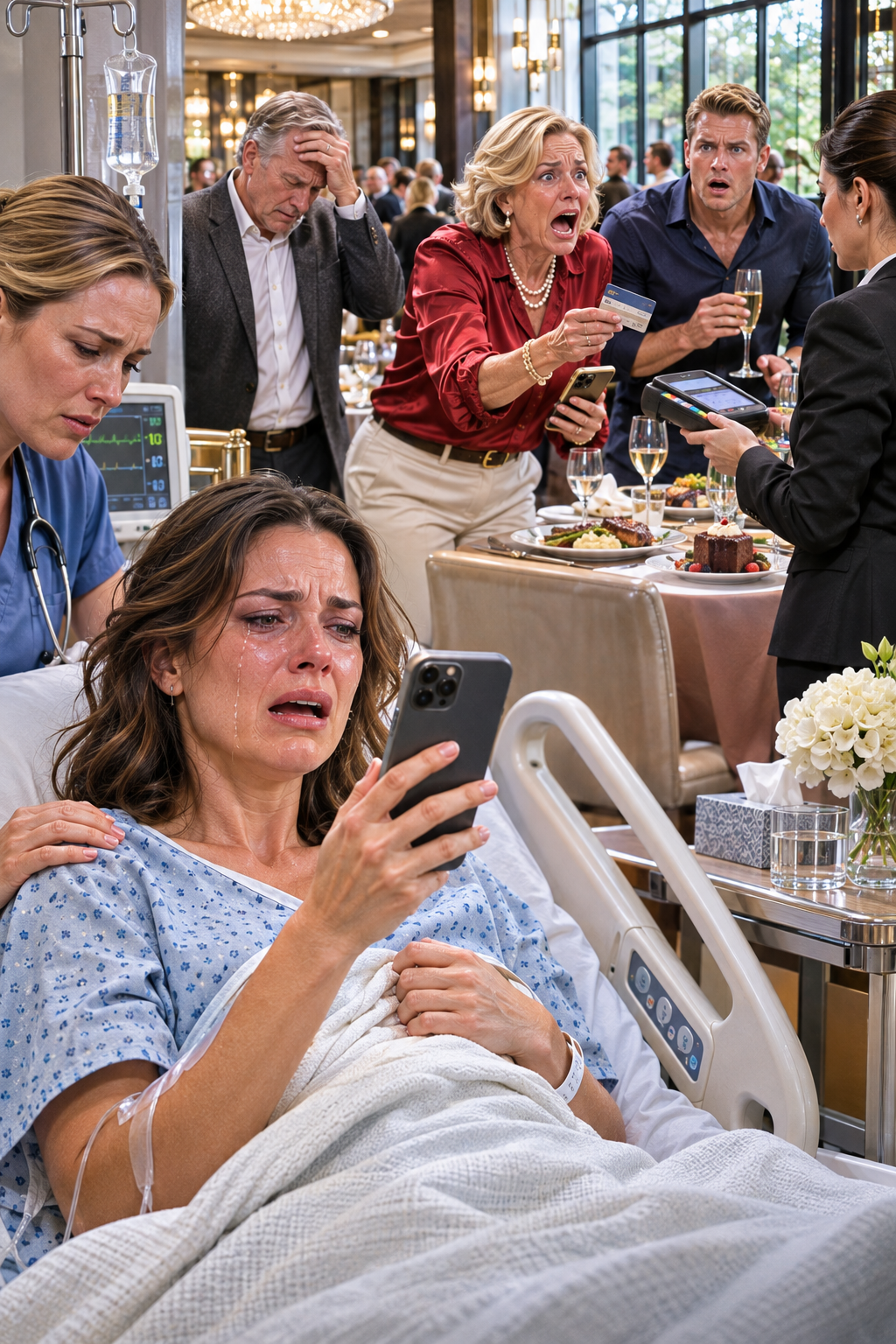
“Two weeks later you posted pictures from Florida.”
“I had the right to take a vacation.”
“Did Dad have the right to try to walk again?”
I looked away.
Emily’s eyes filled with tears.
“I’m not blaming you for his accident. I’m blaming you for deciding your freedom mattered more than everything we needed.”
“I was drowning.”
“So was I.”
That silenced me.
For a moment, the café sounds seemed too loud.
Then she asked, “Why did you really want to see me?”
I took a breath.
“My condition may get worse. Eventually I might need help cooking, bathing, getting around.”
Her expression changed.
“I thought maybe we could support each other. As a family.”
“You mean Dad and me.”
“I don’t see why that’s unreasonable.”
She stared at me.
“I’m not becoming a caregiver again.”
“You’re eighteen.”
“Exactly.”
“You’re my daughter.”
“And I was your daughter when I was fifteen.”
She stood.
“I have school. I have plans. I’m not giving them up.”
“I didn’t ask you to give up your life.”
“You haven’t changed.”
“That isn’t true.”
“You didn’t come back because you missed me.”
Her voice broke.
“You came back because now you’re the person who needs help.”
She left cash beside her untouched water and walked away.
By the time I reached my car, my number was blocked again.
Chapter 3
Mark seemed different from Emily.
At least that was what I told myself.
He had lived through dependence. He knew how frightening it was to wonder whether your body would cooperate from one day to the next.
And my finances were deteriorating.
Pain forced me to reduce my hours. My employer tried to accommodate me, but there were limits.
The apartment suddenly felt expensive.
So I returned to the house.
Mark opened the door using only his cane.
“You’re moving better,” I said.
“Rehab helps.”
I followed him into the living room.
“I’ve been thinking about us.”
He raised an eyebrow.
“Us?”
“We were married seventeen years.”
“We were.”
“We built this home together. We raised Emily together. Maybe we shouldn’t throw that away.”
He watched me carefully.
“What are you asking?”
“I could move back.”
His face remained unreadable.
“I’d contribute what I could. Find remote work. We could help each other.”
“You want to be married again?”
“We could see where things go.”
Mark leaned back.
“And when your condition gets worse?”
“We’d adjust.”
“Who helps you bathe?”
My cheeks warmed.
“We’ll figure it out.”
“Who takes you to appointments?”
“We can organize schedules.”
“Who cooks if you’re having a bad day and my leg isn’t working well?”
“You know how this works better than anyone.”
“Yes,” he said. “That’s why I’m asking.”
I grew frustrated.
“I’m not demanding you do everything.”
“Have you contacted home assistance programs?”
“Not yet.”
“Disability services?”
“I came here first.”
His answer was immediate.
“I can’t be your caregiver.”
I stared.
“I did it for you.”
“For six months.”
“Exactly.”
“And you hated me for needing it.”
“I didn’t hate you.”
“You told me my disability was destroying your life.”
“That was an awful time.”
“For both of us.”
“I was overwhelmed.”
“So was I.”
I stood too quickly and pain shot through my legs.
Mark didn’t move toward me.
“I thought you’d have some compassion.”
“I do.”
“This doesn’t feel compassionate.”
“Compassion isn’t the same as moving you into my house.”
My house.
The phrase irritated me.
“Our house.”
Mark went quiet.
Then I remembered something obvious.
“We never divorced.”
His eyes narrowed slightly.
“This house still belongs partly to me.”
“Karen.”
“If you’re going to treat me like a stranger, maybe we should finally deal with the property.”
“We already did.”
I frowned.
“What?”
He stood slowly and walked toward a cabinet.
From it, he removed a thick folder.
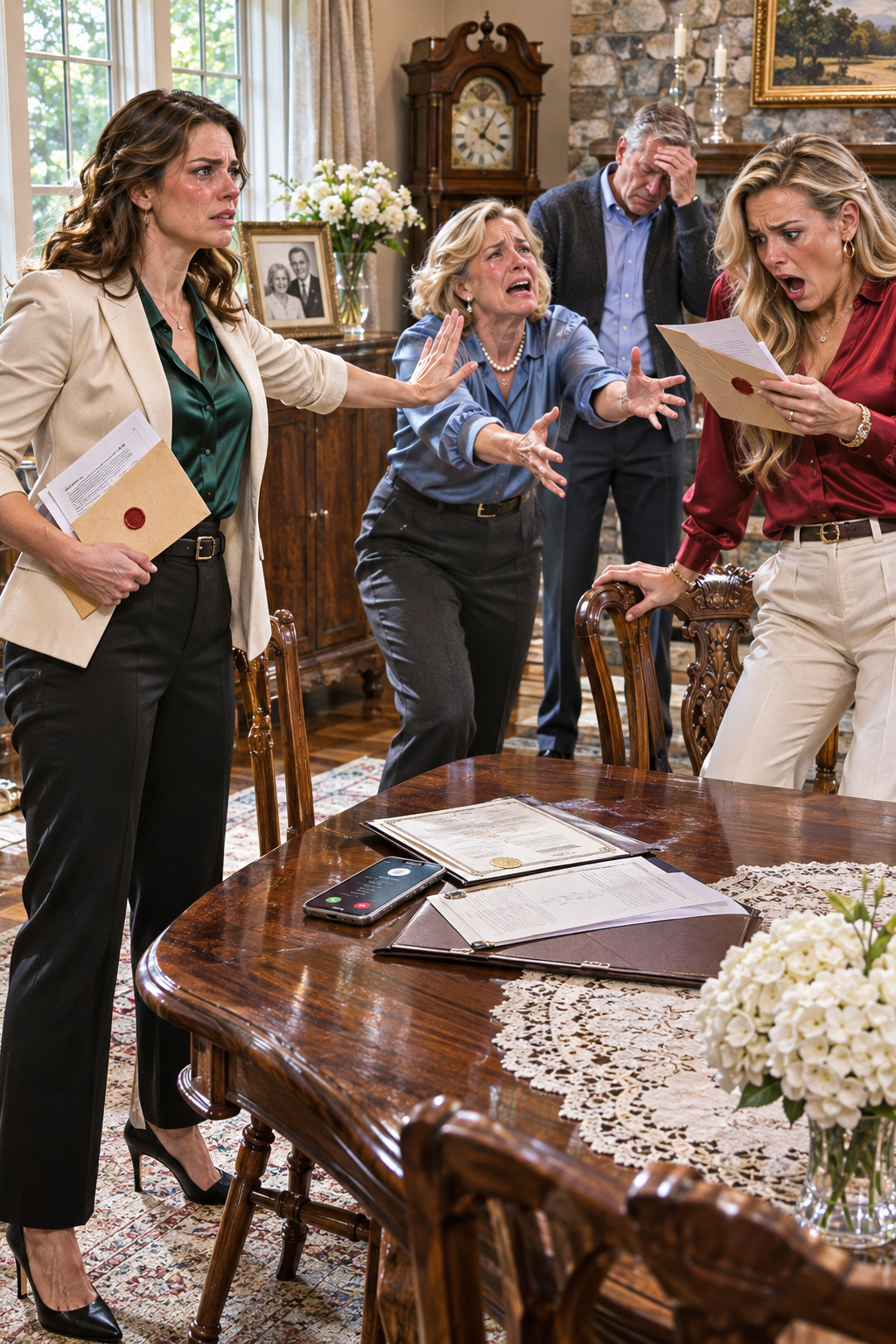
“Do you remember all the envelopes you received after you moved?”
My stomach tightened.
I remembered court-looking documents. Notices. Certified letters.
I had left several unopened.
At the time, I assumed Mark was trying to pressure me for money.
He handed me the folder.
I read the top page.
Divorce decree.
My throat went dry.
“This isn’t real.”
“It is.”
“You divorced me without telling me?”
“You were served.”
“I never agreed.”
“You didn’t have to agree. You had to respond.”
I flipped through pages.
There were property orders.
Support calculations.
Custody records from the years Emily had been a minor.
Then I found the house.
Awarded to Mark.
I looked up.
“You took my house.”
“The court divided the assets.”
“No.”
“Karen, you took forty-one thousand dollars from our joint savings when you left.”
“That was partly mine.”
“The court considered that.”
I kept reading.
Then another number caught my eye.
Past-due child support.
“What is this?”
Mark looked tired.
“Money you were ordered to contribute for Emily.”
“You never told me.”
“I did.”
He pointed toward the folder.
“So did the court.”
I stared at the stack of documents I had spent years refusing to read.
Chapter 4
The attorney I hired the next morning was patient, which somehow made the conversation worse.
He reviewed the documents twice.
“You received notice at this address?”
“Yes.”
“And these were your signatures on the certified mail receipts?”
“Some.”
“Did you respond?”
“I thought my husband was using the courts to pressure me.”
“Your ex-husband.”
I hated that correction.
“I never consented to the divorce.”
“He did not require your consent for the case to proceed.”
“And the house?”
“The property division appears final.”
“But I’m sick now.”
He folded his hands.
“Your current condition is serious, but it doesn’t automatically undo a judgment entered more than a year ago.”
I showed him my medical reports.
“I may need a wheelchair.”
“I understand.”
“He can walk now.”
“That doesn’t change what happened during the marriage or after the separation.”
I paid him to review every possible option.
The more documents we obtained, the worse things looked.
Mark had records of everything.
The $41,000 transfer.
Mortgage payments he made afterward.
Rehabilitation bills.
Messages where he asked me for help with Emily’s expenses.
Messages where I said I would help once I was financially stable.
A particularly painful exchange showed his request for $1,200 toward physical therapy.
My response said:
I already sacrificed enough. You need to find another solution.
Two weeks later, my vacation photographs had timestamps.
My lawyer looked at me over his glasses.
“Why didn’t you contribute regularly to your daughter’s support?”
“I intended to.”
“But did you?”
“Not consistently.”
“Did you leave money designated for her when you withdrew the savings?”
“No.”
I became angry.
“Everyone keeps acting like those six months meant nothing. I worked constantly. I cared for Mark. I supported the entire household.”
“That may explain why you reached a breaking point.”
“Exactly.”
“It doesn’t erase what happened afterward.”
The hearing came months later.
By then, I sometimes needed a walker.
Mark arrived with a cane.
Emily came with him.
I hated seeing them together.
Not because I wanted them apart.
Because they looked like a team formed in the space I had abandoned.
Mark testified calmly.
He described suspending rehabilitation because he needed money for groceries, mortgage payments, transportation, and Emily’s expenses.
He explained how friends rotated helping him.
How he found remote work.
How he slowly resumed therapy.
When I spoke, I told the truth as I understood it.
“I was physically and emotionally exhausted. I was carrying everyone. I felt like I had disappeared inside caregiving.”
Then came the question I feared.
“When you withdrew the funds, did you leave a designated amount for your minor daughter’s support?”
I hesitated.
“No.”
Emily testified briefly about the years Mark paid her expenses.
She didn’t look at me.
My attorney presented my medical situation and reduced income.
I believed surely that would matter.
It did.
Just not the way I wanted.
The court adjusted payment terms based on my current ability to work.
But the house remained Mark’s.
The past-due support remained.
The previous financial division remained.
I appealed what I could.
Nothing substantial changed.
Legal fees piled up.
Medical costs climbed.
My work hours fell again.
The morning the final decision came, I left the courthouse barely able to feel my right foot.
Mark and Emily walked ahead.
“Mark.”
They kept moving.
“Emily.”
I tried to catch up.
My leg trembled.
Then it gave out.
A courthouse employee rushed over with a wheelchair.
“Ma’am, sit down before you fall.”
I wanted to refuse.
I couldn’t.
From the chair, I watched my former husband walk toward the parking lot while our daughter stayed beside him.
Neither turned around.
Three years earlier, Emily had warned me not to come back expecting them to care for me.
I had dismissed it as an angry teenager’s cruelty.
Sitting in that courthouse wheelchair with legal papers trembling in my lap, I finally understood that she had meant every word.
Chapter 5
I lost the apartment two months later.
My parents took me in.
Mom cried when she saw how much my mobility had declined.
Dad did not.
“You can stay here while you get organized,” he said.
“Get organized?”
“We’ll help you find resources.”
“Dad, I can barely walk.”
“I know.”
“That doesn’t sound like something you say to your sick daughter.”
He sighed.
“What do you want me to say?”
“That you’ll help me.”
“We will. But your mother and I can’t do everything.”
I moved into their downstairs guest room.
Some days I used a walker.
More often, I used the wheelchair.
Mom helped with meals and laundry, but she was sixty-nine and had arthritis herself.
Dad was still working part-time.
He began bringing me information about home-care programs, transportation services, disability benefits, and remote jobs.
One afternoon, he placed a job posting on the table.
“Customer support. Work from home.”
I stared at it.
“You expect me to work?”
“If your doctor agrees and the company can accommodate you, yes.”
“I’m sick.”
“So was Mark.”
I felt anger surge through me.
“Mark had everyone helping him.”
Dad looked at me steadily.
“Did you ever ask yourself why?”
“I am so tired of being judged.”
“I’m not judging your illness.”
“You’re judging everything else.”
“Yes.”
That stunned me.
Dad had never been a man who spoke bluntly.
He sat across from me.
“You left your fifteen-year-old daughter in a house where she became responsible for things no child should have been responsible for.”
“Mark had friends.”
“Not every hour.”
“I had been caregiving for six months.”
“And Emily did it while going to high school.”
“She wasn’t doing what I did.”
“Maybe not. But she was fifteen.”
I looked away.
Dad continued.
“Now you’re asking everyone to reorganize their lives around you.”
“That’s what family does.”
“Sometimes.”
I turned back.
“What does that mean?”
“It means family helps. It doesn’t mean family has no boundaries.”
I hated that word.
Boundaries.
It seemed to be everyone’s favorite excuse for refusing me.
An old neighbor occasionally sent updates about Mark and Emily.
Mark’s remote job had become permanent.
His physical therapy continued.
Emily had received an academic opportunity at a university several hours away.
When I heard she planned to move, my first emotion was disbelief.
Her mother was becoming increasingly disabled, and she was leaving town.
I wrote Mark.
I explained that I now needed a wheelchair most days.
I asked whether we could put the bitterness aside.
Not remarry.
Not even live together.
Just help each other occasionally.
His answer arrived that evening.
Karen, I’m sorry you’re going through this. I mean that sincerely. But I cannot take responsibility for your care. I still have limitations of my own, and Emily deserves the chance to build her adult life. Please use the professional and community resources available to you. Please also respect Emily’s decision about contact.
I cried after reading it.
“How can he be so cold?” I asked Mom.
She sat beside me.
“Maybe he isn’t trying to be cold.”
“He knows exactly what this is like.”
“That may be why he’s careful.”
I didn’t want to hear that either.
A week later, Dad drove me to meet with a county disability coordinator.
The woman explained options for in-home assistance, transportation, occupational therapy, and potential housing support.
She didn’t speak to me like a burden.
She also didn’t speak as if someone else owed me their life.
That distinction unsettled me.
On the ride home, Dad said, “Send the job application.”
“I’ll think about it.”
“No. Apply. If it doesn’t work, it doesn’t work. But apply.”
I did.
The company offered a part-time remote position with flexible hours.
I almost turned it down.
Instead, I accepted.
Not because I suddenly became grateful or wise.
Because I needed money.
Chapter 6
The photograph arrived from my aunt on a Tuesday afternoon.
Mark stood outside his rehabilitation center with his arm around Emily.
He wasn’t holding a cane.
My aunt’s message read:
Big day for Mark. Walked the full therapy hallway without assistance. Emily leaves for college next month. Thought you’d want to know.
I stared at the picture for a long time.
Mark had gained something back.
Emily was finally moving forward.
And I sat in my parents’ guest room with a wheelchair beside the bed and a headset for my new remote job resting on the desk.
My immediate thought was bitter.
They don’t need me at all.
Then another thought followed.
When had I last made them feel needed rather than obligated?
That question stayed with me.
My condition did not improve.
Some weeks were better than others, but I gradually accepted that mobility aids would remain part of my life.
The home-care program sent an aide several mornings a week.
Her name was Teresa.
The first time she helped me shower, I cried afterward.
Not because she was unkind.
Because she was professional.
She asked permission before touching anything. She explained what she was doing. She encouraged me to do whatever I safely could myself.
She didn’t sacrifice her whole life to care for me.
She came at nine.
She left at noon.
And somehow I still survived the afternoon.
I began to understand what Mark had tried to tell me years before.
Help did not have to mean one person disappearing so another person could function.
That had been the choice I thought existed.
Either I sacrificed everything, or I escaped everything.
I had never seriously considered the middle.
Outside help.
Schedules.
Counseling.
Respite.
Friends.
Boundaries.
I had rejected those things because by the time Mark suggested them, I didn’t want relief.
I wanted out.
There is a difference.
Understanding that didn’t erase how exhausted I had been.
Six months of caregiving had been brutal.
My anger had been real.
My loneliness had been real.
I had needed help too.
But suffering explains a decision.
It does not automatically excuse every decision that follows.
Taking nearly all our savings wasn’t necessary for my freedom.
Leaving Emily behind because taking her would cost more money wasn’t necessary for my mental health.
Ignoring court notices wasn’t self-care.
Refusing child support wasn’t recovery.
And a vacation wasn’t the problem by itself.
It was the fact that I chose it while telling Mark I could not spare money for the treatment that might help him regain independence.
Those were harder truths.
For months I had asked the same question.
Why won’t anyone help me now?
Eventually another question became impossible to avoid.
Why did I believe help belonged to me in a form I had refused to give anyone else?
I wrote Emily a letter.
Not a text.
Not a plea.
I did not tell her how sick I was.
She already knew.
I didn’t ask her to visit.
I wrote:
I am sorry I left you carrying responsibilities that belonged to adults. I told myself you were old enough because that made leaving easier for me. You were fifteen. You deserved to be fifteen.
I am sorry I treated my exhaustion as if it erased yours.
I am sorry I returned asking for care before I had truly returned as your mother.
You don’t owe me contact, forgiveness, or assistance. I hope college gives you room to build the life you want.
I love you.
I mailed it.
For six weeks, nothing happened.
Then one Sunday, my phone rang.
Emily.
I nearly dropped it.
“Hello?”
“Hi.”
Her voice sounded cautious.
“Hi.”
“I got your letter.”
“Okay.”
“I don’t know what I want our relationship to be.”
“You don’t have to know.”
Silence.
Then she asked, “How are you?”
For once, I didn’t use the question as an opening to list everything I needed.
“I’m adjusting.”
“Grandpa said you’re working.”
“Part-time.”
“That good?”
“Some days.”
Another silence.
“I leave Thursday.”
“For school?”
“Yeah.”
“I’m proud of you.”
She didn’t answer immediately.
“Thanks.”
The conversation lasted seven minutes.
She did not offer to visit.
She did not offer to care for me.
She did not say she forgave me.
When we hung up, I cried anyway.
Not because I had gotten my daughter back.
Because for the first time in years, I had spoken to her without asking her to carry something for me.
Mark and I exchanged one message several months later.
I congratulated him on his progress.
He replied:
Thank you. I hope your treatment gives you as much independence as possible.
That was all.
Once, I would have called it cold.
Now I saw something else in it.
Kindness with a boundary.
I had spent years thinking love was measured by how much suffering someone would accept for you.
Mark’s recovery taught me otherwise.
Emily’s distance taught me otherwise.
Even my father’s insistence that I work taught me otherwise.
People could care about me without surrendering their futures to me.
And I could need help without making that need a debt someone else was required to pay.
I still use the wheelchair.
I still have days when anger rises unexpectedly, especially when I see families where someone seems to receive endless care without having to beg for it.
I am not a saint now.
I don’t wake every morning filled with gratitude.
Sometimes I am scared.
Sometimes I am lonely.
Sometimes I wish Mark had opened the door that afternoon and simply said, “Come home.”
But wanting that does not make him wrong for saying no.
Emily visits my parents during school breaks now.
Sometimes she sees me.
Sometimes she doesn’t.
When she does, I don’t ask when she’s coming back.
I don’t ask whether she could stay longer.
I don’t ask what will happen if my condition worsens.
Those questions belong to my doctors, my care coordinator, my savings plan, and me.
Not to the girl who spent fifteen years believing her mother would always be there, then three years learning she wouldn’t.
The hardest lesson of my life came from becoming dependent myself.
I once told my daughter that nobody should have to sacrifice their happiness forever for someone else.
I said it to justify leaving.
The sentence wasn’t entirely wrong.
What was wrong was believing it applied only to me.
Emily deserved that freedom too.
Mark deserved it.
My parents deserve it now.
And, strangely enough, accepting that has made the help they freely give feel more like love than anything I once tried to demand.
One evening, Dad was helping me adjust the ramp near the back door when I apologized.
Not for one specific thing.
For the way I had treated care as something everyone owed me.
He sat beside me on the porch.
“You were scared,” he said.
“So was Mark.”
“Yes.”
“And Emily.”
“Yes.”
I watched the sunset fade behind the houses.
“I thought if people loved me, they’d take responsibility for me.”
Dad shook his head.
“No, honey. They can walk beside you. They can help you carry what they reasonably can. But responsibility for your life is still yours.”
Three years earlier, hearing that would have made me furious.
Now I understood why.
It was easier to demand devotion than to face the consequences of my own choices.
Easier to call everyone cruel than to admit that my daughter had been right at fifteen.
She was my child.
Not a nurse.
Not a backup plan.
Not the person assigned to save me when my own body failed.
She was simply my daughter.
And if I wanted any place in her life again, I had to learn how to be her mother without making her responsible for keeping me afloat.
THE END.
⚠️ All characters and events are fictional. Do not imitate or apply them in real life. 😌😌😌