My sister Vanessa shoved me through a glass door after her college rejection, leaving me unconscious for three weeks. As I blacked out, I heard Mom whisper, “If Harper wakes up, everything comes out.” My neighbor Owen had already hidden years of photographs and notes documenting Vanessa’s attacks. When I finally woke, Aunt Rebecca revealed our parents had conceived me to “soften” my violent sister. Then police recovered messages showing what Mom tried to erase while I fought to survive.
### Part 1
My sister shoved me through a glass door so hard that I never got my hands up.
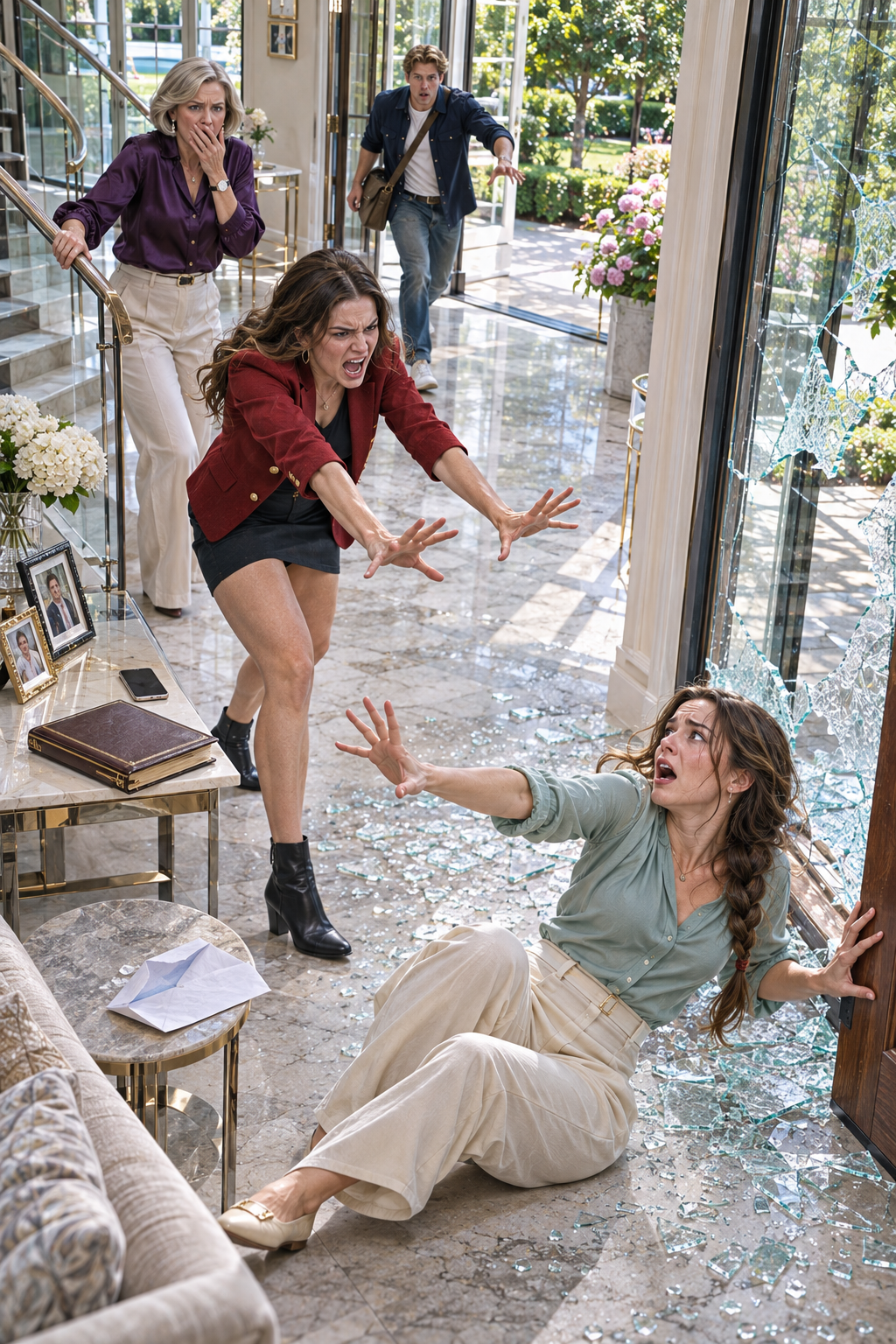
One second I was standing in the upstairs hallway of our house in Maple Glen, holding the dark green dress I planned to wear to my student art showcase. The next, Vanessa’s hands hit my shoulder and chest, the decorative glass door behind me resisted for one impossible heartbeat, and then the entire world exploded into cold air, splintering wood, and glittering shards. I remember hitting the floor inside my mother’s office. I remember Vanessa screaming, “Harper, get up!” as if standing would somehow erase what she had done. I remember my mother running upstairs, seeing me on the floor, and making a sound I had never heard from her before. Then everything disappeared.
The strange thing is that the day had started quietly. My iron had hissed over the hem of my dress while afternoon sunlight spilled through the stairwell window, and downstairs my mother, Diane, was making dinner. Ordinary sounds filled the house: cabinet doors, silverware, the hum of the refrigerator. Ordinary had always been important in our family because my parents worked very hard to make us look ordinary. From the street, we were almost painfully normal—two-story house, trimmed lawn, basketball hoop, framed school photographs lining the hallway. What those photographs never showed was that Vanessa had spent most of my childhood teaching me how little space I was allowed to occupy.
She was three years older, athletic, beautiful, and magnetic enough that adults forgave her before they understood what she had done. My parents organized our household around her emotions. If Vanessa was furious, everyone became careful. If she cried, everyone comforted her. If she failed at something, the entire house became a disaster zone. If I cried, my father Robert would sigh and say, “Harper, don’t make this bigger.” My mother preferred another sentence: “You know how your sister is.” As a child, I believed that meant Vanessa was complicated. By sixteen, I understood it meant nobody intended to stop her.
The first time I realized how completely my parents had accepted the arrangement, I was twelve. I was sitting on the back steps sketching an old flowerpot while Mom and Vanessa talked in the kitchen. Through the screen door, Vanessa suddenly asked, “Why did you even have her?” I stopped drawing and waited for my mother to become angry. Instead she sighed and said, “Don’t start.” A few seconds later, she added softly, “You’re still my special girl.” I stared at the graphite on my fingers until the lines blurred. I did not know then that those two sentences contained more truth about my family than anything they would admit for years.
Vanessa’s cruelty grew slowly enough that everyone could pretend each incident was separate. She hid my school assignments, destroyed clothes, mocked my voice, grabbed my arm hard enough to leave fingerprints, and once shoved me into pantry shelves so violently that the cans rattled above my head. My mother called us “girls” whenever she witnessed it, as though pluralizing the problem made us equally responsible. My father called Vanessa “under pressure.” That pressure became his explanation for everything.
The only person who never seemed fooled was Owen Bennett, who lived next door. Owen and I had known each other since kindergarten. He was quiet, observant, and irritatingly difficult to lie to. When he noticed a bruise near my elbow one summer, I said I had walked into a door. He studied me and replied, “You should start choosing less aggressive doors.” He smiled when he said it, but his eyes did not. Years later, when Vanessa slapped me in the kitchen after learning I had been accepted into a competitive summer arts program near her training facility, Owen looked at the bruise on my cheek and told me to start documenting everything.
So I did.
I bought a plain black notebook and recorded dates, photographs, broken belongings, threats, witnesses, and my parents’ responses. I emailed photographs to an account Vanessa did not know existed. When I caught her tearing apart a large print I had prepared for an art showcase, I wrote down exactly what she said: “You think everyone gets to clap for you now?” After that, Owen kept my notebook and copies of my identification documents inside a lockbox at his house. My aunt Rebecca’s phone number went into my backpack. I began quietly preparing for the possibility that one day staying in that house would become more dangerous than leaving it.
That day arrived less than a week later.
Vanessa came home clutching a thin college envelope, her face blotched red with humiliation. She had been rejected from a program she had convinced herself was guaranteed. I was upstairs preparing for my showcase when she charged toward me and demanded to know why I always seemed to “win” whenever she lost. I tried to move toward the stairs, but she blocked me. “You don’t even have to try,” she hissed. “You just stand there being quiet and pathetic and somehow everybody likes you.”
“Vanessa, move. I have to leave.”
Instead she grabbed my shoulder. I told her to let go. She shoved me against the wall, making a framed family photograph rattle beside my head. Then her face changed. The rage seemed to peel open and reveal something older underneath.
“You should have never been born,” she said.
I went cold.
She grabbed my wrist. I twisted away. My heels slid on the polished floor until the glass office door pressed against my back.
“Let go of me!”
Vanessa planted both hands against me and drove forward.
The door shattered.
Later, I learned that Owen’s father, a former paramedic, heard the crash from next door and ran over. He kept pressure on the worst injury until the ambulance arrived and told everyone not to touch the scene. Without him, doctors said, I probably would not have survived the trip to the hospital.
But I knew none of that yet.
I was already sinking into darkness when I heard my mother crying above me. Vanessa was babbling that she had not meant it. My father was shouting into a phone.
Then, somewhere between the hallway and unconsciousness, I heard my mother whisper words that followed me into the dark.
“If Harper wakes up, everything comes out.”
And for the first time, I understood that my family might be afraid of more than what Vanessa had just done.
### Part 2
People describe a coma as if consciousness simply disappears. Mine did not. I existed somewhere below the surface, unable to move but occasionally able to hear voices filtering down through the darkness. Machines beeped. Shoes squeaked against hospital floors. Nurses talked over me. One called what Vanessa had done an assault, and I held onto that word because nobody in my family had ever used language that honest. Nobody said sisters arguing. Nobody said pressure. Nobody said I was too sensitive. Assault.
Then I began hearing my family.
My father sounded broken. One night he said, “We should’ve stopped this years ago.” My mother answered, “That doesn’t help now.” Vanessa snapped that they had always told her I caused problems, that I knew how to provoke her, that I never stopped making her feel like she was failing. Dad denied saying anything that direct, but his denial sounded weak even through the fog. Then Aunt Rebecca arrived, and her voice cut through everything. “You don’t get to stand beside Harper’s hospital bed and pretend you didn’t build the conditions for this. I warned you when Vanessa was ten. I warned you again when she was thirteen.”
I wanted to wake up just to ask what she meant.
The answer came before I could.
A prosecutor visited my parents after Owen gave investigators the lockbox. She told them they now had photographs, dated journal entries, and witnesses establishing years of escalating violence. Then she asked why Vanessa’s childhood aggression had never received sustained intervention. My father hesitated. My mother finally whispered, “We thought another child might soften things.”
Even unconscious, I understood.
Another child.
Me.
Later Vanessa came to the hospital, and I heard her angrily accuse my mother. “You made her for me. After Dr. Pierce, you told me a little sister might teach me how to love somebody.”
My mother began crying.
Nobody denied it.
Three weeks after the glass shattered, I opened my eyes with Owen sitting beside my bed. My body felt like it had been rebuilt incorrectly. My wrist was fractured, my head throbbed, and a deep injury along my neck had missed becoming fatal by less than an inch. When I saw my parents standing across the room, everything I had heard returned at once. Another child might soften things. I deliberately turned my face away from them.
A hospital social worker named Marissa asked where I wanted to live after discharge. I wrote Aunt Rebecca’s name on a legal pad. When she asked whether I wanted my parents included in meetings with investigators, I wrote NO so large the pen nearly tore the page.
Rebecca came that afternoon carrying an old manila folder.
She waited until we were alone before telling me the truth. When Vanessa was ten, she had injured a seven-year-old cousin during an argument over a craft project. The injury was not life-threatening, but it was frightening enough that my grandmother demanded counseling. A child psychologist, Dr. Samuel Pierce, documented Vanessa’s escalating aggression, fixation on attention, and hostility toward children she viewed as rivals. He recommended strict boundaries, continuing therapy, and careful safety planning around younger children.
My parents stopped treatment.
The withdrawal paperwork was dated three months before I was conceived.
Then Rebecca showed me a copy of a letter my grandmother had written. In it, she described warning my mother not to treat a second child as a solution for Vanessa. Dr. Pierce had apparently made the same warning explicitly: if my parents expanded the family, the younger child could never be expected to regulate Vanessa’s emotions.
That was exactly what they had expected from me.
Every time Mom called me mature, she meant absorb it. Every time Dad called me understanding, he meant surrender. Every time they told me to keep the peace, they were asking the younger child to manage the older one just as the psychologist had warned them never to do.
When my parents came to Rebecca’s house after my discharge, I put the folder on the coffee table between us.
“You knew,” I said.
Mom immediately began crying. “We wanted you, Harper.”
“For what?”
Her face changed.
Dad looked at the floor.
Mom said they had hoped another child would bring warmth into the family. Dad called their choices mistakes. I asked why they had continued excusing Vanessa once those “mistakes” started leaving bruises on me.
“We kept hoping things would improve,” Mom whispered.
Then she reached toward me. I pulled away.
That was when her real concern emerged.
“The prosecutor is being extremely aggressive,” she said. “Vanessa could go to prison.”
I stared at her.
I had almost died, yet she was still standing in front of me asking me to consider what consequences might do to Vanessa.
“She should face consequences,” I said.
Mom gasped as if I had struck her.
A few days later, Vanessa’s attorney asked whether I would agree to meet her before formal depositions. I agreed because I wanted one conversation without our parents translating her rage into something softer.
At the detention center, Vanessa sat across from me and opened with, “You look awful.”
“You put me in a coma.”
“I pushed you. I didn’t mean for the door to break.”
She still believed changing a verb could change what happened.
When I told her I knew our parents had hoped my existence would help her, she smiled bitterly. “So you finally know.”
Then she told me something worse.
After I fell, Mom had instructed her to describe everything as an accident. She wanted Vanessa to say I had grabbed her first and that she had tried to catch me.
Before the guard led her away, Vanessa leaned back and said, “You still don’t know everything Mom did after you fell.”
I left that room shaking.
For years, I had believed my mother’s greatest failure was refusing to protect me.
I was about to discover that while I had been fighting for my life, she had actively tried to protect the person who put me there.
### Part 3
Investigators recovered deleted messages from my mother’s phone.
Within an hour of the ambulance leaving our house, Mom had texted Dad telling him to retrieve my lockbox from Owen’s house if possible. She had suspected I was documenting Vanessa’s behavior. Dad replied, “Too late. Bennett has it.” Mom also contacted one of Vanessa’s coaches and warned that I could become “dramatic when upset” and that they could not allow the incident to destroy Vanessa’s future.
The words made me physically nauseated.
While surgeons were working on me, my mother had tried to enter the Bennetts’ house to find the records. Owen’s father had already secured the box elsewhere. Hospital records later showed that Mom had also requested access to my phone under the excuse that she needed to contact my friends. During that period, messages between Owen and me discussing Vanessa’s threats disappeared. Investigators eventually recovered enough from backups to establish what had happened.
There was no longer any way to call my mother merely weak.
Weakness was standing aside.
She had taken action.
As the trial approached, I concentrated on recovery because my body demanded attention whether my family deserved any or not. Physical therapy hurt. Bright lights triggered headaches. Narrow hallways sometimes made my chest tighten before I consciously remembered why. Rebecca never pushed. She knocked before entering my room, asked before touching me, and treated boundaries as ordinary rather than insulting. Owen drove me to appointments, helped restore my damaged art files, and spent long afternoons beside me without insisting I talk.
My postponed showcase was rescheduled. My art teacher told me, “The piece you protected is still going on the wall.”
I nearly cried at the wording.
The prosecutor’s victim advocate prepared me for court. She taught me not to fill uncomfortable silences and not to guess when I could simply say I did not know. Most importantly, she told me, “The truth is enough. You don’t have to perform it.”
The trial began in late fall.
Medical witnesses described my injuries. Owen’s father explained how he found me and why the bleeding had been immediately life-threatening. Then prosecutors presented years of journal entries and photographs. A teacher testified that she had noticed bruises and fear responses, only to be told by my parents that I was overly sensitive. A former teammate described Vanessa shoving another player during an argument. My cousin’s mother testified about the childhood incident that originally sent Vanessa to therapy.
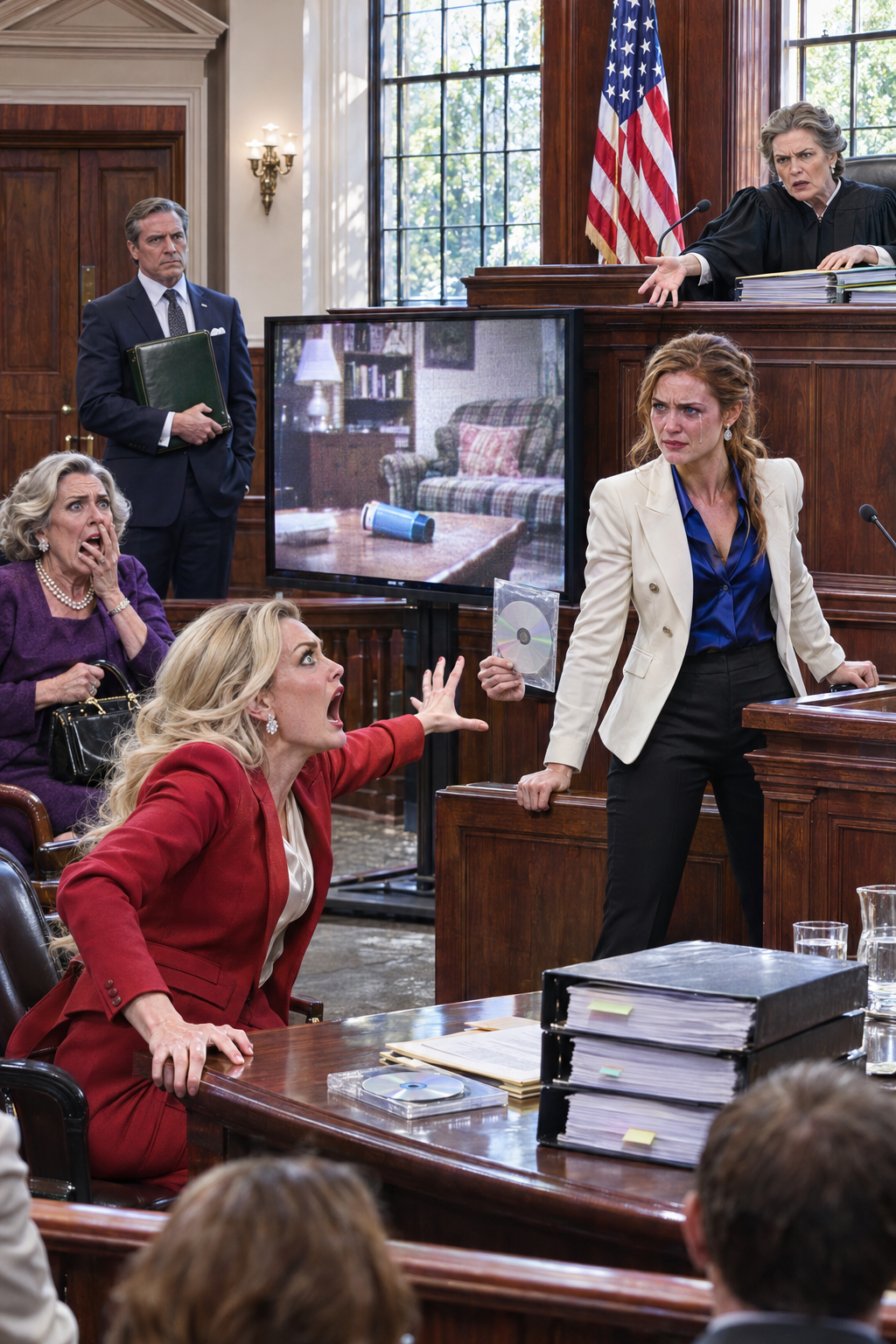
Then my mother took the stand.
At first, she repeated every phrase I had heard growing up. Vanessa was sensitive. Vanessa struggled with pressure. The family had been under strain. She had never imagined anything serious could happen.
Then prosecutors displayed her deleted messages.
The courtroom became so quiet I could hear somebody shifting papers several rows behind me.
“Were you attempting to retrieve records documenting previous violence while your younger daughter was receiving emergency treatment?” the prosecutor asked.
Mom cried.
“I was panicking.”
“That was not my question.”
Mom stared down at her hands.
“Yes,” she whispered.
My father’s testimony was less defensive, which somehow hurt more. He admitted seeing previous bruises and repeatedly minimizing them. When asked why, he said, “I thought I was keeping the peace.”
Keeping the peace.
By handing me to war.
When it was my turn, I walked to the witness stand with my scar visible above my collar. I described the rejection letter in Vanessa’s fist, the hot smell of the iron, the dress slipping from my hand, her fingers around my wrist, and the cold glass against my back.
“What did your sister say immediately before pushing you?”
I looked at the jury.
“She said, ‘You should have never been born.’”
Vanessa’s attorney tried to turn the incident into mutual conflict. Had I argued? Had I known Vanessa was emotionally distressed? Could she have only intended to move me aside? Had I possibly lost my balance?
“No.”
Again and again, simply no.
Then he asked whether I still loved my sister.
“That isn’t the relevant question,” I answered.
The jury deliberated for six hours.
Just before we were called back, Mom approached me in the courthouse hallway. Rebecca started to move between us, but I stopped her.
Mom looked exhausted. “Whatever happens in there, Harper, Vanessa is still your sister.”
I studied the woman who had spent my childhood demanding that biology matter more than behavior.
“She stopped being my sister to me long before the glass broke.”
The jury found Vanessa guilty of aggravated assault.
The judge later ordered incarceration in a secure treatment setting followed by strict supervised conditions. Nothing about the sentence made me feel triumphant. A verdict could not return the weeks I lost or erase the scar. What it did was end my family’s argument with reality. What Vanessa did finally had a name that my parents could not soften.
After sentencing, I cut contact with both of them.
Mom sent pages of apologies. Dad wrote that he knew he had failed me and hoped I would someday let him say it in person.
I answered neither.
Some doors do not need one final conversation.
They need a lock.
Six weeks later, I stood beneath gallery lights beside the artwork Vanessa had once tried to destroy. I had changed the image during recovery, adding a cracked pane in the foreground that distorted the landscape behind it. Owen stayed beside me all evening without hovering. When the crowd became too much, he said, “We can leave.”
“I don’t want to.”
“Then we stay.”
Outside afterward, beneath the cool night sky, he told me quietly, “For the record, I was always going to stay.”
For once, staying did not sound like being trapped.
So I kissed him.
And for the first time in my life, being close to someone did not require me to become smaller.
### Part 4
Healing did not transform my life overnight. It arrived through ordinary things: sleeping through a full night, walking into a grocery store alone, finishing a class without tracking every exit, laughing before remembering that I was supposed to be afraid. Owen and I moved slowly. He never treated my recovery like a romantic challenge he could solve. We ate takeout on Rebecca’s porch, worked on my portfolio, and learned each other without making promises bigger than the lives we actually had.
Then a letter arrived from Vanessa’s treatment facility.
It was not an apology. She still blamed my mother, our childhood, therapy, me, and almost everyone except herself. But buried inside the resentment was another confession: Mom had visited her immediately after the incident and coached her to say that I grabbed first. After failing to retrieve the lockbox, Mom tried to gain access to my phone and delete messages describing earlier violence.
I gave the letter to investigators.
They confirmed enough of it.
That ended the final pathetic hope I had been carrying—that perhaps Mom’s behavior had been panic rather than intention. She had not merely frozen when forced to choose between her daughters. She had chosen, then tried to alter reality until everybody else saw the version she preferred.
At Christmas, my parents ignored my request for no contact and sent packages to Rebecca’s house. Mom sent a scarf and another long letter. Dad sent a bookstore gift card. I donated the scarf, returned Mom’s letter unopened, and used the gift card for schoolbooks. I did not feel guilty.
By spring, I had returned to classes part-time and applied to an art therapy program. The idea had grown during my recovery. Drawing had once given me a place where Vanessa could not control the shape of things. Maybe I could eventually help other people find something similar.
The acceptance email arrived nearly a year after the shove.
I was sitting at Rebecca’s kitchen table with cold coffee beside my laptop when the word Congratulations appeared on the screen.
For a moment, I was sixteen again, reading the acceptance that had helped trigger Vanessa’s fury. My body prepared for footsteps, anger, punishment.
None came.
Rebecca walked in, read the screen, and smiled.
Owen brought cupcakes that evening. We ate them outside while neighborhood children rode bicycles along the sidewalk. Nothing extraordinary happened.
That was what made it extraordinary.
Several weeks later, Mom asked Rebecca whether I would agree to see her once.
I thought about it for three days before saying yes.
Not because I wanted reconciliation.
I wanted the final conversation to belong to me.
We met at a café inside a public botanical garden. Mom looked years older. She stood when she saw me, knocking her chair backward, but I did not hug her. We ordered coffee neither of us drank.
“I’m here because I want this to be the last time,” I said.
Her eyes filled.
“I deserve that.”
It might have been the first time she had accepted a consequence without immediately trying to negotiate it.
I asked the questions in order.
“Did you tell Vanessa to say what happened was an accident?”
“Yes.”
“Did you try to take the lockbox?”
Her eyes dropped.
“Yes.”
“Did you delete messages from my phone while I was unconscious?”
Her hands began trembling.
“Yes.”
No excuses remained between us.
“Why?”
Mom looked at me with a misery that would once have made me rush forward to comfort her.
“Because if I admitted what Vanessa had done,” she whispered, “then I had to admit what I had allowed all those years. I had to admit I knew better. I couldn’t survive that.”
For several seconds, I said nothing.
Then I understood my entire childhood in one sentence.
She could not survive the truth, so she had asked me to survive it for her.
I had carried it in bruises. In fear. In destroyed work. In nights spent listening for Vanessa’s footsteps. Finally, I had carried it through shattered glass and into a coma while Mom tried to erase the evidence.
I stood.
She immediately reached toward me. “Harper, please. I know I don’t deserve forgiveness, but—”
“You’re right.”
Her hand stopped.
“You don’t.”
She began crying harder.
I felt sad, but sadness was no longer the same thing as surrender.
“I’m not spending my life helping you feel less guilty,” I said. “You have to live with what you did. I already did.”
Then I walked away.
Owen was waiting in the parking lot, but he did not rush toward me. He waited until I crossed the distance myself. When he opened his arms, I stepped into them because I wanted to, and I stayed there only as long as I chose.
That night, I stood in Rebecca’s bathroom and studied the pale scar running along my neck. For months I had thought of it as the place where Vanessa almost ended my life. Now I saw something else.
A boundary.
Before the glass, my family had believed my silence belonged to them.
After it, nothing did.
Vanessa remained where the court had placed her, receiving treatment under strict supervision. My parents remained outside my life. I never reconciled with them, and I never decided that forgiveness was required for healing. Maybe they changed. Maybe they did not. That became their problem instead of mine.
Owen and I kept building something quiet and careful. Rebecca remained the person whose house taught me that safety could feel boring in the best possible way. I continued school and began preparing for work where art was not merely something beautiful to hang on a wall but a language for people who had spent too long believing they were not allowed to speak.
Sometimes I still dream about the hallway.
In the dream, Vanessa is coming toward me. The glass is behind me. I know what happens next.
But lately the dream has changed.
I no longer stand there waiting for her hands.
I turn.
I open another door.
And I leave.
My family taught me that surviving meant being quiet enough, forgiving enough, and useful enough to absorb everyone else’s damage.
They were wrong.
Sometimes survival means keeping records.
Sometimes it means telling the truth in a courtroom.
Sometimes it means returning letters unopened.
Sometimes it means loving someone who understands that closeness is a choice, not a debt.
And sometimes it means looking at the people who were supposed to protect you and realizing you no longer need them to understand why you walked away.
I was not untouched.
I was not magically healed.
But I was free.
After everything that house had tried to make of me, freedom was not a consolation prize.
It was the ending.
The only one I was willing to accept.
THE END!
Disclaimer: Our stories are inspired by real-life events but are carefully rewritten for entertainment. Any resemblance to actual people or situations is purely coincidental.