I Was Engaged To This Man 15 Years Ago. He Left Me With A Letter Saying I’d Never Make Rank. Yesterday, He Walked Into My Battalion And… Saw My Nameplate.
Fifteen years ago, my fiancé left a letter on our kitchen counter saying I was too stubborn to ever command soldiers. His mother and our friends watched me pack the invitations alone. When he reported to my battalion as a major, I didn’t raise my voice. I gave him the hardest assignment we had, with the same support anyone else would receive. Eleven days later, a maintenance record appeared on my desk bearing his signature—and a date from our engagement.
Part 1
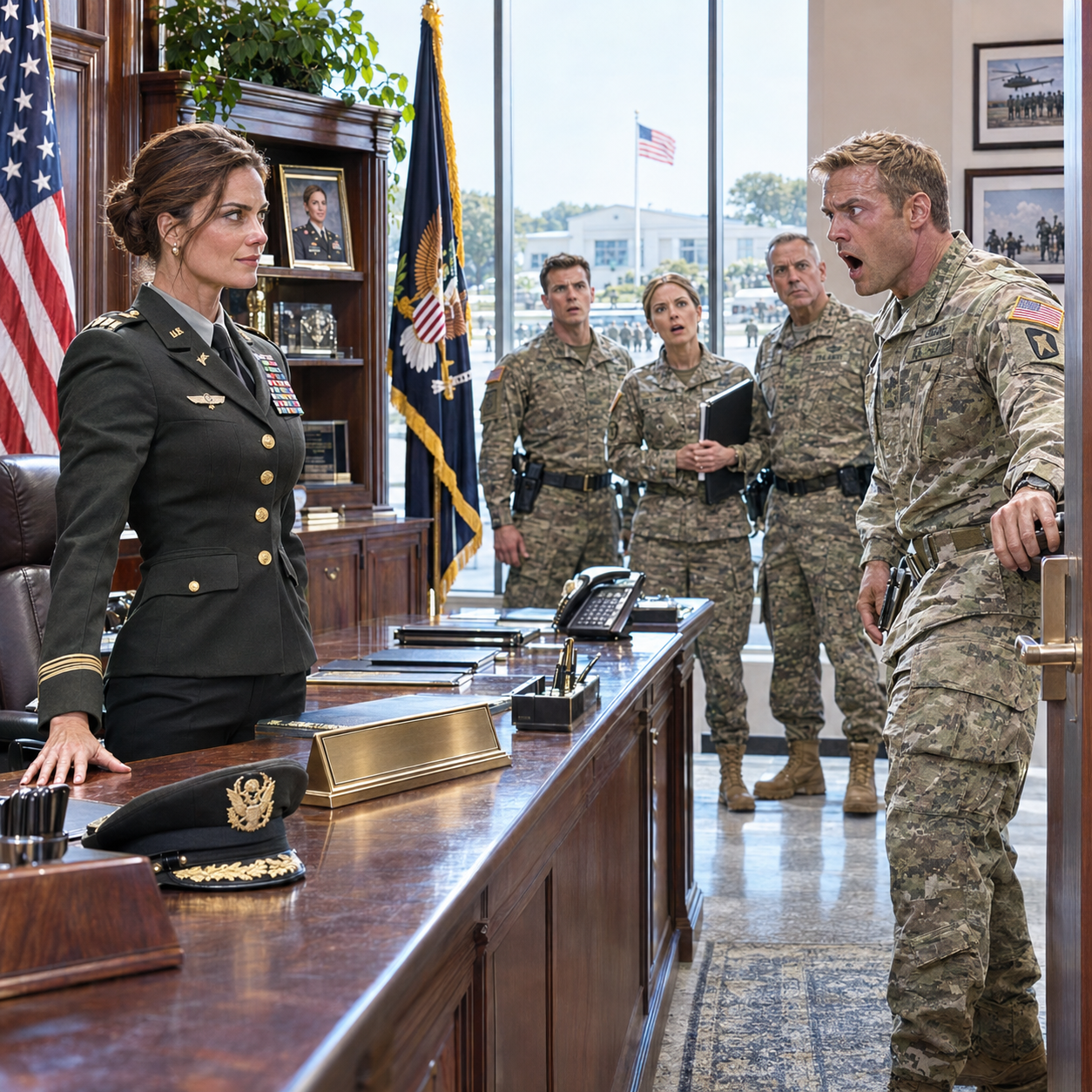
The morning Major Everett Sloane walked into my headquarters, the coffee had burned down to something resembling engine oil, and a sergeant was explaining why fourteen available trucks couldn’t leave the motor pool. It was 6:45, the ventilation rattled, and I was deciding whether to cancel a training convoy scheduled for Friday. Then the door opened. Everett took two steps into the conference room, saw me at the head of the table, and stopped so abruptly that the folder beneath his arm struck the doorframe.
I was forty years old, an Army lieutenant colonel with eighteen years of service, and commander of an eight-hundred-soldier sustainment battalion at Fort Bragg. For fourteen months I’d signed orders, listened to grievances, and stood in muddy lots while soldiers showed me equipment that looked fine in reports and barely functioned in daylight. Command meant knowing what my orders did to people I might never meet. None of that knowledge helped with the sudden sight of the man who had once promised to meet me at the altar.
“Major Sloane reporting as directed, ma’am,” he managed. His voice sounded older than I remembered. Silver threaded his temples; there was a faint crease between his eyebrows I hadn’t seen fifteen years earlier. He had arrived expecting a routine introduction to Lieutenant Colonel Brynn Calder, a name on his orders. When we were twenty-five, he had said Brynn with the easy certainty of someone who assumed he’d always be welcome in my life. Now he couldn’t seem to look at my face for more than a second.
My executive officer, Major Dana Voss, glanced from him to me. She had worked beside me long enough to notice when I stopped moving. I indicated the empty chair. “We’re reviewing readiness, Major. Sit down.” He obeyed, too carefully. The meeting continued. Captain Lyle Mercer showed us a chart whose green bars disguised a growing queue of vehicles awaiting parts, and Sergeant First Class Nia Bell described drivers borrowing serviceable fittings from one truck to keep another running. I asked for maintenance records instead of explanations. Everett answered one question about depot turnaround times, correctly and without flourish. By eight, everyone knew something odd had occurred. Nobody knew what.
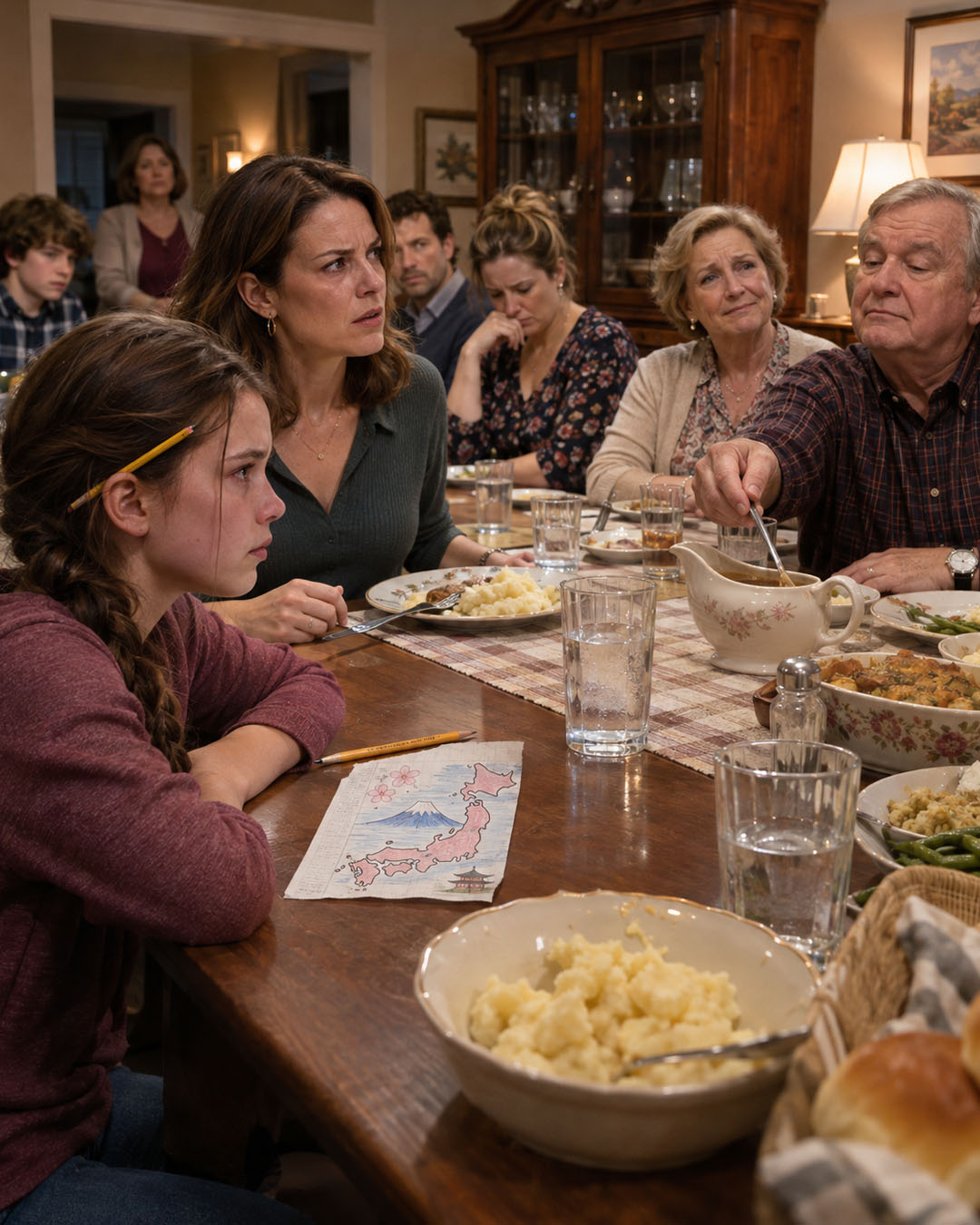
Fifteen years earlier, we’d shared a small duplex outside the same post, balancing takeout cartons on boxes because we hadn’t bought a dining table. Everett was clever, handsome, and wonderfully persuasive when he wanted something. He could convince a skeptical superior that an impossible schedule was manageable, then come home and persuade me that we could afford a honeymoon in Maine. Three days before our engagement party, I found his key beside a two-page letter. He wrote that I cared more about regulations than people, that my refusal to “work the system” would keep me a junior officer forever, and that he needed someone who understood ambition. By evening his clothes were gone. His mother sent a short message saying we should handle our disappointment privately.
I had read the letter so many times the paper softened along its folds. The worst sentence wasn’t about my career. It was his assertion that he was leaving before my limitations became his. I wondered for months whether he had discovered something in me that everybody else could see. Eventually deployments, promotions, and a thousand ordinary decisions pushed that question out of my daily life. I kept the letter in a wooden box, not because I still loved him, but because I hadn’t yet known what to do with it.
After the meeting, Dana closed my office door and asked the question her professionalism required. “Do you know him personally?” I told her the truth, including the engagement, without describing its ending. She offered to call brigade and arrange a reassignment before gossip reached the enlisted ranks. I understood the impulse. A commander can poison a workplace without ever shouting; a lowered evaluation, an inconvenient duty roster, or a private joke from the wrong person can spread farther than an official order. I also knew that hiding our history could damage the unit just as easily.
“Notify the brigade commander that we have a prior personal relationship,” I said. “Ask legal for guidance on oversight of his performance reviews. Put the disclosure in writing.” Dana held my gaze, then nodded. “And his assignment?” she asked. I slid the readiness chart between us. Our operational readiness rate was sixty-one percent, and an inspection team would arrive in three months. Soldiers were working weekends to compensate for accounting errors they hadn’t created. Everett had spent much of his career in depot management. His record matched the problem. “Support operations,” I said. “Ninety-day recovery plan. You and the brigade staff will verify the milestones.”
The next morning he stood in my office with his cap tucked beneath one arm. The sound of morning physical training drifted through the open window. I handed him a plan with weekly equipment checks, documented parts reconciliation, independent spot inspections, and a realistic staffing allocation. The same standards applied to every officer. “Our goal is verified readiness above ninety percent,” I said. “Not a prettier spreadsheet. If a truck can’t move safely, it stays down. If the deadline is impossible, bring me evidence before you bring me excuses.” He read the pages twice, searching for the hidden insult.
“Why this section?” he asked finally. I showed him his own career summary, marked with years of technical experience. “Because you are qualified, Major.” For a moment his expression shifted, as though I had denied him a familiar argument. He saluted, gathered the papers, and left. I expected that to be the difficult part of our reunion. Eleven days later, Nia Bell brought me a yellowed shipping discrepancy report found beneath newer files. It listed a disputed batch of repair components, fifteen years old, with an approval signature I recognized at once. Beneath Everett’s name was a note: “Previous objection withdrawn by requesting officer.” The requesting officer was me.
Part 2
I stared at the line until the words lost their shape. Its original date fell in the week before Everett left our duplex. The disputed parts were steering assemblies for heavy transport trucks. A young mechanic had shown me a cracked fitting under a flashlight, and I had refused to sign a receipt declaring the shipment acceptable. I never learned what happened after that because my unit deployed before the next report came back.
“Where did you find this?” I asked Nia. She said a specialist had discovered an old binder behind a row of shelving during the equipment audit. Our section had inherited the misplaced binder when a storage office closed. Most pages concerned harmless transfers, but this one matched the part numbers on an unfilled requisition. I asked her to scan the entire binder, preserve the original, and keep its location documented. “No conversations about this in the yard,” I added. “Especially not with Major Sloane.” Nia looked surprised, then relieved. She told me the specialist who found it had first considered throwing it away, afraid somebody would blame him for keeping obsolete paperwork. I asked her to thank him for speaking up.
I called Dana and the brigade legal adviser. Within an hour, the old report had been sealed in an evidence envelope for an independent review. I told brigade commander Colonel Helena Rusk that both our names appeared. I recommended that the brigade, not I, determine whether the signature was authentic or the record actionable. Colonel Rusk asked if I could still lead the battalion without treating Everett differently. “I can follow a process,” I told her. “Whether I can trust my feelings is a separate question.” She assigned an outside officer to supervise any inquiry and required Dana to participate in all formal counseling sessions with Everett.
For the next few weeks, routine failures became more urgent than the mystery. A fuel truck broke down before a training movement, leaving thirty drivers waiting. A replacement pump was shown as received in the computer, although nobody could find it. Everett walked the warehouse with Nia and traced the mistake to two mismatched inventory codes. He made the correction and found eight other trucks that had been waiting for components already sitting in crates under the wrong labels. Nia described his work as thorough. She also said he had stopped listening when soldiers told him a deadline was unreasonable.
Everett presented a tight schedule and began to explain why the specialists had failed to maintain accurate counts. Nia sat three seats away, her jaw working. “Who approved the old labels?” I asked. Everett paused. He had no answer. “Then we have a process failure, not a specialist failure. Revise the plan and include the people who handle the parts.” He reacted as though I’d contradicted him before a court. His ears reddened, but he wrote it down. That afternoon he invited Nia and the mechanics to help redesign the count system. One of them later told Dana it was the first time a major had asked for their suggestions before promising results to headquarters.
The section’s readiness numbers climbed to seventy-four percent, but the records continued to trouble me. Corrected requisitions led to the same contractor: Stonebridge Systems. The company had supplied replacement assemblies to several posts under successive contracts. I remembered the name from my lieutenant years, although I hadn’t thought about it in more than a decade. A civilian inspector had listened to the mechanics but filed no report. Everett had assured me the problem would be handled above our level. I had believed him because I loved him, and because I was twenty-five.
One evening I searched my files from that assignment. Beneath old tax forms sat a photograph of our kitchen, an itinerary for the engagement party, and a draft memorandum typed on pale blue stationery. In it, I had requested that the questionable lot be quarantined until an independent test could be completed. I remembered handing the final copy to Everett, who was coordinating the depot response. He had promised to route it. A week later, he told me the problem had been resolved, and shortly afterward he vanished. The draft bore my initials in the corner, but not my signature. I still couldn’t say whether the final memorandum had ever reached anyone.
At the next maintenance briefing, Everett reported a newly uncovered group of trucks marked available even though their steering components had never been independently verified. He recommended taking them out of service until inspected. Doing so would knock our improving readiness rate backward. A brigade staff officer attending by video asked whether temporary administrative classification could keep the vehicles out of the calculation until after inspection. Everett glanced at me. I told the room that availability had to reflect reality, and I authorized the inspections. The score fell from seventy-four to sixty-eight percent by evening.
Weeks of repairs had vanished from the chart. Nia found me in the parking lot and said she didn’t know how to explain the reversal to her team. I walked with her back toward the motor pool, where a corporal was rubbing a grease stain from his sleeve before picking up his child at daycare. “Tell them a vehicle doesn’t become ready just because a screen says it is,” I replied. “Tell them fixing an honest problem counts for more than hiding it.” Nia nodded, but we both knew morale would depend on what happened next, not on my words.
Two days later, the outside reviewing officer sent a request for the original Stonebridge acceptance files. Attached was a scanned routing sheet from fifteen years earlier. My objection had been logged as received, then closed as withdrawn. The withdrawal authorization carried an electronic notation from Everett’s account. Beneath it was a second approval, from the officer who had supervised the depot then. I read that name twice. Colonel Helena Rusk—the woman now overseeing our battalion—had once signed the paperwork that buried my warning.
Part 3
I sat with the routing sheet, hearing boots in the corridor. Helena Rusk had been a major when I was a lieutenant, an officer known for getting equipment to deploying units under impossible deadlines. I had respected her efficiency. Mechanics said her updates looked better than the work. Now her approval appeared on the record that said I had withdrawn an objection I remembered making with every ounce of certainty I possessed.
I did not confront her. Anything private could be mistaken for pressure or special treatment. I sent the new document to the independent reviewer and asked that the potential conflict be raised with division headquarters. By noon, a colonel from another brigade had assumed administrative oversight of the inquiry. Rusk remained our brigade commander for routine operations, but she was removed from matters involving the old files and the current contractor review. I couldn’t question either officer about the old events. It was the first order in months that felt like relief.
Our section still needed repair. The next morning, I found Everett in the maintenance yard beside a truck with its front wheel removed. He was kneeling in the gravel, holding a component while a warrant officer measured the worn surface. They hadn’t seen me approach. “The manufacturer calls this acceptable play,” the warrant officer said, rocking the metal housing between her fingers. “It doesn’t feel acceptable when you’re hauling fuel.” Everett asked for the specification, then told her to keep the truck out of service and document the discrepancy. He wasn’t looking at a readiness chart. For once, he was looking at the person who would have to drive it.
The warrant officer, Naomi Keene, later showed me the measurements and explained that the defective assemblies were not identical to the ones I’d questioned fifteen years before. They belonged to a newer contract series, but both series used the same vendor inspection process and a shared database of accepted components. A mistaken code from the first contract had been copied into the second. Nobody had noticed because every annual review sampled the electronic records rather than the actual fittings. Repeated for years, the paperwork became more trusted than the machines.
I approved Naomi’s request for additional inspection support. I also authorized temporary rental vehicles for the most essential missions, within our existing limits, and asked brigade for mechanical specialists. The extra effort mattered. When a shipment was delayed, someone at the receiving hospital had to explain why treatment supplies hadn’t arrived. Families already knew too many soldiers whose shifts stretched into the evenings; I wasn’t going to congratulate myself for honesty while leaving those soldiers to absorb its entire cost. At the next town hall, I explained why our readiness numbers had dropped. I did not mention the investigation. I promised that every repaired vehicle would be verified by someone who hadn’t signed its original paperwork.
Everett kept his distance from me except in meetings. He began sending shorter reports with attachments that made his conclusions easy to check. When Nia challenged one of his timelines, he adjusted it instead of defending his authority. He was becoming a better supervisor. That improvement irritated me more than I expected. I’d once spent months asking him to hear my concerns before deciding I was wrong. Now, without any explanation or apology, he appeared capable of doing exactly that for strangers. His progress belonged to the soldiers, not my younger self.
On day fifty-eight, a storm knocked power out across part of the post. The emergency generators at our supply facility started, but one transfer switch failed, threatening the cold storage required for several medical shipments. Everett and Naomi stayed through the night to reroute power and arrange guarded transport for the sensitive supplies. By morning, every shipment was accounted for. A specialist told me Everett had carried boxes alongside the team instead of standing aside and offering instructions. I thanked the whole section at formation. I did not single him out, though Dana later said she saw him studying my face, searching for either praise or contempt.
Two evenings later, Everett came to my office carrying no folder. He looked exhausted, with a dark stain across one cuff and the rigid expression of someone approaching a difficult door. “I need to tell you something,” he said. I told him Dana would join us and that any matter concerning the historical records had to go through the independent reviewer. He almost turned around. Then he sat across from my desk, hands clenched between his knees, and waited while Dana came in. The clock above the door clicked through three whole minutes before he began.
“I did withdraw your memorandum,” he said. “Not because you asked me to.” I felt a hot, startling pressure behind my ribs. He explained that Rusk had insisted the shipment be cleared before a deployment, and he had entered the withdrawal under his account because my objection was holding up the acceptance. He told himself the components would be retested later. He never checked. “I knew you’d go to the commander if I told you,” he added. “So I didn’t. Then I left before you could discover it.” Dana wrote down his words. I asked no questions. The duty to determine whether he was telling the whole truth belonged elsewhere.
He looked at me then with an expression I recognized from our last year together: a plea disguised as impatience. “You could at least be angry,” he said. “I spent sixty days waiting for you to make me pay.” I told him anger wasn’t a punishment I was authorized to assign. He seemed disappointed, as though I had refused him the final scene he’d rehearsed. I gave him the review officer’s contact information and instructed him to provide a written statement. As he stood, he placed an email on Dana’s desk. That morning, Rusk had instructed him to mark fifty-one questionable parts as available until after the inspection. Everett hadn’t done it. The order was in writing.
Part 4
Dana read the email twice, then called the independent reviewer from my office. We copied the email, recorded its source, and transferred it. He remained responsible for his section’s daily operations, but the review officer directed him to have no contact with the questioned historical records. Another officer took custody of the contractor files. By the next morning, division inspectors had been asked to examine our physical inventory, not merely our spreadsheets. The people counting the components would finally touch them.
Rusk called my office that afternoon. She spoke pleasantly, as if the old case were a misunderstanding that could be settled over coffee. She suggested I was too personally involved to appreciate the difference between administrative availability and operational serviceability. I said I would comply with the review and continue reporting equipment according to its actual condition. She asked whether I was prepared to let the battalion fail inspection over a handful of questionable fittings. “I’m prepared to report what we can safely operate,” I answered. I wrote a record of it immediately.
The following week, fifty-one suspect parts were removed from available stock and inspected. Nineteen failed the required checks. Some were worn; three were the wrong model. An inspector showed me one of the failed fittings, its small fracture almost invisible until she turned it toward the sunlight. The metal looked no different from what the young mechanic had placed in my hand fifteen years earlier. I thought of all the drivers who had checked a green status board before climbing behind a wheel. Our battalion’s numbers fell again, this time to sixty-four percent. No commander enjoys watching a score move backward. I signed the report anyway.
At home that night I opened the wooden box beneath my bed. The engagement photographs lay under the letter, their corners curled. In one, Everett held me as I laughed. I remembered charcoal smoke and his jacket against my wrist. I was angry now, plainly and without the clean detachment I’d described to Dana. Not because he had left, but because he had known my concerns were real and used my trust to make them disappear. I put the letter back in its box. My feelings didn’t belong in an official decision.
As the inspection continued, the work in the motor pool changed. Naomi established a second-person check for critical components, and Nia built a paper trail that linked each accepted fitting to its physical location. Everett authorized overtime only when necessary and rearranged shifts so soldiers with families weren’t always the last to leave. A young specialist named Owen Price, who had once been reprimanded for questioning an inventory count, volunteered to explain how old codes had been copied into new shipments. The inspectors treated him like an expert. Watching him speak freely gave me hope.
Rusk’s argument traveled through the headquarters hallways before I heard it officially. Some officers believed I was using a buried personal grievance to turn a routine contract problem into a scandal. Others believed Everett had taken the assignment to win me back. Both stories ignored the mechanics. Dana asked whether I wanted her to address the rumors at a staff meeting. “Address the standards,” I said. We gave every officer a written reminder about truthful reporting, confidentiality, and the prohibition on retaliation. I asked Dana to track any shift changes or unfavorable assignments involving people who had reported discrepancies. No one would be punished quietly for telling inspectors what they had seen. I stopped a captain repeating a joke about the engagement. My private life wasn’t a teaching aid.
On day seventy-six, the review officer asked me to give a factual account of my original objection. We met in a plain room at division headquarters. I described the cracked fitting, my draft memorandum, Everett’s promise to forward it, and the fact that I had never authorized a withdrawal. When asked whether I believed he had deliberately concealed the problem, I said that he had admitted entering the withdrawal, but the investigator should determine intent. When asked whether I wanted him punished, I said that what I wanted was an accurate record and a safe battalion. The officer wrote both answers down without commenting.
The next day, inspectors found another file in the central archive. Years after my original complaint, a transportation specialist at a different post had reported a steering failure involving a component from the same supplier’s database. His vehicle had gone into a drainage ditch during a routine move. The specialist survived with a shoulder injury, but the incident had been closed as operator error after reviewers relied on an inventory certification declaring the assembly serviceable. The mechanics’ photographs were there. So was a note asking why their findings had been excluded from the final summary. The note had never received a response.
I read the file in the review officer’s presence. The injured soldier had been a twenty-two-year-old private named Samuel Dyer. He’d challenged the finding twice without success. I imagined him explaining a failure while officers trusted their database. The old record was no longer only about Everett lying to me. It was about a system that had trained people to doubt the person holding the broken metal. The reviewer said Dyer had been located and was willing to speak. His statement was scheduled for the following week.
Everett’s section worked quietly through the final inspection preparations. The trucks that passed were photographed, measured, and driven; the ones that failed stayed behind a painted line awaiting parts. On day eighty-eight, Naomi brought me the preliminary count: ninety-three percent verified operational readiness, with two additional vehicles nearly repaired. I signed the numbers with the same pen I’d used on the first sixty-one-percent report. That evening, division headquarters sent word that the old incident review had produced an unexpected result. Samuel Dyer’s original photographs showed the precise defect our inspections had just found. His claim of driver error was about to be formally reconsidered.
Part 5
At six on day ninety, I stood outside the motor pool. A mechanic had written final checks on a cardboard box. Nia moved from truck to truck with a clipboard, Naomi checked her measurements against the physical tags, and Everett worked with the section leaders to make sure the inspectors could trace every result to a real piece of equipment. The final two vehicles passed their operational checks before breakfast.
Our verified readiness rate was ninety-four percent. It was an extraordinary turnaround from the sixty-one percent we’d reported at the start, despite disqualifying items that would once have padded the total. The inspectors called the work rigorous. I told the battalion what the number meant and thanked the mechanics, drivers, supply clerks, and warrant officers by section, not by rank. The new checks would stay after the inspectors left. Nia told me that mattered most.
Everett came to my office that afternoon for his ninety-day review. Dana joined us, as she had at every formal counseling session since our relationship was disclosed. His report documented the improved readiness, the corrected inventory codes, and the rebuilt maintenance schedule. It praised his technical competence and his willingness to accept uncomfortable findings. It also described his early habit of blaming subordinates for inherited problems and his tendency to work past exhaustion rather than delegate. The inquiry remained separate from my assessment. Fairness didn’t erase accountability.
He read the pages slowly. At the end, he put the report on the desk and said, “That’s fair.” He once said fairness would keep us overlooked. I remembered believing our disagreement was merely a difference in temperament. I felt sad for our younger selves. “That’s what the job requires,” I said. He signed the acknowledgment. Dana gathered the documents, and for a moment there was nothing left between us but the scratch of her pen.
After she stepped out, Everett remained by the chair. I didn’t invite a private conversation about the investigation, and he didn’t ask for one. Instead, he said he’d finally read a copy of the memorandum I’d written as a lieutenant. “You were right about the fittings,” he said. “I knew you might be. I was afraid the shipment delay would ruin the recommendation Rusk had promised me.” He swallowed and looked at the doorway. “I turned that fear into a story about you being impossible to live with.” I considered the years I’d spent wondering whether he had left because I was too demanding. His explanation did not give those years back.
“Did you ever believe what you wrote?” I asked. It was the one personal question I allowed myself. He said he had needed to believe it, because otherwise he’d have to admit he’d chosen a recommendation over someone who trusted him. He looked at the window, where the unit flag moved in a light wind. “I’m sorry, Brynn.” I had imagined that apology a hundred different ways when I was young. Now it sounded small compared with the work still waiting outside. “I heard you,” I said. “But we don’t have a relationship to repair.” He nodded. This time, he didn’t ask me to make his feelings easier.
The independent inquiry continued after his review. Six weeks later, division headquarters issued its findings. The evidence established that Everett had entered my withdrawal without permission and that Rusk had approved the shipment without confirming the objection had been resolved. The report also found that subsequent acceptance procedures had repeatedly treated electronic inventory certifications as substitutes for physical inspection. Rusk was removed from her logistics oversight duties while the Army pursued administrative action. Everett received a formal reprimand and was reassigned to a position without authority over equipment acceptance. His promotion prospects, once the reason for his choices, had been severely damaged by the paper trail he’d created himself.
Stonebridge was required to replace the rejected components under its contract terms, and broader purchasing controls were reviewed. The investigators found no evidence that every questionable part had failed, nor that one person’s decision explained every later mistake. They did find that valid warnings had been set aside, copied forward, and then cited as proof that nothing was wrong. For me, that distinction mattered. A satisfying story could blame a single villain. A useful investigation showed how ordinary people had helped a bad decision survive. Our battalion kept the independent component checks even when the extra steps made a weekly report less attractive.
The Army also reopened Samuel Dyer’s incident. His old mechanic’s measurements, the photographs, and the newly identified faults supported removing the unsupported finding that he alone had caused the crash. Dyer received a corrected record and a written acknowledgment that his original technical concerns had not been properly evaluated. Now thirty-three, he worked in an Ohio transit garage. The reviewer passed along his message. “Tell the mechanics who found this,” he wrote, “that somebody finally looked at what I was trying to show them.”
That line stayed with me longer than Everett’s apology. A few months later, Nia brought a young specialist to my office. He had found a discrepancy in a replacement part and worried that raising it would delay an exercise. He stood in the doorway clutching a stained inspection sheet. I asked him to show me the measurements. He sounded afraid that honesty might cost him. We held the part for testing. The exercise went on with different equipment. His concern became part of the work.
That evening, I took Everett’s two-page letter from the wooden box and read it one last time. Its predictions looked strangely ordinary now: too rigid, too direct, incapable of moving ahead. I fed the pages into the shredder beside my desk and watched the paper disappear. I didn’t feel triumphant. I felt steady, like watching a repaired truck leave safely. Everett had mistaken my refusal to look away for weakness. I no longer needed to argue about it. Our soldiers had safer equipment, and the record finally told the truth.
THE END!
Disclaimer: Our stories are inspired by real-life events but are carefully rewritten for entertainment. Any resemblance to actual people or situations is purely coincidental.