
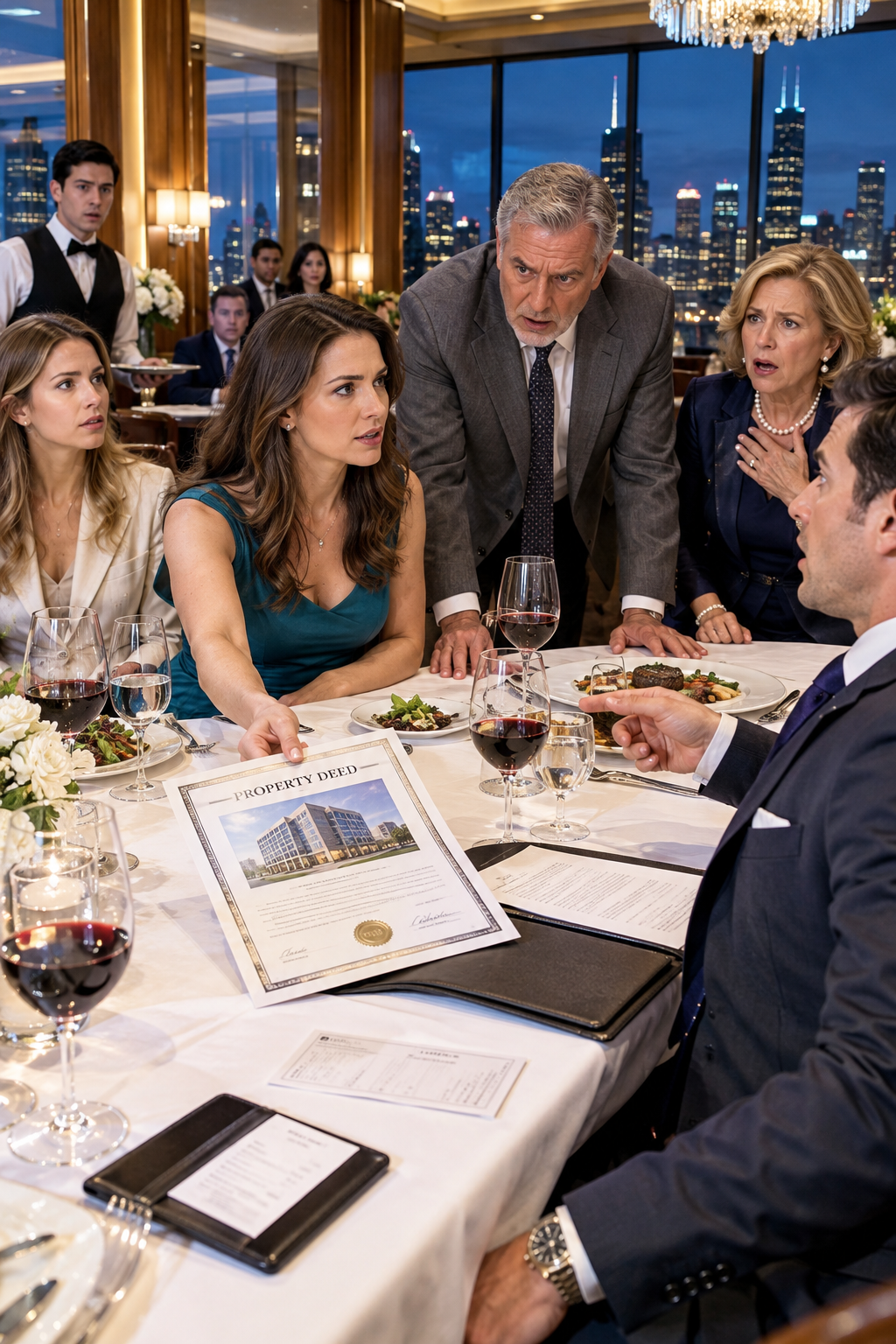
### Part 2: My Brother’s Desperate Lies Threatened Everything I Had Built
At 7:12 the following morning, my phone lit up with a message from my aunt. “Emily, how could you threaten to throw your parents out of their own business?” she wrote. Before breakfast, nearly a dozen relatives had contacted me with similar accusations. Oliver had posted in our extended family group chat that I was demanding ownership of Carter House and threatening immediate eviction unless everyone publicly acknowledged my importance.
I stood in our kitchen reading his words while Sarah poured coffee into two chipped ceramic mugs. “He’s using a few true details to sell a completely false story,” she said, scrolling through the messages. My first instinct was to photograph every agreement and send the entire collection to our relatives. Sarah caught my wrist gently and reminded me that private financial documents belonged in proper business discussions, not a family argument designed to humiliate me.
I sent one carefully worded response. Carter House’s current lease remained valid, no immediate eviction was planned, and all contractual obligations would be respected. I explained that my professional contributions had been misrepresented and would be addressed through appropriate channels. Oliver responded with a laughing emoji, followed by a photograph of himself standing beside the showroom’s marble entrance.
That afternoon, my attorney, Rebecca Mills, spread our agreements across her conference table. She confirmed that I could give proper notice regarding the lease’s approaching expiration and insist on the attribution protections already contained in the design agreement. Carter House could continue using materials covered by valid licenses, but Oliver couldn’t simply erase my authorship or claim additional rights I hadn’t granted. Rebecca prepared formal correspondence addressing the missing credits, lease renewal, and a reasonable transition for services my studio had been funding.
“We don’t need to punish anyone,” I told her, signing the instructions. “I just need the agreements to mean what they say.” Rebecca nodded and placed the documents into separate envelopes. It felt strangely peaceful to watch someone handle my family’s demands as ordinary business matters. For once, my relationship to Oliver wasn’t being treated as a reason to surrender protections every other client respected.
That evening, Dad called and accused me of bringing lawyers into a private family disagreement. When I reminded him that he had laughed while Oliver publicly called me a freeloader, he went quiet. Then he explained that two outside investors had committed money to the Legacy Collection and that their projections depended heavily on the downtown showroom’s unusually low rent. “Your brother has worked incredibly hard on this expansion,” he insisted.
“So have I, Dad,” I answered. “The difference is that Oliver has been receiving the applause while my company carries expenses nobody wants to acknowledge.” He asked whether I would restore the old arrangement if Oliver apologized. I told him an apology would matter personally, but it would not replace fair commercial terms. He ended the call by saying he needed time to think.
Two days later, my project manager forwarded Oliver’s keynote presentation for the collection launch. The slides displayed my original hotel design sketches under the heading of his creative vision, then announced a major expansion into commercial hospitality design. I recognized drawings I’d made while working late nights to finish independent client projects, and several had been copied almost directly from early development files. Oliver wasn’t merely borrowing credit for one furniture collection; he was building an entirely new professional reputation on work he hadn’t created.
Sarah examined the presentation beside me. Her experience planning exhibitions had taught her how public claims could shape business partnerships long before anyone examined the underlying contracts. “He’s not selling furniture anymore,” she observed. “He’s selling people the idea that he’s the designer.” I asked my staff to organize the project timeline, approved credits, emails, and revision histories, then instructed Rebecca to preserve the relevant records for a formal review if necessary.
On Friday, my mother appeared at Lantern Interiors without an appointment. She walked slowly through our bright office, studying project photographs, sample boards, and employees collaborating around a large drafting table. “I didn’t realize you’d grown this much,” she admitted, although we’d occupied that space for eighteen months. Her eyes lingered on a photograph of the boutique hotel project that had launched our commercial reputation.
Instead of asking how I had built the company, she asked me not to embarrass Oliver at the collection preview. “Your brother is under tremendous pressure,” she whispered, adjusting the strap of her handbag. I looked toward the conference room where my team was reviewing another major contract. “So am I, Mom. But I haven’t asked him to carry my responsibilities.”
She left without promising anything, and I watched her disappear through the glass doors. Six weeks after our disastrous dinner, Carter House would unveil its Legacy Collection before retail executives, investors, designers, and local journalists. I had received an invitation identifying Lantern Interiors as a contributing studio, even though Oliver had instructed the event coordinator to place me near the back. I confirmed that I would attend as a company representative, with Sarah beside me.
For years, I’d protected Oliver’s reputation because I believed protecting him meant protecting our family. Standing in my office that evening, watching my employees carefully prepare designs carrying their rightful names, I finally understood the difference. I wasn’t going to destroy my brother’s future. But I would no longer help him build it by erasing mine.
### Part 3: One Public Question Finally Exposed My Brother’s Stolen Success
The Legacy Collection preview opened beneath enormous chandeliers in the Carter House flagship showroom. Waiters moved between polished furniture displays carrying champagne, while photographers captured Oliver shaking hands with retail executives and prospective partners. Dad stood near the entrance introducing his son as the visionary responsible for the company’s future. When Oliver noticed Sarah and me approaching, his welcoming smile tightened into something cold.
“Please don’t embarrass the family tonight,” he murmured, positioning himself between us and the nearby guests. “Then give the designers the credits you agreed to give them,” I replied. His eyes darted toward Sarah, who calmly adjusted the sleeve of her navy jacket. He walked away without answering, disappearing into a circle of executives who immediately congratulated him.
At seven o’clock, Oliver stepped onto the presentation stage beneath a massive illuminated company logo. He described the Legacy Collection as the product of years of personal experimentation, explaining how his creative instincts would transform Carter House into a complete lifestyle brand. Behind him appeared a curved reception desk, a distinctive suspended lighting installation, and a hotel suite layout my team had revised fourteen times. I remembered the coffee stains on those original drawings and the exhausted laughter of my employees when the final design was approved.
Then the slide changed to a title that made my stomach tighten: The Mind Behind the Collection. Oliver’s photograph appeared beside my sketches, without a single mention of Lantern Interiors. I checked the printed program and found the required attribution missing there, too. A silver-haired man standing nearby noticed me studying the page and introduced himself as Daniel Price, an outside director of Carter House.
“I recognize your name from the project correspondence,” Daniel said. “Wasn’t Lantern Interiors responsible for developing some of these concepts?” I showed him the attribution provision from our signed agreement, explaining that Rebecca had already requested corrections. He read it twice before looking toward Oliver onstage. “Would you be willing to provide the supporting records through a formal company review?” he asked, and I told him everything was ready.
During the question period, a hotel executive named Clare Donovan stood near the front. Her company had hired Lantern Interiors to renovate several boutique properties, and she recognized design elements that originated in our work. “Oliver, these concepts look remarkably familiar,” she said into the microphone. “Emily Carter’s studio developed the original interior designs for one of our hospitality projects, so could you explain how Lantern Interiors contributed to this collection?”
Oliver smiled too quickly. “Emily occasionally helped refine the visual details, but the creative direction was mine.” Clare’s expression changed as she studied the rendering behind him. “That’s not consistent with how our project was developed,” she said, and conversations stopped across the showroom.
Daniel stepped forward and asked for clarification of the credited designers. My father approached the microphone, visibly uncomfortable, and promised that the company would review the materials before distributing additional copies. Oliver could have accepted that solution, but his pride wouldn’t permit him to surrender the spotlight. “We shouldn’t turn minor design contributions into a major controversy,” he announced.
Clare turned directly toward me. “Emily, were your contributions minor?”
For one painful second, I heard my mother’s voice from childhood telling me not to make things difficult. Then I stood, feeling Sarah’s reassuring hand against my back. “Lantern Interiors developed the original concepts and many production drawings shown tonight,” I said. “Carter House contributed product sourcing, manufacturing, and merchandising, and those contributions deserve recognition, just as ours do.”
The silence afterward was almost physical. I could hear glasses being placed onto serving trays and someone shifting uncomfortably near the stage. “I’m proud of what we created together,” I continued. “That’s why I want the public credits to reflect the actual collaboration.”
Daniel thanked me and announced that the materials would undergo a formal review. Nearby, a journalist approached the public relations manager, while two prospective expansion partners requested clarification concerning future design rights. Oliver couldn’t produce the comprehensive assignment he’d expected me to sign at dinner, because my signature had never been placed on it. By the end of the evening, the partners had paused further discussions until Carter House could establish precisely which intellectual property rights it possessed.
My mother approached me beside the entrance. “You could have waited until tomorrow,” she whispered, her face strained with embarrassment. “I’ve been asking privately for weeks,” I answered, watching my father speak urgently with Daniel across the room. As Sarah and I prepared to leave, Dad approached and told me the directors wanted the supporting records by Monday. I reminded him that the evidence had been available long before Oliver stepped onto that stage.
Monday’s board meeting lasted almost four hours. Through a documented exchange with Rebecca, the directors reviewed original sketches, licensing agreements, revision histories, and correspondence confirming that Oliver understood the attribution requirements. They also discovered that his expansion forecasts assumed the discounted showroom lease would continue, even though no renewal agreement existed. The problem wasn’t merely his inflated presentation of his abilities; he’d committed the company to plans built around financial benefits he didn’t control.
Dad called that afternoon while I was reviewing a hotel proposal. His voice sounded smaller than I had ever heard it. “The directors have removed Oliver as managing director,” he said, explaining that an experienced operations executive would take over while the expansion was reassessed.
Oliver retained his ownership interest, but his authority over contracts and creative strategy was gone. His performance bonus, vehicle allowance, and corporate spending privileges had been withdrawn, while two national retail partners postponed their rollout commitments. I sat motionless with the telephone against my ear, unable to celebrate the consequences I’d spent years believing would never come.
That evening, Oliver sent a message accusing me of destroying everything he’d worked for. I stared at the screen before replying. “I didn’t take your work away, Oliver. I asked you to stop claiming mine.”
### Part 4: My Family Finally Learned What Respect And Responsibility Cost
Carter House’s new management quickly discovered that the flagship showroom couldn’t remain profitable under an ordinary market-rate lease while supporting Oliver’s ambitious expansion. I offered a renewal based on an independent appraisal, but the company ultimately chose a smaller location in a less expensive district. My parents sold their vacation property to strengthen reserves and pay relocation expenses, a decision they made without any demand from me. The company survived, its employees kept their jobs, and the new management built a more realistic business plan.
Dad called repeatedly during the transition, sometimes about practical property questions and sometimes with awkward attempts at conversation. Three weeks after the board meeting, he finally admitted he’d reviewed the complete financial records. “I had no idea how much you were contributing,” he said, his voice breaking slightly. When I reminded him that I had tried for years to explain my work, he remained silent before answering.
“You’re right, Emily. I wanted Oliver to be the man I believed he was, and I didn’t want to acknowledge how much I’d underestimated you.” It was the first time my father had admitted that his favoritism wasn’t merely a harmless misunderstanding. I thanked him for saying it, but explained that business matters would continue through formal channels. If we were going to rebuild a personal relationship, it couldn’t depend on my willingness to finance another family emergency.
My mother struggled more openly. She missed family dinners and kept suggesting that everyone should forget what had happened, as though forgetting would restore the trust we’d lost. I told her I wasn’t interested in pretending the past had never happened; I wanted to see whether our behavior toward one another could genuinely change. Several days later, she sent a photograph of the smaller showroom under construction, writing only that the employees were proud of their progress.
Oliver refused to accept the directors’ decision. He blamed our father, accused the board of betrayal, and told relatives he’d been sacrificed to protect the company’s reputation. When Carter House publicly released corrected Legacy Collection materials crediting Lantern Interiors, his accusations began losing their audience. He eventually moved into a smaller apartment and started consulting independently, although securing clients without his executive title proved difficult.
My own company continued growing. Clare recommended Lantern Interiors to another hospitality group, and we secured a contract renovating three boutique properties. Sarah helped organize an exhibition featuring our completed work, ensuring that every designer, architect, and contributing specialist received appropriate recognition. Standing beside my employees that evening, I felt a quiet pride no family dinner had ever given me.
Four months after the original confrontation, Dad invited Sarah and me to lunch at a modest neighborhood café. He promised there would be no contracts, no discussion of financial support, and no Oliver. I accepted with one condition: if the conversation became another attempt to pressure me into helping Carter House financially, I would leave. Dad agreed without arguing.
When we arrived, my parents were already seated beside a window overlooking a busy neighborhood street. Mom greeted Sarah warmly and asked about her exhibition work, while Dad wanted to hear about my latest hotel project. He listened as I described the challenges of renovating historic properties without disturbing their original character. For the first time, he didn’t interrupt to compare my achievements with Oliver’s.
Halfway through lunch, Dad reached into his jacket and withdrew a cream-colored envelope. My stomach tightened immediately, and he must have recognized the expression on my face. “It’s not a contract,” he said, placing it gently beside my plate.
Inside was a printed copy of the corrected Legacy Collection brochure. Lantern Interiors appeared prominently among the credited creative contributors, exactly as our agreement required. Beneath the acknowledgment, in my father’s careful handwriting, were eleven words I never expected to read: “We should have been proud of you before we needed your help.”
I read the sentence twice before looking up. Mom was wiping her eyes with a folded napkin. “I thought staying quiet during arguments was keeping the family together,” she whispered. “But silence wasn’t neutral when someone was treating you unfairly.”
I wanted to believe her, and perhaps that was enough for a beginning. Years of dismissal couldn’t disappear because of one lunch, but neither did I need to reject every attempt at change. We talked about ordinary things afterward: Sarah’s next exhibition, the new showroom, and a young designer I’d begun mentoring. Nobody asked for money, professional favors, or another sacrifice disguised as family loyalty.
When the waitress brought the check, I instinctively reached for my wallet. Dad gently placed his hand over the bill. “I invited you,” he said. “I’d like to pay, if that’s all right.”
I looked at him for a long moment before nodding. Four months earlier, a dinner bill had been used to humiliate me before everyone I loved. Now there was no audience, no lecture about responsibility, and no performance designed to establish who mattered more. He simply paid for lunch.
That evening, Sarah and I returned home and reviewed plans for another commercial project. The new contract would allow Lantern Interiors to hire four additional employees, and I had begun mentoring young designers who struggled to persuade others that creative work carried genuine commercial value. Helping people build their confidence felt more meaningful than collecting the approval I’d once begged my family to provide.
The original restaurant receipt still rested inside my office drawer. I kept it because it marked the evening I finally stopped confusing love with unlimited access to my labor, money, and loyalty. Oliver had tried to make an ordinary dinner check prove that I depended on everyone around me, but the documents revealed how much of his celebrated success depended on contributions he refused to acknowledge.
My parents lost their illusion that Oliver could do no wrong. Oliver lost his executive authority and the privileges that came with it, while Carter House surrendered its prestigious location and its unrealistic expansion plans. None of those consequences required me to invent a scandal, violate a contract, or hurt the employees whose livelihoods had once motivated my generosity.
Later that night, Sarah noticed me studying a photograph from our first completed hotel project. “What are you thinking about?” she asked, settling beside me on the sofa. I smiled, remembering Oliver’s smug expression when he ordered the waiter to split my bill.
“Oliver was right about one thing,” I said.
Sarah raised an eyebrow. “And what was that?”
“Everyone needs to learn responsibility.”
I placed the photograph back on the shelf and took her hand. My brother had spent years teaching everyone that money determined a person’s worth, but he’d never understood that respect couldn’t be purchased with someone else’s sacrifices. I still loved my family, and perhaps someday Oliver would understand what he’d lost, but my happiness no longer depended on his apology.
For the first time, I wasn’t waiting for someone else to decide whether I deserved a seat at the table.
I had built a table of my own.
THE END.
All characters and events in this story are fictional, created for storytelling and entertainment purposes. Thank you sincerely for reading. Your feedback and support are invaluable and motivate me to continue sharing more stories with you.


