### Part 2: A Secret Notebook Exposes Eighteen Girls Who Disappeared Without Explanation
I put the car keys on the counter and stepped closer to my husband. “Shawn, this is Lena. She’s going to stay with us for a little while.” He stared at her, confusion clouding his eyes. “But she looks like Ruth,” he said. “Except Ruth had that blue jacket.”
My throat tightened. “She’s not Ruth, sweetheart.”
For several seconds, he seemed unable to understand. Then he looked at Lena’s thin shoulders and asked a question that nearly broke me. “Have you eaten, honey? I made soup.”
Lena glanced at me for permission. When I nodded, she followed him to the table, where he filled a bowl and brought her a glass of water. He didn’t question her about the bus stop or the men. He simply sat across from her, asking whether the soup was too hot.
I watched my husband smile at a child for the first time in years.
Later, I showed Lena the room that had belonged to Ruth. The books were still arranged on the shelves, and photographs stood beside the little reading lamp. “There’s another bedroom,” I told her. “You don’t have to sleep here.”
She touched the edge of the desk without disturbing anything. “Could I stay in this one? It’s smaller. I think I’d feel safer.”
I showed her the lock on the inside of the door. “You decide when this door opens. Nobody else.”
Her eyes filled with tears, but she wiped them away before I could speak.
Shortly after midnight, I found her sitting alone at the kitchen table. She was still wearing the clothes she’d arrived in, and her hands were wrapped around an untouched glass of water. I sat opposite her.
“Those men,” she whispered. “They weren’t trying to bring me home.”
She told me she’d spent nearly two years in a residential program that promised education and future placements with families. Girls arrived, attended classes, and waited for their paperwork to be completed. Then, without warning, some were taken away.
“Where did they go?” I asked.
“That’s what Maya wanted to know.”
Maya was an older girl who had begun recording everything: names, departure dates, addresses, and the initials of people who collected the children. Whenever another girl disappeared, the staff claimed she’d been transferred to a different program. Nobody ever received a forwarding address or a telephone number.
Lena reached beneath her shirt and pulled out a small, worn notebook.
“Maya gave me this the night before they took her. She said if anything happened, I had to find someone who would listen.”
I opened it beneath the kitchen light.
Eighteen names filled the pages. Some had addresses in Wisconsin, Illinois, and Iowa. Others had only a city and a date.
Near the bottom was Maya’s name. Her departure had been recorded three weeks earlier.
And directly beneath it was Lena’s.
“They told me I was leaving Monday,” she said. “A family in another state wanted me. But Maya heard them talking about me before she disappeared.”
“Did she tell you what she heard?”
Lena shook her head. “Just that I shouldn’t get into the car.”
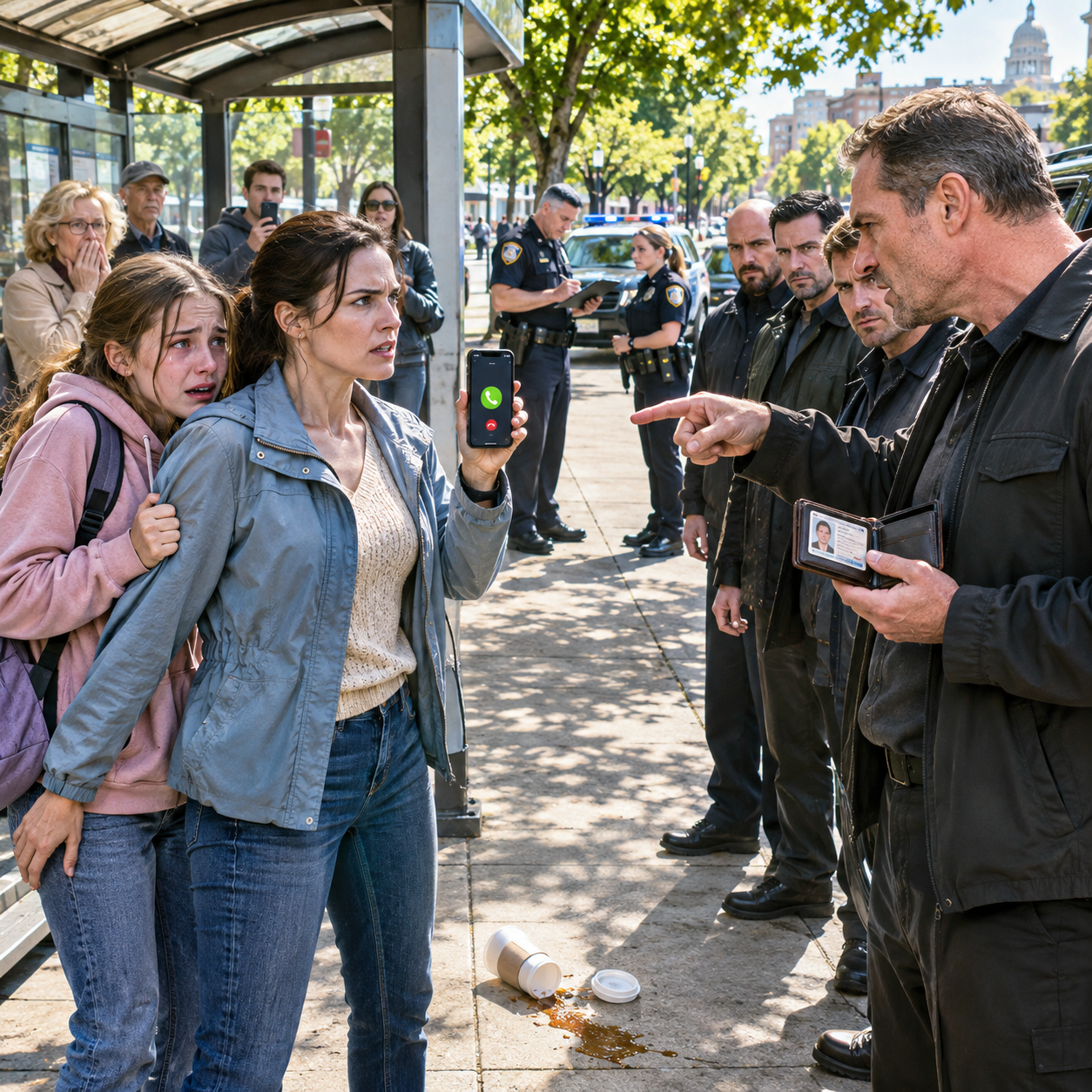
I looked at those eighteen names and understood why four grown men had chased one frightened child through Madison.
The next morning, I brought the notebook to Brian Yates. He examined every page, photographed the entries through official evidence procedures, and contacted his supervisor.
“This isn’t proof by itself,” he warned. “But if these transfers don’t match official records, we’re dealing with something much bigger.”
As he checked preliminary documents, one name appeared repeatedly.
Gloria Spence.
She worked in the regional office responsible for oversight of several residential programs. Her signature appeared on transfer approvals connected to addresses in the notebook.
I asked Ethan and Cody to help gather publicly available property records. They found several business registrations linking the addresses to the same network of organizations. One facility’s website even listed Gloria on its advisory board.
I forwarded everything to Brian.
That afternoon, the dark SUV drove past our house twice.
On the second pass, it slowed almost to a stop.
I photographed its license plate and called Brian. Within minutes, a patrol car was stationed across the street.
Lena watched from behind the curtains. “They’re going to find me,” she whispered.
I put my arm around her shoulders.
“They already know where you are,” I answered. “But now the police know where they are, too.”
Then I looked toward the kitchen, where Shawn was humming while washing dishes, unaware that someone had begun watching our home.
And for the first time, I wondered whether I could protect both of them.
### Part 3: A Powerful Stranger Threatens Everything I Have Left To Love
Three days later, my phone rang from an unfamiliar number. The caller said a man named Raymond Holt wanted to discuss Lena’s situation. He proposed a coffee shop near the Wisconsin State Capitol, somewhere public where we could supposedly resolve our disagreement.
I called Brian before answering. He arranged for two officers to remain nearby and made me promise I wouldn’t follow Holt anywhere else. I agreed, although every instinct told me the meeting was a trap.
Holt arrived wearing a gray suit without a tie. He smiled, offered his hand, and ordered two coffees without asking what I wanted. When I refused his handshake, his smile barely changed.
“Mrs. Harlo, you’re clearly a compassionate woman. But sometimes compassion interferes with good judgment.”
“Is that what you call sending four men after a thirteen-year-old?”
His eyes narrowed.
“Lena has behavioral difficulties. She belongs in a structured environment.”
“Then why did your people run when the police asked for proof?”
He stirred his coffee, watching the spoon turn.
“Children in care often misunderstand what adults are doing for them. Sometimes they invent stories. Sometimes they steal documents.”
My stomach tightened. He knew about the notebook.
I leaned forward. “Eighteen girls. Eighteen names. How many of them are safe, Mr. Holt?”
For the first time, he stopped stirring.
“You’re entering territory you don’t understand.”
“Then explain it.”
Instead, he lowered his voice.
“You live in a wooden house with your husband. Shawn, isn’t it? I understand his memory hasn’t been the same since the accident.”
My blood went cold.
Holt continued, almost conversationally. “He spends quite a lot of time near the front window. Sometimes your porch light stays on all night.”
I gripped the edge of the table.
“Are you threatening my husband?”
“I’m saying that accidents happen when people involve themselves in situations beyond their control.”
I stood so quickly that my chair scraped against the floor.
“Stay away from my family.”
He looked up at me without blinking.
“Give Lena back, Diana. You still have time to return to your ordinary life.”
I left the untouched coffee behind.
Outside, I walked two blocks before calling Brian. I repeated Holt’s words exactly, including the details about Shawn and our house. Brian documented everything but explained that the conversation alone might not justify an immediate arrest.
That evening, I found Lena and Shawn playing cards at the kitchen table. He was patiently teaching her a game he remembered from childhood.
“You’re cheating,” Lena accused, smiling.
Shawn laughed. “Then you must be learning from the best.”
I stood in the doorway, watching them.
For fourteen years, I’d thought protecting my husband meant keeping painful truths outside our home. Now a stranger was trying to use that fragile peace against us.
When Lena went to bed, Shawn looked at me.
“You’re worried about her,” he said.
“Yes.”
He gathered the playing cards into a neat stack.
“Then we should help her.”
It was such a simple sentence. Yet hearing him say we gave me strength I hadn’t felt in years.
The investigation began moving faster.
A former employee of one facility contacted the authorities. She had worked overnight shifts and kept copies of logs showing girls leaving with unfamiliar men who never presented identification. Two former residents also came forward after investigators traced names in Maya’s notebook.
One had been sent to another state and instructed to sign paperwork she didn’t understand. The other produced emails showing that Gloria Spence had continued approving transfers after concerns about certain receiving facilities had already been reported.
The details matched Maya’s dates.
The names matched.
And the addresses matched.
Brian called me after investigators completed their preliminary interviews.
“This is no longer just Lena’s account,” he said. “We have independent witnesses, documents, and records showing serious irregularities. The prosecutor’s office is reviewing the evidence.”
“Does that mean the girls were being sold?”
“We don’t know that, Diana. The evidence points to fraudulent transfers and serious failures in protecting these children. We’re still determining who approved what and where everyone ended up.”
I respected his caution. But one thing had become painfully clear.
Someone had created a system in which vulnerable children could disappear behind official-looking paperwork, while the very adults responsible for protecting them signed the forms.
That night, Lena came into the kitchen carrying the photograph of Ruth she’d found on the bedroom desk.
“Was she your daughter?” she asked.
I nodded.
“Did she die?”
I stared at the photograph. I hadn’t expected the question to hurt so much.
“Yes. Fourteen years ago.”
Lena sat beside me. “I’m sorry.”
“Thank you, sweetheart.”
She studied the smiling little girl in the photograph.
“Does your husband know?”
“He remembers some things. But when I tell him, sometimes it feels like he’s losing her all over again.”
Lena was quiet for a moment.
“Maybe that’s why he keeps asking me about school,” she whispered. “Maybe he’s trying to remember how to be a dad.”
Tears slid down my cheeks.
Then she asked, “Do you think Maya is still alive?”
I didn’t know.
So I gave her the only answer I could defend.
“Brian hasn’t stopped looking.”
The next morning, before sunrise, my phone rang.
Brian spoke quickly.
“Diana, the judge signed the warrants. The teams are moving in now.”
I turned toward the hallway where Lena was sleeping.
For the first time, the people who had been hunting her were about to hear footsteps outside their own doors.
### Part 4: The Final Revelation Brings Justice And A Family Home
By midmorning, Raymond Holt was in custody. Three of the men who had confronted us at the bus stop had also been arrested. Officers searched properties connected to the suspicious transfers, collecting records, computers, and correspondence.
Gloria Spence was placed on administrative leave and barred from accessing placement files while investigators examined her role.
Prosecutors filed conspiracy, fraud, and child-endangerment charges against several defendants. The investigations into the facilities and the remaining people involved continued.
When Brian told me the news, I was sitting at the kitchen table beside Lena.
“Were the men from the bus stop arrested?” she asked.
“Yes, sweetheart. Three of them were.”
She looked down at her hands.
“Does that mean they can’t take me?”
“No one can simply come here and take you, Lena. The people responsible for your care know you’re safe, and they’ll make the decisions properly.”
She nodded slowly, then pushed back her chair.
I expected her to cry or jump with relief.
Instead, she walked to the sink, filled her glass with water, and asked Shawn whether they could play cards after lunch.
That’s when I realized how deeply those two years had changed her. Safety wasn’t something she knew how to celebrate yet. It was something she needed to experience over and over before she could believe it would last.
Over the following weeks, investigators continued tracing Maya’s list. Some girls were located in legitimate programs, while other placements required further investigation. Authorities began examining how the transfer records had been approved, who had altered them, and why reported concerns had been ignored.
Then, one afternoon, Brian called with the news Lena had been waiting to hear.
“We found Maya.”
I gripped the phone.
“Alive?”
“Yes. She’s alive.”
I covered my mouth.
Investigators had located her in Iowa. Her placement records had been changed, and she’d been cut off from the people who knew her previous whereabouts. She was now receiving appropriate care and had agreed to speak with investigators.
“There’s something else,” Brian said. “She asked about Lena. She wanted to know whether the notebook reached someone she could trust.”
I looked across the room.
Lena was doing schoolwork at the dining table. Shawn sat beside her, patiently helping with a math problem.
“Tell her it did,” I whispered. “Tell her she saved her friend.”
When I told Lena, she dropped her pencil.
For several seconds, she stared at me.
Then she began crying.
Not the quiet, frightened tears I’d seen when she first arrived. These were deep sobs that shook her entire body.
I held her while she repeated the same words.
“She made it. Maya made it.”
Shawn came around the table and placed a gentle hand on her shoulder.
“Who made it, sweetheart?”
“My friend,” Lena cried. “My friend is alive.”
He sat beside us, and for a long time, none of us moved.
Something changed in our house after that day.
Lena began sleeping through the night. She stopped checking the front windows whenever a car slowed outside. When her social worker brought school worksheets, she completed them and started talking about attending regular classes again.
Shawn changed, too.
At first, he still confused Lena with Ruth. He would occasionally mention the blue jacket or ask whether she remembered a birthday from years earlier.
But gradually, he began asking Lena questions about herself.
What books did she enjoy? Did she like mathematics? What did she want to do when she was older?
One evening, she told him she wanted to become a teacher.
“Why?” he asked.
“Because I want kids to know when an adult actually cares about them.”
Shawn smiled.
“That’s a good reason.”
Later, after Lena went to bed, he stood beside Ruth’s photograph on the hallway shelf.
“She’s not our little girl,” he said softly.
My heart stopped for a moment.
“No,” I whispered. “She’s Lena.”
He studied the photograph.
“I know.”
Then he looked toward Lena’s room.
“But she needs us.”
I couldn’t speak. I simply reached for his hand.
During the following months, our social worker completed the home study and required background checks. I met with an attorney who specialized in adoption, and we discussed the legal steps for making Lena a permanent member of our family.
Lena met privately with her caseworker several times. Each time, she said she wanted to stay.
I was careful not to pressure her. She had spent too many years being told where she belonged by people who never bothered to ask.
One afternoon, while I was folding laundry, she appeared in the doorway.
“Diana?”
“Yes, honey?”
“If I stay forever, do I have to call you Mom?”
I set down the towels.
“No. You can call me whatever makes you comfortable.”
She thought about that.
“What if I want to?”
My eyes filled immediately.
“Then I’d be very happy.”
She looked embarrassed, smiled, and disappeared down the hallway.
I sat on the edge of the bed and cried into one of the towels.
Six months after the arrests, we stood together inside a small courtroom.
Lena wore a pale blue dress. Shawn wore the dark suit he reserved for important occasions, and I held the documents our attorney had prepared.
The judge looked down at Lena.
“Do you understand what adoption means?”
“Yes, Your Honor.”
“And is this what you want?”
Lena turned to look at us.
Then she faced the judge again.
“Yes. I want to stay with my parents.”
My knees nearly gave way.
The judge signed the order.
And just like that, the girl who’d once begged a stranger to pretend to be her mother legally became my daughter.
Outside the courthouse, Brian waited near his car. He shook Shawn’s hand, congratulated Lena, and reminded her she could reach out if she ever needed help.
When we got home, Shawn went straight to the kitchen to prepare dinner.
Lena set three plates on the table.
I stood in the doorway, watching the two of them argue playfully about whether he had put too much salt in the potatoes.
For the first time in fourteen years, I didn’t feel guilty for being happy.
But the moment that changed me most came later that evening.
I found Shawn standing outside Ruth’s old bedroom. The door was open, and Lena was sitting on the bed, reading one of the books Ruth had left behind.
He looked at the photographs on the desk, then at Lena.
“Your mother and I had another daughter,” he said.
Lena lowered her book.
“I know. Ruth.”
He nodded.
“She was wonderful.”
“I bet she was.”
Shawn stood quietly for another moment.
Then he said something I had waited fourteen years to hear.
“I know she’s not coming home.”
The words were barely audible.
I moved toward him, afraid he might suddenly become confused again. But he turned and looked directly into my eyes.
“I remember pieces, Diana,” he whispered. “Sometimes I lose them. Sometimes I forget what happened and think she’s still away at school.”
His voice trembled.
“But right now, I remember.”
I took his hands.
“You don’t have to force yourself.”
He shook his head.
“I’m not. I just don’t want Lena to think she has to be Ruth for us to love her.”
Lena rose from the bed.
“I don’t,” she whispered.
Shawn opened his arms, and she stepped into them.
I stood beside the doorway as my husband embraced our daughter, not because he believed the past had returned, but because he finally recognized the person standing in front of him.
That night, I went into Ruth’s room alone. I straightened her photograph and placed a new picture beside it.
In the new photograph, Lena stood between Shawn and me outside the courthouse, smiling so widely that her eyes were almost closed.
Two daughters.
Two different stories.
One family.
The following Sunday, I returned to the bus stop.
For fourteen years, I’d gone there alone, sitting on the same bench and remembering the child who would never come back.
This time, Lena came with me.
She sat close enough that our shoulders touched.
“Why do you always come here?” she asked.
I watched a bus approach through the morning sunlight.
“Because this is where I used to wait with Ruth.”
Lena slipped her hand into mine.
“Does coming here make you sad?”
“Sometimes.”
She squeezed my fingers.
“Then maybe we can come together.”
I looked at her, remembering the frightened girl who had wrapped her arms around my neck and begged me to pretend.
I had believed I was saving a stranger that morning.
But she’d brought warmth back into a home that had forgotten how to feel alive. She’d helped Shawn find a way to love the child in front of him while still remembering the one we’d lost.
And she’d reminded me that loving someone new does not mean abandoning the person you miss.
The bus arrived. Its doors folded open, and a few passengers stepped aboard.
I stood, still holding Lena’s hand.
“Ready to go home?” I asked.
She smiled.
“Yeah, Mom.”
For the first time in fourteen years, I walked away from that bus stop without looking back.
I wasn’t leaving Ruth behind.
I was finally bringing the rest of my heart home.
THE END.
All characters and events in this story are fictional, created for storytelling and entertainment purposes. Thank you sincerely for reading. Your feedback and support are invaluable and motivate me to continue sharing more stories with you.