Part 2: My Son Had Made A Promise Behind My Back
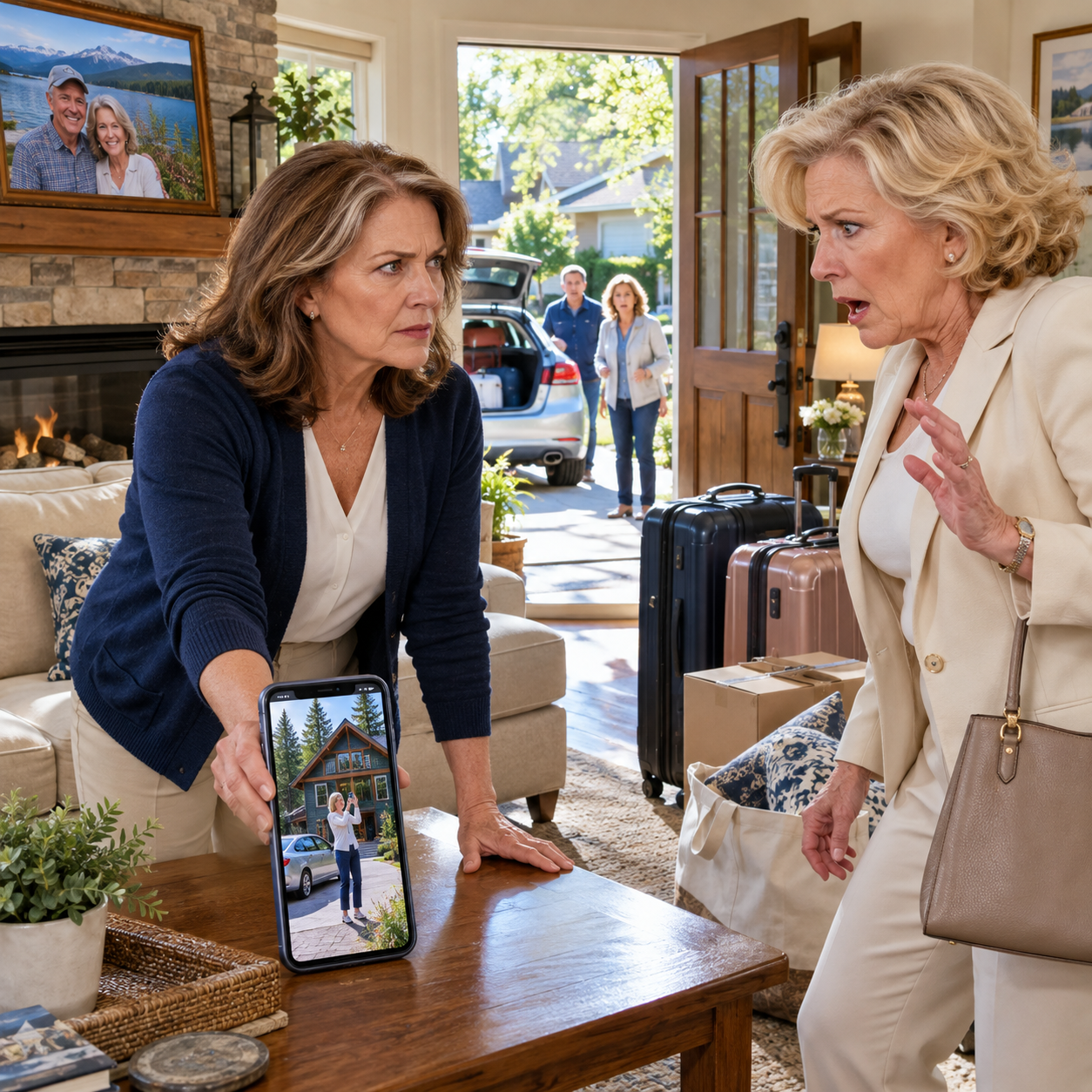
Vivian picked up her handbag and rearranged its contents while I waited for a better explanation. She eventually closed the zipper and looked at me with the practiced patience of someone addressing an unreasonable customer. “Evelyn, I don’t understand why you’re making this so complicated. Nobody is asking you to give up ownership. I simply need somewhere comfortable while I get my finances organized.”
“Then let’s talk about your finances.”
Her expression changed.
Three weeks earlier, Margaret had mentioned an uncomfortable conversation with a neighbor in Fresno County who worked as a notary. The woman had recognized Vivian’s name from documents involving a creditor claim against a residential property. Margaret hadn’t known the details, but she’d encouraged me to check the public records before agreeing to anything involving real estate.
I had done exactly that.
“There’s a judgment lien against your former house,” I said. “Sixty-two thousand dollars, plus interest. A private investment company.”
Vivian leaned forward. “My financial affairs are none of your business.”
“They weren’t until you arrived expecting to live in my husband’s cottage.”
She looked away, toward the window. For the first time that afternoon, I could see the exhaustion beneath her carefully applied makeup. “I borrowed money to invest in a business opportunity four years ago,” she said. “It didn’t work. I made payments until I couldn’t anymore. They were threatening to take everything.”
“I understand why you sold.”
“Do you?” She looked back at me sharply. “Because I don’t think you understand what it’s like to be sixty-five and realize that a mistake you made years ago has followed you into retirement.”
I couldn’t argue with the fear in her voice. Losing financial security late in life was frightening, especially for someone accustomed to managing her own home. But sympathy didn’t answer why she’d photographed my property without permission or arrived with enough luggage to suggest she intended to stay indefinitely.
“Where have you been living since the sale?” I asked.
“With a friend. Temporarily.” Vivian pressed her lips together. “She has grandchildren visiting next month, so that arrangement is ending. Simone knows how difficult this has been.”
“Does Simone know you came here today?”
“Of course. She and Connor want to help me.”
“Wanting to help you isn’t the same as giving you my house.”
Vivian looked genuinely offended. “Your house? Evelyn, you have this beautiful home here in Sacramento. George left you very comfortable. Surely you can spare one little cottage when your son’s marriage is being strained.”
I set my coffee down. “My financial circumstances aren’t an invitation to distribute my property.”
Before Vivian could answer, I heard the garage door open.
Connor came through the side entrance a moment later. At forty-one, he had George’s dark eyebrows and the same habit of rubbing the back of his neck whenever he was worried. He stopped when he saw Vivian sitting opposite me. “Mom,” he said carefully. “I was going to call.”
“You had plenty of opportunities.”
He looked toward the suitcase. “Vivian, I thought we agreed to talk first.”
“We are talking,” she replied. “Your mother is being unnecessarily suspicious.”
Connor sat on the edge of the sofa. He hadn’t taken off his jacket. “I told Simone I’d see what I could do. That’s all I said.”
Vivian turned toward him. “Last Tuesday, you promised your wife you’d handle her mother’s housing situation. Those were your words.”
Connor rubbed his face. “That doesn’t mean I promised you the cottage.”
“No,” I said. “It means you made a promise using something that belongs to me, and now we’re all paying for the misunderstanding.”
He looked at the floor.
I asked Connor to join me on the back porch. Vivian began to follow, but I told her the conversation was between my son and me. Outside, the afternoon air smelled of damp leaves, and the maple beside the fence had begun turning red. Connor rested both hands on the porch railing, staring into the yard the way he used to when George caught him doing something he knew he shouldn’t have done.
“Simone’s been crying every night,” he said. “Her mom’s sleeping in somebody’s guest room, and she can’t afford the apartments she keeps looking at. I thought maybe we could let her use the cottage for a few months.”
“Why didn’t you ask me?”
“I didn’t want to put you in an uncomfortable position.”
“You put me in one anyway.”
He exhaled. “I know.”
I waited until he looked at me. “Connor, do you know what your father told me the summer before he got sick?”
My son’s expression softened.
“He said he wanted that cottage to remain a place where we could all come without asking anything of one another. No business worries. No obligations. Just family.” I glanced through the kitchen window, where George’s photograph stood on the sideboard. “It was the last place he felt strong enough to take the boat out by himself.”
Connor lowered his eyes. “I remember.”
“Then you should understand why I won’t hand it over simply because Vivian needs somewhere to live.”
He nodded, but there was still something he hadn’t considered.
Four days after Walt photographed Vivian, he had contacted me again. While visiting the local county planning office about his own renovation, he’d noticed paperwork connected to my cottage address. After confirming the application details, I had requested a copy of the publicly available filing.
I had printed it that morning.
I took the folded pages from my cardigan pocket and handed them to Connor. Near the top was an application for a vacation-rental business license, identifying my property and listing a temporary management contact. That phone number belonged to a newly registered limited liability company associated with Vivian.
Connor read the address twice.
“Why would she apply for a rental license?” he asked.
“That’s what I need you to help me understand.”
He turned to the next page, where the business filing date appeared.
The company had been established the previous month.
Connor sat down on the porch step, holding the papers with both hands. “She started this before Simone even asked us to help,” he said.
“Yes.”
He looked up at me. “Mom, I didn’t know about any of this.”
I believed him. But the realization that he had nearly provided Vivian access to the property before learning her intentions clearly troubled him.
Inside, she was waiting for an answer.
Part 3: One Sentence Exposed The Plan Hidden Behind Her Suitcases
When Connor and I returned to the living room, Vivian was standing beside the bookshelf, studying a photograph of George and me on our first summer at Tahoe. George was wearing a faded baseball cap and holding a trout he’d been ridiculously proud of catching. I remembered taking that picture just before Connor complained that his father had spent more time photographing the fish than cooking dinner.
Vivian turned around. “Have we reached an understanding?”
Connor remained near the doorway. “Vivian, why did you register a rental business using Mom’s cottage address?”
Her hand dropped from the picture frame. “What are you talking about?”
He held out the documents. “The application. The LLC. Mom has copies.”
Vivian glanced at the paperwork but didn’t take it. “That’s a preliminary business filing, Connor. It doesn’t mean anything has been finalized.”
“Then why is her property address on it?” he asked.
“Because I was exploring options.” Vivian looked toward me. “Surely you understand that people investigate possibilities before making decisions.”
“Most people ask the owner first,” I replied.
She gave an impatient sigh. “You know, there’s actually a great deal of money to be made from vacation rentals around Lake Tahoe. I could manage bookings, arrange cleaning, handle everything. Evelyn wouldn’t have to lift a finger.”
“And where would you live while doing that?” I asked.
“At the cottage, obviously. At least initially.”
Connor pulled out a chair but didn’t sit. “You told Simone you needed somewhere to recover financially. You never said you were planning to operate a business.”
“Recovering financially requires income.” Vivian spread her hands. “I’m trying to rebuild my life. You two act as though I’ve committed some terrible crime simply by having a plan.”
There was a logic to what she was saying, provided one ignored the most important detail. She needed money, owned no suitable property, and had found a valuable house belonging to a relative who was grieving. In her mind, the arrangement would benefit everyone because she had already decided that my rights were less important than her needs.
“Was Simone involved in the application?” I asked.
“No,” Vivian answered quickly.
Connor looked toward her. “You didn’t even tell your own daughter?”
“She has enough to worry about.”
I studied the woman standing beside George’s photograph. There was genuine fear beneath her defensiveness, but there was also a remarkable certainty that other people’s boundaries were negotiable if her circumstances were difficult enough. She seemed to believe that admitting desperation should settle the question of consent.
“Vivian,” I said, “if your LLC files one more document using my Tahoe property address, my attorney will take action, and the county planning office will have the entire record by tomorrow.”
She stared at me.
I didn’t raise my voice. I had already checked the application with my attorney, and I knew what I was prepared to do. For several seconds, Vivian seemed to be searching for the familiar opening where an apology, a complaint, or an appeal to family loyalty would allow the conversation to begin again.
“You would involve lawyers over this?” she finally asked.
“If necessary.”
“Against your own family?”
“I’m asking you not to use property you don’t own.”
Her eyes moved toward Connor. “Are you going to stand there and let your mother threaten me?”
Connor swallowed. “You should have told us what you were planning.”
“I was trying to fix a terrible situation.”
“By making decisions about Dad’s cottage before Mom even knew?”
Vivian looked down at the papers. The anger in her face softened into something less certain. She adjusted the strap of her handbag and turned toward the front hallway.
“Fine,” she said. “I can see I’m not welcome.”
I followed her to the door, stopping as she gripped the handle of her largest suitcase. “You are welcome to ask for help, Vivian. But the cottage isn’t available, and I won’t negotiate that.”
She turned slightly. “I suppose it’s easy to say that when you have somewhere to sleep tonight.”
Her words stayed between us for a moment.
“I know you’re frightened,” I answered. “I can help you find a housing counselor or someone who understands your financial situation. But I won’t hand over George’s home.”
Vivian looked as though she might respond, then pulled the suitcase over the threshold. The wheels bumped against the porch steps. She loaded her car herself, closed the trunk with both hands, and drove away without looking back.
Connor stood beside me in the doorway.
“I should’ve stopped this before she came,” he said.
I touched his sleeve. “You should’ve spoken to me honestly.”
He nodded.
Only then did I notice Simone standing near the living room window. She had been waiting outside in Connor’s car earlier and must have come in while we were dealing with Vivian’s luggage. Her eyes were swollen, and she was twisting her wedding ring around her finger.
“Evelyn,” she said, “I didn’t know she filed those papers.”
“I believe you.”
“I knew she wanted to stay there. Connor told me we could ask. But she said she’d already spoken to you about the cottage, and I thought—” Simone stopped and looked at her husband. “I thought everybody was just having trouble agreeing on the details.”
Connor moved toward her. “I should’ve told you Mom hadn’t agreed to anything.”
Simone wiped her cheek with the back of her hand. “My mother told me she was going to lose everything. She said if I couldn’t help her, there was nobody left.” She looked toward the driveway. “I kept thinking if we could find her somewhere safe, she’d finally be all right.”
I remembered being that age, believing I could protect everyone I loved by solving whatever problem was closest at hand. Sometimes the habit lasted well beyond youth.
“Your mother’s situation is serious,” I said. “But she needs help that doesn’t depend on taking something from someone else.”
Simone sat on the sofa, and Connor lowered himself beside her. For a while, we discussed practical things: temporary housing, affordable rentals, financial counseling, and whether Vivian had money remaining after the sale of her house. It was an uncomfortable conversation, but for the first time that afternoon, nobody pretended the cottage was the only possible solution.
After they left, I called my attorney and arranged to submit the documents showing that I had not authorized any rental business at my property. I also asked that the application be formally withdrawn or rejected unless Vivian could establish legitimate authority to use the address.
That evening, I sat alone at the kitchen table with George’s photograph in front of me. He was laughing in the picture, his face turned toward someone outside the frame. I traced the edge of the wooden frame with my thumb and wondered what he would have said about all of it.
Probably something simple.
Probably something about Connor needing to learn how to say no.
Part 4: Protecting George’s Cottage Also Meant Repairing Our Fractured Family
Nine days passed before Connor called again.
It was a Thursday evening, and I was folding laundry when his name appeared on my phone. He sounded tired, and I could hear traffic moving past his car. Connor often called from the driveway when he needed a moment alone before going inside to face whatever conversation was waiting for him.
“I talked to Vivian,” he said.
I sat on the edge of my bed. “How did that go?”
“She finally told me what she intended to do.”
I waited.
“She wanted to get into the cottage before you knew about the business. She figured she could start taking reservations, use the income to make payments on her debt, and show you afterward that everything was already running smoothly.”
I looked toward the old dresser George had refinished for our twentieth anniversary.
“She actually said that?”
“Not in those words. She said you wouldn’t object once you saw it was successful.” Connor paused. “She thought you’d feel too guilty to shut it down after people had booked their vacations.”
It was the part that hurt most. Vivian hadn’t simply hoped I would help her. She had relied on my discomfort with confrontation, believing I would sacrifice my own wishes rather than disappoint strangers or embarrass the family.
“She was going to make it difficult for me to refuse,” I said.
“Yes.” Connor took a breath. “Mom, I knew she was hoping to stay there without paying rent. I should’ve said that plainly. But I swear I didn’t know about the rental plan.”
“I know you didn’t.”
“She said she was desperate. And I believe her.” His voice grew quieter. “But I also think she’s been making everybody else responsible for fixing it.”
I had spent enough years raising Connor to recognize when he had reached an understanding I couldn’t have forced on him. George had always said our son learned best when he was allowed to hear his own mistakes out loud.
“I don’t want you and Simone to fight over this,” I said.
“We already have,” Connor admitted. “Not because of you. Because Simone realizes her mother lied to her, and she’s trying to figure out what that means.”
“How is she?”
“She cried most of Sunday. Then she called Vivian and told her she wouldn’t make any more promises on her behalf.”
I closed my eyes briefly, remembering Simone at the living room window.
“Tell her I’m proud of her,” I said.
Connor gave a tired little laugh. “She’ll appreciate that.”
Before hanging up, he asked something that surprised me.
“Mom, do you think Dad would’ve been disappointed in me?”
I looked at his father’s photograph on the dresser.
“He would have been disappointed that you didn’t ask me first,” I said. “But he also would have been glad you finally told the truth.”
Connor didn’t answer immediately.
“I miss him,” he said.
“So do I, sweetheart.”
Over the following weeks, Vivian’s rental application went no further. My attorney confirmed that the property could not properly be used under the authority Vivian had claimed, and I kept copies of the correspondence with my other property records.
But securing the cottage didn’t resolve the larger problem. Vivian still had nowhere permanent to live, and Simone still woke up wondering whether her mother was sleeping safely or running out of money.
I called Margaret and asked whether she knew someone who specialized in housing assistance after a financial judgment. Through a few contacts, we found a counselor in Fresno who worked with older adults facing serious financial setbacks. I telephoned the office myself and explained the circumstances without asking for favors or special treatment.
The counselor described several possibilities, including subsidized senior housing in nearby Clovis. She couldn’t guarantee placement, but she offered to review Vivian’s income and help her understand which programs she qualified for.
I forwarded the information to Simone.
She called that evening. “Evelyn, you didn’t have to do this.”
“I know.”
“After what Mom tried to do, I wouldn’t blame you if you never wanted to hear her name again.”
I moved George’s photograph aside to make room for my tea. “Your mother needs a place to live. That part hasn’t changed.”
Simone was quiet for a moment. “Thank you for not making me choose between caring about her and being part of this family.”
“You can love your mother without agreeing with every decision she makes.”
Two months later, Vivian moved into a modest subsidized senior apartment in Clovis through a program recommended by the counselor. It wasn’t the lakefront property she’d imagined. It had a small bedroom, a tidy kitchen, and a balcony overlooking a courtyard where residents grew tomatoes in raised planters.
Simone sent me a photograph on moving day. Vivian stood beside a stack of boxes, her silver hair pinned back, holding a set of keys attached to a bright blue plastic tag. She looked older than she had on my porch, but there was something steadier about her expression.
She never thanked me directly. Once, at a family dinner, she mentioned that her apartment was convenient and the neighbors were friendly. Then she asked Connor to pass the potatoes.
I decided that was enough.
The following spring, Connor offered to drive up to Tahoe with me and help open the cottage for the season. We arrived on a Saturday morning with groceries, cleaning supplies, and a new screen door strapped into the back of his truck. The old one had warped during two winters, and every time I tried to close it, the frame scraped against the porch.
Connor spent most of the morning removing stubborn screws while I cleaned the kitchen windows. At one point, he called me outside to hold the door steady, and I watched him struggle with a hinge that refused to line up.
“Your father would’ve had this finished an hour ago,” I said.
Connor glanced at me. “Dad would’ve spent the first hour telling me why I was doing it wrong.”
I laughed harder than I expected.
When the door was finally in place, Connor stepped back and examined it. “Not bad.”
“Your father would have approved.”
“He would’ve said it was almost straight.”
“He would’ve been right.”
That afternoon, we carried sandwiches onto the porch and sat watching sunlight move across the lake. A fishing boat passed beyond the trees, its wake spreading slowly toward shore. Connor ate half his sandwich before speaking.
“Simone wants to come up next month,” he said. “Just us, if that’s okay. Maybe stay for a weekend.”
I turned toward him. “Of course it’s okay.”
He picked at the edge of his sandwich wrapper. “I wasn’t sure you’d still want us here after everything.”
“Connor, this was always your home too. Your father wanted you and Simone to enjoy it.” I looked toward the newly repaired door. “He just never intended it to become somebody else’s business.”
My son nodded, then reached over and covered my hand with his.
We stayed until the afternoon shadows stretched across the porch boards. Before leaving, Connor went into the mudroom and stood looking at his father’s fishing poles. He took down the old green rod George had used for nearly twenty years, checked the line, and carefully returned it to its hooks.
“Maybe I’ll bring this out next time,” he said.
“Your father would like that.”
After Connor loaded the truck, I walked through the cottage one last time. The kitchen walls were still the pale blue I’d chosen the previous September. The fireplace stones held the faint scent of wood smoke, and the bedroom floor creaked in exactly the same spot it had for decades.
For a long time after George died, I had avoided changing anything, afraid that every repaired hinge or replaced appliance meant losing another piece of him. But standing there that afternoon, I realized something had shifted. The cottage no longer felt like a place I had to preserve perfectly to keep my husband close.
It was a place where our son could still laugh, where Simone could come without being asked to solve her mother’s problems, and where ordinary family weekends could continue.
I locked the front door and turned toward Connor’s truck. Through the trees, the lake shimmered beneath the evening sun. George had spent years making that little house a refuge from everything difficult in our lives.
I had almost forgotten that a refuge needs a door that closes.
And sometimes, the kindest thing you can do for the people you love is decide who gets to open it.
The End .
All characters and events in this story are fictional, created for storytelling and entertainment purposes. Thank you sincerely for reading. Your feedback and support are invaluable and motivate me to continue sharing more stories with you.