Chapter 2
I walked out of the room and found Detective Hayes near the nurses’ station. I told her exactly what Max had said, repeating every word because I was afraid I might forget something important. By the time I finished, my hands were shaking so badly I had to hold them together.
Hayes asked a few careful questions and made arrangements for Max to speak with a trained child-interview specialist once he was medically stable. She also contacted other investigators. The expression on her face told me she understood the seriousness of what my son had just revealed.
Max’s ambulance left for Nationwide Children’s a short time later. Hayes explained that officers were preparing to contact Shelby and asked whether I could accompany them briefly to identify items or clarify details if necessary. I hesitated because I hated being separated from Max, but the children’s hospital had already confirmed that he would be taken directly into surgical care, where I couldn’t stay with him.
With the hospital’s contact information saved on my phone and assurances that I would be taken straight there afterward, I went with the detective.
Shelby and Jeremy lived in a cream-colored house on a quiet cul-de-sac about fifteen minutes away. Their lawn was always perfectly trimmed, and there was a decorative wreath on the front door no matter the season. I’d been inside that house hundreds of times. I’d celebrated birthdays there, shared holiday dinners, and watched Max and Addison build forts from couch cushions in the living room.
Shelby opened the door wearing black leggings and a faded sweatshirt. There was flour on her hands, and her hair was pulled into a loose ponytail. She smiled when she saw me, but the smile faded as her eyes moved toward the police officers.
“Nicole? What’s happened?”
Detective Hayes introduced herself and explained that they needed to ask questions about Max. Shelby immediately pressed a hand against her chest and asked if he was all right. Her concern sounded so natural that, for one confused second, I wanted to believe this was some terrible misunderstanding.
“Of course, come in,” she said. Then she glanced toward the neighboring houses. “Could we please close the door? I don’t want everyone staring.”
The house smelled of cinnamon and lemon cleaner. Addison’s pink backpack hung beside the kitchen doorway, and a photograph of the two cousins at the county fair was attached to the refrigerator. In the picture, Max was laughing with his whole face, one arm wrapped around Addison’s shoulders.
Detective Hayes asked Shelby to describe a typical afternoon with the children. Shelby answered easily. They had snacks, did crafts, watched educational programs, and sometimes played in the backyard. She described herself as a devoted aunt who wanted Max to feel secure after his parents’ divorce.
“Does Max have any access to magnetic toys here?” Hayes asked.
Shelby blinked. “Addison has some. She got a desk set for her birthday.”
“What kind of magnets?”
“Little silver balls. You can make shapes with them. But I keep them out of reach because they’re dangerous for young children.”
I looked at her sharply. She had answered without hesitation. She knew those tiny objects could be dangerous, yet Max had described being given silver candy in this very house.
The officers explained the legal process and obtained the necessary authorization before searching the areas relevant to the investigation. In the kitchen pantry, behind several boxes of cereal, they found a round metal tin decorated with a cartoon rocket.
Inside, arranged on a piece of dark felt, were approximately thirty small silver spheres.
My stomach tightened at the sight of them. They caught the overhead light and looked almost like miniature Christmas ornaments. I imagined Max opening his mouth while Shelby smiled and told him they were going to make him strong.
“Can you explain why these are in this container?” Hayes asked.
Shelby gave a small laugh. “It’s just an old tin. I needed somewhere to put them.”
“Did Max ever play with them?”
“Not that I know of.”
I stepped forward. “He told me you gave them to him.”
Shelby turned toward me, her expression changing immediately. “Nicole, don’t be ridiculous. He’s four years old. Children get confused.”
“He said you called them superhero medicine.”
For a moment, she didn’t answer. Then she folded her arms and shook her head.
“Maybe he got into Addison’s things when nobody was looking. I can’t watch two children every single second.”
The words struck me harder than I expected. Shelby had volunteered to care for Max. She’d insisted she could manage both children, and whenever I worried about imposing, she’d reminded me that family helped family.
Now she was suggesting that the child in a hospital operating room had somehow caused his own suffering.
Investigators found several shipping packages addressed to Shelby. The labels identified sets of small rare-earth magnetic spheres. There were multiple orders, far more than one child would ordinarily need for a casual desk toy.
Shelby claimed they were for Addison’s science activities, but her explanations became increasingly inconsistent. When Detective Hayes asked additional questions, she requested a lawyer.
As the officers prepared to escort her to the station, Shelby stopped beside me. She lowered her voice, close enough that I could smell her vanilla body spray.
“You really brought the police into my house?”
I stared at her. “Max is having emergency surgery.”
She looked away for an instant, then back at me.
“You could have handled this privately. Now you’ve dragged the whole family into it.”
“Privately?” My voice came out barely above a whisper. “My son could die.”
She didn’t answer. Instead, she straightened her shoulders and walked out between the officers while I stood in the kitchen surrounded by all the familiar objects that had once made this house feel safe.
By the time I reached Nationwide Children’s, Max had already been taken into surgery. A nurse gave me a blanket and a pair of hospital socks, then showed me where to wait. I sat beneath a television playing a cooking show and stared at the operating room doors.
I needed to call Todd. No matter how strained our relationship had become, Max was his son too. I expected him to be horrified, perhaps even angry that he hadn’t been notified sooner.
He answered on the second ring.
“Nicole, Jeremy just called me. He says the police took Shelby in for questioning. What on earth is going on?”
“Max is in surgery, Todd.”
There was a pause. “What?”
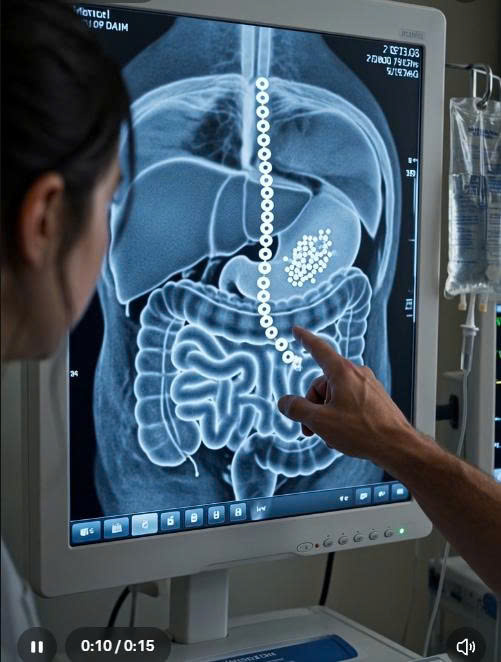
“He’s got dozens of magnets inside his intestines. The doctors think they’ve been there for weeks. Max told me Shelby was giving them to him.”
“That doesn’t make sense.”
“They found more magnets in her pantry.”
“Nicole, Shelby loves that kid. She’s watched him practically every day for a year.”
I closed my eyes. “And you think that means she couldn’t have hurt him?”
“I’m saying we need to be careful. Maybe Max found Addison’s toys. Maybe he doesn’t understand what happened.”
“He told me she gave them to him every Tuesday and Friday.”
Todd exhaled heavily. “Look, let’s find out everything before we start accusing people. Mom’s going to be devastated, and Jeremy’s business is already having problems. If this becomes public—”
I pulled the phone away from my ear and stared at the screen. I couldn’t believe that while our son was lying on an operating table, Todd was thinking about his brother’s reputation.
“Your son might not survive this, and you’re worried about Jeremy’s business?”
“That’s not what I’m saying.”
“Then what are you saying?”
He hesitated before suggesting that perhaps we could keep the matter within the family until they understood what had happened.
I felt something inside me change. For six years of marriage, I’d heard versions of that same request whenever Todd’s family behaved badly. Keep the peace. Don’t embarrass anyone. Let the family handle it.
“The hospital reported this, Todd. Not me. And I wouldn’t stop them even if I could.”
“Nicole, please—”
“Are you Max’s father, or are you your brother’s spokesman?”
I ended the call.
The surgery lasted nearly five hours. Twice, someone came into the waiting room to explain that the procedure was more complicated than expected. Several magnets had attracted one another through separate sections of the intestines, creating injuries that required careful repair.
I listened, nodded, and tried not to picture what my little boy was enduring.
When Dr. Daniel Foster finally appeared, he was still wearing his surgical clothes. I stood so quickly that my chair scraped the floor.
“How is he?”
“Max made it through the procedure. He’s stable.”
I covered my mouth and began crying before he could finish. Dr. Foster waited patiently, then explained that the surgeons had removed the remaining magnets and repaired several damaged areas. A short section of intestine had to be removed, and Max would need close monitoring for infection and other complications.
“The next several days are important,” he said. “But he came through a very difficult operation.”
The surgical team had photographed the magnets after removing them. When Dr. Foster showed me the image, I stared at dozens of tiny silver balls resting in a metal tray.
They looked harmless outside his body. That was what frightened me most. Something small enough to disappear into a child’s palm had nearly taken my son away from me.
Later, when I was finally allowed into Max’s recovery room, he lay beneath a white blanket with tubes and monitors around him. His face looked pale, and a large dressing covered his abdomen. I pulled a chair close, took his hand, and stayed there as the hours passed.
Todd called repeatedly. I let the phone ring.
Around three in the morning, Max began whimpering. A nurse checked him and adjusted his pain medication. When he opened his eyes, he looked straight at me.
“Mommy, no more candy.”
I leaned close enough for him to hear me without straining.
“No more, sweetheart. Nobody is going to make you eat those things again.”
He stared at me for a moment, then relaxed and fell asleep.
I remained awake, looking at his tiny fingers wrapped around mine. I kept thinking about Shelby’s calm expression as the officers searched her kitchen. She had looked more upset about the neighbors seeing police cars than about Max’s condition.
The next morning, Detective Hayes called. Shelby’s attorney was presenting an accidental-ingestion explanation. According to that account, Max must have found the magnets and swallowed them without anyone realizing it.
“But that’s not what happened,” I said.
“We have serious evidence pointing in another direction, Nicole. We need to establish the full timeline and determine whether there was deliberate intent.”
“What else can I do?”
“If you remember anything unusual, especially something that might explain a motive, tell me. We’re examining the physical and electronic evidence, but every reliable detail helps.”
After the call, I sat beside Max’s bed and studied his sleeping face.
I’d known Shelby for almost seven years. She liked expensive handbags, carefully decorated her house, and often complained that other people had easier lives than she did. She could be competitive and controlling, but I’d never imagined she was capable of deliberately hurting a child.
Still, one thing kept bothering me.
Shelby had never been generous without a reason. Even when she refused money for watching Max, she reminded me how fortunate I was to have her help.
I began wondering what she had expected in return.
Chapter 3
Max developed a fever on the second day after surgery. The nurses moved quickly, checking his blood pressure and starting additional treatment while Dr. Foster ordered tests. I sat beside his bed, gently wiping his forehead with a damp washcloth as his temperature climbed to 103 degrees.
He drifted in and out of sleep, sometimes murmuring words I could barely understand. At one point, he turned his head away and whispered, “Don’t make me, Aunt Shelby. I don’t want any more silver candy.”
I held the washcloth so tightly that water ran between my fingers. I wanted to cry, but more than anything, I wanted to go back six weeks and listen carefully the first time he’d said his tummy hurt.
Todd arrived that afternoon. He looked exhausted, with red eyes and two days of stubble. He stepped into the room carrying a small stuffed dinosaur, but stopped when he saw Max beneath the blankets.
“How is he?” he asked quietly.
“Fighting a fever.”
Todd moved toward the bed, then glanced at me. “Nicole, I know you’re angry.”
“Where were you before you came here?”
He hesitated. “I had some things to take care of.”
“What things?”
“Jeremy needed help getting an attorney.”
For a moment, I couldn’t speak. His brother had been questioned in connection with what happened to our son, yet Todd had chosen to spend his morning dealing with Jeremy’s problems.
“You drove past this hospital to help your brother?”
“Nicole, they’re my family.”
“And Max is your son.”
Todd looked toward the bed. Max stirred and opened his eyes.
“Daddy?”
Todd hurried to his side. “Hey, buddy. I’m here.”
Max studied him with a frightened expression. “Do I have to go to Aunt Shelby’s?”
Todd froze. I watched the realization move across his face as he looked at our son’s bandaged abdomen and the frightened way Max clutched his blanket.
“No, sweetheart,” Todd said finally. “You don’t.”
“Not Tuesday?”
“Not Tuesday.”
“Not Friday?”
“Never again, buddy.”
Max closed his eyes, apparently comforted by the answer. Todd stood beside him for another moment, then went into the hallway. When I followed, he was leaning against the wall with tears running down his face.
“I didn’t know,” he whispered.
“You didn’t want to know there was a problem,” I replied. “Every time I worried about something involving your family, you told me I was overreacting.”
He looked down.
I wasn’t trying to hurt him. I needed him to understand that keeping peace with his brother had become more important to him than listening to the concerns surrounding his own child.
The next morning, Max’s fever began improving. By afternoon, he was drinking apple juice through a straw and asking for the blinds to be opened. He watched the clouds drift above the parking garage and pointed toward one shaped like a shark.
For the first time in days, he smiled.
I held on to that small moment because I needed something good to remember.
While Max slept later that afternoon, I opened my laptop and began looking through Shelby’s public social media posts. I didn’t expect to discover anything dramatic. I simply wanted to understand whether there had been changes in her life that might explain her behavior.
Three months earlier, she’d posted photographs from Addison’s birthday party. One picture showed a table covered with presents, including a colorful magnetic desk toy set. Beneath the photo, a friend had warned that the tiny magnetic balls were dangerous if children swallowed them.
Shelby had replied, “Oh, I know! I’m extremely careful. Those stay locked away.”
I read her response twice.
She had acknowledged the danger before Max’s symptoms began.
I took a screenshot and sent it to Detective Hayes. Then I kept scrolling.
Two months earlier, Shelby had written a long post complaining about financial stress. She mentioned how difficult it was to watch money disappear while other people seemed to have everything handed to them. In the comments, she wrote that it was unfair when certain children had money waiting for them before they were even old enough to appreciate it.
Something about that sentence bothered me.
Money waiting for children.
I read it again, and a memory from two years earlier suddenly returned.
Todd and Jeremy’s father, Dale Turner, had died after a brief illness. Dale had spent most of his life working as an electrical contractor, saving carefully, and avoiding unnecessary expenses. He left a modest estate to his two sons, but he’d also established a separate educational trust for Max.
I remembered sitting beside Todd in an attorney’s office while the lawyer explained the arrangement. The trust contained approximately $380,000, intended to help Max with college and his future. Dale had wanted his youngest grandchild to have opportunities that hadn’t been available to him.
There had been an additional provision in the document. If Max died before reaching twenty-five, the remaining trust funds would pass to Dale’s other living grandchildren.
At the time, I hadn’t given that clause much thought. Max was a healthy little boy, and the idea of losing him seemed too terrible and unlikely to imagine.
But Dale had only two grandchildren.
Max and Addison.
Shelby’s daughter.
I sat staring at my laptop, hardly able to breathe.
Then I called Michael Adams, the attorney who’d handled my divorce.
“Michael, I need to know something about Dale Turner’s trust.”
He listened while I explained the situation, then said he would try to obtain the relevant documents through the proper channels. I spent the next two hours pacing the hospital hallway, checking my phone, and returning to Max’s room whenever he woke.
When Michael called back, he confirmed the clause.
If Max died before twenty-five, Addison would be the remaining beneficiary under the existing terms.
“Could Jeremy have known about that?” I asked.
“Certainly. He was involved in the estate proceedings. Todd was too.”
I thanked Michael and ended the call.
For several minutes, I sat motionless beside Max’s bed.
Jeremy owned a small construction company. Over the previous year, business had apparently become difficult. He’d complained about rising costs, delayed payments, and the burden of keeping his employees working. Yet he’d bought a newer truck and continued spending money on things that made his life look successful.
Shelby often complained that Jeremy worked too hard for too little reward.
What if they weren’t simply jealous of the money Dale had left Max?
What if they’d decided that Addison should receive it instead?
I called Detective Hayes and explained everything.
She listened carefully, asked for the trust documents, and said investigators were already examining Jeremy’s financial situation.
Twenty minutes later, she called again.
“Nicole, we’ve confirmed Jeremy’s company is facing serious financial pressure. There’s a commercial loan in default, and the lender is pursuing payment.”
“How much does he owe?”
“Enough that the trust could make a substantial difference. We’re still reviewing the details.”
My heart began pounding.
“Do you think they did this for the money?”
“I can’t give you a conclusion yet,” Hayes said. “But this is a significant lead.”
I looked at Max sleeping peacefully beside me. He was holding a small dinosaur against his chest, completely unaware that adults might have considered his life an obstacle to their financial security.
That thought frightened me more than anything I’d encountered since the ambulance ride.
The following morning, Hayes came to the hospital with additional information. Investigators had obtained and reviewed electronic records from Shelby’s devices under the appropriate warrants. The records included searches about the dangers of swallowing multiple rare-earth magnets, how symptoms might develop, and whether early medical examinations could miss the cause.
There were also searches concerning inheritance trusts and the death of a beneficiary.
The dates were especially disturbing. Several inquiries had been made before Max first complained about stomach pain, and others appeared during the weeks when his condition worsened.
Shelby hadn’t simply kept a dangerous toy in her house. The records suggested she’d researched the consequences of swallowing those objects long before anyone at the hospital discovered them.
I looked at the detective. “She knew exactly what those things could do.”
“The evidence strongly suggests she understood the risks,” Hayes replied.
Then she showed me another part of the investigation.
Forensic examiners had recovered messages exchanged between Shelby and Jeremy. Most were ordinary conversations about groceries, Addison’s school schedule, and Jeremy’s work. But several messages appeared to follow the same days Max had described.
One Tuesday, Jeremy had written, “Did you take care of it?”
Shelby replied, “Yes. One.”
On another occasion, he wrote, “Don’t rush things. We have time.”
A later exchange referred to an approaching deadline. Investigators believed the timing corresponded with Jeremy’s financial obligations.
I read the messages twice, trying to understand how two adults could discuss my little boy’s suffering with such ordinary words.
Hayes explained that Jeremy had been arrested and that prosecutors were reviewing charges against both him and Shelby. The investigation had connected the medical timeline, purchases, electronic communications, and financial records into a deeply troubling picture.
I closed the folder and pushed it away.
For weeks, I’d dropped Max off at Shelby’s house before work. I’d kissed his forehead, told him to be good, and trusted that he would be safe until I came home. Shelby had waved from her doorway, smiling as though she were doing me an enormous favor.
Now I wondered how many mornings Max had stood beside her kitchen counter, frightened but obedient, believing that the strange silver candy would make him strong enough to protect his mother.
That evening, Todd returned to the hospital.
He looked worse than before. His shirt was wrinkled, his eyes were swollen, and his hands shook when he reached for the doorframe.
“They showed me the messages,” he said.
I remained beside Max’s bed.
“Todd, your brother knew.”
He nodded.
“And Shelby knew those magnets could hurt him.”
“I know.”
I waited. For once, he didn’t try to explain everything away.
“I didn’t know about their plan, Nicole. I swear I didn’t.” His voice broke. “But I knew Jeremy was in trouble financially. I knew about Dad’s trust. And when you called me from the hospital, I was more worried about protecting my brother than helping you.”
“Yes,” I said quietly. “You were.”
He began crying.
“I’m sorry.”
I looked toward Max, who was awake and watching us with serious blue eyes.
“Then tell him.”
Todd approached the bed slowly and knelt beside it.
“Buddy, I need to say something. Daddy should’ve been here sooner. I should’ve listened when Mommy said something was wrong. I’m so sorry.”
Max studied him.
“Are you mad because I told the secret?”
Todd shook his head immediately.
“No, sweetheart. I’m proud of you for telling. You didn’t do anything wrong.”
For a long moment, Max said nothing. Then he held out one small finger, and Todd took it gently in both hands.
Watching them, I felt a complicated mixture of sadness and hope. I wanted Max to have a father who loved him enough to put him first. But love couldn’t be measured by apologies alone.
Todd would have to prove that his son mattered more than the approval of the Turner family.
Chapter 4
Max was discharged from the hospital twelve days after his surgery. He was still weak, and his favorite dinosaur T-shirt hung loosely on his shoulders, but he could walk short distances and had begun eating small meals again. When we stepped through the hospital’s sliding doors, he lifted his face toward the sunlight and smiled.
“Mommy, the air smells different.”
I laughed softly. “That’s because we’re finally outside.”
He held my hand as we walked slowly toward the parking lot. A cold breeze moved through the trees, and Max stopped for a moment to watch the leaves blowing across the pavement. It was such an ordinary sight, but after nearly two weeks of hospital rooms and medical equipment, I wanted to remember every second.
Todd was waiting near my car with a small duffel bag. He’d shaved and put on clean clothes, although he still looked exhausted. He didn’t approach until I nodded.
“I brought some of Max’s things,” he said. “His stuffed animals, his favorite books, and the blanket from my house.”
Max immediately reached for the bag, delighted to find the green triceratops he’d been missing.
Todd watched him for a moment, then turned to me.
“I’ve spoken with my attorney. I’m going to cooperate fully with the prosecution, and I’ll testify about everything I know. I’ve also agreed to temporary supervised visits while Max works with his therapist.”
I looked at him carefully.
“You’re agreeing to that voluntarily?”
“Yes. I don’t want him to feel unsafe with me. If it takes time to rebuild his trust, that’s what I’ll do.”
He handed me an envelope containing a check for fifteen thousand dollars.
“It’s from my savings,” he explained. “For medical expenses, therapy, whatever he needs.”
I accepted it after telling him that all financial arrangements would need to be properly documented. Todd nodded without argument. For once, he wasn’t asking me to make things easier for him.
Before leaving, he crouched in front of Max.
“Can I have a hug, buddy?”
Max considered the question, then stepped forward and wrapped his arms around his father. The hug was brief, but Todd closed his eyes as though it meant everything in the world.
When Max stepped back, Todd didn’t try to hold him longer. He simply smiled and told him to take care of his dinosaur.
A month later, Max and I moved across Columbus into a ground-floor apartment with a small fenced yard. Our old place had too many memories of frightening nights and long climbs up the stairs with a sick little boy in my arms. I wanted us to have somewhere that felt new.
The apartment had two bedrooms, a sunny kitchen, and windows overlooking a community garden. Max chose the bedroom nearest the flowers. He ran from room to room, sniffed the air, and announced that the entire place smelled like clean laundry.
I took that as a good sign.
We bought new curtains, a blue comforter, and a small bookshelf for his dinosaur collection. I hung his drawings on the refrigerator and let him choose a little lamp shaped like a moon. For the first few weeks, he insisted on keeping the hallway light on at night. I didn’t argue.
Recovery wasn’t simple. Max sometimes became frightened when someone offered him unfamiliar food, and he wanted me to taste everything before he ate. At preschool, his teachers were patient when he became anxious. His therapist helped him understand that what happened had been wrong and that he hadn’t caused it.
One evening, while I was reading beside his bed, he asked why Aunt Shelby had given him something dangerous.
I closed the book and thought carefully before answering.
“Sometimes grown-ups make very bad choices because they want something they shouldn’t have. That doesn’t make what they do right, and it doesn’t mean the child did anything wrong.”
He pulled his blanket closer.
“Even when I kept the secret?”
“Even then, sweetheart. You were trying to do what someone you trusted told you to do. She was the grown-up. Keeping you safe was her responsibility.”
He thought about that for a long time.
Then he asked whether we could have pancakes for breakfast.
I smiled, grateful that his mind could still move so naturally from painful questions to ordinary childhood wishes.
“With blueberries?”
“And whipped cream,” he said.
“Then that’s what we’ll have.”
As the months passed, the criminal case moved forward. Detective Hayes occasionally called to update me, and Michael Adams helped me understand the legal proceedings. The investigators had gathered purchase records, medical evidence, financial documents, electronic searches, and messages between Shelby and Jeremy.
The pattern was difficult to comprehend.
Jeremy’s construction company had been struggling under substantial debt. According to the prosecution’s evidence, he and Shelby believed that if Max died before reaching twenty-five, Addison would inherit the money Dale had placed in the trust. The funds could eventually provide their family with financial security at a time when Jeremy’s business was close to collapse.
They had apparently treated my child’s life as an obstacle between themselves and that money.
I kept wondering how people could become so consumed by greed that they stopped seeing a little boy as a human being. Max had trusted Shelby. He’d sat at her kitchen table, played with her daughter, and believed her when she told him the silver candy would make him strong.
The truth didn’t become easier to accept simply because I understood the motive.
The trial began the following March in a downtown Columbus courtroom with tall windows and polished wooden benches. I attended with Michael, while Max stayed home with my friend Laura. She had promised him an afternoon of dinosaur movies and a fort made from couch cushions, which sounded far better than anything happening in that courthouse.
Detective Hayes met us outside the courtroom.
“How’s Max doing?” she asked.
“Better. He’s finally gaining weight again, and yesterday he told me he wants to be a paleontologist.”
Hayes smiled. “Sounds like he’s making plans.”
“He is.”
Inside, Shelby sat beside her attorney wearing a navy cardigan. Her hair was neatly arranged, and her hands rested calmly on the table. Jeremy sat several feet away with his own attorney, looking down at the floor.
Todd and Jeremy’s mother, Deborah, sat in the back row holding a handkerchief. She had not spoken to me since the arrests. I didn’t know whether she was ashamed, angry, or simply unable to face what had happened, and I no longer felt responsible for finding out.
The prosecution began with the medical evidence. Dr. Foster described Max’s condition, the emergency surgery, and the pattern of injuries consistent with more than one period of exposure. He explained how the magnets could attract each other through separate sections of the intestines and why the resulting damage was so dangerous.
The courtroom was silent as the photographs were presented. I stared at my hands, remembering the metal tray filled with silver spheres. Those objects had nearly cost my son his life, yet they looked like something anyone might find in an office supply drawer.
Next came the purchase records and the electronic searches. The prosecution showed that Shelby had researched the hazards associated with swallowing powerful magnets and had also searched for information about inheritance trusts. The dates placed those inquiries before and during the period when Max became ill.
The financial records followed. They documented Jeremy’s business difficulties, his mounting obligations, and the approaching payment deadline. The trust documents established what could happen to Max’s inheritance if he died before reaching the specified age.
Then the prosecutors presented the recovered messages between Shelby and Jeremy.
I listened while the short exchanges were read aloud. They sounded so ordinary, almost like reminders about picking up groceries or paying a bill. But beside the medical timeline, the meaning the prosecution attributed to them was chilling.
Todd testified on the fourth day.
He wore a gray suit and looked uncomfortable as he took the witness stand. He admitted that he had initially defended his brother and sister-in-law, despite knowing Max was seriously ill.
“Why did you ask Nicole to keep the matter within the family?” the prosecutor asked.
Todd looked down before answering.
“Because I was afraid of what it would do to my brother’s reputation. I didn’t want to believe anyone in my family could do something like that.”
“And what do you believe now?”
He swallowed.
“I believe my brother and his wife deliberately endangered my son. I believe I should have listened to Nicole, and I failed Max when he needed me.”
His voice trembled, but he continued answering the questions. For the first time in all the years I’d known him, Todd didn’t try to excuse his family’s behavior.
Later, the prosecution played portions of Max’s recorded forensic interview. His small voice filled the courtroom as he described the silver candy, the promise of superhero strength, and the secret Shelby had told him to keep.
I closed my eyes.
Hearing his voice from that recording was harder than seeing the medical photographs. He sounded so trusting, so eager to explain what he’d been told. I remembered the way he’d looked at me on the hospital stretcher, afraid he had done something bad simply by speaking.
Michael quietly handed me a tissue.
The defense argued that the evidence did not establish deliberate intent beyond a reasonable doubt. Shelby’s attorney suggested accidental access to the magnets, while Jeremy’s attorney questioned whether his messages proved he had participated in any plan.
The jury listened carefully. When both sides finished their arguments, the jurors retired to deliberate.
I waited in a small room with Michael and Detective Hayes. We didn’t talk much. I drank half a cup of coffee and kept looking at the clock, wondering whether Max had eaten his lunch and whether Laura had helped him finish his dinosaur fort.
Less than four hours later, the jury returned.
We stood as the judge entered.
The foreperson announced guilty verdicts on the principal charges, including attempted murder and related offenses involving the deliberate endangerment of a child.
Both Shelby and Jeremy were convicted.
I didn’t cheer. I didn’t feel triumphant. I simply sat down, covered my face, and cried with the overwhelming relief of knowing that the truth had been acknowledged.
At sentencing, the judge spoke firmly about the calculated nature of the offenses. She emphasized that this had not been an impulsive act or a single careless mistake. The evidence showed repeated decisions made over weeks, despite clear opportunities to stop.
“You were entrusted with the care of a vulnerable child,” the judge told Shelby. “You used that trust in a way that put his life in grave danger. The pursuit of money cannot excuse such conduct.”
Shelby began crying and said she had never intended for things to become so serious.
The judge reminded her that the harm had developed over time and that the repeated actions were central to the case.
Shelby received a twenty-two-year prison sentence, while Jeremy received eighteen years, with the applicable conditions governed by Ohio sentencing law.
Separate proceedings protected Max’s trust and addressed the financial consequences of the crimes. The money Dale had intended for his grandson remained preserved for Max’s benefit, beyond Shelby and Jeremy’s control.
When the officers prepared to escort Shelby from the courtroom, she turned and looked at me.
For a moment, I saw the woman who had brought homemade cookies to my apartment, offered to care for my child, and called me her sister even after my divorce. I remembered how grateful I’d felt when she refused payment, believing she’d stepped in when our family was falling apart.
Then I remembered Max begging me to make the little silver fish stop moving.
I held her gaze without saying a word.
She turned away, and the officers led her through the side door.
Behind me, Deborah began crying. I felt a quiet sadness for her, but I knew that the consequences facing her family were not mine to carry.
When I reached home that evening, the apartment was warm and smelled of freshly baked bread. Laura met me near the kitchen and asked how everything had gone.
“It’s finished,” I said. “The trial is over.”
She studied my face and gave me a long hug. Then she told me Max had spent most of the afternoon building a dinosaur city and had fallen asleep waiting for me.
I found him curled on the living room couch beneath his favorite blanket. A plastic stegosaurus rested against his chest, and one little foot stuck out from under the fabric. His cheeks were fuller now, and his hair had grown long enough to fall into his eyes.
I sat on the floor beside him and watched his chest rise and fall.
For the first time in a long while, there were no hospital monitors, no frightening machines, and no nurses hurrying through the doorway. There was only my little boy sleeping peacefully in his own home.
After a few minutes, he stirred and opened his eyes.
“Mommy?”
“I’m here, sweetheart.”
“Did you see the judge?”
“Yes, I did.”
He rubbed his eyes and sat up slightly.
“Did the judge make Aunt Shelby stop?”
I brushed the hair away from his forehead.
“Yes, honey. She won’t be taking care of you anymore.”
He considered that answer, then looked down at his stomach.
“Mommy, are all the fish gone?”
I felt tears gathering again, but this time they came with a smile.
“Every single one.”
“For real?”
“For real.”
“Forever?”
I nodded and kissed his forehead.
“Forever, sweetheart.”
He seemed satisfied. He moved his dinosaur aside, patted the empty cushion beside him, and waited for me to sit down.
I climbed onto the couch and pulled the blanket over both of us. Max settled against my shoulder, his fingers curling around the sleeve of my sweater.
Outside the window, evening sunlight spread across the little garden. The maple tree near our fence swayed gently in the breeze, and somewhere in the courtyard, children were laughing as they played.
For months, I’d been trying to understand how people I trusted could have placed my child in danger. I’d replayed every conversation, every missed sign, and every moment when Max had tried to tell me something was wrong.
But sitting there with him, I realized that understanding their cruelty would never be as important as helping him feel safe again.
Our lives weren’t magically perfect. Max still had medical appointments and therapy sessions ahead of him. Todd was learning how to be a dependable father, and I was learning how to trust my own judgment without letting fear control every decision.
Some nights, Max still wanted the hallway light left on. Sometimes he asked me to check his food or stay beside his bed until he fell asleep. I gave him the reassurance he needed, knowing that healing couldn’t be rushed.
But there were also mornings when he woke up laughing, afternoons when he ran across the yard chasing butterflies, and evenings when he proudly showed me another dinosaur drawing.
Those ordinary moments had become the most precious parts of my life.
“Mommy?” he whispered sleepily.
“Yes, baby?”
“Can we have pancakes tomorrow?”
I smiled. “Of course.”
“With whipped cream?”
“Absolutely.”
“And lots of blueberries?”
“As many as you want.”
He giggled, then rested his head against me again.
I began humming the same old lullaby my mother used to sing, the gentle song about a river and the morning sun. Max’s breathing became slow and even, and his fingers relaxed against my sleeve.
I looked down at the little boy sleeping beside me, safe in our quiet living room, and thought about how close I’d come to losing him.
There had been a time when I believed family was something you preserved at any cost. I had learned that real family was made of people who protected one another, told the truth when it mattered, and never demanded silence in exchange for love.
I couldn’t change what Max had suffered. I couldn’t give him back those frightening weeks or erase every memory of the hospital. But I could believe him, stand beside him, and make sure he grew up knowing that his voice mattered.
Outside, the sunlight slowly faded, leaving the garden in soft evening shadows.
Max stirred once more.
“I love you, Mommy.”
I kissed his hair and held him a little closer.
“I love you too, sweetheart. More than you’ll ever know.”
He fell asleep again, still holding my sleeve.
And as I listened to his peaceful breathing, I understood that the greatest gift wasn’t the money waiting in his trust, the verdict from the courtroom, or the punishment given to those who had betrayed us.
It was this simple evening. A warm home, a child who was healing, and the promise of another ordinary morning together.
Tomorrow, there would be pancakes.
And Max would be there to enjoy them.
THE END.
⚠️ All characters and events are fictional. Do not imitate or apply them in real life. 😌😌😌