### Part 2: Leaving Sacramento Forces Me to Rebuild Trust on Different Terms
By nine the next morning, the vineyard had confirmed our cancellation. We forfeited several deposits, and the caterer required a substantial payment because the food had already been ordered. I sat at my mother’s breakfast table adding figures while she made toast I couldn’t eat. When she suggested Grant should reimburse me for his share, I told her I wanted everything documented, with no conversations that didn’t have a practical purpose.
Grant sent messages for weeks. At first, he blamed wedding stress, then loneliness, then his own inability to say no when Tessa sought attention. Eventually, he admitted he’d enjoyed being admired by someone who didn’t know the unremarkable parts of him, the overdue bills and bad moods and Saturday mornings spent repairing things around the house. I forwarded his financial messages to an attorney who helped us separate our joint obligations, but I stopped responding to his explanations.
My stepfather, Paul, struggled with what had happened. Tessa was his only biological daughter, and he’d spent years rescuing her from decisions she regretted. One Sunday, he came to my mother’s house carrying a grocery bag of my favorite cinnamon rolls and cautiously suggested that families sometimes survived terrible mistakes. My mother set down her coffee cup and said, “Paul, she didn’t borrow Leah’s car without permission. She helped Grant deceive her for months.”
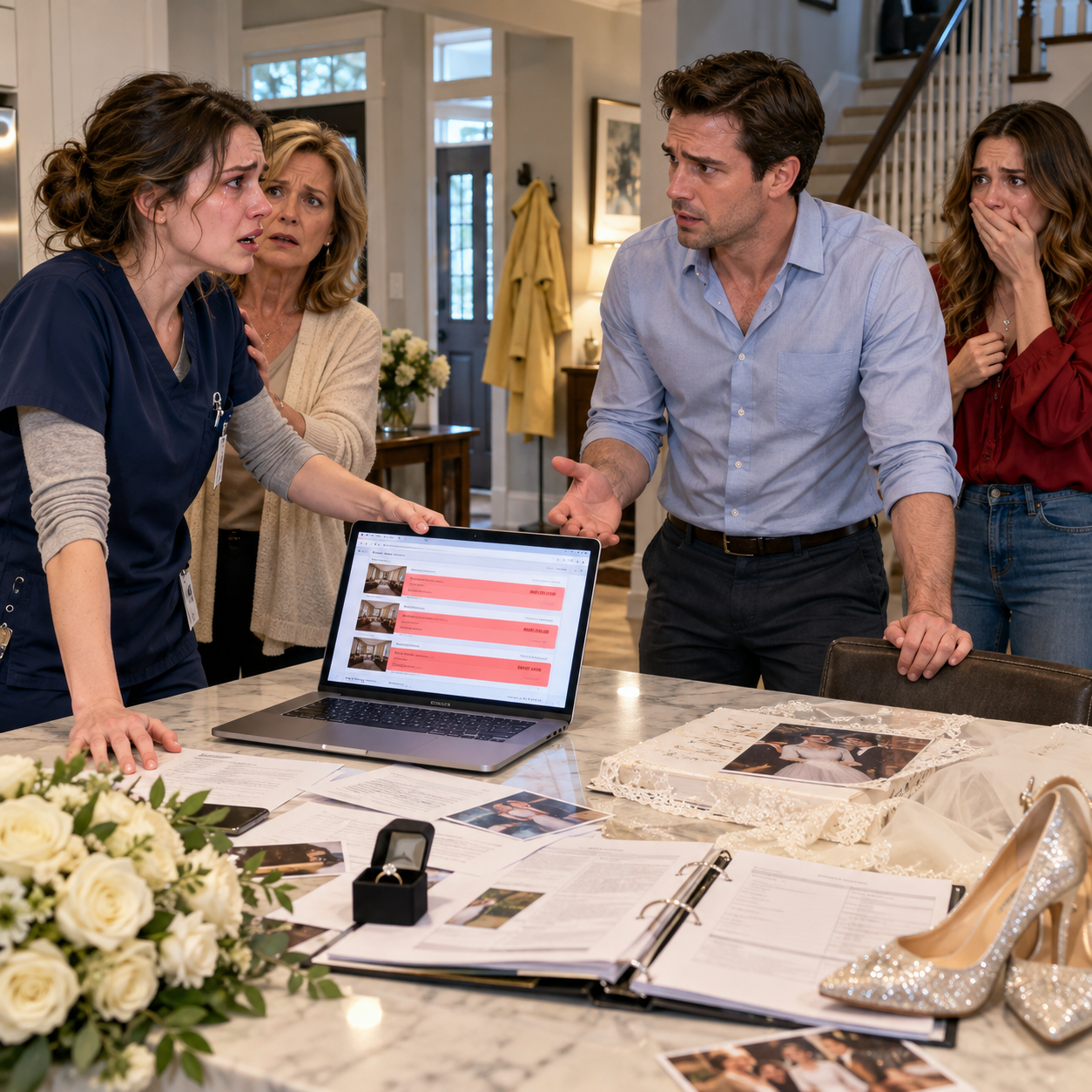
He looked at the table for a long while. “She’s ashamed,” he finally said, and I asked whether Tessa had told him about the hotels. When he admitted she hadn’t, I opened the statement and showed him the dates. He left the cinnamon rolls untouched, and three days later he called to apologize for asking me to reconsider anything.
Tessa eventually appeared at my mother’s house while I was packing. She looked exhausted, with dark circles beneath her eyes and a folded letter trembling in her hand. She said she’d always felt that I was the dependable daughter, the accomplished daughter, the one everyone trusted, and that Grant’s attention had made her feel important. “I didn’t start out wanting your life,” she whispered, and I answered, “But when you saw what you were taking, you kept taking it.”
She began crying harder, yet I felt no satisfaction. I remembered teaching her to ride a bicycle, sitting through her school plays, and helping her rehearse interviews for jobs she rarely kept. She asked whether we could ever be sisters again. I told her I didn’t know, accepted the letter without reading it, and asked her not to contact me until I was ready.
I moved into a small apartment above a neighborhood laundromat. The building shook whenever the industrial dryers reached their highest speed, and the kitchen was barely large enough for one person. Still, I bought secondhand dishes, painted the bedroom a soft green, and discovered how strange it felt to make decisions without consulting anyone. On difficult evenings, I’d set out two plates without thinking, then quietly return one to the cupboard.
Four months after the canceled wedding, my friend Marisol forwarded a travel nursing position in Denver. The pay was better, the hospital needed experienced emergency nurses, and the contract offered relocation assistance. My mother asked whether I wanted to move because I loved the opportunity or because I couldn’t bear Sacramento anymore. I told her both reasons were true, and she helped me pack.
Denver greeted me with an early autumn snowfall and an emergency department that never seemed to slow down. I rented an apartment near a public park, learned the quickest route to the hospital, and made friends who knew nothing about Grant or Tessa. For the first time in months, conversations didn’t begin with questions about my wedding. People wanted to know whether I preferred coffee or tea, whether I’d tried skiing, or whether I could trade a weekend shift.
That’s where I met Dr. Daniel Ward, a trauma surgeon with graying hair at his temples and a habit of listening carefully before speaking. During a particularly difficult night, I worked beside him while our team stabilized a construction worker injured in a fall. Afterward, I found a turkey sandwich and an apple beside my workstation, with a note from Daniel reminding me that nurses needed lunch, too. I thanked him the next morning, and he simply said he’d noticed I’d missed my break.
We became friends slowly. Daniel had been divorced for several years and was raising a teenage son with his former wife, with whom he maintained a respectful relationship. He spoke warmly about his son but never pretended co-parenting was effortless, and I appreciated that he didn’t polish his life into something flawless. When he invited me to dinner, I explained that my last relationship had ended badly and I wasn’t prepared to date.
He smiled a little. “Dinner doesn’t have an expiration date,” he said, and we returned to discussing hospital schedules. He never mentioned the invitation again, never made my refusal uncomfortable, and never treated kindness like an investment he expected repaid. Months later, I asked whether he’d like to join me at a small Italian restaurant near my apartment. He checked his calendar, called a babysitter to confirm his son’s plans, and said Friday would be wonderful.
Our first date lasted almost three hours. We talked about his son, my nursing career, the grandmother who had taught me to bake bread, and the vacations neither of us had managed to take. When I finally told him about Grant and Tessa, he didn’t offer dramatic promises about being different. He asked what I needed from a relationship now, and I found myself saying, “Someone who tells me the truth even when it’s inconvenient.”
Over the following months, Daniel showed me what that looked like in ordinary ways. He admitted when work had overwhelmed him, told me when he disagreed, and didn’t hide uncomfortable conversations behind pleasant excuses. When his son needed extra time adjusting to our relationship, Daniel explained the situation without making either of us feel guilty. Trust began returning to me through countless small moments in which people’s words matched their actions.
By the following spring, we were talking about a shared future. Neither of us wanted a rushed engagement or a celebration designed to convince other people we were happy. We wanted a family built on decisions we could discuss openly, including difficult ones. When I learned I was pregnant several months later, Daniel sat beside me on the bathroom floor, holding the test and laughing softly through tears.
He asked whether I was frightened. I admitted I was, and he wrapped an arm around me without pretending there was nothing to worry about. We talked about childcare, work, money, and the kind of home we wanted our daughter to grow up in. That evening, I called my mother, who cried so hard she had to hand the telephone to Paul.
For the first time since leaving California, I stopped measuring my life against the one I’d lost. I was seven months pregnant when the past finally found me again.
### Part 3: A Chance Hospital Encounter Brings My Former Life Into Focus
It happened on a Wednesday afternoon in the hospital gift shop. I had stopped to buy a congratulations card for a colleague who’d recently adopted a little boy. My maternity scrub top was becoming uncomfortable, and I was considering whether to exchange it for a larger size when someone behind me said my name. The voice was familiar enough that I recognized it before I turned around.
Grant stood near the greeting cards, wearing a charcoal suit and carrying a conference badge. His hair had thinned slightly, and there were tired creases around his eyes that hadn’t been there when we were together. For a moment, we simply looked at each other among the stuffed animals and flower arrangements. Then his gaze settled on my belly, and his expression changed.
“Leah,” he said quietly. “You’re pregnant.” I nodded and explained that I worked at the hospital, keeping my voice polite because a volunteer was stocking shelves nearby. Grant glanced at the badge around his neck and said he was in Denver for an engineering conference, then asked whether we could talk somewhere private. I suggested the seating area outside the shop, where people were passing regularly.
We sat across from each other beside a window overlooking the parking garage. Grant rested his elbows on his knees, rubbing his hands together. He asked how long I’d lived in Denver and whether my mother visited, and I answered without volunteering much. Eventually he looked toward my stomach again and asked, “Why didn’t anyone tell me you were having a baby?”
The question surprised me more than seeing him had. I set my shopping bag beside my chair and asked why he thought someone should have told him. He said he’d imagined hearing about major events in my life, even after everything, because we’d once planned to raise children together. Then he stopped and acknowledged that saying it aloud sounded unreasonable.
“She’s Daniel’s daughter,” I said. “He and I are together, and we’re very happy.” Grant looked away, swallowing several times before he could answer. He admitted he’d wondered whether I might someday return to Sacramento, whether enough apologies and enough time could persuade me to hear him out. He hadn’t expected to find me preparing for motherhood with someone else.
I told him I’d heard his apologies. I’d also read the messages in which he’d explained what he and Tessa had done, and I believed he regretted it. But regret didn’t erase the months of secrecy, the hotel reservations, or the decision to keep planning a wedding while sharing himself with somebody else. Grant nodded, staring at the conference badge between his fingers.
He said he and Tessa had tried to continue seeing each other after I left. Without the secrecy, he’d discovered that much of their relationship had been built around the excitement of escaping responsibilities. They argued about blame, about what they’d lost, and about whether either of them had really intended to choose the other. By the following winter, they’d separated, and Grant had begun counseling.
“I was angry with you for leaving,” he admitted, his face tightening with embarrassment. “For a while, I told myself you’d destroyed our future by refusing to talk. It was easier than admitting I had given you a reason to walk away.” He looked at me and said his counselor had asked why he’d wanted the security of marriage while repeatedly risking the person who provided it. He still didn’t have an answer he liked.
I appreciated his willingness to acknowledge it, but there was nothing I could offer him in return. When he asked whether I could ever forgive him, I explained that forgiveness and rebuilding a relationship weren’t the same thing. “Maybe one day I won’t feel hurt when I remember it,” I said. “But I’m not going to become part of your life again to prove I’ve recovered.”
Grant’s eyes filled, and he nodded. After a moment, he mentioned Tessa, saying she’d recently started a steady job and was living alone. She’d told him she missed me terribly, though she understood why I hadn’t answered her letters. I said I hoped she was doing well, and Grant seemed to realize that was all I intended to say.
He stood when I did, hesitating as though he wanted to embrace me. Instead, he extended his hand, and I shook it briefly. “I really did love you,” he said, and I answered that I’d believed him for years. Neither of us tried to settle that disagreement before we went our separate ways.
Daniel was waiting near the elevators when I approached, holding two paper cups of water. He noticed Grant walking toward the main entrance and asked whether everything was all right. I explained who I’d met and what we’d discussed while we rode upstairs, and Daniel listened without interrupting. When I finished, he asked whether I wanted to leave early or continue my shift.
“I think I’d like to finish,” I told him. He handed me my water and reminded me that our prenatal appointment was the following morning. Then he kissed my forehead and headed toward the surgical wing, leaving me to return to work without questioning whether my conversation with Grant had disturbed our relationship.
That evening, I found Tessa’s unopened letter in a box of old belongings. I’d brought it from Sacramento and carried it through three apartments without ever opening it. Sitting beside the nursery crib Daniel and I had assembled the previous weekend, I finally unfolded the pages. Her handwriting was uneven, and several sentences had been crossed out before she settled on words she could live with.
She didn’t ask me to understand her choices. Instead, she described remembering how I’d stayed awake with her when she failed college entrance exams, how I’d brought her home after a painful breakup, and how she’d mistaken my generosity for something she could never exhaust. She wrote that she’d wanted to feel chosen, even for a little while, and that she had made me pay for her insecurities. At the bottom, she said she was sorry and would respect whatever distance I needed.
I sat for a long time with the letter across my knees. Eventually, I took out my phone and sent her a brief message saying I’d read it, that I appreciated her taking responsibility, and that I wasn’t ready for regular contact. Her reply arrived the following morning. She thanked me for reading it and promised not to push.
Six weeks after my encounter with Grant, our daughter, Charlotte, was born. Daniel was beside me throughout labor, offering water, following the nurses’ instructions, and looking appropriately terrified whenever the monitor made an unfamiliar sound. When the nurse placed Charlotte against my chest, Daniel rested his hand gently on her back. My mother arrived later that afternoon carrying a knitted blanket she’d worked on for months.
Motherhood brought plenty of sleepless nights, disagreements about feeding schedules, and evenings when both of us were too tired to cook. Daniel’s teenage son became a surprisingly patient older brother, proudly introducing Charlotte to visitors and helping choose books for her nursery. We argued occasionally, apologized when necessary, and continued finding ways to care for one another. Our home wasn’t perfect, but nobody needed to pretend it was.
A month after Charlotte’s birth, my mother asked whether I’d like to bring her to Sacramento for Christmas. She explained that Tessa would be spending the holiday elsewhere if I preferred, and that Paul had already agreed to arrange separate visits. I appreciated the choice and told her we’d come for a few days. I wasn’t ready to sit across a dinner table from my sister, but I was beginning to believe that someday I might be.
On Christmas morning, I stood beside my mother’s living room window with Charlotte sleeping against my shoulder. The house smelled of cinnamon rolls, and Daniel was helping Paul repair a loose kitchen cabinet while his son decorated cookies with my mother. Two years earlier, I’d thought losing Grant meant losing the future I’d worked so hard to build. Watching my daughter sleep, I understood that I’d lost the future I’d imagined, but not my ability to have one.
I still remember that Thursday night in Sacramento. Sometimes a song or an ordinary household sound brings back a detail I wish I could forget. But those memories no longer determine how I treat the people who love me or how I imagine the years ahead. I have a daughter to raise, a partner to grow old with, and a family whose complicated history no longer has to dictate my choices.
When Charlotte stirred, I kissed her forehead and carried her toward the kitchen. Daniel looked up from the cabinet, smiled, and reached for her while I poured myself some coffee. Outside, Christmas morning continued quietly, with nothing remarkable happening at all. For the first time in years, that ordinary peace felt like everything I had ever wanted.
The End .
All characters and events in this story are fictional, created for storytelling and entertainment purposes. Thank you sincerely for reading. Your feedback and support are invaluable and motivate me to continue sharing more stories with you.