
Part 2: The paperwork exposes plans my son never meant to explain
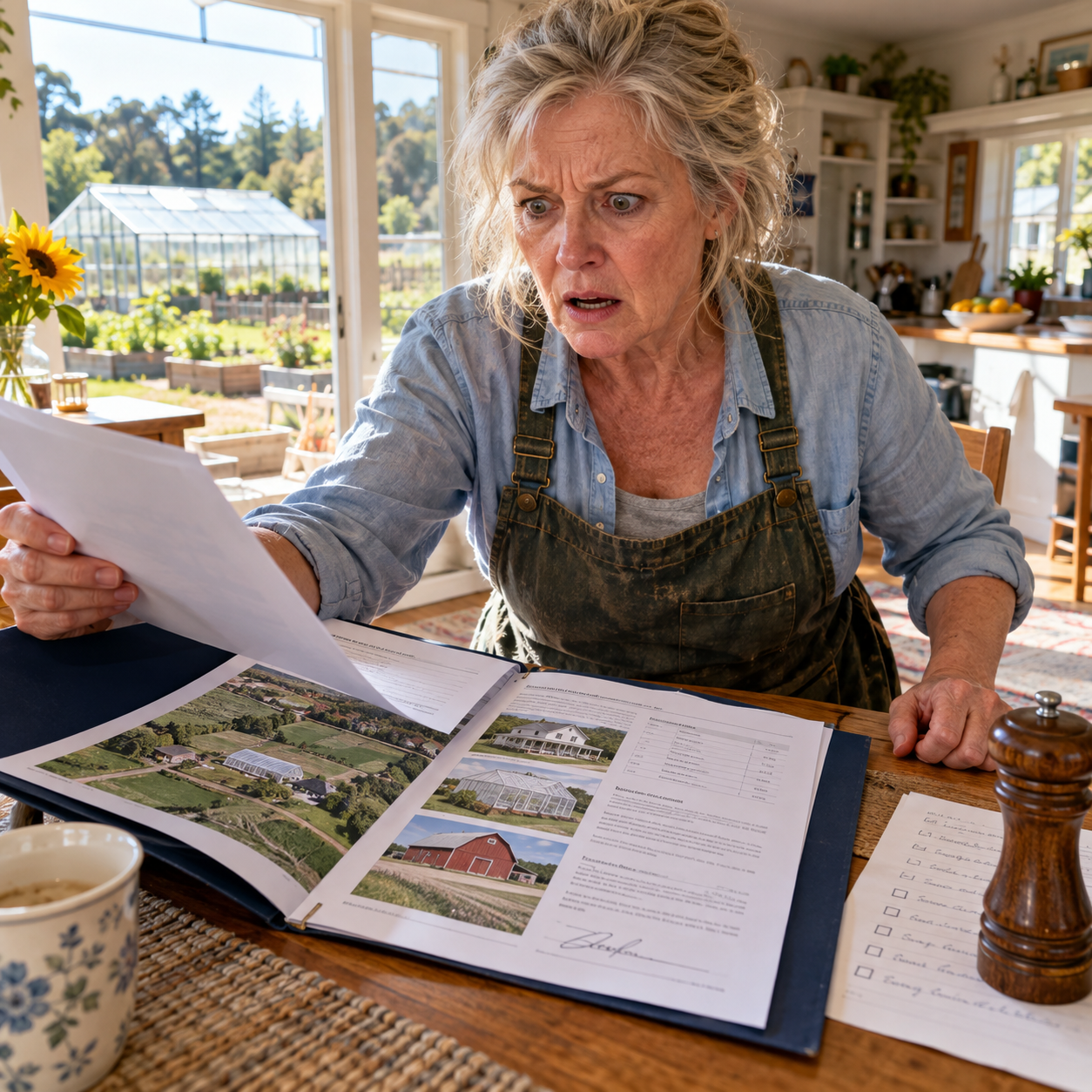
He lowered his voice. “That was preliminary.” I asked, “Preliminary to what?” and he began talking about opportunities, income streams, my age, maintenance costs, and how much easier life could be if the front acre were developed. He spoke in calm nouns to cover uncomfortable verbs until I finally said, “You had my land appraised and discussed transferring the deed without asking me.”
“That’s not fair,” he said, sounding suddenly younger. “We were trying to solve a problem before it became one. This place is too much for you alone.” I looked down at my dirt-caked hands. “Interesting, because you left me a two-page work list for the place that’s supposedly too much for me.”
He asked if we could talk when he got home. I told him we would talk Monday at Walter’s office at nine and that he was welcome to attend. Before hanging up, he muttered, “Celeste already told some people we were moving forward.” I answered, “Then Celeste can tell them she was mistaken.”
Amara called an hour later. I let voicemail take it, but listened while transplanting basil. “Lorraine, I think this has gotten emotionally charged,” she began, then described cottages on the road frontage, a smaller house for me, and a farm operation Daniel could manage. “We thought it could benefit everyone,” she said. I saved the message because I had lived long enough to know how often women are told they misunderstood decisions nobody invited them to make.
Monday arrived gray and wet. Walter spread the papers across his conference table and made two columns on a yellow pad: what Daniel could do, and what he could not. The second mattered most. He could handle certain finances under specified circumstances, but he could not transfer title to my property without my direct, witnessed authorization, and nothing Daniel had signed made him an owner.
“So he can’t sell it?” I asked. “Not legally, based on what you’ve shown me,” Walter said. “But he has represented himself to third parties as though he had authority he doesn’t have.” He prepared a revocation of the power of attorney, which I signed before his notary, then sent letters to the consulting firm and the developer stating that no sale, subdivision, transfer, option, or development agreement had been authorized.
Daniel never came. At 9:37 he texted: Flight got in late. I think lawyers will make this worse. Can we handle it as a family? Walter read the screen and handed back my phone. “Families are exactly why paperwork exists,” he said, and despite everything, I laughed.
Daniel arrived Wednesday afternoon without calling. I watched his car idle in the driveway before he got out, shoulders rounded, tie loose. At the kitchen table he stared at the pepper mill and the folded work list beneath it. “Amara is furious,” he said. “Her mother put money into preliminary legal work.”
“With whose permission?” I asked. He rubbed his face. “Nobody signed anything binding. We thought once you saw the numbers, you’d understand.” There it was—not cruelty exactly, but the certainty that because he could imagine a future for my land, he was entitled to arrange it before asking whether I wanted that future.
He talked about college costs, rising insurance, my medical needs someday, and his fear that the farm would become a burden no one could manage. Those worries were real, which made the betrayal harder, not easier. When he stopped, I said, “Concern doesn’t make my consent optional.” He looked toward Ray’s old barn and said, “Dad would’ve hated watching this place fall apart.”
“Your father would’ve hated being used as an argument for something he was never asked about.” Daniel’s jaw tightened, but he didn’t answer. I slid the revocation across the table. “I’m not cutting you out of my life. I’m cutting you out of decisions you started making as though my life had already become paperwork.”
He read the page without lifting his head. After a while, he asked, “What are you going to do with the farm?” I had been asking myself the same thing since Ray died, though until that week I had treated the question like a door I could keep closed forever. Now I knew keeping the land meant deciding its future while I still had the right to do it.
Part 3: I choose the farm’s future and redefine our family
I told Daniel I was meeting with the county agricultural extension office about a conservation easement and a long-term teaching partnership. He stared at me. “You’d give the land away?” “No,” I said. “I’d protect how it can be used.” Part of the acreage could host beginning farmers who needed affordable ground, while the farm remained mine during my lifetime.
“You would still inherit what my estate documents give you,” I said, “but not the right to turn the road frontage into cottages because someone ran projections.” Daniel walked to the sink and stood with his back to me. “Amara will think you’re doing this to punish us.” I answered, “Then tell her punishment would be spending the rest of my life arranging my decisions around whether she approves.”
He turned around. “You never liked her.” That accusation had been waiting years for an excuse. “I didn’t like how quickly she began speaking for you,” I said. “And I liked even less how quickly you let her. But she isn’t responsible for your signature on that assessment.”
That reached him. He leaned against the counter and admitted he had signed it, telling himself it was only exploratory. Then Celeste became excited, Amara began planning, and every week made the conversation with me harder. “I pictured you saying no before I could explain,” he said. “So,” I answered, “you built a plan where my no would arrive too late.”
His eyes shone, though he blinked hard. “I didn’t mean to make you feel disposable.” I touched the edge of the table, remembering the SUV disappearing down the road and the list beneath the pepper mill. “Intent matters,” I said. “So does what you actually did.”
The next Saturday, Daniel came with me to the agricultural extension office. I had not asked him to, and he did not bring Amara. The coordinator showed us maps and photographs of growers leasing small plots around the county—a former nurse raising culinary herbs, two brothers building a market garden, a young couple selling cut flowers while raising three children. Daniel asked practical questions, and for once they were questions instead of conclusions.
Afterward we walked the farm together. Near the stone wall, where Ray’s ashes were buried beneath a dogwood, Daniel nudged a pinecone with his shoe. “I forgot how much Dad did out here,” he said. I told him, “You didn’t forget. You got used to seeing the result instead of the labor.” He nodded, then said, “I think I did that with you too.”
I did not rush to forgive him. Forgiveness spoken too quickly can become another form of pretending. But I reached for his hand, and for a moment he was eight again, standing in the first garden asking Ray how seeds knew which way was up. “You have time to remember,” I said.
The legal work took months. Walter helped me record an easement preserving most of the acreage for agriculture, while my new estate plan allowed Daniel to inherit the farmhouse and part of the land without subdividing the protected fields. The extension office received a long-term agreement for two mentorship plots. Every document carried my signature because every decision was mine.
Amara and I did not have a dramatic reconciliation. She came by in September carrying my leather gloves, washed and wrapped in tissue paper, though the palms had gone stiff from salt water. “I shouldn’t have taken them,” she said, looking at the package. “No,” I answered. “You shouldn’t have.”
She swallowed. “I also shouldn’t have written that note like the transfer was settled.” Then she admitted she had realized Daniel had told me less than she first believed, but kept planning because Celeste had already discussed the project with friends and investors. “I didn’t want us to look foolish,” she said. It was not an excuse, but I recognized the motive: pride, momentum, and fear of embarrassment.
We sat on the porch while she explained that Celeste was worried about retirement money and saw the development as security for the family. I told her financial fear did not turn someone else’s home into available capital. Before leaving, she asked if I hated her. “No,” I said. “But trust grows slower than basil.”
By October, Daniel was visiting twice a month, sometimes alone, sometimes with the children, and he worked without handing me lists. He replaced a failing greenhouse latch and taught his daughter to loosen roots before transplanting lettuce. Daniel repaid the resort charges and the other personal expenses taken from my account, and Amara stopped calling the acreage “the property.” She called it “your farm,” a small correction I noticed every time.
The following spring, the extension program placed its first two growers on the east field. A young couple arrived before sunrise with a dented pickup, three children, and more enthusiasm than equipment. Daniel brought a borrowed tiller, Amara brought sandwiches, and I handed out work gloves from a box by the barn. Mine were new leather with my initials stitched at the wrist.
Around noon, Daniel stood beside me watching the youngest child press bean seeds into a row. “This isn’t what I pictured,” he said. I glanced at him. “No.” He smiled a little. “It’s better.”
I looked across the greenhouse, farmhouse, and road frontage that would remain open instead of becoming someone’s development brochure. For the first time since Ray died, I did not feel like the last person guarding a memory. I felt like a steward passing something forward without surrendering it. There is a difference, and my son nearly taking that choice from me taught me how fiercely I wanted to keep it.
The End .
All characters and events in this story are fictional, created for storytelling and entertainment purposes. Thank you sincerely for reading. Your feedback and support are invaluable and motivate me to continue sharing more stories with you.

