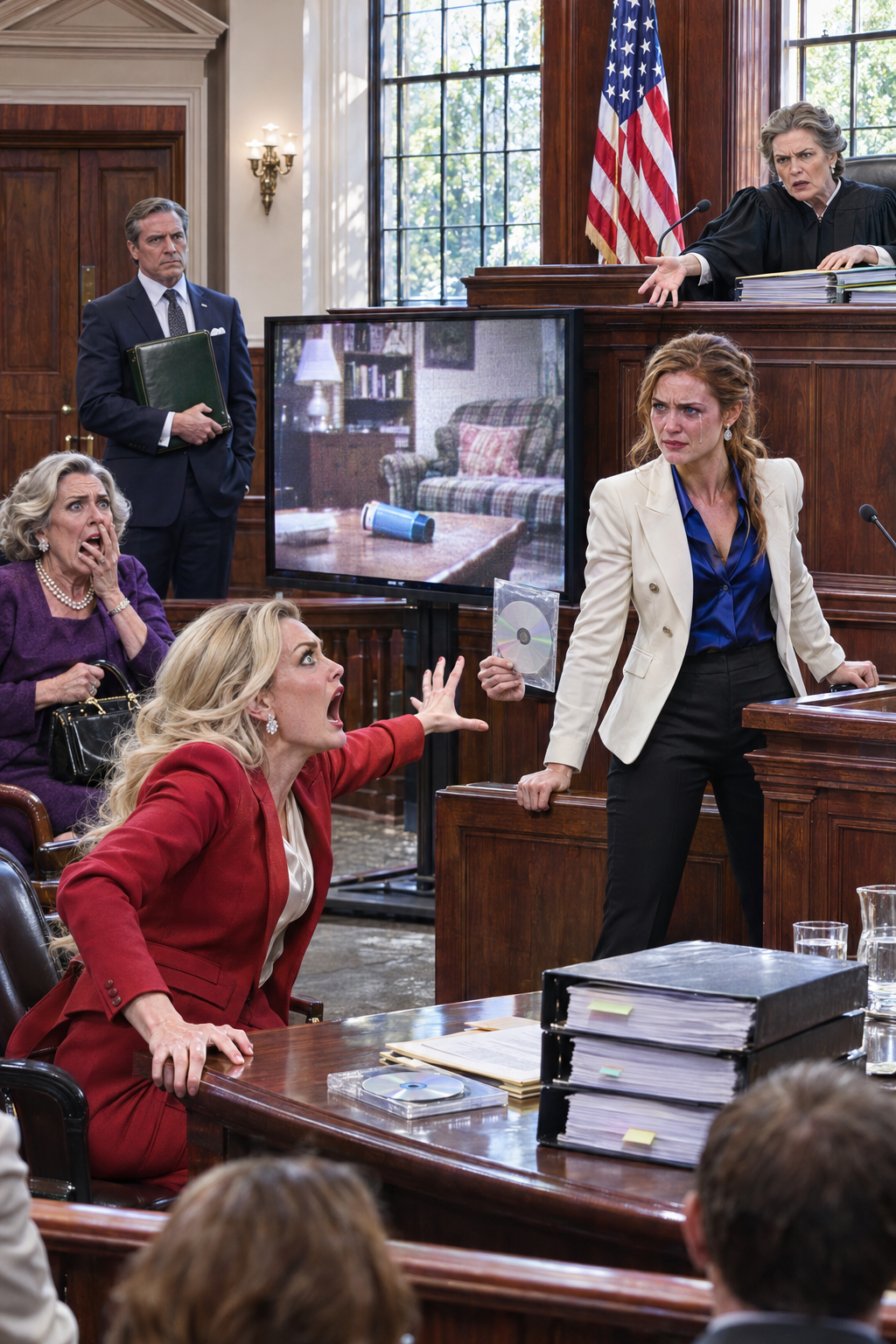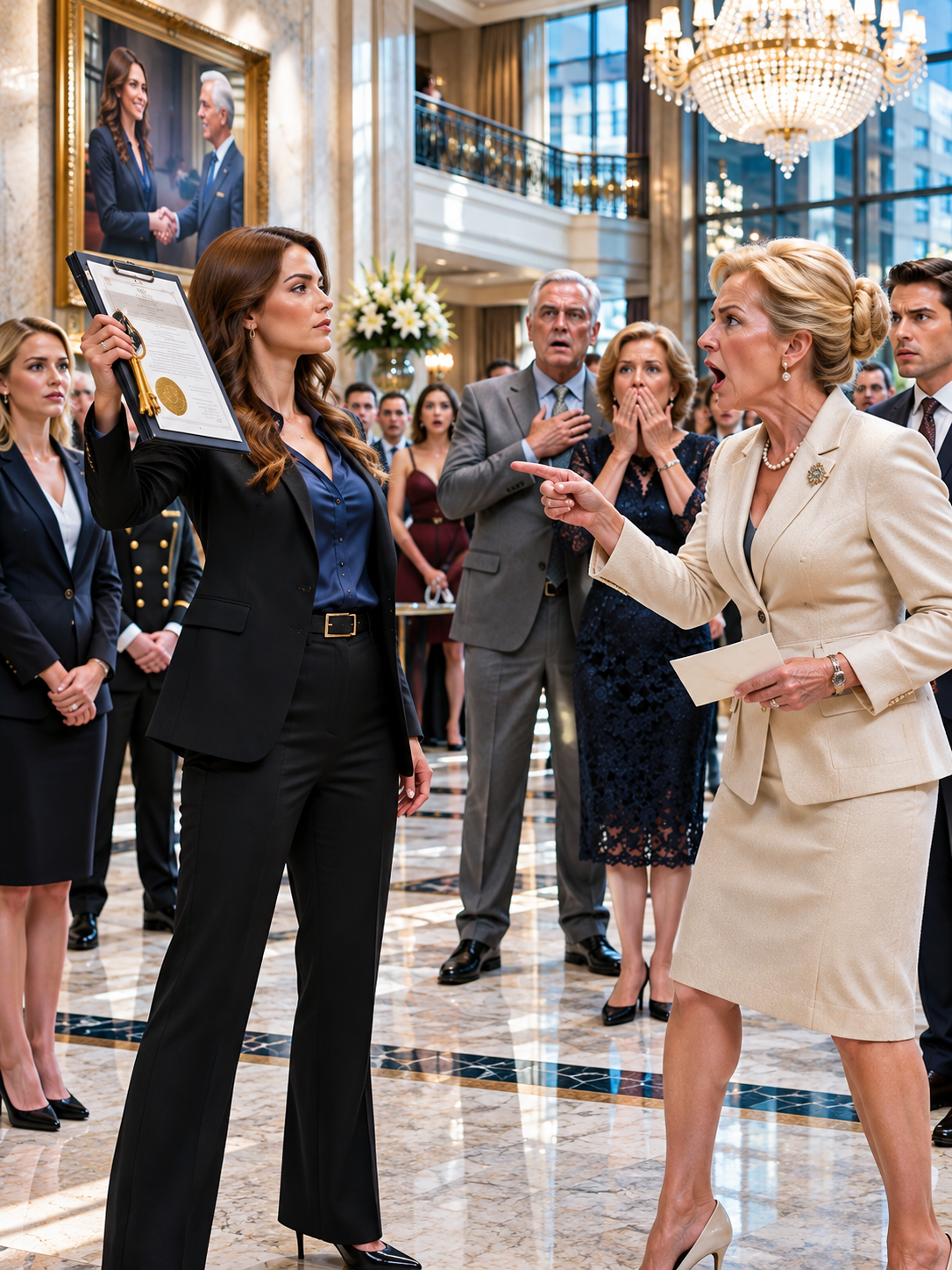
My mother pressed her fingertips against the brass nameplate outside my office, as though touching it might change the letters. Through the glass wall, I watched her read my name twice. Ten years earlier, she’d thrown me out over a cabin I’d bought with my own money. Now she needed a signature from its owner, and she had no idea whose hand held the pen.
Part 1: A Deed, a Daughter, and the Door That Closed
I was twenty-eight years old, standing on the ninth floor of 400 Market Street in Knoxville, Tennessee, with a cup of coffee cooling between my hands. Behind me, my business partner, Priya, studied a one-page document while our receptionist, Rosa, watched the lobby monitor. My mother, Diane Vance, had arrived with my older sister and brother-in-law, expecting a meeting with a stranger who owned a piece of mountain property. She wore the same polished smile I remembered from childhood, the one that made people believe she was the kindest woman in any room. I hadn’t seen that smile in ten years, but I remembered exactly what happened the last time it disappeared.
Growing up in Fairfax, Virginia, I learned that my mother’s affection came with conditions. My sister Amber, four years older, received praise simply for walking into a room, while I seemed to spend my childhood trying to earn permission to belong. When Amber graduated, Mom reserved a private dining room at a steakhouse in Tysons Corner and invited eleven guests; when I graduated, she complained that the ceremony conflicted with her hair appointment. My acceptance letter from Virginia Tech sat beneath grocery coupons for three days before I rescued it. At Thanksgiving, Amber joined the adults at the dining table while I was directed toward the kitchen island with our younger cousins.
My father, Ryan, managed a hardware store and loved me in the quiet, frightened way of a man who had forgotten how to disagree with his wife. When I was twelve, he showed me how to locate a property boundary using a survey and an iron marker buried beside our backyard fence. “Never let somebody talk you out of what the papers say is yours,” he told me, pressing that cold piece of metal into my palm. Unfortunately, when Mom challenged me, Dad usually found something fascinating about the floor. I remembered his lesson even after I stopped expecting him to defend me.
At fourteen, I started clearing tables at Mason’s Diner on Lee Highway, saving every dollar I could. Two years later, I added weekend work at Harland and Pike Title, where an elderly closing agent taught me to examine deeds, liens, and property records. I opened my own credit union account and kept the statements away from our mailbox because Mom considered privacy an act of disobedience. During my final year of high school, I discovered a listing for a neglected cabin in Sevier County, Tennessee. It stood on 2.3 wooded acres beside a creek, not far from where my grandfather had taken me fishing when I was little.
The cabin was eleven hundred square feet, needed repairs, and cost $38,500 in cash. Its owner, a seventy-one-year-old widow named Colleen Pruitt, wanted someone who would care for the place instead of tearing it down. I called her from the diner and told her I was seventeen but would turn eighteen in June. She listened, then said, “Come see me on your birthday, honey. We’ll get the paperwork done right.”
On June 3, I signed the deed at the county office in Sevierville, after driving overnight in a used Toyota Corolla I’d purchased for $2,100. The deed was recorded that afternoon, bearing my name and no one else’s. I stood outside the courthouse holding the documents against my chest, trembling with a happiness I couldn’t remember feeling before. For the first time, something belonged to me without anyone deciding whether I deserved it.
Three weeks later, Colleen accidentally exposed my secret by mailing a welcome card to my parents’ address.
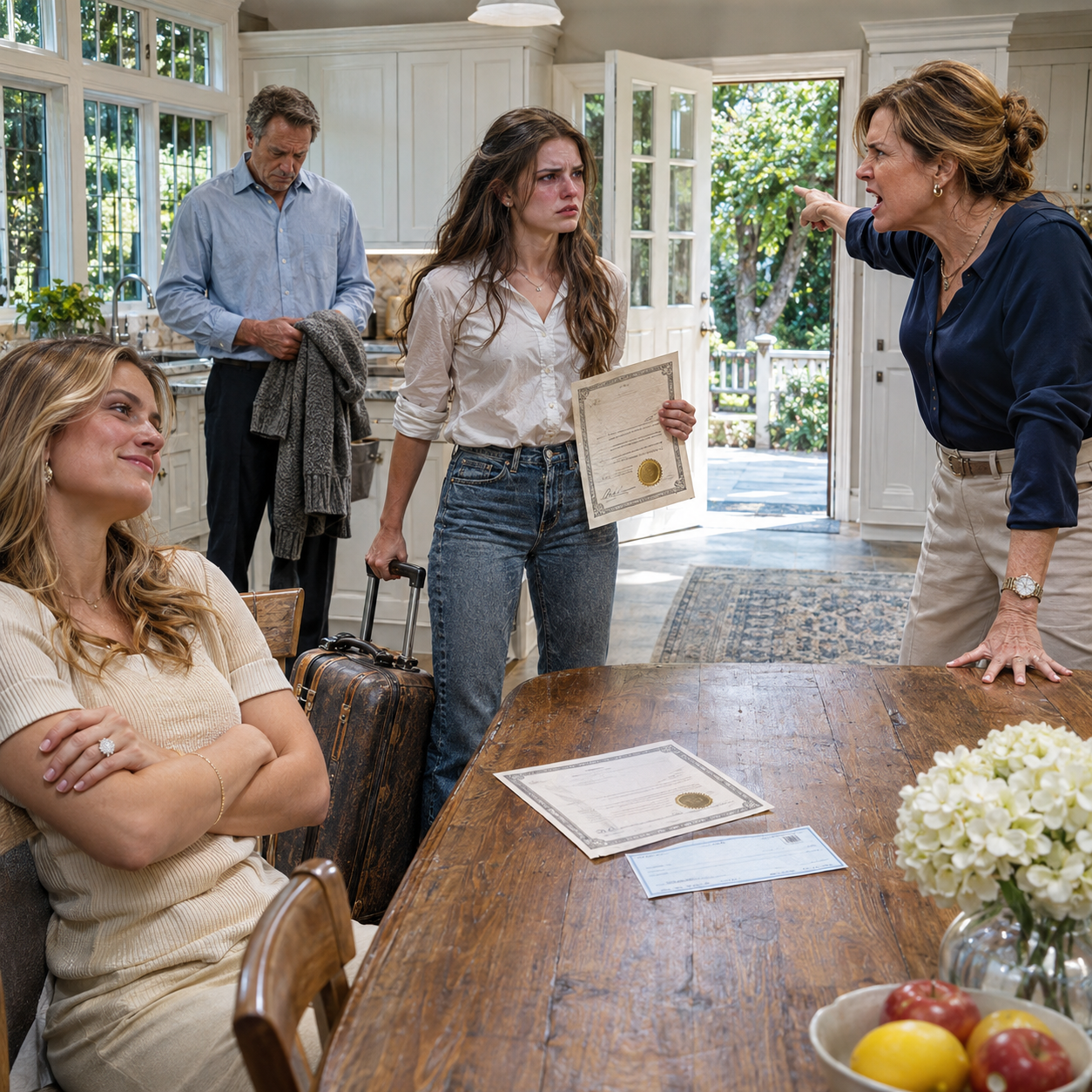
That Sunday, Mom placed the card beside a printed copy of my deed on our kitchen table. Amber sat beside her, displaying the engagement ring Marcus had given her, while Dad hovered in the doorway. “We’ve discussed this,” Mom announced, although nobody had discussed anything with me. “Amber and Marcus are starting a family, and you’ll be away at college. Obviously, the cabin makes more sense for them.”
I stared at her. “I bought it, Mom. With my money.”
She slid a check across the table. It was for $1,650. “That’s more than enough for your trouble,” she said, smiling as though she were offering me a gift. Amber folded her arms and explained that a responsible daughter would want her sister’s future children to have somewhere special to spend their summers. I looked toward Dad, waiting for him to say that the deed mattered, that my work mattered, that I mattered.
He lowered his eyes.
“The cabin isn’t for sale,” I said, pushing the check back.
Mom’s smile vanished. She stood so abruptly that her chair scraped across the tile, then pointed toward the front door. “Then get out of my house. Right now.”
I packed two bags while Dad retrieved my gray winter coat from the hallway closet. He stood holding it, unable to meet my eyes or place it in my hands. I left without the coat, drove nine hours through darkness, and reached the cabin at 5:10 the following morning. Colleen had hidden the key beneath a flowerpot and left a covered casserole on the kitchen counter.
I ate standing up, then curled beneath an old cedar-scented quilt as dawn spilled through the windows. My mother believed she had punished me by taking away my home. She didn’t know she had sent me to the one place where I could finally build a life beyond her control.
And neither of us understood what that gravel road would eventually be worth.
Part 2: I Built a Life Along the Forgotten Gravel Road
That first winter nearly broke me. The cabin’s roof leaked, the woodstove demanded constant attention, and my paycheck from the Sevier County Assessor’s Office barely covered groceries and repairs. I earned $11.20 an hour sorting property records, then came home to split firewood until my shoulders ached. Twice, the water pipes froze before dawn, forcing me to sit on the kitchen floor with a flashlight and hair dryer while ice collected along the windows. I cried once, not because I wanted to return to Fairfax, but because I was afraid I might have to.
Colleen arrived one Sunday carrying split oak and a space heater. She found me kneeling beside the stove, my hands red from the cold, and quietly began stacking wood. “Owning a home doesn’t mean you have to suffer alone,” she said. When I tried to repay her, she shook her head and asked whether I’d join her for supper instead. I began spending Sunday evenings at her farmhouse, where she served green beans she’d canned herself and never once asked why my parents hadn’t come to visit.
At nineteen, I joined Holston Valuation Group in Knoxville as a trainee real estate appraiser earning $14.50 an hour. I attended night classes at the University of Tennessee, drove hundreds of miles measuring buildings and examining property records, and earned my state license at twenty-two. By twenty-five, I was a certified general real estate appraiser, qualified to value commercial buildings, shopping centers, and sprawling tracts of land. My specialty became a question that sounded simple but could destroy an expensive dream: Could the owner legally reach the property?
I learned its importance while inspecting forty acres a retired man had purchased for $180,000. He planned to build his dream house there, but the access road crossed land belonging to someone else, and no permanent easement had been recorded. Without guaranteed access, his property was worth roughly one-third of what he’d paid. He sat across from me with trembling hands while I explained the survey, and I remembered my father’s warning about trusting paperwork rather than promises. I couldn’t change the facts, but I could make sure nobody misunderstood them.
Priya entered my life when she rejected one of my early commercial appraisal reports and marked the mistake in red. I corrected it, and she became the first professional mentor who judged me entirely by my work. At twenty-six, we opened Vance Valuation Group together, surviving our first year on small assignments and determination. Two years later, we employed twenty-three people and occupied the ninth floor of an office building in downtown Knoxville. Banks throughout East Tennessee trusted us with valuations that could determine whether million-dollar transactions succeeded.
Through it all, I kept my cabin.
I replaced the leaking roof with metal for $4,800, restored the porch, and planted flowers along the path to the creek. Every Friday evening, I drove out of Knoxville and returned to that quiet road, no matter how busy the week had been. Colleen still owned sixty-one acres behind my property, accessible by a private driveway crossing my land. Her late husband had created the drive decades earlier, but when she’d sold me the cabin, no formal access easement had been included in the deed.
I noticed the omission immediately. Colleen explained that the families in the hollow had always operated on handshakes, and I never challenged her use of the road. She had given me kindness when I had nothing, and I had no intention of turning a technicality into a weapon against her. At twenty-four, following attorney Howard Breslin’s advice, I transferred my property into Hollow Road Holdings LLC for liability and management purposes. The company used my business address, while I remained its owner.
Colleen died two winters before my mother appeared at my office. She was eighty-one, and her niece in Ohio inherited the sixty-one acres, eventually putting them up for sale. I prepared a valuation of my own property, documented the conflict of interest, and discovered that its location and control of the only existing driveway gave it an estimated value of $312,000. The property my mother had tried to take for $1,650 had become the key to something far more valuable than a weekend retreat.
Meanwhile, my family had remained almost perfectly silent. Every Christmas, Mom mailed a card containing the same message: “When you’re ready to be reasonable.” Dad sent a text on my birthday each June 3, always saying he was thinking of me, while Amber married Marcus without inviting me. None of them asked where I lived, what work I did, or whether I was happy.
I kept those cards in a shoebox, not because I expected an apology, but because they reminded me how easily a person could mistake silence for surrender.
Then, three Thursdays before that Monday morning, Howard called my office at 3:14 p.m.
“Nora,” he said, “we’ve received an easement request concerning the road to your cabin.”
I set down my pen. “Who’s asking?”
Howard paused before answering, and something in that silence made me straighten in my chair.
“Your sister.”
Part 3: A Familiar Signature Appeared on My Business Desk
Howard explained that Lakeine Hospitality Group was negotiating to purchase Colleen’s former acreage and build fourteen vacation cabins in the mountains. The developer needed a recorded easement across my private driveway before the financing could be approved. Their lender, Smoky Ridge Community Bank, had issued a $520,000 loan commitment, personally guaranteed by Diane Vance of Fairfax, Virginia. My mother had apparently decided to finance Amber’s latest dream, just as she had always financed every dream Amber brought home.
Then Howard read the compensation offer.
“Sixteen hundred and fifty dollars,” he said.
I closed my eyes. Ten years had passed, and my family had somehow arrived at exactly the same number they’d once offered for my entire cabin. The request was signed by Amber Drummond, managing member of Lakeine Hospitality Group, and addressed impersonally to Hollow Road Holdings LLC. My sister was asking me to surrender permanent access rights across my property without knowing she was speaking to me.
“Do you want me to reject it?” Howard asked.
I turned toward the window, watching traffic crawl along Market Street. I could have refused without another conversation, but I wasn’t interested in punishing Amber for existing, even after everything she’d done. What bothered me most was discovering that nobody had ever investigated where I’d gone. Mom had apparently assured Amber I’d sold the cabin years ago, and my sister had accepted that story without checking the public records.
“No,” I told Howard. “Arrange a meeting with the property owner at the company’s registered address. Monday morning, nine o’clock.”
After hanging up, I called Priya into my office and showed her the letter. She read it twice, then examined the signature and the amount without changing expression. “Is this the family you told me about?” she asked, and I nodded. She pulled out a chair, sat beside me, and said, “Then I think you should let the facts do the talking.”
That weekend, I drove to the cabin and sat on the porch long after sunset. The creek murmured beneath the trees, and the metal roof clicked softly as the air cooled. I unfolded a letter Colleen had written shortly before her death, the paper worn thin at its creases. She’d reminded me that I’d paid for every board of my home and should never allow anyone to convince me I was merely borrowing it. I slipped the letter into my pocket and thought about calling Dad, but after staring at his number, I put the phone away.
On Monday, I reached the office before seven. I placed a certified copy of my original deed on the conference table, its recording date of June 3 clearly visible beneath the county seal. Beside it, I arranged a survey showing my driveway in red, a valuation of the properties with and without legal access, and a memorandum explaining the lender’s requirements. Then I laid down the battered black pen I’d received on my first day at Holston Valuation Group, the same one I’d carried through years of night classes and long workdays.
Priya arrived at eight, followed by Howard, who asked whether I wanted him to conduct the meeting. “No,” I said. “I need you to listen and make certain everything is documented.” He examined the files, nodded, and took the chair beside Priya. Rosa checked the conference room once more before returning downstairs to greet our visitors.
At 8:58, the elevator doors opened.
My mother emerged wearing a navy blazer and pearl earrings, carrying a handbag that probably cost more than my first month’s wages. Amber followed in a cream-colored coat, holding her phone, while Marcus carried a leather portfolio against his chest. They stopped outside the conference room, where a brass nameplate identified the company’s managing partner. I watched Mom read it twice before turning toward the glass.
When Rosa opened the door, Mom’s practiced smile collapsed. She stared at me, glanced at the nameplate, and whispered, “Nora?” Amber stopped behind her, suddenly motionless, while Marcus looked from one woman to the other. Mom recovered first, smoothing her blazer and offering a thin smile. “Well, look at you, sweetheart. We didn’t know you worked here.”
“I own this business with Priya,” I replied.
“How wonderful,” she said quickly. “We’re actually here to see the owner of Hollow Road Holdings. We have a very important appointment.”
I rested my hand on the folder.
“You’re looking at her.”
For eleven seconds, nobody spoke. Amber’s expression shifted from confusion to disbelief, while Marcus slowly lowered his portfolio onto the table. My mother stepped closer, studying my face as though she could find the obedient eighteen-year-old she’d left behind. Then she smiled again, the same calculating smile she’d worn across our kitchen table ten years earlier.
“Well,” she said, “that certainly makes things easier. We’re family, after all.”
Amber nodded eagerly. “This is perfect, Nora. We can finally put everything behind us.”
Mom reached toward the deed. “It’s only paperwork, sweetheart. Let’s not make this complicated.”
I placed my palm over the document before she could touch it. Marcus opened his portfolio and began arranging financial statements, explaining their proposed development with confident gestures. Then I noticed an entry that changed the weight of everything sitting on that table.
My mother had borrowed $178,000 against the house in Fairfax.
She wasn’t simply helping Amber invest in a business.
She had placed her own home at risk to make the deal happen.
Part 4: The Truth My Mother Couldn’t Bargain Her Way Around
Marcus began describing the resort, fourteen guest cabins surrounding a landscaped courtyard, with a parking area and private gate. He repeatedly called the arrangement a partnership, promising that everyone would benefit once tourists started arriving. Mom watched me carefully, waiting for the moment I’d become uncomfortable enough to agree. But Priya had already reviewed their proposal, and Howard had arranged for the bank’s lending officer, Janet Cole, to join us by speakerphone.
“Good morning,” Janet said. “For the record, financing requires a legally recorded access easement across parcel 14B. At present, no such easement exists.” Marcus leaned forward, asking whether the bank could extend its commitment if negotiations took longer. Janet explained that the commitment expired at five that afternoon, the interest-rate lock could not be extended, and their financing contingency had already been waived. “Without legal access, we cannot release the loan,” she finished.
My mother’s fingers tightened around the back of a chair.
I pushed my valuation memorandum across the table. The first figure showed my cabin property at $312,000, while the next listed Colleen’s former sixty-one acres at approximately $94,000 without recorded access. With secure access, that larger parcel could be worth roughly $229,750. Amber examined the numbers, looked at Marcus, and finally seemed to understand why their lender had insisted on a signed agreement.
“You’re going to ruin everything over a road?” she demanded.
“No,” I answered. “I’m refusing to sign away something you haven’t treated seriously.”
Mom sat down, her expression shifting from frustration to fear. “Nora, you know we never meant for things to turn out this way. Families have disagreements, but we should be able to settle this privately.” I looked at her hands resting on the table, remembering those same fingers pushing a $1,650 check toward me. “You said the deed was only paper,” I replied. “Now the bank needs that paper, and suddenly it matters.”
She opened her mouth, but I continued. “You told me I’d never use the cabin. I’ve gone there almost every Friday for ten years. You said family should handle things quietly. That’s what I’m doing.”
Marcus tried one final negotiation, promising to reconsider their payment if I would sign before the bank closed. I explained that neither my cabin nor the access rights were available to them under the terms they’d proposed, and that I would not negotiate a permanent easement under an artificial deadline. Amber whispered my name with the old impatient tone she used whenever she wanted something handed to her. For the first time in my life, I didn’t feel compelled to respond.
At five that afternoon, the bank’s commitment expired. Two days later, the estate terminated the land purchase contract, and because Marcus had waived the financing contingency, his $22,000 earnest-money deposit was forfeited. The money had come from the funds Mom borrowed against her Fairfax home, leaving her with a debt and no mountain investment to show for it. I hadn’t filed a complaint, called their creditors, or demanded a penalty. I had simply declined to give away my property.
The estate soon relisted the land, this time stating honestly that access would require negotiation with the adjoining owner. When the agent called, I told her I was willing to discuss a properly documented easement with a future purchaser whose plans respected the land and its neighbors. I hadn’t forgotten Colleen’s kindness, and I had no wish to turn the road into a permanent barrier. What I refused to do was let my family define my obligations without ever acknowledging my rights.
Three weeks passed before a package arrived at my office. Inside lay a gray wool coat, the one Dad had held in the hallway when Mom threw me out. Its fabric smelled faintly of cedar, and tucked into the pocket was a small piece of paper bearing his familiar handwriting.
I should have handed it to you.
I sat beside the conference-room window, holding that note until the afternoon light faded. Of all the things my family could have sent, Dad had chosen the one object that remembered his silence. I wrote back that Saturday, and although neither of us pretended the past had disappeared, we slowly began speaking on the third of every month. His apology arrived ten years late, but at least he had finally found the courage to offer one.
In December, Amber sent a message from an unfamiliar number.
“I didn’t know it was you.”
I studied those words for a long time. She hadn’t known who owned the road because she’d never cared enough to discover where her younger sister had gone. I answered, “I know. Drive safely,” and left it there.
My mother never apologized. Perhaps she still believed she’d been wronged, or perhaps admitting the truth would require questioning everything she’d taught herself about me. I no longer needed to know which explanation was correct.
On the first Friday of November, I drove to the cabin after work and stepped onto the porch just as the sun disappeared behind the trees. The metal roof clicked in the cooling air, the creek moved over its familiar stones, and warm light spilled through the window onto the gravel. I took Colleen’s old letter from my pocket and read her reminder that the home belonged to the person who had worked for it.
Then I looked down the road.
Ten years earlier, I’d arrived there at dawn with two bags, almost no money, and no idea how I would survive. Now I owned the little house, the business I’d built, and something far more precious than either: the freedom to decide who could enter my life.
My mother had once pointed toward her front door, convinced she was showing me how little I mattered. She never understood that by forcing me outside, she’d given me the chance to discover my own worth.
I folded the letter, went inside, and closed the door softly behind me.
This time, I wasn’t leaving home.
I was home.
THE END.
All characters and events in this story are fictional, created for storytelling and entertainment purposes. Thank you sincerely for reading. Your feedback and support are invaluable and motivate me to continue sharing more stories with you.