## Part 2: The payments stopped, and my family invented another damaging lie.
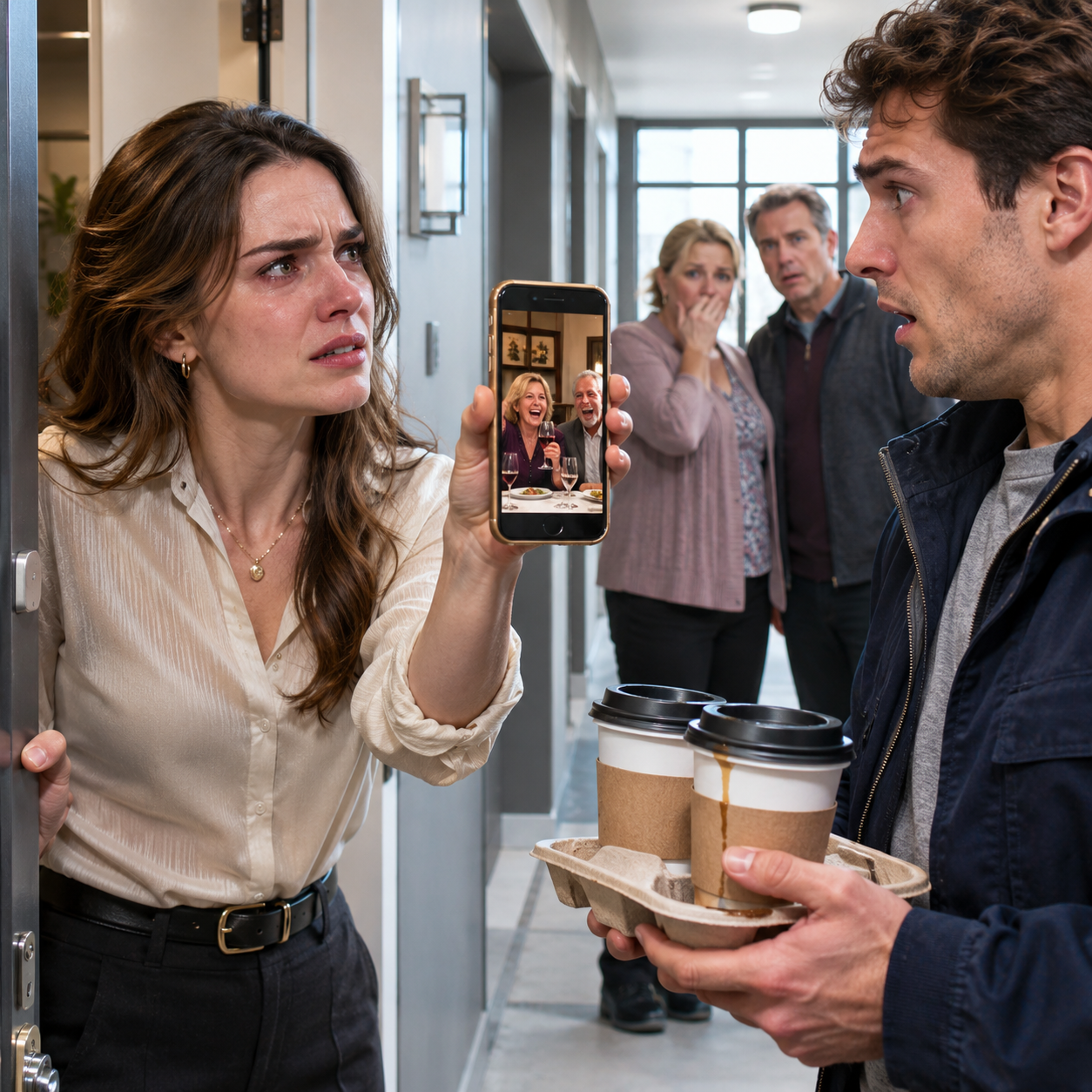
Evan stared at the screen until I stopped the video. “Everybody was joking,” he muttered, glancing toward my neighbor’s closed door. “Dad thinks you act like you’re better than us because you have that office job.”
“I never said I was better than anyone. I asked why three adults still needed me to support them.”
His face hardened. “You don’t know what it’s like living at home.”
“I know you’re twenty-eight. I know I paid for courses you never finished. And I know you laughed while Mom explained how she scares me into giving her money.”
He shifted the coffees into one hand and reached for his phone. “Just send this month’s rent. We can work everything else out afterward.”
I shook my head.
“Claire, it’s due today.”
“I know.”
“So you’re punishing us?”
“No. I’m refusing to pay for people who call me useless behind my back.”
He looked at me for several seconds, then lowered his voice. “Mom’s going to tell everyone what you’re doing.”
“Then I’ll tell them why.”
He left the coffees on the hallway floor before walking away. I picked them up, poured both into the sink, and sat at my desk with my laptop open.
At 9:07 a.m., I canceled the recurring transfer.
The confirmation appeared immediately, but I read it three times. My chest was pounding as though I’d committed something terrible instead of deciding what to do with my own paycheck.
I emailed my parents and Evan. Household support was ending immediately, although I would honor the remaining month of Evan’s car insurance that I’d already promised. I would not pay rent, utilities, or new emergency expenses, and I would discuss practical matters by email only.
At four o’clock, the money was still in my account. I stared at the balance, frightened by how unfamiliar it felt to have enough money for myself.
Sunday afternoon, my cousin sent me a screenshot from our extended family’s group chat.
Mom had written that I was refusing to repay money my parents had generously lent me during college. She claimed they’d sacrificed for years to give me a good life, only to be abandoned when they needed help.
I read her accusation twice, waiting for some sign of shame.
There was none.
Before responding, I secured my finances. I changed banking passwords, checked recovery contacts, strengthened account authentication, and reviewed my credit reports. Nothing suspicious appeared, but I wasn’t willing to leave my financial security dependent on trust that had already been broken.
Monday brought an unexpected phone call.
“Miss Bennett? This is Arthur Keller, your parents’ landlord.”
My stomach tightened.
He explained that Mom had asked him to contact me about the missing rent payment. I stepped into an empty conference room and asked one question.
“Am I listed on their lease?”
“No, ma’am. Only as an emergency contact.”
“Then I’m not responsible for their payments.”
“I understand,” he said. “But they also asked whether you’d be willing to sign their renewal as a guarantor. Their current lease ends in three months.”
I gripped the conference table.
They weren’t merely trying to restore the money I’d been sending. They were attempting to make my support a legal obligation without discussing it with me.
“Please document that I will not sign or guarantee anything.”
Mr. Keller agreed without argument.
That evening, I answered Mom’s accusation in the family group. I explained that I’d paid for my own education through work and student loans, and that my parents had received seven years of voluntary financial support from me.
I attached three bank records with account information concealed, showing transfers from different years.
Mom replied almost immediately. “Sharing private financial information says plenty about your character.”
My cousin answered, “Denise, you told us Claire owed you money. These show the opposite.”
Aunt Paula insisted that family relationships couldn’t be measured in bank statements.
“Then stop measuring mine by whether I send money,” I wrote.
Nobody replied.
Two weeks later, my parents sold Dad’s fishing boat to cover the overdue rent. Mom sent me a photograph of the boat attached to a stranger’s truck.
“Your father worked hard for that,” she wrote.
I sat inside my aging sedan, looking at the broken passenger window that I’d postponed repairing, and answered, “I’m glad you found a way to pay.”
Her response was a single sentence.
“You’ve become cold.”
I cried in my car before driving home.
But I didn’t send a dollar.
Then Evan requested that I keep paying his phone bill while he searched for work. I helped transfer the line into his name and gave him the cutoff date, along with information about cheaper plans.
Six weeks after the video, the boat money had run out. Mr. Keller had offered my parents a payment arrangement and the option of moving when their lease expired.
Instead of accepting responsibility, Mom forwarded his message with four words.
“Look what you’ve done.”
Three days later, Aunt Paula emailed me an invitation titled FAMILY RESOLUTION.
My parents wanted another meeting.
And this time, they wanted witnesses.
## Part 3: A family meeting revealed the evidence nobody could explain away.
I joined the video call with a notepad beside my laptop. On it, I had written three sentences: I will not resume payments. I will not guarantee a lease. I will not argue about whether the video happened.
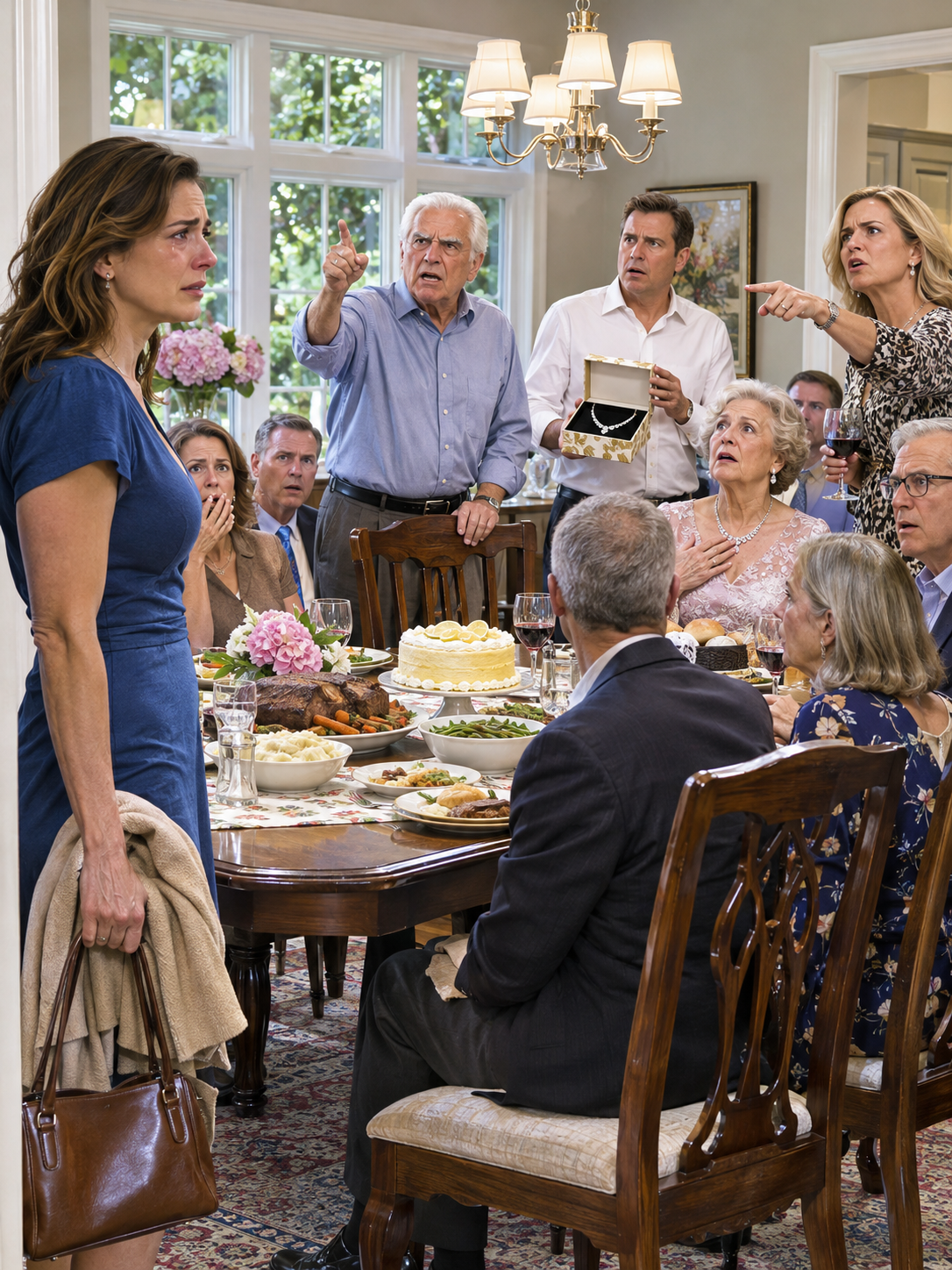
Mom and Dad sat at the same dining table where they’d laughed about me. Evan occupied the chair I’d purchased for him, while Aunt Paula and two cousins appeared in separate windows.
Paula began with a weary smile. “Everyone has made mistakes. We need to move forward.”
“What mistake did I make?” I asked.
She looked annoyed. “Claire, that attitude isn’t helping.”
Dad interrupted before I could respond. He explained that if I covered the outstanding balance and signed the renewed lease as guarantor, the family would gradually take more responsibility.
Mom held up a handwritten budget.
I asked how much each adult could contribute the following month.
Dad said his repair jobs were unpredictable. Mom said she was considering returning to regular employment. Evan mentioned several interviews.
No one gave me a number.
“I’m not paying the balance,” I said. “And I’m not signing.”
Mom lowered her eyes, preparing an expression I’d known since childhood. “After everything we’ve done for you.”
One cousin leaned forward. “Denise, did you actually lend Claire money for college?”
Mom hesitated.
“I won’t have every little thing I’ve done for my daughter put on trial.”
Dad accused me of humiliating the family by sharing financial records. Paula shook her head and said the whole disagreement had grown out of a silly private video.
I looked at her square on the screen.
“Do you remember what you said in that video, Aunt Paula?”
She shifted in her chair. “Things sound different without context.”
“Then everybody deserves to hear the context.”
I clicked Share Screen.
Dad’s voice came first, calling me a pathetic failure. Evan laughed and promised I’d send the money as always. Paula’s remark about my uselessness followed, and then Mom raised her glass.
“If she ever gets difficult, I tell her we might lose the house. Works every time.”
I stopped the playback.
Nobody moved.
The silence was so complete that I could hear the refrigerator humming behind me.
Finally, Dad said, “That was a private conversation.”
“So was my financial support,” I answered.
My cousin looked directly into her camera. “Until Denise told everyone Claire owed you money.”
Mom turned toward Evan. He stared down at the table.
Paula tried again. “It was a joke taken out of context.”
My other cousin asked quietly, “What context would make any of that kind?”
No one answered.
I had imagined this moment for weeks. I’d expected relief, perhaps even satisfaction, when everyone finally understood. Instead, I felt the enormous sadness of watching people I loved struggle to explain why humiliating me had seemed reasonable.
Mom adjusted her blouse and cleared her throat. “Fine. We said things we shouldn’t have said.”
She paused.
“Can you at least help with this month’s rent? Then we can work on our relationship.”
I looked at her, stunned by how naturally the request followed her apology.
“We can work on our relationship without money, Mom.”
Her expression changed. She glanced at Dad, waiting for him to rescue the conversation, but he said nothing.
“I hope you figure out a workable plan,” I told them.
Then I ended the meeting.
The consequences unfolded through ordinary decisions rather than dramatic confrontations.
My parents couldn’t qualify to remain in their expensive three-bedroom rental without my contributions. Mr. Keller accepted a written arrangement for the remaining balance, and they moved into a modest two-bedroom apartment across town.
Mom sent pictures of their dining table listed for sale. I recognized the burn mark near the corner where I’d once placed a hot Thanksgiving dish.
“Hope this makes you happy,” she wrote.
It didn’t make me happy. I wasn’t celebrating their smaller home. I was relieved that their housing finally cost what they could afford.
Evan couldn’t stay with them anymore because Dad needed the second bedroom for tools and Mom’s bookkeeping work. My brother called from a friend’s apartment, asking to stay with me for six weeks.
“I can help with groceries,” he offered.
“Evan, you need a job and somewhere you can afford.”
“I don’t have enough money.”
“I know. That’s what you have to solve.”
He went quiet, then hung up without calling me selfish.
Within a month, he found evening work loading deliveries and rented a room in a shared house near a bus route. When he needed a reference, I agreed to confirm that I knew him, but not to guarantee his rent.
He eventually sold his car and began addressing the outstanding balance from his abandoned college program. His circumstances were difficult, and I didn’t take pleasure in them. I simply stopped treating his difficulties as bills that belonged to me.
Even Aunt Paula helped my parents move, bringing boxes and used furniture instead of offering to cover their expenses. Apparently, she understood the burden of an open-ended financial commitment when someone asked her to make one.
One Friday evening, I found myself in the same used-car dealership I’d visited eighteen months earlier.
The little hatchback was still the kind of car I wanted. Nothing luxurious, just dependable transportation with working windows and room for groceries.
The salesman handed me the keys.
My phone vibrated with another picture from Mom, showing unpacked boxes in her apartment. For one terrible second, I felt guilty about the money I’d spent on myself.
Then the salesman smiled.
“Ready to take your car home, Ms. Bennett?”
I slipped my phone into my purse.
“Yes,” I said.
And this time, I drove away in it.
## Part 4: The final betrayal taught me what forgiveness truly required.
Six months after Mom sent the video, I could finally finish a workday without stepping into a stairwell to answer a family emergency. My savings were growing, my manager had recommended me for a promotion, and I could buy groceries without calculating whether my parents might need the money first.
I started seeing a counselor because understanding what my family had done didn’t automatically erase the fear of disappointing them. Sometimes I still reached for my phone when a bill arrived, instinctively preparing to help someone else before checking my own needs.
I missed them, too.
Dad had taught me how to ride a bicycle. Mom knew exactly what soup I wanted when I was sick. Evan and I had once spent entire evenings laughing at terrible movies.
Those memories were real.
So was the video.
One afternoon, Evan sent me a message without mentioning money.
“I was wrong to laugh. I was wrong to say you’d always pay. You don’t have to answer, but I’m sorry.”
I read it three times, searching for the request that usually followed every affectionate word from my family.
There wasn’t one.
A few weeks later, we met for coffee. Evan arrived wearing a faded work jacket, with tired eyes and rough hands from unloading deliveries. When the waitress brought our drinks, he pulled out his own wallet.
“Work’s harder than I thought,” he admitted.
“I believe you.”
He smiled faintly. “I guess I should’ve tried it sooner.”
We didn’t become close again that afternoon. But when we said goodbye, neither of us owed the other anything, and the possibility of rebuilding something felt more genuine than years of purchased gratitude.
Dad eventually began sending birthday greetings and occasional updates about his repair work. Mom shared photographs of her apartment and bookkeeping projects. I answered when I wanted to, and I ended conversations whenever they drifted toward financial hints.
Then one Sunday, Mom invited me to lunch.
“Just you and me,” she wrote. “I miss my daughter.”
I studied those words for a long time before agreeing.
We met at a small diner halfway between our homes. Mom wore her familiar blue cardigan, and for the first twenty minutes we talked about ordinary things: her clients, my work, the changing leaves outside the windows.
I found myself relaxing.
Then she folded her napkin and looked down at the table.
“Claire, I regret that video.”
I set down my coffee.
“Do you regret what you said, or that I saw it?”
Her fingers tightened around the napkin. She didn’t answer immediately, and for once I didn’t rush to fill the silence.
“Both,” she finally whispered.
I could see how difficult the admission was for her. It wasn’t a perfect apology, but it was the first time she’d acknowledged that her cruelty existed independently of my reaction.
“I wanted you to be proud of me,” I said. “All those years, I thought helping you would make you see me as somebody worth loving.”
Mom’s eyes grew wet.
“I’ve always loved you.”
“Then why did you laugh?”
She stared at the table.
“I don’t have a good answer.”
I nodded slowly. I hadn’t expected an answer that could repair seven years, but I appreciated that she hadn’t invented another excuse.
For the first time, lunch began to feel like two people speaking honestly instead of a parent negotiating with her financial safety net.
Then the check arrived.
Mom reached for her purse and mentioned that the lease on their new apartment would be coming up for renewal. The property manager had apparently suggested that a stronger guarantor might improve their options.
She didn’t finish the sentence.
She didn’t need to.
I placed my bank card beside my half of the bill.
“I’m not signing another lease, Mom.”
Her eyes filled again, but the expression was different now.
“I thought we were making progress.”
“We are,” I said. “We’re having lunch together. That’s what I agreed to.”
She waited, perhaps expecting me to explain, soften my refusal, or offer a smaller financial favor to protect the fragile peace.
I waited, too.
For years, our disagreements had ended when I made myself uncomfortable so nobody else had to be. This time, I simply sat across from my mother until she opened her wallet.
We paid separately.
Outside, the autumn air smelled of wet leaves, and cars hissed along the road beyond the parking lot. Mom stood beside my hatchback, studying it with an expression I couldn’t quite read.
“It’s a nice car,” she finally said.
“Thank you.”
“I’m glad you got something you wanted.”
I didn’t know whether she meant it entirely. But she had said it without asking what the car had cost or suggesting that I could have used the money elsewhere.
She hugged me briefly, then walked toward her own vehicle.
I watched her go, feeling sadness and relief occupying the same space inside my chest.
As I opened my car door, my phone vibrated with a message from Evan.
“Got promoted to shift supervisor. First full paycheck comes Friday. Coffee’s on me next time.”
I smiled.
For seven years, I had believed that saying no would destroy my family. Yet the truth was more complicated. My parents had learned to live within their means, Evan was beginning to support himself, and I was discovering that love didn’t have to be measured in transfers.
I still didn’t know whether Mom would ever stop testing my boundaries. I didn’t know whether Dad would apologize for that night or whether Paula would admit how cruel her words had been.
But I no longer needed every answer before allowing myself to live.
I slid behind the wheel and started the engine. The passenger window worked perfectly, and the heater warmed my fingers as I pulled away from the diner.
At a red light, I remembered my father calling me a pathetic failure while sitting in a home my money had helped preserve.
I thought of the tuition I’d paid, the car I’d postponed, the nights I’d worked late, and the countless times I’d mistaken obedience for love.
Then I looked at my reflection in the rearview mirror.
There was no triumphant stranger staring back. Just a thirty-two-year-old woman who had finally stopped believing she needed to earn her place in her own family.
The light turned green.
I drove toward the apartment I paid for myself, carrying my own groceries, my own keys, and enough money in the bank to handle whatever tomorrow brought.
My parents’ bills were theirs. My brother’s choices were his. Their opinions about me were theirs to examine.
And my life, after seven years of trying to purchase a love that should never have carried a price tag, finally belonged to me.
THE END.
All characters and events in this story are fictional, created for storytelling and entertainment purposes. Thank you sincerely for reading. Your feedback and support are invaluable and motivate me to continue sharing more stories with you.