### Part 2: My Refusal Forced Everyone To Reveal Their Real Plans
I laid the paper beside my plate and asked Amy when she had decided this arrangement. She exchanged a glance with Sarah before answering. “We talked about it around Thanksgiving. You always say you love spending time with the children.” I reminded her that loving them wasn’t the same as agreeing to provide around-the-clock childcare. My mother sighed and said she had hoped we could enjoy one family dinner without arguing.
Aunt Lisa reached across the table and examined the itinerary. “Helen, did you know Meredith was being assigned to the children?” My mother admitted that she’d heard something about it, although she insisted she believed everyone had discussed the details. I asked her when that conversation could possibly have happened. She began rearranging the serving dishes, an old habit whenever someone asked a question she didn’t want to answer.
Sarah leaned forward. “We just thought this was something you could do for the family. Amy and I haven’t had a proper vacation in years.” I explained that my company was handling a major merger and that taking the entire week off would require careful arrangements. “But you already booked the vacation,” Sarah said, sounding confused. “Obviously, we assumed you’d arranged your work schedule.”
“I booked rooms for a family holiday,” I replied. “I didn’t volunteer to work as a nanny.”
Amy pulled the paper toward her. “Fine. Maybe we should have asked, but we’ve already paid for the excursions. The children are excited, Mom’s counting on this trip, and nobody can get refunds now.” She spoke with the strained patience of someone trying to explain an obvious obligation. When I suggested they take turns watching their own children, she said the adults had planned this vacation specifically because they wanted time away from parenting.
That was the first time anyone had said it plainly.
I opened the calculator on my phone and worked out what a professional caregiver might reasonably charge for five children over seven days, including overnight responsibility. Even a conservative estimate came to several thousand dollars. I showed Amy the figure, not because I particularly wanted their money, but because I wanted them to understand what they were asking. She studied the screen and said, “Meredith, we’re not paying you to be with your own family.”
“Then you should be comfortable taking care of your own children,” Aunt Lisa said.
Daniel finally spoke. “There’s probably a compromise. Maybe Meredith could do the mornings, and we could hire somebody for the afternoons.” Sarah turned toward him sharply. “With what money? You know what December did to our savings.” He lowered his eyes, and for a moment I saw how much strain was hiding beneath their confident plans. They weren’t simply assuming my help would be convenient; they had built a vacation they couldn’t comfortably afford without it.
I might have softened if they’d acknowledged that honestly. Instead, Amy said, “It’s different for you, Meredith. You don’t have a household depending on you. You can take time off whenever you want.” I looked at her across the dining table, remembering the evenings I’d worked until midnight after collecting her children from school, and the emergency savings I’d used to secure the lodge.
“My responsibilities aren’t imaginary because I don’t have children,” I told her. “And my time isn’t worth less than yours.”
Mother’s expression tightened. “You make everything about money and work. We just wanted a happy birthday.” I reminded her that I’d paid most of the deposit and spent hours planning the trip she wanted. She looked wounded, and that hurt more than Amy’s irritation because I had sincerely wanted to do something beautiful for her.
I excused myself before dessert. In the hallway, Aunt Lisa helped me into my coat and squeezed my shoulder. “You don’t have to prove that you love them by letting them use you,” she said quietly. Through the doorway, I could see my father gathering the empty plates, unwilling to look in our direction. I drove home with the itinerary folded inside my purse.
The next morning, I called Silver Pine Lodge. A patient reservation manager explained that the deposit was partially nonrefundable, but the remaining charges could be transferred to separate guest accounts if the other adults accepted responsibility. She also confirmed that the resort had a licensed childcare program, although its rates were substantial and overnight care was not available. I requested the details in writing and forwarded everything to my family.
My email was brief. I would not supervise the children during the vacation. I would also not pay any additional group expenses, and everyone needed to settle their share of the existing deposit by the following Friday. I offered to help transfer the reservation, but made it clear I would not be occupying the cottage.
Amy called within ten minutes. “You can’t be serious. We’ve organized everything around you.” I told her I was serious, and she asked whether I understood how much trouble I was creating. I looked at the calendar on my desk, where seven vacation days had been marked in blue, and realized that not one person had asked what I wanted to do with them.
That evening, Joanne found me looking at flight schedules during our lunch break. “Spain?” she asked, reading the destination on my screen. I told her I had always wanted to see Barcelona and Madrid but had never managed to get away long enough. She pulled up a chair and helped me compare hotels. By the following afternoon, I’d booked ten days in Spain using money I had deliberately set aside for myself.
My boss approved the leave after we arranged coverage for the merger. “You haven’t taken a real vacation in three years,” she said. “Go see something that doesn’t have a balance sheet attached to it.” When I told Aunt Lisa, she laughed and asked whether she could borrow my itinerary someday. She was the only relative I told about Spain.
The messages from everyone else became more insistent as departure approached. Amy said I was punishing the children. Sarah wrote that family obligations couldn’t be abandoned just because they were inconvenient. My mother sent a photograph of herself standing beside the winter coat she’d bought for Colorado, accompanied by a message saying she hoped I wouldn’t spoil the birthday she’d been looking forward to.
I called her that night. “Mom, you can still go. I’m not stopping anyone.” She was quiet for a while before admitting that Amy had told her the childcare arrangements were settled. “I should have checked with you,” she said, almost too softly to hear. Then she added, “But couldn’t you help just this once?”
“We’re past just this once,” I answered.
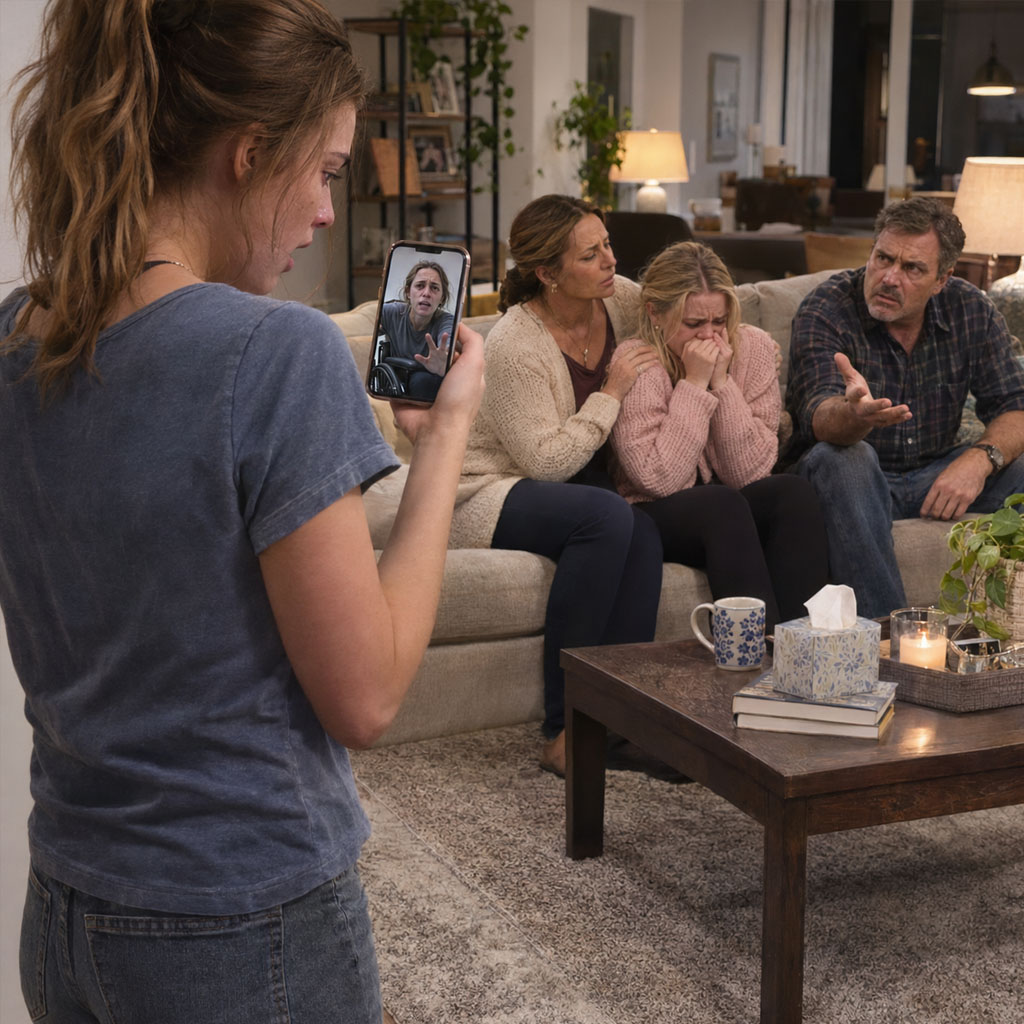
Three evenings before my flight, my parents, Amy, Daniel, and Sarah arrived at my condominium. I opened the door after seeing them through the peephole, but asked them to remain in the living room rather than spreading through the apartment as they usually did. Amy noticed my suitcase standing near the bedroom doorway. “You’re actually going somewhere?” she asked. I told her I’d made other plans, which seemed to upset her more than my refusal itself.
Sarah explained that hiring childcare would consume most of their spending money. Daniel said they’d considered canceling their ski lessons but were already committed to several reservations. My father stood near the window, listening while Amy argued that I was placing unnecessary stress on the children. Then Sarah suggested that my recent behavior showed I might be emotionally overwhelmed by work.
“I think we should be concerned,” she said. “You’ve suddenly stopped helping with the kids, you’re avoiding everyone, and now you’re leaving town without telling us where.”
“I’m taking approved vacation leave,” I replied. “None of that makes me incapable of making my own decisions.”
Sarah hesitated, then said, “If you’re becoming unstable around the children, we may need to speak to someone. Even child protective services.”
My father turned away from the window. “Sarah, stop.”
She tried to explain that she was only expressing concern, but he interrupted her. “These are your children. Meredith hasn’t agreed to care for them. You can’t threaten her with child services because you don’t like her answer.”
Daniel put a hand on Sarah’s arm. Her face flushed, and she looked down at the rug. Amy began crying, saying they were all exhausted and had been counting on the trip for months. For the first time, I could hear how desperate they were beneath their anger, but desperation didn’t make their demands fair.
I told them I would communicate about the reservation and outstanding payments by email. I wouldn’t discuss childcare again, and I expected no more threats or unannounced visits. Dad nodded, then quietly asked everyone to leave. After the elevator doors closed behind them, I sat at the kitchen table, opened the resort confirmation, and finished transferring the remaining payment responsibilities as agreed with the reservation manager.
Two days later, I boarded a plane to Barcelona.
### Part 3: Across The Ocean I Finally Learned What Family Meant
My first morning in Spain began with sunlight crossing the tiles of a small hotel room and the smell of fresh coffee drifting upward from the café below. There was no frantic call about a missed school bus, no request to collect a sick child, and no family schedule waiting for my approval. I spent an hour eating breakfast, then walked through streets filled with balconies, flowerpots, and people who seemed in no particular hurry. For the first time in years, I wasn’t measuring the day against somebody else’s needs.
I visited museums, stood beneath the extraordinary ceiling of the Sagrada Família, and ate lunch outdoors even when I was dining alone. In Madrid, I spent an entire afternoon looking at paintings I had previously seen only in books. I met a retired American couple on a walking tour, and they invited me to dinner after discovering we were staying at the same hotel. I told them a little about my family and the vacation I’d decided not to take.
The woman, Margaret, listened without interrupting. “Our oldest daughter used to handle everything for us,” she said eventually. “Appointments, holidays, birthday parties. We thought we were close because she was always helping.” Her husband nodded and added that it had taken their daughter moving across the country for them to understand how little they’d asked about her own life. Their honesty stayed with me long after dinner ended.
I hadn’t turned my phone off completely, but I had muted the family conversation. Aunt Lisa occasionally sent me short updates, reassuring me that the children were safe and their parents had rearranged the resort plans. She didn’t pass along the arguments or ask me to resolve them. That simple respect made it easier to enjoy the days I’d given myself.
When I returned to Chicago, a stack of messages revealed what had happened in Colorado. Amy and Sarah had arranged professional childcare for two days, but the cost was higher than expected, and the caregiver couldn’t provide overnight supervision. After trying to divide the remaining responsibilities, the parents shortened several excursions and canceled the wine tasting. The vacation continued, but it was not the uninterrupted adult holiday they had imagined.
My mother had still enjoyed her birthday dinner. Aunt Lisa sent me a photograph of her sitting beside my father, smiling over a small cake decorated with white chocolate snowflakes. Behind her were all five grandchildren, crowded together and looking delighted. The picture stung a little, but I was relieved to see that my absence hadn’t destroyed the occasion everyone had insisted depended on me.
On my third day back at work, Dad asked whether we could meet for lunch. We chose a quiet diner halfway between his house and my office, the kind of place where he used to take me for pancakes after my childhood dentist appointments. He arrived early and was sitting with both hands wrapped around a coffee cup when I walked in. Before I could ask about the trip, he slid an envelope across the table.
Inside was a check covering the remaining share of the reservation deposit that the family owed me. There was also a handwritten breakdown of the expenses, including the amounts Amy and Daniel had already transferred. “I should have made sure this was settled months ago,” he said. “You shouldn’t have been chasing us for money.”
I thanked him, but neither of us reached for our menus. Dad turned his cup slowly against the saucer before telling me that he’d known the childcare arrangement was being discussed before the dinner. He’d assumed I’d eventually agree because I always had. “When you started saying no, I thought you were upset about the money,” he admitted. “It took me longer than it should have to understand you were upset because nobody asked.”
I watched him struggle with the next sentence. My father had always been a decent, hardworking man who disliked conflict so much that he sometimes allowed unfairness to continue rather than interrupt it. He told me he was sorry for standing by while everyone treated my generosity like a family resource they were entitled to spend. “You deserved better from all of us,” he said.
I hadn’t expected an apology, and for several moments I couldn’t think of an answer. Finally, I told him that I missed feeling like a daughter instead of a solution to other people’s problems. His eyes filled, and he reached across the table for my hand. We stayed there until the waitress came with the check, talking about Spain, his retirement garden, and things we hadn’t discussed in years.
The others took longer.
Amy eventually acknowledged that she’d planned the trip beyond what she could comfortably afford. Her youngest had started kindergarten, her small home-based business was struggling, and she’d been desperate for a break that didn’t come with more responsibilities. “I thought you wouldn’t mind,” she told me during a phone call. “You always made taking care of them look easy.” I explained that I had made it look easy because I loved her children, not because I had endless time or energy.
She apologized, though I could tell she still wished I had helped. We agreed that I would see the children when we made plans together, rather than whenever their parents needed coverage. A few weeks later, I took my niece to a museum on a Saturday afternoon. Amy packed her daughter’s lunch, arranged the transportation, and thanked me afterward without asking for another favor.
Sarah remained angry. She had told several acquaintances that I had behaved unpredictably, and one of those comments eventually reached me through a mutual friend. I asked her in writing to stop making claims about my emotional stability and explained that further false statements would be documented and addressed through appropriate channels. Daniel called to say he understood, and after that, Sarah and I maintained polite distance at the few family gatherings we both attended.
Mother’s adjustment was slower and more complicated. She still occasionally commented that my professional life seemed exhausting, but she stopped volunteering me for childcare. One Sunday, she called simply to ask whether I’d enjoyed the art museums in Madrid. We talked for nearly half an hour, and she didn’t mention Amy, Sarah, or anyone’s schedule. It was a small beginning, but I appreciated it.
Spring arrived with good news at work. The merger closed successfully, and I received a promotion that would allow me to supervise a larger department while delegating some of the daily emergencies that had dominated my schedule. Joanne took me out for dinner to celebrate. When she asked what I planned to do with my bonus, I told her I was considering painting lessons and another trip abroad.
“You’ve become dangerously interesting,” she said, raising her glass.
I laughed because for once I wasn’t embarrassed to admit I wanted something simply because it would make me happy.
I started a Saturday painting class, bought an absurdly comfortable reading chair, and adopted a gray rescue cat named Olive. My calendar still included birthdays, family dinners, and afternoons with my nieces and nephews, but it also held appointments I’d made for myself. When someone asked for a favor, I checked whether I genuinely had the time before answering. Sometimes I said yes, and sometimes I didn’t.
Several months after Colorado, Dad invited me to breakfast with him and Mom. He mentioned that Amy was planning a summer barbecue and had asked whether I’d come. I said I’d love to, provided nobody had quietly assigned me responsibility for the children’s entertainment. Dad smiled and said he’d already told Amy to make sure there were enough adults supervising the kids.
That Saturday, I arrived carrying a homemade peach pie instead of an overnight bag filled with children’s supplies. My nieces and nephews ran to greet me, and I hugged them all before joining my parents on the patio. For the first time in a long while, nobody asked me to do anything except sit down and enjoy the afternoon.
I looked around the table at the people I loved, aware that some things between us were still unfinished. My family hadn’t become perfect, and I hadn’t stopped caring about them. But I had finally learned that belonging to a family shouldn’t require surrendering ownership of my own life.
When my youngest nephew asked whether I’d come watch his soccer game the following weekend, I checked my calendar and smiled.
“I’d really like that,” I told him.
And this time, I meant yes.
The End .
All characters and events in this story are fictional, created for storytelling and entertainment purposes. Thank you sincerely for reading. Your feedback and support are invaluable and motivate me to continue sharing more stories with you.