### Part 2: My Hawaii Plans Exposed Secrets Beyond the Missing Invitations
I opened the door but didn’t invite anyone inside. Melinda held up her phone, displaying my Facebook post, while my mother stood behind her with the expression she usually reserved for embarrassing situations at church.
“Was this really necessary?” Melinda asked.
“Which part?”
“Making us look terrible in front of everyone.”
I glanced at Jake. He had his hands in his pockets and was studying the porch railing. “Nobody’s names are in the post,” I said. “If people recognize what happened, perhaps that’s worth thinking about.”
My mother stepped closer. “Bonnie, your father has been upset all afternoon. You’re making a private misunderstanding public.”
“It wasn’t a misunderstanding. You took every grandchild except mine.”
Melinda exhaled impatiently. “We found a package deal. The hotel rooms were limited, and everything happened quickly.”
“Three weeks before the pictures were posted?”
She shifted her weight. “Why are you checking dates?”
“Because I wanted to know how long everyone had been lying.”
Jake finally spoke. “I thought Mom told you.”
My mother turned toward him. “Jake, please.”
He looked genuinely uncomfortable, but he said nothing else.
I asked them to leave. Before my mother walked away, she glanced past me at the children’s backpacks hanging beside the staircase.
“Don’t teach them to resent their own family,” she said.
After they left, I sat at the kitchen table with my laptop open. I had barely checked the airline reservations when my phone rang.
It was my father.
He asked me to come over the following morning, alone.
I went because some part of me still believed he might apologize. Instead, I found a printed copy of our Hawaii itinerary lying beside his newspaper.
“Your sister sent this,” he explained. “She’s worried you’re spending money to prove a point.”
My mother came in carrying coffee. “You could have used that money for something practical.”
“I’ve budgeted for it.”
“That’s not the issue,” she said. “Families shouldn’t compete over vacations.”
I looked from one parent to the other. “You seem very concerned about a trip you’re not paying for.”
My father pushed the itinerary toward me. “We just want things settled.”
My mother picked up the paper, folded it sharply, and tore it across the middle. She placed the pieces on the table as though she’d concluded an argument.
I stared at the torn confirmation. “That doesn’t cancel the reservation.”
“Bonnie,” she whispered, “why do you always have to make everything so difficult?”
I left before I said something my children might eventually hear repeated.
The next week brought a peculiar kind of punishment. My mother stopped responding to Harper’s drawings. Jake’s wife canceled a planned playdate, explaining that things were uncomfortable. Melinda removed me from the family vacation chat, apparently forgetting that I could still see the older messages.
One afternoon, Harper brought me her tablet. “Grandma hasn’t answered. Did I do something?”
I pulled out a chair for her. “No, sweetheart. Adults sometimes handle hurt feelings badly. That’s their responsibility, not yours.”
She considered this, then asked whether Grandma would still come to her school concert.
“I hope so,” I said.
I couldn’t promise anything more.
The following Saturday, my family arranged a barbecue at my parents’ house. Jake’s wife sent me a photograph of a banner reading “Family Togetherness Day.” There was no apology attached, just a request that I bring potato salad.
Instead, I drove the children to the coast. We collected shells, ate fish sandwiches, and watched Eli lose a lengthy argument with a seagull over a french fry. Harper fell asleep in the car with her head against her brother’s shoulder.
When I got home, I had fourteen missed calls.
The family group chat had erupted after Melinda demanded that I return the spare key to Grandma Evelyn’s lake house.
Jake replied that nobody had the right to collect keys because Grandma owned the property. Cory brought up the money he’d spent repairing its roof. Melinda accused Jake of borrowing the boat trailer without permission.
I read the messages twice.
The lake house had belonged to my grandparents for forty years. I’d spent summers there as a girl, learning to fish with Grandpa and helping Grandma plant flowers along the porch. After Grandpa died, I continued visiting to clean gutters, replace broken screens, and keep the pipes from freezing.
I had never considered those chores an investment.
Apparently, everyone else had been keeping accounts.
Two days later, a cream-colored envelope arrived in my mailbox. Inside was a note in Grandma Evelyn’s unmistakable handwriting.
“Bonnie, come Sunday at three. Alone. I want to hear your side before I make decisions I cannot easily undo.”
Grandma was eighty-six and rarely asked anyone for anything.
When I arrived, she was sitting at her kitchen table with a yellow legal pad and a cup of tea. Her silver hair was pinned back, and the hearing aids she usually complained about were firmly in place.
“I’ve heard plenty from your mother,” she said. “Now tell me what happened.”
I told her about Disneyland, the children, Hawaii, and the messages about the lake house. She listened without interrupting, occasionally writing something down.
When I finished, she turned the legal pad around.
It contained a list of family properties, expenses, and names. Beside the lake house, she’d written the dates of repairs I’d arranged over the past decade.
“You kept receipts?” I asked.
“I keep everything.”
She tapped another column. Melinda had requested the lake house for her family, while Jake had argued that he should inherit it because he was the only grandson.
Grandma removed her glasses. “Your grandfather and I wanted that place to bring people together. Lately, everyone talks about it like a prize.”
Then she told me she was revising her estate plan. Her brother-in-law Richard, who lived in Montana, had agreed to serve as an alternative beneficiary if she decided her descendants couldn’t handle the responsibility.
“I’ve asked everyone to dinner next Saturday,” she said. “I want one evening when people can tell the truth without calculating what they’ll receive.”
“Grandma, a dinner won’t fix twenty years.”
“No,” she answered. “But it might tell me whether anyone intends to try.”
Before I left, she opened a drawer and handed me a small brass key.
“The boathouse,” she explained. “Your grandfather gave it to me when we bought the place. I want you to have it, whatever happens to the property.”
I turned the worn key in my palm.
For the first time in years, someone in my family had remembered something I’d done without asking what I wanted in return.
### Part 3: Grandma’s Final Decision Forced Us to Face Our Family’s Failures
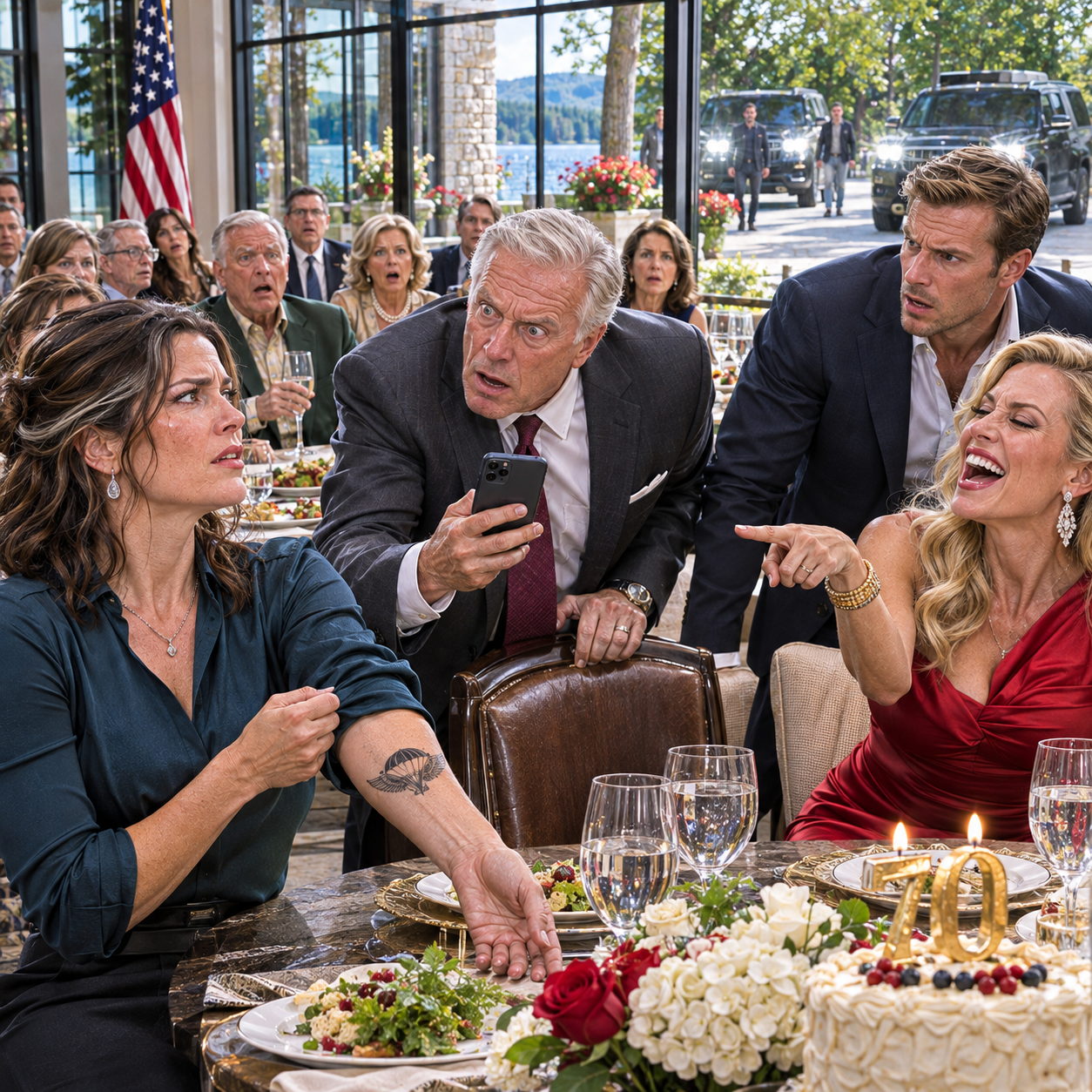
Saturday evening brought steady rain and the familiar smell of Grandma’s pot roast. Everyone arrived on time, which was unusual enough to make the occasion feel like a business meeting.
Melinda brought flowers. Jake brought a bottle of wine. My mother arrived with a casserole Grandma hadn’t requested and immediately began rearranging the serving dishes.
I brought nothing except myself.
Dinner began with ordinary conversation. Jake talked about his daughter’s soccer team, and my father asked whether the weather in Hawaii would be hot in August. For a few minutes, we sounded like people who might enjoy each other’s company.
Then Melinda mentioned the lake house.
“Cory and I were thinking,” she said, setting down her fork, “maybe we could take over the maintenance. It’s getting difficult for Grandma.”
Grandma looked up. “I’ve already arranged for someone to handle it.”
“Of course,” Melinda replied. “I just thought it would make sense to keep things in the family.”
Jake gave a humorless chuckle. “That’s funny, considering you asked me to give back my key.”
“Because you never tell anyone when you’re using it.”
My mother reached for the gravy. “Can we please have one pleasant dinner?”
Grandma put her napkin beside her plate. “I’d prefer an honest one.”
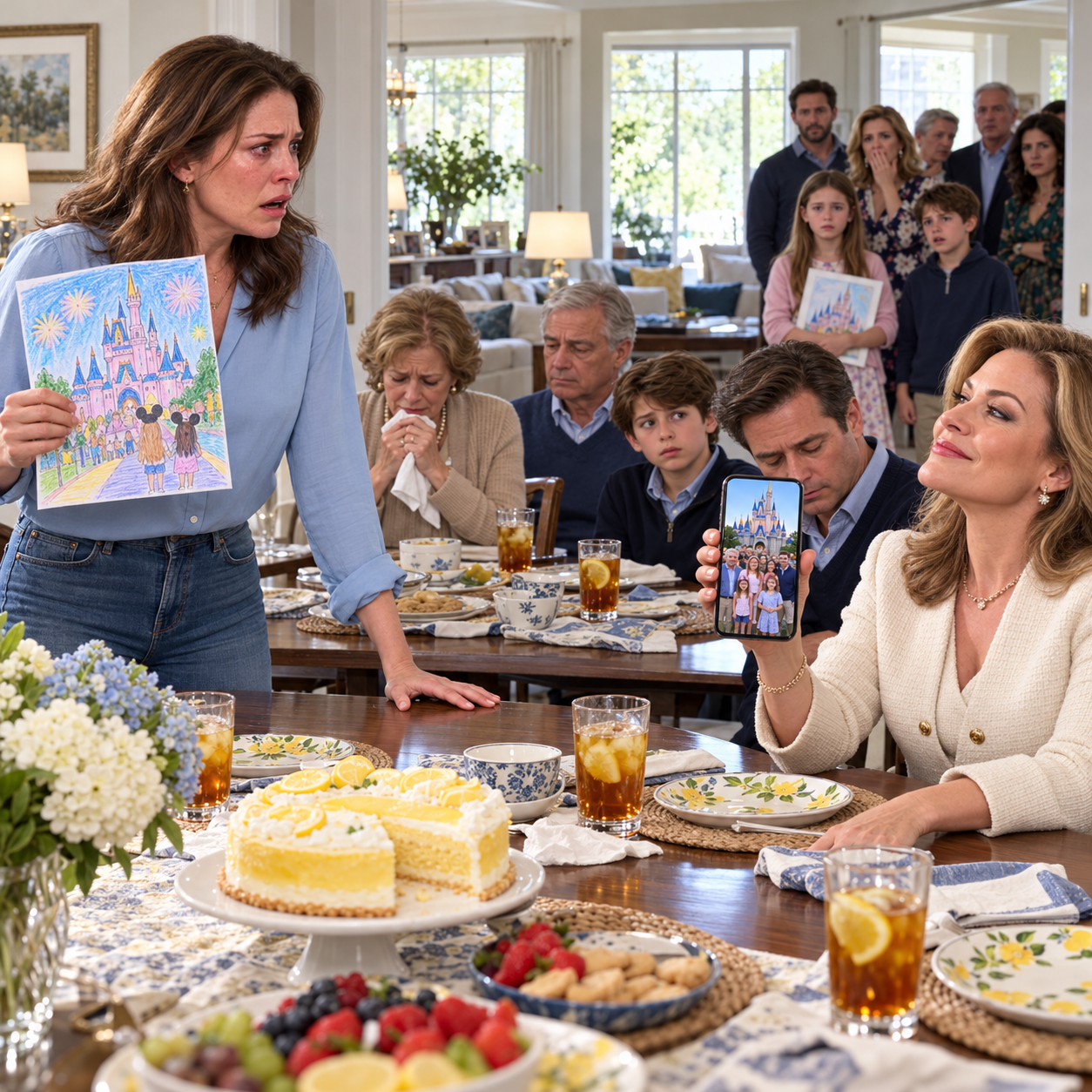
She looked at Melinda. “Why didn’t Bonnie’s children go to Disneyland?”
Melinda blinked. “We already explained that.”
“Explain it to me.”
After a moment, Melinda admitted she’d booked the original hotel package for six adults and three children. Adding another adult and two children would have required different accommodations and more money.
“Bonnie’s always working,” she added quietly. “I assumed she’d say it was too expensive.”
“You could have asked,” I said.
Melinda rubbed her forehead. “I know.”
My mother spoke next, almost reluctantly. She confessed that she’d known about the reservations two months before the trip. She’d intended to tell me, but after hearing Harper talk about Disneyland, she couldn’t bring herself to disappoint her.
“So you let her keep hoping,” Grandma said.
My mother stared at her plate. “I thought we’d plan another trip.”
I looked at her. “You didn’t even send them a postcard.”
That was the detail that finally seemed to reach her. She pressed her fingers against her mouth, remembering, perhaps, all the souvenirs she’d brought home for the grandchildren who’d gone.
Jake leaned forward. “I should’ve said something. I knew you weren’t coming, Bonnie. I figured there was a reason, and I didn’t ask.”
For once, nobody hurried to excuse him.
Grandma stood, holding the back of her chair until she was steady. “I love every person at this table. But I am not leaving behind a property that becomes another reason for you to hurt each other.”
She explained that she’d instructed her attorney to prepare a revised estate plan. If she signed it, Richard would inherit the lake house and the bulk of her remaining estate, with instructions reflecting her charitable wishes.
Melinda’s eyes filled. “Grandma, you’re punishing us.”
“I’m deciding what happens to things that belong to me,” Grandma answered. “You still have time to decide what happens between yourselves.”
I wanted to feel victorious. Instead, I watched my mother stare at Grandma’s trembling hands and realized how much time we’d wasted trying to win arguments that had never made anyone happy.
I drove home through the rain, thinking about the brass key in my coat pocket.
We went to Hawaii six weeks later.
The condominium had a tiny balcony overlooking a garden, and Eli spent the first morning counting geckos along the railing. Harper learned to float on her back in the hotel pool. We ate pineapple with our fingers and took photographs of sunsets that looked impossibly beautiful even without filters.
One evening, Harper asked whether Grandma would like the seashell necklace she’d bought.
“She would,” I said.
“Even though she’s mad at everybody?”
I helped her fasten the little paper bag. “People can be disappointed in someone and still love them.”
When we returned, Grandma invited the children over for lemonade. She admired the necklace and listened to every detail of their trip. My mother came by while we were there, bringing Harper a new sketchbook and asking Eli about the snorkeling excursion.
It wasn’t an apology, but she stayed to listen.
Grandma died four months later, peacefully, after a short illness. During her final weeks, I visited every Wednesday, bringing groceries and sometimes the children. We didn’t discuss her estate again.
At the attorney’s office after the funeral, we learned she’d signed the revised will. Richard inherited the lake property and most of the remaining assets. Modest personal gifts went to the grandchildren, including savings bonds Grandma had purchased years earlier.
There was also a letter for each of us.
Mine contained a photograph of Grandpa and me standing beside the lake when I was twelve. On the back, Grandma had written that she hoped I’d remember the place for the afternoons we’d shared rather than the arguments that followed.
Melinda cried quietly as she read her letter. Jake walked outside and stayed there for several minutes. My mother folded hers carefully and placed it in her purse.
Richard eventually sold the lake house to a retired couple who promised to preserve the garden. He donated a substantial portion of the proceeds to a local children’s literacy program, as Grandma had requested.
The sale hurt more than I expected. I missed the crooked porch steps, the smell of cedar inside the closets, and the old kitchen window that always stuck in humid weather.
But I didn’t challenge the will.
About a month afterward, Melinda called and asked whether we could meet for coffee. She arrived without Cory, looking tired and considerably less certain of herself.
“I’ve been thinking about what Grandma said,” she began.
I stirred my coffee. “So have I.”
She told me she’d always assumed I preferred being independent, that I didn’t want to join expensive trips or complicated family arrangements. Then she admitted something else.
“When Mom talked about you, she always said you were the strong one. The one who didn’t need much attention.” Melinda looked down. “I liked being the one everyone worried about. I didn’t question what that cost you.”
I let her finish.
“I’m sorry about Disneyland,” she said. “Especially the kids. I knew they wanted to go.”
“Thank you for saying that.”
She reached across the table but stopped before touching my hand. “Can we try again?”
“Slowly,” I told her. “And not by pretending nothing happened.”
She nodded.
That Christmas, my mother invited us for dinner. She asked Harper to help decorate the cookies and spent nearly an hour listening to Eli explain a complicated school science project. Jake apologized privately for staying quiet when he knew we were being excluded.
None of those gestures erased the past. There were still awkward conversations, invitations I declined, and moments when old habits surfaced.
But there were also small changes.
The following spring, Melinda invited us to her son’s birthday party. Harper played with her cousins in the backyard while Eli helped Jake set up a basketball hoop. My mother brought out a photograph from years earlier, showing all three of her children sitting on Grandpa’s dock.
For once, she didn’t talk about how wonderful the old days had been. She asked what we remembered.
I told her about the summer Grandma taught me to make peach pie. Melinda remembered falling off the dock in her new sandals, and Jake insisted he’d been the one who rescued them.
We laughed, and nobody needed to win the argument.
Later, while washing dishes beside my mother, I felt the brass boathouse key resting against the small chain I wore beneath my sweater. I kept it there because Grandma had given it to me, not because it opened anything anymore.
My mother dried a plate and looked toward the backyard, where the grandchildren were playing together.
“I’m glad you brought them,” she said.
I handed her another dish. “So am I.”
For the first time, I believed we both understood that being invited was only the beginning. Making someone feel welcome was the part that mattered.
The End .
All characters and events in this story are fictional, created for storytelling and entertainment purposes. Thank you sincerely for reading. Your feedback and support are invaluable and motivate me to continue sharing more stories with you.