
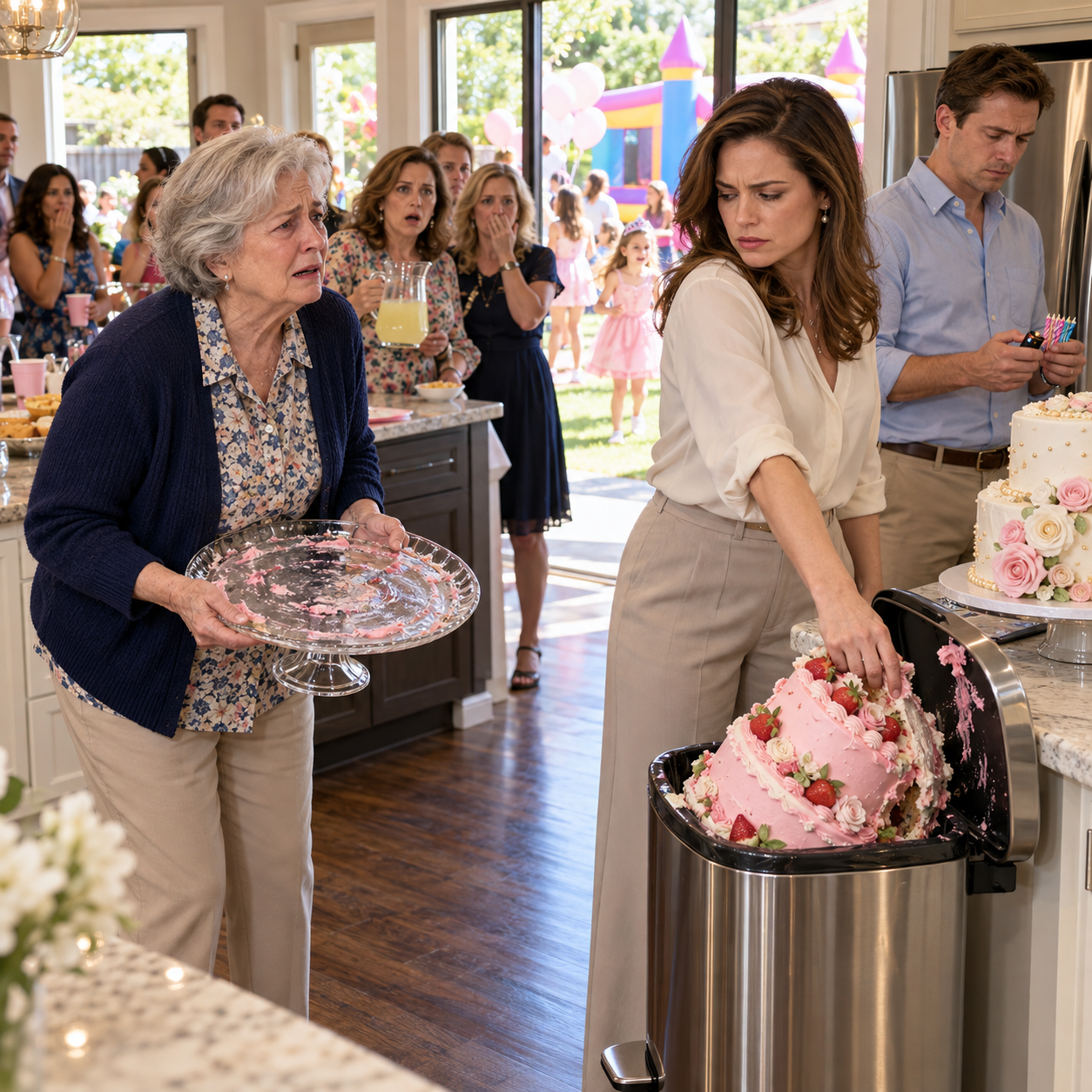
Part 2: I Stopped Paying for the Privilege of Being Disrespected
Sunday morning, I logged into Ellie’s dance studio account and paid April, May, and June in advance. The total was $555, which guaranteed she wouldn’t miss a single class while the adults sorted out their problems. Then I removed my credit card and called the studio Monday morning to explain that future invoices should go to her parents.
I also contacted both schools and confirmed that Preston and Jillian would be responsible for Wednesday pickups. Having worked as a school nurse for thirty-one years, I knew how frightened children could become when an adult failed to arrive. The secretaries recorded the change and notified the parents, and I made certain nobody was expecting me to collect either child.
On Wednesday afternoon, I sat on my back porch with a glass of iced tea.
At 3:22, Jillian sent her first message.
“Where are you?”
Three minutes later came another.
“The school is calling me. Ellie is waiting.”
At 3:31, she wrote, “Shirley, I’m in a meeting with my boss.”
By four o’clock, she’d left work to collect Ellie and Bennett herself. The later messages mentioned preschool late fees, her ruined afternoon, and how selfish I was being.
At 4:41, she finally asked, “Is this really about a cake?”
I didn’t answer.
Ellie had spent twenty-five minutes in the school office with a secretary, a juice box, and a coloring sheet before her mother arrived. The secretary later told me Ellie had cheerfully announced that her grandma made the best strawberry cake in Texas. I thanked her for looking after my granddaughter and sat on my porch until the sun went down.
Preston called that evening.
“Mom, Jill had to leave an important meeting.”
“I sent the message Saturday, honey.”
“I know, but we thought you were just upset.”
“I was upset. I was also serious.”
He exhaled slowly. “So you’re really not doing Wednesdays anymore?”
“Not unless we make a new arrangement. You have two children, Preston. You and Jillian need to decide how to care for them.”
He didn’t argue. Somehow, his quiet acceptance hurt almost as much as his silence at the party.
The following afternoon, Jillian posted a photograph of the bakery cake in our family group chat. Beneath the picture, she wrote, “Ellie’s perfect day! So grateful for the people who actually show up.” She added a pink heart.
Two days later, her sister Monica left me a voicemail accusing me of ruining a seven-year-old’s birthday and abandoning my grandchildren because I couldn’t accept that Jillian had asked me not to bring a cake.
“You made a scene, Shirley. Then you punished the kids. Honestly, grow up.”
I listened twice, sitting on the edge of my bed with a towel around my wet hair.
I had never raised my voice at the party, but Jillian had told everyone a different version. Two of her aunts began avoiding me at the grocery store, and one woman who’d always greeted me after church suddenly became fascinated with her shoes whenever I approached.
When Preston called again, I asked whether he’d actually seen his wife throw my cake away.
“Yes, Mom.”
“Then you know what happened.”
He hesitated. I could hear Bennett singing in the background, and Preston finally said he needed to help with bedtime.
Three weeks passed without a visit.
I missed the children so badly that I sometimes caught myself reaching for my car keys on Wednesday afternoons. I cleaned my oven, organized my baking pans, and made more trips to the grocery store than I needed.
Then Preston called and suggested we meet at McKenzie Park on Sunday. Jillian was attending a bridal shower with Monica, and the children had been asking for me.
I arrived early and waited beside the swings.
Preston took four-year-old Bennett to look at the prairie dogs while Ellie climbed onto the swing beside my bench. I pushed her gently, listening to the chains creak overhead, until she tilted her face toward me.
“Grandma, can I ask you something?”
“Of course, sweetheart.”
“Why didn’t you get me the dollhouse for Christmas? The white one with blue shutters?”
My hands remained on the swing chains.
“Mama said you forgot,” Ellie continued. “She said maybe you were getting old and couldn’t remember everything.”
I remembered the dollhouse perfectly.
I had bought it on December ninth for $340, carried the enormous box into their house myself, and watched Jillian promise to put it somewhere safe until Christmas morning.
I looked at my granddaughter and gently pushed her swing forward again.
“Ellie, honey, let me check on something.”
That afternoon, I went home and opened the folder where I kept every receipt for the children’s gifts.
Part 3: A Missing Dollhouse Led Me to Two Years of Receipts
The folder was labeled “Kids” in my handwriting. I pulled out the Christmas receipts, found the dollhouse purchase, and logged into the toy store’s website to check whether something had happened with the delivery. Under the order, beside the photograph of the white dollhouse, was a single word.
Returned.
The date was December twenty-eighth.
I checked the receipt again, then opened the transaction details. The purchase had been refunded through a return processed at the store on Slide Road, and the credit had been issued without my knowledge.
I remembered something that had puzzled me for months. My store rewards points kept disappearing, even though I was making regular purchases. I’d called customer service once, received a confusing explanation about adjustments, and decided the computer system was making mistakes.
Now I began checking everything.
Bennett’s blue bicycle, the one with the little bell that he had wanted for his fourth birthday, had been returned for $260. Jillian had told me it was stored in the garage until he grew taller. Ellie’s purple winter coat was gone, along with the green coat I’d bought Bennett, and so were a train table and a karaoke machine Ellie had begged for after seeing it advertised on television.
I pulled out more receipts and checked transactions reaching back almost two years.
Some returns had been exchanged for store gift cards. Others had been refunded in cash or credit. By midnight, my kitchen table was covered with receipts, printed account histories, and an envelope on which I’d added the amounts three separate times.
The total was $2,100.
I sat there with a cup of tea that had long since gone cold, looking at the dates. The children hadn’t simply lost presents; they’d been allowed to believe I hadn’t remembered what they wanted. All those little explanations, the coat being washed, the bicycle being stored, the dollhouse being forgotten, had kept me from asking questions.
On Monday, I asked Preston to stop by after work the following evening, alone.
He arrived at 6:30, exactly as he used to on Wednesdays. I poured him iced tea and arranged the receipts in two rows across the kitchen table, with the oldest purchases on the left and the calculations at the end.
“What is all this, Mom?”
“Just look through them.”
He read quietly, occasionally lifting a receipt toward the light. When he reached the dollhouse, he put his glass down and examined the return date.
“Jill told me you forgot this.”
“She told Ellie that, too.”
“She said not to mention it to you because you’d be embarrassed.” He looked at the other pages, then at the envelope. “Two thousand one hundred dollars?”
“As far as I can document.”
Preston rubbed both hands over his face. I hadn’t seen him look so tired since Walter died and he was trying to be strong for everybody.
“Can I take these?”
“Of course. I made copies.”
That Thursday, Preston visited the toy store during his lunch break. I’d authorized him to discuss my purchase and return records with the manager, who checked the transactions and confirmed that identification had been recorded for the returns. The driver’s license information belonged to Jillian.
He called me from the parking lot.
“Mom, it was her. The manager confirmed it. Even the returns without gift receipts.”
I could hear shopping carts rattling in the wind.
“There’s a gift card in Jill’s wallet with over four hundred dollars on it,” he added. “I’ve seen her use it. I thought she got it from work.”
“I’m sorry you had to find out this way.”
“No, Mom. I should have been paying attention.”
Neither of us spoke for a moment. Then Preston mentioned that Bennett’s fifth birthday party was coming up in May, at Jillian’s mother’s house.
“He asked you for a red bike, didn’t he?”
“With a bell.”
“Bring it, Mom. Bring it yourself.”
On the third Saturday in May, I walked into that crowded living room pushing a bright red bicycle with a bow on the handlebars. I had brought a matching helmet in a separate gift bag. Nearly thirty relatives were there, including Monica and several people who had seen Jillian’s version of Ellie’s birthday on Facebook.
Bennett spotted the bicycle and practically climbed over the couch to reach me.
“Grandma! It has a bell!”
He rang it repeatedly until his father suggested saving some ringing for the driveway.
Jillian approached with a practiced smile.
“Oh, Shirley, you shouldn’t have. His feet probably won’t reach the pedals yet. We’ll exchange it for something more appropriate.”
Preston stood in the kitchen doorway holding a paper plate.
“Like you exchanged the dollhouse?” he asked.
Jillian’s smile disappeared.
“Not now, Preston.”
“Or the blue bicycle? Or both winter coats?”
People began looking from one of them to the other. Monica stopped arranging cups, and Jillian’s mother stood near the kitchen counter with a cake knife in her hand.
Jillian folded her arms.
“Fine. Yes, I returned some things. Your mother buys these enormous toys, and we don’t have space for everything. I exchanged them for things the kids actually needed.”
“Ellie never received the coat,” Preston said.
“I was managing our house, Preston.”
“Then why did you tell Ellie my mother forgot her dollhouse?”
Jillian looked toward me.
“You see what you’ve started? At Bennett’s birthday?”
I could have answered with the receipts, the dates, the missing money, or the birthday cake she’d thrown away. Instead, I looked at my grandson, who was holding his new bicycle steady with both hands.
“I’d just like the children to keep this one.”
Monica quietly said, “Jill, that’s enough.”
Ellie took the helmet from its gift bag, knelt beside her brother, and carefully fastened the strap beneath his chin. She checked the buckle the way I’d taught her when she learned to ride.
“Click,” she announced, smiling at Bennett.
He rang the bell once.
Across the room, Preston was still looking at his wife, waiting for an answer she hadn’t given him.
Part 4: The Money Came Back, but Trust Required Something Harder
The following Saturday, Preston arrived at my house carrying an envelope.
“It’s $2,100, Mom. The four hundred and change left on Jill’s gift card, and the rest from our savings. She’s agreed to replace the savings out of her paychecks.”
I pushed the envelope back toward him.
“Honey, I don’t want your money.”
He shook his head.
“It’s not for you. It’s for Ellie and Bennett.”
I looked at the envelope for a long moment before accepting it.
Later that afternoon, Preston and I drove to the toy store on Slide Road and bought the same dollhouse Ellie had requested. White walls, blue shutters, and a tiny porch light that actually turned on. We carried the enormous box into his house together, one of us holding each end, just as we’d carried Christmas trees into our old house when Walter was alive.
Ellie saw the picture on the box and covered her mouth with both hands.
“Daddy, it’s the one!”
Preston knelt beside her.
“Grandma remembered, sweetheart. She always remembered.”
The rest of the money went into a coffee can on top of their refrigerator, marked “KIDS” in Preston’s handwriting. He took responsibility for replacing the children’s missing things, and Jillian no longer handled presents from me without their father knowing.
Jillian and Preston had several difficult conversations after Bennett’s birthday. She admitted that she’d resented the growing collection of toys and felt embarrassed asking for help when household expenses became difficult, but she couldn’t explain why she’d allowed the children to think I’d forgotten them. Preston told her that returning gifts wasn’t what had damaged their marriage most; it was the repeated lying.
Their problems weren’t solved by one envelope of money.
In July, the dance studio sent Jillian the first $185 bill, and her credit card was declined. Preston paid it and arranged their finances so Ellie’s lessons wouldn’t be interrupted. He also took over Wednesday pickups, while I began teaching cake decorating at the community center on Wednesday afternoons.
Eleven students signed up, including a sixteen-year-old boy who could pipe buttercream roses better than I could.
Preston started calling me every Sunday, sometimes just to ask what I’d had for dinner. The first Saturday of every month became baking day with Ellie, and Bennett usually joined us to eat strawberries and steal frosting. Jillian remained polite but reserved, and I didn’t pretend we had the relationship we once had.
One afternoon, Preston hugged me in my driveway and said, “I keep thinking about that party, Mom. You looked right at me, and I lit those candles anyway.”
“You did,” I said.
“I’ll be sorry about that for a long time.”
“Then be sorry, honey. And be better.”
The following March, Ellie turned eight.
She made her own strawberry cake at my kitchen table, three layers high, with me standing behind her to help when the frosting became difficult. It leaned slightly to the left, but Ellie declared it perfect. At her birthday party, Preston carried it to the table and lit all eight candles.
I stood beside my granddaughter while everyone sang.
At the far end of the table, Jillian waited until the children had their slices before approaching me with a paper plate.
“Shirley, could I have a piece?”
I looked at her, then cut a generous slice and placed it on her plate.
“Of course.”
That was all we said.
The recipe card Preston wrote in third grade is still taped inside my kitchen cabinet, misspelling and all. I still make cakes, still love my grandchildren, and still believe a gift should be given freely.
But I no longer confuse being needed with being respected.
And when Ellie asks for three floors, I give her three floors.
The End .
All characters and events in this story are fictional, created for storytelling and entertainment purposes. Thank you sincerely for reading. Your feedback and support are invaluable and motivate me to continue sharing more stories with you.


