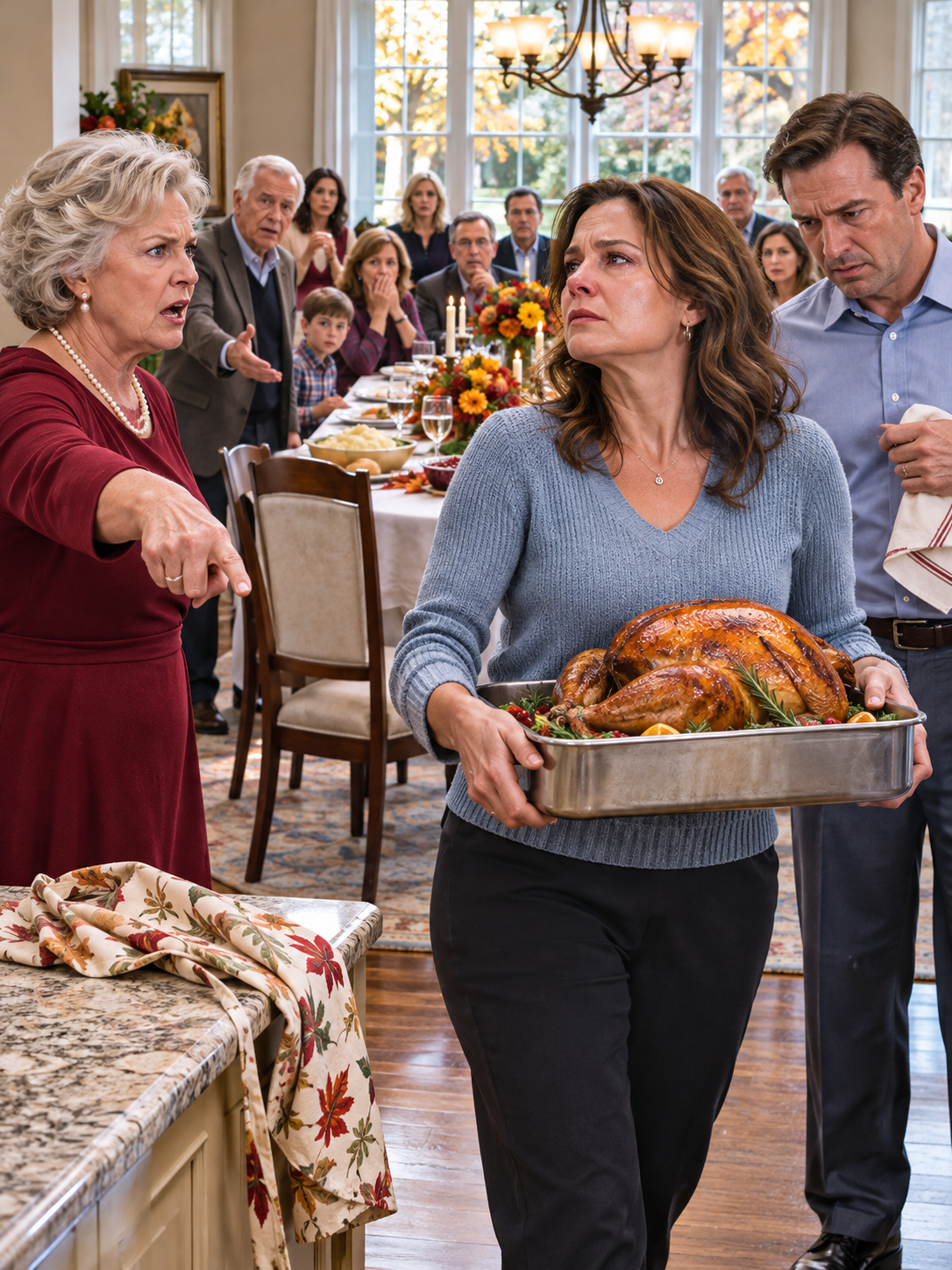
My Six-Year-Old Ran Three Miles to Find Me—Then a Stranger Shouted My Husband’s Secret
My six-year-old son came through the supermarket doors barefoot, sobbing so hard he could barely say my name. He had run three miles because his father was lying on our kitchen floor and a stranger had broken into our house. Minutes later, I found police cars, an ambulance, and a man shouting that my husband knew why his daughter had disappeared. I thought I was rushing home to save my family. I didn’t yet understand how long my husband had been hiding the danger from us.
Part 1
I noticed the little boy beside register four only when the scanner beeped. I was reaching for a customer’s gallon of milk when someone behind me said, “Ma’am, I think that child needs you.” My six-year-old, Owen, should have been building spaceships with his father. Instead, his cheeks were streaked with dirt, his shoes and socks were missing, and his bare heel left a faint red mark on the grocery-store tile.
“Mom, come home,” he gasped, grabbing my apron. “Dad is on the floor, and the man won’t stop yelling.” His shirt stuck to his back with sweat despite the cold November wind. “What man?” I asked, but Owen shook his head violently. “He said if Dad didn’t tell, he’d make him sorry. Then Dad fell, and I ran.”
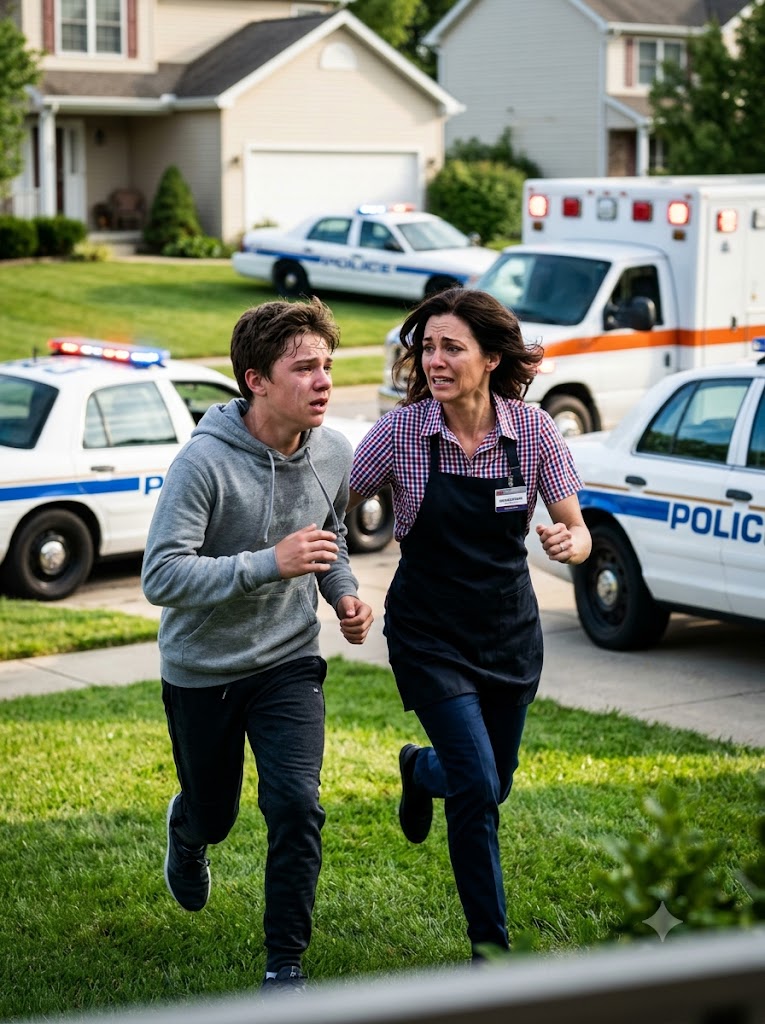
Tessa, my supervisor, switched off my register. She drove while I held Owen in the passenger seat, wrapped in the sweatshirt she kept behind her seat. Three miles had never felt so long, especially with every traffic light turning red just as we reached it. On Alder Street, three cruisers and an ambulance surrounded our blue house.
A paramedic was guiding a stretcher down the front steps, and my husband, Nolan, lay on it with a white bandage above his eyebrow. He opened his eyes when I called his name, but the paramedic told me to stay back while they checked his blood pressure. Across the lawn, an officer escorted a broad-shouldered man in a muddy work jacket toward a cruiser. He twisted toward me and shouted, “Grace Ellis! Ask your husband what happened to my daughter!”
“Who are you?” I shouted as an officer stepped between us. “Her name is June Mercer!” the man yelled, his face turning bright red. “He knows where she went, and he’s been lying to everybody!” Nolan turned his face toward the ambulance wall, and that movement frightened me more than the stranger’s words. He knew the name and wanted to hide it.
Officer Clara Benton took us into the neighbor’s kitchen. The room smelled of coffee and lemon dish soap, and Owen kept staring at the crumbs on the table as though they were moving. Benton identified Vernon Mercer and said a neighbor called 911 after a crash; Nolan was conscious. “There’s no indication your son was physically hurt,” she added, but I was already looking at his feet.
“Why didn’t you go next door?” I asked Owen gently, wrapping gauze from the neighbor’s first-aid kit around his scraped heel. “Dad told me to stay hidden,” Owen whispered. “When the phone broke, I tried Mrs. Walker’s door, but nobody answered. So I ran to you like we practiced.” Nolan and I had never practiced a three-mile emergency run.
At the hospital, I learned Nolan had fainted and hit the kitchen counter. He was stable but staying overnight for observation. Tessa offered to sit with Owen in the waiting room, and I entered Nolan’s room carrying the muddy sneaker the paramedics had found in our driveway. My husband looked at it, then at my face, and whispered, “Is he okay?”
“He ran three miles barefoot,” I said. “A stranger screamed about a missing daughter, and our son thinks he practiced running to my job.” Nolan’s fingers tightened around the hospital blanket, but he didn’t deny any of it. “Who is June Mercer?” I asked. He watched the monitor before saying, “She used to work at our repair shop. She left eighteen months ago.”
Nolan managed an auto shop with Wesley, and I knew its workers. I recalled a quiet woman with dark braids who had given Owen a sticker. When I asked if June had been at our house, he nodded. “The night she disappeared,” he said, “and I’ve lied about that night ever since.”
I remembered his story about an emergency tow, and his midnight return smelling of gasoline. I nearly asked about an affair, then stopped. “Tell me why Vernon came to our house today,” I demanded. Nolan looked at the muddy sneaker in my hands and said, “Because he thinks June left something there. And, Grace, he might be right.”
Part 2
I set Owen’s sneaker on the windowsill. Outside, an ambulance backed into the bay with a sharp mechanical beep, and the sound made me flinch. “Start with what happened to June,” I said, “and don’t leave anything out just because you think it would upset me.” Nolan nodded, choosing his words.
June had started at the shop at twenty-one, handling calls and invoices. She ate packed lunches and stepped outside for her father’s calls. Nolan worried when she asked about opening a private bank account. A week later, she wanted to know whether someone could legally keep her identification documents because they had paid for them.
Vernon’s construction business was struggling, and June couldn’t access her wages. Her father kept the title to the car she’d helped purchase and insisted on checking her phone whenever she came home. Applying for an apartment, she discovered unfamiliar accounts in her name. Nolan said June began collecting paperwork, afraid that asking questions at home would make her situation worse.
“And you helped her?” I asked. “At first I let her keep copies in a locked drawer at the shop,” he said. “Then one night she showed up at our house with a backpack and asked me to drive her to someone from a support organization.” Owen and I were visiting my recovering aunt. Nolan had claimed he was towing a truck.
“Why didn’t you tell me?” I asked. “She was terrified Vernon would follow anyone who knew,” Nolan answered. “I didn’t know the address where she ended up, and I promised not to tell him anything that could lead to her.” I understood why June needed privacy, but that didn’t explain why my own home had become part of the secret.
“You could have warned me without revealing her location,” I said. Nolan looked down at his bandaged wrist. “I thought Vernon would get tired of asking. Then he started showing up at the shop, and telling you would have meant admitting I’d lied in the first place.” For twelve years, I’d mistaken his silence for steadiness. Maybe he had just avoided uncomfortable conversations.
Nolan shook his head at Vernon’s accusations. “There was never anything romantic between us, Grace.” I remembered a motel charge on our joint card. He’d claimed Wesley needed a room after work. He admitted buying June a room and hiding it in shop expenses.
“You used our money?” I asked. “Two hundred and forty dollars, not some huge amount,” he replied, then immediately winced. “I know. That’s not the point.” It wasn’t the money that made my throat tighten; it was remembering how I’d balanced that month’s grocery budget while he told me we couldn’t afford Owen’s swimming lessons. One lie changed an ordinary memory.
Detective Mara Pike arrived. She said investigators were treating the confrontation at our house separately from Vernon’s claims about June, and asked Nolan if he’d ever reported the threats. He admitted that Vernon had visited the shop repeatedly but said he had kept no complete record of the visits. When Mara asked whether Vernon had ever approached our home before, Nolan answered too quickly: “No.”
Mara didn’t challenge him; his thumb worried the blanket. After she left, I told Nolan Owen and I would spend the night with Tessa instead of returning home. “That’s probably safest,” he said, without meeting my eyes. I asked him what he was still hiding, and he answered, “Nothing that changes what happened today.”
At Tessa’s, Owen cut his grilled cheese into squares. I told him he had done the right thing by finding help, then asked what he meant when he’d said “like we practiced.” He pointed at a passing pickup. “When the red truck comes, Dad says I have to hide,” he whispered. “He said it was our secret, so you wouldn’t get scared.”
I held his hand until the truck vanished. “How many times did you hide?” I asked. Owen counted on his fingers and looked embarrassed when he ran out. Whatever Nolan had told the detective, today was not the first day Vernon had come looking for us.
Part 3
The next morning, I took Owen to his pediatrician, who cleaned his scraped feet and helped me arrange a counselor familiar with frightening events involving children. Owen sat on the exam table swinging his legs, clutching the plush dinosaur he’d brought from Tessa’s house. When the doctor asked whether he felt safe going home, he whispered, “Only if the red truck is gone.” I couldn’t let Nolan ration the truth anymore.
Detective Pike met me at our house that afternoon, after confirming Vernon remained subject to restrictions while the investigation continued. The lamp was gone; a crescent scratch remained on the floor. Inside the pantry, Owen showed us the narrow space behind the recycling bin where Nolan told him to crouch when an unfamiliar truck parked outside. I found a flashlight and a packet of crackers there, both too neatly placed to be accidental.
“Did your father tell you what to do if the man came inside?” Mara asked gently. Owen nodded. “Be quiet, and don’t call Mom because she’ll come home and get hurt.” He rubbed his dinosaur before adding, “But Dad fell down, so I didn’t listen.” My eyes burned, but I kept my voice steady while I told him he never had to keep a grown-up’s dangerous secret again.
After Tessa collected Owen, Mara reviewed photographs of our kitchen. Vernon’s phone had been found near the back door, and investigators were reviewing its messages with the proper authorization. She confirmed Vernon had pressured Nolan for weeks. “Pressure about June?” I asked, and Mara said, “About documents. We don’t yet know which ones.”
I drove straight to the shop, where motor oil and hot rubber hung in the air even with the garage doors open. Wesley stood behind the counter in his usual gray work shirt, smiling until he noticed how tightly I held my car keys. “Had Vernon been coming around?” I asked. “Nothing we couldn’t handle,” Wesley said. I told him Owen had run barefoot to the supermarket, and his expression changed from sympathy to something uncomfortably close to calculation.
“Nolan always said you shouldn’t be pulled into this,” Wesley replied, reaching under the counter for a ledger. I asked why he had ever discussed my involvement with Nolan, but he only shrugged. On the wall behind him, a clipboard listed employee schedules beside handwritten notes about customers who needed rides. My own name appeared near the bottom, followed by “Thursdays, store until six,” in Nolan’s distinctive handwriting.
Wesley noticed me reading it and flipped the page over. “He probably wrote that for pickup arrangements,” he said. I hadn’t needed a ride in years. When I reached my car, I photographed the clipboard through the window and forwarded it to Mara with a note asking who else might have seen it. Then my phone rang, and the hospital number appeared.
Nolan sounded exhausted when I confronted him. He admitted that Vernon had parked outside our house several times, sometimes waiting until Owen’s school bus arrived. Nolan claimed he was protecting us and planned to install cameras. “You taught our son to fear the driveway instead of telling his mother why,” I said. He fell silent.
Nolan finally identified a storage locker containing June’s documents. He moved them when Wesley complained. Mara arranged to inspect the locker with Nolan’s permission, and I watched as she opened a flat cardboard box marked with the name of an old parts supplier. Inside were copies of loan agreements, payroll records, and invoices for equipment that appeared never to have reached Vernon’s business.
One page bore June’s signature, which was different from the handwriting on an employee form tucked beneath it. Another bore Wesley’s stamp beside an enormous payment. Mara sealed the sheets in evidence sleeves. Just as we were leaving, she showed me a printed email taped inside the box lid: “Get the copies back, or I’ll tell Grace who got paid.”
I stared at “got paid,” wondering who it meant. Then Mara unfolded the second page of the email, which had been hidden underneath the tape. It contained the last four digits of our joint bank account.
Part 4
I drove to the hospital thinking about that number. Nolan sat by the window, looking like the man who made Sunday pancakes. I set the email on his tray and asked, “What did Vernon pay you for?” Nolan read it once, then pressed his palms flat against his knees.
He said Vernon’s company had paid the shop for equipment repairs during a difficult year, and Wesley had handled most of the invoices. After June left, Nolan found payments for unverified jobs. When he confronted Wesley, his partner called it sloppy bookkeeping and promised to correct it. “I believed him to keep the business alive,” Nolan admitted. “I feared losing the shop and house.”
“That account is ours,” I said, pointing to the last four digits. Nolan said the shop once used our old account for business transfers. He insisted the email referenced a legitimate transfer from years earlier, not a recent payment from Vernon. I couldn’t tell whether that was true, and I hated that I now needed a detective to check my husband’s explanations.
Mara said the account number alone proved no fraud. What disturbed her was that he had known about irregular invoices before June came forward but had never fully disclosed them to investigators. Nolan finally admitted something worse: six days before the confrontation, Wesley had shown him a message from Vernon containing my work schedule and Owen’s school pickup time. Nolan had told Wesley to stop sharing information but had not warned me, called police, or changed our routine.
“You knew he was watching our child,” I said when I confronted him by phone. “I thought I could settle it before anyone got hurt,” Nolan answered. I stood in Tessa’s quiet laundry room, staring at a basket of tiny socks, and felt something inside me go completely still. Nolan had chosen the comfort of believing he could fix things over the work of making sure his family was safe.
That evening, an unfamiliar number called. A young woman introduced herself as June Mercer, and my first response was to ask whether she was somewhere safe. “I am,” she said, “but I heard about Owen, and I needed to tell you I’m sorry.” An advocate had helped her contact Detective Pike.
June said her father had used personal information from her employment and family records to apply for credit in her name. She had kept copies because some financing papers also listed payments to Nolan’s shop for machinery that she had never seen. “I didn’t know if Wesley was involved or if my father was using the shop’s name,” she said. “I just knew he wanted those papers badly enough that I couldn’t stay in that house.”
I told her seeking help needed no apology. “But what happened at my house was not acceptable,” I added, and she quietly agreed. June asked whether she could give the documents directly to investigators without telling her father where she lived. I connected her with Mara, promising nothing for Nolan.
Two days later, June arrived at a police station in another county with an attorney and a support advocate. I stayed away; it was her account. Mara later told me she had provided original correspondence and had confirmed several key dates from the shop’s records. Investigators scrutinized Wesley and the shop accounts.
I met June outside a café afterward, where the windows fogged against the cold afternoon rain. She wore a green raincoat and kept both hands around her paper cup, although the coffee had gone cold. “I thought if I disappeared quietly, he would eventually leave everyone alone,” she said. “I thought that too,” I answered, remembering how much damage two different kinds of silence had caused.
Before we parted, June showed me a photograph she’d taken through Nolan’s truck window the night he helped her leave. Beyond the gas station’s illuminated pumps stood a silver SUV, its driver visible through the windshield. June pointed to the man behind the wheel and whispered, “Wesley followed us that night. Nolan knew.”
Part 5
I didn’t confront Nolan immediately. I sent the photograph to Mara. Then I sat with Owen at Tessa’s table while he drew a house with a giant yellow sun above it. “Can we have a place where nobody tells us to hide?” he asked, and I told him that was exactly what I was working on.
When Nolan called, I asked, “Did Wesley follow you the night June left?” He inhaled sharply before admitting he’d noticed Wesley’s SUV at the gas station. Nolan said he had changed routes and later argued with his partner, who swore he’d only been worried about the shop. “And you let him keep working beside you for another eighteen months,” I said. “You let him know our schedule, and you called all of this protection.”
Nolan cried; I let him. I told him helping June find safety had been the right thing, and keeping her location private had been a promise worth honoring. Hiding threats to our family, concealing questionable business records, and teaching our son to be afraid without telling me were choices he had made afterward. “I don’t hate you,” I said, “but I can’t trust you to make those decisions for us ever again.”
I rented a small apartment near Owen’s school instead of returning to our old house. Tessa carried boxes; a neighbor brought kitchen towels. I moved our savings into an account in my name after getting legal advice and made sure Owen’s emergency contacts included adults he could approach without fear. For the first time in weeks, I slept without listening for tires in the driveway.
The investigation moved slowly, which turned out to be easier to endure than the dramatic answers I’d once demanded. Police separately reviewed the confrontation and financial allegations. Months later, prosecutors filed financial charges against Vernon related to accounts opened without June’s authorization, and Wesley faced allegations involving false invoices. Their lawyers disputed the allegations; charges were not convictions.
Nolan cooperated and dissolved his partnership. His letter apologized without excusing the lies. He agreed to a safety plan before visits with Owen. Owen loved his father; love still required safety.
Six months later, our divorce was nearly final. Nolan asked if we could try again. “You can become a better father, and I hope you do,” I said. “That doesn’t mean I have to become your wife again.” He lowered his eyes and said he understood, and for once I didn’t need to inspect his words for a hidden condition.
June sent me a photograph of her new apartment, a tiny second-floor place with blue curtains and a plant on the windowsill. She had secured her own bank account, started a new job, and was working through the process of correcting her credit records. I didn’t ask for her address. Her independence was enough.
One Saturday, we shopped for oranges and pancake mix. Owen wore bright green sneakers he’d chosen himself, and he insisted on carrying the basket even when it bumped against his knees. At register four, Tessa asked if he still wanted to be an astronaut. Owen shook his head and announced, “I think I’ll be the person who helps people find their way home.”
In our new kitchen, he measured flour while I warmed the skillet, and the apartment filled with the smell of butter and cinnamon. He asked if I was sad that Dad wouldn’t live with us again, and I told him I was sad about some things and relieved about others. “Can both happen?” he asked, carefully pouring too much milk into the bowl. “Yes,” I said, taking the whisk from him, “and neither feeling means we made the wrong choice.”
Sunlight crossed the floor as I served his pancake. I had once believed a good family was one that never kept anything from the outside world. Now I knew a home was only safe when the people inside it could tell the truth to one another. My son had run three miles because he trusted me to come, and I intended to spend the rest of his childhood proving that he could stop running.
Legal Notice: This story is a work of fiction. Names, characters, businesses, events, and incidents are the product of the author’s imagination or are used fictitiously. Any resemblance to actual persons—living or dead—or to actual events is purely coincidental. Thank you! 💓