My Parents Called My Navy Uniform a Disgrace—Then Sued Me for Grandpa’s Farmhouse
After twelve years of silence, my parents sued me for the farmhouse Grandpa left me. They claimed I’d abandoned it and never paid its expenses. I arrived in my Navy dress uniform, the one they’d once called a family embarrassment. My father laughed until the judge recognized my name. But the biggest shock wasn’t my rank or my medals. It was a document proving my parents had been planning to take the house long before they filed their lawsuit.
Part 1
The envelope arrived on a Thursday, between an electric bill and a gutter-repair flyer. Barefoot in my Norfolk kitchen, I saw the return address: Chesapeake Circuit Court. My dog, Scout, waited beside his empty breakfast bowl while I opened a complaint naming my parents, Martin and Elaine Mercer, as plaintiffs. They wanted the court to declare that my grandfather’s farmhouse belonged to them.
I read the claim twice before sitting down. According to my parents, I’d abandoned the house, refused to contribute to its upkeep, and promised them ownership in exchange for years of maintenance and property taxes. They demanded reimbursement and recognition of an agreement I’d never made. Twelve years without a birthday call, and this was how they chose to contact me.
My grandfather, Walter Mercer, had taught me to drive his old pickup on the gravel road outside that house. He smelled of cedar and peppermint and kept a red pencil behind his ear. In 2012, he signed a deed giving me the property while reserving the right to live there for the rest of his life. When he died two years later, I arranged automatic tax payments and hired a caretaker.
My parents knew where I lived, but they had never asked about the house. They stopped speaking to me after I accepted my Navy commission. My father had called the uniform a costume for people who couldn’t succeed in ordinary life, while my mother said, “We raised a daughter, not a sailor.” They missed my commissioning and every promotion afterward. For years, I still scanned ceremony crowds for two faces that never appeared, then hated myself for looking.
I called a lawyer named Simone Price before I did anything else. A ceiling fan rattled as she read the complaint. “Abandoning a house doesn’t magically transfer title to your parents,” she told me, “and paying for repairs doesn’t make someone the owner.” Then she circled a paragraph referring to a signed consent agreement from 2023, a document my parents hadn’t attached.
“I’ve never signed away that house,” I said. Simone looked at my driver’s license, then at the complaint. “Then we’re going to need to find out what they think they have.” Then she noted my parents had requested permission for a pending sale. I hadn’t known the house was on the market.
The night before the first hearing, I opened the cedar trunk at the foot of my bed. Inside lay my dress uniform, polished shoes, ribbons, and a folded letter from Grandpa congratulating me on making commander. After an afternoon Navy ceremony, I arranged to wear it to court. I could almost hear my mother’s embarrassed sigh as I fastened the jacket.
The courtroom smelled faintly of floor polish and wet umbrellas. Dad wore his stiff-collared gray suit; Mom sat beside him in pearls. When I entered, Dad gave a little laugh and muttered, “Still playing soldier?” My mother looked down at my ribbons as though I’d tracked mud across her carpet.
Judge Miriam Halstead called the case and asked Simone to identify me for the record. She glanced at the citation accompanying our response, then looked up. “Commander Mercer—the officer recognized last spring for coordinating those regional flood evacuations?” I answered yes, and the judge added, “Thank you for that work. Now let’s address the property evidence without regard to anyone’s military career.”
Dad stopped smiling anyway. He’d always treated my career as an exaggeration born of defiance. Simone handed up the certified deed and proof of my tax payments, while my parents’ attorney shuffled documents and asked for additional time. The judge studied the recorded deed, paused, and lifted a second page from the county archive.
“Mr. Mercer,” she said, turning toward my father, “there’s an acknowledgment here dated 2012, beneath Walter Mercer’s signature.” She read the witness’s name aloud: Martin Mercer. My father gripped the edge of the table, and I realized the man who claimed to know nothing about my ownership had personally witnessed the deed that gave it to me.
Part 2
Dad stared at the page as though the ink might rearrange itself. “I witnessed Dad signing something,” he said. “I didn’t know what it meant.” Judge Halstead asked why his sworn complaint claimed that Walter had intended the house to pass to Martin, when the recorded instrument stated otherwise. He said he remembered it differently, a carefully ironed version of the truth.
Simone asked the court to stop any sale until the disputed documents could be examined. The judge preserved the property temporarily and scheduled another hearing. She refused to let anyone transfer it before the case was resolved. Outside, my parents crossed the parking lot without looking at me.
I drove to the farmhouse instead of going home. Wet leaves slapped the windshield as Scout sat upright beside me. Grandpa’s siding had yellowed, and the porch drooped like a tired shoulder. A lockbox hung from the railing, although I’d never authorized a real-estate agent to put it there. I touched its cold metal, remembering Grandpa hanging his house key from a crooked nail beside the door.
I called the caretaker I’d used for years, retired electrician Ben Alvarez; he arrived in his dusty pickup and said Dad had dismissed him five years earlier. “He said you’d hired somebody new,” Ben explained. “I called you twice, but both calls went straight to a full mailbox.” I’d changed numbers after a deployment and forgotten to tell Ben. My carelessness explained one missed call, not the months my father had concealed the new arrangement.
Ben showed me photographs he’d taken before losing access. His photos proved he’d repaired gutters and plumbing at my expense. Then he pointed to fresh gravel beside the barn and an electrical meter that hadn’t been there in his last picture. “Somebody’s been using the property,” he said. “That’s more than the occasional inspection your dad described.”
Inside, the house smelled of lemon cleaner instead of the cedar and coffee I remembered. Somebody had replaced Grandpa’s worn kitchen curtains with beige blinds, and a laminated card on the counter instructed guests to strip the beds before checkout. Menus stood beside a jar marked WELCOME. Somebody had pasted a cheerful Wi-Fi password on the refrigerator, covering a faded magnet from my Navy commissioning. I had expected neglect, not a house prepared for strangers.
A woman in a green raincoat appeared at the back door carrying fresh towels. Jenna, the rental cleaner, looked horrified when I said I owned the property. “I work through a management company,” she said. “They told me the owners were a retired couple who lived nearby.” She showed me a calendar with reservations extending into December.
I asked her not to cancel anything yet and photographed the calendar for Simone. Two arriving families didn’t deserve to be stranded by my parents’ deception. Jenna gave me the management company’s contact information, then asked whether she’d still be paid for that day’s work. I paid her, because the first innocent person I’d met in this mess had already been put in an impossible position.
In court, I’d felt angry over my inheritance. Standing in Grandpa’s kitchen, I understood that they’d been collecting money from it while telling a judge they alone had supported the property. A framed picture of a sailboat covered the spot where Grandpa had hung our childhood height marks, and I was suddenly desperate to find what they’d done with them. Ben found the original door trim wrapped behind a vacuum cleaner.
Simone called just after sunset. The rental company’s records listed a business called Tidewater Guest Properties as the recipient of the deposits, and public filings identified Elaine Mercer as its manager. “There’s more,” Simone said, rustling papers beside the phone. “The house was advertised as available for purchase last month, with an expected closing date in November. Someone submitted an ownership consent form bearing your signature.”
My mother had never once asked me to come home. Somehow, she’d found time to sell tickets to it, rent out its rooms, and sign my name to a sale I knew nothing about.
Part 3
Next morning Simone covered her conference table with documents. A May 2023 consent form supposedly authorized my parents to negotiate a sale. It said I was overseas and couldn’t attend in person. I’d spent that month at Naval Station Norfolk, attending daily briefings. A command-picnic photograph and fellow officers could confirm it.
“That doesn’t automatically prove forgery; we need the original electronic records and whoever verified the signature,” Simone warned. I pointed to the little loop in the letter M, a habit I’d abandoned years earlier after changing how I signed official reports. It matched paperwork I’d signed so Mom could arrange Grandpa’s funeral flowers. I hadn’t trusted her with the house, just a florist’s order. That small distinction had become everything.
Simone requested transaction records and sent a preservation notice. The rental manager also provided a ledger after verifying my ownership. It showed over $140,000 in guest payments since 2021, before operating expenses, and deposits into an account controlled by my mother. I remembered her telling relatives I’d abandoned Grandpa’s values. It included weekends she’d claimed the farmhouse sat empty.
I met my parents at a diner, with both lawyers nearby. Dad stirred untouched coffee; Mom settled in like this was a family brunch. She asked why I wasn’t wearing my uniform. I told her to explain the rental income instead of commenting on my clothes. A waitress left unwanted toast; nobody corrected her.
“We took care of an empty house; someone had to make it useful,” she said. Dad cited porch repairs and drainage assessments, which I didn’t dispute. Then I set down the bank statements showing the taxes paid from my account, and Mom’s smile became strained. “You were never here,” she replied, as though distance canceled ownership. I’d served far away, but that didn’t erase my connection to home.
“You told the court I paid nothing,” I said. Dad looked toward the lawyers, then back at his coffee. “Elaine handled the paperwork,” he muttered, and she turned on him so quickly that even the waitress stopped beside the pie case. Once, that argument might have suggested one innocent parent. Now it sounded like two people arguing over who should carry a suitcase they’d packed together.
I showed Mom the 2023 consent form. She alleged a video call but couldn’t identify a witness or platform. I asked why they needed a lawsuit to enforce it. “The title company wouldn’t accept it,” he said, and Mom kicked him under the table hard enough for the cups to rattle.
The room seemed to tilt. They’d sued because the title company rejected their supposed authorization. Mom called it routine clarification; Dad stared outside. He’d known who owned the house since 2012. His supposed confusion was the foundation of their lawsuit.
That afternoon I called the closing attorney listed on the sales documents. He confirmed the purchaser planned to subdivide the acreage. The disputed authorization had stalled the title review. The price was $680,000, enough to explain their sudden interest. The buyer envisioned cottages replacing Grandpa’s orchard.
I returned to the farmhouse at dusk and stood in the workshop while rain pattered against its metal roof. Grandpa’s tools remained, but his file cabinet held only old receipts. He’d taught me never to sign away a promise. Behind the bottom drawer, I found a narrow envelope marked PROPERTY, with a carbon copy of a letter Grandpa had sent to Dad in 2013. It began, “Martin, you are not to borrow against or offer this land to anyone, whatever trouble your business is in.”
I took photographs and called Simone from the porch. She was quiet for a moment, then said the purchaser had already advanced my parents $90,000 under a separate agreement they might have to repay if the sale failed. I’d thought they wanted to punish me for leaving. Now I understood they had built a financial escape plan around the assumption that I would never come back.
Part 4
I wore a charcoal suit to the next hearing. Autumn rain streaked the courtroom windows. Simone brought the authorization records, original deed file, rental statements, and Grandpa’s 2013 letter. Together they told a story heavier than paper. I hid trembling hands beneath the table.
My father testified first. He admitted he’d witnessed Grandpa’s deed but claimed he’d assumed it could be changed after Grandpa died. He admitted I’d never transferred him the house, however many times the question was asked. Asked why he called himself the owner on rental contracts, he said, “We considered it our family property.” Judge Halstead reminded him that family affection and legal ownership were different things.
Mom’s testimony was harder to watch. She described cleaning, maintenance, and guests, painting herself as Grandpa’s only loyal relative. Some of that work was real; the photos proved it. I remembered her helping Grandpa plant daffodils. But every time Simone asked about the income or the consent form, Mom returned to the same sentence: “Our daughter left us.”
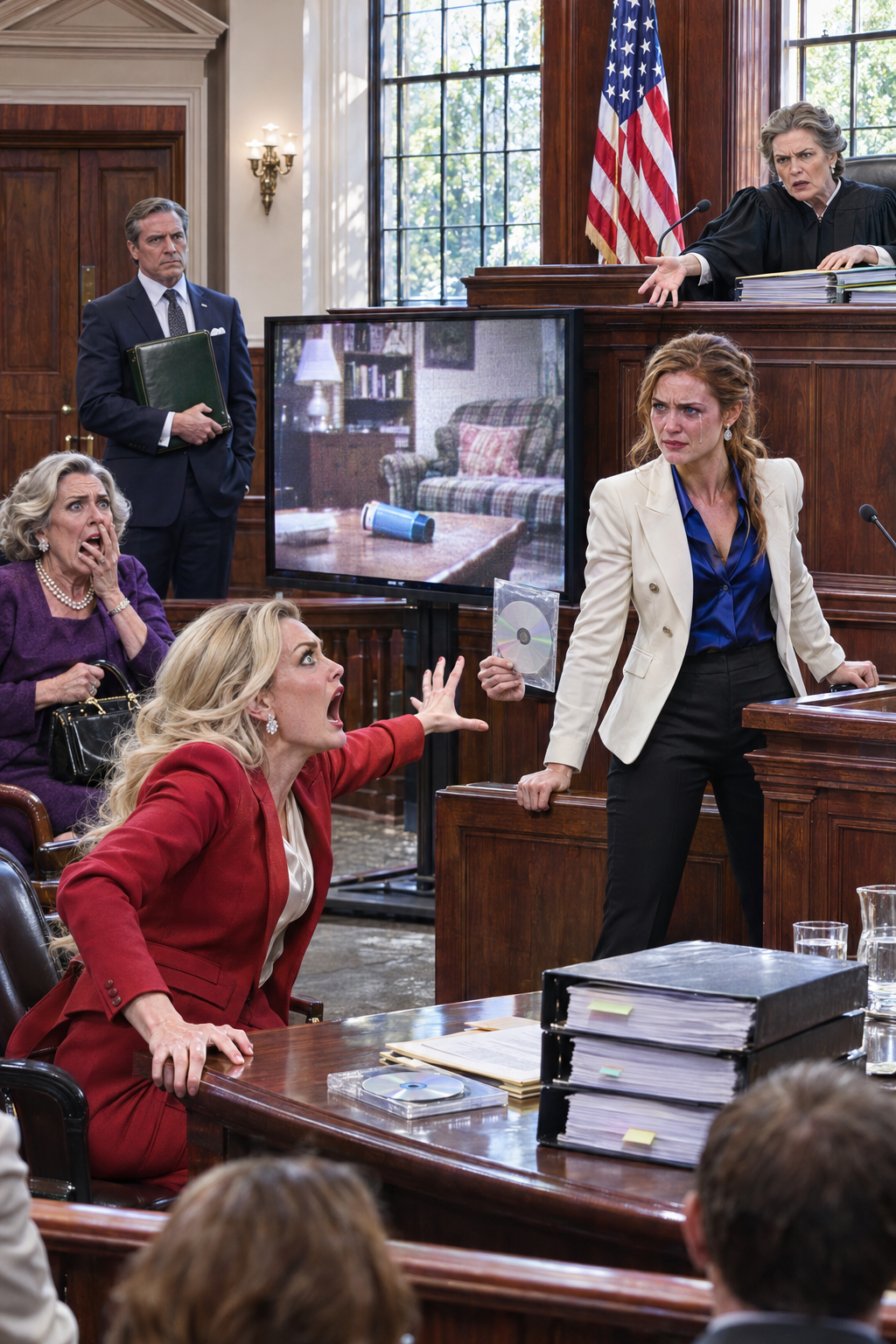
Simone displayed the electronic signing records on a monitor. The consent had been submitted from an email account created in my name, but its recovery address was my mother’s personal account. Verification messages went to her phone; no record supported her alleged video call. Her lawyer noted the records didn’t identify who clicked each button, but that did not prove I’d consented. The judge made notes; Mom avoided my eyes.
Then Simone introduced the 2013 letter. Grandpa wrote that he’d transferred the house to stop Dad pledging it for business loans. An attached reply, signed by Dad and retained in the lawyer’s files, said, “I understand the property is hers, and I won’t challenge that.” My father read his own words on the screen and stopped trying to explain what he thought the deed meant. Sweat darkened his collar as he asked for water.
Judge Halstead ruled that my recorded title stood, rejected my parents’ request for authority to transfer the property, and ordered the disputed rental and repair accounts preserved for further proceedings. Any reasonable expenses they claimed could be examined separately, but no maintenance bill entitled them to sell someone else’s land. Their attorney said they would consider their options, while Simone reminded me that additional accounting and potential allegations of fraud would require separate review. It was a quiet order that demolished their story. I felt relief, and grief that they’d chosen this.
In the hallway Mom grabbed my sleeve before Simone could reach us. “We are going to lose the house because of you,” she said, her voice sharp enough to turn two heads. I pulled free and said she couldn’t sell my property. Dad approached, carrying his folder like a shield, and said their business lender was demanding payment on Friday. He’d known that deadline when he sued me.
“Then speak to your lender,” I told him. He looked genuinely shocked by my refusal. “You’re our daughter,” he said, and I remembered every ceremony they’d skipped and every message they’d left unanswered. I asked where that word had been when they signed the complaint, and he had no answer.
Mom tried a different approach as we reached the elevator. “Your grandfather wanted this family together,” she whispered, suddenly sounding old. Grandpa’s letter proved he’d anticipated this pressure. I told her, “He protected my choice because he knew you wouldn’t.” Her face tightened, but she didn’t deny reading that warning years before.
That night, Ben called from the farmhouse while I was washing dishes. A moving truck was parked beside the barn, and two workers were carrying boxes out of Grandpa’s workshop under my father’s direction. I drove there while Simone stayed on the phone. I had won the right to keep the property, but my parents were still trying to decide which pieces of it I was allowed to have.
Part 5
Ben had parked his pickup across the workshop entrance. Dad stood beside the moving truck, furious at Ben. He claimed the tools were his, but I recognized Grandpa’s red toolbox and brass lamp. We photographed the boxes, and the movers agreed to leave them pending verification. One worker quietly apologized; he’d believed he was helping an elderly man clear a family workshop.
Dad stared at me as they drove away. “I was trying to save something of my father’s,” he said, and I looked past him at the house he had tried to sell. “So was I,” I answered. Out of arguments, he placed his keys on the porch railing when I asked for them. Ben changed the locks the following morning, while I made coffee and watched the sun catch the barn windows.
Over the next two months, the property accounting became a separate civil matter. An accountant identified rental income, repairs, taxes, and payments to my parents. Some repairs were legitimate, and I credited them. Rental proceeds exceeded supported expenses, and the settlement required repayment, withdrawal of claims, and cooperation with the signature inquiry. Neither parent was allowed to return without my written permission.
Their proposed sale fell apart, and the developer pursued the advance under its contract with them. I didn’t pay the $90,000, didn’t offer my house as security, and didn’t sign the statement my mother sent me saying it had all been a misunderstanding. My parents eventually sold their vacation condo to resolve their obligations. When the settlement was finalized, Simone called: “It’s yours without an asterisk now.”
Mom wrote three letters. The first accused me of humiliating my father, the second listed sacrifices she’d made while raising me, and the third finally said she was sorry. Once, that last letter would’ve convinced me twelve years could be repaired. I placed all three in the case folder and didn’t answer. Her words weren’t worth more to me simply because she’d waited until the documents proved her wrong.
An apology didn’t undo the knowingly false complaint, the rental contracts, or the attempted sale. I no longer wanted love offered after every other tactic failed. I sent a single message through Simone saying that I would not be meeting them or discussing reconciliation. There was no dramatic goodbye, just a boundary I intended to keep.
The farmhouse needed more work than I expected. Ben showed me where rain had seeped beneath a windowsill, and the porch boards creaked under even Scout’s weight. I spent weekends sanding doorframes, choosing paint, and restoring the height marks Grandpa had carved into the rescued piece of trim. He’d measured me at eight, eleven, and fourteen, joking about my posture.
I didn’t turn the place into a shrine. With help from a local veterans’ nonprofit, I converted the farmhouse into short-term lodging for military families traveling for medical appointments, training, and difficult moves. I kept a bedroom, hired a manager, and wrote clear rules for guests. The first family arrived with two suitcases, a sleepy child, and a request for extra towels; I showed them the kitchen and pointed out the porch swing. The child asked if the old oak tree was theirs to climb, and I smiled for the first time all week.
On the first anniversary of the lawsuit, I returned to the courthouse to collect a certified copy of the final order. Nobody recognized me in jeans and a green jacket, and that was fine. A young sailor held the door for an older man, and I remembered craving my parents’ approval. I no longer needed their surprise, their pride, or their permission.
That evening I sat on Grandpa’s rebuilt porch while Scout slept against my boots. Lights glowed in the guest rooms, and laughter drifted through an open kitchen window as somebody searched for a missing bottle opener. My parents had called my uniform a disgrace, then tried to make my absence a reason to take what was mine. They were wrong about both things, and I didn’t need them to admit it to know I was finally home.
Legal Notice: This story is a work of fiction. Names, characters, businesses, events, and incidents are the product of the author’s imagination or are used fictitiously. Any resemblance to actual persons—living or dead—or to actual events is purely coincidental. Thank you! 💓