My Husband Abandoned Me in Labor for His Mother’s Birthday—Then His Billionaire Boss Called Me His Daughter
I was thirty-nine weeks pregnant when my husband told me to call a cab because his mother’s birthday dinner mattered more than our baby. By midnight, our son was in intensive care, and a stranger with my eyes was standing outside my hospital room. He was the billionaire who signed my husband’s paychecks, and he called me his daughter. I thought the worst betrayal was being abandoned during labor. Then he showed me a letter my husband had hidden for five weeks—and a document supposedly signed while I was unconscious.
Part 1
“Caleb, I need you home.” I was sitting on our kitchen floor in Seattle, one hand pressed to the cabinet while rain drummed against the windows. I was thirty-nine weeks pregnant, my water had broken, and something about the sudden pain felt wrong. Through the phone I heard a string quartet playing at his mother’s sixty-fifth birthday party.
“Mom only turns sixty-five once,” Caleb said, his voice stiff with embarrassment. “If you’re really in labor, call a car.” I told him the baby hadn’t moved the way he usually did, but his mother, Sylvia, spoke loudly enough for me to hear: “Don’t let Lena turn my evening into another one of her emergencies.” Caleb said he’d come after the speeches, then hung up.
I stared at the dark screen, expecting an apology. Seven years of marriage had taught me Caleb minimized anything that interrupted his plans, but I hadn’t imagined he’d do it tonight. I called 911 and followed the dispatcher’s instructions. The lemon-scented cleaner on our floor made me nauseated.
I pulled myself toward the front door, whose latch sometimes jammed. My elbow struck a stack of mail Caleb had told me to ignore, sending an ivory envelope sliding across the floor. It was addressed to me, from a downtown law firm, and someone had already opened it.
The first page mentioned “your biological parentage.” June, the aunt who raised me, had said my birth parents were gone, and she died before I asked the hardest questions. Another contraction interrupted my reading. I slipped the letter into my pocket and unlocked the door.
The paramedics arrived with wet boots and calm voices. One checked me while another carried my bag to the ambulance. I called Caleb as we pulled away, but reached voicemail. City lights blurred through the rain-streaked window as a medic assured me, “We’re taking care of you.”
At the hospital, the care team examined me quickly and explained that my baby was showing signs of distress. They recommended an urgent cesarean delivery, and I signed the consent form with a hand that wouldn’t stop shaking. When a nurse asked whether my husband was coming, I looked at the unanswered messages on my phone. “Apparently not,” I said.
I asked the nurse to secure the envelope with my belongings. Its first page named Graham Whitlock, founder of the financial company where Caleb worked. My husband spoke about Whitlock like a force of nature, powerful and untouchable. What could his employer know about the family I’d lost?
There wasn’t time to investigate. A nurse adjusted my blanket, another checked the monitors, and the room became a blur of bright lights and clipped instructions. I thought of the pale blue pajamas I’d folded into the nursery drawer that afternoon. I wanted nothing more than to hear my son cry.
When I woke, my mouth was dry and the room smelled of antiseptic. My son had been delivered safely, a nurse explained, but needed breathing support in the neonatal intensive care unit. I begged to see him, and she promised I could once I was stable. I cried into the blanket.
Near dawn, a woman in a charcoal suit appeared at my door and introduced herself as attorney Nadia Shah. She said she’d received an urgent message from the firm’s overnight service after the hospital helped me call the number on the envelope. Behind her stood a tall silver-haired man with a damp overcoat folded over one arm. I recognized his face from Caleb’s company holiday newsletter.
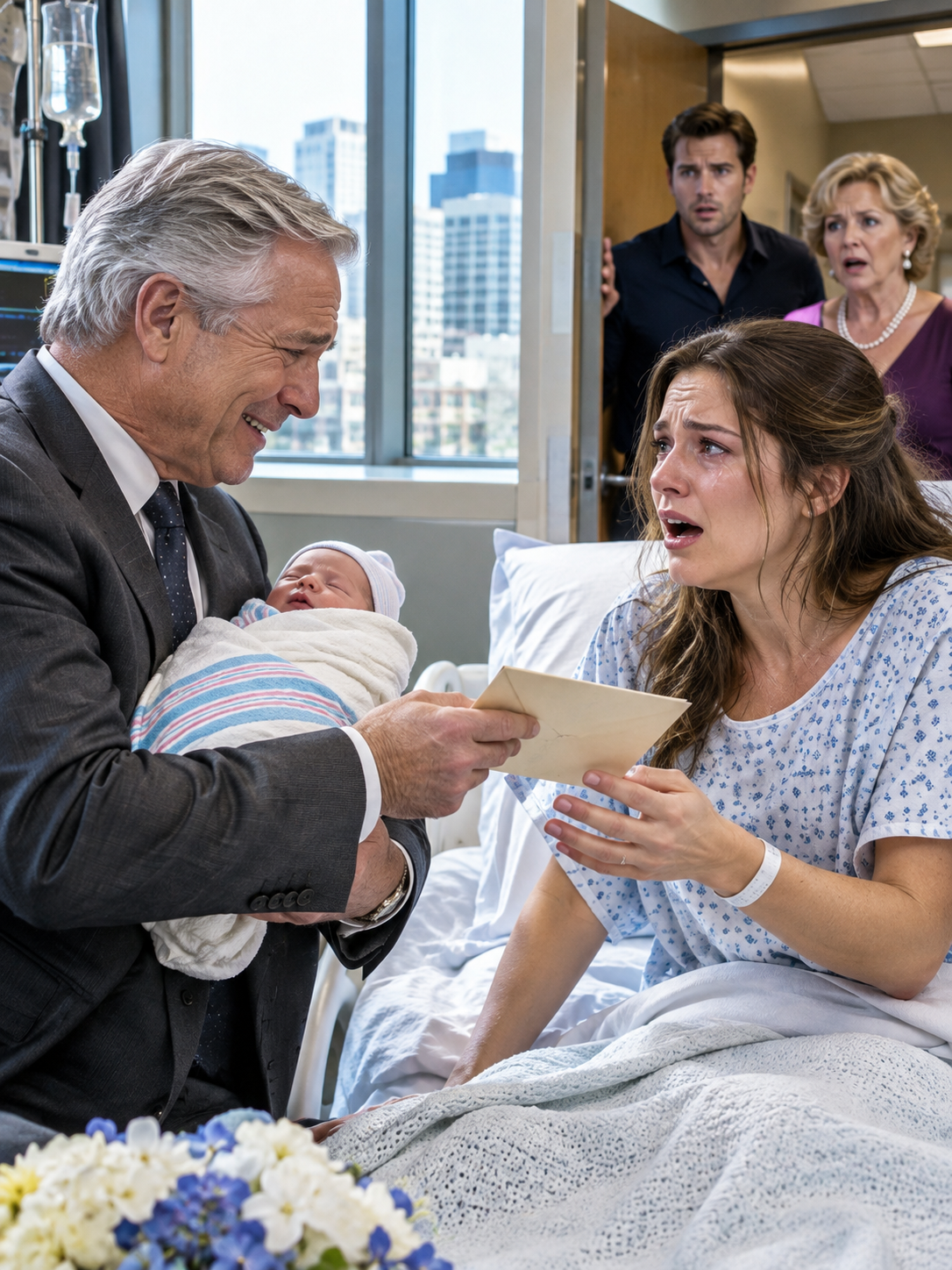
“Mr. Whitlock?” I whispered, gripping the edge of my blanket. His eyes filled when he looked at me, and I noticed they were the same unusual gray-green as mine. He stepped closer but stopped when I stiffened, giving me room to decide whether he could approach. “Lena,” he said, his voice shaking, “I believe I’m your father.”
Part 2
I stared at Graham Whitlock as sunrise caught the rail of my hospital bed. He didn’t reach for me; instead, he set a worn photograph on the tray. A young woman with my crooked front tooth laughed beside a bicycle. “Elise Hart,” he said. “Your mother.”
June had raised me in Spokane, and I called her Mom despite knowing she was my aunt. She’d said Elise died when I was a baby and my father disappeared. Graham told me his wealthy family opposed their planned marriage. Someone sent each of them a forged letter saying the other had chosen to leave.
“Why didn’t you look for us?” I asked. Graham rubbed his hands together and admitted he’d let shame become an excuse. “I accepted an answer I should have questioned,” he said. “That wasn’t enough, and I won’t pretend otherwise.” For once, a powerful man wasn’t demanding I excuse him.
After his father died that spring, Graham found Elise’s undelivered letters in a cabinet. Nadia traced adoption records and located me through my marriage certificate. Graham wanted to offer proof without pressuring me. Two letters had been sent to our house, and Caleb signed both delivery receipts.
“Five weeks ago, Caleb called the envelope work mail,” I said. I remembered him crumpling paper at the recycling bin, insisting pregnancy made me suspicious. Nadia laid a duplicate letter beside the one I’d saved. It offered records, an independent DNA test, and a chance to meet without obligation.
The second letter explained a trust Graham had established for me, contingent on verification of my identity. Nadia said I didn’t need to make financial decisions while recovering. The potential amount could change my son’s future, but I could barely process that. I wanted my baby first.
A nurse brought me to the NICU that afternoon, where machines hummed softly around rows of incubators. My son, Miles, lay bundled beneath a tiny knitted cap with one hand resting near his cheek. The doctor said he was improving, although he still needed monitoring. I pressed my finger against his palm, and he curled his fingers around it.
Graham waited outside until I invited him closer. He watched Miles with such careful wonder that I couldn’t tell whether his tears were for the baby or for the daughter he’d missed. “Can I call him my grandson?” he asked, and I nodded. I wasn’t ready to call Graham Dad, but I was ready to let him stand beside us.
Later, when the nurse said Miles could be held briefly, I settled him into Graham’s arms. The man whose photograph hung in corporate offices looked terrified of dropping a seven-pound baby. Miles gripped his finger, and Graham laughed through tears. For a moment we were simply three people meeting each other, without lawyers or money between us.
Caleb arrived smelling of cologne and birthday cake. He carried grocery-store flowers and claimed he’d spent the night trying to find me. I asked why he’d ignored my messages. When he saw Graham standing beside my wheelchair, his expression collapsed.
“Sir, I didn’t realize you’d be here,” Caleb said, straightening his jacket as if we were at an office reception. Graham’s voice stayed level. “Your wife and newborn needed you long before I arrived.” Caleb insisted I’d exaggerated the emergency, until I told him Miles had required intensive care. Even then, his first question was whether Graham had said anything about him.
I held up the envelope. “You signed for this, didn’t you?” Caleb said he’d hidden it to spare me stress, then stumbled when I asked why he’d lied about its sender. I told him to leave. He glanced toward Nadia’s briefcase instead of our son’s room.
After security escorted him out at my request, Nadia showed me a filing the trust office had flagged. Someone had submitted an authorization naming Caleb my representative. The signature looked like mine, but it was dated during my surgery. Who had signed my name while I was unconscious?
Part 3
The signature copied my rounded L and the little slash beneath my surname. I knew it wasn’t mine; I’d been in surgery at the recorded time. Nadia said the trust office had rejected the authorization and referred it for review. No money had moved, but someone had tried to speak for me.
I asked Nadia to explain every page. The disputed power of attorney included a notary record claiming I’d appeared at a shipping store that morning. “But I was here,” I said, showing her my hospital wristband. “And the medical records will prove it,” she answered.
Graham offered his company’s lawyers, but I wanted independent representation. He agreed without argument. By afternoon, I’d hired an attorney who represented me, not his business. It was my first decision since the ambulance that felt entirely mine.
My attorney asked whether Caleb had ever tried to arrange financial authority over my affairs. I remembered the folder he’d left by our breakfast plates two months earlier, calling it routine planning for the baby. When I asked why it gave him access to accounts in my name, he’d laughed and said I was reading too much into the wording. I’d refused to sign, but I remembered how quickly his expression hardened when I put the folder away.
Investigators reviewed the paperwork and shipping-store cameras. A woman wearing a low scarf had presented a copy of my identification; the notary’s checks were under scrutiny. A clearer parking-lot image showed her beside Caleb’s car. I recognized his coworker Paige Nolan, who’d once called me “the lucky wife.”
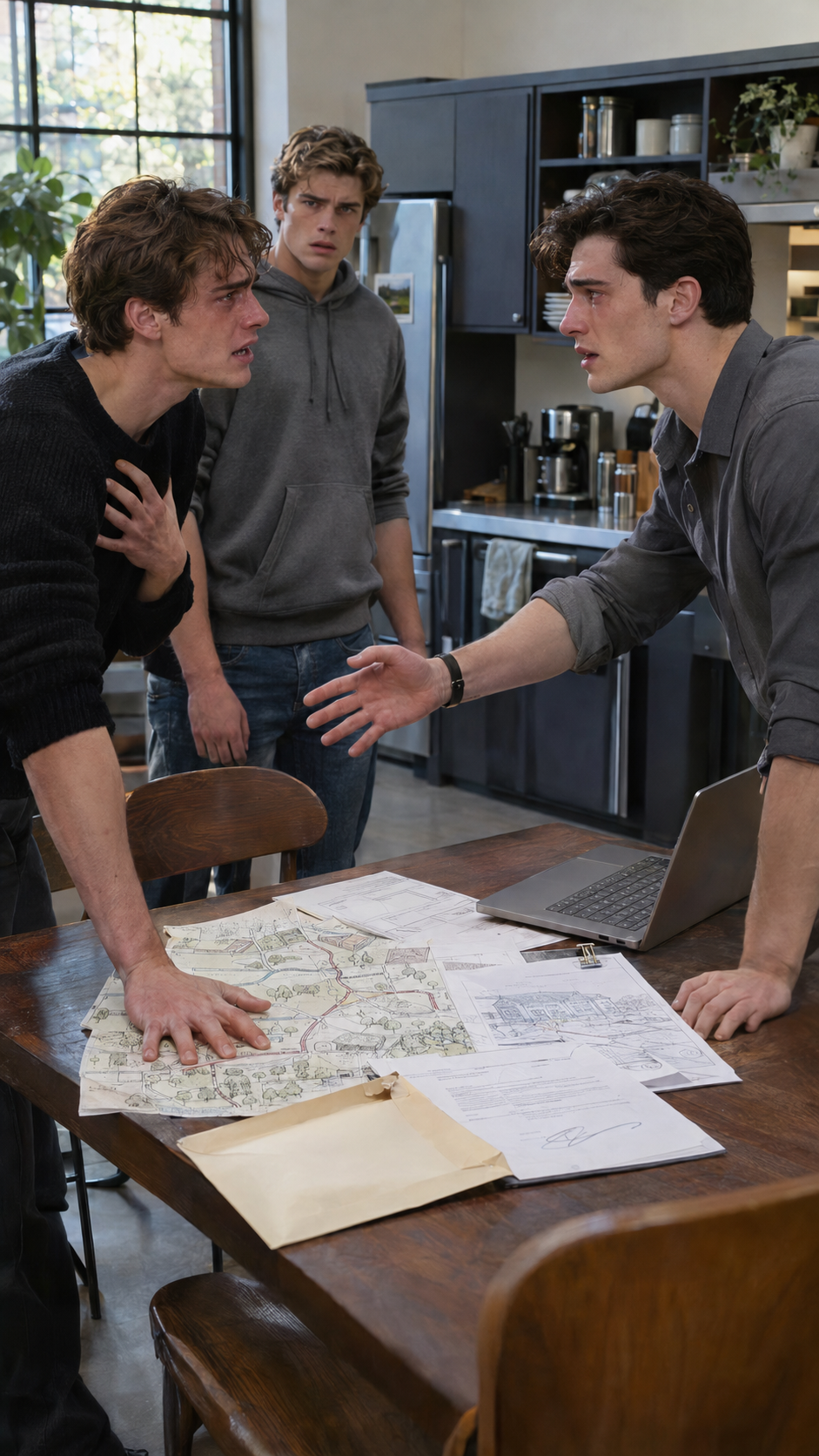
Caleb denied arranging the signature and said Paige was helping with paperwork. Investigators found messages about the trust and hotel reservations suggesting their relationship went well beyond work. I remembered late meetings and his phone turned facedown at dinner. One abandoned night was revealing an entire hidden life.
An older company email delivered the next blow. Months before our wedding, Caleb had asked a researcher whether an adoption notice connected “Lena Hart” to Graham’s family. He hadn’t known for sure, but he’d proposed to me three weeks later. I wondered which memories he’d staged and which he’d meant.
I asked Graham if he’d hired Caleb because of me. “No,” he said, visibly angry. “He joined before I knew your married name.” His company began an independent employment review after the allegations surfaced. Graham kept out of the decision, as he promised.
Sylvia called while I sat near Miles’s incubator. She didn’t ask about her grandson; she demanded I stop “turning a family disagreement into business.” I described the hidden letters and disputed signature. After a pause, she said, “Think about what your husband stands to lose.”
I ended the call and asked to hold Miles. The nurse arranged his blankets and monitors, and his cheek settled warm against my chest. I’d spent seven years treating Caleb’s moods and Sylvia’s approval as measures of being a good wife. I wouldn’t raise Miles to believe love meant surrendering his judgment.
A week later, Graham and I arranged an independent DNA test. We waited without pretending the result could create an instant relationship. When it confirmed our connection, he asked to visit. I agreed to coffee and the truth, not a ready-made family.
Once discharged, I filed for divorce and concentrated on Miles. Caleb was placed on leave while his employer investigated, and authorities reviewed the disputed documents. Paige’s lawyer then provided messages Caleb sent during Sylvia’s party. One read, “She’ll be too distracted tomorrow to notice what we file.”
The message beneath it was worse: “Don’t tell Mom until it’s done. She thinks I’m only hiding the letters.” I sat in my attorney’s office, listening to the radiator tick, and understood Sylvia hadn’t merely been cruel during my emergency. She had known about the letters all along. What else had she helped Caleb keep from me?
Part 4
Sylvia had seen Graham’s first letter when Caleb asked her to collect our mail during a weekend away. Investigators found she’d helped conceal it, but not that she’d participated in the forged document. She insisted Graham had wanted to embarrass Caleb. “So you decided I couldn’t know my father?” I asked on our last call.
“You would have left my son,” she replied, as if that settled everything. I watched Miles sleeping and knew she’d never been frightened for me during the emergency. She’d feared only what Caleb might lose. “You won’t decide anything for me or my child again,” I said, and hung up.
Miles came home after twelve days, with follow-up appointments scheduled. I carried him into a rented townhouse instead of returning to the house where I’d begged Caleb to help me. The rooms smelled of fresh paint, and a crooked maple stood outside the kitchen. Every key belonged to me.
Graham visited Saturdays with groceries and burp cloths. Once he brought a crooked bookshelf he’d built himself. He told stories of Elise teaching English and making him read novels he once dismissed. He never demanded I call him Dad or pretend his money could replace trust.
One afternoon he brought a shoebox of letters Elise had written, their envelopes yellowed at the edges. We read one together at my kitchen table while Miles slept nearby. Elise had described the rain in Spokane, her students’ terrible poetry, and the baby she hoped would inherit Graham’s eyes. I had mourned a mother I barely remembered; now, for the first time, I could hear her voice in her own words.
The verified trust was placed under independent administration, with advisers I’d chosen. I kept working as a freelance architectural illustrator and opened savings for Miles. Graham smiled when I said I wanted my own income. “Your life belongs to you,” he said.
The legal case moved more slowly than the online rumors about a wealthy executive’s hidden daughter. Evidence supported charges relating to the disputed authorization, and Caleb eventually entered a plea agreement that included restitution and court-imposed conditions. Paige’s involvement was handled separately, and the company terminated Caleb after its own review. I refused interviews; my son’s early months weren’t public entertainment.
Our divorce was finalized after careful negotiations. Miles lived primarily with me under a parenting plan approved by the court, and Caleb’s contact followed the arrangements established for our child’s welfare. I never told Miles his father was worthless, because he deserved room to form his own understanding someday. But Caleb would never again be my partner, and I no longer answered personal appeals disguised as apologies.
Caleb wrote that he’d made mistakes and wanted us back. He described missing my laughter but barely mentioned leaving me to find emergency care alone. I didn’t reply. The divorce and the life I was building were answer enough.
Six months after Miles’s birth, Graham invited us for a picnic beside Lake Washington. Wind lifted the blanket while Miles tugged his grandfather’s shirt. Graham showed me a snapshot of Elise outside a bookstore. “She said ordinary afternoons were the ones you remembered,” he said.
“Are you ever going to forgive him?” Graham asked carefully, meaning Caleb. I watched two kayaks glide over the water and considered how different that question felt when nobody was demanding a particular answer. “No,” I said. “I won’t spend the rest of my life angry, but I won’t call what he did love.” Graham nodded and didn’t try to change my mind.
That night I placed Graham’s first letter beside Elise’s photograph. Five weeks of silence had almost stolen the chance to know my father, and one awful night had exposed the marriage I needed to leave. But the story didn’t end with a billionaire rescuing me or a remorseful husband. It ended with my son safe in his crib, my name on the lease, and a future nobody else could sign away.
Legal Notice: This story is a work of fiction. Names, characters, businesses, events, and incidents are the product of the author’s imagination or are used fictitiously. Any resemblance to actual persons—living or dead—or to actual events is purely coincidental. Thank you! 💓