I Offered the Single Dad Who Saved Me Everything—Then He Showed Me a Signature I Never Wrote
I asked the man who pulled me from a freezing Ohio river a question I never imagined asking anyone: “Will you stay if I undress?” Twenty-four hours earlier, I was a billionaire CEO planning my wedding. Now my fiancé had helped remove me from my own company, my car was at the bottom of the Maumee, and I was wearing a dead woman’s flannel shirt. The single dad didn’t take what I offered. Instead, he showed me one piece of mail that changed everything.
Part 1
By eight on Tuesday morning, I was still planning to marry Nolan Price. By nine, I was staring at a resolution removing me from the company I’d built, while Nolan sat beside the woman who’d written it. The coffee in my hand had gone cold, but I could smell the cinnamon rolls untouched on the conference table.
“Loss of confidence,” said board chair Vivian Sloane, tapping the page with one lacquered nail. I was forty-one, founder of Ridgeway Logistics, a freight business I’d grown from two borrowed trucks into operations across nine states. Now Vivian spoke to me like an intern who’d misplaced a receipt.
“Loss of confidence from whom?” I asked. Nolan, my fiancé and supposedly our outside acquisition consultant, pushed forward a buyout offer valuing my thirty-one percent stake at a quarter of its recent appraisal. “Take the money, Claire,” he said. “You’ll never have to worry again.”
“You can’t force me to sell,” I said, pulling off the diamond ring Nolan loved to describe by its price. Vivian glanced at the company lawyer, who suddenly found his hands fascinating. I left the ring on the glass table and walked out before they could see me cry.
Rain struck my windshield as I drove toward the Maumee River outside Waterville, Ohio. I needed somewhere private to call an attorney, somewhere I could stop shaking. The steering wheel jolted, a tire burst, and my sedan spun through a weakened guardrail before the road vanished beneath me.
The river hit like a wall. I remember fighting my seat belt and forcing open the door as icy water swallowed the dashboard. Then the current pulled me away, and a man’s voice shouted, “Look at me. Keep looking.”
Owen Mercer had been checking a fishing line when he heard the crash. A single father who repaired diesel engines, he dragged me onto the muddy bank, called emergency services, and stayed through the hospital assessment. When I was discharged later, shaken but medically cleared, he offered me a place to rest while I arranged somewhere safe to go.
His kitchen smelled of woodsmoke and toast. He lent me sweatpants and a red flannel shirt, then looked away while I changed. “That belonged to my wife,” he said afterward, glancing at a photograph above the bookshelf. “She died three years ago. I hope it’s okay.”
At the door, Owen checked his watch. “I have to pick up my daughter,” he said. “My neighbor will stay until I’m back.” Panic rose in my throat, and I offered him money: ten thousand, fifty thousand, whatever he wanted. He only shook his head.
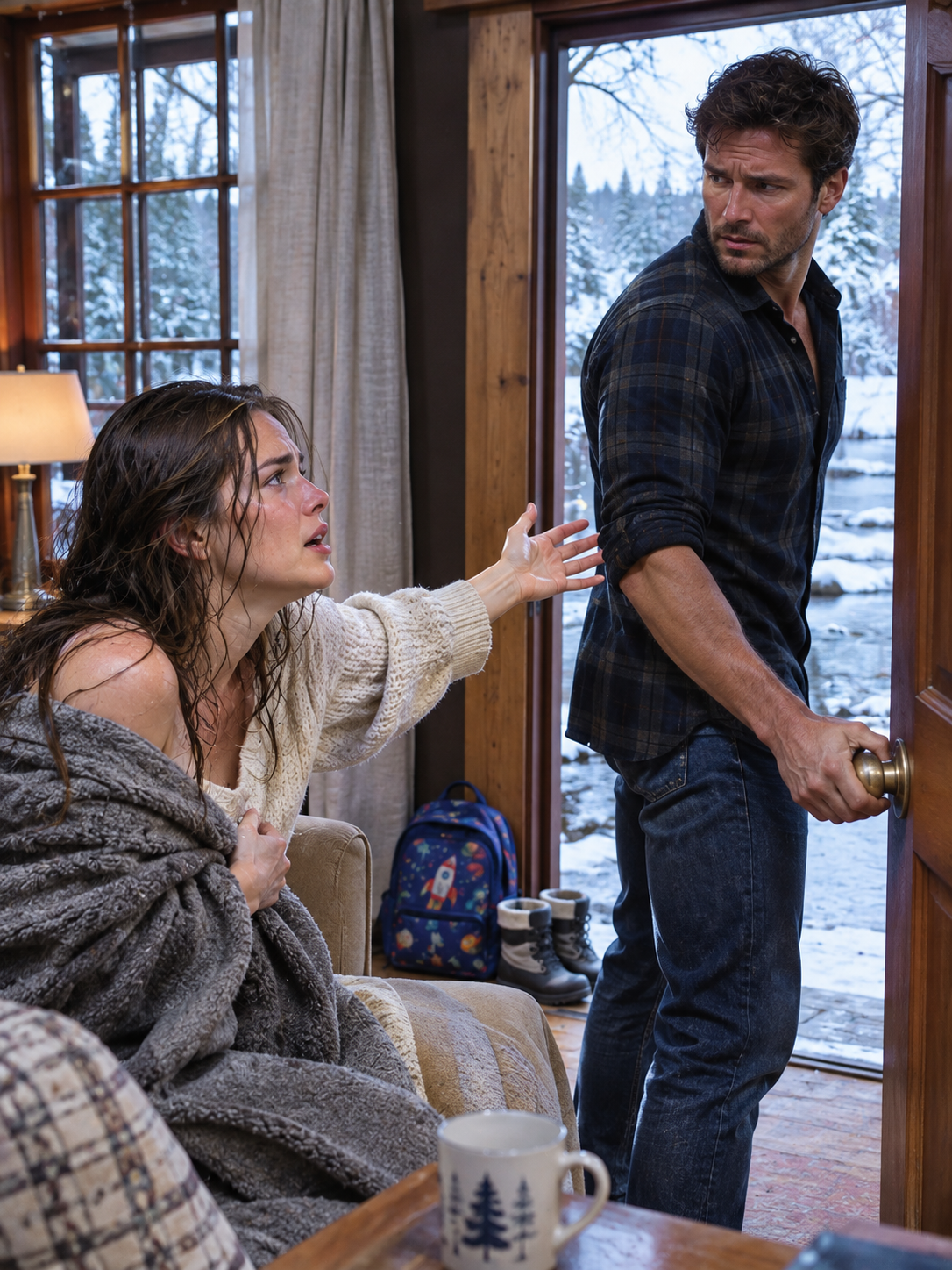
“Will you stay if I undress?” I blurted, grabbing the hem of the flannel. Owen stopped, returned just far enough to draw a blanket around my shoulders, and said, “No. You never owe someone that for being kind.” He called his neighbor, waited for her to arrive, and I cried at his decency.
When he returned, his six-year-old daughter, Maisie, brought me tea with three marshmallows floating in it. She asked whether my car had really gone into the river, and Owen gently changed the subject. My phone lit up with seven messages from Nolan insisting I stop “making things complicated.”
Owen noticed the company name on the screen. “Ridgeway Logistics?” he asked, opening a drawer of repair receipts. He’d serviced their trucks until headquarters abruptly canceled his contract, and a strange ownership notice had arrived afterward. “I figured someone made a mistake,” he said, handing me the folded paper.
Attached was a voting-proxy certification dated the day before the board meeting. Beneath it sat my signature, complete with a flourish I’d stopped using five years earlier. Someone had signed away my voting rights, and whoever it was had copied the wrong version of my name.
Part 2
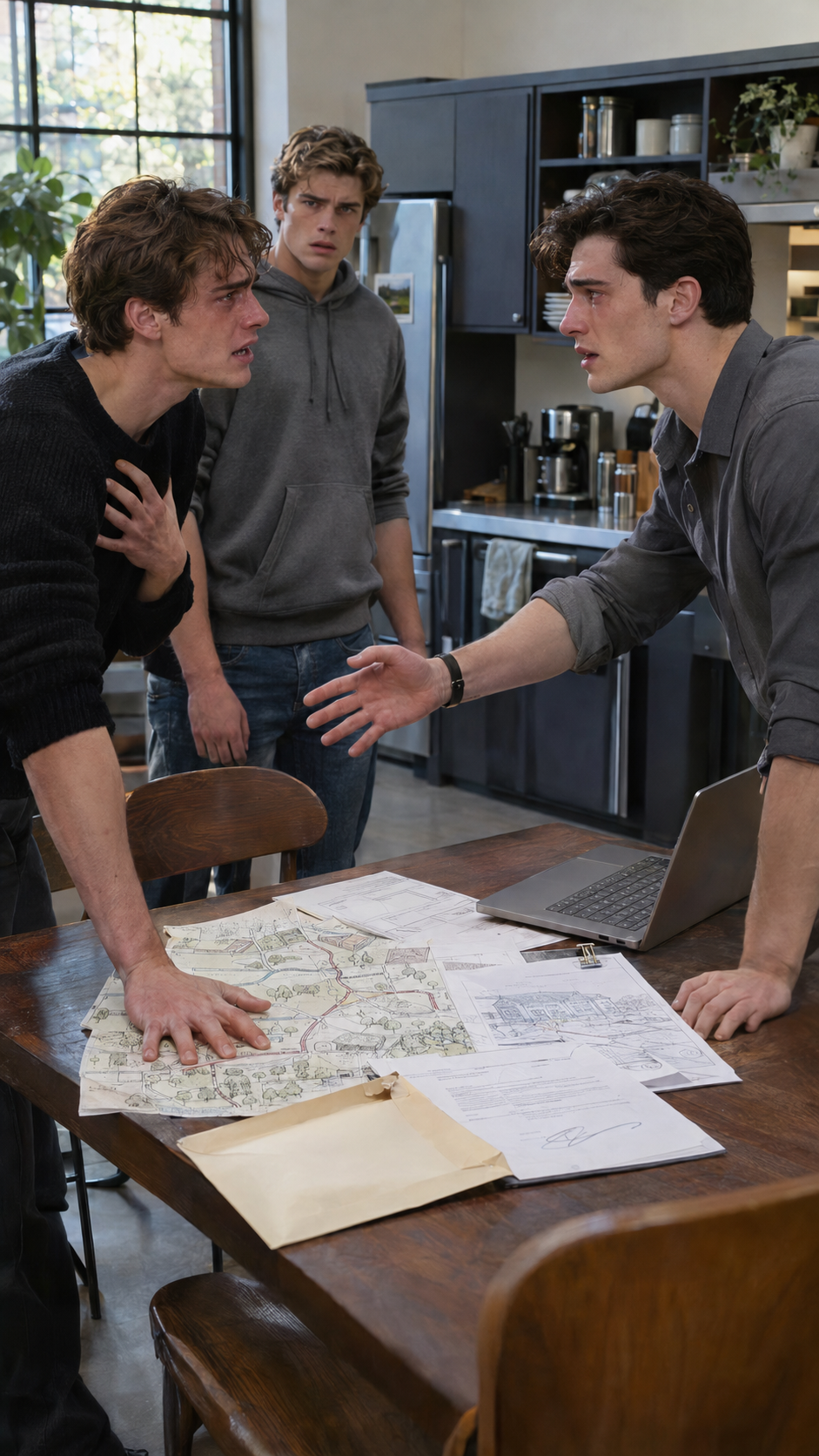
I spread the notice across Owen’s kitchen table while Maisie colored a picture of a blue horse. The proxy didn’t sell my shares outright; it gave a newly formed company the right to vote them for eighteen months. With my thirty-one percent added to Vivian’s allies, they could approve the takeover I’d spent a year refusing.
“Could a clerk have copied an old signature?” Owen asked. I wanted that explanation, but the form listed an electronic notarization and a certificate number assigned to my personal signing device. That device lived in my home safe, and Nolan knew the combination. I suddenly remembered him asking whether my signature software needed updating.
I borrowed Owen’s charger and called my former corporate attorney, Beth Kessler, whose number I’d memorized during our first warehouse lease. She listened without interrupting, then said, “Don’t go home, and don’t contact Nolan. A copied signature isn’t enough by itself, but the certificate records may tell us whether it was authorized.”
Nolan called as if he’d heard her. “Claire, please be reasonable,” he said when I answered once, with Beth listening on another line. “You signed the proxy during our financial planning session.” I remembered that session perfectly: two glasses of sparkling water, an argument about wedding guests, and no documents. “Then you won’t mind showing Beth the original,” I replied.
His silence lasted three seconds. “You’re exhausted. You drove into a river yesterday.” He sounded concerned until he added, “People might question your judgment.” I ended the call and saved the recording; for the first time, my fear had a shape other than water.
The next morning, Owen drove me to Beth’s office in his pickup, which smelled of motor oil and peppermint gum. He’d borrowed a neighbor’s car to get Maisie to school, refusing my offer to reimburse him until I promised to cover the fuel. Outside the office, he said, “I don’t know corporate law. I know a machine leaves traces when somebody uses it.”
Beth’s digital-forensics consultant inspected a backup log from the signature service. A certificate matching mine had been used at 2:14 Monday morning, but the login originated from a newly registered workstation, not my authenticated laptop. The system showed a manual override that required approval from Ridgeway’s internal compliance administrator.
“Who holds that approval?” Beth asked. “Edgar Pike,” I said, naming our general counsel and oldest surviving executive. Edgar had negotiated my first financing agreement and sent flowers when my mother died. I couldn’t picture him forging anything, which suddenly seemed like a poor reason to trust him.
Beth filed notices to preserve Ridgeway’s digital records and prepared an emergency court petition to block the proposed acquisition vote. We still needed the physical token and evidence showing who ordered the override. Nolan had access to my safe, and the company had just revoked my building badge.
That afternoon, Owen stopped at his old repair yard to pick up a folder he believed might help. I accompanied him because Beth wanted every contractor notice we could find. The bay smelled of diesel and wet concrete, and a mechanic told us the entire maintenance route was being handed to a brand-new vendor called North Basin Services.
Owen studied the vendor name stamped on a shipping label. “They offered to hire me back for half my rate,” he said. “Same trucks, same work, just somebody else taking the margin.” He didn’t sound angry until the mechanic added that three other independent shops had already been cut loose.
Back at Beth’s office, her consultant found that North Basin and the company holding my proxy shared a mailing address. That could mean little more than a common incorporation service, Beth warned, but it justified more questions. I watched Owen fold his daughter’s school drawing into his wallet and wondered how many families my board planned to squeeze.
At dusk, Beth obtained a hearing for the following morning. Then she received a scanned page from Ridgeway’s records department: a request to reissue my signing credential, bearing two approvals. One was Edgar’s. The other came from the employee whose loyalty I had never once questioned.
Part 3
The second approval belonged to my chief operating officer, Lena Voss. For fourteen years we’d survived breakdowns and layoffs together; she’d even held my mother’s hand at the hospital. Seeing her name beside Edgar’s felt less like a business loss than discovering a stranger wearing my friend’s face.
“An approval isn’t proof of intent,” Beth cautioned, putting the page between us. “Someone could have misused her credentials.” I wanted to believe that, so I called Lena from Beth’s office. She let it ring, then texted, “I’m sorry. Nolan said this would be easier if you stepped aside.”
The hearing room had beige walls and a thermostat stuck on tropical. Nolan arrived in a tailored charcoal suit, sitting behind Vivian and Edgar, while their attorney suggested I’d authorized the proxy and later regretted it. He mentioned the accident twice, as though falling into a river could somehow make an earlier signature authentic.
Beth presented a sworn report from the forensic consultant, the mismatched certificate log, and the rush request for a replacement credential. She asked only for an emergency order preserving the ownership and voting status quo while the disputed documents were examined. When the judge asked Ridgeway’s lawyer for the original authorization, Edgar couldn’t explain why its supposed notarization referenced an inactive device.
The judge temporarily blocked use of the proxy and postponed the acquisition vote pending further proceedings. It wasn’t a verdict, but I finally breathed when Beth whispered, “They can’t close the deal tomorrow.”
In the hallway, Nolan intercepted me beside a vending machine that hummed louder than his apology. “I was protecting you from a board that had already decided to push you out,” he said. “If we handle the settlement quietly, we can still have the wedding.” He reached for my hand, and I stepped back before his fingers touched my coat.
“You tried to steal my vote,” I said. He lowered his voice. “You never knew when to stop working, Claire. Somebody had to make the difficult decision.” For a moment, I saw the man I’d planned to marry; then I realized he was explaining why my refusal had never mattered to him.
Owen waited outside beside his rusty truck, holding two paper cups of coffee. He didn’t ask what Nolan had said, only whether I needed a ride. I told him the vote was halted, and he smiled before remembering his own canceled repair contract. “My people could use one piece of news like that,” he admitted.
At the farmhouse, Maisie insisted I help with a cardboard solar system for school. Owen cut holes in a shoebox while I colored Saturn’s rings, and neither asked about lawyers or shares. When Maisie announced that Pluto deserved a planet again, Owen agreed solemnly, and I laughed until my eyes watered.
After she went to bed, Owen told me how his wife, Rachel, had died after a long illness. He’d spent months expecting someone to tell him the right way to be both parents. “Nobody did,” he said, folding a dish towel. “I just kept showing up.” I had measured my worth by control; Owen measured his by showing up.
The next day, Beth’s court-authorized document preservation process uncovered internal invoices from North Basin Services. Some charged Ridgeway for work Owen’s former crew had already performed, and others billed for maintenance no one could verify. Lena had approved those payments; Vivian had overruled a finance manager who questioned them.
Beth sent the findings to investigators and sought broader financial records. I read statements from mechanics who’d lost contracts and drivers who’d been told there was no money for raises. The people I’d promised to protect had been financing the scheme against me, and they hadn’t even known it.
Then Beth found an email Nolan had sent Lena six weeks before our engagement party. “Once Claire’s voting block is neutralized,” it read, “North Basin becomes the preferred service vendor and we recover our investment.” I had been arranging flowers and place cards while the man beside me scheduled the dismantling of my life’s work.
Part 4
For the next four months, I learned the difference between winning a hearing and reclaiming a company. The temporary order bought time, not trust. Beth’s team followed bank transfers and vendor invoices while auditors traced payments to businesses connected to Nolan, Vivian, and Lena.
Edgar resigned before he could be questioned at a shareholder meeting. Lena tried calling me, leaving messages about how she’d felt trapped between competing interests. I listened to one and deleted the rest. Being afraid of losing a promotion did not excuse taking away a livelihood that belonged to twelve hundred people.
I moved into a rented apartment, though I was a billionaire on paper. Huge, quiet rooms had begun to frighten me. Owen never treated that contradiction as embarrassing. He just called every few days and asked whether I’d eaten dinner.
The legal outcome came in pieces. A court invalidated the proxy after forensic review established I had never authorized it. The proposed acquisition collapsed, investors demanded a new board, and my remaining allies helped restore me as chief executive. State investigators later brought fraud-related charges, while civil proceedings sought repayment of the diverted funds.
Nolan wanted a private meeting before the civil settlement. Beth offered to handle it, but I chose to attend with her beside me because I wanted my answer to be unmistakable. He looked thinner, without his expensive watch, and opened by saying, “We were supposed to be partners in everything.”
“We were,” I replied. “That’s why I trusted you with my home and my future.” He said Vivian had manipulated him and he still loved me. His apologies kept circling back to what he’d lost, and not once did he ask about the people his scheme had put out of work.
“Can you ever forgive me?” he asked. Rain ticked against the conference-room glass, almost the same sound I’d heard before the crash. “No,” I said. “And I don’t need to hate you to mean it.” I stood, left the rest to Beth, and didn’t look back.
Back at Ridgeway, the fluorescent lights were as unforgiving as ever, but the desks were filled with people who had stayed despite uncertainty. I met the mechanics whose contracts had vanished and listened without making promises I couldn’t keep. Their grievances showed me that restoring my signature was only the beginning; I had to rebuild the rules that gave it power.
We established independent procurement reviews, worker reporting channels, and transparent bids for regional maintenance work. Small garages could compete directly, with fair payment terms. I insisted on a conflict-of-interest review for every vendor I knew personally, starting with Owen’s shop.
Owen applied only after I told him the process was open to everyone and I would take no part in selecting the winner. He submitted references, safety records, and a proposal to employ several mechanics who’d lost their work. When his cooperative won a three-year contract on its merits, the procurement director phoned him, not me.
I visited the garage one October afternoon. Air compressors rattled, and Maisie’s cardboard solar system hung above Owen’s desk. I brought the washed red flannel in a paper bag, unsure whether returning it would feel like giving back something I still needed.
Owen held it for a moment, brushing his thumb along the cuff. “Rachel always said that shirt was warmer than it looked,” he said. I told him she’d been right, and that I hadn’t forgotten how he’d covered my shoulders when I was certain kindness came with a price. He didn’t make a speech about saving me; he asked whether I’d join him and Maisie for chili after work.
I said yes, not because I owed him anything and not because I needed someone to rescue me again. Outside, the river moved through the town beneath an ordinary blue sky. I had once offered a stranger everything because I thought I had nothing left; now I knew the one thing nobody could take was my right to choose what I gave.
Legal Notice: This story is a work of fiction. Names, characters, businesses, events, and incidents are the product of the author’s imagination or are used fictitiously. Any resemblance to actual persons—living or dead—or to actual events is purely coincidental. Thank you! 💓