I Came Home to Find My Wife Unconscious and My Seven-Day-Old Son Seriously Ill—Then the Doctor Looked at My Mother and Said, “Call the Police!”
My son was only seven days old when I returned from a business trip and found him dangerously ill beside my unconscious wife. My mother and sister had promised to take care of them, but neither seemed surprised when I discovered what had happened. At the hospital, a doctor examined my family, turned pale, and ordered someone to contact the police. I thought I was witnessing a terrible medical emergency. What investigators eventually uncovered proved that the truth was far more heartbreaking than I could have imagined.
Part 1
The first thing I noticed when I walked into my house that morning was the silence. There should have been a baby crying, water running in the kitchen, or my wife softly singing the ridiculous little songs she had invented for our newborn son. Instead, the air conditioner hummed over the smell of abandoned takeout, and my mother lay asleep on our couch as though nothing in the world required her attention.
My name is Ethan Mercer, and until that morning, I believed my family was the safest place in the world. I lived outside Columbus, Ohio, worked as a warehouse operations supervisor, and had been married to my wife, Hannah, for four years. We weren’t wealthy, but we had a small rental house, two dependable paychecks, and the kind of ordinary happiness I had once assumed belonged to other people.
Seven days earlier, Hannah had given birth to our first child, Oliver. He arrived weighing just over seven pounds, with dark hair flattened against his forehead and fists that seemed permanently offended by the world. When the nurse placed him against Hannah’s chest, she looked at me through exhausted tears and whispered, “We actually did it, Ethan.”
I had never been so terrified of holding something so small. The nurse showed me how to support his head, and I watched his tiny mouth open in a silent yawn. Hannah laughed when she saw how carefully I moved, but later, after the hospital room grew quiet, she squeezed my hand and told me she had never felt so happy.
My mother, Margaret, visited the following afternoon with my younger sister, Allison. Mom brought a homemade casserole, while Allison carried a stuffed giraffe nearly as large as Oliver. Both women took photographs, praised Hannah for being brave, and assured us they would help with everything once we returned home.
There had always been some tension between Hannah and my mother, but I considered it normal family friction. Mom liked controlling holiday dinners, grocery lists, and how people loaded the dishwasher, while Hannah preferred making decisions without an audience. When Hannah politely asked visitors to wash their hands before holding Oliver, Mom smiled tightly and remarked that babies had survived for generations without so many rules.
Hannah didn’t argue. She simply repeated the request, and I supported her because it seemed reasonable. Later, Mom told me privately that Hannah was becoming unnecessarily controlling, and I answered that she’d just delivered a baby and deserved patience. I thought the conversation ended there.
Three days after Oliver’s birth, my workplace called about an urgent inventory problem at another distribution center. Several expensive shipments had been recorded incorrectly, and the paperwork involved approvals carrying my name. My manager, Russell, explained that he needed me there personally before a supplier meeting, promising the trip would last no more than four days.
I initially refused. Hannah had only recently returned home, and our son was still so new that the bassinet beside our bed seemed like something we had borrowed from a stranger. But Russell explained that the company could lose a major account, and he offered paid leave afterward if I helped resolve the problem.
When I mentioned the trip to Hannah, she looked disappointed but didn’t immediately object. “I don’t love the idea,” she admitted while adjusting Oliver’s blanket. “But if your mom and Allison are really going to stay, I suppose we’ll manage.”
I should have noticed the hesitation in her voice. Instead, I focused on arranging help, preparing food, and making sure the baby supplies were organized. I called Mom, explained the situation, and asked whether she and Allison could stay until I returned.
“Of course,” Mom answered without hesitation. “I’ve raised two children, Ethan. You act like we’re strangers who don’t know how babies work.” She laughed, then promised Hannah would have warm meals, plenty of rest, and whatever assistance she needed.
On the morning I left, the kitchen smelled of freshly brewed coffee and the lemon dish soap Hannah preferred. I placed the hospital discharge instructions on the counter, pointing out the warning signs that required immediate medical attention after childbirth. Mom waved toward the papers and said, “I’ve got it, sweetheart. Stop worrying.”
Hannah was sitting against two pillows when I entered the bedroom to say goodbye. She looked tired, but she smiled when I bent down to kiss Oliver’s forehead. As I turned toward the door, she caught my wrist and said, “Ethan, if something feels wrong while you’re gone, will you please believe me?”
I looked at her, surprised by the seriousness in her expression. I promised I would, and she released my wrist without explaining further. As I drove away, I told myself she was simply nervous about managing a newborn without me.
That evening, I called home three times, but Mom answered every call. She told me Hannah was resting and insisted I shouldn’t disturb her because new mothers needed uninterrupted sleep. During our final video call, I briefly saw Hannah lying beneath a blanket, her eyes half-open and her phone resting on the bedside table.
Just before Mom turned the camera away, Hannah raised one hand toward the screen. I thought she was waving goodbye until I heard her whisper something that sounded like, “Please, Ethan.” The call ended before I could ask what she meant.
Part 2
I called back immediately, but nobody answered. Ten minutes later, Mom sent a message saying Hannah had fallen asleep and that I needed to concentrate on work. I stared at the screen in my hotel room, listening to the refrigerator rattle beneath the television, and tried convincing myself that exhaustion was making me imagine problems.
The following morning, I asked Mom to put Hannah on the phone. She told me Hannah was taking a shower, although the previous evening she’d complained that Hannah hadn’t wanted to get out of bed. When I asked about Oliver, Mom said he was eating normally and sleeping beautifully, then ended the conversation because she supposedly had laundry to finish.
At the distribution center, I spent twelve hours comparing shipping records beneath fluorescent lights. A forklift beeped continuously beyond the office wall while Russell and I argued over missing signatures and mislabeled pallets. Every time my phone vibrated, I reached for it, hoping Hannah had finally called.
By that evening, I had received only one photograph from Allison. Oliver lay in his bassinet wearing a yellow sleeper, but his face looked unusually flushed. I asked whether he had a fever, and Allison replied, “He’s a baby, Ethan. They all look funny sometimes.”
I called again, more firmly this time. Mom answered with irritation and told me Hannah was becoming emotional whenever anyone suggested she needed help. She claimed my wife had refused dinner and was insisting on handling Oliver herself despite being exhausted.
“Put her on,” I said. Mom sighed loudly, and after nearly a minute, Hannah’s face appeared on the screen. Her hair was damp against her temples, and she seemed to struggle to hold her head upright. “Are you okay?” I asked, suddenly frightened by how different she looked.
“I’m really not feeling—” Hannah began, but Mom’s hand appeared beside her and the camera swung toward the ceiling. I heard Mom say something about putting the phone away before she returned to the screen. “She’s overtired,” she told me, smiling so deliberately that it made my stomach tighten.
I asked Mom to contact Hannah’s doctor if she was feeling worse. She responded that Hannah didn’t have a fever and that first-time parents worried unnecessarily. When I said I was thinking about returning early, Mom became angry and accused me of trusting my wife more than the woman who had raised me.
I nearly booked a flight that night. Instead, I called Hannah directly, left two messages, and told Russell I needed to finish the work as quickly as possible. I now know that indecision can become its own terrible choice when someone vulnerable is depending on you.
On the fourth day, Oliver cried somewhere in the background during my afternoon call. It was a thin, exhausted sound, nothing like the furious cries I’d heard when he was hungry at the hospital. Allison laughed and said he’d been fussy all morning, but when I asked how many diapers they’d changed, she couldn’t give me a clear answer.
I demanded that she check on him while we were speaking. Allison disappeared from the screen, and I heard Mom sharply tell her to stop encouraging my paranoia. The phone disconnected, and for the next several hours, neither woman answered my calls.
Russell finally completed the necessary paperwork that evening, and I told him I was leaving immediately. I drove through steady rain, stopping only for gasoline and coffee that tasted bitter enough to make my eyes water. At 2:16 a.m., Allison texted, “Everyone’s sleeping. Stop calling.”
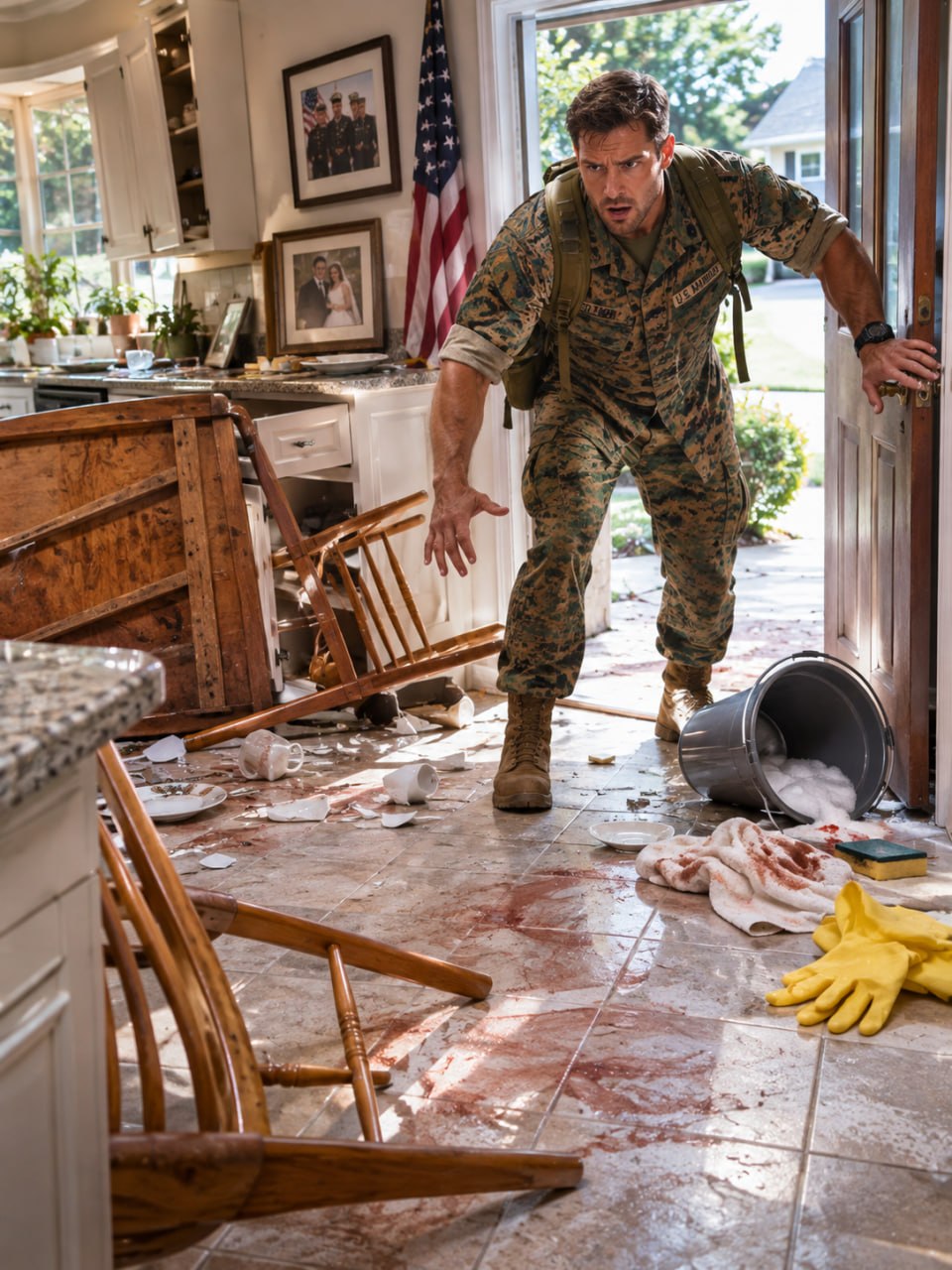
I reached our street shortly before sunrise. A neighbor’s porch light flickered through the rain, and our trash bin lay sideways against the curb. I opened the front door expecting to hear movement, but Mom and Allison were sleeping beneath blankets on the couch, surrounded by empty food containers and disposable cups.
Mom woke when I dropped my keys. “Ethan? Why didn’t you tell us you were coming?” she asked, sitting upright with an expression that seemed more startled than pleased. I asked where Hannah and Oliver were, and she gestured toward the bedroom, saying they’d finally settled down after a difficult night.
Then I heard my son. The sound was so faint that I barely recognized it, and I ran down the hallway before Mom could say another word. Inside the bedroom, the air was stale and unpleasantly warm, and several used diapers sat beside a full trash basket.
Hannah lay unresponsive on the bed, her face pale and her forehead damp. Oliver was in the bassinet beside her, wrapped in a stained blanket, his skin unusually hot when I touched his cheek. I called Hannah’s name, but she didn’t open her eyes, and Oliver barely reacted when I picked him up.
I called 911 while shouting for Mom to bring the discharge instructions. The dispatcher guided me through what to do while I waited for the ambulance, and our neighbor, Mr. Whitcomb, came over after hearing me yelling. Mom stood in the hallway insisting Hannah had been fine earlier, while Allison repeatedly whispered that she hadn’t realized anything was seriously wrong.
At the emergency department, doctors rushed Hannah and Oliver into separate treatment areas. A physician examined my son, reviewed his condition, and asked detailed questions about who had cared for him during the previous four days. When I told her about the unanswered calls, Hannah’s weakness, and the condition of the bedroom, her expression changed.
She turned toward a nurse and said, “Contact the hospital social worker and the police. We need an urgent safeguarding assessment.” Then she looked at me and asked a question I hadn’t been prepared to answer: “Mr. Mercer, has anyone been preventing your wife from getting medical help?”
Part 3
I stared at the doctor, unable to understand why she was asking me that question. Hannah and Oliver were behind separate doors, surrounded by medical equipment, and all I wanted was someone to promise they would survive. “I don’t know,” I admitted. “My mother kept answering Hannah’s phone, but I thought she was helping her rest.”
The doctor introduced herself as Dr. Rebecca Lawson and explained that both patients needed urgent treatment. Oliver had a serious fever and signs of dehydration, while Hannah appeared to be suffering from a severe postpartum infection. The medical team was working to stabilize them, but the circumstances surrounding their care raised concerns that couldn’t be ignored.
A hospital social worker named Teresa joined us shortly afterward. She asked when I had last spoken directly to Hannah, whether she’d been able to contact her doctor, and who controlled the household while I was away. I showed her my phone, including the unanswered calls and Allison’s message telling me to stop worrying.
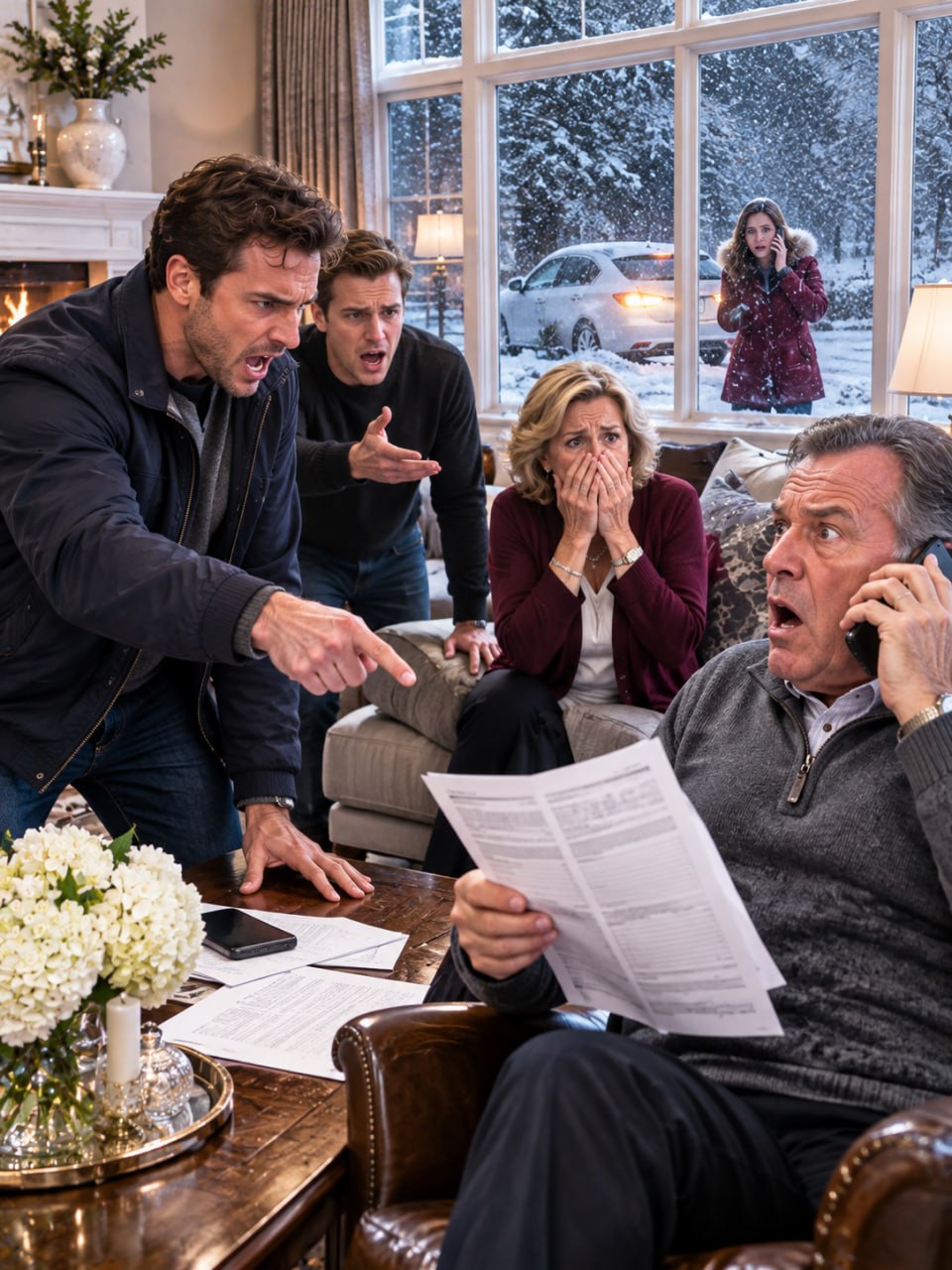
When Mom and Allison arrived at the hospital, they immediately began explaining themselves. Mom insisted Hannah had been emotional and unwilling to cooperate, while Allison claimed Oliver had simply been difficult to settle. Neither initially asked whether Hannah or Oliver was going to recover, and I watched Teresa quietly record their answers.
“She was exhausted,” Mom told the officer who joined us. “I raised two children, so I know what normal recovery looks like.” The officer asked why nobody had called for medical advice when Hannah became increasingly weak. Mom crossed her arms and answered, “Because she kept telling us everything was worse than it actually was.”
That afternoon, doctors moved Oliver to the neonatal intensive care unit for close monitoring. Seeing my son surrounded by machines was terrifying, especially when I remembered holding him against my chest only days earlier. The doctor explained that newborn infections could progress quickly, and he needed continued treatment and careful observation.
Hannah remained in a separate hospital unit. Every few hours, a nurse gave me an update, but nobody could tell me exactly when she would be strong enough to speak. I sat between the two departments holding Oliver’s tiny hospital cap, unable to decide where I was needed most.
Around four that afternoon, Mr. Whitcomb arrived carrying a bag of clothes he’d collected from our house with my permission. He said he’d seen Mom and Allison sitting on our porch several times during my absence, laughing and talking while the bedroom curtains remained closed. Then he hesitated and asked whether Hannah had been unable to answer her phone.
When I asked why, he explained that Hannah had called him two days earlier. She’d sounded weak and asked whether I was home, but the connection ended before he could answer. He had tried calling back, only for Mom to answer and tell him Hannah had accidentally dialed the wrong number.
I felt sick hearing that. Hannah had tried reaching someone outside the house, and Mom had intercepted the return call. Teresa recorded his account and asked whether he would be willing to speak with investigators.
Later that evening, Allison approached me near the vending machines. Her eyes were swollen, and she kept twisting the strap of her handbag. “I didn’t know it would get this bad,” she whispered, but when I asked what she’d known, she began crying and said Mom had told her Hannah was exaggerating.
“Then why didn’t you call me?” I demanded. Allison stared at the floor and admitted Mom had warned her that I would blame them if Hannah went to the hospital. She said she’d been afraid of upsetting our mother and had allowed that fear to guide her decisions.
An officer approached before I could respond and asked Allison whether she would voluntarily share the messages she’d exchanged with Mom. After a long silence, she unlocked her phone and handed it over. I watched her face change as the officer scrolled through the conversation.
A few minutes later, Teresa came back carrying a written note. She said investigators had found something important in the messages: Mom had contacted a medical advice service the previous evening. I looked at her in disbelief, because Mom had repeatedly told me there was no reason to seek help.
Part 4
The advice service had documented Mom’s call at 9:18 p.m. According to the record investigators later obtained, she’d described Hannah as feverish, extremely weak, and struggling to remain awake. The nurse had advised immediate medical evaluation, emphasizing that those symptoms following childbirth required urgent attention.
Mom had ended the call without arranging it. Instead, she’d messaged Allison, telling her that the nurse was being overly cautious and that Hannah needed to stop making everything dramatic. Allison replied that Oliver also seemed unusually hot and wasn’t feeding normally.
The next message made my hands shake when investigators eventually showed it to me. Mom had written, “Don’t tell Ethan. He’ll come home and make us look like monsters.” I stared at those words until the letters blurred, realizing they’d understood the situation was serious enough to frighten them.
The officer explained that the messages and medical records would become part of an investigation. He couldn’t promise what charges, if any, might follow, but he made it clear that knowingly ignoring urgent medical warnings could have serious consequences. For the first time, I understood why the doctor had immediately requested police involvement.
Mom tried calling me repeatedly that night. I finally answered once because I wanted to hear her explanation without anyone speaking for her. “You don’t understand how difficult Hannah was,” she began, and I interrupted to ask why she’d ignored the nurse’s advice.
She went silent, then accused me of choosing my wife over my own mother. I looked through the hospital window at the parking lot, where rainwater reflected the emergency entrance lights. “Hannah is my wife, Mom,” I said. “Oliver is my son, and you knew they needed help.”
Mom started crying, saying she’d only wanted Hannah to become more independent. She complained that Hannah had corrected her about feeding schedules, visitors, and how to hold Oliver, making her feel unwanted in her own son’s home. Listening to her describe those small disagreements, I finally understood that she’d interpreted ordinary parental boundaries as personal insults.
“You weren’t teaching her anything,” I said. “You were punishing her for disagreeing with you.” She denied that immediately, but she couldn’t explain why she’d withheld information from me or ignored the medical advice. I ended the call and blocked her number.
Two days later, Hannah was finally well enough for a conversation. I sat beside her hospital bed while sunlight fell across the blue blanket covering her knees, and she asked about Oliver before she asked anything about herself. When I told her he was improving, she closed her eyes and cried quietly.
Then she told me what had happened while I was gone. She’d started feeling unwell and repeatedly asked Mom to contact her doctor, but Mom insisted she was being unnecessarily anxious. As Hannah became weaker, Mom began keeping her phone in the kitchen, claiming the constant calls from me were preventing her from resting.
Hannah said Allison sometimes brought water and food, but she became less willing to intervene whenever Mom criticized her. Eventually, Hannah couldn’t manage Oliver’s care properly, and she begged them to help. Mom responded by accusing her of expecting everyone else to raise her child.
“I tried to call you,” Hannah whispered. “When your mother took my phone, I tried calling the neighbor from the house phone.” My chest tightened as I remembered Mr. Whitcomb’s account. Hannah looked at me and said, “I was scared you wouldn’t believe me because she’s your mother.”
I held her hand and apologized for dismissing her concerns before leaving. She didn’t immediately tell me everything was fine, and I didn’t expect her to. After a long silence, she said, “I need to know that this family comes first, Ethan. Even when your mother doesn’t like it.”
I promised that it would. As I sat there, I realized the promise wasn’t about choosing between two women. It was about finally understanding that love without accountability could become an excuse for terrible behavior.
Part 5
Oliver spent another week in the hospital before the doctors were satisfied with his recovery. Hannah came home earlier, but she needed additional rest, follow-up appointments, and help with nearly everything. I took the leave Russell had promised and arranged more time away from work, determined that she wouldn’t have to recover while worrying about being abandoned again.
The first night Oliver returned home, I sat beside his bassinet listening to his gentle breathing. The house smelled of fresh laundry and the vegetable soup Hannah’s friend Melissa had brought that afternoon. When Oliver stirred, Hannah reached for my hand and whispered, “He’s really here.”
We both cried, although neither of us said much afterward. The fear didn’t disappear simply because the doctors had allowed us to come home. Some nights, Hannah woke suddenly and asked me to check Oliver, and I did so without suggesting she was being unreasonable.
The investigation continued over the following months. Allison cooperated with investigators and admitted that she’d known Hannah needed more help than Mom was allowing. Mom initially maintained that she’d misunderstood the seriousness of the situation, but the documented medical advice and messages contradicted important parts of her account.
Eventually, prosecutors pursued a child-endangerment case involving Oliver’s care. Mom accepted a plea agreement that included supervised probation, required counseling, and restrictions involving the unsupervised care of children. Allison also faced legal consequences for her failure to intervene and was required to complete court-ordered conditions.
Neither outcome made me feel victorious. I attended the proceedings because I believed my family deserved the truth to be acknowledged, not because I wanted revenge. Watching Mom sit quietly in court was painful, but it was nothing compared with remembering Oliver lying helpless in his bassinet.
Afterward, Allison sent me a letter. She wrote that she’d spent her life avoiding conflict with Mom and had convinced herself that obedience was the same as loyalty. She apologized for ignoring Hannah’s requests, admitting that she’d chosen her own comfort over the safety of someone who trusted her.
I read the letter twice before putting it away. I believed Allison regretted what had happened, but regret didn’t automatically restore trust. I wrote back that I hoped she would change, although she would no longer have a place in Oliver’s life.
Mom’s letters were different. She repeatedly described the incident as a terrible misunderstanding and complained that nobody appreciated how much she’d sacrificed raising us. She said she missed Oliver and wanted photographs, insisting that keeping a grandmother away from her grandson was cruel.
I never responded. Hannah and I agreed that Mom would have no contact with Oliver, and we would not reconsider that boundary simply because time had passed. Forgiveness was not something she could demand, especially when she still refused to accept responsibility without excuses.
Six months later, Hannah returned to work part-time at the local accounting office where she’d worked before Oliver’s birth. We found a small licensed childcare center near her workplace, carefully checked its references, and gradually became comfortable trusting people again. It wasn’t easy, but each ordinary week helped us reclaim something we’d lost.
I also changed my relationship with work. I still cared about doing my job well, but when Russell asked me to travel unexpectedly again, I explained that family responsibilities would determine whether I could accept. He understood, and the company arranged alternative coverage without the disaster I’d once imagined would follow if I said no.
On Oliver’s first birthday, we celebrated in our backyard beneath strings of white lights. Hannah baked a small vanilla cake, Melissa brought balloons, and Mr. Whitcomb arrived carrying a wooden toy truck he’d made himself. Oliver laughed when the truck rolled across the picnic table, and everyone cheered as though he’d accomplished something extraordinary.
Later that evening, after our friends had gone home, I stood at the kitchen sink washing frosting from plastic plates. Hannah came beside me with Oliver asleep against her shoulder, his little hand curled around the collar of her sweater. She looked tired, happy, and entirely herself again.
“Do you ever think about calling your mother?” she asked gently. I considered the question while watching the backyard lights sway beyond the window. “Sometimes,” I admitted. “But missing who I thought she was doesn’t mean I want her back.”
Hannah leaned against my shoulder, and we stood quietly together. I understood then that the family I’d spent my life trying to please was not necessarily the family I needed to protect. My mother had asked me to choose loyalty over truth, but I’d nearly lost everything because I hadn’t recognized the difference soon enough.
I couldn’t change the four days I’d been away or undo the suffering Hannah and Oliver had endured. What I could do was build a home where their voices mattered, where asking for help was never treated as weakness, and where love meant showing up when someone needed you.
My mother once told me that family was the one thing a person should never turn his back on. Looking at my wife and son that night, I finally understood she had been right about one thing: family was worth protecting. She had simply been wrong about who deserved that protection.
Legal Notice: This story is a work of fiction. Names, characters, businesses, events, and incidents are the product of the author’s imagination or are used fictitiously. Any resemblance to actual persons—living or dead—or to actual events is purely coincidental. Thank you! 💓