Chapter 2
I enlarged the photograph until the signature filled my phone screen.
My name was written in blue ink, with the familiar sweeping M I used on business documents.
But I hadn’t signed anything.
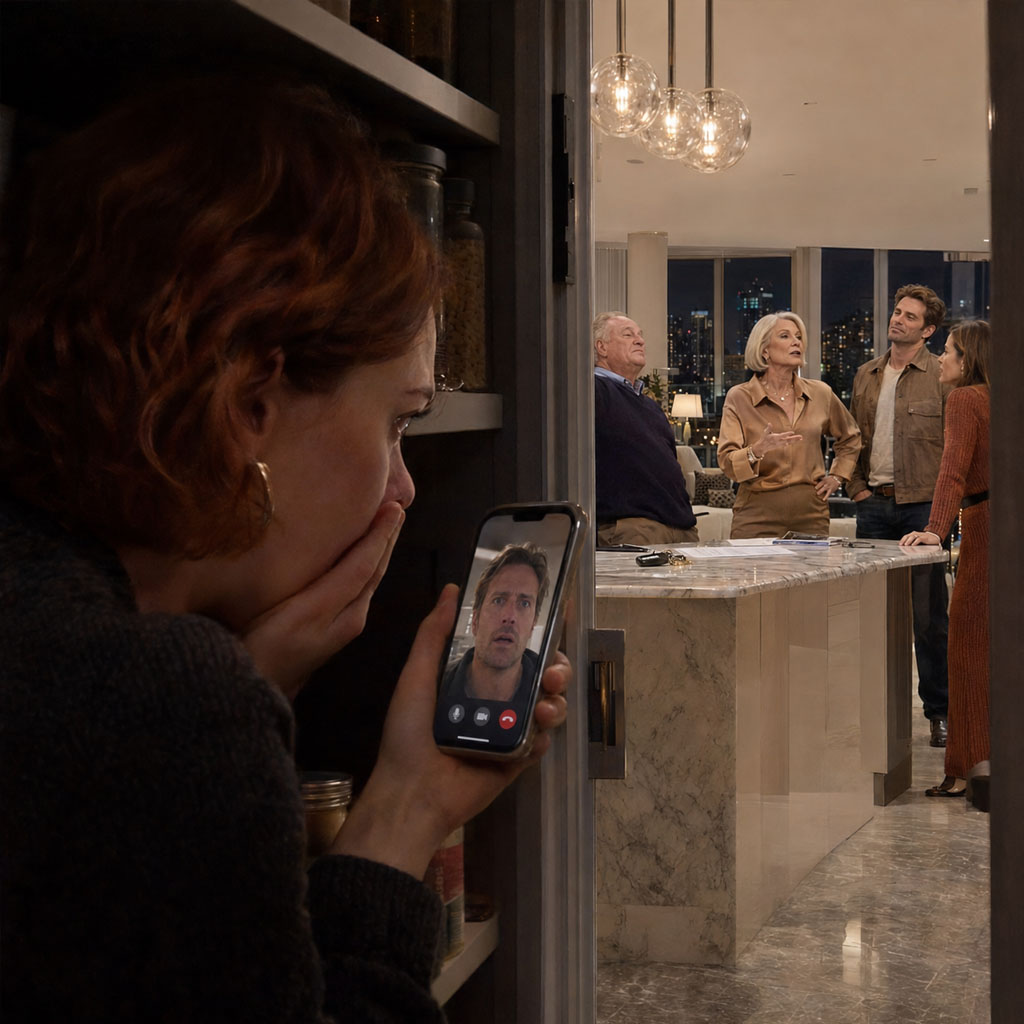
I called Chloe again.
“Can you photograph the rest of that document without anyone noticing?”
“I already did,” she whispered. “I’m sending it now.”
The agreement claimed I’d voluntarily transferred management authority over Sterling Lofts to a family committee consisting of my parents and Leo.
It also stated that my siblings could occupy selected units without paying rent.
My signature appeared on the final page.
There was no notary acknowledgment, no corporate approval, and no supporting ownership documentation.
But someone had clearly gone to considerable trouble to make the paper look official.
“Chloe, put your phone away and get out safely,” I said. “You’ve done enough.”
“Are you going to call the police?”
“I’m calling my attorney first.”
Julian Vance had handled every major real estate transaction I’d completed.
He answered immediately.
“Maxwell, what’s wrong?”
I explained the gathering, the copied keys, and the document bearing my name.
His tone changed.
“Send me those photographs. Do not confront anyone alone. And preserve every message.”
Within minutes, Julian confirmed what I already knew.
The agreement couldn’t transfer ownership of my property. Sterling Lofts was held by Apex Property Development LLC, a company I owned entirely.
My mother had no authority to assign units, collect rent, or direct employees.
But the apparent forged signature made the situation considerably more serious.
“We need to secure the property and document everything,” Julian said. “I’ll meet you there.”
I called David.
“Get the security team ready. No confrontation until Julian arrives. Make sure the actual tenants aren’t disturbed.”
“Understood.”
“Also, arrange emergency rekeying and new electronic access credentials. We don’t know how many copies exist.”
“I’ll coordinate with the locksmith and notify affected residents before any access changes.”
I put on my coat and drove toward Sterling Lofts.
Chicago was cold and quiet that night. Christmas decorations still hung in storefront windows, and light snow drifted across the sidewalks.
I passed the little sandwich shop where I’d eaten lunch nearly every day during the renovation.
Back then, the building had been an aging commercial property with unreliable plumbing and boarded-up windows.
I’d spent almost a year transforming it.
The first floor became retail space. The second and third floors were divided into spacious residential lofts, several already leased to paying tenants.
The fourth-floor penthouse became my personal retreat.
I still kept the apartment, although I’d recently started spending more nights at my downtown condo near the office.
My mother knew the penthouse wasn’t always occupied.
Apparently, she’d mistaken my absence for permission.
When I reached the coffee shop across from the building, Julian was waiting beside David.
He spread the photographs across the table.
“This document is worthless as an ownership transfer,” he said. “But it appears designed to persuade people that your family has authority over the property.”
“Can we have them removed tonight?”
“If they’re guests whose permission has been revoked, we can direct them to leave. If anyone refuses, we’ll involve law enforcement. We won’t use private security to force anyone out.”
I nodded.
“I don’t want a public spectacle. There are tenants in that building.”
David leaned forward.
“My team can escort anyone who leaves voluntarily. We’ll keep the lobby secure and prevent additional unauthorized guests from entering.”
Julian looked at me.
“One more thing. Are you prepared for what this will do to your relationship with your parents?”
I thought about the signature.
“They’ve already made that decision.”
We crossed the street together.
The lobby looked exactly as I’d envisioned it years earlier: warm lighting, polished stone floors, and a quiet sitting area beside the reception desk.
Ben, the evening concierge, stood when he saw us.
“Mr. Sterling, I’m sorry. Your mother told us she’d arranged a family event with your approval.”
“It’s not your fault, Ben. Did she mention anything about moving people into the vacant apartments?”
“Yes, sir. She said the family would be taking over the building’s management.”
Julian handed him his card.
“Please preserve all relevant security records.”
We entered the private elevator.
As it climbed, I felt a strange mixture of anger and sadness.
I remembered Mom bringing chicken soup after my surgery. She’d tucked a blanket around my legs and insisted I give her a spare key.
“A mother needs to know she can reach her son,” she’d said.
I’d believed her.
Now I wondered whether she’d been thinking about the building even then.
The elevator doors opened.
Laughter spilled into the hallway.
Inside my penthouse, about 15 relatives were gathered around the dining table. Music played from my speakers, and someone had opened several bottles from my wine collection.
Clara’s children were sitting on the living room rug.
Leo was showing his wife photographs of the upstairs balconies.
And my mother stood proudly beside the kitchen island.
When she spotted me, her face lit up.
“Maxwell! What a wonderful surprise!”
The conversation stopped.
Mom hurried toward me.
“We were just finalizing the arrangements. Your father and I have decided to take the penthouse, but there’s a perfectly nice smaller apartment downstairs for you.”
I looked around the room.
Then I looked directly at her.
“Everyone needs to stop what they’re doing.”
My father’s expression darkened.
“Don’t start an argument, son.”
“I’m not starting one. I’m ending something.”
Julian stepped forward.
“Good evening. I’m Julian Vance, counsel for Maxwell Sterling and Apex Property Development.”
Mom’s smile faded.
“A lawyer? Maxwell, that’s ridiculous.”
Julian placed a formal notice on the kitchen island.
“This property belongs to Apex Property Development LLC. None of the individuals gathered here has been granted authority to occupy or manage the building.”
Leo laughed.
“Come on. We’re family.”
“That doesn’t create an ownership interest,” Julian replied.
Dad rose from his chair.
“We gave that boy the money to start his business!”
“Yes,” Julian said. “You provided a $20,000 loan, which was repaid in full with the agreed interest.”
He opened another folder.
“Here’s the repayment confirmation.”
My father stared at the document.
Mom waved her hand dismissively.
“That’s not the point. Without us, Maxwell wouldn’t have any of this.”
I felt something inside me settle.
For years, I’d tried to explain my achievements to people determined to minimize them.
Tonight, I didn’t need their approval.
“Mom,” I said, “you used an emergency key to enter my home. You brought people here without permission. You made plans to occupy apartments that don’t belong to you.”
“We were helping you!”
“You also signed my name to a document I never approved.”
Her face changed.
For the first time that evening, she looked genuinely frightened.
Chapter 3
“Maxwell, don’t be ridiculous,” Mom said. “It’s just a family agreement.”
“Then why is my signature on it?”
She glanced toward Leo.
He suddenly became interested in the floor.
My father stepped between us.
“You watch how you speak to your mother.”
Julian raised his hand.
“Mr. Sterling, my client is entitled to ask who signed his name. The document purports to give other people control over valuable property.”
Mom clutched her necklace.
“I was only trying to organize things.”
“By pretending I agreed?”
Nobody answered.
Then Leo stepped forward.
“Fine. Maybe Mom got ahead of herself. But you have all this space, Max. What’s wrong with helping your brother and sister?”
I stared at him.
“Helping is something someone asks for. You decided to move into my building without even speaking to me.”
Clara folded her arms.
“My children need stability. You have more than enough.”
“Then you should have talked to me about your situation.”
“You would’ve said no.”
“Maybe. But you didn’t give me the choice.”
Her eyes filled with tears.
“That’s cold.”
I looked toward her children, who were watching the adults with frightened expressions.
“Clara, please take the kids downstairs with Aunt Carol. They shouldn’t have to listen to this.”
She hesitated, then gathered their coats.
For a moment, the room was quiet.
Julian opened his briefcase again.
“Since there’s apparently some confusion about my client’s financial position, perhaps a few facts will help.”
I turned toward him.
“Julian, you don’t have to—”
“I think they need to understand why their assumptions are incorrect.”
He looked at my father.
“The initial capital for Apex Property Development came from Maxwell’s sale of proprietary logistics software, not from your repaid loan.”
Leo frowned.
“What sale?”
“The Kestrel Analytics program,” Julian said. “Maxwell developed it and sold the associated intellectual property rights for $1.2 million.”
My mother’s mouth opened.
Dad stared at me.
“You sold a computer program for that much?”
“Yes.”
“Why didn’t you tell us?”
I almost laughed.
“Would you have believed me?”
Nobody answered.
Julian continued.
“Sterling Lofts is also not Maxwell’s only investment. His broader real estate portfolio was recently valued at approximately $8.3 million.”
The room fell completely silent.
Leo stared at me as though I’d suddenly become a stranger.
“Eight million?”
“Approximately,” I said.
He shook his head.
“You’re telling me you’ve been sitting on that kind of money while the rest of us struggle?”
There it was.
Not congratulations.
Not pride.
Accusation.
“My finances aren’t something I’ve been hiding to punish you,” I said. “They’re private because every time I achieve something, this family finds a way to make it about what I owe everyone else.”
Leo’s jaw tightened.
“You think you’re better than us.”
“No. I think I worked for something that belongs to me.”
Julian glanced at Leo.
“And there’s another issue we should address.”
I knew what he meant.
Earlier that week, a business associate had forwarded public records showing that Leo’s import-export company was facing significant financial trouble.
His suppliers had filed claims for unpaid invoices, and a lender had initiated proceedings over a defaulted business loan.
Leo had always presented himself as a successful entrepreneur.
But his business was close to collapsing.
“Leo,” I said quietly, “were you planning to use rental income from my building to cover your company’s debts?”
His face turned pale.
“Who told you that?”
“You didn’t answer.”
He looked toward our mother.
She wouldn’t meet his eyes.
And suddenly, the entire evening made sense.
The family committee. The building assignments. The plan to give Leo management authority.
They weren’t merely trying to find apartments.
They wanted control of the income.
Mom began crying.
“Your brother is in trouble. We were trying to keep the family together.”
“By taking something that belongs to me?”
“We raised you, Maxwell! We sacrificed for you!”
“I know you raised me. And I’ve never denied that. But raising a child doesn’t entitle you to take over his adult life.”
My father slammed his palm against the counter.
“Enough! You’ll regret humiliating your mother.”
I met his eyes.
“Dad, I’m not the one who invited 15 people into someone else’s home and handed out apartments.”
Julian stepped forward.
“The individuals present have been informed that they are not authorized to remain. We’re requesting that everyone gather their belongings and leave voluntarily.”
Uncle Robert cleared his throat.
“Surely we can discuss this tomorrow.”
“Tomorrow, through my office, if necessary,” Julian replied. “Tonight, the gathering is over.”
David entered with two security employees.
They wore ordinary dark jackets and spoke calmly.
“Ladies and gentlemen,” David said, “we’ll help you find your coats and escort you to the lobby.”
Mom stared at him.
“You can’t throw a mother out of her son’s home.”
David glanced toward me.
I felt every eye in the room waiting for my answer.
For a moment, I remembered being eight years old, standing beside Mom at the kitchen sink while she showed me how to wash dishes.
I remembered her helping me with spelling homework and sitting beside my hospital bed after surgery.
Those memories were real.
So was what she’d done tonight.
“Mom,” I said, “you need to leave.”
She began sobbing harder.
One by one, my relatives collected their belongings.
Leo passed me without speaking.
Clara looked furious.
Dad stopped near the elevator.
“You’ve destroyed this family.”
I shook my head.
“No, Dad. I just refused to let you destroy what I built.”
Mom was the last to leave.
She stood in the doorway holding her purse, her eyes red.
“Maxwell, please.”
I waited.
For one hopeful moment, I thought she might apologize.
Instead, she whispered, “After everything we’ve done, you could at least give Leo the third floor.”
I stepped back.
“Good night, Mom.”
The elevator doors closed.
Chapter 4
The penthouse fell silent.
Empty wineglasses stood on the counters. Someone had spilled cranberry sauce on my dining chair. Children’s toys lay scattered across the rug.
David looked around.
“We can arrange a cleaning crew.”
“No,” I said. “I’ll handle it.”
Julian closed his briefcase.
“You did the right thing, Max.”
“Then why does it feel terrible?”
He studied me for a moment.
“Because they’re your family. Setting a boundary doesn’t erase the attachment.”
I nodded.
He handed me a copy of the notice.
“We’ll preserve the evidence concerning that agreement. If they attempt to use it again, we can take appropriate legal action.”
After Julian left, David stayed while the locksmiths began working.
The time was approaching midnight.
The security contractor rekeyed the penthouse and shared entrances, revoked the compromised access credentials, and arranged replacement keys or fobs for everyone who legitimately needed them.
Occupied apartments remained accessible to their tenants throughout the process.
By the early morning hours, my mother’s copied keys were useless.
I watched the locksmith test the new penthouse lock.
There was something strangely comforting about the small, ordinary click.
It wasn’t a victory celebration.
It was the sound of my home becoming mine again.
When everyone left, I stood beside the living room windows, looking down at the quiet street.
I’d won the argument.
I’d protected the building.
But I felt more alone than I had in years.
Around 3 a.m., I opened the family group chat.
The messages were already pouring in.
Clara wrote that I’d frightened her children and ruined their hopes for a better home.
Leo claimed he’d only been trying to help me manage my investments.
Aunt Carol called me ungrateful.
My father wrote, “As far as I’m concerned, Maxwell is no longer part of this family.”
I stared at those words.
Then I left the group.
For the next several weeks, I heard nothing directly from my parents.
Julian received a few angry messages, but nobody attempted to enter the building again.
I returned to work.
Sterling Lofts became fully leased, and I signed an agreement with a small art gallery to occupy the ground-floor commercial space.
My consulting company also secured an important new contract.
Without the constant pressure of family expectations, I found myself sleeping better and enjoying ordinary moments I’d barely noticed before.
I reconnected with old friends.
I began volunteering with a local technology education program.
And I started dating Sarah, an architect who loved restoring old buildings as much as I did.
Sarah didn’t care about my bank accounts.
She wanted to know why I’d chosen the brickwork at Sterling Lofts and how I’d preserved the original windows.
It was refreshing to have someone interested in what I’d created rather than what she could take from it.
Six months after the incident, Chloe met me for lunch.
She’d become one of the few relatives I still spoke to regularly.
“You look happier,” she said.
“I am.”
She smiled.
“They’re still talking about you.”
“I figured.”
“Your mom tells people you hired armed guards to throw everyone into the street.”
I laughed.
“David’s team wasn’t armed, and everyone walked out voluntarily.”
“I know. But that doesn’t make a dramatic enough story.”
She stirred her coffee.
“Leo’s business is in worse trouble. I think he’s considering bankruptcy.”
I felt a brief ache of sympathy.
“I’m sorry to hear that.”
Chloe looked at me carefully.
“Are you thinking about helping him?”
“No.”
“Good.”
I smiled faintly.
“I can feel sorry for him without paying his debts.”
She reached across the table and squeezed my hand.
“That’s a lesson your family never wanted you to learn.”
We finished lunch talking about ordinary things.
For once, I didn’t feel responsible for solving anyone else’s problems.
Then, two weeks later, a thick envelope arrived at my office.
It was from an unfamiliar law firm.
Inside was a lawsuit.
My parents and Leo were suing me for partial ownership of Apex Property Development.
They claimed we’d entered into a verbal family agreement years earlier, establishing that my business ventures were shared family assets.
Their evidence?
The $20,000 loan I’d repaid.
They also demanded financial damages for allegedly excluding them from a business they’d helped establish.
I read the complaint twice.
Then I called Julian.
“They’re serious.”
“So are we,” he replied.
His confidence helped, but the lawsuit still hurt.
My parents had raised me. They’d watched me graduate, celebrated birthdays with me, and sat across from me at hundreds of family dinners.
Now they were asking a court to take control of the business I’d spent my adult life building.
I wondered whether there was any amount of success that would finally make them proud.
The answer seemed painfully obvious.
They didn’t want to celebrate what I’d accomplished.
They wanted to own it.
Chapter 5
Julian filed a motion to dismiss the lawsuit.
Our evidence included the original loan agreement, proof of complete repayment, corporate formation documents, property deeds, and records establishing the source of my investments.
There was no written agreement giving my parents or Leo ownership of Apex Property Development.
No corporate shares had ever been issued to them.
They’d never contributed capital beyond the repaid personal loan.
At the hearing, their attorney argued that the family had always understood my business success would benefit everyone.
The judge asked what evidence supported that understanding.
Their attorney referred again to the loan.
Julian submitted the repayment records.
He also explained that the money used to purchase Sterling Lofts came years later, after I’d developed and sold my software.
The judge dismissed their ownership claims with prejudice, finding that they had no viable legal basis under the circumstances presented.
After further proceedings, the court ordered my parents and Leo to reimburse $11,200 in legal fees and costs associated with their unsupported claims.
I sat quietly while the ruling was announced.
There was no applause, no dramatic confrontation.
Just paperwork, legal arguments, and a decision.
Outside the courthouse, Julian shook my hand.
“It’s finished, Max.”
I looked back at the building.
“I hope so.”
For years, I’d imagined that proving myself successful would finally change my parents’ opinion of me.
But I’d just spent months defending my achievements against the very people whose approval I’d once wanted most.
The realization was painful.
It was also freeing.
Several weeks later, Chloe called with news.
Leo’s business had closed.
He and his wife were separating, and Dad had become increasingly withdrawn.
Mom continued telling relatives that she’d voluntarily abandoned the lawsuit to protect me from embarrassment.
I didn’t argue.
I no longer needed to correct every story they told.
Their version of events belonged to them.
My life belonged to me.
A few days after the court decision, a small package arrived at my office.
There was no return address.
Inside was a carefully wrapped bonsai tree.
Beneath it lay a handwritten note.
I recognized the handwriting immediately.
It belonged to Uncle Ben, my father’s younger brother.
He’d attended the gathering at my penthouse but had remained mostly silent.
The note read:
“Dear Maxwell,
“I owe you an apology.
“I was there that night. I heard your mother assigning apartments, and I knew it was wrong. I should have spoken up.
“Instead, I stayed quiet because I didn’t want an argument.
“Silence can be its own kind of betrayal, and I’m ashamed of mine.
“I want you to know something I should have told you years ago. I’ve always admired how hard you worked and what you’ve accomplished.
“You built something remarkable.
“I hope this little tree reminds you that strong things can keep growing, even after difficult seasons.
“With love, Uncle Ben.”
I sat at my desk holding the letter.
For months, I’d heard nothing from my family except accusations.
Now, for the first time, someone had acknowledged what happened without demanding anything in return.
No excuses.
No requests for money.
Just an apology.
I called him that afternoon.
He answered on the third ring.
“Maxwell?”
“Hi, Uncle Ben.”
There was a pause.
“Did you get the tree?”
“I did. Thank you.”
His voice softened.
“I meant every word.”
“I know.”
We talked for nearly an hour.
He told me he’d wanted to stop my mother that night but had been afraid of becoming the next target of the family’s anger.
“I should’ve done it anyway,” he said.
“Maybe,” I replied. “But I appreciate you telling me the truth now.”
He hesitated.
“Would you consider having lunch sometime?”
I looked at the bonsai tree sitting beside my office window.
“I’d like that.”
We met the following Sunday.
There were no arguments about property, no comparisons with Leo, and no lectures about family obligations.
We talked about his garden, his retirement plans, and the years I’d spent building my company.
He asked thoughtful questions.
And he listened to the answers.
It was the kind of conversation I’d always wished I could have with my father.
Over the next several months, Uncle Ben became a regular part of my life.
So did Chloe.
And Sarah.
My circle grew smaller than the enormous family gatherings I’d once attended, but it became stronger.
One evening, nearly a year after that disastrous Sunday, Sarah and I were standing inside Sterling Lofts, looking at plans for a new renovation project.
The building was thriving.
The gallery downstairs was preparing an exhibition. Residents chatted in the lobby. Every apartment was occupied by people who belonged there through legitimate agreements.
Sarah glanced at the framed architectural drawings on the wall.
“You really love this place, don’t you?”
I smiled.
“More than you know.”
She took my hand.
“Then you should keep something from it when we build our own house.”
“Like what?”
“Maybe one of the original bricks. Or a piece of the old woodwork.”
I considered her suggestion.
Then I laughed softly.
“I already have something.”
I took her to my downtown office.
On the wall beside my diploma and first business license hung a simple black frame.
Inside was the original ownership deed for Sterling Lofts.
Sarah studied it.
“You framed a deed?”
“It’s my favorite piece of artwork.”
She smiled.
“Why?”
I looked at the document.
For most of my childhood, I’d believed that if I worked hard enough, achieved enough, and became successful enough, my parents would finally recognize my worth.
I’d wanted them to see the son standing quietly beside Leo.
The boy who repaired computers while his brother collected trophies.
The young man who built a business after everyone told him it was too risky.
But standing in that office, I understood something I’d spent years overlooking.
I had never needed their permission to become someone.
I was already someone.
The deed wasn’t valuable to me because of the property’s price.
It represented the freedom to build a life of my choosing.
Sarah slipped her arm around my waist.
“I’m proud of you, Max.”
Three simple words.
They meant more than every dollar I’d ever earned.
Chapter 6
Another Christmas came around.
This time, I wasn’t surrounded by relatives deciding what I should give them.
I was in the kitchen of my downtown condo, helping Sarah prepare dinner for a small gathering.
Chloe arrived carrying homemade cookies.
Uncle Ben brought a bottle of sparkling cider and a tiny ornament shaped like a house.
We laughed, ate too much, and spent the evening talking about books, travel, and plans for the coming year.
Nobody asked about my net worth.
Nobody made jokes about my computer business.
Nobody suggested that loving them meant surrendering something I’d worked for.
At one point, Uncle Ben handed me the ornament.
“For your new house,” he said. “Whenever you and Sarah build it.”
I turned it over in my hand.
“Thanks, Uncle Ben.”
He smiled.
“Your grandmother used to say a home isn’t made by the walls. It’s made by the people who respect what’s inside them.”
I looked around the table.
For the first time in years, Christmas felt peaceful.
After everyone left, Sarah and I stood beside the window, looking out at the quiet city.
“Do you miss them?” she asked.
I knew who she meant.
My parents. Leo. Clara.
“Sometimes.”
She squeezed my hand.
“That’s understandable.”
“I miss who I wanted them to be,” I said. “I miss the family I kept hoping we’d become.”
She rested her head against my shoulder.
“Maybe that’s the hardest part.”
I nodded.
I’d stopped speaking to my parents and siblings after the night at Sterling Lofts. No sincere apology had followed, and the lawsuit had made further contact even harder to imagine.
I didn’t wish them harm.
I hoped Leo eventually rebuilt his life. I hoped Clara found happiness and stability for her children. I hoped my parents discovered something more satisfying than resentment.
But I no longer believed those outcomes were mine to arrange.
For years, I’d mistaken family loyalty for an obligation to accept whatever treatment came my way.
Now I understood that love and boundaries could exist together.
I could remember the good moments without excusing the bad ones.
I could appreciate the sacrifices my parents made when I was young without surrendering everything I’d built as an adult.
And I could choose relationships based on mutual respect rather than blood alone.
The following morning, I stopped by Sterling Lofts.
The concierge greeted me warmly. The lobby smelled faintly of fresh coffee from the gallery’s adjoining café, and sunlight streamed through the tall front windows.
I walked upstairs to the penthouse.
It was quiet and orderly.
Everything stood exactly where it belonged.
I approached the door and took out my key.
The new lock turned smoothly.
I remembered the night my mother stood inside that apartment, promising Leo an entire floor and Clara another, while offering me a little room near the laundry.
At the time, I’d thought defending my property would cost me my family.
In a way, it had.
But what I’d gained was something I hadn’t possessed before.
Peace.
Not the empty silence of being excluded from family conversations, but the steady calm of knowing that the people who entered my home respected me.
I opened the living room curtains.
Chicago stretched beyond the windows, alive with possibility.
Somewhere out there were new projects to build, new friendships to discover, and ordinary happy days I hadn’t yet experienced.
I thought about the little bonsai tree growing on my office windowsill.
It had survived its journey through the mail, adjusted to a new environment, and continued sending out tiny green shoots.
Uncle Ben had chosen it well.
I smiled, locked the penthouse behind me, and headed downstairs.
That night, the locks on my building had changed.
But the greater change had happened inside me.
I’d finally stopped asking people who didn’t respect my boundaries to tell me what I was worth.
And in doing so, I’d made room for a life filled with people who already knew.
THE END.
⚠️ All characters and events are fictional. Do not imitate or apply them in real life. 😌😌😌