Chapter 2
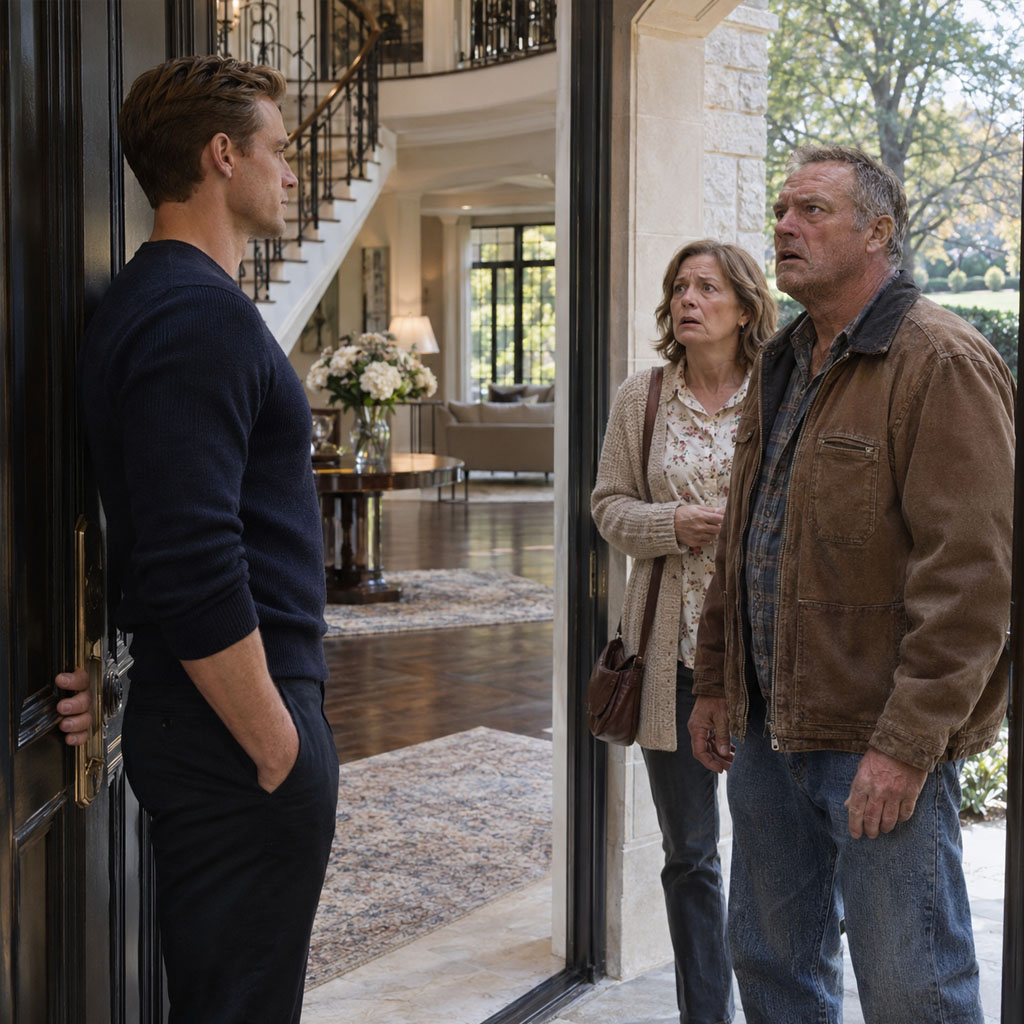
For several seconds, nobody moved.
My mother seemed to be waiting for me to embrace her. My father was studying the marble floors, the staircase, and the artwork along the hallway.
“Well, it’s your birthday,” my mother finally said. “We thought it was time to reconnect. Family is family, after all.”
I looked at her.
“Is that what we are?”
Her expression changed.
“I haven’t received a birthday card from either of you in ten years. You didn’t invite me to Megan’s wedding. You held family reunions without telling me. You never called when Bridgework went public. So I’m curious. What made today different?”
My father cleared his throat.
“We’ve been meaning to reach out. You were busy building your career, and we didn’t want to interfere.”
I almost laughed.
“You were being considerate of my schedule?”
“There’s no need to dredge up ancient history,” he replied. “We’re here to celebrate your success.”
My mother glanced toward the staircase.
“You must have done very well with your computer business.”
The way she said computer business suggested she still didn’t quite believe it was a legitimate profession.
“Yes,” I answered. “I did very well with the business you refused to invest in.”
My father’s expression tightened.
“You’re still holding on to that?”
“I’m holding on to the years you excluded me from your lives. Those aren’t the same thing.”
He shifted his weight.
“Look, Porter. We’re older now. People make mistakes. There’s no point spending the rest of your life angry.”
I studied him carefully.
The man standing in my doorway was no longer the towering figure who had intimidated me as a child. His hair had thinned, his shoulders had begun to stoop, and his hands showed the wear of decades in construction.
But his voice still carried the same expectation that everyone should accept his version of events.
My mother reached toward my arm.
“We always loved you. We just didn’t understand your choices.”
“No, Mom. You didn’t respect them. There’s a difference.”
A silence settled between us.
From the great room came the sound of laughter. Someone had started another birthday toast. My friends were celebrating a life I had built with people who had chosen to stay.
My father glanced toward the noise.
“So,” he began, lowering his voice, “we were hoping to discuss something important. Man to man.”
I knew that tone.
It was the same one he used when he wanted something from a neighbor.
“What do you need?”
My mother looked down.
My father hesitated before answering.
“Retirement hasn’t been easy. Construction isn’t what it used to be, and pensions don’t stretch as far as people think.”
I folded my arms.
“You’re here for money.”
“That’s a terrible way to put it,” my mother protested. “We’re your parents.”
“And I’m your son. That didn’t seem to matter when you were planning family holidays.”
My father frowned.
“Your mother and I have had some financial difficulties. We could use a little help getting back on our feet.”
I remembered the second mortgage I had discovered while researching their property records. I also remembered the years they had insisted they couldn’t afford to support my education while funding Megan’s wedding without hesitation.
“How much?” I asked.
He looked surprised.
“Well, we haven’t worked out an exact figure.”
“Of course.”
My mother stepped forward.
“Porter, you have more money than you could ever spend. We’re not asking you to sacrifice anything.”
That was when my phone rang.
The name on the screen made me pause.
Megan.
I hadn’t spoken to my sister in years, except for a few brief exchanges online.
“Excuse me,” I said, answering the call.
“Porter? Thank God you picked up.”
Her voice sounded tense.
“What’s going on?”
“Are Mom and Dad there?”
I looked at the two people standing in front of me.
“They are.”
Megan exhaled sharply.
“I’m so sorry. I found Dad looking up directions to your house on Mom’s computer. When I asked what he was doing, they admitted they were going to visit you.”
My father stiffened.
“Megan, this is between your brother and us.”
She ignored him.
“Porter, they’ve been struggling financially for years. Dad’s retirement savings took a serious hit, and they borrowed against the house. They’ve been asking relatives for money, but nobody wants to keep lending to them.”
I looked at my father.
He stared back, his face growing red.
“You’re making us sound desperate,” he snapped.
“Because you are,” Megan replied.
Then she said something I hadn’t expected.
“They saw the magazine article about your mansion. Mom said you were wealthy enough to solve all their problems. Dad thought if they showed up on your birthday, you’d feel obligated to help.”
The words landed harder than I expected.
I had spent years wondering whether my parents would ever miss me.
Apparently, they had missed my financial potential.
My father stepped toward the phone.
“That’s enough, Megan!”
“No, Dad. It isn’t enough. You can’t spend ten years treating Porter like he isn’t part of this family and then show up because you need his money.”
My mother began crying.
Megan continued, her voice trembling.
“And Porter, there’s something else. I owe you an apology. I knew how they treated you. I benefited from it, and I let it happen because standing up to them would have made my life harder.”
I stared at the phone.
The golden child was apologizing to the son who had been pushed out.
For the first time in years, I didn’t know what to say.
Chapter 3
My father finally lost his composure.
“So this is what we’ve sacrificed for? Your brother gets rich, and now you betray us?”
Megan’s voice became firmer.
“I’m not betraying anyone. I’m telling the truth.”
I looked at my parents.
My mother was wiping her cheeks. My father seemed more offended by the conversation than embarrassed by what it had revealed.
“That’s the problem,” I said quietly. “You believe Megan telling the truth is betrayal, but you believe showing up at my house asking for money is family.”
My mother shook her head.
“We always wanted what was best for you.”
“No, Mom. You wanted what was easiest for you.”
I turned my attention back to the phone.
“Megan, thank you for warning me. I’d like us to talk properly sometime. Just the two of us.”
“I’d like that,” she answered.
“Happy birthday, Porter.”
After ending the call, I stood quietly for a moment.
Then I faced my parents.
“I’m willing to consider having a relationship with you. But it won’t be the relationship you remember.”
My father frowned.
“What does that mean?”
“It means honesty. It means acknowledging what happened instead of pretending the last ten years were a misunderstanding. It means respecting Amanda and the life I’ve built. And it means boundaries.”
He looked toward the hallway.
“And the financial help?”
I almost smiled at how quickly he returned to the subject.
“That depends on whether there’s a genuine relationship here. I’m not an ATM for people who couldn’t be bothered to call their son on his birthday.”
My father’s face hardened.
“So you’re going to make us beg for help?”
“No. I’m asking you to understand that relationships require reciprocity.”
My mother reached for my hand.
“Porter, please. We’re still your parents.”
“Yes, you are. And I’m willing to explore what that means now. But not tonight.”
I gestured toward the driveway.
“Tonight is my birthday celebration with people who have supported me through the years you weren’t there. Marcus will show you out. If you want a real conversation, call me and arrange a time.”
My father looked as though he wanted to argue.
My mother gently pulled his sleeve.
“Come on, Kenneth.”
They walked toward their car without another word.
I watched until the gate closed behind them.
Amanda found me standing in the entryway.
“Are you all right?”
“I think so.”
She slipped her arm through mine.
“Do you want to end the party?”
I considered it. Then I heard Jason laughing with someone in the great room and remembered how much effort Amanda had put into the evening.
“No. I’ve spent enough years letting them take happiness away from me.”
She kissed my cheek.
“Then let’s go celebrate.”
Back inside, Jason approached me with two glasses of whiskey.
“Security told me what happened,” he said. “I figured you wouldn’t want me interfering, but I was ready.”
I smiled.
“Ten years ago, I might have needed you to stand beside me. Tonight, I handled it.”
He nodded.
“What did they want?”
“Money.”
“Of course.”
I told him about Megan’s call and her apology.
Jason raised an eyebrow.
“People can change. Just make sure you judge them by what they do next.”
He was right.
Later that evening, my phone rang again.
Megan.
I stepped into my study.
“Twice in one night. That’s more communication than we’ve had in a decade.”
She laughed softly, then sighed.
“Mom and Dad are furious. Dad says I’m a traitor. Mom keeps crying about how ungrateful her children are.”
“That sounds familiar.”
There was a pause.
“I should have called you years ago,” she said. “After my wedding. After the first family reunion you weren’t invited to. I knew it was wrong.”
“Why didn’t you?”
“Because being the favorite was comfortable. I didn’t want to lose that position.”
Her honesty surprised me.
“What changed?”
“My oldest son started asking about his uncle. He uses apps made by your company. He wanted to know why he’d never met the man who created them.”
I leaned back in my chair.
“How old are the kids now?”
“Owen is eight. Lily is six, and Grace is four. They’re wonderful.”
She told me Owen loved computers and had recently started building simple games. The thought of a nephew sharing my childhood interests stirred something I hadn’t expected.
“I’d like to meet them someday.”
“I’d like that, too. Maybe we could meet somewhere neutral. Just us, no Mom and Dad.”
I agreed.
Then Megan hesitated.
“There’s something else. Last year, someone anonymously established college funds for all three children. The financial company told me a distant relative had created them.”
I said nothing.
“Was that you?”
I looked out at the city lights.
“If it was, I hope the kids have a chance to use those funds for something they love.”
Her voice softened.
“Thank you. Not just for the money. For thinking about them when you had every reason to walk away from all of us.”
“They didn’t choose any of this, Megan.”
We agreed to meet the following month.
When I returned to the party, Amanda was waiting near the library.
“That sounded like a good conversation.”
“It might be the beginning of one.”
She smiled.
“That’s all anyone can ask for.”
The following morning, my father sent me a text.
Sorry if our surprise upset you. We were only trying to reconnect with our son. Guess success changes people.
I read it twice, then showed Amanda.
She shook her head.
“Some people would rather defend their pride than repair a relationship.”
I didn’t reply.
Two days later, Megan sent photographs of her children. I studied each face, wondering how many ordinary moments I had missed.
Owen had my serious expression. Lily seemed to be laughing at something outside the frame. Grace was holding a stuffed rabbit almost as large as she was.
I began asking questions about their interests, school, and favorite activities.
For the first time, I was building a connection with someone from my family without having to earn permission from my parents.
Our meeting took place at a pizza restaurant with a small arcade.
I arrived early and chose a corner booth. Amanda stayed home, understanding that I needed to meet my sister on my own.
When Megan walked in, I barely recognized her.
She was no longer the carefree young woman whose wedding had been celebrated by everyone but me. She looked older, more cautious, and tired in the way parents often do.
Her three children followed her.
Owen spotted me first.
“Are you really the guy who made Bridgework?”
I laughed.
“I am.”
He immediately began asking questions about programming, software, and how companies hired people through the platform.
Lily showed me a game on her mother’s phone. Grace climbed beside me and announced that I was her favorite uncle, despite having known me for approximately six minutes.
Something warm settled in my chest.
For the next hour, we talked about ordinary things. School, cartoons, pizza, and the children’s latest adventures.
When they went to play in the arcade, Megan and I finally had a chance to talk.
“I was complicit,” she said, stirring her drink. “I benefited from being the favorite, and I didn’t want to question it.”
“We were both children in that house,” I replied. “You stayed. I left. Neither of us knew how to change things back then.”
She looked toward the arcade.
“I’m trying to make sure my kids never feel that way. I want them to know they’re valuable whether they’re good at school, sports, or absolutely nothing in particular.”
“That’s a good place to start.”
We talked for another hour.
When we left, we agreed to meet again the following month.
As Megan helped the children into their car seats, she turned toward me.
“Mom and Dad won’t change overnight. Maybe they won’t change at all.”
“I know.”
“Don’t let them hurt you again.”
I smiled.
“I’ve learned to recognize the difference between hope and expectation.”
Chapter 4
Over the next several months, Megan and I rebuilt our relationship slowly.
Sometimes we had dinner with the children. Other times, we met for coffee without them. She told me about her job, her marriage, and the pressure of raising three children while trying to escape the expectations our parents had placed on her.
One afternoon, she admitted something that changed how I understood our childhood.
“I wanted to study business when I was younger,” she said. “But Dad insisted I pursue something more suitable for a woman. He said performing arts would make me a better mother and wife.”
I stared at her.
“I never knew that.”
“Of course you didn’t. You were the difficult child, and I was the perfect one. But perfect meant obedient. Every decision had to fit what they wanted.”
I thought about the countless hours I’d spent wishing I could be more like my sister.
She had spent years wishing she could make her own choices.
“We were both playing roles,” I said. “The golden child and the black sheep.”
Megan nodded.
“My therapist calls it a family system. Everyone gets assigned a part, and nobody is allowed to question the script.”
It was strange to realize that we had both needed professional help to understand the same household.
Over time, our monthly dinners became a tradition. I got to know the children, especially Owen, who seemed to have inherited my fascination with technology.
Amanda and I continued planning our wedding.
Her family embraced me completely. Her father offered advice about marriage, and her mother called regularly just to ask how we were doing.
I began to understand what healthy family relationships looked like.
They involved support without control, affection without conditions, and disagreements without threats of abandonment.
The question of inviting my parents to our wedding eventually came up.
Amanda listened as I explained my concerns.
“Invite them if you want to,” she said. “But invite them as guests, not as people who suddenly have a right to control your celebration.”
After thinking it through, I sent invitations to my parents and Megan’s family.
I included a short note for my parents explaining that they were welcome to attend if they respected our boundaries and treated the occasion as a celebration of our marriage.
Two weeks later, their response arrived.
Both declined.
There was no handwritten note, no explanation, and no suggestion that they wished us well.
For a moment, I stared at the RSVP card.
Then I placed it in a drawer.
I expected to feel rejected. Instead, I felt relieved.
Our wedding would be surrounded by people who genuinely wanted to celebrate with us.
Around that time, another part of my life began taking shape.
The technology center I had established in my old neighborhood was flourishing. It provided coding classes, equipment, and scholarships to students whose families couldn’t afford specialized education.
The program director approached me with an idea to expand its work into startup development.
I realized we could do much more than teach young people to write software.
We could help them turn their ideas into businesses.
That was how the Bridgework Foundation was born.
Its mission was to support promising young entrepreneurs from difficult backgrounds with funding, mentorship, professional resources, and a community that believed in them.
I wanted to create the kind of support system I had searched for at 17 and 20.
We didn’t simply hand out checks. We helped applicants develop business plans, find collaborators, understand contracts, and navigate the emotional challenges of building something from nothing.
Some of the young people we supported came from unstable homes. Others had parents who simply couldn’t understand their ambitions.
Each time I met a new recipient, I remembered the boy who had taken the bus alone to accept his state award.
The foundation became one of the most meaningful parts of my life.
Meanwhile, Megan suggested that we spend Thanksgiving together.
“Just our families,” she said. “No Mom and Dad. No drama. We can start our own traditions.”
I agreed.
That Thanksgiving, Amanda prepared dinner at our home. Megan brought the children, who immediately treated the mansion as their personal adventure playground.
Owen spent most of the afternoon in my office, studying my computer monitors.
“Uncle Porter, how do you make an app?”
I pulled up a chair beside him.
“First, you have an idea. Then you learn enough to turn it into something people can use.”
“Can I make one?”
“Absolutely.”
He looked at me with an expression I recognized from my own childhood.
For the first time, I could imagine what it might have felt like if someone had encouraged me that way.
Christmas followed, our first as a married couple.
We exchanged thoughtful gifts, played ridiculous family games, and laughed until late into the evening.
My parents were absent.
But their absence no longer controlled the atmosphere of the room.
A few weeks into the new year, Megan called with unexpected news.
Mom and Dad had agreed to attend family counseling.
“They’re doing it because they’re worried about losing access to the grandchildren,” she explained. “Dad still thinks therapy is a waste of time. Mom says she wants everyone to get along.”
I listened carefully.
“Don’t expect miracles,” she warned.
“I’m not.”
“Doesn’t it bother you that they’re finally trying now?”
I considered the question.
“Maybe a little. But I don’t need them to participate in my healing anymore. If they genuinely want to become better grandparents, that’s between them and the kids. I’m not going to make my peace dependent on their progress.”
Megan was quiet for a moment.
“That’s probably the healthiest thing you’ve ever said.”
I laughed.
Dr. Mitchell would have been pleased.
Chapter 5
One year after my parents appeared at my birthday party, Amanda and I received news that changed our lives.
She was pregnant.
When she showed me the test, I sat on the edge of the bed, staring at it as though it were a complicated business proposal.
“We’re having a baby,” she said, smiling.
I pulled her into my arms.
Joy came first. Then excitement. Then a strange, unexpected fear.
I had spent much of my life trying to understand how parents could make a child feel unwanted.
Now I was going to become a father.
What if I repeated the same mistakes? What if my work consumed me? What if I failed to recognize when my child needed me?
During my next appointment with Dr. Mitchell, I brought up every concern.
She listened patiently.
“The fact that you’re asking these questions already puts you in a different position,” she said. “You understand what emotional neglect can do. You know the patterns you’re trying to avoid.”
“But knowing isn’t the same as doing.”
“Exactly. That’s why you practice. You listen. You apologize when you’re wrong. And you make sure your child never has to earn the right to feel loved.”
Her words stayed with me.
As Amanda’s pregnancy progressed, I became even more involved in the foundation.
We supported young entrepreneurs who reminded me of myself at different stages of life.
One of them was a young woman named Talia, who had developed an accessibility-focused coding education platform.
After presenting her project at one of our foundation events, she approached me.
“Your story helped me believe I could do this,” she said.
I smiled.
“I hope your project goes further than mine ever did.”
She shook her head.
“You don’t understand. I grew up hearing that my ideas were unrealistic. When I learned that someone could build a successful company without family support, I stopped thinking I was foolish for trying.”
Her words stayed with me long after she left.
For years, I had thought of my family’s rejection as the defining wound of my life.
Now I was beginning to see that the same experience had given me a purpose I might never otherwise have discovered.
I couldn’t change what had happened to me.
But I could make sure someone else didn’t have to face the same loneliness without support.
Meanwhile, Megan and I continued meeting regularly.
Her children became a familiar part of our lives. Owen was especially excited about the baby.
“Can I teach the baby computers when they’re older?” he asked during one dinner.
I laughed.
“Let’s start with teaching the baby how to hold a spoon.”
Megan rolled her eyes.
“Please don’t turn my children into little software engineers.”
I looked at Owen.
“Too late. He’s already asking about programming languages.”
We all laughed.
My parents continued attending counseling, but their progress was uneven. Megan told me they had begun discussing some of the ways they had treated her, although neither seemed ready to acknowledge how they had treated me.
My father still believed his intentions should excuse his actions.
My mother still struggled to express disagreement with him.
They made two more attempts to contact me, both involving polite questions about my company followed by vague references to their financial difficulties.
I responded with the same message each time.
I was willing to talk about rebuilding a relationship, but financial assistance would not be the price of admission.
Eventually, the calls stopped.
I didn’t chase them.
There was a time when that silence would have sent me into weeks of self-doubt. I would have wondered what I could do differently to make them want me.
Now I understood that their willingness to love me was not something I could manufacture.
They were free to change.
I was free to live.
As Amanda’s due date approached, our home became increasingly prepared for a new arrival.
The nursery was finished. A crib stood beneath a window overlooking the garden. Tiny clothes filled drawers that had once held office supplies.
One evening, I stood in the doorway looking at the room.
Amanda came up behind me and rested her hands on my shoulders.
“You’re going to be a good father,” she said.
“How do you know?”
“Because you already care about the kind of childhood this baby will have.”
I turned and kissed her forehead.
“I want our child to know that nothing they accomplish will ever determine how much we love them.”
“Then make sure they see it every day.”
I nodded.
That was the promise I intended to keep.
A few weeks later, the foundation hosted another gathering to celebrate its newest group of young entrepreneurs. Jason attended with his wife, Megan brought the children, and Amanda came with me, one hand resting on her growing belly.
As I watched the young founders present their ideas, I recognized something familiar in their expressions.
Nervousness. Excitement. The fear of being dismissed.
I remembered standing in that state competition at 17, looking toward two empty seats.
Then I looked around the room.
Jason was laughing with a group of developers. Megan was helping Owen understand one of the demonstrations. Amanda was talking with Dr. Mitchell.
These people had become my family.
Not because we shared a last name, but because we had chosen to show up for one another.
That evening, driving home, I thought about the birthday when my parents had appeared at my gate.
For years, I had imagined that confrontation as the moment they would finally understand what they had lost.
I had pictured apologies, tears, and some grand acknowledgment of everything they had done.
Instead, they had arrived expecting financial assistance.
And I had discovered that I no longer needed their approval.
Their appearance hadn’t restored the family I once wanted. It had simply forced me to recognize the family I already had.
When I pulled into the driveway, Amanda was waiting near the front entrance.
Jason and his wife were still there. Megan’s children were running around the great room, laughing as they played a game Owen had invented.
Amanda smiled when she saw me.
“Welcome home.”
I looked at the people inside.
For most of my childhood, I had believed that belonging was something parents granted their children. If they withdrew it, there was nothing a child could do except spend years trying to earn it back.
I knew better now.
My parents had given me a difficult beginning, but they didn’t get to determine the rest of my life.
Their rejection had hurt me. Their silence had shaped me. Their refusal to acknowledge my achievements had once made me question my worth.
But none of those things defined who I was.
The mansion was beautiful, the company was successful, and the foundation was doing work I was proud of.
Yet none of those things was my greatest accomplishment.
My greatest accomplishment was learning to build relationships without repeating the behavior that had hurt me.
I had learned that children deserve encouragement even when their interests seem unfamiliar. That siblings can choose honesty over competition. That love requires more than a shared surname. And that forgiveness does not require giving someone unlimited access to your life.
I didn’t hate my parents.
I didn’t spend my days wishing they would suffer or regret their decisions.
I simply stopped waiting for them to become the people I had needed when I was young.
Perhaps someday they would learn to acknowledge their mistakes. Perhaps they wouldn’t.
Either way, I had a life to live and a child to raise.
As I stepped inside, Owen ran toward me.
“Uncle Porter! I made something!”
He held up a small drawing of a computer screen with a series of colorful boxes.
“What’s this?”
“It’s my first app idea.”
I crouched beside him.
“Tell me how it works.”
His face lit up.
And as he began explaining his idea, I found myself remembering the boy I had once been, sitting alone in his bedroom, hoping someone would notice what he could do.
I couldn’t go back and give that boy the encouragement he deserved.
But I could give it to Owen.
I could give it to my own child.
And through the foundation, I could give it to hundreds of other young people who were still waiting for someone to believe in them.
That was worth more than any number in a bank account.
My parents had once made me feel that I had no place in their family.
They were wrong.
I had found my place.
And this time, nobody could take it away.
THE END.\
⚠️ All characters and events are fictional. Do not imitate or apply them in real life. 😌😌😌