Chapter 2
For the first hour of the flight, I stared out the window while guilt fought with relief in my chest. I knew my parents were furious, and I knew Amanda would be telling everyone what a terrible brother I was. But whenever I considered calling to apologize, I remembered the slap and the complete absence of concern on my parents’ faces.
By the time I reached Maui that evening, exhaustion had replaced anger.
The oceanfront suite was beautiful, with a wide balcony overlooking the Pacific and enough space for four people. The resort receptionist asked when my family would arrive. I told her plans had changed and that I would be traveling alone.
That first evening, I ordered dinner and sat outside watching the sunset. The empty chairs around the table made me unexpectedly sad. I had imagined my parents sitting there, holding hands and remembering thirty-five years of marriage.
Instead, I was alone with a vacation I had planned for people who had hurt me.
The following morning, I met a woman named Sarah at the resort pool. She was a marine biologist from Portland who had stayed in Maui after a research conference. She was thirty-one, thoughtful, and had a wonderful habit of listening without rushing to offer advice.
We started talking over coffee, then continued over breakfast.
Eventually, she asked why I seemed distracted.
I told her what had happened at the airport.
When I finished, Sarah sat quietly for a moment.
“Can I ask you something?” she said. “If a friend told you his sister hit him because he bought her the wrong kind of airplane ticket, what would you tell him?”
“I’d tell him he deserved better.”
“Then why are you having such a hard time believing that about yourself?”
I had no answer.
Over the next two days, Sarah and I explored Maui. We walked along the beach, ate fresh seafood, and joined a snorkeling excursion at Molokini Crater. Beneath the clear water, surrounded by colorful fish, I experienced something unfamiliar.
Peace.
Then, on the boat ride back, I checked my email.
A message from my Aunt Patricia was waiting.
Patricia was my father’s older sister, a retired nurse living near Boston. We had always gotten along, although we rarely spoke outside holidays.
Her subject line read: “Daniel, we need to talk.”
She explained that Amanda had posted several angry messages online, claiming I had abandoned the family at the airport out of jealousy and spite. Patricia said the accusations didn’t sound like the nephew she knew.
Then she attached screenshots from an extended family group conversation I had never been invited to join.
I opened the first image.
My mother had written, “We’re worried about Daniel. He earns good money but manages it terribly. Robert and I are constantly helping him financially.”
The message was dated two years earlier.
I remembered that month perfectly.
Dad had been temporarily unemployed, and I had transferred $8,000 to my parents to help them cover their mortgage and bills.
In the next screenshot, my father claimed I had borrowed that money from them.
I stared at the screen.
Another message described Amanda as a successful marketing professional who helped support our parents. In reality, she had been unemployed for months, and I had recently paid her overdue car insurance.
The lies continued across several years.
Every time I helped my family, my parents told relatives the opposite story.
Sarah noticed my shaking hands.
“What happened?”
I handed her the phone.
She read silently before looking at me. “Daniel, this isn’t a misunderstanding.”
I knew she was right.
That evening, I called Patricia.
She sounded relieved to hear my voice.
“Sweetheart, I’m so sorry,” she said. “I’ve been questioning these stories for a long time. I just never imagined your parents would deliberately lie about their own son.”
I explained the loans, Amanda’s dependence, and the airport incident. Patricia listened, occasionally asking questions.
Then her voice became serious.
“Daniel, there’s something else you need to know. It’s about your grandmother’s will.”
My grandmother, Evelyn, had died eight years earlier. She had been a strong, independent woman who taught elementary school for nearly forty years. I adored her.
I remembered my father telling me that Grandma had left money for me, but that it had already been applied toward my college education.
At twenty-four, I had accepted his explanation.
Patricia told me Grandma had actually left $50,000 to each grandchild, with instructions that the money be distributed when we turned twenty-five.
“Your parents were responsible for handling the estate,” she said. “But your grandmother was very specific. That money wasn’t intended to reimburse anyone for college expenses.”
My stomach tightened.
“Are you sure?”
“I kept copies of the documents. I’ll send them.”
Minutes later, the paperwork arrived.
There was my name.
There was the $50,000 inheritance.
And there were bank records showing the money had been deposited into an account associated with me, then transferred away.
The transfer documents carried what appeared to be my signature.
Except I had never signed them.
I enlarged the image, staring at the handwriting. It looked enough like mine to fool someone unfamiliar with it, but several letters were formed differently.
“I didn’t authorize this,” I whispered.
Patricia told me the money appeared to have been used to pay Amanda’s debts and purchase her car. She cautioned that the records would need professional review, but the evidence was deeply troubling.
For several minutes, I couldn’t speak.
My grandmother had tried to give me a beginning.
My parents had taken it away.
That night, I searched through years of emails and banking records. I found payments to my parents and sister totaling more than $40,000, although some had been gifts rather than loans.
Then I discovered an old email chain accidentally forwarded to me years earlier.
My mother’s words made my blood run cold.
“Daniel always wants to feel useful. If we explain that Amanda needs his help and remind him how much family matters, he’ll probably agree.”
My father had replied, “He’s always been the responsible one. He won’t want to disappoint us.”
Amanda’s response was worse.
“Just tell him you’re proud of him. He’ll do anything for that.”
The conversation concerned $5,000 I had given Amanda for a boutique that closed four months later.
I remembered how warmly my parents had praised me that evening.
For years, I had considered it one of our happiest family dinners.
Now I understood why.
Sarah found me sitting on the balcony long after midnight.
I told her everything.
She sat beside me without speaking until I finally asked, “How could they do this?”
“I don’t know,” she answered softly. “But you don’t have to keep pretending it didn’t happen.”
I looked out at the dark ocean.
For thirty-two years, I had believed my greatest responsibility was keeping my family together.
Now I wondered whether the family I had been trying to preserve had ever existed the way I imagined.
Chapter 3
The next morning, I began organizing the evidence.
Sarah helped me create a spreadsheet documenting every loan, every misleading family message, and every relevant financial record. We separated what could be verified from what still needed investigation. I wanted facts, not revenge.
Patricia contacted my Uncle David in Denver. When I spoke with him, he admitted that my parents had borrowed $4,000 from him several years earlier, claiming I needed help after a car accident.
I had never been in a car accident.
Then Aunt Helen called from Florida with an even more disturbing account. My parents had borrowed $15,000 from her, claiming I required emergency surgery. She still had copies of the medical invoices they had shown her.
I had never received that treatment.
The false stories weren’t limited to protecting Amanda’s reputation. My parents had apparently used my name to obtain money from relatives.
I felt physically sick.
Before leaving Maui, I sent the supporting documents privately to Patricia, David, and my cousin Jennifer, an attorney in Chicago. I explained what I knew, what I suspected, and what remained uncertain.
Some relatives believed me immediately. Others accused me of dividing the family.
I didn’t argue publicly.
I had learned that shouting rarely changed someone’s mind, and I refused to turn my private suffering into online entertainment.
Sarah and I shared dinner on my final evening. She asked what I intended to do when I returned home.
“I think I need a lawyer,” I admitted. “And probably a therapist.”
“That sounds like a good beginning.”
She smiled, then reached across the table and squeezed my hand.
We exchanged numbers before leaving Hawaii. What had begun as an unexpected friendship had become something I hoped might continue.
Back in Seattle, I stayed with my college friend Marcus for several days. My parents still had a key to my apartment, and I wasn’t ready to face them unexpectedly.
Marcus listened to the whole story over takeout.
“Daniel,” he said, “you’ve spent half your life being the emergency fund for three grown adults. It’s time somebody looked after you.”
A week later, Jennifer called.
She had reviewed the documents with a Washington attorney experienced in estate disputes. The evidence raised serious questions about unauthorized transfers, misrepresentation, and financial wrongdoing.
“There’s a potential case here,” she explained. “But we need certified records, and Washington law will determine which claims are still available. Don’t confront them without preparing yourself.”
I appreciated her careful approach.
For the first time, someone was treating my concerns seriously without demanding that I forgive or forget.
Unfortunately, my parents weren’t interested in giving me space.
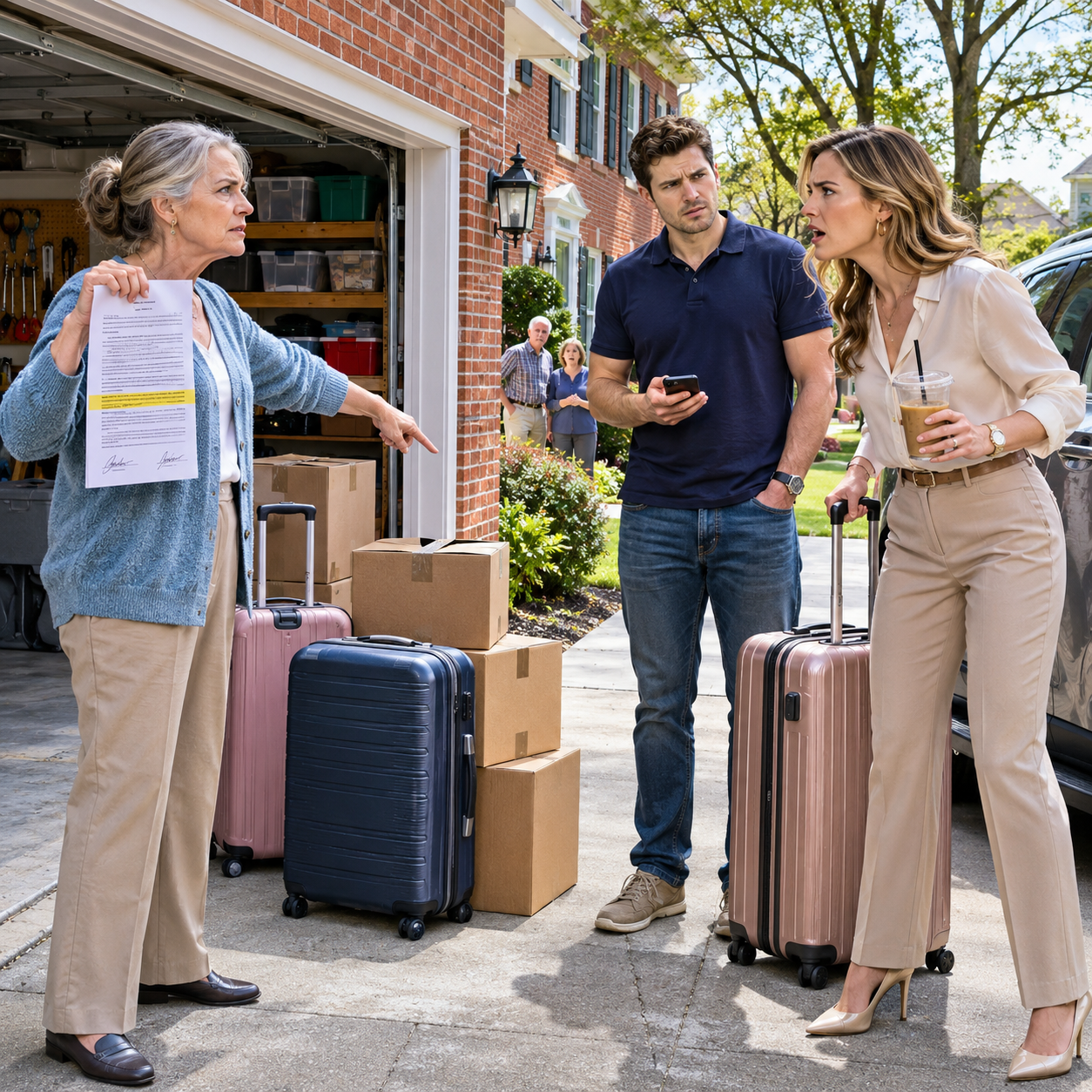
Two weeks after the airport incident, they appeared unannounced at my workplace.
My supervisor, Diane, came to my office looking concerned.
“Daniel, your parents are downstairs. Security says they’re refusing to leave until they speak with you.”
My stomach tightened.
I agreed to meet them at a coffee shop nearby rather than argue in the lobby.
My father started before we had even sat down.
“You’ve humiliated us long enough,” he said. “Amanda is devastated, your mother can’t sleep, and now relatives are questioning our integrity.”
My mother wiped her eyes.
“We raised you to be better than this, Daniel.”
I placed a folder on the table.
“Then explain these documents.”
Dad opened it and began reading.
His expression changed.
Mom leaned closer, then covered her mouth.
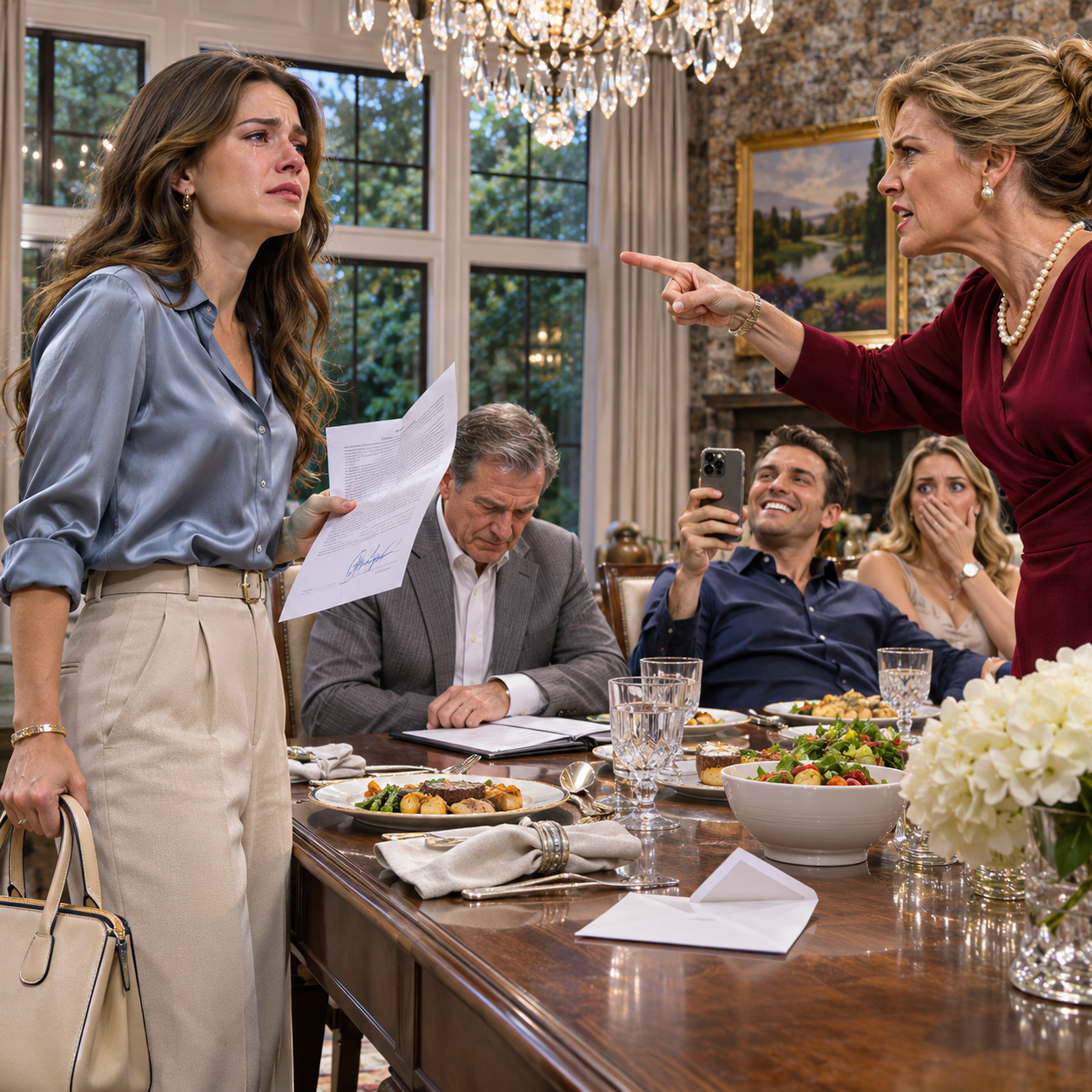
I showed them the banking records, the messages about my supposed debts, and the inheritance transfer bearing a signature I hadn’t written.
“Grandma left me $50,000,” I said. “Where did it go?”
Dad closed the folder.
“That money was used for family expenses.”
“Whose expenses?”
He hesitated.
“Your sister needed help.”
I stared at him.
“So you took money Grandma left me and used it for Amanda?”
“We were making decisions for the family,” he replied.
“By signing my name?”
Neither parent answered.
Mom began crying.
“You have no idea how difficult it was raising two children. We sacrificed so much.”
“I know you worked hard,” I said. “I’ve never denied that. But raising me didn’t give you permission to take what belonged to me.”
Dad’s face hardened.
“You’re being ungrateful.”
I leaned forward.
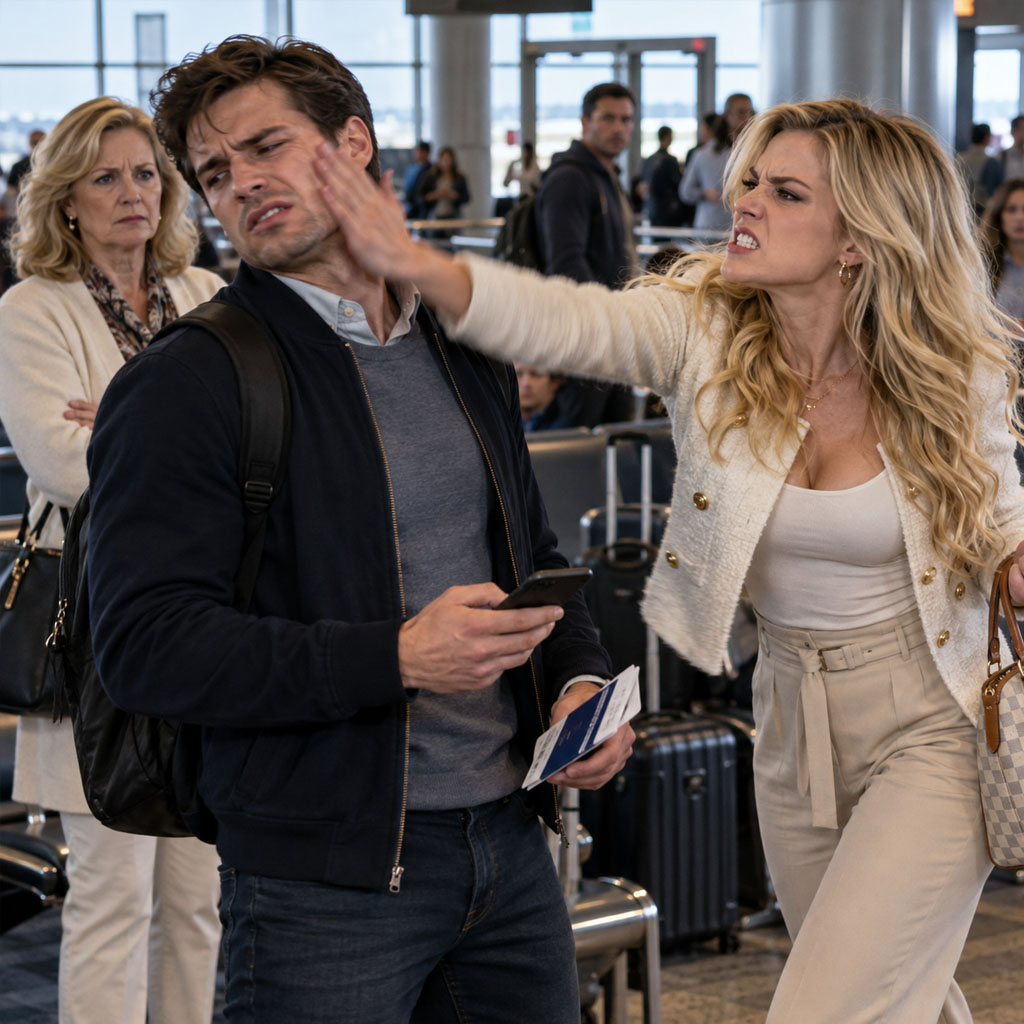
“Amanda slapped me in a public airport because I wouldn’t buy her a first-class ticket. You both blamed me. Now I discover you’ve been telling people I’m financially irresponsible while taking money from me.”
Mom looked away.
“Where does this end, Daniel?” she whispered.
“It ends when you stop lying and take responsibility.”
Dad pushed his chair back.
“If you walk away from this family, don’t expect us to welcome you back.”
For a moment, I saw the man who had taught me to ride a bicycle, who had stayed up helping me with science projects, and who had applauded when I graduated from college.
I loved that man.
But I could no longer ignore the man sitting across from me.
“I’m not asking you to welcome me back,” I said. “I’m asking you to stop hurting me.”
I left before either could respond.
Outside, I walked two blocks before the tears came. I stood beside a brick wall, struggling to compose myself.
I wasn’t crying because I wanted revenge.
I was grieving the parents I had thought I knew.
Three days later, I received a letter from their attorney.
My parents threatened legal action unless I publicly withdrew my accusations and paid them $20,000 for damage to their reputation.
I immediately contacted Jennifer.
She referred the letter to my Washington attorney, who prepared a formal response and a demand for the return of my inheritance and documented loans.
Then more information arrived.
Aunt Helen provided the suspicious medical invoices. Uncle David supplied records of the money he had transferred. Patricia agreed to explain Grandma’s wishes and provide the documents she had preserved.
The evidence was substantial, although nobody could predict how a court might evaluate every claim.
My parents’ attorney eventually requested a settlement meeting.
We met in a downtown Seattle conference room on a rainy Wednesday afternoon.
My parents sat opposite me with their lawyer. Mom wouldn’t meet my eyes, and Dad stared at the polished wooden table.
My attorney presented the financial records and outlined the disputed inheritance and loans. The initial demand, including proposed interest and additional repayment, was approximately $87,000.
My father looked stunned.
Their lawyer requested a private discussion.
When they returned, they offered $50,000, representing the original inheritance. They disputed responsibility for the remaining loans.
Negotiations continued for almost two hours.
Eventually, we reached an agreement.
My parents would pay $70,000, consisting of the inheritance amount and $20,000 toward documented loans. In exchange, the civil financial claims covered by the agreement would be resolved.
They would not admit wrongdoing.
They would not apologize.
My attorney explained the risks of continuing, including expense, uncertainty, and years of possible litigation.
I signed.
Not because I believed money could repair the damage.
Because I wanted the fighting to end.
As we prepared to leave, my father finally looked directly at me.
“You’ve destroyed this family,” he said.
I held his gaze.
“No, Dad. I just stopped letting this family destroy me.”
Twenty-eight days later, the money arrived.
I sat at my kitchen table staring at the bank confirmation.
There was no message from my parents.
No apology.
Just $70,000 and the quiet knowledge that I had finally stood up for myself.
That evening, I called Jennifer, Patricia, David, and Helen to thank them.
Then I called Sarah.
When she answered, I told her the news.
“I’m glad it’s over,” she said.
“So am I.”
After a pause, she added, “I have something to tell you, too. I accepted that research position in Seattle.”
For the first time in months, my happiness had nothing to do with winning an argument.
It came from the possibility of beginning something new.
Chapter 4
Three months after the airport incident, I invited Patricia, David, Helen, and Jennifer on a long weekend in Victoria, British Columbia. I paid for the hotel rooms and a few special meals, not because anyone expected me to, but because I genuinely wanted to thank them.
That distinction mattered more than I could have imagined.
We spent our days walking along the harbor, visiting gardens, and sharing stories over leisurely dinners. There were no arguments over who received the nicest room or who deserved the most expensive meal.
Nobody complained about the travel arrangements.
Nobody made me feel that my generosity was an obligation.
On our final evening, Patricia raised her glass.
“To Daniel,” she said, “for reminding us that courage doesn’t always mean fighting. Sometimes it means refusing to surrender your dignity.”
I felt my throat tighten.
Later, while we watched the harbor lights reflecting on the water, Patricia told me something about Grandma Evelyn.
“Your grandmother worried about how your parents treated you and Amanda,” she said. “She loved you both, but she noticed that you were expected to carry responsibilities your sister never faced.”
I looked at her.
“She noticed?”
“Oh, honey, she noticed everything. That’s why she was so careful about her will. She wanted both of you to have something of your own.”
The thought overwhelmed me.
For years, I had believed nobody in my family recognized how hard I tried.
But Grandma had seen me.
She had known.
I wiped my eyes, embarrassed by how emotional I had become.
Patricia put her arm around my shoulders.
“You don’t have to earn your place at this table, Daniel. You’re already family.”
Those words stayed with me long after we returned home.
Over the following months, I began seeing a therapist regularly. I learned that setting boundaries was not the same as punishing people. I also learned that loving someone didn’t require accepting every choice they made.
Some days were easier than others.
There were mornings when I missed hearing my mother’s voice and evenings when I remembered my father teaching me how to change a tire. I didn’t want to erase the good memories. I simply needed to stop allowing them to excuse everything that had happened afterward.
My parents occasionally sent messages through relatives, insisting that families should forgive and move forward. But they never directly acknowledged what they had done.
Eventually, I stopped expecting them to.
Amanda, however, surprised me.
One afternoon, several months after the settlement, she called from an unfamiliar number.
I almost ignored it.
Then I answered.
“Daniel?” she asked.
“Yes.”
Her voice sounded smaller than I remembered.
“Can we talk? Just us?”
I agreed to meet her at a coffee shop in Fremont. I chose a public place and told Marcus where I was going.
Amanda arrived wearing jeans and an oversized sweater. She looked tired, and her usual confidence seemed to have disappeared.
We ordered coffee and sat in awkward silence.
Finally, she spoke.
“I don’t know how to be in this family if I’m not the favorite.”
I wasn’t expecting that.
She looked down at her cup.
“Mom and Dad always told me I was special. They made excuses whenever I messed up. They kept saying I’d find my way eventually.”
Her eyes filled with tears.
“But I never actually had to find my way, Daniel. Somebody always rescued me.”
I listened without interrupting.
She admitted that her latest relationship had ended after her boyfriend discovered she had exaggerated her career accomplishments. She had no meaningful savings and little confidence that she could support herself.
“You built a life,” she whispered. “I just kept pretending I had one.”
For the first time, I saw my sister as something more complicated than the spoiled young woman who had slapped me.
She had been harmed by our parents’ favoritism too, although in a very different way.
But understanding her didn’t erase her responsibility.
“Amanda,” I said gently, “you hit me. You lied about me. You accepted money that wasn’t yours. And when I finally stood up for myself, you tried to make everyone believe I was cruel.”
She lowered her head.
“I know.”
“Then you need to take responsibility. Not because I demand it, but because you’ll never build a better life while blaming everyone else.”
She cried quietly.
“I don’t know where to start.”
“Maybe with counseling. Maybe with a job you can keep. Maybe with telling the truth, even when it makes you uncomfortable.”
She nodded, but didn’t promise anything.
When we left the coffee shop, I didn’t hug her.
I wasn’t ready.
Still, I felt something I hadn’t expected.
Compassion.
That evening, Sarah and I walked along the waterfront. She had moved to Seattle a few weeks earlier, and our friendship had gradually grown into a relationship.
I told her about Amanda’s confession.
“Do you think she’ll change?” Sarah asked.
“I don’t know.”
“Do you want her to?”
I considered the question.
“Yes,” I said. “But I finally understand that wanting her to change doesn’t mean I have to do the changing for her.”
Sarah smiled.
“That’s a pretty important lesson.”
Life slowly began taking a different shape.
I spent more time with Marcus, reconnected with relatives who had supported me, and started enjoying weekends without feeling guilty for declining family requests.
My cousin Matthew in Austin even called to say he had begun setting healthier boundaries in his own relationships.
“Watching you speak up made me realize I could stop accepting things that hurt me,” he explained.
I hadn’t expected my experience to influence anyone else.
But his words gave me an idea.
Grandma Evelyn had spent nearly forty years helping children discover what they were capable of achieving. She had believed education could change the direction of a person’s life.
I decided to honor her.
With Jennifer’s guidance, I established a modest scholarship fund in Grandma’s name. It would help local students who were working to pay their way through college.
I couldn’t change what my parents had done with her original gift.
But I could decide what her legacy would mean going forward.
At a small gathering to announce the scholarship, I displayed a photograph of Grandma standing outside the elementary school where she had taught.
She was smiling, one hand resting on a stack of textbooks.
I remembered her telling me something when I was twelve.
“Daniel, don’t measure your worth by how much you can do for other people. Remember to become someone you’re proud to be.”
At the time, I hadn’t fully understood her.
Now I did.
As the holidays approached, my parents sent a Christmas card. It contained an old family photograph and a generic holiday greeting.
There was no personal message.
No mention of the airport, the inheritance, or the settlement.
I placed it in a drawer.
I didn’t tear it up, and I didn’t respond.
I simply accepted that some relationships needed distance until genuine accountability became possible.
Sarah and I spent Christmas with Marcus and several close friends. We cooked a simple dinner, watched old movies, and stayed up late telling stories.
Nobody demanded an expensive gift.
Nobody kept a mental record of favors.
For the first time in years, the holidays felt peaceful.
Several months later, Sarah and I returned to Maui.
This time, I wasn’t trying to impress anyone.
We rented a modest oceanfront room, spent our mornings swimming, and explored the island at our own pace.
One afternoon, we sat on the beach watching waves wash over the sand.
Sarah rested her head against my shoulder.
“Do you ever regret canceling those tickets?” she asked.
I thought carefully before answering.
“I regret what happened at the airport. I regret that my parents chose Amanda’s behavior over my feelings. I regret the lies, the lost years, and all the family dinners we’ll probably never have again.”
I looked toward the horizon.
“But I don’t regret standing up for myself.”
Sarah squeezed my hand.
“Good.”
“I used to think being a good son meant never saying no,” I continued. “I thought if I worked hard enough, gave enough, and forgave enough, eventually everyone would appreciate me.”
“And now?”
“Now I know love isn’t supposed to require constant proof.”
We sat quietly for a while.
Then my phone vibrated.
It was a message from Amanda.
Two words appeared on the screen.
“I’m sorry.”
I stared at them longer than I expected.
Part of me wanted to call her immediately. I wanted to believe those words represented the beginning of real change.
But another part remembered the airport, the accusations, and the years of manipulation.
I showed Sarah the message.
“What are you going to do?” she asked.
“I’m going to give it time.”
I placed the phone beside me.
“An apology matters,” I said. “But so does what happens afterward.”
Sarah nodded.
We watched the waves in comfortable silence.
I didn’t know whether Amanda and I would ever become close again. I didn’t know whether my parents would eventually acknowledge their mistakes.
And for once, I didn’t feel responsible for finding those answers.
I had spent thirty-two years believing my family’s happiness depended on me.
Now I understood that every adult was responsible for their own choices.
That didn’t mean I had stopped loving them.
It meant I had finally begun loving myself enough to establish limits.
As the afternoon sun softened, Sarah and I walked along the shore. We talked about ordinary things: dinner plans, her research, a hiking trip we wanted to take, and whether we might adopt a dog.
Small, peaceful conversations.
The kind I once overlooked because my attention was always occupied by somebody else’s emergency.
We stopped near a stretch of smooth sand where the waves barely reached our feet.
Sarah slipped her hand into mine.
“You’re awfully quiet,” she said.
“I’m remembering something Grandma told me.”
“What was it?”
“That I should become someone I’m proud to be.”
Sarah smiled.
“And have you?”
I looked at her, then out across the ocean.
“I’m getting there.”
That evening, we returned to our room and watched the sunset from the balcony. I thought about the man who had stood alone at an airport gate, humiliated and frightened, wondering whether he had just made the worst mistake of his life.
I wished I could go back and tell him what was waiting.
The painful discoveries.
The difficult choices.
The people who would stand beside him.
The love he would find.
And the quiet confidence that would eventually replace his desperate need for approval.
I had originally spent $15,000 hoping to give my parents an unforgettable anniversary celebration.
Instead, that journey had revealed a truth I could no longer ignore.
Family wasn’t measured by the money I gave, the problems I solved, or the mistreatment I was willing to endure.
It was measured by honesty, kindness, respect, and the willingness to take responsibility when someone caused harm.
I still loved the people who had raised me.
But I no longer confused love with permission to hurt me.
As the last light disappeared beyond the Pacific, Sarah leaned against my shoulder, and I felt completely at peace.
My sister’s slap had ended the vacation I planned for my family.
But it had also started the life I finally chose for myself.
And that was a gift no amount of money could ever buy.
THE END. ⚠️ All characters and events are fictional. Do not imitate or apply them in real life. 😌😌😌