
Part 2
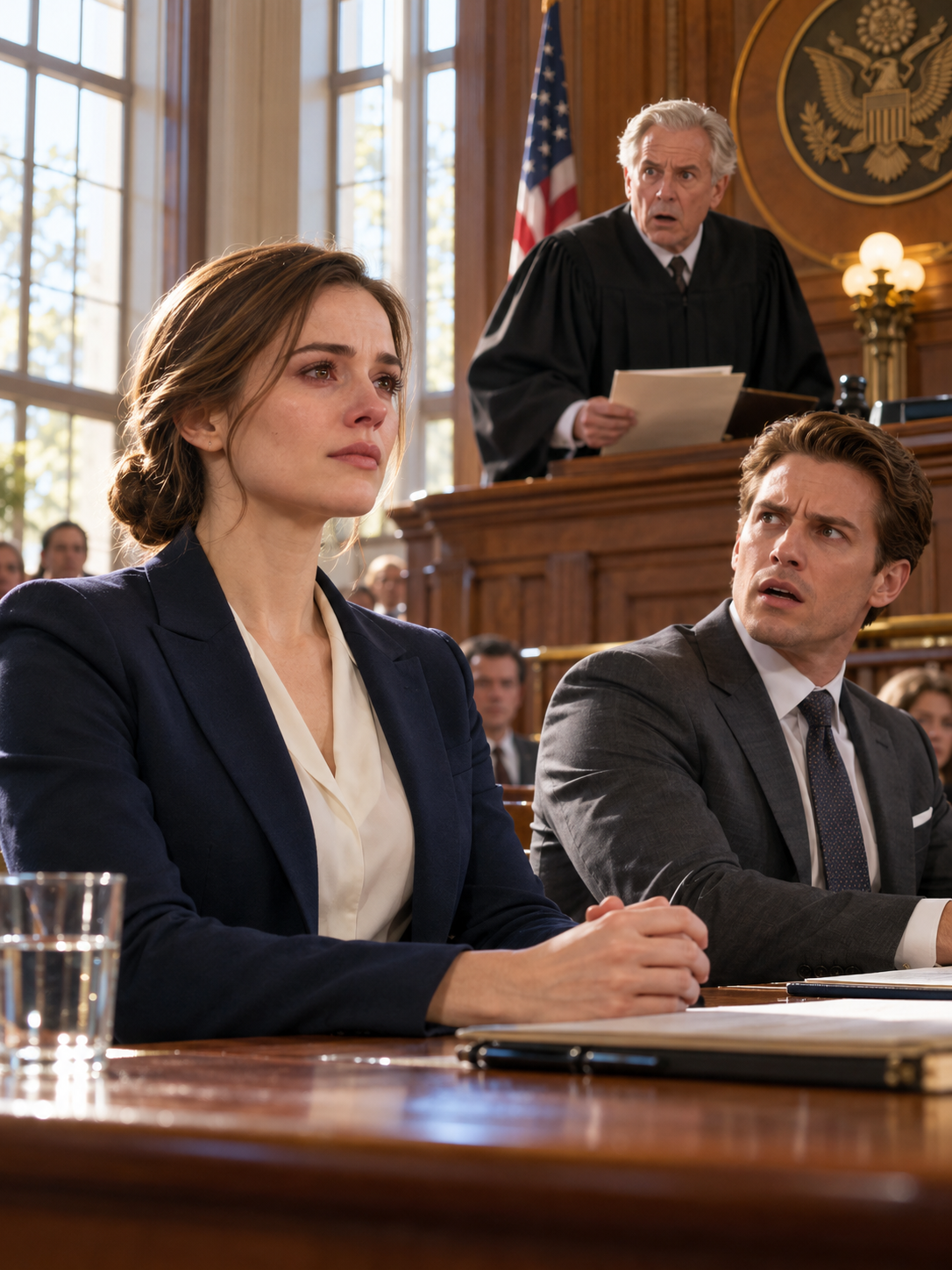
Daniel stared at me as though the chair beside my attorney had suddenly been occupied by a stranger.
“Dead?” he said.
Judge Whitaker seemed to realize where he was. He sat again, though his expression remained shaken. “Counsel, I need a moment.”
Rachel nodded.
Daniel leaned toward his attorney and whispered something urgently. His attorney answered, but Daniel barely heard him. His eyes stayed fixed on me.
I had imagined many ways my past might return.
I had never imagined this.
Judge Whitaker removed his glasses again and rubbed the bridge of his nose. “Captain Anderson, I want to be very careful here. Some of the records before me are sealed, and I have no intention of discussing classified material in this courtroom.”
“Understood.”
“But I believe I recognize your name from an operation that involved my nephew.”
My chest tightened.
“What was his name?”
“Benjamin Whitaker.”
For the first time that morning, I lost control of my expression.
Ben Whitaker.
Twenty-three years old. Medic. Terrible singer. Always carried cinnamon gum.
I could see him immediately, sitting in the red dirt with his helmet tilted back, telling me that if we ever got home, he was going to eat an entire pecan pie by himself.
“He made it?” I asked.
The judge’s eyes filled.
“Yes.”
I looked down.
For years I had wondered.
Judge Whitaker steadied his voice. “My family was told a captain stayed behind during the evacuation. We were told that officer diverted the hostile patrol long enough for the wounded men to reach extraction.”
Daniel was completely still.
The judge continued carefully. “We were also told that officer was presumed killed.”
A memory flashed behind my eyes.
Rain.
Burning fuel.
A radio crackling against my shoulder.
Someone shouting my name.
I pushed it away.
“I wasn’t killed,” I said.
Judge Whitaker gave a sad, astonished smile. “I can see that.”
A few nervous laughs moved through the courtroom and died quickly.
Daniel leaned forward. “Your Honor, I don’t understand what any of this has to do with our divorce.”
His attorney closed his eyes.
Judge Whitaker looked at him.
“It has relevance, Mr. Bennett, because you just spent several minutes asserting that your wife has never held meaningful responsibility, never demonstrated professional value, and never accomplished anything of significance.”
Daniel’s jaw tightened. “I meant during our marriage.”
“Then you should have said that.”
Daniel glanced at me. “She never told me.”
The words came out accusingly.
For the first time, I answered him.
“You never asked.”
His face reddened. “I asked plenty of things.”
“You asked why I didn’t have a better job. You asked why I wasn’t more impressive at your company dinners. You asked why other men’s wives had better titles.” I kept my voice calm. “You never asked why I wake up when helicopters fly low. You never asked why I hate fireworks. You never asked why I check exits every time I enter a restaurant.”
Daniel’s mouth opened, then closed.
Judge Whitaker said nothing.
Rachel rested her pen on the table.
I had not planned to say any of it. Yet once the words began, I felt years of pressure loosening around my ribs.
“I told you I served in the Army,” I continued. “You knew that.”
“You said logistics.”
“I did work in logistics.”
“You never said you were a captain.”
“I stopped being one before I met you.”
“You let me think—”
“I let you think I was me.”
That silenced him.
I looked directly at the man I had loved.
“I wanted one part of my life where rank didn’t matter. Where medals didn’t matter. Where I didn’t have to be the woman people had read about in a report.” My voice softened. “I wanted someone to love Emily.”
Daniel swallowed.
“And for a while,” I said, “I thought you did.”
Part 3
The hearing resumed after a short recess.
Daniel spent those fifteen minutes pacing the courthouse hallway while his attorney tried to contain the damage. I sat on a wooden bench near the windows and watched rain streak down the glass.
Rachel handed me a cup of coffee.
“You okay?”
“I’ve been better.”
“You’ve been worse too, I’m guessing.”
I smiled faintly. “Much.”
She sat beside me. “I knew you had military service. I knew you had commendations. I didn’t know the judge’s family was connected.”
“Neither did I.”
“You want me to ask for a continuance?”
“No.”
“Emily, you don’t have to prove anything today.”
“I know.”
That was the first time I truly understood it.
I had spent years telling myself I did not care what Daniel thought, yet every insult had left a mark. Somewhere inside me, I had begun measuring my life against his contempt.
The problem with hearing something often enough is that eventually your heart starts repeating it in your own voice.
Failure.
Wasted potential.
Nothing to show.
I had survived an operation that military investigators later called catastrophic. I had carried a wounded sergeant for nearly half a mile after shrapnel tore through my shoulder. I had spent three days moving alone through hostile territory after everyone who knew my position assumed I was dead.
Yet Daniel’s disappointment had somehow convinced me to feel small in my own kitchen.
That realization hurt worse than the divorce.
When we returned to the courtroom, Judge Whitaker’s demeanor was professional again.
“Let’s focus on the matters properly before us,” he said.
Rachel began presenting the financial records.
They told a story Daniel had never bothered to see.
During the first two years of our marriage, I had used part of my military savings to cover our rent while Daniel changed firms. I had paid nearly half the down payment on our home from money saved before we met. When Daniel’s father suffered a stroke, I had taken six months away from contract work to help his mother manage appointments, medications, and rehabilitation.
Daniel remembered those months as the time when my “career disappeared.”
The records remembered differently.
They showed checks.
Transfers.
Medical invoices.
Mortgage payments.
They showed that while Daniel worked seventy-hour weeks, I had managed our household, handled his parents’ emergencies, and done part-time consulting from home.
“You told me you barely made anything from that,” Daniel said.
“I barely discussed it.”
Rachel passed another document to the clerk.
I had provided risk-management consulting for two transportation companies and a private security training organization. I never put my name on a building. I never posted about it online. I never cared enough about status to explain it at dinner parties.
But I had earned money.
More than Daniel realized.
I had saved most of it.
Judge Whitaker looked at the financial statement.
“Mrs. Bennett, this account is solely in your name?”
“Yes, Your Honor.”
Daniel stared at the number.
His face changed again.
Not because it was enormous. It was not. But it was enough to destroy the picture he had created of a helpless woman with no resources of her own.
“You never told me about that either,” he said.
I turned toward him.
“It was disclosed during discovery.”
“You know what I mean.”
“Yes,” I said. “I do.”
He wanted to know why I had not performed my worth for him.
That was the question underneath every other question.
The answer was simple.
Because I should never have needed to.
Judge Whitaker reviewed the documents before addressing Daniel.
“Mr. Bennett, marriages are not corporate résumés. Financial contribution matters in a divorce, but so do nonfinancial contributions, caregiving, deferred work, and property brought into the marriage.”
Daniel nodded stiffly.
The judge continued. “You may be proud of your professional success. You have every right to be. But success does not give you authority to define the value of another person’s life.”
Daniel looked down.
I felt no triumph.
That surprised me.
For months I had imagined the satisfaction of watching him discover how wrong he had been. But seeing him embarrassed did not heal anything.
I had once wanted this man to be happy.
Part of me still wanted that, even though I no longer wanted to be responsible for making it happen.
Part 4
Three weeks later, Daniel asked to meet me outside our attorneys’ offices.
We sat in a small coffee shop near the courthouse. He looked older without the suit, more like the man I had married and less like the man who had tried to dismantle me under oath.
For a while, neither of us spoke.
Then he said, “I looked you up.”
I stirred my coffee.
“I figured you would.”
“Most of it is vague.”
“That’s intentional.”
“There were articles.”
“Old ones.”
“You received a Silver Star?”
I met his eyes.
“Yes.”
His voice dropped. “Why didn’t you tell me?”
I could hear the question differently now. There was no accusation in it this time.
Only hurt.
So I gave him the truth.
“When I came home, everyone wanted the story.”
He waited.
“They wanted to know how I survived. They wanted to know what I did. They wanted to call me brave.” I looked down at my hands. “But the people I couldn’t bring home were brave too. Some of them were braver than I was.”
Daniel said nothing.
“For months, I couldn’t go anywhere without someone treating me like what happened was the most important thing about me. My mother cried every time she saw the scar on my shoulder. My father kept newspaper clippings. People I barely knew asked questions they had no business asking.”
“So you disappeared.”
“In a way.”
I left active duty after my recovery. I moved. I took small consulting jobs. I went to therapy. I stopped attending ceremonies.
Then I met Daniel.
“You didn’t know who I was,” I said. “And I liked that.”
His eyes filled with regret.
“I thought you were just… quiet.”
“I was.”
“I thought you lacked ambition.”
“I didn’t.”
“I know that now.”
I looked out the window.
A couple in their seventies crossed the street under one umbrella, moving slowly together through the rain.
Daniel rubbed his palms against his jeans.
“I was cruel to you.”
“Yes.”
He flinched.
There would have been a time when I softened the answer to protect him.
That time was over.
“I kept telling myself I was pushing you,” he said. “Like I was trying to make you want more.”
“You were trying to make me look better beside you.”
His eyes closed briefly.
“Yes.”
It was the first honest thing he had said about our marriage in a long time.
“I don’t know when I became that person,” he said.
“Neither do I.”
“Was I always?”
“No.”
That seemed to hurt him most.
I remembered the young man with the crooked kitchen table. The man who once drove two hours in a thunderstorm because my car had broken down. The man who sat beside me when I had nightmares without demanding to know what they were about.
He had not always been cruel.
That was why leaving had taken so long.
People rarely stay because they love pain. They stay because they remember tenderness and keep waiting for it to return.
Daniel looked at me.
“Is there any chance for us?”
I had known the question was coming.
Still, hearing it made my heart ache.
“No.”
He stared at his coffee.
“I’m sorry.”
“I know.”
“I wish I had known.”
I shook my head slowly.
“That wasn’t the problem.”
He looked up.
“You knew enough.”
His brow tightened.
“You knew I was loyal to you. You knew I took care of your father when he couldn’t walk. You knew I sat in the hospital with your mother every night after his stroke. You knew I supported you when your first firm passed you over for promotion. You knew I loved you.”
His face crumpled slightly.
“You had all the information you needed to treat me with respect.”
He looked away.
“That’s because you never tried to know me,” I said.
The words were quiet.
There was no anger left in them.
Only truth.
Part 5
The divorce was finalized in early spring.
The judge divided the marital property fairly. I kept the portion of the house equity tied to my original contribution and received my share of the assets we had accumulated together. Daniel kept what was rightfully his.
I did not ask for revenge.
I did not need it.
The most important thing I carried out of that courthouse could not be listed on any settlement document.
I carried myself.
For the first few weeks, freedom felt strangely empty.
I rented a small house outside Charlottesville where the backyard sloped toward a line of oak trees. The kitchen was outdated, the porch creaked, and the neighbor’s dog believed six in the morning was the proper time to announce the existence of squirrels.
I loved every inch of it.
I bought a cheap kitchen table.
I assembled it myself.
One drawer came out crooked.
I laughed so hard I had to sit on the floor.
Slowly, pieces of my old life returned.
I called people I had avoided because they reminded me of the woman I had been before Daniel. One of them was Sergeant Marcus Reed, who had retired in Tennessee and somehow still remembered every bad joke ever told overseas.
When he answered the phone, he was silent for two seconds.
Then he said, “Well, hell. The ghost finally calls.”
I laughed.
“I heard you were too stubborn to die,” I said.
“Learned from my commanding officer.”
Marcus came to visit two months later. We sat on the porch drinking coffee while he complained about his knees and showed me pictures of his grandchildren.
“You ever talk to Whitaker?” he asked.
“Ben?”
“Yeah.”
I shook my head.
Marcus pulled out his phone.
“You should.”
I hesitated.
Then he showed me a picture.
Ben Whitaker was older, heavier, and smiling beside a woman and three children. The sight of him alive struck me harder than I expected.
“He’s a physical therapist now,” Marcus said. “Works with wounded vets.”
I covered my mouth.
For years, I had carried Route Red as a list of things lost.
I had forgotten it was also a list of people saved.
That evening, after Marcus left, I stood alone on the porch while the sky turned gold over the trees.
I thought about the courtroom.
Daniel calling me a failure.
Judge Whitaker standing.
The stunned silence afterward.
For months, I had believed that moment changed my life because everyone finally learned who I was.
I was wrong.
The real change was that I finally remembered.
I was not valuable because I had once been Captain Anderson.
I was not valuable because a judge recognized my name.
I was not valuable because of medals hidden in a box at the back of my closet.
And I was certainly not valuable because a husband approved of me.
I mattered before any of those things.
A few weeks later, I accepted a position with a nonprofit that helped veterans transition into civilian careers. I did not take the job to prove Daniel wrong. I took it because I understood what it meant to come home and discover that the skills that once kept people alive did not fit neatly into ordinary conversations.
On my first day, a young former Marine sat across from me and stared at his résumé.
“Nobody cares what I did,” he said.
I knew that voice.
It was the voice people use when disappointment has begun sounding like fact.
I slid the résumé back toward him.
“That’s not true.”
He shrugged.
“I spent eight years doing something that doesn’t mean anything out here.”
“It means something.”
“To who?”
“To you,” I said. “Start there.”
He looked at me.
I smiled.
“Then we’ll help everyone else understand.”
Months passed.
I learned how peaceful life could feel when I stopped defending my right to occupy it.
Daniel and I spoke only when necessary. The last time I saw him was outside the county clerk’s office after signing a final document related to the house.
He looked healthier.
Less polished.
More human.
“I took a different job,” he told me.
“Good?”
“Less money.”
I smiled. “That wasn’t what I asked.”
He laughed quietly.
“Yeah. Good.”
We stood there awkwardly for a moment.
Then he said, “I think about what you told me.”
“Which part?”
“That I knew enough.”
I said nothing.
He put his hands in his pockets.
“You were right.”
There was no satisfaction in hearing it.
Only closure.
“I hope you’re happy, Daniel.”
“I hope you are too.”
“I’m getting there.”
He nodded and walked away.
I watched him go without wishing he would turn around.
That was how I knew I had healed.
For years, I thought the worst thing Daniel did was underestimate what I had accomplished.
It wasn’t.
The worst thing was that I nearly let his judgment convince me that my life required his approval.
There will always be people who measure worth by what can be displayed. Job titles. Houses. Money. Awards. The right clothes at the right table beside the right people.
But some of the strongest lives cannot be summarized that way.
Strength may look like surviving something you never discuss.
It may look like caring for a family while someone else collects the applause.
It may look like walking away from a person you still love because love without respect has become another name for loneliness.
And sometimes it looks like sitting silently in a courtroom while someone calls you a failure, knowing the truth does not become smaller just because another person never bothered to see it.
Daniel once believed I had nothing to show for my life.
For a while, I let that wound me.
Now, when I wake before dawn and step onto my porch with coffee warming my hands, I no longer count achievements.
I listen to the birds.
I watch light move between the trees.
I think about the people who came home.
I think about the woman I was, the woman I lost, and the woman I finally learned to respect again.
Then I go inside and begin another ordinary day.
And after everything I have lived through, I have come to understand that an ordinary life, chosen freely and lived with dignity, may be one of the greatest victories of all.
THE END.


