
Chapter 2
On January 2, I met with a housing attorney named Anna Crawford.
I had spent most of New Year’s Day gathering paperwork: the deed, tax statements, insurance records, bank transfers, receipts for repairs, and every message showing that my parents understood I owned the property.
Anna reviewed everything twice.
“You’ve been extraordinarily generous,” she finally said.
“That’s a polite word for stupid.”
She smiled slightly.
“I wouldn’t use that word. But generosity without boundaries can become an arrangement nobody respects.”
I told her about New Year’s Eve.
The laughter through the window.
Josh’s message.
My parents pretending I was a stranger.
Something changed in her expression.
“Then the question isn’t whether you have rights as the owner,” she said. “The question is what outcome you want.”
“I want them to understand that the house isn’t theirs to use while treating me like I’m disposable.”
“Then we do this properly.”
Anna explained that removing occupants from a property had to follow Arizona law and formal notice procedures. There would be no dramatic changing of locks, no shutting off utilities, no showing up with friends to throw belongings onto the curb.
That suited me.
For years my family had treated me as emotional rather than competent whenever I disagreed with them.
I wanted everything documented.
Anna prepared formal notice offering two choices: enter a written rental agreement at a below-market monthly rate, or vacate after the legally required notice period.
The rent was $1,000.
Comparable homes in the neighborhood rented for considerably more.
“They’re going to say this is cruel,” I told her.
“People often call boundaries cruel when they benefited from the absence of them.”
On January 4, a professional process server delivered the papers.
I went with him because Anna wanted no confusion about what was happening.
Jay came too, though I made him promise to keep quiet.
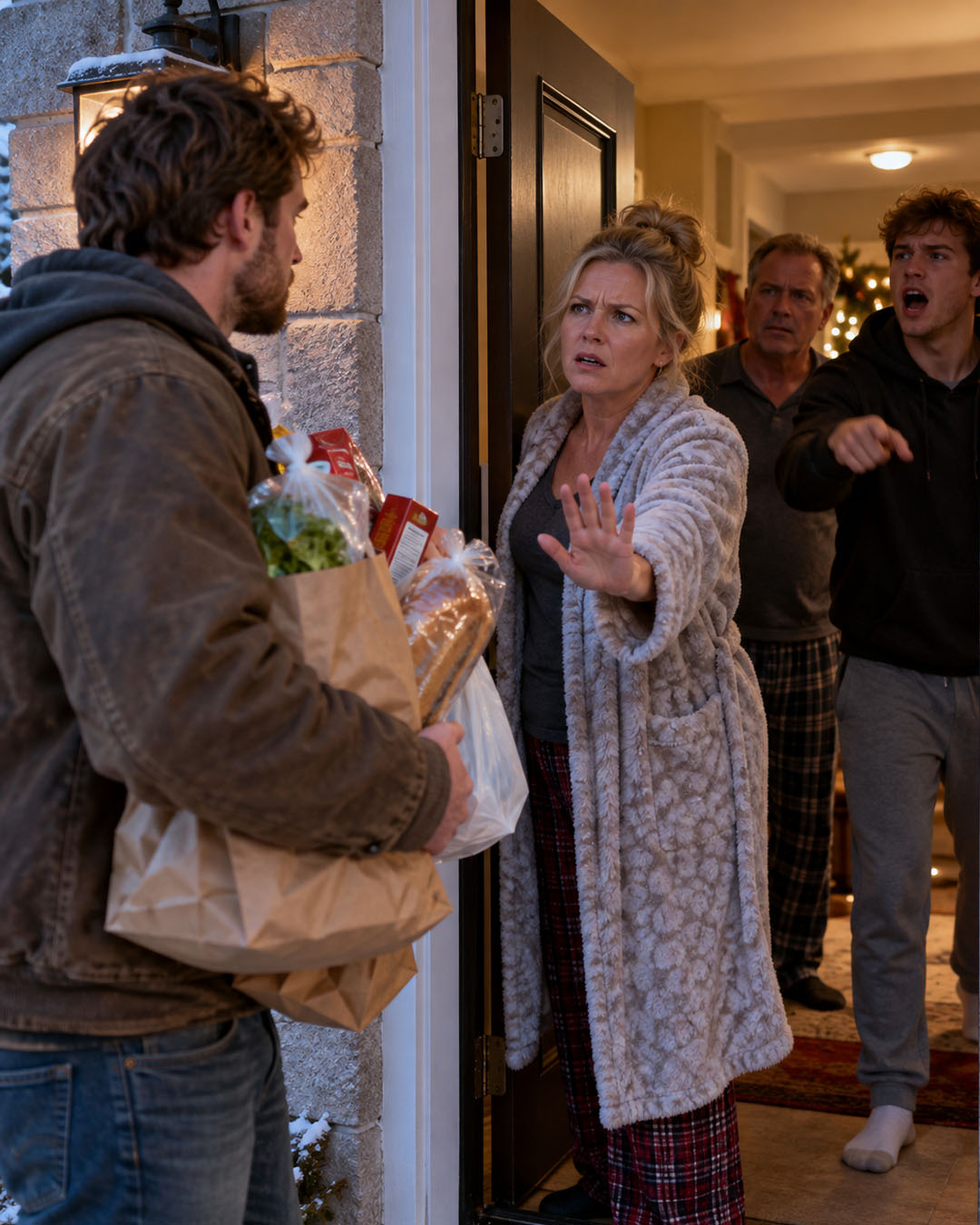
Dad answered the door in a bathrobe.
His irritation disappeared when he saw the paperwork.
“What is this?”
The server handed him the notice.
Linda hurried into the entryway.
Josh appeared behind her.
Dad read the first page.
His face changed.
“You’re evicting your own parents?”
“I’m offering you a rental agreement or time to move.”
Linda snatched the papers from him.
“This is our house.”
“No,” I said quietly. “It isn’t.”
Josh laughed.
“Yes, it is.”
“Check the county records.”
“You’re lying.”
“My name has been on the deed since I saved the house from foreclosure.”
Josh stepped onto the porch.
“You can’t just decide you own something because you paid for it.”
Even Jay couldn’t keep his face straight after that.
I looked at Josh.
“That is very close to how ownership works.”
Dad shoved the notice against my chest.
“We raised you.”
“And I’m grateful for what you did for me when I was young.”
“You don’t throw your parents out.”
“You don’t lock your son out of his own property and mock him through the window either.”
Linda’s eyes filled with tears.
“You’re doing this because your feelings got hurt.”
“No. New Year’s Eve just made me understand what had already been happening.”
For the next two days, my phone became almost unusable.
Aunts called.
Cousins texted.
An uncle left a six-minute voicemail about loyalty.
According to Linda’s version of the story, I had suddenly decided to steal my parents’ home because I was angry about missing a party.
Nobody mentioned that I had purchased the house.
Nobody mentioned five years without rent.
Nobody mentioned the taxes, insurance, repairs, or utilities.
Then Dad’s older brother Samuel called.
Samuel Morrison was fifty-eight, a master plumber who had built his own company from a single truck. He had raised four children after losing his wife and had never had much patience for excuses.
“Theo,” he said, “tell me exactly what happened.”
So I did.
Unlike everyone else, he didn’t interrupt.
When I finished, he was quiet for several seconds.
“Rick has been living rent-free in a house you own?”
“Yes.”
“For five years?”
“Yes.”
“And he locked you out?”
“Yes.”
Samuel gave a long sigh.
“I love my brother. That doesn’t mean I have to pretend he’s behaving like a decent man.”
Relief washed over me.
“You don’t think I’m going too far?”
“I think you waited too long.”
My parents hired a lawyer and challenged my right to remove them. Their argument shifted several times—first that the house morally belonged to them, then that they had lived there long enough to deserve ownership, then that they had somehow misunderstood the purchase.
The hearing was held later that month.
I wore the best suit I owned.
Anna brought a thick binder.
My family brought anger.
The judge brought questions.
Who was on the deed?
Me.
Who paid the property taxes?
Me.
Who carried the insurance?
Me.
Who paid for the roof, plumbing, air-conditioning system, garage door, and exterior work?
Me.
Could my parents produce evidence that they had repurchased the property from me?
No.
Could they produce evidence that I had gifted it to them?
No.
Their lawyer tried to argue that years of residence gave them an ownership interest.
The judge disagreed.
The property was mine.
The courtroom was silent when she said it.
For years, my family had treated that fact as an inconvenient technicality.
In less than a minute, it became reality.
Outside the courthouse, Josh was furious.
“This is unbelievable. You seriously took your own family to court.”
I stopped walking.
“No, Josh. You forced me to prove in court that I own something I already paid for.”
“That house was supposed to stay in the family.”
“It is in the family.”
I pointed at myself.
“I’m family too.”
For once, he had nothing to say.
Chapter 3
A week after the hearing, Linda called.
Her voice was different.
No anger.
No accusations.
Just fear.
“Theo, we’ve been looking at rentals.”
I waited.
“Everything decent costs more than we expected.”
“I know.”
“We can’t afford first month, deposit, moving expenses, everything all at once.”
I sat at my apartment table while my orange tabby, Larry, sprawled across a stack of invoices.
“What are you asking?”
“Could we take the rent option?”
I closed my eyes.
Five years of free housing.
One locked door.
One court fight.
And now they were asking permission to rent from me.
“Yes,” I said. “But it will be a real lease.”
“We’re family.”
“That’s why there wasn’t a lease before. Look where it got us.”
Dad took the phone.
“Son, the legal stuff got out of hand.”
“You challenged my ownership.”
“We were scared.”
“You said I was stealing your house.”
“We were emotional.”
I almost laughed at the irony.
For years, whenever I objected to their behavior, I was the emotional one.
“$1,000 a month,” I said. “Due on time. Everything in writing.”
Dad grumbled.
Josh tried negotiating it down to $800.
I refused.
They signed the agreement in Anna’s office.
Watching my father sign the line marked Tenant should have felt triumphant.
Instead, it felt sad.
This was what it had taken for three adults to acknowledge what I had done for them.
The first rent payment was due February 10.
Nothing arrived.
On February 12, Linda called.
“We just need a few days.”
“Why?”
“Your father’s disability application hasn’t been approved, and Josh is waiting for a client payment.”
“What about your income?”
“I had fewer salon hours.”
I looked at the calendar.
“You signed an agreement.”
“We know.”
“Then honor it.”
February 15 arrived.
Still nothing.
Dad called this time.
“We need to renegotiate.”
“No.”
“The amount isn’t realistic.”
“You agreed it was realistic six days ago.”
“Our circumstances changed.”
“No, Dad. Your circumstances have been the same for years.”
His voice hardened.
“So now you’re going to make your parents homeless over a thousand dollars?”
“No. You had five years without rent. Then you had a legal notice. Then you asked for another opportunity and signed an agreement you didn’t keep.”
“You’ve changed.”
That sentence would once have destroyed me.
Instead, I answered calmly.
“I hope so.”
Anna handled the rest.
Another hearing followed after the required notices and filings.
This one was shorter.
There was a signed rental agreement.
There was an unpaid balance.
There was little to argue about.
The judge granted possession back to me after the statutory period.
This time, even Josh stayed quiet.
My parents moved out before law enforcement became necessary.
Samuel helped them load furniture because, as he told me, “A boundary doesn’t require cruelty.”
I agreed.
That sentence mattered to me.
I wasn’t trying to destroy my family.
I was simply finished destroying myself to protect them.
Linda stayed temporarily with her sister. Dad bounced between relatives while trying to sort out his finances. Josh slept on friends’ couches and complained online about “toxic family systems.”
For the first time in years, none of those problems came with an invoice addressed to me.
I walked through the empty house the evening after they left.
The walls were marked where furniture had stood.
The garage smelled like motor oil from Dad’s Camaro.
In Josh’s old room, strips of tape still held pieces of a forgotten poster to the wall.
I expected to feel powerful.
Instead, I sat on the living-room floor and cried.
Larry wandered over, climbed into my lap, and began purring as if nothing unusual had happened.
“I wanted them to appreciate me,” I told him.
He blinked.
“I didn’t want this.”
That was the truth nobody in my extended family seemed to understand.
Walking away from people you love is not satisfying just because you have a good reason.
Sometimes doing the right thing still hurts.
Then something happened that showed me how deep the problem had really gone.
About two weeks later, a man named Marcus knocked on my apartment door.
He was broad-shouldered, serious, and obviously uncomfortable.
“You Theo Morrison?”
“Yes.”
“I’m looking for Josh.”
“He doesn’t live here.”
Marcus frowned.
“He told me he lived in your house.”
My stomach tightened.
“What house?”
Marcus showed me his phone.
There was a picture of my property.
My garage.
My driveway.
Dad’s restored Camaro.
“He said his family owned this place,” Marcus continued. “Said he had a successful design business and needed $5,000 for equipment. He borrowed money from me.”
I stared at him.
“When?”
“Last month.”
While Josh was fighting me over ownership of the property, he had apparently been using photographs of it to convince other people he was financially secure.
Marcus had a signed promissory note.
He had messages.
He had screenshots in which Josh described his “home office” and business expansion.
“I’m sorry,” I said. “None of that house belongs to him.”
Marcus looked more disappointed than angry.
“I was afraid of that.”
When he left, I called Josh.
He answered from an unfamiliar number.
“Theo?”
“Did you borrow $5,000 from Marcus?”
Silence.
“That’s complicated.”
“No, it isn’t.”
“I needed equipment.”
“You showed him pictures of my house.”
“I lived there.”
“You told him it belonged to you.”
“I was going to pay him back.”
“With what?”
“My business was about to take off.”
“Josh, wishing isn’t income.”
His voice cracked.
“Can you help me?”
There it was again.
The sentence our entire family had built its life around.
Can you help me?
For years, I would have asked how much.
This time, I said, “No.”
Chapter 4
Marcus turned out not to be the only person Josh owed.
Once one lender started asking questions, others surfaced. There were three more people who said Josh had borrowed money after describing himself as a successful designer with stable assets and family property behind him.
The total was more than $12,000.
I stayed out of it except when investigators contacted me to confirm ownership of the house.
I gave them accurate records.
Nothing more.
Josh eventually accepted responsibility in court as part of a plea agreement involving financial deception. He received probation, restitution obligations, and a criminal record that would make his future harder.
When Linda called me afterward, she was crying.
“You could have saved him.”
That sentence stunned me.
“From what?”
“This whole mess.”
“How?”
“You could have paid those people.”
“So he wouldn’t face consequences for lying to them?”
“He’s your brother.”
“Exactly. He’s my brother, not my dependent.”
“He made a mistake.”
“He made several choices.”
Mom became quiet.
I softened my voice.
“I hope this is the thing that finally makes him change.”
“You don’t sound like you care.”
“I care enough not to keep teaching him that somebody else will erase every consequence.”
Dad wasn’t doing much better.
After leaving the house, he stayed with his brother Paul. The arrangement lasted only a few weeks before they argued.
Dad eventually found a small rental room through an acquaintance from his warehouse days.
For the first time in years, he also picked up part-time work doing inventory for an auto-parts store.
When Samuel told me, I nearly dropped the phone.
“His back?”
“Apparently it hurts less when rent is due.”
I laughed despite myself.
Linda increased her hours at the salon.
Not happily.
But she did it.
She rented a room from a coworker and began saving for an apartment.
The family stories about me gradually changed too.
In January, I had supposedly been a heartless son stealing his parents’ house.
By summer, people had learned more.
Samuel helped.
Whenever somebody complained about me at a family gathering, he asked a few simple questions.
“Who bought the house?”
“Theo.”
“Who paid the taxes?”
“Theo.”
“Who paid the repairs?”
“Theo.”
“How much rent did Rick pay for five years?”
Nothing.
Then Samuel would shrug.
“Sounds settled to me.”
The house itself became peaceful.
Jay needed somewhere to live after the owner of his apartment decided to sell the building, so I offered him the house at a fair rent.
He stared at me.
“You’re serious?”
“Only if we have an actual lease.”
He grinned.
“Oh, absolutely. After watching your family, I’d sign one in blood.”
“Regular ink is fine.”
Jay paid early every month.
He fixed small problems without turning them into emergencies.
Before repainting the guest room, he sent me three color samples and asked permission.
The first time he did that, I laughed for nearly a minute.
“What?”
“Nothing.”
“Dude, it’s your house.”
Exactly.
Such a simple concept.
With rent coming in and my salary increasing to about $75,000, I finally began rebuilding the savings I had drained years earlier.
I even replaced my aging truck.
When I drove it to Carol and Tony Romano’s house, Tony walked around it twice, nodding.
“About time you bought something for yourself.”
Those words struck deeper than he probably intended.
For years, every extra dollar had gone toward somebody else’s crisis.
I had become proud of needing nothing.
That wasn’t strength.
It was another kind of neglect.
So I started letting myself have a life.
I traveled to Sedona for a weekend.
I replaced the couch in my apartment.
I stopped answering every family call the instant my phone rang.
And through Jay, I got to know a woman named Sarah Keller.
We had met before at barbecues, but I had always been distracted by whatever emergency my family was creating that week.
Sarah taught middle school science. She had a dry sense of humor, loved old movies, and possessed an extraordinary ability to tell when I was agreeing to something I didn’t actually want to do.
One evening, she asked why.
“Why what?”
“Why do you say yes so quickly?”
I looked at her.
“To what?”
“Everything. Restaurant, movie, weekend plans. I ask what you want, and you ask what I want.”
“I’m easygoing.”
“No.”
She smiled gently.
“You’re trained.”
Nobody had ever put it that way.
I told her the whole story.
Not just the eviction.
The years before it.
The bills.
The repairs.
The feeling that being useful was the only reliable way to stay loved.
Sarah listened.
Then she reached across the table.
“You know people can care about you even when you’re inconvenient, right?”
I laughed uneasily.
“I’m still learning.”
“Good,” she said. “Because I hate action movies.”
“I love action movies.”
“See? Progress already.”
Chapter 5
A little more than a year after that New Year’s Eve, I proposed to Sarah.
Nothing elaborate.
No crowd.
No photographer hiding in bushes.
We were hiking outside Sedona when we stopped at an overlook where the red rocks glowed in the evening sun.
I asked.
She cried.
I nearly dropped the ring.
She said yes anyway.
At our engagement dinner, Jay was already announcing himself as best man before I officially asked.
Carol cried harder than Sarah’s mother.
Tony opened a bottle of wine he claimed he had been saving for something important.
Samuel came too.
He raised his glass after dinner.
“To Theo,” he said, “who finally figured out that success isn’t how many people depend on you. It’s whether you can build a life that doesn’t collapse every time somebody else makes a bad decision.”
That was a very Samuel toast.
Not elegant.
Completely accurate.
My relationship with my parents remained complicated.
Dad called occasionally.
We talked about work, cars, and weather.
Apologies were harder for him.
Once, after a long silence, he said, “I shouldn’t have locked you out that night.”
“You didn’t lock the door.”
“No. But I sat there and let it happen.”
That mattered.
Linda took longer.
For months, nearly every conversation drifted toward how difficult her life had become.
Eventually, during one call, I stopped her.
“Mom, do you want a relationship with me, or do you want access to what I can provide?”
She went silent.
Then she started crying.
I expected anger.
Instead, she said, “I don’t know how we got this far.”
“I do.”
Another silence.
“I’m sorry,” she whispered.
It didn’t repair five years.
But it was a beginning.
Josh’s path was rougher.
Restitution forced him to take regular employment, and for once he kept a job.
He worked production at a sign company, where he used some of the design skills he had always bragged about having.
Samuel told me Josh was actually good at it.
Months passed before Josh contacted me.
His message was brief.
I was awful to you. I don’t expect you to answer. I just needed to say it.
I read it several times.
Then I typed:
I hope things get better for you.
I didn’t add money.
I didn’t offer housing.
I didn’t ask what he needed.
For me, that was growth.
The house that had nearly torn us apart remained mine.
Jay stayed there for another year before buying a small place of his own. After that, Sarah and I moved into it while we saved toward something larger.
On our first New Year’s Eve there, I stood on the same porch where I had once held bags of groceries while my family laughed behind a locked door.
The weather was warmer this time.
Sarah hung lights around the doorway.
Jay arrived carrying steaks.
Carol brought enough pasta to feed half the neighborhood.
Tony brought wine.
Samuel brought nothing except opinions, which was exactly what everyone expected.
My parents came too.
They arrived early.
Dad carried folding chairs.
Linda brought a pie.
When she reached the front door, she stopped instead of walking in.
“Can we come in?”
I looked at her.
The question took me back to that frozen porch instantly.
The locked door.
Josh’s laughter.
My father saying money didn’t make me family.
For a second, twenty-nine-year-old me was standing there again, holding groceries for people who didn’t want him.
Then Sarah touched my arm.
I came back to the present.
“Yes,” I said. “Come in.”
Later that night, just before midnight, Dad found me alone in the garage.
The old Camaro was gone now.
In its place sat my tools, storage shelves, and Sarah’s bicycle.
Dad looked around.
“You’ve taken good care of the place.”
“Thanks.”
He put his hands in his pockets.
“I used to tell myself you buying the house embarrassed me.”
I didn’t answer.
He continued.
“I was supposed to provide for the family. Then my son saved me, and every time I looked at you, I saw my own failure.”
For the first time, I understood something I had never considered.
His cruelty had not come from believing I was worthless.
Some of it had come from knowing I wasn’t.
“That doesn’t excuse what happened,” I said.
“I know.”
He nodded toward the living room.
“Your mother knows too.”
“And Josh?”
Dad almost smiled.
“Josh is learning everything the hard way.”
“That sounds like Josh.”
We laughed.
It wasn’t forgiveness.
Not completely.
But it wasn’t nothing.
At midnight, we gathered in the backyard.
Sarah stood beside me.
Jay raised his glass.
“Anybody locking Theo out this year?”
Carol slapped his arm.
“Jason!”
“What? I’m checking.”
Everyone laughed.
Even Mom.
I looked through the sliding glass door toward the living room.
Five years earlier, I had believed providing that house made me valuable to my family.
Then I believed taking control of it would finally prove my worth.
Both ideas were wrong.
A deed can prove ownership.
A paycheck can prove employment.
A bank statement can prove what you have sacrificed.
None of those things can prove that you deserve respect.
That shouldn’t require proof.
I spent years trying to purchase peace by covering bills, solving emergencies, and making myself useful enough that nobody would have a reason to reject me.
They found one anyway.
And standing outside that locked door turned out to be the best terrible thing that could have happened.
Because the cold didn’t change their minds.
Consequences did.
More importantly, consequences changed mine.
I learned that helping someone is not the same as carrying them.
Forgiveness is not permission.
Family does not mean unlimited access to your money, your property, your time, or your dignity.
Sometimes love means opening the door.
Sometimes it means closing it.
And sometimes, before you can know the difference, you have to stand outside your own house and finally understand that the person you have been forgetting to protect is yourself.
THE END.
⚠️ All characters and events are fictional. Do not imitate or apply them in real life. 😌😌😌


