Part 2
For two days, I told him nothing.
Instead, I returned to David Rosen’s office and made myself listen carefully this time. A tax specialist joined us, along with Martin Hayes, the longtime chief operating officer of my uncle’s logistics company.
What I had inherited, they explained, was not a magical mountain of spendable cash. It was responsibility. Employees depended on that company. Tenants depended on buildings I now had an interest in. Loans, taxes, maintenance contracts, and investments all carried consequences.
Oddly, that made me feel better.
I understood responsibility.
I had spent years balancing books for small businesses while Eric and Marlene treated my work like a hobby.
At one point, Martin showed me a financial statement. I studied it and asked, “That depreciation expense doesn’t represent actual cash leaving the company, correct?”
He smiled. “Correct.”
For the first time in years, I felt something straighten inside me.
My knowledge mattered.
I mattered.
That evening, I put the brown envelope on our coffee table.
Eric barely looked away from television. “What’s that?”
“My uncle’s estate.”
“Oh. How much did you get?”
I slid the inventory toward him.
He skimmed it casually until he reached the last line.
Then he stopped.
He counted the digits with his finger.
Once.
Twice.
His beer glass slowly lowered.
“Claire.”
“Yes?”
“This says a billion dollars.”
“Approximately.”
He looked up as if I had suddenly become another person.
“We’re billionaires?”
“No. I am inheriting an estate currently valued at roughly a billion dollars.”
His expression changed so quickly it would have been funny if it hadn’t been heartbreaking.
The next morning, Eric made coffee before I woke up.
He had not made coffee for me in years.
“You should relax,” he said brightly. “Maybe you don’t need to work so hard on those little bookkeeping jobs anymore.”
Those little bookkeeping jobs.
By evening, Marlene appeared at our door carrying a luxury gift basket.
“My sweet Claire,” she said.
I nearly checked the hallway to see whether another Claire was standing behind me.
Marlene had never called me sweet anything.
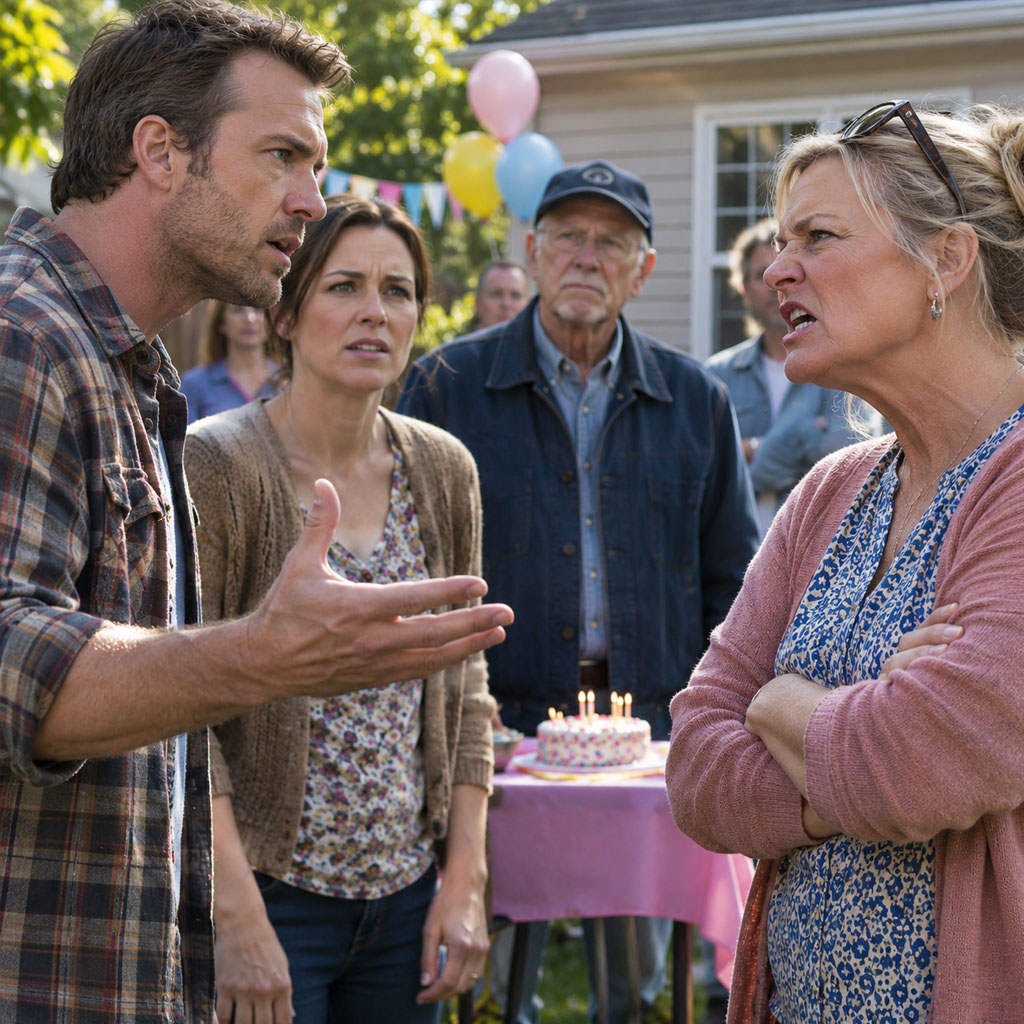
She sat in our living room, drank iced tea, and smiled until her cheeks must have hurt.
“You must feel overwhelmed,” she said. “A woman shouldn’t have to handle complicated business matters alone. Eric can manage everything for you.”
Eric arrived twenty minutes later, suspiciously early.
“Mom,” he said, pretending to be embarrassed. “Don’t pressure her.”
But he didn’t reject the idea.
After Marlene left, he sat beside me.
“She does have a point.”
“About what?”
“Managing the estate. Investments. Taxes. Business decisions. I can be the point person.”
“I already have an attorney, accountants, executives, and advisers.”
His smile tightened.
“I’m your husband.”
“Yes.”
“So why would you trust strangers instead of me?”
I looked at him for a long moment.
“Because they know what they’re doing.”
The next Saturday, he showed me luxury condos on his phone.
“Two million is nothing compared with a billion,” he said. “We should pay off our mortgage immediately. Then maybe get Mom something. Her house is old.”
I stared at him.
“Whose money are you planning to use?”
He actually looked confused.
“Ours.”
“The inheritance is mine.”
“We’re married, Claire. Your assets are family assets.”
Interesting.
My freelance income had been my failure.
My career sacrifice had been my choice.
The housework had been my responsibility.
But suddenly my inheritance belonged to the family.
Then came the investment idea.
One of Eric’s college friends needed capital for a startup. Eric suggested investing enough to earn himself a board seat.
That was the moment I saw the pattern clearly.
He wanted my money to pay his mortgage, buy his mother a condo, and elevate his status among his friends.
When I refused, the sweetness disappeared.
“Don’t let this money go to your head,” he snapped.
A few days later, David called me.
His voice was unusually careful.
“Claire, your mother-in-law contacted my office.”
My stomach tightened.
“Marlene?”
“She requested information regarding your expected financial position and said your husband should receive copies of relevant documents.”
I went cold.
“I never gave her your number.”
“I assumed not. We refused the request.”
Only one person could have given Marlene David’s business card.
Eric.
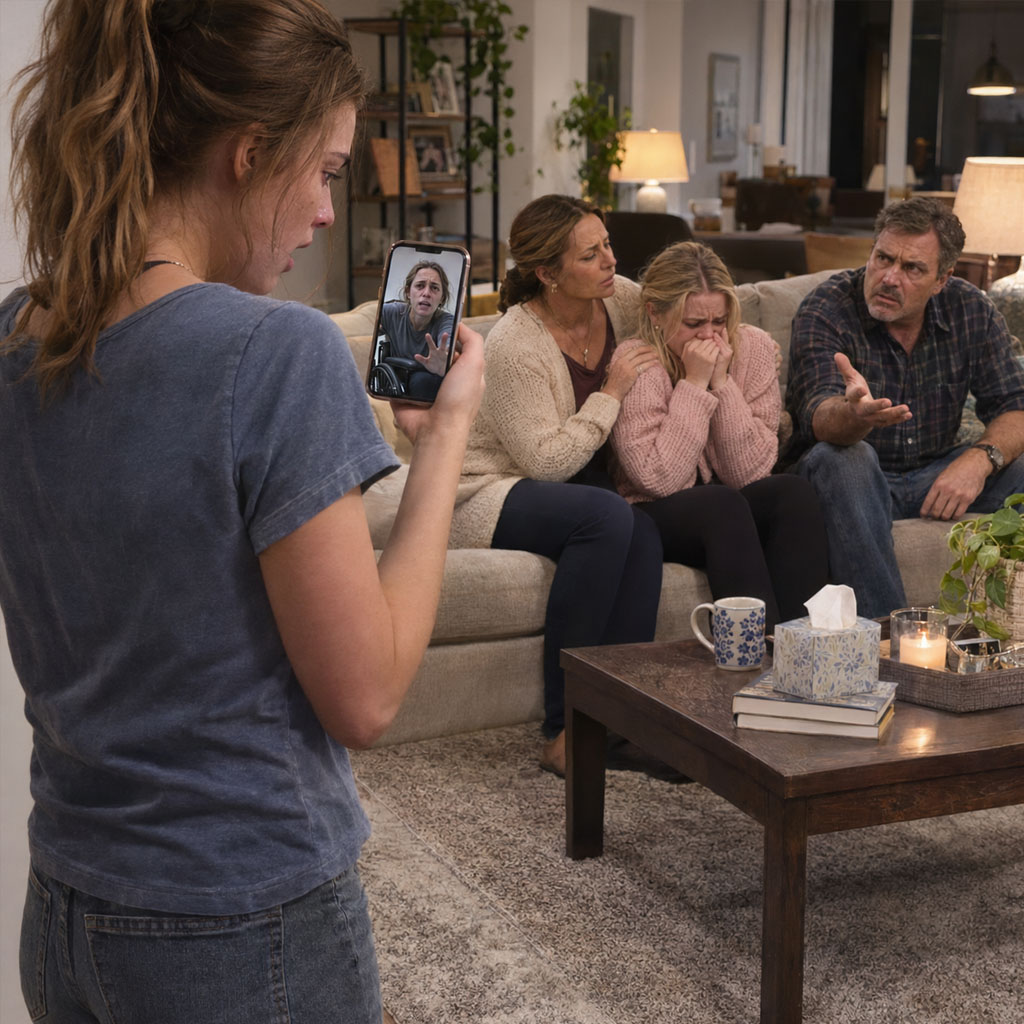
That evening, I confronted him.
He admitted it immediately.
“She’s worried about you.”
“She called my attorney behind my back.”
“She’s family.”
“She demanded private financial information.”
“She didn’t mean any harm.”
There it was.
The sentence that had governed my marriage.
She didn’t mean any harm.
Marlene insulted me. She didn’t mean harm.
She arrived uninvited. She meant well.
She criticized my housekeeping, income, clothes, cooking, and childlessness. She was only worried.
Every time Marlene crossed a boundary, Eric erased the boundary.
Then he ordered me to apologize to her.
Something inside me became very quiet.
“No.”
Eric stared.
“What?”
“I am not apologizing.”
“Claire, stop this.”
“No. You stop.”
For the first time in our marriage, I walked away while he was still angry.
Three days later, David gave me something my uncle had left separately from the estate documents.
A letter.
I opened it alone in a small coffee shop.
The first sentence made me cry.
Claire, you have said “whatever is fine” far too often since you were a little girl.
My uncle remembered.
When adults asked where I wanted to eat, I said anywhere was fine. When friends chose movies I disliked, I said it didn’t matter. When people hurt my feelings, I smiled because disappointing someone frightened me more than disappointing myself.
His letter continued.
Being considerate is a virtue. Erasing yourself is not.
Then came the sentence that changed my life.
Money will not make you free if you still let other people make your choices. The more you inherit, the more people may try to decide for you. Listen to good advice. Ask questions. But in the end, choose for yourself.
I sat there crying into a paper napkin.
My uncle had left me a billion-dollar estate.
But that letter was the inheritance I needed.
Part 3
Eric changed tactics after that.
The anger became tenderness.
One evening, he sat across from me and spoke gently.
“You’re overwhelmed. Let me handle the meetings.”
“No.”
“You hate negotiations.”
“I can learn.”
“You’re a freelance bookkeeper, Claire. You don’t understand commercial real estate or corporate strategy.”
“No,” I said. “I don’t.”
He seemed pleased, thinking I had finally surrendered.
Then I continued.
“That’s why I ask people who do understand. Then I make my decision.”
His face hardened.
“We’re married. Do you trust me or not?”
“I trusted you too much.”
That silenced him.
I told him about every time I had surrendered a decision because arguing seemed exhausting. Moving for his job. Leaving my career. Spending weekends with Marlene when I wanted to rest. Accepting her criticism so he wouldn’t be “caught in the middle.”
“I thought that was keeping peace,” I said. “But it wasn’t peace. I was disappearing.”
Eric lowered himself onto the couch.
For several minutes, neither of us spoke.
Then he covered his face.
“I’m scared.”
It was the first vulnerable thing he had said in weeks.
“Of what?”
His voice cracked.
“If you have all that money… you won’t need me anymore.”
There it was.
Not love.
Need.
Eric had built his identity around earning more than I did. He understood the “real world.” He provided. I accommodated. As long as I was financially weaker, he knew exactly where he stood.
My independence frightened him because equality felt, to him, like rejection.
“If I make my own decisions,” I asked, “why does that make you unnecessary?”
He couldn’t answer.
I almost felt sorry for him.
Almost.
Then I remembered the hallway.
Divorce that useless woman.
I’m not thinking about it right now.
Our marriage had depended on me staying small enough for Eric to feel large.
I could not return to that.
Two weeks later, I rolled a suitcase into the living room.
Eric muted the television.
“What are you doing?”
I placed legal documents on the table.
“I’m leaving.”
He stared at the papers.
“Divorce?”
“Yes.”
His face reddened. “I’m not signing.”
“That’s your choice. My attorney will proceed either way.”
He immediately called his mother.
Ten minutes later, Marlene burst through the door.
“You can’t do this!”
I almost admired the performance.
A month earlier, she had demanded that Eric divorce me.
Now she preached about sacred marriage.
“Families support each other,” she cried. “You don’t abandon people over a misunderstanding.”
I set down my suitcase.
“Marlene, did you believe that before you knew about the inheritance?”
Her face froze.
“Of course.”
“I was useless then, remember?”
Eric went pale.
Marlene stopped breathing.
So they finally understood.
I repeated what I had heard outside the door that evening.
“You said I was almost forty, had no children, barely made money, and sat around playing with spreadsheets. Then you said, ‘Divorce that useless woman.’”
Marlene stammered. “I was irritated.”
“Does one billion dollars change the meaning of your words?”
Her embarrassment turned instantly into rage.
“You ungrateful little—”
“Mom, stop.”
We both looked at Eric.
He stood between us.
“Enough. Don’t talk to Claire like that.”
Marlene stared at him in disbelief.
“We were wrong,” he said. “Just stop.”
For seven years, I had waited for that moment.
My husband had finally drawn a boundary with his mother.
And I felt nothing except sadness.
“Thank you,” I said. “I needed you to do that years ago.”
His eyes filled.
Perhaps if he had defended me outside that door, everything might have ended differently.
But love cannot survive forever on delayed courage.
I placed my apartment key on the table.
“Goodbye, Eric.”
Then I walked out.
Part 4
The divorce was not dramatic.
Reality was quieter than revenge.
Eric initially threatened to fight everything, but after my attorney explained the process and I established a separate residence, his resistance faded. The inheritance remained separate property, while we divided our ordinary marital savings and the equity in our apartment according to the settlement.
I did not celebrate.
I had loved him once.
Losing a marriage, even a bad one, still meant grieving the future I had imagined.
Meanwhile, my uncle’s estate became the hardest job of my life.
I sat through meetings where half the terminology initially sounded like another language. I reviewed leases, valuations, tax liabilities, debt schedules, environmental reports, insurance policies, and operating statements.
Sometimes I said, “I don’t understand.”
Then I asked the question again.
And again.
I discovered that admitting ignorance did not make me weak.
Refusing to learn did.
I decided not to run my uncle’s logistics company myself. Martin and his executive team had decades of experience that I did not possess.
“I want professionals operating the business,” I told them. “But I want to understand the decisions I’m responsible for approving.”
Martin smiled.
“That sounds exactly like your uncle.”
By late October, the divorce became final.
Eric and I met once more at a coffee shop to finish several administrative matters.
He looked older.
The confident man who once corrected the way I loaded a dishwasher and explained investment strategies I had never asked about sat across from me with dark circles beneath his eyes.
When the paperwork was finished, I stood.
“Claire.”
I stopped.
He wrapped both hands around his coffee.
“If you hadn’t inherited the money, would we still be married?”
I considered lying.
Then I remembered my uncle’s letter.
Choose for yourself.
Tell the truth.
“Probably.”
Eric gave a bitter laugh. “So money ruined us.”
“No.”
He looked up.
“The money didn’t ruin our marriage.”
“Then what did?”
“It showed me our marriage.”
He said nothing.
“I saw your arrogance. I saw your mother’s contempt. And I saw something I didn’t want to admit about myself.”
“What?”
“I had spent years teaching both of you that my feelings could be ignored.”
His face tightened.
“That doesn’t excuse what you did,” I continued. “But I kept surrendering. I called it compromise because I was afraid to say no. The inheritance didn’t create that. It just turned on the lights.”
Eric lowered his eyes.
For once, he offered no excuse.
I picked up my coat.
“Take care of yourself.”
Outside, October wind swept red leaves along the sidewalk.
My phone buzzed.
A message from David said the final estate transfer documents had cleared another major stage.
Months earlier, seeing a message like that would have terrified me.
Now I simply slipped the phone into my purse and kept walking.
The money had not made me fearless.
It had forced me to practice courage.
There was a difference.
Part 5
One year later, I sat in a Boston conference room reviewing plans for a forty-year-old commercial property my uncle had owned.
The building needed major work. One adviser recommended a complete renovation. Another believed selling immediately would produce a better return.
Charts covered the table.
Numbers filled the screen.
Several years earlier, I would have smiled politely and said, “Whatever you think is best.”
Instead, I raised my hand.
“Go back one page.”
The property manager stopped.
I pointed to a projection.
“Explain how you calculated that ten-year yield. I want the assumptions behind the vacancy rate.”
He did.
I asked three more questions.
An hour later, everyone looked toward me.
“So,” the manager said, “should we authorize the renovation?”
I considered it.
Then I shook my head.
“Not yet. There’s too much uncertainty around the redevelopment project nearby. Let’s monitor the market and tenant renewals for another six months.”
No one rolled his eyes.
No one called me difficult.
No one told me a woman couldn’t understand these things.
The manager simply nodded.
“Understood.”
That ordinary respect moved me more than I expected.
After the meeting, he asked casually, “Do you consult with family on decisions this large?”
For a second, I was back outside that apartment door.
Divorce that useless woman.
Then Eric’s hesitant reply.
I’m not thinking about it right now.
I smiled.
“I consult experts. I listen carefully. But I make the final decision myself.”
Outside, Boston was crisp with autumn. Leaves rattled along the sidewalk, and I pulled my coat tighter as I headed toward the station.
I was not suddenly brilliant because I had inherited wealth. I still made mistakes. I still encountered things I didn’t understand. Some nights, numbers followed me into my dreams.
But I finally understood my uncle’s warning.
Having money and being free were not the same thing.
You could possess a billion dollars and still live according to someone else’s permission.
You could have almost nothing and still refuse to surrender your dignity.
My phone buzzed.
It was my mother.
Lunch Sunday?
I opened my calendar.
For most of my life, my automatic answer would have been, Whatever is fine.
But Sunday was my first completely free day in weeks, and I wanted to spend it alone with a book, a pot of coffee, and absolutely nowhere to be.
Saturday, however, was open.
So I typed the truth.
I’m exhausted and want Sunday to myself. How about Saturday instead?
Her reply came less than a minute later.
Saturday works. Love you.
I stared at the screen.
Then I laughed.
It really could be that simple.
The world did not collapse because I said what I wanted.
People who genuinely loved me did not require my obedience as proof of love.
I slipped my phone into my coat and continued down the sidewalk.
A year earlier, I thought my uncle had left me one billion dollars.
I know better now.
He left me a company, buildings, investments, responsibilities, and a life I never expected.
But his greatest gift was a sentence written on three sheets of paper in his familiar handwriting.
Make the choice yourself.
That was the fortune no tax could reduce, no husband could control, and no mother-in-law could spend.
And for the first time in my life, every step ahead of me belonged entirely to me.
THE END.