
Chapter 2
I recognized Sophia’s handwriting before I could read a single word.
Dr. Marlow turned the letter toward me.
The page contained Lily’s words, written by her mother because Lily’s hands had become too weak.
To the people who pick who is a doctor.
Please pick Elizabeth Bellamy.
She held my hand when I was scared. She helped my mommy when the English was too hard. She read me Charlotte’s Web.
She is already a doctor in the ways that matter.
Please.
Lily Donovan, age nine.
I covered my mouth.
“How did you get this?”
“Dr. Beatrice Nell sent it to me.”
Dr. Nell had been Lily’s oncologist.
Dr. Marlow explained that they had trained together years earlier. After receiving Lily’s letter, Dr. Nell forwarded it with one sentence.
For when this applicant arrives.
“I’ve kept it in that drawer for fourteen months,” he said.
I stared at the paper.
Lily had died believing she had sent something into the world for me.
And somehow, it had been waiting.
Dr. Marlow sat down again.
“There is something else.”
His expression became more formal.
“Another applicant used details from Lily Donovan’s story.”
My stomach tightened.
“What applicant?”
“I cannot show you confidential admissions material in this setting.”
I already knew.
He continued carefully.
“When your application arrived this cycle, certain similarities became impossible to ignore. Someone from your family used specific details about Lily in an application submitted before yours.”
The room felt very quiet.
“My sister.”
Dr. Marlow didn’t confirm it directly.
He didn’t need to.
“Your account today is consistent with Lily’s letter, with Dr. Nell’s documentation, and with your employment history. There is a formal process for what happens next.”
My hands had gone cold.
A memory surfaced.
My personal statement.
The draft.
The family Google Drive.
I had written Lily’s name. Sophia’s name. The east-facing window. Charlotte’s Web. The sentence about sunrise.
Everything.
My mother had access.
So did my father.
So, through them, did Juliet.
Dr. Marlow studied me.
“Are you all right?”
“No.”
He nodded as if he respected the answer.
“You have another interview at one-thirty. Take it. Complete your day. I’ll contact you afterward through your verified application email.”
Outside, I sat on a courtyard bench beneath a bare tree.
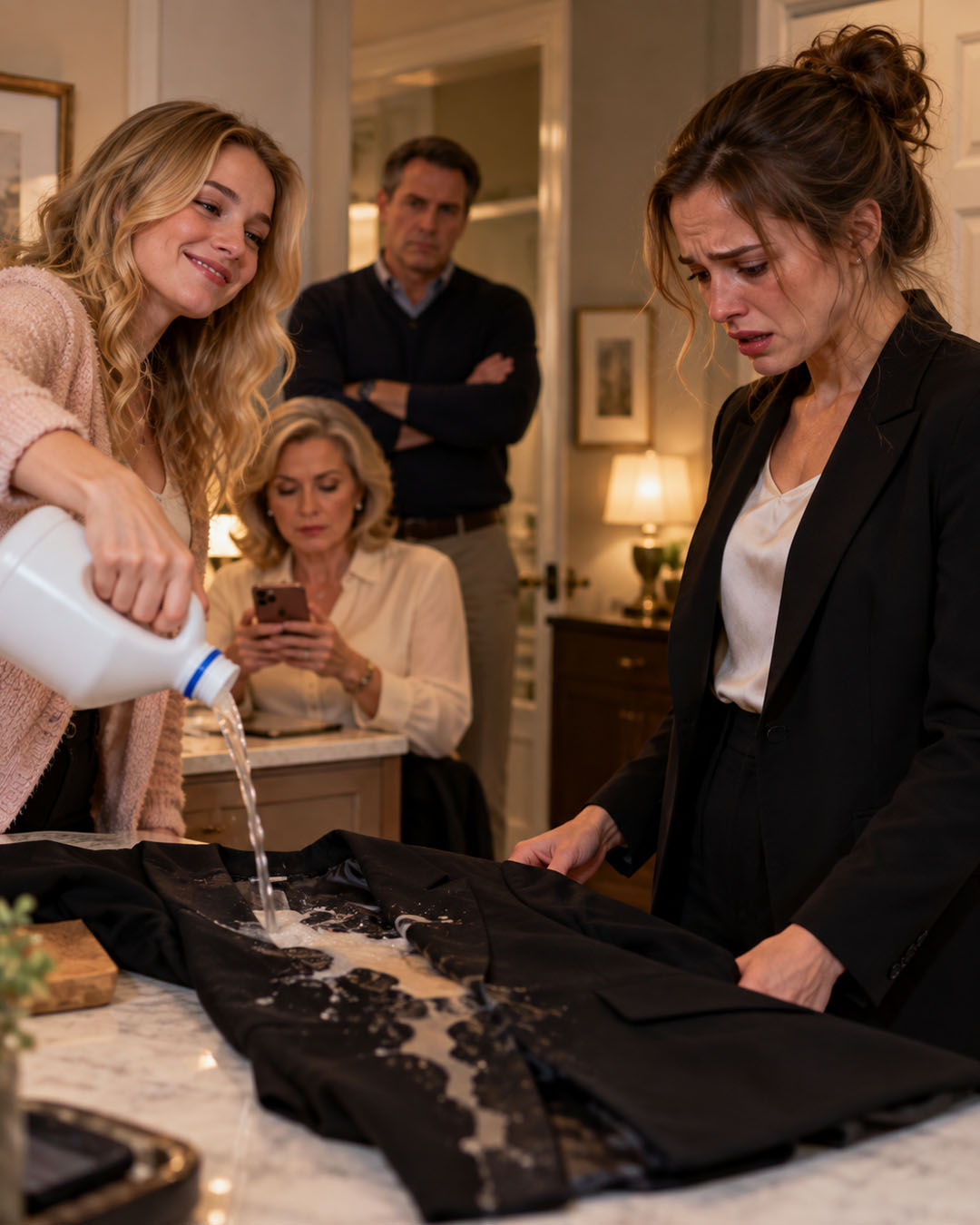
My blazer was still stained.
For the first time, I wondered whether Juliet had destroyed it because she knew something I didn’t.
I finished my final interview.
Then I drove north.
Halfway to Brooklyn, I called my supervisor, Ingrid Sandberg.
“Ingrid, did Juliet ever actually shadow on our oncology floor?”
A pause.
“Your sister?”
“Yes.”
“Four times.”
I tightened my grip on the steering wheel.
“For how long?”
“Never more than about ninety minutes. Why?”
“Did she know Lily?”
“No.”
“You’re sure?”
“Elizabeth, I keep observer records. Juliet Bellamy was never assigned to Lily Donovan.”
I thanked her and ended the call.
Then I called my mother.
She answered brightly.
“Elizabeth, sweetheart. How did Yale go?”
“Did Juliet write about Lily Donovan in her application?”
Silence.
Four seconds.
Long enough.
“What are you talking about?”
I noticed what she didn’t ask.
Who is Lily?
“Did she?”
“You’re exhausted. Come home and we’ll discuss this calmly.”
“I’m going to Brooklyn.”
“Elizabeth—”
I ended the call.
That night, Dr. Marlow emailed me.
The school had procedures for allegations of academic misrepresentation. If I wished to file a formal complaint, the Committee on Honor and Professionalism could compare submitted materials.
I opened my laptop.
Then I opened the old Google Drive.
My personal-statement draft was still there.
I clicked Version History.
The document contained dozens of entries from my own account.
Then one appeared in the middle.
2:18 a.m.
Bridget Bellamy.
My mother.
Viewed.
No edits.
I sat on my apartment floor and wrote a list on a yellow legal pad.
My work logs.
Hospital visitor records.
My original draft.
Google access history.
Juliet’s application.
Lily’s letter.
Then I stopped.
There was something else.
Something I didn’t even know was missing yet.
A month passed before Sophia supplied the answer.
When I called and asked whether she had ever met my mother, she went silent.
“Yes,” she said eventually. “At the hospital donor luncheon. Before Lily died.”
My pulse jumped.
“What happened?”
“I recognized her from the family picture you showed me. Lily made something for you. I gave it to your mother.”
“What?”
“A drawing.”
I closed my eyes.
“What drawing?”
“You and Lily. Holding hands beside her bed.”
I couldn’t speak.
Sophia continued.
“There were words on the back. Lily wrote them herself.”
“What words?”
Sophia began crying.
“For when you graduate.”
I whispered, “I never received it.”
The line went quiet.
Then Sophia said, “Oh, Elizabeth.”
My mother had taken a dying child’s drawing meant for me.
And hidden it.
I still didn’t know where.
Chapter 3
My father called me on March 30.
He hadn’t called privately in more than a year.
“I need to see you.”
“Why?”
“Because there are things on my phone you need.”
We met two days later in a small café in Brooklyn.
Lincoln Bellamy looked older than he had at Christmas. His suit was immaculate, but his hands shook when he put his phone between us.
“I let her do this.”
I said nothing.
“I am not asking you to forgive me.”
“Good.”
He swallowed.
“I’m asking you to know what happened.”
He opened a text thread with my mother.
May 14, 2024.
2:31 a.m.
Bridget: Just read Elizabeth’s draft. The Lily section is the strongest writing either girl has.
A later message:
Bridget: Juliet needs stronger material. Elizabeth isn’t applying this cycle anyway.
Dad had replied:
That’s Elizabeth’s work.
Mom:
She can write something else. We have one chance to get Juliet into Yale.
I read fifty-two messages.
My mother had not casually shown Juliet a paragraph.
She had coordinated with her.
Clinical stories.
Essay themes.
Which details to use.
How to explain gaps.
My father had objected occasionally.
Then done nothing.
He sent the entire thread to my phone.
“I should have stopped it,” he said.
“Yes.”
“I kept telling myself it wasn’t my decision.”
“It became your decision when you stayed quiet.”
He nodded.
“I know.”
For once, he didn’t defend himself.
The committee compared the two essays.
The overlap was extensive.
One sentence appeared word for word in both:
Her window faced east and she watched the sunrise even when she couldn’t eat.
Juliet had submitted it a year before mine.
But my dated draft came first.
And Juliet had never met Lily.
Ingrid obtained hospital records showing I had logged 3,200 hours of patient-navigation work, with 1,180 hours specifically connected to Lily and Sophia.
Juliet’s hospital visitor history covered five hours and twenty-two minutes over three years.
She had never entered Lily’s room.
The committee told me they had enough to move forward, but Dr. Marlow asked whether anything physical remained connected to Lily.
I thought about the missing drawing.
Then Mom called.
“Come home Sunday.”
“No.”
“Your father needs you here.”
“He knows where I live.”
Her voice hardened.
“This has gotten completely out of hand.”
I went anyway.
Not because she asked.
Because I knew that house.
When I was ten, I once opened the second drawer of Mom’s dresser while looking for stockings.
She had appeared behind me.
“That drawer is private, Elizabeth.”
She closed it slowly.
“My things stay mine.”
For sixteen years, I never opened it again.
On Sunday, Mom answered the door.
“We can still fix this.”
“Where’s Dad?”
“In the dining room.”
“Juliet?”
“With him.”
“Bathroom first.”
I walked upstairs.
Past my old bedroom.
Into my parents’ room.
I stood before my mother’s dresser.
Second drawer.
I opened it.
Silk scarves.
I lifted them.
Underneath was folded hospital sketch paper.
My hands began to shake.
I opened it.
A child had drawn two people.
One sat in a hospital chair.
The other lay in bed.
Their hands met in the middle.
On the back, in unsteady pencil:
For when you graduate.
Lily, age 9.
For fourteen months, my mother had kept it under scarves.
I photographed it exactly where I found it.
Then I put the drawing inside my coat.
Downstairs, my family sat around the dining table.
Juliet’s eyes were swollen from crying.
Mom folded her arms.
“Are you ready to be reasonable?”
I placed Lily’s drawing on the table.
My father went white.
Juliet stared at it.
Mom stopped breathing for a moment.
“This was given to you by Sophia Donovan,” I said. “October 18, 2024.”
Mom’s lips parted.
“You promised to give it to me.”
No answer.
I looked at Juliet.
“I have your essay.”
She flinched.
“I have my original draft. I have the Google access history. I have hospital records proving you never met Lily. I have Mom and Dad’s texts.”
“Elizabeth—”
“And now I have this.”
Juliet began crying.
“You don’t understand.”
“No. I understand perfectly.”
“It wasn’t my idea at first.”
“At first?”
“Mom said—”
“Stop.”
I didn’t raise my voice.
“You were twenty-one when you submitted that essay. You wrote thousands of words about caring for a dying child you never met.”
Juliet wiped her face.
“I was under pressure.”
“So was Lily.”
That silenced everyone.
Mom reached toward the drawing.
I put my hand over it.
She stopped.
“You have no idea what you’re doing,” she whispered.
I looked down at Lily’s pencil lines.
“She did.”
I took the drawing and left.
The hearing was scheduled for April 8.
Sophia agreed to appear by video.
The night before, Juliet called.
“I’ll lose everything.”
I sat at my kitchen table.
“You may.”
“Yale. My career. Everything I’ve worked for.”
“You stole the work.”
“I made a mistake.”
“No.”
My voice was calm.
“A mistake is getting a date wrong. You submitted a story about Lily. You stayed in medical school eight months knowing it wasn’t yours. That was a series of decisions.”
“Please.”
“I’m sorry you’re frightened.”
“Then stop this.”
“I can be sorry you’re frightened and still tell the truth.”
She hung up.
Mom left me a four-minute voicemail.
She said I was destroying the family.
She said Lily would want forgiveness.
She said my sister deserved to become a doctor.
Five minutes later, Dad texted.
Your mother does not speak for me. Do what is right.
The next morning, I opened my closet.
There were other jackets inside.
I had bought one after my interview.
I ignored them.
I put on Sophia’s ruined blazer.
The bleach stain was still there.
I buttoned it once.
Then I drove to Yale.
Chapter 4
The hearing room was smaller than I expected.
Dr. Marlow chaired the committee. Dr. Phoebe Lynwood and Dr. Reed Larkin sat beside him. Juliet sat across from them with an attorney serving as her adviser.
My parents were required to remain outside.
I placed my evidence folder on the table.
Dr. Marlow opened proceedings.
“Ms. Elizabeth Bellamy, you may begin.”
I started with numbers.
No emotion.
No family history.
Just records.
“My patient-navigation logs show 3,200 hours of clinical work. One thousand one hundred eighty were directly associated with Lily Donovan and her mother over twenty-seven months.”
I placed the report down.
“Juliet Bellamy’s hospital visitor record documents four visits totaling five hours and twenty-two minutes over three years. None placed her in Lily Donovan’s room.”
Dr. Larkin looked toward Juliet.
“She never met the patient?”
“No.”
I placed my original personal-statement draft beside the essay Juliet submitted.
“My document is dated April 2024.”
Then I pointed to the identical line.
“Her submission came later.”
Dr. Lynwood read both.
Nobody spoke.
At 11:30, a laptop screen brightened.
Sophia appeared.
She wore a blue blouse. Her hair was pulled back.
Dr. Marlow asked about Lily’s letter.
Sophia explained how Lily dictated it.
He placed the original on the table and read her words into the record.
Please pick Elizabeth Bellamy.
She held my hand when I was scared.
She helped my mommy.
She is already a doctor in the ways that matter.
Please.
Juliet began crying.
This time, I believed the tears.
Sophia looked into the camera.
“My daughter knew Elizabeth. She loved Elizabeth.”
Her voice trembled.
“She did not know Juliet. I never met Juliet while Lily was alive.”
Then Sophia told them about the drawing.
How she had handed it to my mother.
How Mom promised to deliver it.
How Lily died believing I would receive it.
“I am here because my daughter wrote a letter so somebody would listen,” Sophia said. “So I am asking you to listen.”
The connection ended.
I removed the drawing from my folder.
“This is the original.”
Dr. Marlow held it carefully.
He passed it to the other committee members.
Then he turned to Juliet.
“Did you know this existed?”
“No.”
Her voice cracked.
“I swear, I didn’t.”
I believed that too.
There were different kinds of guilt in that room.
My mother had stolen the drawing.
Juliet had stolen the story.
My father had stolen nothing directly.
He had simply stood beside the door while everyone else carried things out.
During a recess, I stepped into the hallway.
Mom rushed toward Juliet.
“What happened? What did they show?”
Dad stood.
“They have the drawing.”
Mom froze.
“You told me you forgot about it,” he said.
“Lincoln—”
“Don’t.”
One word.
My mother stared at him.
Dad’s voice remained low.
“You told me for fourteen months that you forgot.”
She took a step toward him.
“Don’t.”
She stopped.
He looked at me.
“I should have done that years ago.”
I nodded once.
Then I returned to the hearing.
Juliet gave a final statement.
“My mother encouraged me. I was young. I was afraid I wouldn’t get in.”
Dr. Marlow listened.
Then he said, “You were twenty-one when you applied. You are twenty-three now. During eight months as a medical student, you never corrected the record.”
Juliet had nothing else to say.
Then Dr. Marlow turned toward me.
“Ms. Bellamy, do you wish to make a closing statement?”
“Yes.”
I looked at Juliet.
Then at the committee.
“I didn’t file this complaint to destroy my sister.”
My voice remained steady.
“I filed it because Lily Donovan was a real child. She had a mother. She had a hospital room with a window facing east. She loved Charlotte’s Web. She spent two and a half years being treated by people who knew her name.”
I touched the folder in front of me.
“She did not know my sister. My sister did not hold her hand. My sister did not translate for her mother. My sister was not there when Lily was afraid.”
Juliet lowered her eyes.
“Lily wrote a letter because she wanted someone to listen. Someone did.”
I sat down.
The hearing ended.
A week later, an email arrived from Yale School of Medicine.
I read it twice.
Then a third time.
They offered me a place in the incoming class.
I did not call my parents.
I called Sophia.
“Say it,” she said.
“I got in.”
She began crying.
Then laughing.
“Lily knew.”
The following week, Yale’s Committee on Honor and Professionalism issued its decision.
Juliet was dismissed for academic misrepresentation and for failing to correct the record after matriculation.
Mom texted me that night.
You destroyed your sister. I hope Yale was worth it.
I did not answer.
I had destroyed nothing.
I had simply stopped protecting what they built from things that did not belong to them.
Dad moved out three days later.
He rented an apartment in Boston and told me he was separating from Mom.
“I’m not asking you to forgive me,” he said. “I’d like the chance to become someone who speaks before it’s too late.”
“I hope you do.”
“Will I see you?”
“Yes.”
“When?”
“When I’m ready.”
He accepted that.
In May, I drove to Sophia’s apartment in Brighton.
She made soup.
We talked about Lily, Yale, her plans to someday train as a nurse, and all the ordinary things grief leaves behind when it finally allows ordinary life back into the room.
After lunch, Sophia brought out a sewing kit.
“What are we doing?”
“Give me the blazer.”
I laughed.
“This thing?”
“That thing.”
The bleach stain still ran down the front.
I handed it over.
Sophia turned the blazer inside out and opened a small section of lining near the place where my heart would be when I wore it.
She threaded a needle with white embroidery thread.
For almost forty minutes, she stitched.
I held the cloth steady.
When she finished, she turned the lining toward me.
One letter.
L.
Tiny.
White.
Permanent.
Sophia touched it with her fingertip.
“Now she stays where nobody can take her.”
I couldn’t answer immediately.
She turned the blazer right side out.
The bleach stain remained visible.
Neither of us tried to hide it.
That surprised me.
Months earlier, I had thought the ruined jacket represented everything my family had done to make me smaller.
Now it meant something different.
It had walked into Yale with me when my family expected humiliation to turn me around.
It had been there when Lily’s letter finally reached me.
It had sat across from the people who uncovered what Juliet had stolen.
It had entered the hearing carrying a stain my sister put there and left carrying Lily’s initial inside.
My parents spent years deciding which daughter deserved to become a doctor.
In the end, they had been asking the wrong question.
Medicine was never supposed to belong to whichever daughter they loved more.
It belonged to the person willing to tell the truth about why she wanted to be there.
I wore the blazer again on the morning I left for orientation.
The stain had faded but not disappeared.
I stood in front of the mirror and ran my fingers over the lining where Sophia had stitched the L.
Then I thought about Lily watching sunrise from a hospital bed.
The sun came up again.
I made it.
I’m still here.
I buttoned the blazer.
“So am I,” I said.
THE END.
⚠️ All characters and events are fictional. Do not imitate or apply them in real life. 😌😌😌


