
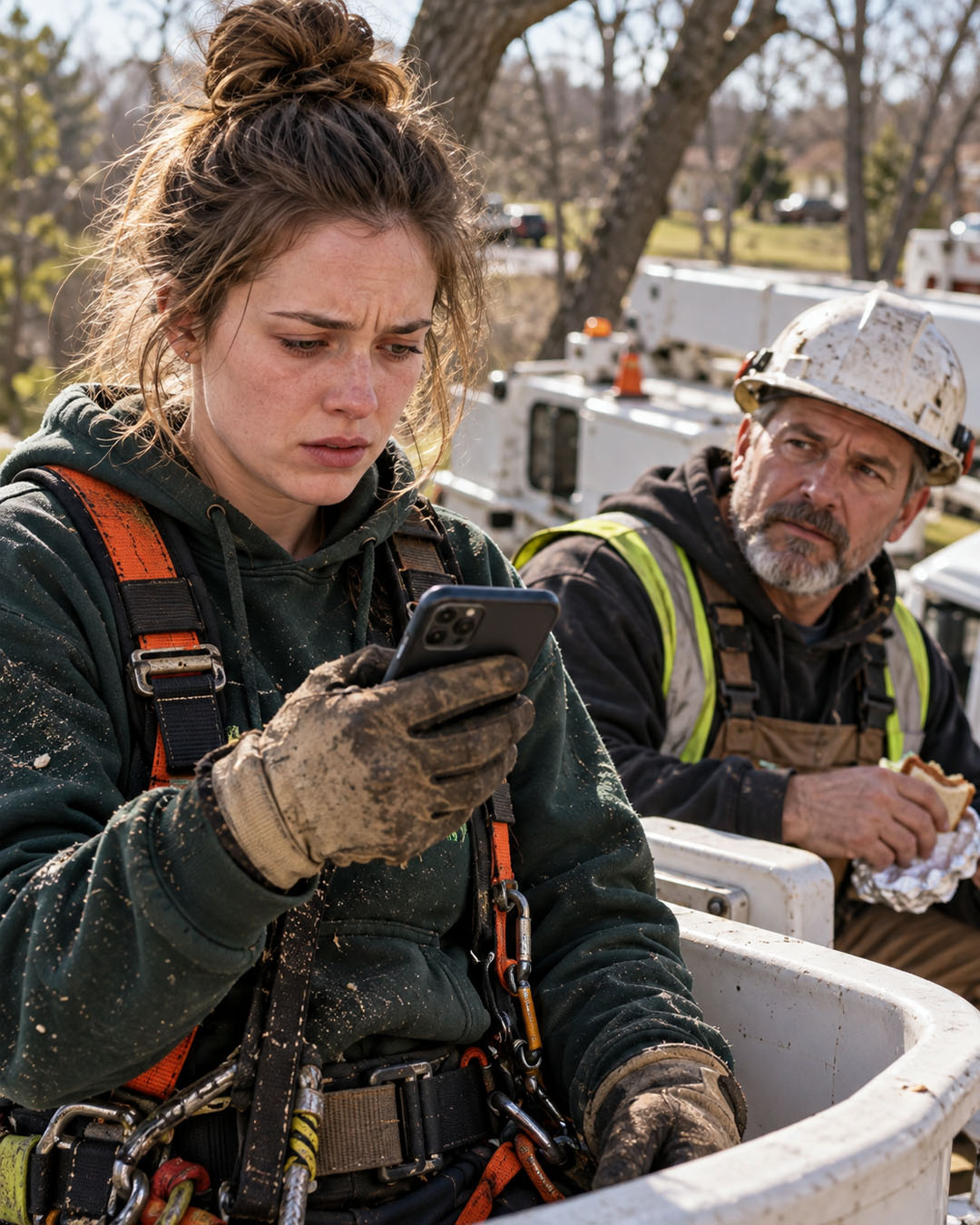
Chapter 2
The discovery brought back memories I’d spent years trying to forget.
Growing up, I was always the dependable child. My mother liked to say I was the daughter she never had to worry about, which sounded like praise until I realized it meant I was expected to solve problems nobody else wanted to handle.
Travis received a used car when he turned sixteen. I got a lecture about responsibility and a summer job at a garden center.
When Travis needed money, Mom called it helping family. When I needed money, Dad told me to work harder.
Eddie was different.
He’d struggled with reading since elementary school. A patient teacher eventually explained that he had dyslexia, but Mom insisted he simply wasn’t trying hard enough.
I used to sit beside him at bedtime, helping him sound out words while our parents watched television downstairs.
He was five years younger than me, quiet and gentle, with a way of folding his hands when he was nervous.
He never asked me for money.
In fact, he was the only person in our family who remembered my birthday every year without being reminded.
When I turned eighteen, I found a used silver Honda Civic at a dealership. Dad agreed to finance it through his credit union because I didn’t yet have enough credit history to qualify easily on my own.
I promised to repay every dollar.
For forty-eight months, I sent him $250.
Every payment carried the same description.
“Civic.”
When I made the final payment, Dad sent me a picture of the loan payoff letter. Two months later, he signed the title over to me.
I still had the title, the payoff letter, and every electronic payment record.
My parents knew that.
Yet now they were claiming I still owed $6,000.
I called my boyfriend, Owen, from the courthouse parking lot.
He listened while I explained everything.
“Tessa, you’ve been helping them financially for years,” he said. “Why would they claim you never paid for a car when they know you did?”
“I don’t know.”
“Maybe you should find out what happened to all the money you’ve already given them.”
He wasn’t wrong.
Since moving out, I’d sent money for utility bills, repairs, prescriptions, and countless emergencies.
A broken water heater.
A phone bill.
An overdue insurance payment.
Even a lawyer’s bill Mom claimed was connected to old bankruptcy paperwork.
I had a record of every transfer.
Looking at the numbers, I realized I’d sent thousands of dollars over six years.
I told myself I was helping keep a roof over Eddie’s head.
Now I wondered where the money had actually gone.
That evening, Owen and I opened the county’s online court records.
He typed my mother’s name into the search field.
Two cases appeared.
Mine was the most recent.
The other had been filed the previous year.
Darlene and Gordon Calloway versus Edward Calloway.
My stomach dropped.
“Eddie?” I whispered.
Owen opened the record.
My parents had sued Eddie for $4,100, claiming he’d damaged a family vehicle.
He hadn’t appeared at the hearing, and the court had entered a judgment against him.
Then came a series of entries showing money taken directly from his wages.
Every week, part of Eddie’s paycheck had been sent toward the judgment.
The payments had continued until the amount was satisfied.
I stared at the screen.
Eddie worked overnight stocking shelves at a grocery store. He earned modest wages, rarely complained, and had recently told me he was trying to save for community college.
I’d wondered why he never seemed to have any money.
Now I knew.
My parents had been collecting it.
I called Eddie during his next break.
“Hey, buddy. Everything okay?”
“Yeah, Tess. Just tired.”
I asked whether he was getting his full paycheck.
He hesitated.
“Not exactly. Mom set up this official thing so I could pay my share.”
“What share?”
“Something with the car. She said everybody needs to contribute.”
I shut my eyes.
“Eddie, do you know what the court order says?”
“Not really. Mom told me she’d handled it.”
He sounded almost proud.
“At least I’m helping. Travis doesn’t pay anything.”
I wanted to tell him everything right then.
But he was standing in a grocery stockroom in the middle of the night, with a few minutes left before returning to work.
So I told him I loved him and asked whether we could have lunch together that weekend.
After the call, I contacted the courthouse again.
I obtained the records from Eddie’s case.
According to the complaint, he’d backed the family’s Buick into a utility pole, causing extensive damage.
Attached was a statement from Travis claiming he’d witnessed the accident.
But something was wrong.
The date was April 2023.
Eddie had been seventeen.
He didn’t have a driver’s license then.
And I remembered another accident involving that exact car during the same month.
Travis had called me asking for help with a rental vehicle after a collision on Route 23.
He claimed another driver had stopped suddenly.
I’d sent him $200.
I began searching the available accident and court records.
What I found made me feel physically sick.
The official crash report identified Travis as the driver of the Buick.
It described a collision with another vehicle, not a utility pole.
The damage was to the front of the car.
The other driver, a woman named Margaret Sutter, had needed medical treatment.
A subsequent civil case showed that Travis had been ordered to pay compensation for the accident.
There was also an installment arrangement connected to his driving privileges.
I sat at my kitchen table with the records spread across it.
Then I looked at Eddie’s wage deductions.
The amounts were disturbingly close to the monthly payments Travis was supposed to make.
Owen sat beside me.
“Are you thinking what I’m thinking?”
I nodded slowly.
My parents had claimed Eddie damaged a vehicle that Travis had actually wrecked.
They’d collected money from Eddie’s paycheck while helping Travis cover his obligations.
And now, with Eddie’s judgment paid off, they were pursuing me for another $6,000.
I looked at the papers.
This wasn’t one financial emergency.
It was a pattern.
And the same people who called me selfish for refusing to help had been taking money from the one person in our family who could least afford to lose it.
Chapter 3
I met Eddie in the grocery store parking lot on a Saturday afternoon.
I brought two cheeseburgers, fries, and a folder filled with documents.
He climbed into my passenger seat wearing his blue work apron, his name badge hanging crookedly.
“What’s all this?” he asked.
“Something important. But I need you to understand that whatever you decide afterward is up to you.”
He looked worried.
“Am I in trouble?”
“No, sweetheart. You’re not in trouble.”
I explained the lawsuit slowly.
I read the complaint aloud and showed him the section claiming he’d damaged the Buick.
He frowned.
“But I didn’t.”
“I know.”
I showed him Travis’s statement.
Eddie’s expression changed.
Then I placed the accident report beside it and pointed to Travis’s name.
For a long time, neither of us spoke.
Finally, Eddie reached into his pocket and unfolded a pay stub.
He pointed to the line showing the deduction.
“I thought this was like rent,” he said quietly. “Mom told me it was official, so nobody could say I wasn’t doing my part.”
My throat tightened.
“Did she explain what the court case was about?”
“No. She said it was insurance paperwork.”
He looked out the windshield.
“I wasn’t even driving back then.”
I touched his arm.
“Eddie, none of this means you did anything wrong.”
He shook his head.
“I should’ve asked more questions.”
“You trusted your parents. That’s not a crime.”
He looked at the documents again.
“Does Mom know?”
“She signed the complaint.”
His eyes filled, but he didn’t cry.
Instead, he asked something that hurt even more.
“Can we not tell her I know yet?”
I nodded.
“This is your decision, Eddie. I won’t make it for you.”
I gave him information for a local legal aid office.
“If you want help reviewing the judgment, I’ll drive you there. If you don’t, I’ll still come see you. Nothing changes between us.”
He held the card carefully.
“You’d really take me?”
“Every time.”
The following week, he called.
“I want to talk to the lawyer.”
At the appointment, attorney Naomi Whitfield reviewed the records and explained Eddie’s options.
She treated him with a level of respect I wished he’d received at home.
She spoke directly to him, asked what he remembered, and made sure he understood each document before moving on.
Because the judgment had been entered relatively recently, she said there might still be a way to ask the court to reopen the case based on the evidence.
Eddie decided to proceed.
Meanwhile, I prepared for my own hearing.
I gathered my car payment history, title, loan payoff letter, and proof that I hadn’t lived at my parents’ address in years.
I also filed a written response with the court, disputing their claim.
Then Mom made another mistake.
She called my employer.
Frank summoned me into his office and showed me an email she’d sent to the city’s general contact address.
It claimed I was unreliable with money and accused me of refusing to help my family.
It also mentioned the lawsuit.
Frank studied my face.
“I’ve worked with you for three years, Tessa. You show up, you work hard, and you do your job safely. This has nothing to do with your performance.”
I swallowed.
“Thank you.”
“I’ve forwarded the email to you. Keep a copy.”
That evening, I added it to my folder.
By then, my mother had begun making public posts about ungrateful children.
Travis joined in, joking about how I made good money climbing trees but wouldn’t help my parents.
I didn’t respond.
Instead, I contacted the county treasurer’s office directly.
This time, I asked about the actual property taxes.
The answer confirmed that part of Mom’s story was true.
My parents really had fallen behind for six years.
They’d entered a repayment arrangement, made a few payments, and then stopped.
The account was delinquent, and the property could eventually face foreclosure proceedings.
But there was no immediate Tuesday deadline requiring a $6,000 payment to Travis.
The house was in danger because my parents had failed to maintain their repayment agreement.
And according to the public records, the court case involving me had nothing to do with those taxes.
I finally understood.
Mom had combined a real financial crisis with a separate lawsuit to create an emergency designed to make me pay without asking questions.
I decided to confront them.
Not with shouting.
Not with accusations they could dismiss.
With paperwork.
The following Saturday, I drove to the house on Walnut Street.
Mom greeted me with a suspicious smile.
Dad sat at the kitchen table, while Travis leaned against the counter.
I told them I was tired of fighting and wanted to resolve the matter.
Mom’s shoulders relaxed.
“I knew you’d come around, honey.”
I asked her to put the payment arrangement in writing so there would be no misunderstanding.
She retrieved a yellow legal pad.
“What exactly is the six thousand dollars for?” I asked.
“The balance on your car.”
“And who receives it?”
“Travis. He needs to make the payment to the lawyer.”
I kept my voice neutral.
“Which lawyer?”
“The one handling his license.”
She began writing.
I asked whether Eddie was expected to contribute anything else.
Mom shook her head.
“No. Eddie’s already paid his part.”
She wrote that down, too.
When she finished, the document stated that I would pay $6,000 toward the claimed car balance, that the money would go to Travis for his license-related expenses, and that my parents would withdraw their claim.
Dad signed it.
Travis signed as a witness.
Mom handed it to me, looking pleased.
“There. Are you satisfied?”
I folded the paper.
“Yes. Now I know exactly what you’re asking me to pay for.”
I told them I’d bring the paperwork to court.
Mom hugged me at the door.
By the following morning, she’d posted online that her daughter had finally decided to do the right thing.
But before our hearing arrived, another problem surfaced.
Travis drove while his license was suspended and was stopped by a state trooper.
His vehicle was towed.
Mom called after midnight, demanding additional money for the towing bill.
She blamed me for the entire situation.
“He’s been under so much pressure because of you!”
I listened until she finished.
Then I said, “Mom, Travis is responsible for his own decisions.”
She hung up.
On the morning of the hearing, she was waiting outside the courthouse with Dad and Travis.
Travis extended his hand before I reached the steps.
“Where’s the check?”
I walked past him.
“I brought the paperwork.”
He followed me inside, muttering under his breath.
What he didn’t know was that Eddie was coming, too.
And this time, my little brother had an attorney beside him.
Chapter 4
The courtroom was smaller than I’d imagined.
There were six rows of wooden benches, two tables, and a raised desk where Magistrate Joan Ellery reviewed a stack of files.
My parents sat together on one side.
I sat across from them with my binder.
Travis occupied the row behind Mom, looking bored and irritated.
When our case was called, Mom immediately began explaining how she’d tried to help me buy a car years earlier.
She described herself and Dad as loving parents who were simply asking for repayment.
The magistrate listened.
Then she asked me to respond.
I handed over my payment records.
“Your Honor, I made forty-eight payments of $250. Here are the transaction records. This is the loan payoff letter, and this is the vehicle title transferred into my name after the loan was satisfied.”
The magistrate reviewed the documents.
My father shifted in his chair.
Mom insisted that payments didn’t necessarily mean the full family obligation had been satisfied.
Then I presented the yellow sheet she’d written in her kitchen.
I explained when and how it had been prepared.
The magistrate read it carefully.
“Mrs. Calloway, this document says the requested six thousand dollars was to be paid to your son Travis for a license-related expense.”
Mom nodded.
“Well, yes, but it all helps the family.”
“Is this claim about an unpaid vehicle loan or a payment for Travis’s legal obligations?”
Mom hesitated.
“Both, really.”
The magistrate looked at my records again.
After reviewing the evidence and hearing both sides, she ruled in my favor and dismissed the claim.
I felt the tension leave my shoulders.
But the hearing wasn’t finished.
Attorney Naomi Whitfield was waiting with Eddie at the back of the room.
She had filed the appropriate paperwork asking the court to reopen his earlier judgment.
The magistrate acknowledged the filing and explained that a separate hearing would be scheduled to examine the allegations.
Mom turned around.
“Eddie? What are you doing here?”
He stood beside his attorney.
For once, he didn’t lower his eyes.
“I’m trying to understand what happened to my paycheck, Mom.”
Her face went pale.
Naomi explained that Eddie had been seventeen and unlicensed at the time of the alleged accident.
She also identified the official crash report showing Travis as the driver in a different collision involving the same vehicle.
The magistrate ordered the relevant parties to provide supporting records for the new hearing.
She also indicated that the court files would be referred for appropriate review because of concerns about the sworn statements.
Nobody in my family spoke.
In the hallway afterward, Mom hurried toward Eddie.
“Sweetheart, why would you do this to us?”
He looked at her sadly.
“I didn’t know you were taking my money for something I didn’t do.”
She reached for his hands.
“We were only trying to keep the family together.”
Eddie gently stepped away.
“I have to go to work.”
He left with Naomi.
I watched him walk through the courthouse doors.
It was one of the bravest things I’d ever seen him do.
Over the following weeks, my parents’ financial problems became impossible to hide.
The county continued its tax collection process.
Travis still faced obligations related to his accident and suspended license.
And now Eddie’s case was being reviewed.
At the November hearing, Naomi presented his school attendance records, driving history, the accident report, and the wage deduction statements.
The evidence showed that Eddie hadn’t been responsible for the vehicle damage described in the complaint.
The court set aside the earlier judgment and ordered repayment of the money collected from him.
Eddie emerged from the courthouse holding the order in both hands.
He studied the stamped page.
“Tess, it says I didn’t do it.”
I hugged him.
“I know, buddy.”
He leaned his forehead against my shoulder.
For several moments, he couldn’t speak.
Further review of the records led to legal consequences for my parents and Travis.
I didn’t celebrate.
Watching your family face the results of their decisions isn’t the kind of victory anyone dreams about.
But I was relieved that Eddie finally had the truth acknowledged.
And I was relieved that my own finances were no longer being treated as the family’s emergency fund.
Then Christmas came.
Mom invited everyone to the old house, which was now facing a possible sale because of the unpaid taxes.
I didn’t intend to go.
But Eddie called me.
“Tess, I want to see the place one more time before they move. Will you come with me?”
I agreed.
On Christmas Eve, we walked into the same living room where we’d opened presents as children.
The furniture was worn, the decorations familiar, and the old family photographs still hung above the television.
Mom had placed five plastic cups on the coffee table.
She poured sparkling cider and tried to smile.
For a little while, we talked about ordinary things.
Then she mentioned the house.
“If we could just get enough together before the sale, maybe there’s still a chance.”
She looked at me.
Then at Eddie.
My stomach tightened.
Eddie reached into his pocket and removed a folded envelope.
Inside was $2,300 in cash.
He’d been saving it from overtime shifts for more than a year.
Mom stared at the money.
“Oh, sweetheart. You’ve been saving all that for us?”
Eddie nodded.
“I wanted to help keep the house.”
Her eyes filled with tears.
Then she said, almost automatically, “Maybe we could use some of it toward Travis’s payment first. That would take care of the most urgent problem.”
The room became silent.
Travis looked up.
Dad closed his eyes.
Eddie slowly gathered the money back into the envelope.
“No, Mom.”
She stared at him.
“What?”
“I saved this because I thought the house was in trouble and everybody was helping. But you’ve been using my money to help Travis while telling me I caused something I didn’t do.”
Mom began crying.
Eddie’s voice shook, but he continued.
“I’m not paying for Travis anymore. Not through the court, and not with my savings.”
I moved closer to him.
Mom looked at me as though I could persuade him to change his mind.
I shook my head.
“This is Eddie’s money. He gets to decide what happens to it.”
For the first time, neither of us offered to solve the problem.
Eddie tucked the envelope into his pocket.
Then he looked at me.
“Can I stay with you and Owen for a while?”
I smiled through my tears.
“Of course you can.”
We left the house together.
Behind us, Dad stood in the doorway.
He looked at Eddie, then at me.
And for the first time I could remember, he didn’t tell either of us that we owed the family something.
He simply nodded.
Chapter 5
Eddie moved into our apartment two days after Christmas.
He arrived with two duffel bags, a shoebox of childhood keepsakes, and a small television he’d bought with his own money.
Owen helped him carry everything upstairs.
We turned our spare room into a bedroom, found a used dresser, and put a reading lamp beside the bed.
That first evening, Eddie stood in the doorway looking uncertain.
“You sure I’m not in the way?”
I handed him a clean set of sheets.
“You’re family, Eddie. You don’t have to earn a place here.”
He smiled.
It was the first time I’d seen him smile without looking over his shoulder in months.
Within a few weeks, he transferred to a grocery store closer to our apartment.
He moved to a daytime schedule and began researching technical training programs.
For years, he’d believed he wasn’t smart enough to study beyond high school.
But he was patient, talented with his hands, and fascinated by how things were built.
When he mentioned welding, Owen offered to take him to visit a local training center.
Eddie came home excited.
“They teach you how to build things that actually hold weight,” he told me.
I smiled.
“You’ve always been good at that.”
He didn’t understand what I meant.
Maybe someday he would.
Meanwhile, the legal proceedings involving our family continued.
Mom eventually accepted responsibility for false statements connected to the court cases. She received probation and was required to make restitution under the terms of her case.
Travis also faced consequences for his sworn statement and the traffic-related violations.
Dad entered a supervised resolution program and began making regular repayments to Eddie.
Every month, a check arrived.
Eddie carefully recorded the amount.
He never spoke about it with satisfaction.
He simply seemed relieved that the money was finally being returned to the person who’d earned it.
The old house on Walnut Street was sold through the county’s foreclosure process after the tax problems remained unresolved.
I didn’t attend the sale.
I couldn’t bear to stand outside the place where I’d learned to ride a bicycle, celebrated birthdays, and built so many memories with Eddie.
But I also understood that I couldn’t rescue my parents from six years of unpaid taxes, especially when they’d repeatedly used money intended for one obligation to cover another.
After the sale, Mom and Dad rented a small duplex across town.
They had to sort through decades of belongings.
Mom called one afternoon sounding defeated.
“There’s so much stuff, Tessa. Your grandmother’s quilt, the old pictures, your school things. I don’t know where we’re going to put it all.”
I thought about those boxes sitting on the curb.
Then I made a decision.
I paid for one month of a small storage unit so they could move their keepsakes safely.
I made it clear that future payments would be their responsibility.
Mom thanked me quietly.
She never asked me to cover another month.
A few weeks later, I visited the storage unit to drop off some old photographs I’d found.
Mom was sitting on an overturned crate surrounded by boxes.
She held a bundle of yellowed papers tied with string.
“Do you know what these are?” she asked.
I shook my head.
“My pay stubs from when I was sixteen.”
She explained that her own father had suffered a serious workplace injury when she was a teenager.
The family struggled financially, and Mom took a job at a diner.
Every paycheck went toward groceries, bills, and keeping a roof over their heads.
She’d worked for years while her younger siblings stayed in school.
“Grandma used to tell me I was the strong one,” Mom said. “The one they never had to worry about.”
I sat down across from her.
The words were painfully familiar.
Mom looked at the papers.
“Nobody ever asked what I wanted to do with my money. They just expected me to help.”
She paused.
“I think somewhere along the way, I started believing that’s what love means. Somebody needs something, and the strong person pays.”
I watched her face.
“And Travis?” I asked.
She sighed.
“I kept helping him because I was afraid he’d never manage on his own. I told myself you could handle things because you always had.”
A tear rolled down her cheek.
“I treated you the way my family treated me.”
I didn’t answer immediately.
For years, I’d wanted Mom to admit that she’d been unfair.
Now that she was doing it, I felt something more complicated than satisfaction.
I felt grief.
For the teenage girl she’d once been.
For the years I’d spent trying to earn her approval.
And for Eddie, who’d believed having part of his paycheck taken meant he was finally contributing something worthwhile.
“I believe you, Mom,” I said. “But understanding why you did it doesn’t make it okay.”
She nodded.
“I know.”
We sat quietly.
Then she opened a cardboard box and pulled out a folded sheet of graph paper.
“Your father wanted to throw this away years ago. I kept it.”
I unfolded it.
It was a drawing I’d made when I was eleven.
A treehouse.
Six feet by eight feet, with a small trapdoor and rope railing.
I’d drawn it after spending an entire summer climbing the silver maple behind our house.
Dad had refused to buy the materials.
He’d said money was for important things.
I remembered crying in my bedroom afterward, not because I couldn’t have the treehouse, but because he’d barely looked at my drawing.
Mom touched the paper.
“You worked so hard on this.”
I looked at the childish handwriting and crooked measurements.
“Yeah,” I whispered. “I did.”
She studied me.
“I’m sorry I didn’t tell you that then.”
It wasn’t enough to erase everything.
But it was honest.
And after years of hearing excuses, honesty mattered.
Over the following months, our family settled into a different kind of relationship.
Mom stopped calling every time something broke.
Dad began phoning on Sunday afternoons.
We talked about the weather, baseball, and my work with the city forestry department.
He never became especially talkative.
But one afternoon, after I mentioned helping remove a dangerously damaged sycamore, he said, “That’s skilled work, kid. You’ve done well.”
I wrote the date in my journal.
Not because I needed another compliment.
Because I wanted to remember that people could sometimes learn to say things they’d withheld for years.
Travis found steady work at a car wash.
We rarely spoke.
I hoped he’d eventually accept responsibility for his choices without expecting someone else to pay for them.
But I no longer made his progress my responsibility.
Eddie was the biggest change.
He received an acceptance letter for a welding program at Columbus State Community College.
He brought the envelope to our kitchen table, turned it over several times, and finally opened it.
He read the letter slowly, his finger following each line.
Then he looked up.
“I got in, Tess.”
I threw my arms around him.
“I knew you could.”
He laughed.
“You always say that.”
“Because it’s true.”
That spring, I bought a used pickup truck with money I’d saved.
And I gave Eddie my silver Honda Civic.
We went together to complete the title transfer.
I made sure every line was explained clearly before either of us signed.
When Eddie climbed into the driver’s seat, he grinned like a little boy opening the best present under the Christmas tree.
“You sure about this?”
“Completely.”
He ran his fingers over the steering wheel.
“Travis got a car when he was sixteen.”
“I remember.”
“You had to pay for yours.”
“I remember that, too.”
He looked at me.
“And now you’re giving it to me?”
I smiled.
“I’m giving it to you because I want to. There’s no hidden agreement, Eddie. No future bill.”
He sat quietly for a moment.
Then he reached across the console and squeezed my hand.
“Thanks, Tess.”
By early summer, he’d completed his introductory welding classes.
One Saturday, he arrived at our apartment carrying a rolled-up drawing.
“Remember that treehouse you wanted when you were little?”
I looked at him.
“How do you know about that?”
“Mom showed me the picture.”
He spread his drawing across the table.
It was a sturdy, freestanding backyard platform with a small staircase and railings, designed as a place where we could sit beneath the trees.
“I thought we could build something like it,” he said. “Not in a tree. I know you’d lecture me about safety and damage to the trunk.”
I laughed.
“You’re learning.”
Over the next several weekends, we worked together.
Eddie handled the metal frame under the supervision of his welding instructor. Owen helped with the wooden decking, and I chose a safe location beneath a large maple in the backyard of the small home Owen and I had recently begun renting.
We checked the plans, assembled the platform, and finished the railings.
Nothing was attached to the tree itself.
When it was done, Eddie stepped back and studied his work.
“It’s not exactly like your old drawing.”
I looked at the platform, the afternoon sunlight filtering through the branches above it.
“It’s better.”
We carried two folding chairs onto the deck.
Owen brought lemonade.
And for the first time in years, I sat beneath a tree without worrying about a phone call asking me to fix somebody else’s emergency.
Eddie leaned back in his chair.
“You know what I remember most about all this?”
I looked toward him.
“What?”
“That day you brought me burgers and showed me the court papers.”
I nodded.
“You told me whatever I wanted to do was my choice,” he continued. “Nobody had ever really said that to me before.”
I felt my throat tighten.
“Well, it was your choice.”
He smiled.
“Yeah. And it turned out I could make it.”
I reached over and squeezed his shoulder.
“You certainly could.”
Later that evening, after Eddie and Owen went inside, I stayed beneath the maple.
I thought about the old house on Walnut Street, the crooked boards I’d nailed to the tree as a child, and the years I’d spent believing love meant never refusing a request.
My mother had once told me I was the family’s only hope.
For a long time, I’d carried those words like a duty.
But hope shouldn’t mean one person sacrificing everything so everyone else can avoid responsibility.
Helping someone is meaningful when it’s freely given.
When help is demanded through guilt, fear, or dishonesty, it stops being generosity and becomes a burden.
I still loved my parents.
I hoped their lives would grow steadier, and that they’d continue learning from the consequences of their choices.
But I no longer confused their needs with my obligations.
And I no longer measured my worth by how much money I could surrender.
Above me, the maple leaves stirred in the evening breeze.
Inside the house, I could hear Eddie laughing at something Owen had said.
That laughter was worth more than the six thousand dollars my parents had demanded.
Because I’d finally learned that being needed isn’t always the same thing as being loved.
And sometimes, the strongest person in a family isn’t the one who keeps paying.
It’s the one who finds the courage to say, “This ends with me.”
THE END. ⚠️ All characters and events are fictional. Do not imitate or apply them in real life. 😌😌😌


