Chapter 2
I became very good at being invisible.
I worked evenings at a grocery store, volunteered for every extra shift I could get, and deposited most of my paycheck into an account my parents did not know about. I told them I was saving for college expenses. That part was true; I simply neglected to mention that independence was the expense I cared about most.
My guidance counselor, Mrs. Reynolds, became the first adult I ever trusted with the whole story. She was in her sixties, with silver hair, sharp blue eyes, and a habit of listening without interrupting. When I explained why I wanted a college far enough away that going home would not be convenient, she did not tell me I was being dramatic.
She pulled a folder from her desk.
“Then we make sure you can stand on your own two feet,” she said.
She helped me with scholarships, financial-aid forms, housing applications, and every piece of paperwork that seemed designed to confuse a teenager. I studied harder than I ever had before. Every A felt like another brick in a bridge leading away from that house.
At home, very little changed.
Ethan got his license before I did because my parents paid for private lessons. When I asked about lessons for myself, Dad said money was tight.
Six months later, Ethan backed Mom’s SUV into a mailbox.
They laughed about it at dinner.
When I received an academic scholarship, Mom said, “That’s wonderful,” then spent the next hour researching new soccer cleats because Ethan said his teammates had better ones.
By seventeen, I no longer expected anything else.
That did not mean it stopped hurting.
One night I came home after closing the grocery store and found a glossy brochure on the kitchen counter. A red sports sedan filled the cover.
Ethan leaned against the refrigerator.
“Pretty nice, huh?”
I shrugged.
“Mom and Dad are thinking about getting it for me when I turn eighteen.”
My hands stopped halfway through opening the refrigerator.
“You’re kidding.”
“Nope.”
“You know they told me they couldn’t help me buy a used car for college.”
Ethan gave me that familiar little smile.
“Guess they changed their minds.”
I shut the refrigerator door without taking anything out.
Upstairs, I checked my savings.
Not enough for comfort.
Enough for freedom.
By spring, I had been accepted to a university 90 miles away with enough scholarship money to cover most of tuition. I found a cheap apartment through Luke’s older brother, Ben, whose coworker owned a small building near campus. The place was hardly impressive, but I could afford it if I kept working.
I signed the lease three days after my 18th birthday.
I told nobody at home.
Then Ethan’s birthday came.
A red sedan appeared in our driveway with a silver bow on the hood.
Mom cried when Ethan hugged her.
Dad kept repeating, “You earned it.”
I watched from the front window.
Ethan had mediocre grades, no job, and two traffic tickets from driving Mom’s SUV.
But somehow he had earned it.
Mom eventually noticed me.
“You want to come outside for pictures?”
“No.”
Her smile faded. “Don’t start.”
“I didn’t say anything.”
“You have that look.”
“What look?”
“That resentful look. Your brother has had a difficult life.”
I almost laughed.
He had been living with us for ten years.
For ten years he had been loved, defended, celebrated, excused, protected, and given nearly everything he asked for. How many years did a person have to be treated like a prince before “a difficult childhood” stopped being an explanation for everything?
But I had learned that arguing changed nothing.
So I went upstairs and finished packing.
I owned less than I expected.
Two duffel bags held most of my clothes. My laptop went into a backpack. I packed my science-fair trophy, three photographs of friends, a stack of books, and the old baseball glove Grandpa had given me before he died.
I left behind almost everything else.
The night before I planned to leave, I lay awake staring at the ceiling.
Freedom sounded beautiful in daylight.
At two in the morning, it felt terrifying.
What if I failed?
What if I ran out of money?
What if my parents were right and I was selfish?
I nearly unpacked one bag.
Then I remembered two empty seats at a school concert.
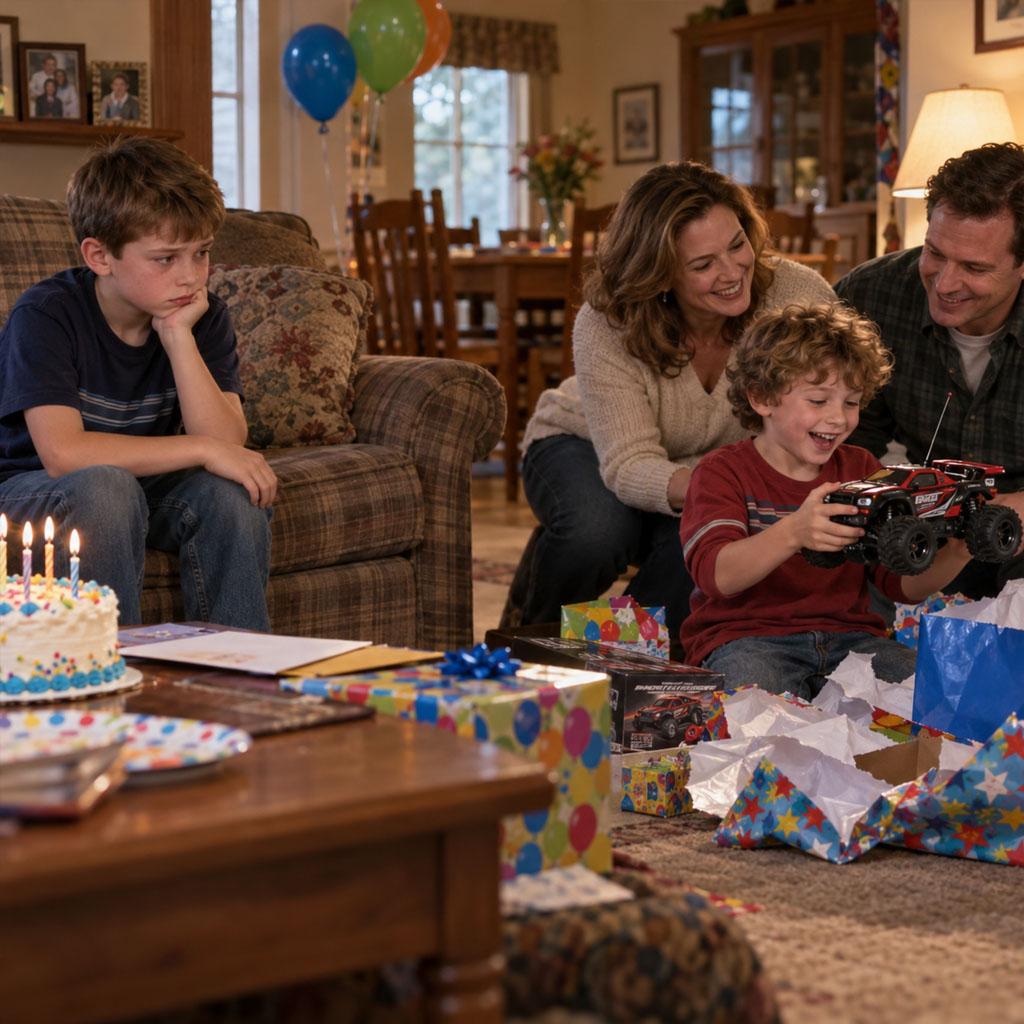
I remembered chocolate birthday cake.
I remembered Ethan’s new car shining beneath the porch light while Dad told him he had earned it.
I zipped the bag closed.
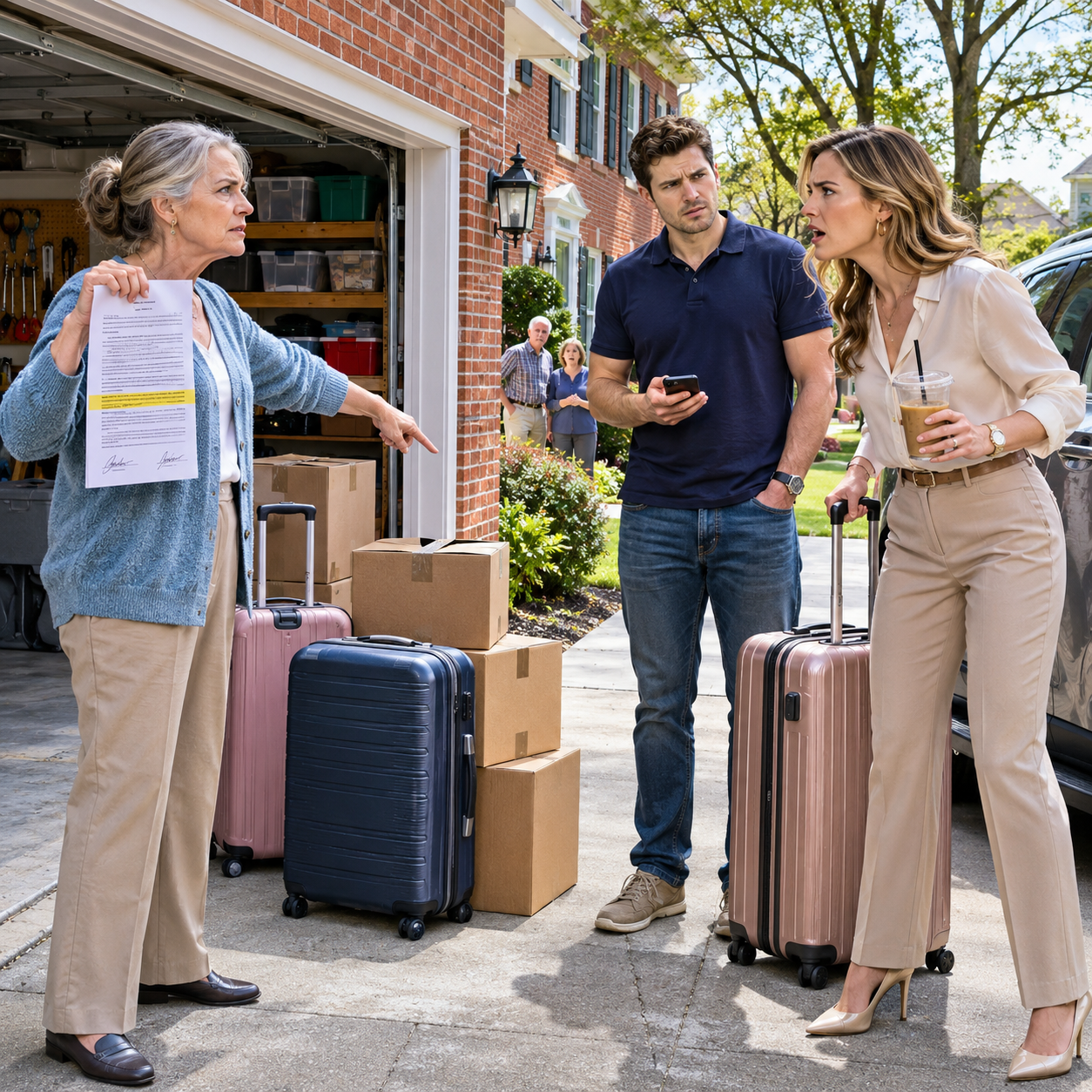
The next morning, my plan nearly collapsed when Mom announced she was working from home.
I waited until she joined a conference call. Then I carried both bags downstairs as quietly as I could.
My hand was on the front doorknob when her office door opened.
“Where are you going with those?”
I turned.
That was the moment everything I had rehearsed disappeared.
“I’m moving out.”
She looked almost amused at first. “Very funny.”
“I’m serious.”
Her expression changed. “What do you mean, moving out?”
“I signed a lease. College starts in a few weeks. I have a job lined up.”
“You signed a lease without telling us?”
“Yes.”
“Why would you do that?”
I stared at her.
How could she ask?
“How can you not know?”
Her eyes narrowed, and then realization seemed to strike her.
“Is this because we bought Ethan a car?”
And that was when I said the sentence that finally silenced my mother.
“No. I’m leaving because it makes no difference whether I’m here or not.”
She opened her mouth.
Nothing came out.
I continued before fear could stop me.
“The car is just one more thing. It was birthdays. Christmas. School concerts. Science fairs. Restaurants. Vacations. Every time I needed you, Ethan needed you more. Every time I wanted something, Ethan wanted something more. Every time I accomplished something, his smallest accomplishment mattered more.”
“That isn’t fair.”
“No,” I said. “It wasn’t.”
Mom recoiled slightly.
I had never spoken to her that way.
She looked toward the stairs as if Dad might suddenly appear and handle the conversation for her.
Finally, she whispered, “We were trying to make him feel loved.”
“And somehow you decided the only way to do that was to make me feel unloved.”
Her eyes filled with tears.
For one terrible second, I wanted to drop the bags.
I wanted her to hug me and say she understood. I wanted her to apologize for all of it and give me a reason to stay.
Instead, she said, “After everything we’ve done for you, you’re just walking away?”
I felt the last thread inside me snap.
“Yes.”
She stepped aside.
Ben’s truck was already waiting at the curb.
I carried my bags outside.
Mom remained in the doorway.
I did not turn around again.
Chapter 3
My apartment had peeling paint, a radiator that clanged like someone was trapped inside it, and a kitchen so small I could reach the refrigerator from the stove without taking a full step.
I loved it.
There was no expensive furniture, no backyard, no family photographs on the walls. For the first week, my dining table was a cardboard box.
But every object in that apartment was where I wanted it.
Nobody changed the television channel because Ethan wanted something else. Nobody told me what food we were ordering. Nobody interrupted a conversation about my day to discuss my brother.
Silence no longer felt like neglect.
It felt like peace.
Ben helped me carry everything to the third floor. Before leaving, he handed me a battered floor lamp from the back of his truck.
“You need this more than I do.”
I laughed. “You sure?”
“It’s ugly, but it works. Kind of like my truck.”
That lamp stayed with me through college.
I found a job at a coffee shop two blocks from campus. Between work and classes, I was exhausted most of the time, but it was a good exhaustion. My life was hard because I was building something, not because I was waiting to matter to people who should already have cared.
For several months, my parents called almost every day.
At first I answered.
Mom wanted to know when I was coming home.
Dad wanted to know why I was “punishing the family.”
Neither asked what they had done wrong.
Then Ethan called.
“You’ve really messed Mom up.”
I was standing behind the coffee shop during my break.
“What do you want me to do about that?”
“Come home.”
“No.”
He sighed dramatically. “You always make everything about you.”
For a moment, I was sixteen again, staring at a chocolate cake.
Then something surprising happened.
I laughed.
Not because it was funny.
Because it no longer had power over me.
“I have to go back to work, Ethan.”
I hung up.
Eventually, I stopped answering any of them.
College gave me things I had not realized I was missing. Professors remembered my name. Friends celebrated my successes without comparing them to somebody else’s. When I earned the highest grade in a difficult economics course, three classmates dragged me out for burgers.
Nobody said I should feel guilty because someone else had struggled more.
I learned that attention was not a limited resource.
Love did not have to be rationed.
Another person’s pain did not require erasing mine.
Those lessons were harder to accept than any material in my textbooks.
There were lonely nights too.
Sometimes I missed Mom’s Sunday pancakes. Sometimes I remembered Dad teaching me to throw a baseball before Ethan came. Sometimes I imagined going home and discovering that everyone had changed.
But I slowly realized I did not miss my family as it actually existed.
I missed the family I kept hoping it might become.
By my third year, I had stopped waiting for that transformation.
I changed my phone number after graduation and gave it only to friends and professional contacts. I landed an entry-level position at a financial software company, where long hours and stubborn determination carried me farther than talent alone ever could.
Five years passed.
I was twenty-three, about to finish a part-time graduate program my employer helped pay for, when my phone rang from an unknown number.
Usually, I ignored those calls.
That afternoon, for some reason, I answered.
“Hello?”
Silence.
Then a woman inhaled sharply.
My mother said my name.
I sat down.
Her voice sounded older.
“I’ve been trying to find you for years.”
I looked around my office after everyone else had gone home. Outside the window, rain streaked the city lights into blurred lines.
“How did you get this number?”
“Luke’s mother.”
I made a mental note to have a polite conversation with Luke’s mother.
Mom began crying.
She said she missed me. She said Dad missed me. She said they had driven past my old university, hoping somehow to see me.
Part of me wanted to hang up.
Another part—the eight-year-old who had once eagerly waited for a little brother—wanted to know whether five years had finally taught them something.
“We can meet,” I said.
“Oh, thank God.”
“But I’m not giving you my address.”
She hesitated.
“Fine.”
We agreed on Romano’s Pizza.
The same restaurant where my 16th birthday had ended in the parking lot.
I chose it deliberately.
If we were going to talk about the past, we might as well sit where part of it happened.
A week later, I drove back into my hometown for the first time in years.
My parents were already seated when I walked in.
Dad had gone gray at the temples. Mom looked smaller somehow.
When she saw me, she stood so quickly she bumped the table.
She hugged me.
I allowed it, but I did not hug her back immediately.
Dad shook my hand.
“You look good,” he said.
“So do you.”
We sat.
For 20 minutes, they asked about work, school, where I lived, whether I was seeing anyone.
I answered carefully.
Then the conversation stalled.
Mom twisted her napkin.
Dad studied the menu despite having already ordered.
I finally said, “I assume you asked me here because you wanted to talk about what happened.”
Mom nodded quickly.
“Of course.”
I waited.
Nothing.
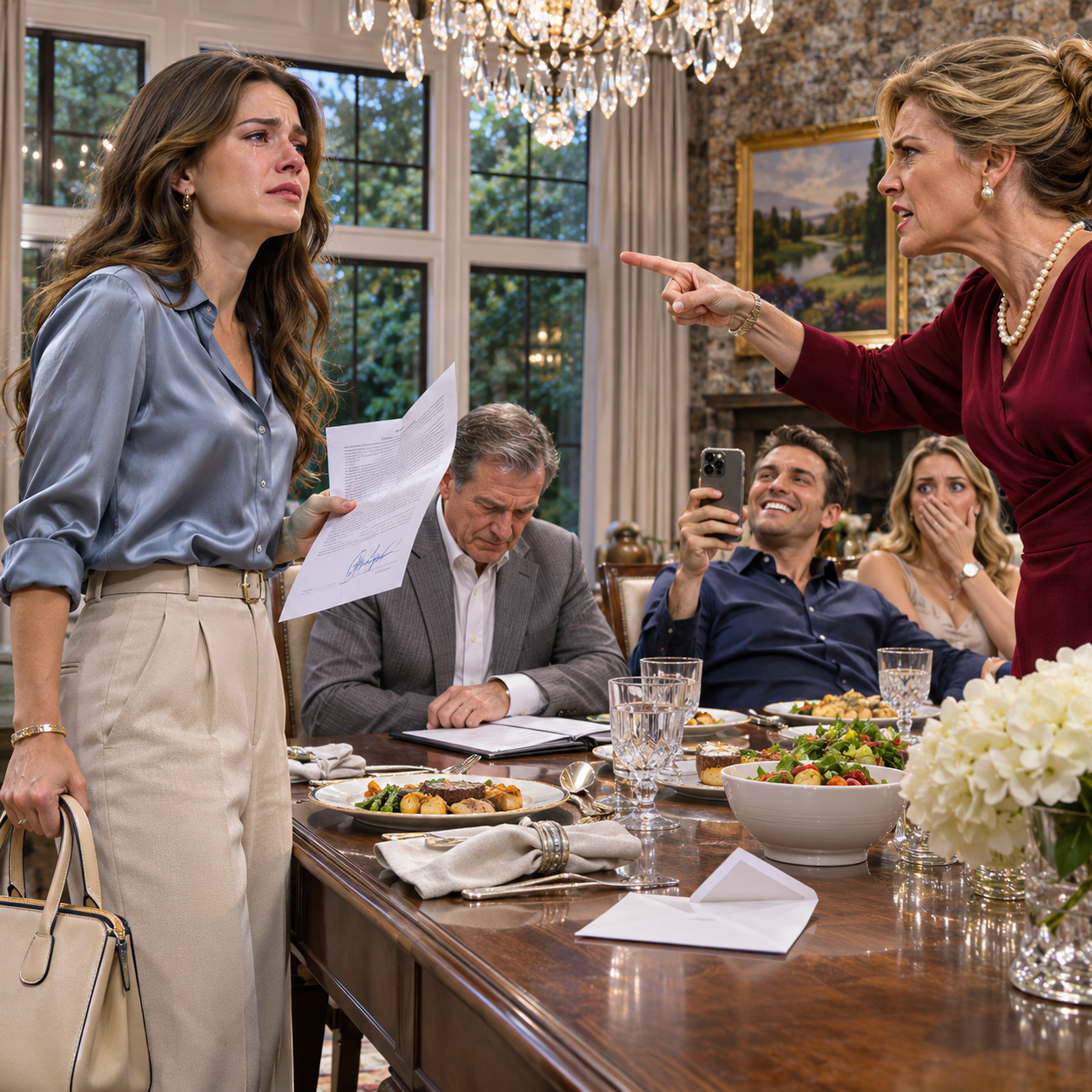
Dad cleared his throat. “You put us through hell.”
I stared at him.
Mom reached across the table. “We thought something terrible had happened. You disappeared.”
“I told you I was leaving.”
“You cut us off,” Dad said.
“Yes.”
“You owe your mother an apology.”
I leaned back.
Five years.
Five entire years, and somehow we were exactly where we had been.
“I thought you called because you wanted to apologize to me.”
They exchanged a look.
Mom actually frowned.
“Apologize for what?”
That question hurt less than I expected.
Maybe because I finally understood that I had not failed to explain myself.
They simply did not want to hear it.
Then Mom said something that revealed why they had really found me.
“We’re having some financial trouble.”
There it was.
Chapter 4
I folded my hands on the table.
“What kind of trouble?”
Mom looked at Dad.
Dad sighed. “We made a few decisions that didn’t work out.”
“What decisions?”
Neither answered immediately.
I waited.
Finally, Mom said, “Ethan needed help.”
Of course he did.
I almost smiled.
Dad explained that Ethan had dropped out of community college after two semesters. Then he had bounced between jobs, quitting each one because a manager “didn’t respect him.” He had accumulated credit-card debt, missed car payments, and moved back home.
My parents covered everything.
Then Ethan decided he wanted to start a business.
“What kind of business?” I asked.
“Custom car accessories,” Dad said.
“Did he know anything about running a business?”
Dad’s jaw tightened. “He had ideas.”
That answered my question.
They had borrowed against the house to finance him.
The business lasted eight months.
Then Ethan asked for another car.
Mom’s voice became defensive before I even reacted. “His old one was unreliable.”
“The car you bought him when he was eighteen?”
“It had problems.”
“And you bought another one?”
“He needed transportation.”
I looked at both of them.
Five years earlier, I had left home with two bags because I knew I could not depend on them for anything.
Ethan was twenty-two, still living in their house, still being rescued from every consequence of his choices.
And they still called it love.
“How much do you owe?”
Dad named a figure.
It was more than I expected.
My mother leaned toward me.
“You’re doing well now. Luke’s mother said you have a good career. We thought maybe you could help us get back on our feet.”
I almost admired the audacity.
“You contacted me because you want money.”
“No,” Mom said quickly. “We contacted you because we’re family.”
“Then why did money come up before an apology?”
Her mouth closed.
Dad frowned. “We’re not going to sit here and relitigate your childhood. We did the best we could.”
“Did you?”
“Yes.”
“For both children?”
That question landed harder.
Mom stared down at her hands.
Dad’s expression hardened. “Ethan needed more.”
“And there it is.”
“What?”
“The sentence you used to justify everything.”
Dad pushed his chair back slightly. “You were always strong. Independent. Ethan wasn’t.”
“So you punished me for being easier to raise.”
“We didn’t punish you.”
“You missed my concert because Ethan had a headache and then watched a movie with him all evening.”
Mom’s face tightened.
“You turned my birthday into his celebration.”
“That was one cake.”
“It was never about the cake.”
Dad looked away.
I continued.
“You gave him the game I asked for. You bought him cars while telling me money was tight. You celebrated things he barely tried for while treating everything I achieved as expected. You taught him that somebody would always rescue him, and you taught me that needing anything was dangerous.”
Mom’s eyes filled again.
“We loved you.”
“I believe you thought you did.”
That wounded her.
I did not enjoy it.
But I no longer believed avoiding their discomfort was my responsibility.
Dad leaned forward. “So this is revenge?”
“No.”
“Then help us.”
I looked at him for several seconds.
Something became clear.
They expected me to prove that I was the good son by rescuing them from the consequences of rescuing Ethan.
If I paid, nothing would change.
They would call my money forgiveness.
Then they would hand it to him.
So I did something they did not expect.
“I’ll help.”
Mom’s face lit up.
Dad exhaled.
“But not by giving you cash.”
Their relief vanished.
I pulled out my phone.
“I’ll pay for a session with a financial counselor. I’ll help you make a budget. I’ll help you talk to the bank about restructuring what you owe. If necessary, I’ll pay directly for an attorney to review your options.”
Mom frowned. “We just need enough to catch up.”
“No. You need to stop digging.”
“Ethan has expenses.”
“Ethan is an adult.”
Dad’s voice sharpened. “He’s your brother.”
“And I’m your son.”
The table went quiet.
I leaned forward.
“You asked me for money because you think I’m the responsible one. But responsibility is exactly why I won’t hand you a check.”
Mom wiped her eyes.
“You don’t understand how hard things have been for him.”
I nodded slowly.
“Then I guess nothing has changed.”
I stood.
Mom grabbed my wrist.
“Please.”
For a second, her hand felt exactly as it had when I was eight and she told me we had enough love for another child.
I gently pulled away.
“I’m willing to help you save your house,” I said. “I’m not willing to finance Ethan’s choices.”
Then I left.
I expected that to be the end of it.
Three days later, Dad called.
His voice was exhausted.
“We’ll meet the counselor.”
That surprised me.
I arranged an appointment with a reputable nonprofit credit-counseling service. I attended the first meeting remotely, mostly because I wanted to hear the numbers myself.
The situation was worse than they had admitted.
Several accounts were past due. The home-equity loan had been used partly for Ethan’s failed business and partly to cover his personal debts. My parents had also co-signed another auto loan for him.
The counselor asked one simple question.
“Is Ethan contributing to these payments?”
Silence followed.
Then Mom said, “He’s between jobs.”
I closed my eyes.
The counselor was kinder than I would have been.
She explained that unless my parents stopped subsidizing Ethan immediately, no repayment plan would work.
Dad finally said, “Then he’ll have to start paying his own way.”
Mom protested.
Dad repeated himself.
Something shifted.
Maybe not enough.
But something.
A week later, Ethan called me.
He was furious.
“You turned them against me.”
“No.”
“They’re making me pay rent.”
“You’re twenty-two.”
“They’re selling my car.”
“It’s their loan.”
“You think you’re better than me because you have some fancy job?”
I looked around my apartment.
It was no longer the tiny place I had moved into at eighteen. I now lived in a comfortable two-bedroom condo, but the ugly floor lamp Ben had given me still stood beside my couch.
“No,” I said. “I think I learned something you never had to learn.”
“What?”
“That nobody is coming to build your life for you.”
He cursed under his breath.
Then he said something I did not expect.
“You think I asked for all this?”
I went quiet.
His voice dropped.
“You think it was easy growing up knowing they treated me differently because they felt sorry for me?”
That stopped me.
For years, I had imagined Ethan as the winner in our family.
But suddenly I remembered the seven-year-old boy who entered our house walking as if the floor might crack beneath him.
“You used it,” I said.
“Yeah.”
At least he admitted that.
“You knew exactly what you were doing.”
“I was a kid.”
“So was I.”
Neither of us spoke.
Finally, Ethan said, “I don’t know how to do anything on my own.”
For the first time in years, I heard something in his voice that was not manipulation.
Fear.
I could have enjoyed it.
Part of me wanted to.
Instead, I said, “Then learn.”
Chapter 5
My parents sold Ethan’s second car.
He hated them for nearly a month.
Then necessity did what endless rescuing never had.
He found work.
Not a dream job. Not a business. Not something glamorous.
He started in the shipping department of a regional hardware distributor, loading boxes at six in the morning.
For the first few weeks, according to Dad, Ethan complained constantly.
Then he stopped complaining.
Six months later, he moved into a small apartment with a coworker.
My parents kept the house.
They were not suddenly transformed into different people. Mom still defended Ethan too quickly. Dad still avoided uncomfortable conversations whenever possible.
But they began paying down their debt.
More importantly, they stopped creating new debt to protect him from adulthood.
My relationship with them remained cautious.
I called occasionally.
I visited once that Christmas, though I stayed at a hotel.
When Mom asked why, I said, “Because I’m not ready to sleep under that roof yet.”
For once, she did not argue.
The biggest surprise came the following spring.
I was at work when a small package arrived.
Inside was my old science-fair trophy.
I had forgotten I left it behind.
There was a letter from Mom.
She wrote that she had found it in a box while cleaning the attic. She remembered the day I brought it home.
She remembered saying, “That’s nice.”
She remembered spending the rest of the evening talking about Ethan’s soccer practice.
For years, she wrote, she had believed being a good mother to Ethan meant constantly repairing whatever his early childhood had damaged. Somewhere along the way, she had confused compassion with compensation.
And she had assumed I would always be fine.
She ended with one sentence.
You should never have had to become invisible for your brother to feel seen.
I read it three times.
Then I cried.
Not dramatically.
Not for long.
Just enough to mourn the apology I had needed when I was sixteen.
That evening, I called her.
She answered on the first ring.
“I got the trophy.”
Her breath caught. “Okay.”
“And the letter.”
“I meant every word.”
“I know.”
Neither of us knew what came next.
There are injuries an apology cannot erase. Sometimes forgiveness is not a door that swings open. Sometimes it is a window lifted one inch at a time.
So that is what we did.
One inch at a time.
A few months later, Ethan surprised me too.
He called on my birthday.
I nearly ignored the number.
“Happy birthday,” he said.
“Thanks.”
“I’m not going to sing.”
“Good.”
He laughed.
Then came an awkward silence.
“I owe you an apology,” he said.
I sat down.
“For which decade?”
“That’s fair.”
He told me he had spent most of his childhood terrified that our parents would send him away if he stopped being the child who needed them. Once he realized sympathy gave him power, he held on to it.
“I knew they were hurting you,” he said. “Sometimes I liked it because if they were choosing me over you, it meant they weren’t going to leave me.”
The admission was ugly.
It was also honest.
“I hated you for that.”
“I know.”
“Part of me still does.”
“I know that too.”
I looked out my window at the evening traffic.
“I’m not promising we’ll be brothers again.”
“I’m not asking you to.”
That was probably why I believed him.
A year later, my girlfriend, Rachel, and I traveled to the coast for a long weekend. We stayed at a quiet resort overlooking the Atlantic, the kind of place eighteen-year-old me could never have imagined affording.
One morning, I sat on the balcony with coffee while Rachel slept.
My phone buzzed.
A photograph from Dad.
Ethan stood in front of a modest used pickup truck, grinning.
The message said:
He bought it himself.
I stared at the picture for a long time.
Then I smiled.
Not because Ethan finally had a truck.
Because for once, nobody had handed it to him.
Later that morning, Mom called.
She asked whether I remembered the day I left home with two bags.
“I remember.”
“I keep hearing what you said.”
I knew exactly which words she meant.
It makes no difference whether I’m here or not.
Her voice trembled.
“You were wrong about one thing.”
I waited.
“It made a difference. We were just too blind to show you.”
Years earlier, hearing that might have changed everything.
Now it did not need to.
My life had already become full.
I had friends who showed up. Work I was proud of. A woman I loved. Parents who were finally learning that love without accountability could become another form of harm. And a brother who, for the first time, was discovering that independence was not rejection.
It was dignity.
“I know that now,” I told her.
After we hung up, Rachel came onto the balcony and rested her head against my shoulder.
“Everything okay?”
I thought about the scared kid with the science-fair trophy. The sixteen-year-old standing outside a pizza restaurant. The eighteen-year-old carrying two duffel bags down the stairs while his mother stared at him in disbelief.
Then I thought about the man sitting there now.
“Yeah,” I said. “I think it finally is.”
Leaving home had not fixed me.
Money had not fixed me.
Success had not fixed me.
What changed my life was learning that being overlooked did not make me worthless, and being loved poorly did not mean I had to accept poor treatment forever.
Sometimes the healthiest thing you can do for people you love is refuse to keep participating in the habits that are hurting everyone.
And sometimes the sentence that leaves a mother speechless is not the end of a family.
Sometimes it is the first honest thing anyone has said in years.
THE END.
⚠️ All characters and events are fictional. Do not imitate or apply them in real life. 😌😌😌