Chapter 2
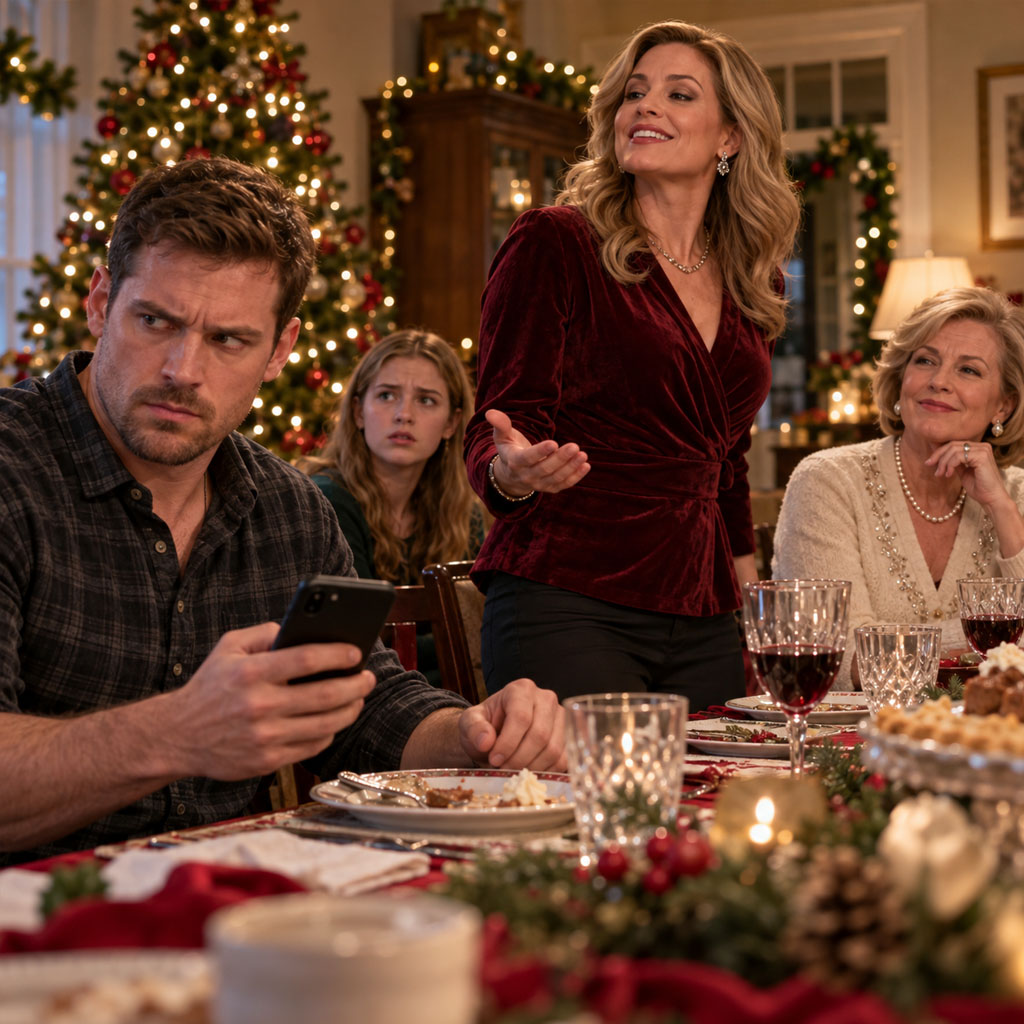
For several seconds, nobody spoke. Then Rebecca gave a nervous laugh, the kind people use when they’re trying to convince everyone that something uncomfortable is actually a joke. “Daniel, there’s no reason to be dramatic. Mom has paperwork, and we’ve already discussed what’s fair.”
I looked at her across the dining table. “You discussed what’s fair without asking the person who owns the property. That’s a strange way to make a family decision.”
Mom straightened in her chair, wounded dignity settling over her face like a familiar coat. “After everything I’ve done for you, I never imagined you’d become so possessive. Especially after the money I gave you to help you get started.”
“What money?” I asked.
“The forty thousand dollars, Daniel. Surely you haven’t forgotten.”
I nodded slowly. “You mean the loan for my company truck? The loan I finished paying back in 2021?”
Her expression changed just enough for me to notice. Brian looked down at his plate, and Rebecca glanced between us with sudden uncertainty. For the first time that evening, nobody seemed eager to continue the conversation.
I took out my phone and opened the app controlling the lake house’s electronic locks. While everyone watched, I disabled the old access codes and generated new ones. Then I placed the phone on the table and looked directly at my sister.
“Nobody is inheriting my home because nobody here has the authority to promise it away. And until this is resolved, nobody will be using it without my personal invitation.”
Rebecca’s cheeks turned red. “You are humiliating me in front of my children.”
“No,” I replied quietly. “You made an announcement you had no right to make. There’s a difference.”
Emma had been staring at her hands throughout the exchange. When she finally looked up, her eyes met mine, and I saw embarrassment rather than disappointment. I hated that the adults had placed her in such an awkward position.
“Emma, honey, you haven’t done anything wrong,” I told her. “You’re always welcome to visit when we arrange it together. None of this is about you.”
Hannah stood beside me as I pushed back my chair. We wished everyone a Merry Christmas, collected our coats, and left before another argument could begin.
We were halfway home when Hannah finally spoke.
“You’ve known about that document since October,” she said. “I don’t know how you managed to sit through dinner without saying more.”
“I wanted to understand what they were doing before I confronted them.”
She rested her hand on mine. “Then it’s time to let Karen handle it.”
Karen Bennett was the real estate attorney I’d hired shortly after discovering the suspicious paperwork. She had listened patiently to my explanation, studied the supposed agreement, and told me something I’d never considered.
“A document doesn’t have to be legally valid to create trouble,” she’d explained. “Someone can use a questionable claim to complicate a title, pressure an owner, or make a future transaction more difficult. The important thing is to establish the facts before anyone attempts to rely on it.”
Karen had immediately noticed the discrepancy in dates. I purchased the cabin in 2016, but the supposed property loan had been made in 2019. I also possessed bank records, canceled checks, and text messages clearly identifying the loan as money for my truck.
The evidence was solid.
What frightened me was the possibility that my mother knew exactly what she was doing.
Hannah had been the first person to suggest Brian’s involvement. His insurance background made him familiar with policy paperwork, and I remembered that a cousin of his worked in a paralegal’s office. Those connections did not prove anything by themselves, but they gave Karen additional questions to investigate.
The calls began before we reached home.
Rebecca called three times, followed by messages accusing me of ruining Christmas. Mom left a long voicemail about being disrespected after a lifetime of sacrifice. Brian remained silent, which somehow made me more suspicious than anything he might have said.
The next morning, Hannah and I drove to the lake house. A thin layer of ice had formed along the shoreline, and the bare maple trees stood perfectly still against a gray winter sky. Inside, everything was exactly as we’d left it, including the old wooden rocking chair I’d rescued from the original cabin.
I built a fire while Hannah made coffee.
“Are you afraid of losing the house?” she asked.
I considered the question before answering.
“Not really. I’m afraid of what I’m learning about the people I trusted.”
She sat beside me and leaned her head against my shoulder. We stayed there for a long time, listening to the fire crackle, and for the first time in weeks I could think clearly.
The day after Christmas, I met with Karen again. She arranged a title search, helped me organize proof of the truck loan and repayment, and contacted the insurance company’s investigation department about the unauthorized policy change. The company confirmed that it would review the matter independently.
The title search came back clean.
Nobody had recorded a claim against my property.
That should have brought relief, but it only raised another question. If my family’s paperwork hadn’t been used yet, what exactly were they waiting for?
Karen believed the Christmas announcement might have been an attempt to get me to agree publicly to their version of events. A room full of relatives could later remember that I’d accepted the arrangement, or at least had not objected.
Fortunately, I had objected.
In January, Mom and I spoke by telephone for the first time since Christmas. I asked about her health and her plans for the new year, and eventually the conversation turned to old financial matters. When I mentioned the truck loan, she casually confirmed that the money had been for the vehicle and that I’d paid her back.
I wrote down her exact words afterward and sent Karen a summary of the conversation. Combined with our original messages and bank records, it gave us another clear account of the truth.
For a few weeks, everything remained quiet.
Then, one Saturday in February, a notification appeared on my phone.
My driveway camera had detected three visitors.
Rebecca and Brian had arrived at the lake house with a stranger carrying a clipboard. The man walked around the exterior taking measurements while my sister pointed toward the deck, the garage, and the upstairs windows. Nobody knocked or called to ask whether I was home.
That evening, I called Rebecca.
“Who was the man you brought to my property today?”
She hesitated. “Just a contractor. We were looking at some improvements the house might need someday.”
“For whom?”
“For Emma, obviously. Daniel, you know Mom has an agreement with you. We don’t have to keep arguing about it.”
I gripped the phone tighter.
“What agreement, Rebecca?”
“Mom’s paperwork,” she replied impatiently. “You can’t pretend it doesn’t exist.”
Suddenly, I understood that the Christmas announcement hadn’t been an isolated family fantasy. My sister was still making plans for a house she didn’t own, relying on a document she had never bothered to verify.
I told her any further discussion about ownership needed to go through my attorney.
She hung up.
That night, Karen reviewed the security footage and suggested sending a formal letter to my mother. It would reject the alleged agreement, identify the repayment evidence, and demand that no one use the questionable document to assert ownership.
The letter went out by certified mail in March.
Mom signed for it on Tuesday.
By Wednesday morning, I had fourteen missed calls.
On Thursday, Brian finally called me directly.
“Daniel,” he began in a smooth, practiced voice, “I think everyone has gotten a little emotional. Your mother loves you. Rebecca wants what’s best for the family. Surely we can settle this privately.”
“I agree,” I said. “We can meet at my attorney’s office.”
There was a long silence.
“You really want lawyers sitting between you and your mother?”
“I want the truth sitting between us, Brian.”
He promised to discuss it with Rebecca.
The following evening, she sent me a message agreeing to the meeting, but adding that I should be ashamed of putting Mom through so much stress.
Hannah read the message over my shoulder.
“She still thinks your mother’s feelings matter more than your rights,” she observed.
I looked out toward the dark lake. “Maybe,” I said. “But I have a feeling we’re about to find out who has been telling whom the truth.”
Chapter 3
The meeting took place on a Wednesday morning in Karen’s office, a modest brick building overlooking the old downtown courthouse. I arrived early with a folder of documents I’d collected over several months. Karen had already prepared a much larger binder, its colored tabs dividing the evidence into neat sections.
She explained that our purpose was not to embarrass anyone or start a family argument. We needed to correct the record, protect the property, and determine whether the other parties would voluntarily acknowledge what had happened. Above all, she reminded me to stay calm.
At ten minutes after ten, the conference room door opened.
Mom walked in first, wearing a navy dress and the pearl earrings she’d worn to church for as long as I could remember. Rebecca followed, clutching her purse, and Brian came last in a dark suit. None of them had brought an attorney.
Mom looked at me with tired, pleading eyes.
“Danny, sweetheart, do we really need to do this?” she asked. “Can’t we just be a family again?”
The words hit me harder than I expected.
For one fleeting moment, I saw the woman who used to sit beside my bed when I was sick and make pancakes shaped like little animals on Sunday mornings. I remembered her coming home exhausted from work, still finding time to ask about my school day. I loved that woman, and some part of me always would.
But loving someone did not mean surrendering everything they asked for.
Karen began by reviewing the property’s purchase records. She then presented the truck loan documents, including Mom’s original message stating that the money was intended to replace my work vehicle. Finally, she placed the disputed memorandum on the table.
“Mrs. Whitmore,” Karen said evenly, “this document describes a transaction that our records show did not occur. Daniel purchased the property years before the loan, and the full amount was repaid. Do you have independent evidence supporting the ownership claim?”
Mom stared at the paper.
Rebecca leaned forward. “Mom said Daniel promised her a share of the house.”
“I never made that promise,” I replied.
Brian cleared his throat. “Families have informal arrangements all the time. Not everything is written down.”
“That’s true,” Karen answered. “But that doesn’t establish an ownership interest. We also need to address an unauthorized change to Daniel’s homeowners insurance policy. The insurer is reviewing the circumstances under which Patricia’s name was added.”
Mom’s hands tightened around her purse.
Karen continued without raising her voice. “Our objective today is to ensure that no inaccurate document is used to interfere with Daniel’s property rights. We are also prepared to pursue appropriate remedies if necessary.”
The silence that followed seemed to last forever.
Then I turned to my mother.
“Mom, I don’t understand why you did this. I bought that place with my savings. Uncle Walter and I worked on it for years. You knew what it meant to me.”
She lowered her eyes. “I only wanted something good for the family.”
“But you were willing to take something away from me to make that happen.”
Tears filled her eyes.
“After your father left, everything became my responsibility,” she whispered. “I was so afraid we’d stop being a family once you children grew up.”
I felt a familiar tug of sympathy, but I stayed quiet.
Rebecca was studying the memorandum now, turning its pages as though she’d never seen them properly before.
“Mom,” she said slowly, “you told me Daniel had signed an agreement.”
Mom didn’t answer.
“You told me the house was partly yours,” Rebecca continued. “You said he’d promised to put it in your name eventually.”
Brian shifted in his chair. “Rebecca, there are details you don’t understand.”
She turned toward him. “Did you know this document wasn’t accurate?”
“That’s not a fair question.”
“It’s a very fair question, Brian.”
I watched my sister’s expression change. The confidence she’d displayed at Christmas drained away, replaced by something I hadn’t seen in years: uncertainty mixed with genuine fear.
She looked back at Mom.
“You told me this was already settled.”
Mom pressed a tissue against her eyes. “I thought Daniel would understand once we explained everything.”
“But you said he agreed.”
My mother remained silent.
Rebecca leaned back as if she’d been pushed.
For all her entitlement, I could see that she was beginning to realize she’d been misled. That didn’t excuse her behavior, especially bringing a contractor to my house without permission. But it mattered that she finally appeared willing to question the story she’d been told.
Brian tried to interrupt.
“Look, we all wanted the same thing. A secure future for Emma.”
I turned toward him. “What does Emma’s future have to do with the house I worked for?”
He had no answer.
Karen then presented a written declaration stating that Mom had no ownership or financial claim to the property, that the truck loan had been repaid, and that the memorandum did not accurately reflect our agreement. She recommended that Mom obtain independent legal advice before signing it.
Mom read the document twice.
“Will this make everything go away?” she asked.
Karen answered carefully. “It can resolve the disagreement over Daniel’s property if everyone follows through. The insurance company is conducting its own review, however, and its decisions are separate from anything agreed upon here.”
Mom looked at me. “And if I sign, will you forgive me?”
That question nearly broke my composure.
“I don’t know,” I admitted. “I want to believe we can repair things someday. But forgiveness isn’t something I can promise just because a paper gets signed.”
She began to cry quietly.
After a long discussion, Mom agreed to have her own attorney review the declaration. Karen arranged for the documents to be sent to independent counsel, and several days later we received the signed statement.
The ownership dispute was over.
Or at least, that was what I hoped.
The following week, Karen called with an update that made my stomach sink. The insurance company had completed its preliminary review and decided to pursue the unauthorized policy change through its own legal and administrative process.
I hadn’t requested that action.
Karen explained that the company’s investigation was independent of my decision not to pursue additional claims against my family.
When I hung up, I sat alone on the back deck for almost an hour.
I’d spent months believing the truth would set everything right. Instead, I was beginning to understand that telling the truth could be necessary and still leave everyone with painful consequences.
Three days later, Mom called.
Her voice sounded smaller than I remembered.
“Daniel, I got a letter from the insurance company,” she said. “They’re saying I might have to pay money because of what happened.”
“Have you spoken with an attorney?”
“I can’t afford an expensive lawyer. Can’t you call them and explain that we’re family?”
I closed my eyes.
For most of my life, that phrase had been enough to make me surrender.
This time, it wasn’t.
“Mom, I can’t tell them something that isn’t true. You need someone qualified to help you understand your options.”
She began crying again.
I wanted to fix it for her. Every instinct I’d developed as a child told me to step in, calm everyone down, and carry the problem myself.
Instead, I called Uncle Walter and asked whether he could help her find affordable legal representation. He promised he would, and later told me Mom had already contacted him because she was frightened.
“You’ve done enough,” Walter said. “You don’t have to solve every problem somebody else creates.”
I thanked him, although I wasn’t entirely sure I believed him yet.
Then, one Sunday evening, almost two months after the meeting, my phone rang.
It was Rebecca.
I nearly let the call go unanswered, but something made me pick up.
“Daniel,” she said, her voice trembling, “I’ve found out something about Brian. And I think you need to hear it from me.”
Chapter 4
Rebecca was crying so hard that at first I could barely understand her. I sat down beside the living room window and waited while she collected herself. Outside, the lake was black beneath the evening sky, with only a narrow trail of moonlight reaching across the water.
“Brian has been talking to Mom about your property for more than a year,” she finally said. “He’s the one who suggested getting that document prepared. He introduced her to his cousin, and he kept telling me everything was legitimate.”
I didn’t interrupt.
“He said you were being difficult because you didn’t want to share,” she continued. “Mom told me you’d made an agreement with her, and I believed them. I wanted to believe them.”
She paused, drawing an unsteady breath.
“Daniel, things haven’t been good between Brian and me for a long time. He’s been hiding bills, moving money between accounts, and telling me our finances were fine. After that meeting, I started looking more carefully. We owe more than I ever imagined.”
I stared at the lake.
Suddenly, Brian’s interest in my house made terrible sense.
Rebecca explained that her husband had imagined the property could eventually become a valuable asset for their family. If Mom established an interest in it, he believed there might be opportunities to borrow against that interest or pressure me into some kind of settlement.
He had been presenting the plan to Rebecca as something done for Emma’s future. Behind the scenes, he was desperately looking for a way to solve financial problems he’d concealed from his wife.
My sister sounded exhausted.
“I should have called you,” she whispered. “I should have asked if any of it was true. Instead, I stood up at Christmas dinner and promised your house to my daughter like you didn’t matter.”
I felt the old anger return, but beneath it was a sadness I couldn’t easily explain.
“You hurt me, Rebecca,” I said. “Not just because of the house. You didn’t even think I deserved to be included in a decision about my own life.”
“I know.”
“And you brought someone there to plan renovations.”
“I know,” she repeated. “I was wrong. I don’t expect you to forgive me.”
For the first time in years, my sister wasn’t offering an excuse or reminding me of everything Mom had done for us. She was simply acknowledging the truth.
That mattered more than she knew.
“I appreciate you telling me,” I replied. “But I need time.”
“I understand.”
We ended the call without making grand promises.
It wasn’t a happy reunion, but something had changed.
The next few months were difficult for everyone. Rebecca and Brian began living separately in the spring, and their marriage eventually ended in divorce. I didn’t celebrate, especially knowing Emma and Caleb would have to adjust to two households, but I couldn’t pretend his actions had been harmless.
Mom’s insurance matter moved more slowly. With help from an attorney Uncle Walter found, she negotiated a settlement involving repayment of certain costs and additional expenses totaling a little over $7,000. She arranged monthly payments and eventually satisfied the agreement.
I didn’t contribute financially.
That decision troubled me more than anything else I’d done throughout the ordeal.
There were nights when I lay awake remembering Mom’s exhausted face at our kitchen table, paying bills after my father left. I remembered her sewing a patch onto my winter coat because we couldn’t afford another one. I remembered how proud she’d been the day I opened my business.
Those memories were real.
So was what she’d done to my house.
It took me a long time to accept that both truths could exist together.
Uncle Walter visited one afternoon and found me sanding an old wooden bench near the dock. He stood watching for a moment, then lowered himself into a lawn chair with the slow, careful movements of a man whose knees had endured too many Michigan winters.
“You look like you’re trying to sand your troubles away,” he remarked.
“Wouldn’t be the worst idea I’ve ever had.”
He chuckled, then grew serious.
“Your mother made mistakes,” he said. “Big ones. But don’t let what happened convince you that every good memory was a lie.”
I stopped sanding.
“Sometimes I wonder if she ever loved me without expecting something back.”
Walter looked out over the water.
“Your mother loves you, Danny. But somewhere along the way, she confused being needed with being loved. Those aren’t the same thing.”
I let his words settle.
“Do you think people can change at her age?”
He shrugged. “I’ve seen seventy-year-olds learn how to use a smartphone. I’d say anything’s possible.”
I laughed despite myself.
Then he added, “But you can’t do the changing for them.”
That summer, Rebecca and I began speaking again. At first, our conversations were careful, mostly about Emma and Caleb, the weather, and ordinary family matters. Slowly, the awkwardness eased, although neither of us pretended the past had disappeared.
One afternoon, she called to ask a question.
“Emma wants to know if she could visit you at the lake sometime,” Rebecca said. “Just to swim and maybe go fishing with Uncle Walter. I told her I needed to ask.”
I smiled.
“Of course she can come. I’d love to see her.”
There was a pause.
“Thank you, Daniel.”
“Rebecca, I never wanted to keep the kids away. I only wanted their parents to respect my boundaries.”
“I understand that now.”
When Emma visited a few weeks later, she stood on the deck looking out at the water. She had grown taller since Christmas and seemed more serious, as children sometimes do when their parents’ lives have changed around them.
“Uncle Daniel,” she said, “can I ask you something?”
“Anything, sweetheart.”
“Were you mad at me because of what Mom said at Christmas?”
My heart tightened.
“No, Emma. Not for one second.”
She looked relieved, but I could tell she had another question.
“Mom said she shouldn’t have promised me the house. She said it was never hers to promise.”
“Your mom was right about that.”
Emma nodded thoughtfully.
“I don’t really want a house,” she said. “I just like coming here. Remember when you taught me how to skip rocks?”
I smiled at the memory.
“You sent one across the water six times. I think you still hold the family record.”
She laughed.
“Could we try again?”
I picked up a flat stone from the path and handed it to her. We spent the afternoon by the shoreline, competing for the best skip while Uncle Walter offered hopelessly inaccurate advice from his folding chair.
Watching Emma laugh, I realized something that should have been obvious from the beginning.
The house didn’t need to belong to her for her to feel welcome in it.
And sharing a beautiful place with someone you love doesn’t mean surrendering ownership of it.
Chapter 5
Four months after the legal matters had settled, Mom asked if she could visit the lake house. Her request came in a short text message, without the familiar accusations or references to everything she’d sacrificed. She simply asked whether I would be comfortable having her come for coffee.
I thought about it for two days before answering.
When she arrived, the leaves were beginning to turn gold along the shoreline. She stepped out of her car carrying a small box of homemade oatmeal cookies, the kind she’d baked when Rebecca and I were children. For a moment, standing in the driveway, she looked uncertain about whether she was truly welcome.
I walked down the steps to meet her.
“Hi, Mom.”
“Hello, Danny.”
We hugged briefly.
Then I led her onto the deck, where Hannah had already set out coffee before leaving us alone.
For a long while, Mom said almost nothing. She watched a pair of ducks moving through the reeds and ran her fingers along the smooth wooden arm of her chair. I had built that chair years earlier from lumber salvaged during the renovation.
Finally, she spoke.
“I’ve been seeing a counselor.”
I turned toward her.
“Uncle Walter suggested it,” she explained. “At first I was angry with him. I told him there was nothing wrong with me except that my family had turned against me.”
She gave a small, embarrassed smile.
“But I went anyway.”
“I’m glad you did.”
Mom looked down at her hands.
“I’ve been thinking about the way I’ve treated you and Rebecca. About how often I’ve reminded you both of what I gave up when your father left.”
She swallowed.
“Those years were hard, Daniel. Harder than I ever admitted. Sometimes I was so frightened we wouldn’t have enough money that I couldn’t sleep.”
“I know, Mom.”
“But you were children,” she continued. “You didn’t ask me to make those sacrifices. Taking care of you was my responsibility, not something you owed me for the rest of your lives.”
I felt my throat tighten.
She looked toward the house.
“When you bought this place, I was proud of you. I really was. But I was also frightened. You were building a life that didn’t need me in the middle of it.”
I listened without speaking.
“And when Brian started talking about keeping the property in the family, I let myself believe I had a right to decide what happened to it. I told myself it was for Emma, but I knew I hadn’t asked your permission.”
A tear slipped down her cheek.
“I knew that wasn’t right.”
For the first time, Mom wasn’t blaming Brian or Rebecca or a misunderstanding. She was taking responsibility for her own choices.
“Why didn’t you just talk to me?” I asked quietly.
“Because I was afraid you’d say no.”
“And you thought that made it all right to go behind my back?”
“No,” she whispered. “I don’t think that anymore.”
We sat together in the afternoon sunshine.
After a while, I told her what I’d been carrying inside me since Christmas. I explained how the discovery of the document had made me question everything, how much it hurt to think she saw my hard work as something she was entitled to claim, and how frightened I’d been by the possibility of losing trust in my own family.
Mom listened without interrupting.
When I finished, she took a deep breath.
“I’m sorry, Daniel. I know those words aren’t enough to undo what I did. But I am sorry.”
I looked at her for a long moment.
“I believe you,” I said. “And I want us to have a relationship. But it has to be different from before.”
She nodded.
“I know.”
“No more decisions about my life without me. No more using guilt to make me agree. And no more treating this property like it belongs to everyone.”
“I understand.”
I reached across the little table and took her hand.
“You don’t have to own a piece of my life to have a place in it, Mom.”
She began crying then, not loudly or dramatically, but with the quiet grief of someone finally facing a truth she’d spent years avoiding.
I didn’t promise that everything would return to normal.
I didn’t want the old normal back.
But when Mom left that afternoon, I walked her to the car and hugged her a little longer than I had when she arrived. She squeezed my shoulder and told me she loved me, without adding a reminder of what that love had cost her.
It was a beginning.
As the seasons changed, our family found a new rhythm.
Rebecca continued building a life for herself and her children. Some days were difficult, especially when she worried about money or the kids missed having both parents under one roof. But she was becoming more independent, and our relationship was gradually growing into something neither of us had experienced as adults.
Uncle Walter remained a regular visitor at the lake. He came with his fishing rods, a cooler of groceries, and stories I’d heard a hundred times. He rarely caught anything, but he insisted that fishing was about patience rather than results.
Hannah moved into the lake house that spring.
She filled the kitchen windowsill with little pots of basil and rosemary, hung soft curtains over the windows, and persuaded me to replace my battered living room sofa. She also brought something into the house that had been missing for a long time: the quiet certainty that I didn’t have to defend my right to be happy.
One Saturday morning, I found her standing on the deck holding a small wooden sign.
It read, “The Whitmore Home.”
“What do you think?” she asked.
I studied the sign for a moment.
“I’m not sure that name has brought me much luck.”
Hannah tilted her head.
“Then maybe it’s time you gave it a better meaning.”
I laughed and helped her hang it beside the door.
That summer, we hosted a small family cookout. Emma and Caleb splashed in the shallows while Uncle Walter supervised from his lawn chair, offering stern warnings about staying where they could touch the bottom. Rebecca helped Hannah prepare hamburgers, and Mom arrived carrying her usual oatmeal cookies.
Nobody discussed inheritance.
Nobody announced plans for my property.
When Rebecca wanted to use the extra folding table in the garage, she asked me where it was kept instead of simply helping herself. It was such a small thing that nobody else would have noticed, but to me it meant more than a dozen grand apologies.
Later that evening, after everyone had gone home, Hannah and I sat on the deck watching the sunset turn the lake a deep copper color.
“You seem happy,” she said.
“I am.”
She smiled.
“Even after everything that happened?”
I thought about the question.
There were still moments when the betrayal hurt. I couldn’t forget Mom’s unauthorized insurance change, the fabricated agreement, or my sister standing at Christmas dinner promising my home to someone else. I knew those memories would never vanish completely.
But I no longer needed them to disappear before I could enjoy what I’d built.
“I’m happy because of what I learned,” I told Hannah.
She leaned against me.
“And what’s that?”
I watched the last sunlight settle over the far shore.
“That loving your family doesn’t mean giving them everything they want. Sometimes the most loving thing you can do is tell the truth, even when nobody wants to hear it.”
She nodded, and we sat quietly together.
A few minutes later, my phone buzzed with a message from Emma. She had sent me a photograph of a smooth stone she’d collected during her last visit, along with a note asking if I could teach her to make it skip seven times.
I smiled and wrote back that we’d practice the next time she came.
Then I slipped the phone into my pocket and looked around.
I could see the sturdy deck I’d built with my own hands, the roof that no longer leaked, and the winding path down to the water. Every board and nail held a memory of the years I’d worked to create this home.
But the most important thing about it wasn’t its beauty or what someone might pay for it someday.
It was the peace I finally felt inside its walls.
My family had nearly taken that peace from me, not through force, but through guilt, pressure, and the assumption that my love could be used against me. For years, I’d mistaken keeping everyone pleased for keeping everyone close.
Now I understood the difference.
The house was mine, and I was free to invite the people I loved into it without surrendering my choices to them.
I could forgive my mother without pretending she’d done nothing wrong. I could rebuild my relationship with my sister without forgetting what happened. I could welcome my niece for a summer afternoon without promising her the future I’d worked so hard to create.
And I could finally stop feeling guilty about saying no.
As darkness settled over the lake, Hannah reached for my hand. Inside, the kitchen lights glowed warmly through the windows, and the smell of fresh bread drifted from the oven.
For years, I had thought owning that house was my greatest achievement.
I was wrong.
My greatest achievement was learning that a home isn’t truly yours until you can live in it without fear, guilt, or the need to earn someone else’s approval.
And for the first time in my adult life, I had exactly that.
THE END.
⚠️ All characters and events are fictional. Do not imitate or apply them in real life. 😌😌😌