Chapter 2: The Things in the Box
Ray carried Mason to the bed and wrapped him in a blanket while the boy explained what he could. He didn’t bombard him with questions. Their divorce had taught Ray how easily an adult’s impatience could make a child retreat into silence.
He heated milk on the stove and stirred in cocoa powder. Mason held the mug in both hands, drinking slowly as if he needed to remind himself what a normal morning felt like.
When Ray gently examined his mouth with the flashlight on his phone, he found an empty space in the lower right side of the boy’s jaw. The gum was tender, and the opening looked recent.
“Does it hurt?”
“Not now.”
“What happened?”
Mason stared into his cocoa.
“Doug said I was getting a cleaning. Sue took me to the clinic last Friday because it was his day with the little kids. Mom was at her book club.”
Ray felt something tighten beneath his ribs.
“Did you know they were going to take your tooth?”
“No. I was asleep.”
Mason described a mask that smelled like bubble gum, a strange taste in his mouth, and waking up with gauze between his teeth. Doug had been smiling beside the chair.
“Good job, buddy,” he’d told him. “You earned a dollar.”
When Mason asked for the tooth, Doug said it belonged to the office because it had been removed during treatment. It was a rule, he explained, and Mason was too young to understand why.
“I thought maybe that’s what dentists did,” Mason said. “But it wasn’t loose. I tried to wiggle it because kids at school have been losing teeth, and mine never moved.”
He looked up at Ray.
“Why would somebody take a tooth that wasn’t ready?”
Ray had no answer he could give an eight-year-old.
Mason explained that he’d discovered the green tackle box in a cabinet in the dental laboratory. He’d been looking for a sticker when he noticed it. The cabinet was unlocked, and the box looked like the fishing tackle his grandfather used to own.
Inside were little brown envelopes.
One had Mason’s name on it, followed by a letter and the date of his appointment.
He had recognized the date. He had recognized his own name.
So he’d taken the box.
“Sue saw me,” Mason continued. “I thought she was going to yell at me. But she sat down and covered her mouth with her hands.”
“What did she say?”
“She asked if I wanted to see you.”
Ray stared at him.
Mason explained that he’d kept the spare apartment key Ray had mailed him inside a birthday card. Ray had written that the key would always open the door for him, even in the middle of the night.
Mason had remembered.
Sue drove him across three states through the night. She let him choose the radio stations, and she told him to stay quiet when they reached Dunore. After helping him enter the building, she had left him alone in Ray’s apartment.
“I waited until I heard you snoring,” Mason said. “Then I put the tooth under your pillow. I was going to wake you up, but Sue said to let you find it first.”
Ray glanced at the clock. It was barely seven.
The boy had crossed hundreds of miles, carrying evidence of something he didn’t understand, because the adults closest to him had failed to make him feel safe enough to speak.
“You’re safe here,” Ray told him.
But the court order in his dresser drawer complicated those words. Gwen had primary physical custody. Ray had six weeks each summer and alternate holidays. An eight-year-old arriving unexpectedly at his father’s apartment could become a custody dispute before anybody considered why he had come.
If Ray made the wrong move, Doug could portray him as an unstable ex-husband who had taken the child.
Ray opened the tackle box.
Three plastic trays held rows of envelopes, each sealed with tape. Every envelope contained something small and hard. The labels carried children’s names, single letters, and dates.
Tyler. Madison. Brandon. Kaye. Deshawn.
Ray looked at the envelope bearing Mason’s name. Beside the date was the letter S.
At the top of the box lay a pink consent form with Gwen’s name at the bottom.
He had seen her signature on birthday cards, checks, and grocery lists for twelve years. The signature on the form looked almost identical.
Almost.
The capital G leaned too far forward. The pen strokes were too deliberate. Gwen usually joined the letters in her last name without lifting her hand, but this signature showed a tiny hesitation.
Someone had practiced signing her name.
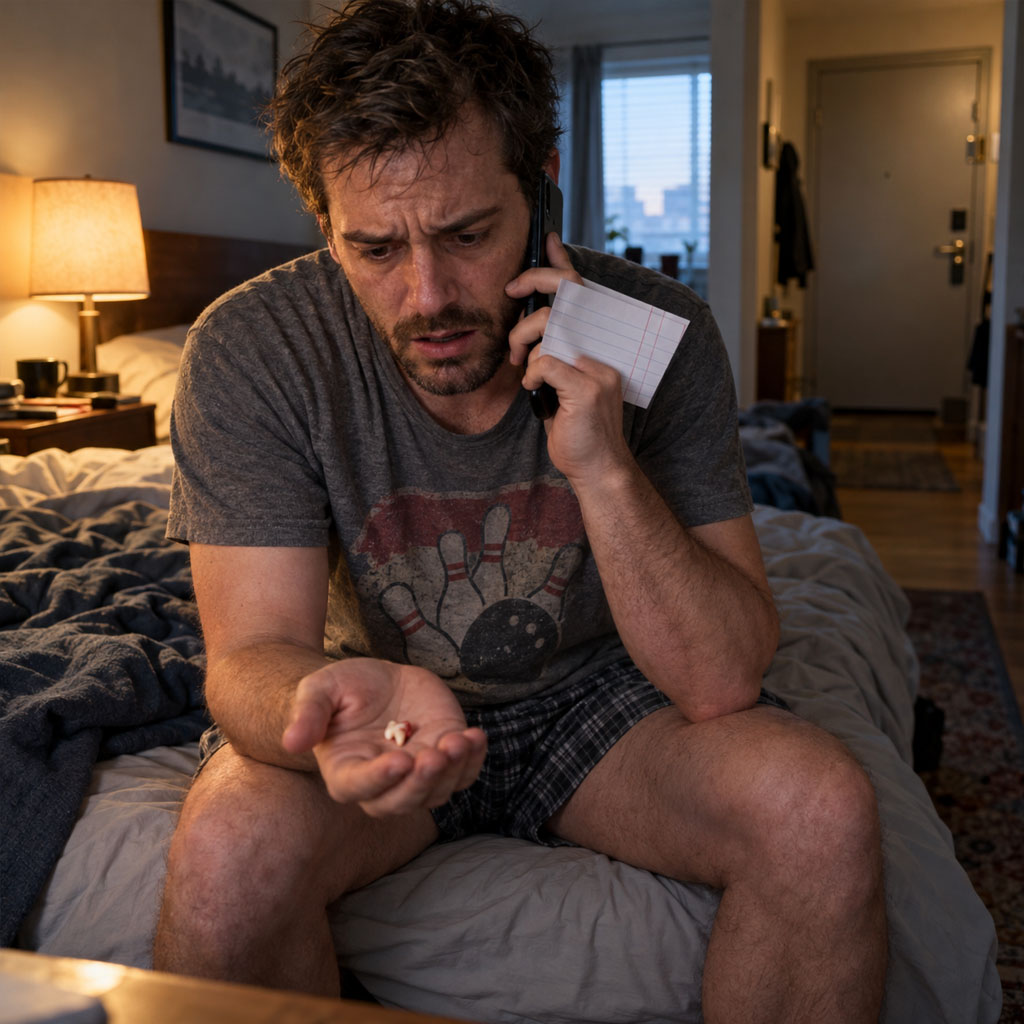
Ray photographed the contents without touching anything else. Then he called Susan Williams.
She answered from a highway rest stop outside Terre Haute, Indiana. Traffic rumbled behind her, and a vending machine hummed somewhere nearby.
“Mr. Hadex,” she said. “Is Mason there?”
“He’s safe. I need you to tell me what happened.”
“I can’t explain it over the phone.”
“You drove my son across three states.”
“I know.”
Her voice cracked.
“I’ve worked for Doug for twenty-two years. I’ve done things for him that I won’t discuss on a cell phone. But yesterday, I looked at that little boy, and I couldn’t do it anymore.”
Ray asked about the envelopes.
Sue told him the truth.
Doug wasn’t taking children’s teeth because they were loose. He was extracting healthy baby teeth from sedated children and selling them to a research company in Kansas that paid for viable dental pulp.
The company wanted the roots intact. Teeth that fell out naturally were of little value to its operation.
“He takes sixty or seventy a month across his clinics,” Sue said. “The parents think they’re authorizing routine treatment or research donations. Most don’t know their children have had healthy teeth removed.”
Ray stared at Mason, who was sitting quietly at the kitchen table.
“Does Gwen know?”
“She thinks Doug is an excellent dentist. She thinks he’s a wonderful stepfather. He forged her signature on Mason’s form, and I helped him make it look legitimate.”
“You helped him?”
“I answered the verification calls. I pretended to be the mothers. I used different names, different voices. The company called a prepaid phone, and I told them I was whoever they needed me to be.”
Ray closed his eyes.
Sue had become the voice of a hundred parents. She had helped an entire operation disguise itself as a respectable business.
“Why stop now?”
“Because of Mason. Because I saw his face when he realized that something had happened to him and nobody had told him the truth.”
She paused.
“Doug knows the box is missing. I left my phone at the clinic and drove away with Mason. But he has a tracking device on my car, and he knows where I’m going. He left Nashville at five this morning.”
“How long until he gets here?”
“About six hours. And he won’t come alone.”
Ray looked at the clock again. He had less time than he’d thought.
His first call was to Dr. Anita Fam, a pediatric dentist whose husband bowled on his Tuesday league team. He explained enough to convince her that a child needed an examination immediately.
She told him to bring Mason through the back entrance.
Dr. Fam examined the boy in a quiet room decorated with painted giraffes. She asked careful questions, took an X-ray, and studied the image for several minutes.
Then she turned the monitor toward Ray.
“This is tooth S, the lower right first primary molar. Children generally lose these around nine to eleven. Look at the roots. They haven’t begun to dissolve.”
She tapped the image.
“A tooth that’s ready to fall out has roots that are being absorbed by the body. This one was healthy and firmly rooted. There’s no clinical reason I can see for removing it.”
“Can you document that?”
“I already am.”
She printed a report and signed it.
“If this becomes a legal matter, you need to protect yourself as well as your son. Call the police yourself. Tell them where he is. When you return him to his mother, do it in front of an officer.”
Ray thanked her.
At Pioneer Lanes, his employer, seventy-one-year-old Bill McCarthy, took one look at Mason and put down the flashlight he’d been using to repair a pinsetter.
“I don’t want to know anything I might have to lie about,” Bill said.
“I need somewhere to hide a box.”
Bill considered this for a moment, then pointed toward an access panel behind lane fourteen. The gap between the ball lift and pin elevator was just large enough for the tackle box.
Ray secured it inside the machinery and tightened the panel with two bolts.
“Good hiding place,” Mason said.
“Your grandfather would be proud.”
At ten that morning, Ray called the Dunore police station and explained the situation. He made clear that Mason had arrived on his own and that he intended to return the child to his mother under an officer’s supervision.
Deputy Felix Ingram arrived shortly after one.
A white Lexus with Missouri plates pulled into the parking lot minutes later. Doug Copeland stepped out first, wearing an expensive golf shirt and rimless glasses. His silver beard was neatly trimmed, and his face wore the expression of a worried, loving stepfather.
Gwen followed him from the passenger seat.
She rushed to Mason and dropped to her knees, gathering him into her arms.
“Oh, baby. You scared me half to death.”
“I’m okay, Mom.”
“Why didn’t you tell me you were leaving?”
Mason looked at Doug.
“Mom, my tooth—”
“We’ll talk about that at home, sweetheart.”
Ray watched her glance at her husband before she answered anything else. It was quick, almost invisible, but he saw it.
Doug approached Deputy Ingram with an easy smile.
“This is a family matter,” he said. “Mr. Hadex has been under a lot of strain. I don’t want anybody getting into unnecessary trouble.”
Ray explained that he’d called the police station himself and was returning Mason voluntarily.
Deputy Ingram wrote everything down.
Doug’s smile never quite disappeared. He simply stepped closer to Ray, lowering his voice.
“There’s something that belongs to my office,” he said. “A green box. I’d like it back by Wednesday.”
“I don’t know what you’re talking about.”
“Of course you don’t.”
Doug glanced toward the Lexus, where Mason watched through the window.
“Children lose baby teeth. They grow back. It’s a harmless little thing. But permanent teeth are different.”
He tapped one of his own immaculate front teeth.
“Your son has fourteen baby teeth left. I’ve counted. I’m very good at counting.”
Then he squeezed Ray’s shoulder, smiled at the deputy, and walked back to his car.
As the Lexus pulled away, Mason raised a hand and pressed it against the rear window.
Ray stood motionless in the parking lot.
The tooth had brought his son to him. The box had brought a criminal investigation into his life. But Doug’s warning made one thing clear.
Whatever was inside that box, Doug was willing to do almost anything to get it back.
Chapter 3: The Signature
That evening, after the bowling alley had closed, Ray retrieved the tackle box from behind lane fourteen. He wore disposable gloves and placed it on a workbench beneath a bright task lamp.
The labels inside were not simply names and dates. Several carried clinic identification numbers, and each envelope was marked with a letter corresponding to a primary tooth.
The pink forms contained parental consent statements, treatment dates, and contact numbers.
Ray began comparing them.
The names changed. The dates changed. The signatures changed.
The phone number in the parent contact field did not.
He counted more than sixty forms before he stopped.
Every one listed the same number.
Ray found a shipping label beneath the cardboard lining of the lid. It identified Larks Cell Works, a laboratory supplier in Lanexa, Kansas. The paperwork referred to a viable dental pulp sourcing program and a lot number matching the labels on the envelopes.
He called the company and asked for its compliance department.
A woman named Elena Atkins answered. She sounded tired but professional.
“I’m a bowling alley mechanic,” Ray told her. “I have paperwork from a dental clinic that may be selling you teeth taken from children without proper consent.”
There was a pause.
“How did you obtain the documents?”
“My eight-year-old son found a box in the clinic laboratory. His tooth was in it. He didn’t give permission for anyone to remove it.”
Elena’s tone changed.
“Do you have the donor forms?”
“Yes.”
“Can you read me the contact number on one?”
He did.
She asked him to read another. Then a third. By the fifth, she was checking the records faster than he could speak.
“They’re all the same number,” she said.
“Every form I’ve checked.”
“That isn’t possible.”
“Then somebody has found a way to make it possible.”
Elena explained that Larks Cell Works required a verification call for every donor form. A compliance technician contacted the parent, confirmed the identity, and read the consent language aloud. The procedure was intended to protect both the children and the company.
The repeated number was a prepaid phone.
“We’ve called it for years,” she said. “A woman always answers. Her name is Susan Williams.”
Ray sat down.
“Sue is the clinic employee who drove my son to Ohio.”
Elena was silent for several seconds.
“If those forms are forged, our entire verification process has been compromised. We may have accepted hundreds of improperly documented donations.”
“Can you stop him?”
“I can initiate an enhanced audit. We would require a live video call with the parent listed on a form, with an investigator observing. If the parent denies consent, the contract is suspended.”
“Will you do it?”
“Thursday morning. Ten o’clock.”
Ray looked at the clock. It was Monday night. Three days felt like three months.
“The parent on the form is my ex-wife,” he said. “She’s married to the dentist. She doesn’t believe me.”
“Then you’ll have to give her a reason to look.”
After the call, Ray sat with the tackle box in front of him and considered his choices. He could call Gwen and tell her everything, but Doug would be standing beside her. He could send her photographs, but she might dismiss them as another attempt to undermine her marriage.
Instead, he sent one text.
Ask Mason what S stands for.
In Missouri, Gwen read the message while the Lexus traveled through the darkness toward home. Mason sat beside her, exhausted, his head resting against her arm. Doug drove with both hands on the steering wheel, occasionally reaching over to squeeze Gwen’s knee.
She had laughed at Ray that morning.
She remembered the sound now, and the memory made her stomach twist. She had laughed because Doug was beside her in the hotel bed, assuring her that Ray was tired, unstable, and prone to imagining problems. She had laughed because believing her husband was easier than considering that her former husband might be telling the truth.
When they reached the house, Doug carried Mason upstairs and kissed Gwen’s forehead.
“Get some sleep,” he told her. “Everything’s fine now.”
She went into Mason’s room instead.
The boy lay beneath a dinosaur night-light, watching the ceiling.
“Your dad sent me a message,” she said. “He asked what S stands for.”
Mason turned his face toward her.
“It’s the tooth Doug took.”
Gwen felt her body go still.
“What do you mean, took?”
“He said it was a cleaning. But it wasn’t loose. I asked for it, and he said the office owned it.”
“Did you tell him you wanted to keep it?”
“Yes.”
Mason opened his mouth. Gwen took out her phone and switched on the flashlight. The empty space in the lower right side of his jaw was unmistakable, the gum still pink and tender.
She remembered the appointment ten days earlier. Mason had been sleepy when she collected him. Doug said the laughing gas had made him groggy, and she’d praised the boy for being brave.
She had never looked inside his mouth.
“Mom?” Mason whispered. “Are you mad at me?”
Gwen sat on the edge of the bed.
“No, sweetheart. I’m not mad at you.”
She wanted to ask a hundred questions, but the first thing she understood was that her son had been afraid to tell her something important. That fact hurt more than anything else.
After Mason fell asleep, Gwen went downstairs.
Doug kept a locked briefcase beside his desk. She knew he used it for contracts, financial records, and clinic paperwork. She tried their wedding date, and the combination lock clicked open.
Inside were unopened envelopes, invoices, and a yellow legal pad folded in half.
The first page stopped her cold.
Her name appeared again and again, written in blue ink. Gwen Copeland. Gwen Copeland. Gwen Copeland.
Some signatures were clumsy. Others looked so much like hers that she had to stare at them to see the differences.
In the margin beside the final signature, Doug had written, Nice. Looks like her when she’s tired.
Gwen sat on the study floor, her back against the desk.
She had spent years telling herself that her marriage to Ray had failed because they had grown apart. She had left because she wanted a husband who was home for dinner, who remembered her coffee order, who listened when she spoke.
Doug had been that man at first.
He’d also been the dentist who hired her, the person who told her she deserved better, and the person who stood beside her in court while Ray’s work schedule was used to argue that their son belonged in a more stable home.
Now she understood that she had mistaken confidence for goodness.
She photographed the pages with her phone and returned everything exactly as she’d found it.
When Doug came into the kitchen, she was drinking a glass of water.
“You should be in bed,” he said gently.
“I couldn’t sleep.”
He kissed her hair.
“Well, it’s all over now. We’re home.”
She looked at him and smiled the way she had smiled a thousand times when she wanted to avoid an argument.
“Yes,” she said. “We’re home.”
Later, while Doug slept beside her, Gwen sent Ray a message.
I was wrong. I’m so sorry. What do I do?
He answered within a minute.
First, don’t do anything differently. Thursday at ten, you’ll be asked a simple question about your own name. Tell the truth.
Gwen stared at the screen until her eyes blurred.
On Wednesday, Doug became unusually attentive. He brought her coffee, asked whether she’d slept well, and reminded her that the company might call the next morning about a routine paperwork review.
“You’ll just confirm your signature,” he said. “It’s nothing to worry about.”
“Of course,” Gwen replied.
He smiled and kissed her cheek.
That night, she barely slept. She kept thinking about Mason’s frightened face and Ray’s voice on the phone. She remembered how easily she’d dismissed him, how quickly she’d chosen Doug’s reassurance over her own instincts.
At five the next morning, Ray met Sue Williams at a highway truck stop in Illinois. She wore the same lavender cardigan she’d worn when she drove Mason to Ohio. Her hair was uncombed, and she held a prepaid phone in both hands.
“I want to tell the truth,” she said. “All of it.”
Ray nodded.
“Then we start with your name.”
“My name is Susan Marie Williams.”
She said it as though she were learning to belong to herself again.
They drove to Missouri together, stopping once for coffee. Sue explained the forged consent forms, the routine extractions, and the way Doug had made her believe that refusing him would cost her everything. She did not ask Ray to forgive her.
By the time they reached Osage Falls, the morning was bright and cold.
Ray parked Bill McCarthy’s pickup on a quiet street a short distance from Gwen’s house. Sue sat beside him, holding the phone that had been used to deceive the company for years.
At nine fifty-four, Ray put a wireless earbud in his right ear.
It was connected to Gwen’s phone, which lay face down beneath a tablecloth in Doug’s home office.
He heard a chair creak. Then Doug’s cheerful voice filled his ear.
“Everything’s ready, honey. It’s routine. You just say yes, and then we’re done. We can leave for Cabo tomorrow.”
“All right,” Gwen said calmly. “I’ll say yes.”
Ray gripped the edge of the seat.
He could hear his own breathing. He could hear Sue’s hands shaking against the prepaid phone.
At ten o’clock, a chime sounded.
Elena Atkins introduced herself, explained that the call was being recorded, and confirmed that an observer from the Missouri Attorney General’s office was present.
Then she asked Gwen to verify her name and the details on the donor form.
“Miss Copeland, this form concerns your minor child, Mason Hadex. It records the extraction of a primary molar ten days ago and carries your signature authorizing a research donation. Did you sign this form?”
Ray held his breath.
Gwen’s voice was steady.
“No. I did not sign it. I have never seen this form before today, and I did not consent to any donation.”
Doug laughed.
It was the same warm, easy laugh Gwen had heard in hotel rooms and clinic offices, the laugh that made people feel foolish for asking difficult questions.
“Honey, come on. You signed a stack of those forms at the clinic Christmas party. You’d had a couple of glasses of champagne. Don’t you remember?”
“Dr. Copeland,” Elena said, “I’m speaking to your wife.”
Gwen took a breath.
“Doug, I found the legal pad in your briefcase. I saw the signatures. I saw what you wrote beside them.”
The chair creaked again.
“You’re confused,” Doug said.
“No. I’m finally paying attention.”
Ray closed his eyes.
Then Gwen asked the question that had been waiting inside her since she’d examined her son’s mouth.
“How many children, Doug?”
Chapter 4: The Truth Has a Name
For several seconds, nobody spoke.
Ray had spent his adult life listening to machines. He knew the difference between a motor that was running normally and one that had begun to fail. He recognized that same uneasy silence now, the pause before something carefully maintained came apart.
Doug’s voice lost its warmth.
“You want a number? Fine. Sixty or seventy a month across three clinics.”
Sue pressed her hand over her mouth.
“Larks pays three hundred and eighty dollars per tooth,” Doug continued, “and nearly eight hundred when the pulp is viable. Do you have any idea what it costs to run three dental offices? You think insurance reimbursements cover everything?”
Elena interrupted him.
“Dr. Copeland, are you admitting that your clinics extracted healthy teeth from minors without valid parental consent?”
“They’re baby teeth,” Doug snapped. “They fall out anyway. Nobody misses them. I was recycling something that would have been thrown away.”
“Did the parents authorize the extractions?”
A long silence followed.
Then Doug made the mistake that ended his practiced defense.
“They don’t need to authorize every little thing a dentist does.”
Elena’s voice remained level.
“This call is being recorded. A representative of the Missouri Attorney General’s office is observing.”
A sudden noise filled Ray’s ear. He heard the laptop slam shut, a chair scrape across the floor, and Gwen call out.
Ray was out of the truck before Sue could stop him.
“Wait,” she said, grabbing his sleeve. “Look.”
The front door of the house flew open.
Doug rushed down the steps with a leather briefcase clutched against his chest. His expensive glasses were missing, and his usually immaculate hair had fallen across his forehead. He moved toward the Lexus with the frantic purpose of a man who had just discovered that the world no longer worked according to his rules.
An unmarked sedan pulled across the driveway. A county cruiser stopped behind it.
Will Harrington, the investigator from the attorney general’s office, stepped out and showed his badge.
“Dr. Copeland, I need you to stop where you are.”
Doug turned.
His gaze passed over the cars, the investigator, and the deputy. Then he saw Ray standing beside the pickup in a faded bowling alley T-shirt.
“You,” Doug said.
Ray felt an old, familiar anger rise in him. For one moment, he imagined crossing the lawn and settling everything with his fists.
Instead, he stepped aside and gestured toward the investigator.
“Go ahead,” he said. “Try the car.”
Doug looked at the Lexus, then at the briefcase in his arms. He seemed unable to understand how something that had always protected him could suddenly become evidence against him.
Harrington approached and asked for the briefcase.
Doug handed it over.
The deputy placed him under arrest.
Sue stepped out of the truck. She stood straight in her lavender cardigan, holding the prepaid phone in both hands.
“My name is Susan Marie Williams,” she said clearly. “I’ve been pretending to be other people’s mothers on those verification calls. I’d like to give my statement now, in my own name.”
Doug didn’t look at her.
But his shoulders dropped, just slightly, as the deputy led him toward the cruiser.
On the front steps, Gwen watched with one hand pressed against her chest. She met Ray’s eyes across the lawn.
Neither of them smiled.
There was too much to feel and too much to repair.
The investigation moved quickly once the evidence was assembled. Authorities searched Doug’s clinics and recovered forged consent forms, financial records, and additional envelopes containing extracted teeth. They found records of hundreds of questionable procedures and a spreadsheet documenting payments from Larks Cell Works.
The company suspended its contract with Doug’s practices and cooperated with investigators. Elena Atkins turned over the verification records and admitted that the safeguards had failed. She also helped establish an independent review of every donation the company had accepted from those clinics.
Dr. Anita Fam’s examination report became a key part of the case. Her X-ray showed that Mason’s tooth had been healthy, with roots that had not begun to dissolve. Ray’s photographs, the tackle box, and the forged forms supplied the evidence connecting that extraction to the larger operation.
Sue gave a complete statement. She acknowledged her role in the scheme and described how she had impersonated parents to approve donations. Her cooperation helped investigators identify other affected families.
She did not escape consequences. She pleaded guilty to her part in the fraud and was required to perform extensive community service, including reading to children receiving treatment in a Springfield hospital.
Doug’s case went to court.
The judge listened to testimony from parents who had trusted him with their children. Some described their confusion when their sons and daughters came home with unexplained gaps in their mouths. Others said they had believed the procedures were ordinary dental care until investigators contacted them.
Doug’s defense emphasized his business expenses, the value of the research material, and the fact that primary teeth eventually fell out naturally.
The judge was not persuaded.
She sentenced him to nine years in prison and ordered his clinics’ remaining assets used to fund necessary dental care for affected children through age eighteen, including orthodontic treatment when needed. As part of the restitution process, Doug was also required to participate in the return of the recovered teeth to their families.
For fourteen weeks, he traveled with a deputy to the homes of the children whose teeth had been taken. He delivered the labeled envelopes and a written apology bearing his own signature.
Some parents cried when they opened them. Others refused to speak to him.
One father held the envelope for a long moment before handing it back.
“Keep it,” he said. “You never gave my boy anything worth having.”
Then he closed the door.
Ray heard about that visit from the investigator. He wasn’t sure what he had expected to feel when Doug finally faced the consequences of his actions. Satisfaction, perhaps. Relief. The pleasure of seeing a man who had threatened him brought to account.
Instead, Ray mostly felt tired.
He had spent years believing that if he worked hard enough, kept his promises, and stayed calm in court, he could protect Mason from the worst parts of the world. He now understood that a father could do everything he knew how to do and still fail to see what was happening when his child was far away.
But he also understood something else.
When Mason had become frightened, he had remembered the key Ray sent him. He had remembered the promise attached to it.
Even in the middle of the night.
That promise had been enough to get him moving.
In the spring, Gwen came to Dunore and met Ray at the front booth of Pioneer Lanes. The old bowling posters still hung on the walls, and the snack bar smelled of coffee and fried onions. She wore a plain sweater and carried a folder containing the custody documents she had prepared.
She had moved out of the stone house in Osage Falls during the first week of the investigation. She was renting a small apartment in Springfield and had left her job at Doug’s clinic.
“I’ve asked the court to give you primary custody,” she said. “Mason wants to live with you. I think it’s the right decision.”
Ray studied her.
“That doesn’t mean you stop being his mother.”
“I know. I want to be in his life. I’ll take whatever arrangement is best for him.”
She wrapped both hands around her paper cup.
“I need to tell you something else. I keep hearing that phone call in my head. You said there was a tooth under your pillow, and I laughed.”
Her voice broke.
“I would give anything to take that laugh back. You were telling me something was wrong, and I made you feel ridiculous. I chose Doug’s explanation because it was easier than being afraid.”
Ray remembered the sound of her laughter in his bedroom that morning. He remembered how quickly it had made him doubt what he was holding.
He also remembered the years before their marriage fell apart, the evenings when she had been kind to him, and the times he had been too tired to notice how lonely she had become. None of that excused what she had done, but it helped him understand the difference between a person who had made terrible choices and a person who refused to admit them.
“I forgive you,” he said.
Gwen’s eyes filled with tears.
“But forgiveness doesn’t mean we pretend none of it happened. You hurt me, and you put Mason in a position where he didn’t know which adults he could trust. We’re going to have to earn that trust back, one day at a time.”
She nodded.
“I understand.”
“We’ll do the custody arrangement properly. Every other weekend, summers, holidays when he wants to spend them with you. You’ll have a place in his life. But we don’t rush him, and we don’t ask him to make us feel better.”
Gwen wiped her eyes.
“Thank you.”
“Don’t thank me yet,” Ray said gently. “We’ve got work to do.”
It was the first honest conversation they’d had in years. There were no promises that everything would be easy, no claim that forgiveness had erased the past. They simply agreed to put their son ahead of their pride.
Mason settled into life in Dunore. He started at a new school, made friends, and spent afternoons at Pioneer Lanes, where Bill McCarthy taught him how to keep score and which pinsetter parts were worth saving.
He still visited his mother regularly. At first, he stayed close to Ray during every handoff, watching both adults carefully. Over time, he began to relax. Gwen learned to listen without immediately defending herself, and Ray learned that protecting a child sometimes meant allowing him to love people who had disappointed him.
Nobody pretended that the experience had left Mason untouched. Some nights, he asked whether his teeth were all right. Dr. Fam answered his questions patiently and showed him the X-rays so he could understand what was happening in his own mouth.
She also taught him something Ray thought every child deserved to know: he was allowed to ask what a procedure was for, and he was allowed to expect the adults caring for him to answer honestly.
By late summer, Mason was laughing more easily.
One Tuesday afternoon, Ray was kneeling in the machinery pit behind lane fourteen when he heard sneakers pounding down the center aisle.
“Daddy! Daddy, look!”
Ray slid out from beneath the pinsetter, wiping his hands on a rag.
Mason stood in front of him, grinning so broadly that his cheeks had turned pink. He held his palm out, and in the middle lay a small, creamy tooth.
“It came out by itself!” he announced. “I was eating a hot dog, and I felt it move. Then it just came out.”
Ray stared at the tooth.
Its root had worn down to a thin, translucent shell. The top was rough, but there was no dark line of fresh extraction, no raw pocket left behind. It was the ordinary, unremarkable tooth of a child whose body had decided it was time.
“Which one is it?” Ray asked, his voice catching.
“Letter T. Lower right, back of my mouth. Dr. Fam showed me the chart.”
Ray laughed, but the sound caught in his throat. He sat down on the oil-stained floor and covered his face for a moment, unable to stop the tears.
Mason looked alarmed.
“Daddy? What’s wrong?”
Ray pulled him close.
“Nothing’s wrong, buddy. Nothing at all.”
Mason pressed the tooth into his father’s palm.
“You can keep this one.”
Ray held it carefully, as if it were something precious enough to break.
For months, he’d thought about the first tooth and what it had cost his son to get it to him. He’d thought about the fear that had made Mason hide in a closet, the trust that had led him across three states, and the adults who had mistaken a child’s silence for permission.
He had also thought about Gwen’s laugh.
She had wanted to believe that nothing was wrong. Ray had wanted her to believe him. Doug had counted on people laughing at what they couldn’t imagine, because a laugh could make a warning sound foolish before anyone had time to investigate it.
The lesson wasn’t that every strange thing meant disaster. It was that love sometimes required the courage to stop dismissing what frightened us, especially when the person asking for help was too young or too vulnerable to explain it perfectly.
An apology could be sincere without repairing everything at once. Forgiveness could be offered without pretending that trust had never been broken. And a person could begin doing the right thing long after realizing how badly they’d been wrong.
Ray slipped Mason’s tooth into his shirt pocket.
“Come on,” he said, getting to his feet. “Let’s go show Bill.”
Mason took his hand, and they walked toward the snack bar together, past the lanes where the pins rose and fell, over and over, as they had for decades.
That night, Ray placed the little tooth in a clean envelope and wrote Mason’s name on the front.
There was no letter beside it. No demand. No secret message.
Just a child’s tooth that had come out when it was ready, and a father who finally understood why that mattered.
THE END.
⚠️ All characters and events are fictional. Do not imitate or apply them in real life. 😌😌😌