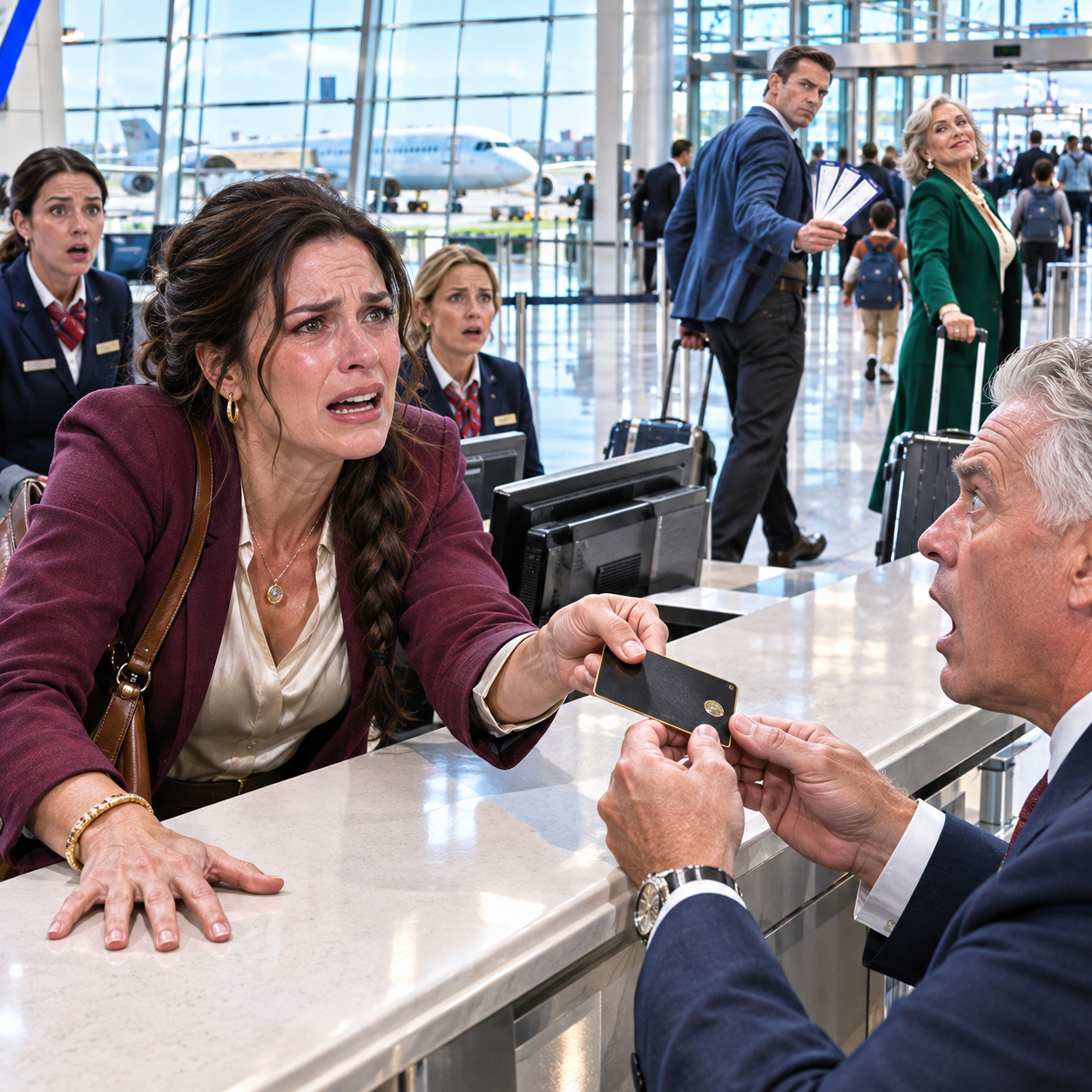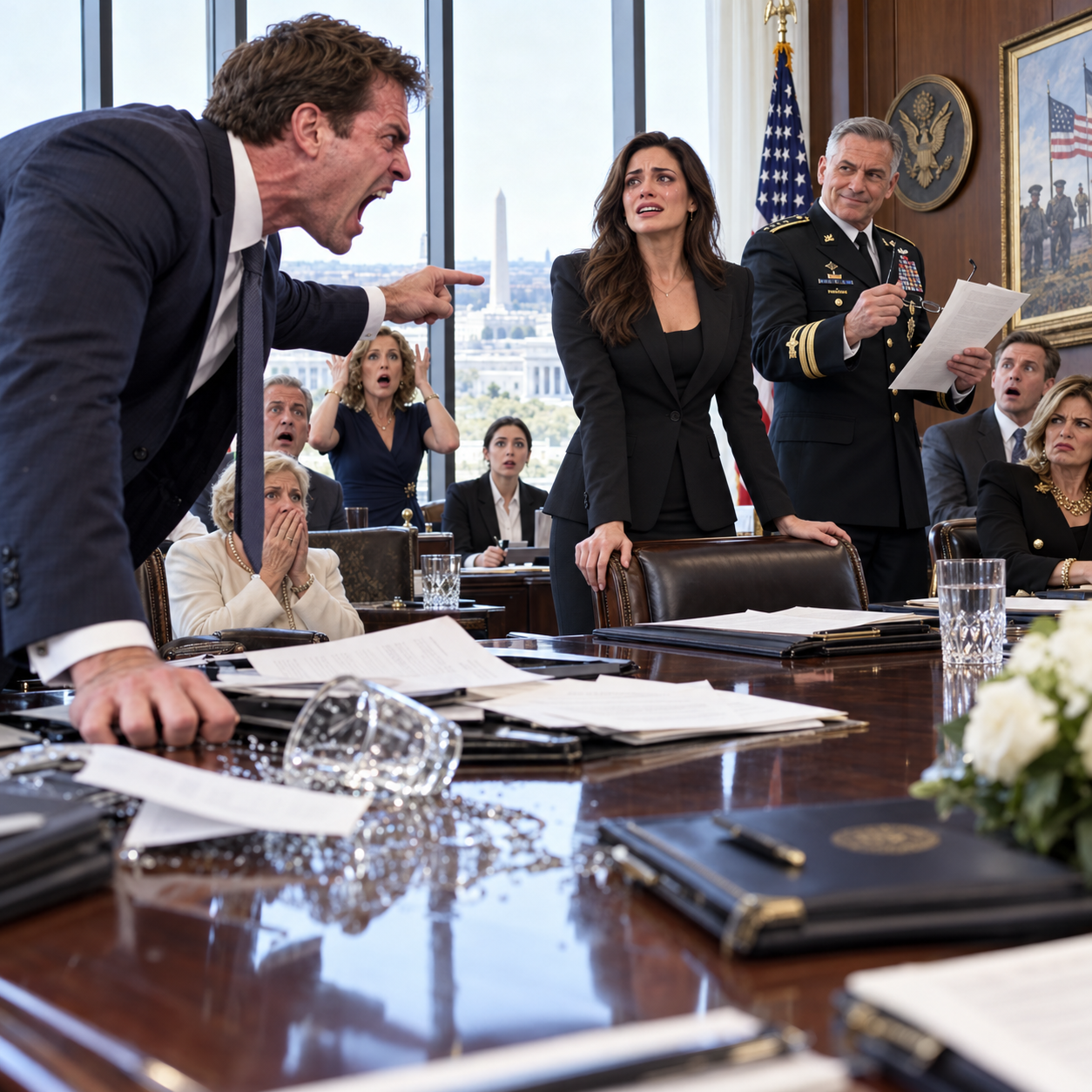
At Dad’s Will Reading, My Brother Slapped The Table. “She’s An Adopted Nobody! The $15M Estate Is Mine!” The Uniformed JAG Officer Removed His Glasses, Chuckled, And Unfolded A Pentagon Decree. “Son… She Didn’t Just Inherit The Money. She Owns The Command You Report To.”
Four days after I buried my father, my older brother called me into a glass conference room and announced that an adopted daughter had no business touching the company our father built. Nobody at the table defended me, so I quietly refused the waiver he pushed across the wood. Three weeks later, after his lawyers had already started dismantling the estate, a military courier brought me a sealed portfolio from my father. Inside was one document bearing my brother’s signature—and a date that made his entire story impossible.
Part 1
My father had been dead for ninety-six hours when my brother decided grief had lasted long enough.
I remember the number because I had barely slept since finding Arthur Sterling collapsed beside the workbench in his garage, one hand still resting on the wooden cradle he had been building for the first grandchild he would never meet. He had suffered what the cardiologist described as a massive cardiac event, sudden enough that there had been no hospital goodbye, no final instructions, no dramatic bedside confession. One minute he had been complaining that I bought terrible coffee, and the next I was choosing a uniform for his burial while my brother Garrick texted me to ask whether Dad had left the combination to the office safe.
Four days after the funeral, Garrick summoned me to Sterling Defense Logistics headquarters in downtown Chicago.
He used the word summoned, too.
“Conference room, fourth floor. Ten sharp. Dennis will be there. Don’t make this difficult.”
Dennis Bradley was a probate attorney whose suits probably cost more than my first car. Garrick had known him through a private club in River North, and when I stepped into the oak-paneled conference room that morning, Dennis was already arranging folders beside a silver laptop while Garrick stared out at the river as though the building belonged to him.
Nobody offered coffee.
Nobody asked whether I had managed to sleep.
Garrick turned around, adjusted the heavy gold ring on his right hand, and gave me the expression he had perfected when we were teenagers—the one that said he had information I did not.
“Sit down, Brin.”
“I’m fine standing.”
His mouth twitched. “Still doing the military posture thing?”
I ignored that.
At the far end of the table sat Colonel Robert Vance, a silver-haired officer I recognized from Dad’s memorial. He had delivered one of the eulogies and stood beside the folded flag while I tried not to cry in front of two hundred employees, veterans, vendors, and former soldiers who had come to honor my father. I assumed he was there because Dad had spent twenty-eight years in uniform before turning a small trucking operation into Sterling Defense Logistics.
That assumption would matter later.
Dennis slid a leather binder toward me. “We’d like to resolve the succession issues efficiently.”
“Succession issues?”
Garrick laughed under his breath. “Don’t act surprised.”
Sterling Defense Logistics had never been publicly traded. Dad owned the controlling interest through a private holding trust, with smaller nonvoting shares assigned over the years to senior managers and an employee retirement plan. The company moved specialized equipment, maintenance components, secure electronics, and other military freight under federal contracts throughout the Midwest.
People heard “trucking company” and imagined semis crossing interstates.
Dad used to say that if the wrong crate arrived at the wrong depot twelve hours late, somebody overseas might be waiting on a part that kept an aircraft in the air.
That was why he hated shortcuts.
Garrick loved them.
He sat across from me, folded his arms, and said, “Dad built this for his family.”
“I’m aware.”
“No, you’re not.”
Dennis looked uncomfortable for half a second, but Garrick was enjoying himself now.
“You were five when Dad brought you home,” he said. “He did a good thing. Nobody’s denying that. But charity doesn’t create equality.”
The room seemed to lose sound.
I could hear only the air vent above me and the faint scrape of traffic forty floors below.
Garrick leaned forward.
“You’re adopted, Brin. You were never meant to inherit Sterling.”
Colonel Vance’s eyes shifted toward him.
I kept mine on my brother.
When I was five, Arthur Sterling had picked me up from a foster placement outside Rockford with a plastic garbage bag containing three shirts, two pairs of pants, one stuffed rabbit, and shoes that pinched my toes. Sixteen months later, the adoption became final.
Dad never introduced me as adopted.
Garrick never introduced me any other way.
“I assume,” I said, “there’s a reason you dragged a lawyer in here to explain biology.”
Dennis cleared his throat. “Your father’s estate includes complicated business interests subject to transfer restrictions. Garrick has served in executive operations and is prepared to assume interim leadership.”
That was generous.
Garrick had served as executive vice president of business development, a title Dad gave him after Garrick threatened to leave for a competitor. His main talents were golf, expense accounts, and remembering the names of people who could do something for him.
“What exactly do you want from me?” I asked.
Dennis opened the binder to a marked page.
A waiver.
I read enough legal documents for work to know when someone wanted a signature more than they wanted agreement.
The paper asked me to disclaim any potential interest in the voting trust, waive challenges to Garrick’s appointment as interim controlling officer, and acknowledge that I had never exercised operational authority over Sterling Defense Logistics.
That last sentence made me look up.
“Why include this?”
Garrick shrugged. “Housekeeping.”
Colonel Vance moved one finger against the folder in front of him.
A tiny motion.
But I noticed.
I looked back at Dennis. “You’re asking me to state that I’ve never exercised operational authority.”
“That’s correct.”
“Why would that matter if I’m an adopted nobody with no claim?”
Garrick’s jaw tightened.
Dennis answered smoothly. “We prefer comprehensive documents.”
I closed the binder.
“No.”
My brother stared at me. “Excuse me?”
“I’m not signing it.”
“Brin, don’t turn this into some emotional crusade because Dad made you feel special.”
“That isn’t why.”
“Then why?”
Because eight months earlier, a transport company named Aegis Fleet Systems had begun appearing on subcontract approval requests crossing a federal review queue I monitored as part of my military logistics assignment.
Because three months earlier, I had noticed that Aegis shared an insurance broker with one of Garrick’s shell leasing companies.
Because six weeks earlier, Dad had called me at 11:47 at night and asked a question that still bothered me.
“Brin, if somebody wanted to make a healthy company look sick, what would you check first?”
I had answered, “Related-party payments.”
Dad had gone quiet.
Then he said, “Good girl.”
It was the last serious conversation we ever had.
I looked at Garrick now and saw something beneath his arrogance.
Urgency.
He didn’t simply want the company.
He needed my signature.
“I’ll review everything after Dad’s full estate inventory is complete,” I said.
Garrick rose so quickly his chair rolled backward.
His palms struck the mahogany table.
“She’s just an adopted nobody,” he snapped at Dennis, then pointed at me. “Why are we negotiating with her like she has leverage? Dad’s company belongs to blood, not some stray he brought home because he felt guilty after the war.”
The word stray landed exactly where he intended it to.
Colonel Vance slowly removed his glasses.
For a second, I thought he was angry.
Instead, he leaned back and laughed.
Not loudly.
Not kindly.
Just one dry, disbelieving chuckle.
Garrick turned on him. “Is something funny, Colonel?”
Vance folded his glasses beside his service cap.
“Yes,” he said. “But I don’t think you’re going to enjoy the explanation.”
Then he reached for the brass-cornered portfolio at his feet.
Part 2
Colonel Vance did not open the portfolio immediately.
That bothered Garrick more than anything.
My brother was a man who believed silence existed so he could fill it, and after ten seconds he started again. “With respect, Colonel, this is a private estate matter. Dad’s military service doesn’t make the Army executor of his company.”
“No,” Vance said. “It doesn’t.”
Garrick seemed relieved.
Then Vance added, “Which is why I’m not here because of his military service.”
Dennis stopped turning pages.
I looked at Vance.
He met my eyes only briefly, and something in his expression told me not to ask yet.
Vance slid the unopened portfolio onto the table. “Mrs. Sterling—”
“Major Sterling,” Garrick muttered sarcastically.
The room went still.
I had never told him my rank.
Vance glanced at him.
Garrick smirked. “That was a joke.”
“I know,” Vance said.
He turned back to me. “Your father gave me written instructions regarding when this package could be opened. Those conditions have not yet been satisfied.”
“What conditions?”
“One was the formal commencement of a contested succession proceeding.”
Dennis frowned. “There is no contested proceeding.”
“Not yet.”
Garrick pushed his chair back. “Then why are you here?”
Vance looked at the waiver in front of me. “To make sure she doesn’t sign anything stupid.”
That ended the meeting.
Or should have.
Instead, Garrick spent another twenty minutes trying to frighten me.
He said the company’s cash position was collapsing.
He said federal contract renewals were uncertain.
He said Dad had left “a mess” that required immediate control.
Dennis mentioned the possibility of an emergency petition in probate court if I interfered with Garrick’s management authority.
I listened.
The numbers did not fit.
Sterling Defense Logistics had posted strong operating margins the previous year. Dad was conservative to the point of irritation. He maintained cash reserves large enough to cover payroll through prolonged federal payment delays, and he distrusted debt so thoroughly that he once paid off a warehouse note early because he disliked seeing interest on the monthly statement.
Yet Garrick was claiming we were weeks from a liquidity problem.
When I left the conference room, I did not go home.
I went to Dad’s house.
Technically, it belonged to the estate now, but my key still worked. The place smelled like furniture polish, old coffee, and the cedar blocks Dad kept in every closet because he had an irrational hatred of moths.
His study was exactly as we had left it.
Yellow legal pad on the desk.
Mechanical pencil beside it.
Reading glasses folded on a stack of federal acquisition manuals.
Garrick had always hated that room.
As children, we both had to do homework there while Dad worked. Garrick would finish half a math worksheet, announce that the teacher was incompetent, then negotiate for television privileges.
I stayed because the room was quiet.
Dad never lowered standards for me because of where I came from.
At twelve, I once accused him of being harder on me than Garrick.
He looked genuinely surprised.
“I’m harder on you because you listen.”
“That makes no sense.”
“It will.”
At eighteen, I understood.
Garrick crashed Dad’s pickup after drinking at a graduation party and expected the problem to disappear. Dad made him spend the summer working in the maintenance yard to repay the deductible.
Garrick called it humiliation.
I called it Tuesday.
Our differences became sharper with age. I joined ROTC, studied supply chain management, later completed graduate work in procurement law, and spent years rotating through logistics assignments where mistakes were documented instead of excused.
Garrick joined Sterling immediately after business school.
His first office was larger than the one Dad had used for fifteen years.
At family dinners, Garrick talked about expansion, acquisitions, prestige, and valuation.
Dad talked about audit trails.
Three years before his death, I had been sitting across from him in the study reviewing a shipment dispute when he removed his glasses and said, “Your brother thinks ownership means permission.”
“For what?”
“Whatever he wants.”
I had laughed.
Dad did not.
“Charisma is useful,” he said. “But a federal auditor doesn’t care whether you can work a room. It cares who signed the manifest.”
That memory sent me toward the filing cabinet behind his desk.
Dad kept paper backups of important records even though everyone complained about it.
I found tax statements, insurance renewals, board minutes, equipment leases, and correspondence with banks.
Nothing shocking.
Then I opened the bottom drawer.
Empty.
That drawer had never been empty.
Dad called it his “graveyard” because he kept records there for businesses he no longer trusted.
I knelt on the carpet and looked toward the wastebasket.
Clean.
Too clean.
Someone had been through the study.
I checked the household alarm log from the kitchen panel.
Garrick had entered the house at 6:12 the morning after Dad died.
He stayed forty-three minutes.
He never mentioned it.
I photographed the log and drove to Sterling headquarters.
The receptionist looked startled when I returned.
“Is Garrick still here?”
“He left with Mr. Bradley.”
“What about Mr. Walsh?”
She hesitated.
Calvin Walsh was Sterling’s longtime chief financial officer.
“He resigned.”
“When?”
“This morning.”
That was new.
Calvin had worked for Dad for seventeen years and once spent Christmas Eve at a truck terminal because a payroll transfer had failed.
He did not resign suddenly.
“Did he leave a forwarding address?”
“No.”
I went upstairs.
My employee badge still opened Dad’s executive floor, something Garrick apparently had not considered.
His office had already changed.
Dad’s coat was gone from the hook.
Garrick’s briefcase sat beside the desk.
A bottle of expensive bourbon stood on the credenza where Dad kept instant coffee.
I should have left.
Instead, I noticed a shipping manifest on the printer.
Aegis Fleet Systems.
The company I had seen in my federal review queue.
The subcontract showed Sterling transferring twelve armored-equipment transport routes to Aegis at a rate almost thirty percent above comparable carriers.
I turned to the final page.
Approved by Garrick Sterling.
Countersigned by Calvin Walsh.
Effective forty-eight hours before Dad died.
My phone vibrated.
Unknown number.
I answered.
A man whispered, “Major Sterling?”
“Yes.”
“This is Calvin Walsh.”
I straightened.
“Where are you?”
“I can’t come back to the office.”
“Why?”
A long pause.
Then he said, “Because your brother thinks I destroyed the second ledger.”
I looked at the manifest in my hand.
“Did you?”
“No.”
Another pause.
“You did.”
Part 3
Calvin refused to meet anywhere near Sterling headquarters.
He chose a twenty-four-hour diner in Schaumburg where the coffee tasted burned and every third booth had cracked red vinyl. I arrived shortly after sunset and found him in the back corner wearing a Cubs cap pulled so low I almost walked past him.
He looked ten years older than he had at Dad’s funeral.
“You shouldn’t have called my office,” he said before I sat down.
“I called your cell.”
“Garrick pays for the plan.”
That told me more about Calvin’s state of mind than anything else.
I slid into the booth. “What second ledger?”
He stared at the window for a moment.
Then he asked, “How much did Garrick tell you about Aegis?”
“Almost nothing.”
Calvin gave a humorless laugh.
“That means he’s scared.”
Aegis Fleet Systems had been created eleven months earlier, he explained, by a holding company registered through an attorney in Delaware. Garrick did not appear on the public paperwork.
But he controlled it.
He had begun transferring selected routes from Sterling to Aegis under the argument that Sterling lacked enough tractors and specialized trailers to meet surge demand. On paper, outsourcing looked legitimate.
The problem was pricing.
Aegis billed Sterling above market.
Then it leased some of Sterling’s own equipment back to Sterling through intermediary companies.
The company was effectively paying twice for assets it already controlled.
“Why would Dad allow that?”
“He didn’t know at first.”
“And when he found out?”
Calvin rubbed both hands over his face.
“That’s when everything changed.”
Dad had confronted him six weeks before his death.
Not Garrick.
Calvin.
“He put invoices on my desk and asked whether I was stupid or dishonest,” Calvin said. “I told him neither answer made me look good.”
“What did you do?”
“I showed him the rest.”
Calvin had maintained a separate reconciliation file documenting the suspicious payments because Garrick kept pressuring accounting employees to reclassify them as normal subcontractor expenses. He called it the second ledger, though technically it was a collection of reports, emails, internal approvals, and transaction summaries.
Dad told him not to destroy anything.
Then Dad did something Calvin had not expected.
“He didn’t fire me.”
“Why?”
“He said he needed to know how far it went.”
My stomach tightened.
“How far did it go?”
Calvin looked toward the waitress, waited for her to pass, then lowered his voice.
“Farther than freight.”
For two years, Garrick had been building a narrative that Sterling Defense Logistics was too old-fashioned to survive. He criticized Dad’s conservative management and complained to vendors that the company needed “modern ownership.”
But privately he was doing more than complaining.
He had approached outside investors.
If Sterling’s profitability fell far enough and Dad died or became incapacitated, Garrick planned to argue that the company needed emergency recapitalization.
His investors would inject cash.
In return, they would gain control of the warehouses, equipment, and commercial routes.
“And the defense contracts?” I asked.
Calvin shook his head. “They thought those would transfer automatically.”
“They wouldn’t.”
“I know that now.”
That explained why Garrick needed my waiver stating that I had never exercised operational authority.
But it still did not explain everything.
“What does adoption have to do with any of this?”
Calvin studied me carefully.
“Nothing legally.”
“Then why is he obsessed with it?”
“I think because he needs you to believe it matters.”
That sentence sat between us.
Calvin pulled a small flash drive from his pocket.
“I copied the reconciliation file when Arthur confronted me.”
“Why give it to me?”
“Because I signed things I shouldn’t have signed.”
He did not ask me to absolve him.
I respected that.
“I kept telling myself Garrick was shifting costs temporarily,” he said. “Then I realized what he was doing, and by then my signature was everywhere.”
“Dad knew?”
“Yes.”
“Did he know about the investors?”
“Yes.”
“Who were they?”
Calvin hesitated.
“That’s in the file.”
I took the drive.
“Why did you resign?”
“Because Garrick came to my house the night after the funeral.”
My hand stopped.
“What did he want?”
“The original records.”
“And?”
“I told him Arthur had them.”
Dad’s empty bottom drawer flashed through my mind.
“Garrick went into Dad’s house the next morning.”
“I figured.”
“What was in that drawer?”
Calvin looked at me.
“Enough to stop the sale.”
Back at my apartment, I opened the drive on an isolated laptop I used for work travel.
The folders went back fourteen months.
Invoices.
Emails.
Freight agreements.
Internal messages.
I read until after midnight.
The pattern was worse than I expected.
Aegis had received priority routes even when lower-cost carriers were available. Fuel charges appeared twice under different references. Equipment maintenance costs were being shifted back to Sterling while Aegis collected management fees.
The amount was not fifty million dollars or some movie-sized theft.
It was more believable.
And therefore uglier.
Hundreds of thousands here.
A few hundred thousand there.
Enough to weaken margins gradually without triggering instant panic.
The deepest problem appeared in an email chain between Garrick and an investment adviser named Nolan Pierce.
Nolan wrote:
Once operating income drops below covenant threshold, lender pressure becomes leverage. Probate uncertainty improves our position. Need clarity regarding B.S. before proceeding.
B.S.
Brin Sterling.
Garrick replied:
She has no meaningful corporate role and can be handled.
Three months later, Nolan asked again.
Any risk from the daughter?
Garrick answered:
Not the real one.
I read the sentence four times.
Not the real one.
My first reaction was anger.
My second was confusion.
Then I found a PDF created six days before Dad died.
A draft asset purchase agreement.
Sterling’s warehouses, commercial fleet, and equipment would be sold to a private investment group after a projected liquidity crisis.
The sale price was less than half the company’s independent valuation.
Garrick would receive an executive position, equity in the acquiring company, and a multimillion-dollar retention package.
My father’s employees would get nothing guaranteed.
I called Colonel Vance at 1:18 in the morning.
He answered on the third ring.
“Sterling.”
“You expected me to call.”
“Yes.”
“Why?”
“Because your father expected you to find Calvin.”
That chilled me.
“What’s in the portfolio?”
Vance was silent.
“Colonel?”
“Your father gave me instructions, Brin.”
“He’s dead.”
“I’m aware.”
“My brother is trying to dismantle his company.”
“I’m aware of that too.”
“So open it.”
“I can’t yet.”
I stood beside my kitchen counter, staring at Garrick’s email.
“What are we waiting for?”
Vance’s voice changed.
“We’re waiting for Garrick to do the one thing your father believed he would do if nobody stopped him.”
“What?”
“File the petition.”
The next morning, a courier knocked on my door.
He handed me a county court envelope.
Garrick had filed.
Part 4
Garrick’s emergency petition was seventy-three pages long and built around one central claim: Sterling Defense Logistics was facing an immediate management crisis caused by Dad’s death.
He described himself as the only experienced successor capable of preserving jobs, creditor relationships, and government contracts. He asked the probate court to recognize temporary authority over estate-controlled business interests while ownership questions were resolved.
Then he accused me of interfering.
Not by name at first.
He called me “a nonexecutive family beneficiary with no demonstrated experience in corporate management.”
By page forty-one, restraint disappeared.
He attached statements claiming that I had attempted to access confidential company records without authorization.
Technically true.
He failed to mention that my badge still worked because Dad had personally authorized it.
Dennis Bradley also argued that any claimed transfer of voting control to me should be scrutinized because my adoption created “potential ambiguity concerning testamentary intent.”
That phrase made me laugh.
Not because it was funny.
Because Garrick had finally put his prejudice into a legal document.
Colonel Vance called before I finished reading.
“Condition satisfied,” he said.
We met that afternoon in the same conference room.
This time, I brought counsel.
Her name was Maya Chen, a federal contracts attorney who had spent twelve years inside the Defense Contract Management Agency before moving into private practice. She did not wear expensive jewelry or carry an intimidating leather briefcase.
She carried a yellow legal pad.
Garrick underestimated her instantly.
“Another bureaucrat?” he said when she introduced herself.
Maya smiled. “Something like that.”
Colonel Vance arrived last.
He placed the brass-cornered portfolio on the table.
Garrick glanced at it, then at Dennis. “Can we get this over with?”
Vance sat down.
“You filed for control.”
“I filed to protect my father’s company.”
“From whom?”
Garrick looked at me. “People who didn’t build it.”
I felt Maya shift beside me, but I kept my face still.
Colonel Vance opened the portfolio.
Inside were three sealed envelopes, a bound trust amendment, a military legal memorandum, and a slim blue folder bearing Dad’s handwriting.
Garrick leaned forward.
Vance touched the trust document first.
“Two years ago, Arthur Sterling amended the controlling ownership structure of Sterling Defense Logistics.”
Dennis immediately raised a hand. “Colonel, if you’re purporting to present a testamentary document—”
“I’m not.”
Vance slid the papers toward Maya.
“The controlling shares were transferred during Arthur’s lifetime to the Sterling Continuity Trust.”
Dennis stopped speaking.
That mattered.
Assets transferred to a valid living trust were not simply waiting inside Dad’s probate estate for Garrick to claim.
Vance continued.
“Arthur remained managing trustee during his lifetime. Upon his death or incapacity, control passes according to successor provisions already in effect.”
Garrick looked at Dennis.
Dennis did not look back.
“Who’s successor trustee?” Garrick asked.
Vance glanced toward me.
I already knew the answer from his face.
“Brin Sterling.”
Garrick laughed.
A sharp, barking sound.
“No.”
Vance kept going.
“The trust also contains a continuity agreement tied to the company’s federal contracting obligations. Any controlling officer must satisfy specified clearance, compliance, conflict-of-interest, and operational-experience requirements before exercising authority.”
Garrick pointed at me.
“She doesn’t.”
Vance removed his glasses.
It was the same gesture he had made four days earlier.
Then came the dry chuckle.
“Mr. Sterling,” he said, “that is the part your father found darkly amusing.”
Garrick’s face hardened.
Vance looked at me. “May I?”
I nodded.
He withdrew a copy of my military personnel summary.
My brother stared at it.
“Major Brin Sterling,” Vance said. “United States Army Reserve Logistics Corps. Current mobilization assignment supporting regional defense sustainment planning. Civilian position: senior procurement compliance director attached to a joint defense logistics program.”
Garrick’s mouth opened.
Vance continued.
“Active security clearance. Federal acquisition credentials. Twelve years of documented logistics and procurement experience.”
Dennis slowly removed his glasses.
Garrick looked from the paper to me.
“You told us you worked in procurement.”
“I do.”
“You said you worked at a regional office.”
“I do.”
“You never said—”
“You never asked.”
He sat back as though I had struck him.
For years, Garrick had assumed that because I did not brag about promotions, I had none.
He thought government work meant filing forms in a gray cubicle.
Dad knew exactly what I did.
He had attended my promotion ceremony.
He kept the photograph in his study.
Garrick had walked past it for five years.
But this was not the real blow.
Maya turned one page in the trust agreement.
“What happens if the designated successor has a conflict involving a Sterling vendor?”
Vance answered, “Mandatory disclosure and independent review.”
She looked at Garrick.
“And if another potential beneficiary has a conflict?”
“Same rule.”
Garrick’s eyes narrowed.
Dennis finally looked alarmed.
Vance opened the blue folder.
“Aegis Fleet Systems.”
The room changed.
Garrick did not move.
That was how I knew.
Colonel Vance slid out a conflict disclosure Arthur had prepared six weeks before he died.
It identified suspected related-party transactions involving Sterling Defense Logistics and Aegis Fleet Systems.
Attached were invoices, leasing schedules, internal emails, and the name of Aegis’s beneficial owner.
Garrick Sterling.
Dennis turned toward his client.
“Is that accurate?”
Garrick’s voice came out too quickly.
“It’s an investment vehicle.”
“You own it?”
“Partially.”
“How partially?”
“Dennis, not now.”
Bradley’s face lost color.
Maya leaned toward me.
Quietly she said, “He didn’t tell his own lawyer.”
Vance removed another document.
“This is an internal memorandum from Arthur Sterling dated five weeks before his death. It directs that if Garrick initiates any attempt to obtain unilateral control before the Aegis review is completed, the full conflict file is to be released to the appropriate contracting authorities and independent corporate counsel.”
Garrick pushed back from the table.
“This is insane.”
“No,” Vance said. “It’s governance.”
“You think Dad set some trap for me?”
“I think your father knew you.”
That landed harder than anything else.
Garrick stood.
“My father would never hand his company to someone who isn’t even his blood.”
The silence afterward was enormous.
Then Colonel Vance picked up the third envelope.
“Interesting choice of words.”
He looked toward me.
“This one is addressed to Brin.”
I reached for it.
Across the front, in Dad’s handwriting, were five words:
READ THIS BEFORE YOU FORGIVE HIM.
Part 5
I did not open Dad’s letter in the conference room.
Garrick wanted me to.
That was reason enough not to.
He spent the next ten minutes switching between outrage and negotiation. First the trust was fraudulent, then Dad had been manipulated, then I had hidden my career deliberately to embarrass him, then Aegis was merely an entrepreneurial side business Dad had “misunderstood.”
Dennis finally told him to stop talking.
Maya asked for a copy of every document in the portfolio.
Colonel Vance provided them.
Before we left, he also handed Garrick a notice informing him that Aegis-related transactions had been referred for federal contract compliance review.
Not a criminal charge.
Not handcuffs.
Something worse for a man like Garrick.
An audit.
I opened Dad’s letter that night at his kitchen table.
His handwriting was shaky in places, which told me he had written it recently.
Brin,
If you are reading this, then your brother did what I hoped he would not do.
I stared at that line for a long time.
Dad continued.
Do not confuse preparation with preference. I did not want Garrick to fail. I wanted him to choose differently when given the chance.
That was Dad.
Even dying, he refused melodrama.
He explained that he had discovered the Aegis arrangement after noticing declining margins on routes where volume had increased. At first he assumed Garrick was simply incompetent.
Then he found the investor correspondence.
Dad confronted him privately.
That surprised me.
Garrick had never mentioned it.
According to the letter, Dad gave him one opportunity to unwind Aegis, disclose the transactions to the board, repay improper charges, and remain in the family company under supervision.
Garrick refused.
He claimed Dad was too old to understand modern business.
Then he said something Dad quoted exactly.
Brin will back me once you’re gone. She knows this company belongs to the real family.
I stopped reading.
There are moments when an old cruelty suddenly acquires a new shape.
All my life, I thought Garrick mocked my adoption because he was insecure.
He was.
But Dad’s letter showed something uglier.
Garrick had spent years treating my exclusion as a business assumption.
He believed I would never challenge him because he had trained me to think of myself as a guest.
Dad knew it.
That was why he had been so insistent that I learn every system properly instead of relying on family access.
The letter continued.
There is something else you need to understand. Garrick’s interest in forcing you out did not begin with my death. It began when I changed the trust.
Two years earlier, Dad had told Garrick he planned to restructure succession.
He did not reveal the details.
Garrick apparently assumed Dad intended to divide ownership equally.
That was when he began creating Aegis.
He was not merely trying to steal more.
He was preparing for the possibility that I might inherit enough authority to stop him.
Dad ended the letter with a sentence that hurt more than I expected.
I taught both of you the same lesson. You learned that responsibility creates freedom. Garrick learned that consequences disappear if somebody else pays them.
The federal audit moved quickly.
Aegis had forty-two questionable billing events, including duplicated fuel surcharges, equipment charges unsupported by dispatch records, and route awards that had bypassed Sterling’s normal vendor-selection process.
The total exposure was just under a million dollars.
Enough to matter.
Not enough to explain Garrick’s desperation.
Then Maya found the deeper problem.
Aegis was not the only entity.
Three equipment companies receiving payments from Aegis traced back to Nolan Pierce’s investment group.
One had already signed an option to purchase Sterling’s suburban maintenance depot if a default occurred under a loan covenant.
Except Sterling had not been near default until Garrick began shifting revenue away.
His wrongdoing was creating the crisis he planned to “rescue” the company from.
Maya spread the documents across Dad’s dining table.
“He manufactures weak margins,” she said. “Then Aegis drains cash. Then the company appears unstable. Then his investor group comes in with emergency capital.”
“And buys assets cheap.”
“Exactly.”
“Employees lose?”
“Probably.”
“Dad’s retirement plan?”
“Depends how the sale was structured.”
I sat back.
Outside, rain ticked against the windows.
Garrick had spent years telling everyone he deserved Sterling because he was Dad’s son.
Yet he was willing to carve the company apart for a minority stake in the replacement.
This had never been about preserving Dad’s legacy.
It was about converting it into cash.
Two days later, Garrick called me.
I almost ignored it.
Then I answered.
“Brin.”
“What?”
He sounded exhausted.
“Meet me.”
“No.”
“Please.”
That word was rare enough to make me pause.
“Why?”
“Because you’re going to destroy the company if you let these auditors keep digging.”
“They’re digging because of what you did.”
“You don’t understand who Nolan is.”
“Then explain.”
Silence.
Finally Garrick said, “Dad’s death changed the timeline.”
“What timeline?”
“He wasn’t supposed to die yet.”
Every muscle in my body tightened.
Garrick heard it in my silence.
“That came out wrong.”
“Then say it right.”
“I mean the financing. The restructuring. It was supposed to happen while Dad was alive.”
I stared at the rain.
“Why?”
Another silence.
Then my brother said, “Because Dad had already agreed to something.”
I knew from the letter that he had not agreed to Garrick’s plan.
So either Garrick was lying again—
or there was another agreement none of us had seen.
Part 6
I met Garrick at Dad’s favorite breakfast place the next morning.
Not because I trusted him.
Because Maya told me lies become useful when people are frightened enough to make them specific.
He arrived fifteen minutes late without his usual tailored jacket. His shirt was wrinkled, his eyes were bloodshot, and for the first time in my life my older brother looked like a man who could not buy his way out of a problem.
“You brought a lawyer?” he asked when he saw Maya two booths away.
“She’s having breakfast.”
“That’s ridiculous.”
“So is calling me a stray in a conference room.”
His face tightened.
“I was angry.”
“No. You were comfortable.”
He looked away.
That distinction mattered to me.
People said cruel things in anger.
Garrick had said cruel things because he thought there would be no cost.
“Tell me about Dad’s agreement,” I said.
Garrick stirred coffee he never drank.
“Last year, he started talking about stepping back.”
“I know.”
“He met with Nolan.”
“That doesn’t mean he agreed to sell.”
“He agreed to explore outside capital.”
That was plausible.
Sterling had wanted to expand into two new secure distribution hubs, and Dad had complained about the cost.
“Where’s the document?”
Garrick slid a photocopy across the table.
It was a preliminary term sheet.
Arthur Sterling had signed it.
I recognized the signature.
For approximately thirty seconds, doubt hit me hard.
Then I read the date.
Nine months earlier.
Before the trust conflict.
Before Dad discovered Aegis.
The document did not authorize a sale.
It permitted preliminary discussions with Nolan Pierce’s group about a minority investment capped at twenty percent, with Arthur retaining control.
“That’s not what you described.”
“It opened the door.”
“You kicked the door off the hinges.”
Garrick leaned closer. “You think Dad was some saint. He wasn’t. He wanted expansion. He wanted money. He wanted to compete.”
“Then why hide Aegis from him?”
His eyes shifted.
There it was.
I continued. “Why manufacture losses if he supported the deal?”
“He changed his mind.”
“After he discovered you were paying yourself.”
“I wasn’t paying myself.”
“You owned Aegis.”
“Aegis had investors.”
“Who expected Sterling assets at distressed prices.”
Garrick’s fist tightened around his spoon.
“You always do that.”
“Do what?”
“Talk like a report.”
“I’m asking simple questions.”
“No, you’re judging me with Dad’s voice.”
That was the first honest thing he said.
He leaned back.
“You know what it was like growing up with him?”
“Yes.”
“No, you don’t. He admired you.”
I almost laughed.
“Dad made me scrub warehouse floors after I mislabeled three training pallets.”
“Exactly. You loved that stuff.”
“I did not love warehouse floors.”
“You loved earning points with him.”
“Garrick, this is not about childhood.”
“It has always been about childhood.”
His voice rose, and nearby diners looked over.
He lowered it again.
“You showed up when you were five, and suddenly everything became about proving what a great man Arthur Sterling was. He taught you to drive the forklift. He took you to veterans’ events. He helped with ROTC. Every damn thing you did became evidence that he had rescued someone who deserved it.”
The words surprised me.
Not because they were fair.
Because I could finally hear the wound underneath them.
I said, “Dad took you to all those places too.”
“I didn’t want to go.”
“That was your choice.”
“He respected you for wanting his life.”
“No. He respected work.”
“Same thing.”
I shook my head.
There was no bridge there.
Garrick had spent thirty years believing love was a competition whose rules had been rigged against him.
Now he had built a financial fraud out of that belief.
“The audit continues,” I said.
His face went flat.
“Then Nolan will come after you.”
“For what?”
“He has contracts.”
“So do I.”
“Not like his.”
I stood.
“Send them to Maya.”
He grabbed my wrist.
Not hard.
But enough.
I looked down at his hand.
He released me immediately.
“Brin, if this company collapses, two hundred people lose jobs.”
“Then help us prevent that.”
“How?”
“Turn over every agreement. Every email. Every payment.”
He stared at me.
“You’d use it against me.”
“Yes.”
At least I was honest.
Three days later, Garrick’s attorney contacted Maya.
Garrick wanted to cooperate.
Dennis Bradley had withdrawn from the probate fight after learning his client had concealed Aegis ownership from him. A new attorney negotiated Garrick’s participation in the corporate investigation.
The records he produced exposed the oldest problem yet.
Nolan Pierce’s investment group had been courting Garrick for nearly three years.
Long before Aegis.
Long before Dad changed the trust.
Nolan had convinced Garrick that Arthur was holding him back, that Sterling could be worth twice as much under aggressive management, and that family control was sentimental nonsense.
The plan evolved gradually.
First Garrick pushed riskier expansion.
Dad refused.
Then Garrick built outside relationships.
Then he created Aegis.
Then he began weakening the company from inside.
His actions had consequences he never predicted.
Because Sterling held federal contracts, the unusual subcontracting patterns triggered compliance review.
Because I happened to sit within the regional logistics chain that reviewed several of those transactions, Dad learned the anomalies were visible outside the company.
Because Dad learned that, he changed the trust’s emergency succession controls.
Garrick had created the very safeguards that prevented him from taking over.
But the worst document came from Nolan’s files.
An email to Garrick dated two days before Dad died.
Arthur is blocking the transaction again. If he won’t move voluntarily, we wait. Estate pressure will do what persuasion didn’t.
Garrick replied:
Understood. Brin won’t be a problem.
Beneath that was another message.
Nolan:
You keep saying that. Why are you so certain?
Garrick:
Because she still thinks she owes us for taking her in.
I read it alone in Dad’s study.
Then I understood what his final letter had meant.
Garrick had not merely hated me.
He had built part of his business plan around my gratitude.
Part 7
There are betrayals that make you furious.
Others make you tired.
By the time the investigations ended, I was mostly tired.
Aegis Fleet Systems lost its eligibility to participate in federal subcontracting while the compliance matters were resolved. Several contracts were terminated for cause, disputed charges were repaid, and Garrick agreed to a settlement that required him to surrender his remaining claims against the Sterling Continuity Trust.
He was not sent to prison.
That disappointed some people when they heard the story later.
Real life rarely ends with everyone who behaved badly being marched away in handcuffs.
The investigators concluded that the strongest provable misconduct involved undisclosed conflicts, false billing support, improper related-party transactions, and misrepresentations during the vendor review process. Garrick avoided criminal prosecution by cooperating, paying restitution, and providing records that exposed Nolan Pierce’s broader scheme.
Nolan was another story.
His investment group had used similar tactics with regional industrial companies—identify an entitled insider, encourage aggressive related-party arrangements, deepen financial weakness, then appear as the rescue capital.
Sterling had nearly been one more name on the list.
Dad had realized it late.
Garrick realized it only when Nolan stopped returning his calls.
Six months after Dad’s death, the company was stable again.
Not glamorous.
Stable.
That would have pleased Arthur Sterling.
I sold two underused properties, canceled Dad’s overly ambitious expansion plans, rebuilt vendor-review procedures, and appointed an independent compliance committee that did not include me.
Some employees expected me to become chief executive.
I did not.
I remained controlling trustee and board chair while hiring a professional CEO named Elena Marquez, who had spent twenty years running logistics networks without once describing herself as a visionary.
Dad would have loved her.
My military work continued.
So did my reserve obligations.
I did not inherit a throne.
I inherited responsibility.
There was a difference.
Garrick disappeared from my life for nearly five months.
Then, one Tuesday afternoon, he walked into Dad’s old office.
The receptionist called upstairs.
“Your brother is here.”
“Does he have an appointment?”
“No.”
I considered sending him away.
Then I said, “Give me ten minutes.”
He entered wearing a plain gray jacket.
No gold ring.
No expensive watch.
He looked healthier than he had during the investigation, though older somehow.
“I’m working at MidCounty Freight,” he said.
I knew.
Private brokerage.
Commercial loads.
No defense work.
“I heard.”
He glanced around Dad’s office.
“You kept his desk.”
“Yes.”
“You could’ve replaced it.”
“I could have.”
He sat.
For a while neither of us spoke.
Then he said, “I’m sorry.”
I looked at him.
He swallowed.
“For Aegis. For the company. For what I said.”
I waited.
“And?”
His face changed.
He knew.
“For using the adoption thing.”
“That’s not what you did.”
“What do you mean?”
“You didn’t use it once.”
He looked down.
“You used it for years.”
“I was jealous.”
“I know.”
“I thought Dad loved you more.”
“Maybe sometimes he liked me more.”
Garrick almost smiled despite himself.
I did not.
“Love wasn’t a balance sheet,” I said. “You kept treating it like one.”
He rubbed his palms against his knees.
“I don’t expect things to go back.”
“They won’t.”
He nodded.
That seemed to hurt him more than anger would have.
“I wanted to ask if there’s ever a chance I could come back to Sterling.”
“No.”
Immediate.
His eyes lifted.
“Not even someday?”
“No.”
“I helped build—”
“You helped damage it.”
“I also brought in accounts.”
“And then diverted them.”
He exhaled.
“I’m trying to make things right.”
“You are making things right.”
“How?”
“By paying what you owe and working somewhere you can’t use Dad’s name to protect you.”
The words sounded harsh even to me.
I let them remain.
Forgiveness, people like to say, is for you rather than the other person.
Maybe.
But access is different.
Trust is different.
I did not need to hate Garrick to know I would never again give him authority over my money, my company, or my peace.
He stood to leave.
At the door, he paused.
“Did Dad hate me at the end?”
That question finally cracked something in me.
I looked at Dad’s photograph on the shelf.
“No.”
Garrick’s shoulders loosened.
“He was furious,” I said. “Disappointed. Probably heartbroken. But no, he didn’t hate you.”
My brother nodded.
“Thanks.”
“He also knew exactly what you were capable of.”
The relief vanished.
That mattered too.
Before leaving, Garrick placed something on my desk.
A small brass key.
“I found it in one of Dad’s old jackets.”
“What does it open?”
“No idea.”
After he left, I held the key beneath the desk lamp.
A number was stamped along one side.
317.
That evening I walked through Sterling’s oldest warehouse, where Dad had kept rows of metal lockers from the company’s first maintenance crew.
Locker 317 opened.
Inside sat a cardboard file box.
Nothing dramatic.
No cash.
No secret stock certificates.
Just employee records, photographs, and old notebooks.
At the bottom was a folder with my childhood name on it.
Not Sterling.
The name I carried before adoption.
Inside was a copy of the social worker’s placement file.
I had seen versions of it before.
But clipped to the back was a letter from 1998.
It was addressed to Arthur Sterling.
The writer had been my biological mother.
I sat down on the concrete floor.
Dad had known her.
Part 8
My biological mother’s name was Rebecca Lane.
I knew that much.
She had died when I was four, and because my father was not legally established and no relatives were willing or able to take me, I entered foster care.
That was the story I grew up with.
It was true.
It simply was not complete.
Rebecca’s letter to Dad was dated seven months before her death.
Arthur,
I know you probably don’t remember me, but Daniel trusted you.
I read the sentence twice.
Daniel was the first name listed for my biological father in an old social-services document, though paternity had never been legally confirmed.
The letter explained that Daniel Lane had served under Dad early in his military career.
He died overseas before learning Rebecca was pregnant.
Years later, Rebecca became seriously ill.
She wrote to several people who had known Daniel.
Dad answered.
There was no dramatic promise between soldiers.
No secret blood relationship.
No hidden fortune.
Dad simply visited.
Then he kept visiting.
When Rebecca died and I entered temporary care, he worked through the proper channels, completed foster certification, and eventually adopted me.
I sat in that warehouse until the overhead lights clicked automatically into night mode.
All my life Garrick had described me as Dad’s charity case.
Dad never corrected him with the full story.
Maybe because he did not want me growing up beneath the weight of another dead soldier’s memory.
Maybe because he understood something Garrick never did.
Family chosen out of duty was still family.
I found one more note in the file.
Dad’s handwriting.
Brin gets this when knowing helps more than it hurts.
That was all.
Typical Arthur.
No speech.
No explanation.
Just a decision left unfinished.
I carried the box upstairs and locked it in my office.
A year passed.
Sterling Defense Logistics had its best safety record in company history.
Employee turnover dropped.
Federal auditors closed the Aegis review after verifying our corrective actions.
We did not become a billion-dollar corporation.
I had no interest in that fantasy.
We became boring.
Predictable.
Clean books.
On-time loads.
Vendors paid according to contracts.
Drivers home when schedules allowed.
Dad used to say boring logistics meant somebody had done the job properly.
Elena expanded our commercial work gradually enough that I could sleep at night.
Calvin Walsh never returned as CFO.
He had helped expose Garrick, but he had also signed documents he knew were wrong.
We settled his departure fairly.
A few months later he sent me a Christmas card with two lines:
Arthur was right to trust you.
I wish I had been braver sooner.
I kept it.
Not because it erased anything.
Because regret that tells the truth has value.
Garrick completed his restitution payments ahead of schedule.
I heard through mutual acquaintances that he became good at ordinary freight brokerage.
No family name opening doors.
No father’s reputation.
No executive title given before it was earned.
He called me once on Dad’s birthday.
I answered.
We talked for nine minutes.
Weather.
Work.
A Bears game Dad would have complained about.
He did not apologize again.
I was grateful.
Repeated apologies can become another way of asking the injured person to provide comfort.
Before hanging up, he said, “I understand why you won’t let me back.”
“Good.”
“I still wish you would.”
“I know.”
That was as close to peace as we got.
People sometimes ask whether I forgave him.
I never know what they mean.
Do I wake up angry every morning?
No.
Do I hope he fails forever?
No.
Would I trust him with Sterling again?
Never.
Would I pretend the things he said did not matter because we share a childhood?
No.
Forgiveness does not require amnesia.
And being related does not require unlimited access.
Two years after Dad’s death, I stood in the same conference room where Garrick had pointed at me and called me an adopted nobody.
We were holding a retirement ceremony for one of Sterling’s longest-serving drivers, Marcus Bell, who had been with the company since Dad owned seven trucks and did dispatch from a folding table.
After the speeches, Marcus looked around the room and laughed.
“Arthur would hate these new chairs.”
“He would hate what they cost,” I said.
Everyone laughed.
I looked toward the end of the mahogany table.
For a second I could almost see Dad there, reading glasses low on his nose, pretending not to listen while hearing everything.
Colonel Vance had retired the previous spring.
Before leaving, he gave me the brass-cornered portfolio.
“Your father bought this thing in 1987,” he said. “Ugliest folder in the Department of Defense.”
I kept it in Dad’s office.
Inside were the trust documents, his letter, the Aegis records, and eventually Rebecca Lane’s letter.
Not as trophies.
As reminders.
The story people repeated about what happened after Arthur Sterling died eventually became simpler than the truth.
Some employees said Garrick tried to steal the company and discovered his adopted sister secretly outranked him.
That version made people laugh.
It also missed the point.
My rank did not save Sterling.
My clearance did not save Sterling.
Dad’s trust documents did not save Sterling by themselves.
Garrick’s own conduct did.
Every inflated invoice created evidence.
Every hidden transaction produced a trail.
Every route he diverted weakened the financial statements in exactly the pattern auditors knew to question.
Every arrogant assumption about me kept him from checking what authority I actually held.
And every attempt to manufacture a crisis forced Dad to create stronger controls against him.
My brother spent years constructing a trap for everyone else.
Then he walked into it himself.
One Friday evening, I stayed late in Dad’s office after everyone left.
Trucks moved through the secure yard below, white headlights passing between painted lanes.
On the shelf beside me sat his military commendations, Rebecca’s letter, and the plain wooden nameplate he had used for twenty years.
ARTHUR J. STERLING.
Nothing underneath.
No title.
Dad had never needed one on the door.
I thought about the five-year-old girl who arrived at his house with her belongings in a garbage bag.
I thought about the brother who believed that made me permanently indebted.
I thought about the man who raised us both and somehow understood that inheritance was less about what you received than what you were prepared to carry without destroying.
Then I opened the next quarterly compliance report.
There was work to do.
That, more than the company valuation or the trust or the rank on my uniform, was what Dad had actually left me.
A place where my history explained me but did not own me.
A family name I could keep without owing anyone obedience.
And the knowledge that blood might tell you where you came from, but character decides what survives after you are gone.
THE END!
Disclaimer: Our stories are inspired by real-life events but are carefully rewritten for entertainment. Any resemblance to actual people or situations is purely coincidental.