My Twin Held Up His Silver Star To 500 Banquet Guests. “I Fought In The Night Raids While She Typed At A Desk!” The Room Cheered. Then The Black Ops Colonel Took The Mic: “Check His Citation. He Was Rescued By Phantom One. And She Is Sitting At Table 12.”
My twin brother told five hundred people I had never gone beyond the safety of an Army base, and our mother laughed before anyone else did. I didn’t interrupt him or explain the years missing from my record. I simply waited while the retired colonel at the head table closed his speech folder and stood. Eleven days later, after the applause became a scandal, a sergeant mailed me a photograph of a mountain road, with one turn circled in red.
Part 1
The first thing I noticed at the Ashford Civic Center was the smell of lilies and kitchen grease. My mother had chosen the flowers because white looked dignified on television, and there were two local news crews stationed beside the stage. Five hundred guests in dark suits and evening dresses filled the room, their glasses catching the chandeliers every time somebody lifted a toast. On a screen behind the podium, my twin brother’s face appeared above the words COURAGE, HONOR, SERVICE.
Everett Vale was thirty-two, seven minutes older and determined to make them count. He stood near the front in his dress uniform, letting donors photograph his Silver Star while my father introduced him as the finest officer Briar County had ever produced. I’d worn my own uniform because the invitation said military dress was encouraged, but Mom looked me over as though I’d arrived in a costume. “A navy dress would have been nicer, Maren,” she said, straightening my collar without permission. “Tonight belongs to your brother.”
I took my seat at table twelve, beside an emergency exit and a cart stacked with spare coffee cups. My place card was folded backward, so I turned it around. I had traveled from my assignment in Virginia that morning and wanted only to congratulate Everett, eat something warm, and catch my return flight on Sunday. A retired colonel named Silas Mercer had asked me to attend, saying there might be news about an old operation. He had also asked that I say nothing publicly until he spoke.
We enlisted the same week after college, although our reasons had little in common. Everett wanted command, a campaign-ready biography, and the kind of photograph that would live over a fireplace. I wanted work that demanded concentration and offered a way out of Nebraska, where every school award had somehow become a story about the Vale twins. During training I was evaluated for a technical aviation specialty, then assigned to a unit whose work rarely appeared on public documents. Everett got the infantry commission he wanted, and our parents learned to describe him first.
My personnel summary listed a support detachment, administrative coordination, and a base address that existed mainly to receive mail. Those entries weren’t lies so much as the narrow part of the truth I was permitted to share. I worked aboard aircraft with specialists who listened for broken signals, rebuilt communications, and helped crews find people when maps and radios failed them. Much of it stayed classified long after individual deployments ended. When relatives asked what I did, I said I supported aviation operations, and they heard paperwork.
At Thanksgiving two years earlier, Everett had told our cousins I was probably the Army’s most decorated stapler operator. Everyone laughed except my grandfather, who had once repaired helicopters and asked whether I slept enough. After he died, nobody at the table bothered to ask that question again. I could have corrected some assumptions without violating any rules, but corrections became arguments, and arguments became demands for details I couldn’t give. Eventually I stopped offering information to people who treated silence as proof of failure.
When Everett stepped to the podium, Dad rose before the applause began. My brother spoke well, pausing for laughter and remembering the names of local veterans seated near the stage. He described a night in the Sharal Valley when his platoon had been surrounded, two vehicles disabled, and thirty-four soldiers trapped beneath hostile fire. His Silver Star had been awarded for holding the unit together and refusing to abandon injured men. I had read the public citation, and every brave thing it credited to him was real.
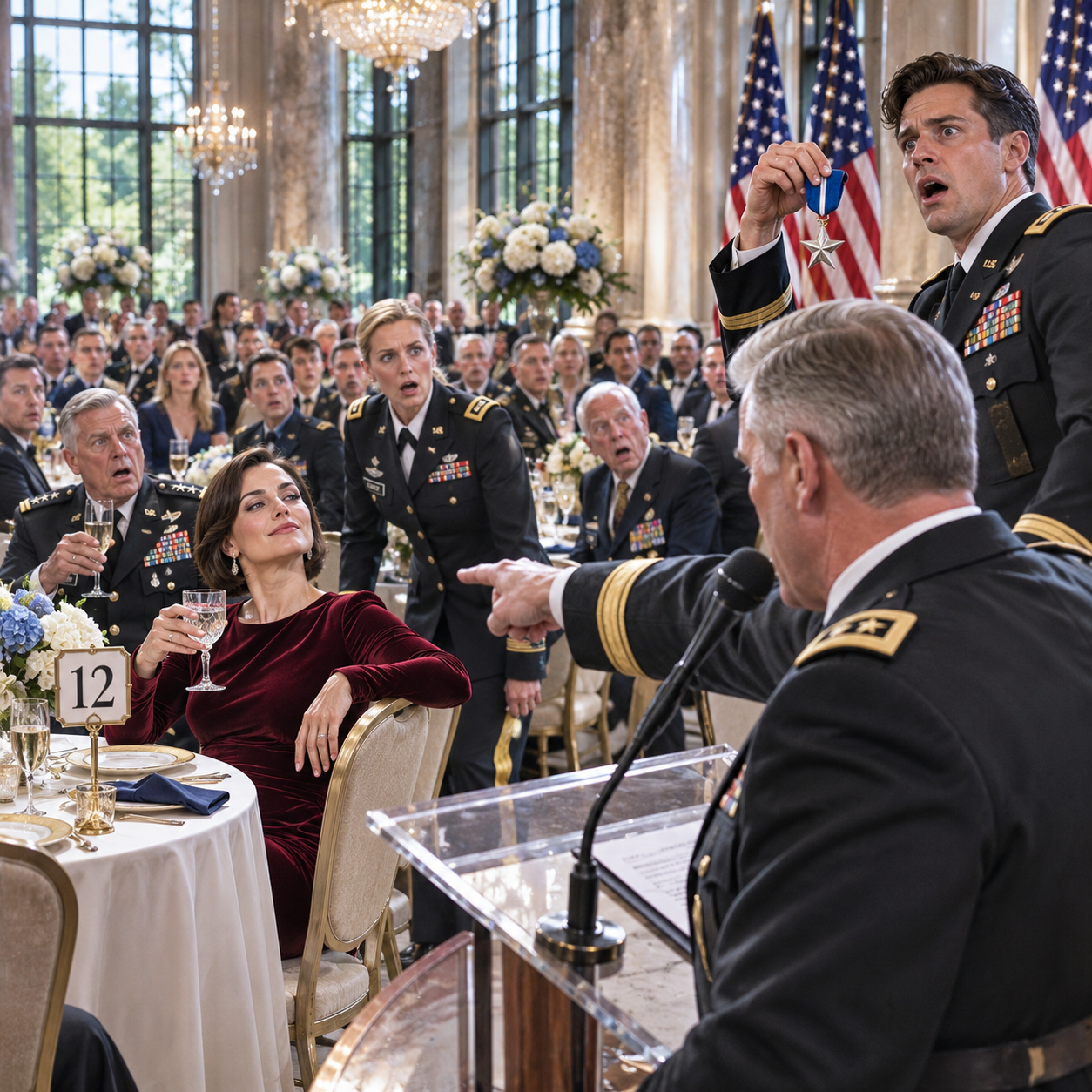
Then he rested a hand on the microphone and smiled toward our table. “My sister Maren enlisted with me,” he said. “We took very different roads. I learned what happens outside the wire, and she learned how to make the supply forms look pretty inside it.” Laughter rolled across the room, then added, “Some of us faced the mountains. Maren never even left the base.”
My mother’s laugh reached me through the applause, sharp and recognizable from every school auditorium of my childhood. Uncle Grant leaned toward me with a grin and said, “Don’t take it personally. He’s just being honest.” Across the table, Aunt Della pressed her palm onto my wrist. “Maybe next time skip the uniform,” she whispered. “You don’t want people thinking you’re trying to share his honor.” I quietly slid my hand away, careful not to spill the water glass between us.
I could still see Mercer at the head table, his silver hair reflecting the stage lights. He wasn’t laughing; he was looking at the printed program, where Everett’s planned remarks had been described as a tribute to every kind of service. My father was already speaking to a reporter, gesturing proudly toward the podium. I wondered whether any of them understood that a person could be humiliated without being surprised. I had spent eight years learning precisely what this family would do whenever a crowd gave it permission.
When the applause died down, Everett toasted our parents for teaching him that real courage meant stepping forward. I looked at his medal and remembered a voice in my headset three years earlier, asking again and again whether help was coming. Until that moment I had always separated the soldier who kept his people alive from the brother who made me feel small. Now he had put both men on the same stage, and I could no longer pretend they had nothing to do with each other.
The emcee returned to introduce Colonel Mercer, retired commander of a joint aviation task force. Mercer walked to the lectern holding a thin leather folder and waited until the last camera flash faded. He glanced at Everett, then at the back corner where I sat with my hands folded beneath the table. “Before I deliver the speech I prepared,” he said, “there is a correction this room needs to hear.”
Part 2
Mercer did not even raise his voice. “Captain Everett Vale earned his Silver Star,” he told the ballroom, “and nothing I say tonight diminishes what he did for his soldiers. But a public honor does not grant anyone permission to erase the people who helped make his survival possible.” My father’s smile stiffened, and I saw Everett shift in his chair without looking up.
Mercer opened his folder and explained that a portion of the Sharal Valley mission record had recently been cleared for public release. The citation he held had passed its own security review, and he would speak only about what it authorized him to disclose. “The aircraft supporting that evacuation was carrying an electronic warfare team,” he said. “An officer aboard it restored a critical communications link while the aircraft was exposed to hostile fire. That link allowed rescue crews to reach thirty-four trapped soldiers.”
The entire room fell so completely quiet I could hear the ice machine behind the service doors. Onstage, the image of Everett’s smiling face remained enormous and bright, an accidental backdrop to someone else’s story. I could have kept looking at the tablecloth, but I watched him carefully instead. His expression changed from annoyance to concentration, then to fear. He recognized the valley, the lost radios, the helicopters arriving through fog, but not the name Mercer was about to say.
Three years earlier, I had been strapped into a windowless work station aboard a modified aircraft, following a line of broken transmissions over the mountain range. The cabin smelled of warm circuitry, coffee, and the rubber seals of our headsets. My crew partner, Ash Bennett, kept one hand against his earpiece while he searched for a usable signal. Far below us, an infantry patrol had stopped answering routine calls. Then someone came through the static yelling that two vehicles were disabled and the road was blocked.
At first, I didn’t know the patrol belonged to Everett. Our assignment was to keep communication pathways available for ground crews, not to collect the names of everyone using them. A voice eventually broke through with a position report, harsh and breathless, and I felt the shape of a familiar childhood argument inside a military call sign. Everett had always spoken faster under pressure. I leaned closer to my headset and asked Ash to repeat the unit identifier.
The valley was filling with interference, and weather had made visual contact unreliable. We had procedures for approaching that environment, and every one existed because crews had died when they confused urgency with certainty. Our aircraft commander asked for an assessment while another transmission reported wounded soldiers and dwindling medical supplies. I gave him the limits of what we knew and a narrower approach that might let us restore the link. He considered it for three seconds before saying, “Proceed. I’ll fly the airplane.”
I spent the next several minutes trying to distinguish useful signals from noise while the aircraft shook through rough air. Ash tracked the medical aircraft waiting beyond the ridge; I worked to connect ground reports to people who could act on them. A warning sounded, and the commander changed course abruptly, pressing my shoulder into the harness. I remember thinking that I had spent my whole life wishing Everett would take me seriously, and now I wanted only for him to survive without ever learning I was there.
The first clear message from the valley was a request for help with a man who could no longer stand. Then came a series of location reports, the shape of a safe corridor, and voices from rescue crews confirming they could finally hear each other. Nobody aboard our aircraft cheered. We kept working while helicopters descended through uncertain weather and lifted the wounded in separate loads. By the time the last transport left the valley, Ash had gone almost completely hoarse, and my fingers ached from gripping the console.
Mercer’s voice brought me back to the banquet. “That officer was Captain Maren Vale,” he said. Someone near the stage gasped, but I barely noticed because my mother’s hand had stopped halfway to her wineglass. Mercer stepped down from the riser and walked toward our table with a small velvet presentation case. “Captain Vale, your approved citation recognizes extraordinary achievement during aerial flight, under circumstances that have prevented public acknowledgment until now. It is my privilege to present your Distinguished Flying Cross.”
I stood because he had addressed me as an officer, not because I wanted five hundred strangers studying my face. Mercer handed me the case, returned my salute, and shook my hand with the firm, brief grip I remembered from operational briefings. A medic rose first, a woman with a cane who had been aboard one of those evacuation helicopters. Others followed, applause traveling toward us until even the kitchen staff were visible in the open doorway. My father sat still, his folded program crushed against his knee.
I thanked Mercer quietly and told him I wished Ash and the rescue crews could have stood beside me. “Their names are in the record,” he replied, “and they’ll be heard.” I didn’t open the case while cameras flashed; I knew what a decoration looked like, and I also knew what fear sounded like through a headset. Everett was watching me without blinking, his own medal suddenly dangling from his jacket like an object he didn’t recognize. For the first time, he looked unable to imagine an appropriate thing to say.
Afterward, I slipped into the corridor to escape the reporters, but a man with a stiff left knee was waiting beside the coat check. His name was Sergeant Wyatt Keene, and he had been one of the thirty-four soldiers pulled from the valley. He thanked me without smiling, then glanced toward the ballroom where Everett was being surrounded by relatives. “Your brother was brave after we got hit,” Keene said, “but somebody needs to ask why he took us down that road in the first place.”
Part 3
Keene didn’t tell me his theory in the hallway, and I was grateful. A banquet wasn’t the place to reconstruct a patrol route, especially one that had nearly killed the men involved. He handed me a card bearing his name and a Kansas phone number, then moved away when he heard Everett approaching. My brother stopped beneath a framed photograph of the civic center’s opening ceremony, his collar undone and his shoulders curiously narrow. “Maren,” he said, “I had no idea you were up there.”
“I know you didn’t,” I said, carrying my coat over one arm, the medal case heavy in my other hand. Everett rubbed his forehead and told me the radio operators had described our help as remote technical support. “If somebody had explained what you did, I never would have made that joke,” he said. “That’s exactly what bothers me,” I answered, watching his face lose its practiced expression; “you thought I deserved the joke until somebody important told you otherwise.”
He said I was making one bad sentence into a verdict on his character. I reminded him of the dinners, the reunions, and the morning he introduced me to his campaign adviser, retired Colonel Dean Markham, as his sister who typed reports. He insisted those comments had been affectionate, although he couldn’t name a single occasion when I’d laughed. When our mother appeared, she went directly to his side and said the colonel should have warned the family before creating a spectacle. Mercer was still inside accepting questions about the released citation, but apparently my uniform had become everybody’s problem again.
Dad found us by the glass doors with a local reporter at his elbow. “Let’s have a picture of both decorated Vales,” he said, already reaching to arrange our shoulders. I stepped outside, leaving him with his hand in the air. The parking lot smelled of rain on hot pavement, and beyond the streetlights I could see a gas station sign blinking above an empty highway. I sat in my rental car until the windshield cleared, then drove to the airport hotel instead of going back to my parents’ house.
By breakfast, the video of Everett’s remarks and Mercer’s response had spread beyond the county. A veterans’ association shared the full recording, including the part where Mercer insisted that Everett’s courage was genuine. Most news reports preserved that distinction, but shorter clips offered the easier story of a decorated brother humiliated by the sister he’d mocked. My phone filled with congratulations from strangers and explanations from relatives; even the people who once dismissed me now wanted photographs together. None of the explanations contained the words “I should have stopped laughing.”
My father’s message was the first I answered. He wanted me to record a joint statement saying the remarks had been harmless sibling humor and that the family was united behind Everett. I wrote back that I would not call a public insult harmless, and I would not participate in anyone’s political messaging. He responded with a screenshot of Everett’s campaign website, where a photograph of the two of us had appeared under the heading A FAMILY OF SERVICE. They hadn’t asked permission to use it; within an hour, I received a revised page without my face.
I called Mercer before returning to Virginia. He said the award announcement had been arranged through appropriate channels, but he regretted that its timing left me facing cameras and family arguments. “I expected a difficult conversation,” he admitted, “but not your brother using a military banquet for a comparison like that.” He was concerned about Keene’s comment, although he wouldn’t speculate about an operational decision without reviewing the record. He advised me to preserve anything Keene sent and to let the proper offices decide whether a formal inquiry was needed.
On my flight east, I remembered the valley as a collection of voices, not a map. I knew where the rescue aircraft had entered and where the surviving soldiers had been collected, but the reason the patrol occupied that stretch of road wasn’t part of my job. For years I had assumed the approach had been unavoidable, one more dangerous necessity in a place where danger was ordinary. Now a man who’d been on the ground was suggesting there had been another choice. I didn’t want that suggestion to be true, because I remembered how frightened Everett had sounded.
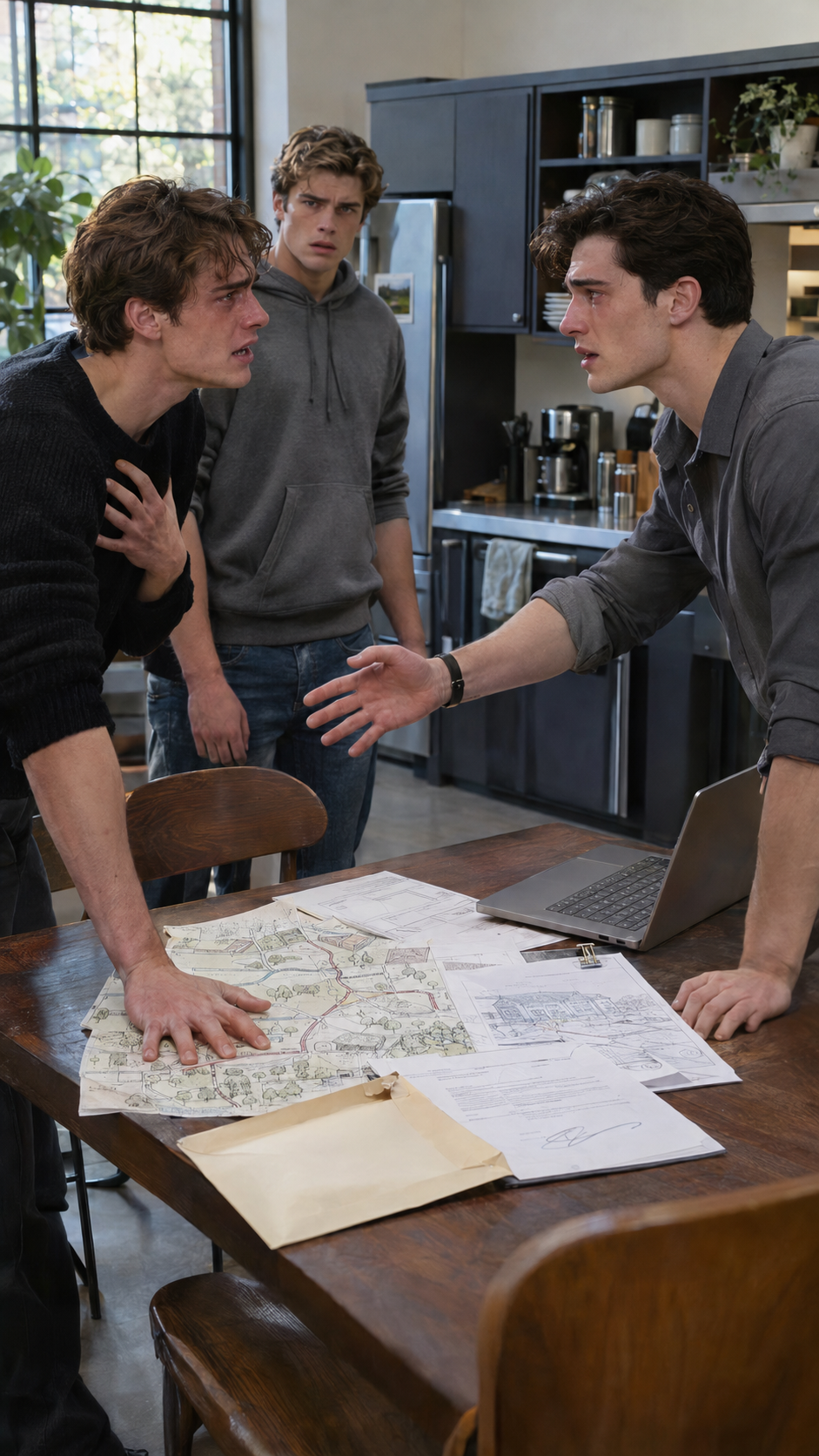
Eleven days after the banquet, a padded envelope arrived without a return address, although the postmark was from Wichita. Inside was a printed photograph of a mountain road splitting around a pale rock formation, a red circle surrounding the narrower branch. A note from Keene said he had taken the picture during a preliminary route survey and had received clearance to discuss his own recollection of that location. Beneath it, he had written, “The approved patrol route went left. We took the right fork.”
There was also a copy of an unclassified witness summary Keene had retained after the original investigation. His signature appeared beneath a statement that the patrol had diverted because poor visibility concealed the primary road, but a handwritten margin note challenged that explanation. I called him, and he answered on the first ring. “I didn’t write that sentence about visibility,” he said. “I reported that Captain Vale ordered the shorter road after we warned him it wasn’t cleared; somebody changed what went into the final report.”
I studied the inked red circle until the paper curled beneath my thumb. The document didn’t prove who had changed anything, and I knew better than to treat a surviving soldier’s memory as a completed investigation. But it changed what I understood about the disaster: the ambush might not have been a random piece of bad luck, and somebody had benefited from making it look that way. Then Keene named the officer who had approved the rewritten report: retired Colonel Dean Markham, a longtime family friend who now guided Everett’s campaign and had personally rehearsed his banquet speech.
Part 4
Dean Markham had eaten peach pie at our kitchen table while Dad complained about taxes. He sent birthday cards to Everett, attended his commissioning, and called me “the other one” when introducing us to visiting officers. During the Sharal Valley deployment, Markham had been a senior officer responsible for reviewing field reports before they moved up the chain of command. He first suggested Everett could build a civilian political career from his military service. I had never put those facts together because I had no reason to.
Keene didn’t want me to post the photograph or confront Markham. He wanted an official review of his account, and he had already spoken to two other soldiers who remembered warning Everett about the right fork. “We could have been ambushed on the other road too,” he said. “I can’t tell you it would have been safe. What I know is that I told him it hadn’t been checked, and the report made it sound like weather forced us there.” His precision made me trust him more than any accusation would have.
I quietly passed the material to the appropriate Army office through my legal adviser and gave a statement limited to my own role. I couldn’t testify to a decision made on the ground, and I refused requests from reporters who wanted me to declare that Everett had caused his own rescue. Investigators could examine contemporaneous messages and archived planning records. My job was to answer their questions accurately, then step out of their way. I had been trained to distinguish a signal from interference, and public anger could be interference too.
Two weeks later, my mother called while I was eating dinner over the sink. She didn’t ask how I was; she said my father’s friends were reconsidering donations to Everett’s county commissioner campaign. I told her campaign fundraising wasn’t something I could solve. “You know your brother didn’t mean it,” she said, her voice shaking. “The public is punishing him for a joke, and you could stop it.” I set my plate down and asked when she had last told Everett to stop making those jokes himself.
She was silent long enough for me to hear a television commercial playing behind her. Finally she said, “You always were harder to celebrate.” She sounded tired, almost surprised by the admission, as if she’d expected the sentence to stay inside her head. I asked what she meant, and she said Everett brought home things people understood: trophies, photographs, speeches, a medal the whole county could admire. I thought about my grandfather asking whether I’d slept enough, and realized how little of my life my mother had ever been curious about.
The next morning Dad emailed a proposed joint statement titled Family Moving Forward. He had attached an old draft of Everett’s banquet remarks to show me that the comments had been planned as “gentle sibling teasing.” The attachment included its revision history, and one comment from Markham appeared beside the sentence about my never leaving the base: “Keep the contrast. His courage reads better against familiar office work.” Below it, my father had written, “Maren won’t make a public fuss. She never does.”
I stared at that note longer than I had stared at the mountain photograph. My parents hadn’t known what I’d done in the valley, and that ignorance was real, but they had knowingly used the limitations on my speech as a way to build Everett’s reputation. I worried Markham had brought the same instinct to an operational report, turning complexity into a cleaner narrative about a promising officer. I forwarded the draft to my legal adviser, not because the banquet joke proved anything about the patrol, but because it showed a relationship that the reviewers deserved to understand. Then I told Dad not to contact me about statements again.
A week later, an investigator asked to speak with me about Markham’s professional connection to my family. I explained the holiday dinners, the introductions, and his recent campaign role without offering a theory about why he had approved the earlier report. She said other witnesses had provided compatible accounts of the route warning, but no finding had been made. I hung up and watched rain run down the windows of my apartment. I wanted a neat conclusion that would finally embarrass Everett.
I called Ash that evening because he knew how to interrupt my worst habits. He listened, then reminded me of the wounded soldier whose call had first reached our aircraft. Her name was Lena Brooks, and she had lost most of the movement in one ankle after the evacuation. “She doesn’t need another public fight about who gets the credit,” Ash said. “She needs people to remember the cost without inventing the parts they don’t know.” He was right, and I went to bed without sending the angry message I’d drafted to Everett.
The official review continued quietly, but the political campaign became noisy. Two veterans withdrew endorsements after hearing Keene describe the missing warning, and Markham resigned as campaign adviser, citing a desire not to distract from the election. Everett issued a statement that his Silver Star reflected his conduct during the ambush, not the decision that preceded it. That was true, and I appreciated his saying it even though he offered no apology to his soldiers. For once, the distinction between bravery and judgment was being discussed without my involvement.
Then Everett called me from a number I didn’t recognize. His voice sounded much as it had on the radio in the valley: clipped, exhausted, determined to remain in control. “They’re asking me about a warning I don’t remember hearing,” he said. “Markham says we were following a revised plan.” I asked him whether he was calling because he wanted to know what happened or because he wanted me to say something that would protect him. He didn’t answer, and in that silence I realized he still believed my job was to rescue him from consequences.
Part 5
The review took four months, until the banquet video faded and spring arrived. I learned most of its findings from an official summary, not from gossip or a sympathetic reporter. Records confirmed that Everett’s patrol had been directed toward the main route and that a warning about the shorter road reached his radio network before the turn. A surviving transmission also captured his acknowledgment and his order to continue. The investigators didn’t need my feelings about him to establish any of that.
The inquiry found that Markham had approved an inaccurate account describing the diversion as a response to poor visibility. Keene’s warning had been removed from a later summary without his consent. The service corrected its historical record and referred the handling of those documents for further administrative review. Everett’s Silver Star remained valid, because it honored what he did after the ambush began. None of that erased the damaged legs, the frightened voices, or the danger his decision had helped create.
Everett withdrew from the county commissioner race three days after the findings became public. His brief announcement still sounded like Markham, who no longer worked for him. My father blamed the news coverage and the veterans who had spoken up; Mom said it was cruel to take a man’s future away over one mistake. I asked her whether she meant the road, the report, or the humiliation at the banquet. She said I knew exactly what she meant, and I realized she didn’t know herself.
Mercer invited me to a small gathering of surviving crew members and medics at a veterans’ center outside Kansas City. There were no chandeliers, no politicians, and no photographers waiting beside the entrance. Ash brought a tray of cinnamon rolls, and the medic with the cane introduced herself as Naomi Pierce before admitting she’d been the one who stood first at the banquet. Lena attended with her husband and joked that she still hated helicopters, although she was grateful for every one that reached the valley. Nobody asked for a speech about heroism.
We sat around folding tables covered with paper napkins, trading memories that didn’t fit into citations. Ash remembered dropping a pencil beneath his station and being unable to retrieve it until we’d landed. Naomi remembered a young soldier apologizing for getting blood on the stretcher. Lena remembered asking the medic whether someone could call her mother, then hearing that the radio was working again. When she reached across the table and squeezed my hand, I didn’t feel like a secret finally revealed. I felt like one person among many who had done what they could.
I saw Everett once more that summer, by accident, at my parents’ house. I’d come to collect my grandfather’s toolbox, which Dad had agreed to leave on the porch, but Everett was sitting on the front steps with a cup of coffee. His hair was shorter than I remembered, and he looked tired without appearing smaller or nobler. He stood when I approached and said he had been waiting for an opportunity to speak without cameras. I told him he had five minutes, then set the toolbox beside my car.
“I heard the warning,” he said, looking at the driveway. “I thought we could save time, and afterward I couldn’t stand the idea that I’d put everyone there.” He said Markham had offered to simplify the account and he’d let him, then persuaded himself that the version people praised was close enough to the truth. For a moment I saw the boy who used to rush ahead of me on icy sidewalks, furious whenever he slipped. But we weren’t children, and thirty-four people had followed him onto that road.
“You were brave when they needed you,” I told him. “You were wrong before that, and you let other people carry the cost of pretending you weren’t.” Everett nodded and said he was sorry about the banquet, the report, and the years he’d treated my silence like an invitation. I believed he meant it, which was different from wanting him back in my life. When he asked whether we could begin again, I said, “Not now, and I’m not asking you to wait. You have people to make things right with besides me.”
My mother came to the doorway as I lifted the toolbox into the trunk. She called my name in the voice she used when guests were listening, asking whether we could at least take a family picture while everyone was together. I closed the trunk and told her I was leaving. She looked bewildered, not angry, and I suspected that hurt her more than an argument would have. There had never been a photograph in our house where the two of us were allowed to be separate people, and I wasn’t interested in making another.
That fall I accepted an assignment training new aviation officers in Colorado. My balcony faced a parking lot and foothills that turned violet at sunset. I put my grandfather’s toolbox beneath the kitchen counter and hung one photograph from the Kansas City gathering beside the front door. The medal stayed in its case, not hidden, just no longer required to speak for me. Sometimes students asked why I insisted they learn the names of the people on the ground, and I told them that voices mattered even when they came through static.
On my first Friday off, I made coffee, opened the balcony door, and listened to someone downstairs trying to start a stubborn old truck. My phone stayed quiet because I’d stopped answering calls from relatives who wanted me to make Everett’s life easier. I didn’t hate him; hatred would have kept our old argument alive, and I had other things worth my attention. He could keep his Silver Star, and I could keep the truth of what happened in the valley without making either one our family property. When the truck started, I smiled at the ordinary noise and went inside to begin my day.
THE END!
Disclaimer: Our stories are inspired by real-life events but are carefully rewritten for entertainment. Any resemblance to actual people or situations is purely coincidental.