For 3 years, my husband’s wealthy family treated me like a quiet middle-aged woman who had married above her station. His son mocked my “government desk job,” relatives whispered that I wanted their waterfront house, and my husband let every insult stand because correcting them was inconvenient. I paid bills, cleaned up their mistakes, and stayed silent. Then one morning, my arrogant stepson kicked open the wrong office door—and finally discovered exactly whose authority he had been laughing at.
### Part 1
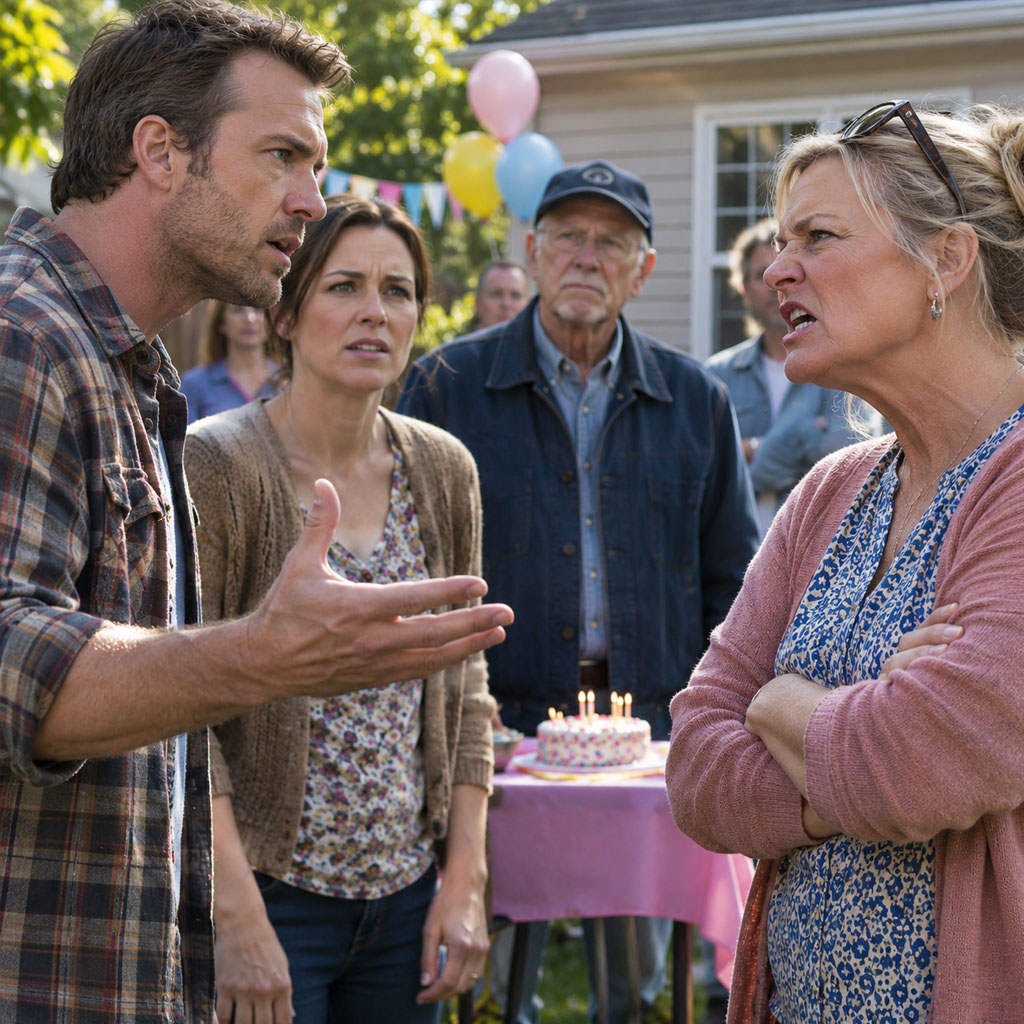
Three sharp taps of a silver spoon against crystal silenced the private dining room, and forty people turned toward Major Nolan Vale at the head of the long oak table. Roasted garlic, charred steak, melted butter, and expensive red wine hung heavily in the air while Nolan loosened his silk tie and lifted his glass toward me. “Some women marry for love,” he said, smiling without warmth, “and some women marry because waterfront property in Virginia is hard to resist.”
A few people gasped, but most simply stared at their plates, which somehow felt worse. Richard, my husband of three years, went pale beside me and tightened both hands around the edge of the table, yet he said nothing until the silence became unbearable. “Nolan has been drinking,” he finally muttered. “Nobody needs to make a scene.”
I looked at Richard instead of his son, because Nolan’s cruelty was familiar while Richard’s cowardice still had enough life in it to hurt me. His relatives resumed cutting into their steaks, forks scraping expensive porcelain as though somebody had just cleared an awkward appetizer from the table. I lifted my water glass, took one slow sip, and gave Nolan exactly what he deserved from me: nothing.
My left hand rested openly beside my plate, the pale scar across my knuckles visible beneath the chandelier light. Twenty-six years earlier, those same fingers had been burned against twisted metal while I tried to pull someone from a vehicle in a place Nolan had only studied on briefing slides. I had spent most of my adult life learning that loud men often confused silence with weakness right up until silence became the last thing they heard before consequences arrived.
Outside, the cold Chesapeake wind smelled of salt, wet wood, and dead sea grass. Richard followed me onto the patio after several minutes, rubbing the back of his neck like a schoolboy preparing an excuse. “You know Nolan,” he said. “He never got over his mother dying, and he thinks I remarried too quickly.”
“His grief isn’t permission to humiliate me.”
“I know.”
“No, Richard. If you knew, you would have said something.”
He stared toward the black water instead of answering, and that told me more than another apology ever could. I pushed both hands into my coat pockets and felt the old brass challenge coin I carried everywhere, its ridged edge pressing into my palm. Nolan believed I had stayed quiet because I feared losing Richard’s money, but what I was actually doing was measuring how much of this family was rotten and deciding whether anything remained worth saving.
The truth was that Nolan’s insult had not begun at dinner. Four months earlier, at three in the morning, I had been sitting barefoot at our kitchen island under the blue glow of my laptop, surrounded by hospital bills, storm-repair estimates, and bank statements. Richard had undergone a minor cardiac procedure, insurance had delayed reimbursement, and without telling anyone I transferred three thousand dollars from my personal retirement savings to cover what was due.
Nobody thanked me because nobody knew. That was how most of my contributions to the Vale family worked: silently, efficiently, without ceremony.
Two mornings later, Nolan arrived in a new sports car and dropped his keys onto the marble counter with a theatrical clack. He carried a bottle of wine, kissed his father on the cheek, and received a hug so enthusiastic that Richard looked ten years younger. “Thanks for making time,” Richard said proudly. “I know how busy you are.”
I stood at the sink drying a plate, remembering the three thousand dollars I had moved while both men slept comfortably. Nolan glanced at me once, barely nodded, then followed his father toward the study as if I were hired help. I finished the plate, folded the towel into a neat square, and went down the hallway with Richard’s prescription bottle.
The study door was open a few inches when Nolan’s voice stopped me. “Why do you even let her touch the joint accounts, Dad? She pushes government paperwork all day. What does she know about money?”
Richard sighed.
“She handles household things.”
“She’s waiting for you to die so she gets this house.”
I waited for my husband to defend me. What I heard instead was, “Your mother’s trust has always stayed separate. You know that. Claire can’t touch what belongs to you.”
The plastic bottle flexed beneath my fingers. I had just taken money from my future to pay his medical bills, and he was reassuring his son that I would never be allowed near their real wealth. I quietly placed the medication on Richard’s nightstand, returned to the kitchen, and looked around at the polished stone and coastal artwork with a strange new clarity.
It was the first moment I understood that I had mistaken usefulness for belonging.
Two days after Nolan humiliated me at the restaurant, I drove into Washington before sunrise. My office had none of the warmth of the Vale house: no family photographs, no decorative pillows, no expensive candles burning cedar and vanilla. There was a steel desk, secure cabinets, a wall clock, one black coffee mug, and thirty-five years of my life hidden behind locked doors that Nolan had never once been curious enough to ask about.
My deputy, Tessa Rowan, entered carrying a folder bordered with red security tape. “This came through overnight,” she said. “Priority review.”
I set down my coffee. “What happened?”
“You should read it yourself.”
The folder smelled of fresh toner and old paper. I opened it, scanned the first page, and felt every muscle in my body become completely still.
The subject line read: Major Nolan Vale.
I continued reading without moving anything except my eyes. By the third page, the insult at dinner no longer mattered, the house no longer mattered, and even my marriage seemed very far away.
Because Nolan had not merely been cruel to me.
He had used his authority against a young officer, and if the file was accurate, that young man might have only seventy-two hours left before Nolan’s revenge placed him somewhere he might never come home from.
For the first time since I married Richard, his family had crossed into territory where silence was no longer an option.
### Part 2
The young officer’s name was Owen Parker, twenty-five years old, six years younger than Nolan had been when Richard bought him his first luxury car. According to the complaint, Owen had challenged a dangerous operational decision after several people were injured during a failed assignment, and rather than admit responsibility, Nolan retaliated. He manipulated an evaluation, branded Owen unreliable, and pushed through a transfer to an isolated post everybody in the command knew had become dangerously unstable.
I read the file twice before touching the attached photograph. Owen had tired eyes, a crooked half smile, and the expression of somebody still young enough to believe that telling the truth would protect him. For a moment the hum of my air conditioner disappeared, and I was twenty-three again, kneeling beside wrecked equipment under a white foreign sky while a friend died because a senior officer had been too proud to admit his plan was broken.
That memory had built much of my career.
It was also why Nolan’s last name would buy him nothing from me.
At eleven that morning, Tessa entered without knocking and shut the door hard behind her. She dropped a tablet onto my desk, displaying an anonymous accusation already circulating online, then placed a copy of my marriage certificate beside it. “People know Nolan is your stepson,” she said. “And they think this office is sitting on the complaint because of you.”
I folded my hands. “Go on.”
Tessa’s jaw tightened. “If Owen gets sent out there while we protect Nolan Vale, I will resign and file directly with the Secretary’s office. I mean it, Claire.”
“Are you accusing me of burying this?”
“I’m telling you I won’t.”
Despite everything, pride warmed me for one brief second. Tessa was scared, furious, and prepared to sacrifice a career she had spent twenty years building because an innocent subordinate mattered more than loyalty to me. I had chosen my people well.
“If I recuse immediately and this goes downstairs,” I said, “Richard’s attorneys will identify the investigator by lunch. By dinner, that investigator will have three law firms threatening procedural challenges, and by tomorrow morning half the witnesses will be terrified.”
Tessa stared at me.
“You think I kept the file because Nolan is family?”
Her expression changed.
“I kept it because Richard has spent thirty years buying influence, and I’m one of the few people he cannot buy.”
I slid the marriage certificate back across the desk. “Prepare Nolan’s suspension package, preserve every communication connected to Owen’s transfer, and put an independent review team around the evidence before anyone learns what we know.”
Tessa slowly sat down. “You’re going after him.”
“I’m going where the evidence goes.”
That afternoon, the evidence went somewhere worse.
My secure phone flagged communications between Richard and three politically connected officials whose committees had influence over contracts held by Vale Strategic Systems, Richard’s company. I could not legally assume what was said without proper authorization, but the timing told me enough to worry. Nolan’s name entered our system at 8:14 that morning, and Richard began making calls before noon.
He never called me.
That night I parked two streets from our house and walked the final distance in cold drizzle. Through the partially open study door, I heard Richard on the phone saying, “My son’s administrative issue shouldn’t affect next quarter’s regional commitments. I’m sure we understand each other.”
I stood in the dark hallway and listened until he ended the call.
When I entered, Richard startled badly enough to spill bourbon across his desk. “Claire. You’re home late.”
“Busy day.”
He recovered quickly and smiled. “That little government office still squeezing every ounce of energy out of you?”
Richard knew I had spent decades in uniform. He knew my current position was senior, sensitive, and not something I discussed casually, but he had never cared enough to understand what I actually did. Over the years, he had reduced everything he did not understand into the phrase “government paperwork,” and Nolan had eagerly accepted that version of me.
“You should retire,” Richard continued. “Let me take care of you.”
I looked at him for a long moment. “Would that make your life easier?”
He laughed. “Of course. You work too much.”
“That isn’t what I asked.”
His smile faded slightly.
I walked upstairs before my anger could become useful to him. Inside my home office, I locked the door, opened my secure terminal, and reviewed Owen’s movement schedule. His transfer had been accelerated.
Six hours.
Someone wanted him gone before the complaint could mature into a formal case.
At 2:07 a.m., the independent review panel returned its preliminary authorization. I removed my fountain pen from the drawer, read every line once more, and signed the emergency order suspending Nolan’s command authority pending investigation. The second order halted Owen’s transfer and placed him under protective reassignment while investigators preserved evidence.
My hand did not shake.
Twelve minutes later, a secure confirmation appeared.
Parker transfer canceled. Subject secured.
I leaned back and finally allowed myself one deep breath. Whatever happened to my marriage, whatever Richard did next, Owen would be alive long enough to tell the truth.
At 9:18 the next morning, Nolan received his suspension notice while playing golf at a private club in Northern Virginia. According to security logs I read later, he attempted to call Richard nine times before driving straight toward Washington. By 10:41, his access card had been restricted.
At 10:46, he used it anyway.
My assistant called from the outer office. “Ma’am, Major Vale is here, and he is refusing to wait.”
“Let him in.”
“I don’t think he plans on asking.”
Through the wall I heard shouting, a chair scraping, and someone saying, “Sir, you cannot go through that door.”
Then came three heavy footsteps.
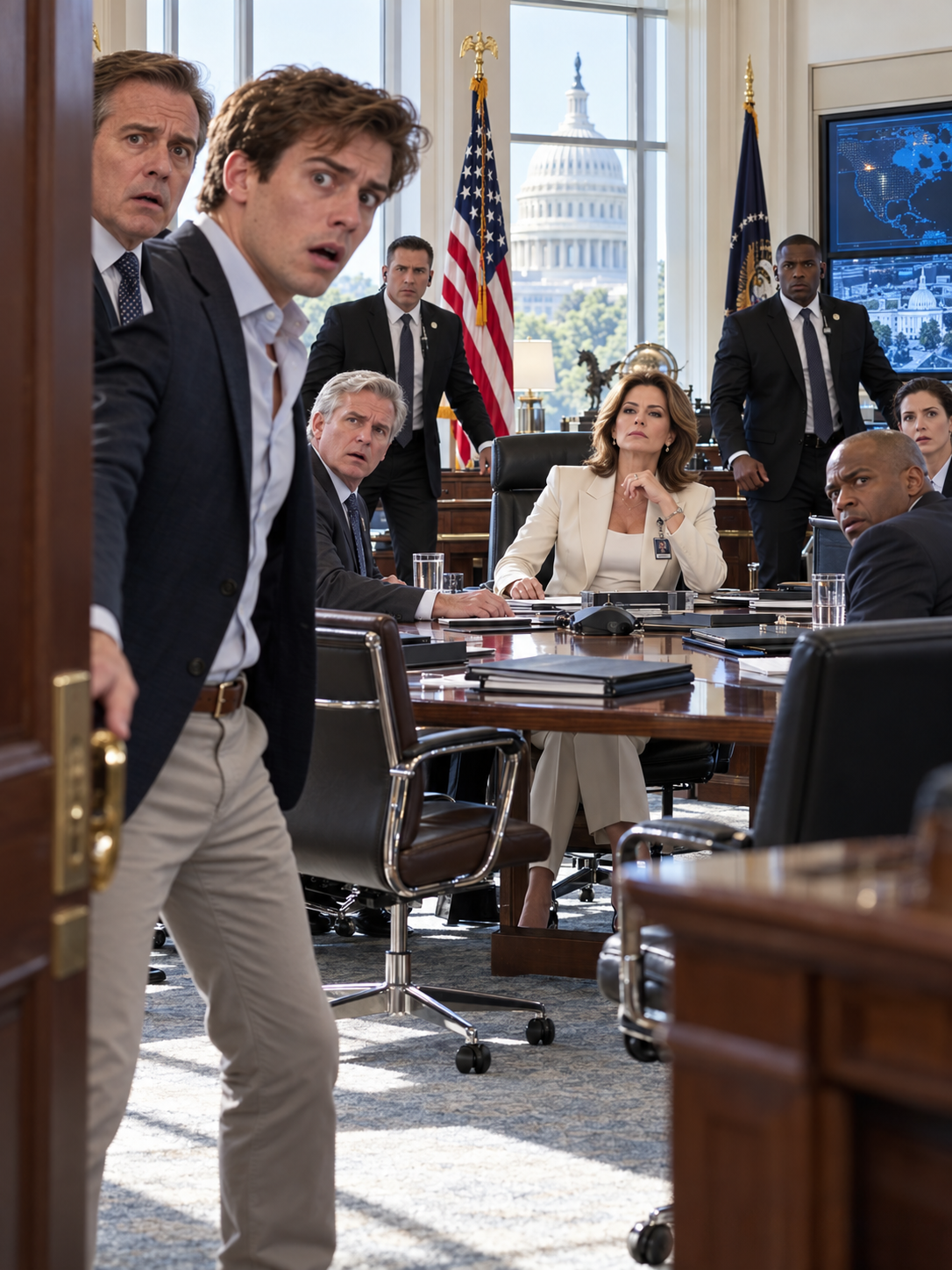
A second later, Nolan kicked my office door open so hard it struck the wall.
“Who the hell signed this order?” he shouted.
For three years, that man had never once asked what I did for a living.
He was finally about to find out.
### Part 3
Nolan stood in my doorway wearing golf pants, expensive shoes, and the expression of a man who had spent his entire life believing locked doors were meant for other people. Two security officers stopped behind him, but I lifted one hand and they held position. Nolan looked across the room, saw me behind the desk, and actually laughed once in disbelief.
Then I stood.
I was not wearing the cardigan he had seen me fold laundry in, nor the old jeans I wore when I cleaned storm debris from the yard. That morning I had attended a formal command review, so my dark service uniform was still immaculate, ribbons aligned across my chest and three silver stars visible on my shoulders.
The laughter died in Nolan’s throat.
I watched his eyes move from the stars to the command insignia behind my desk, then to the red-edged investigative folder bearing his name. His face lost so much color that for one strange second I thought he might faint.
“Major Vale,” I said, “you entered a restricted office after being instructed to stop.”
His mouth opened.
Nothing came out.
“You also used credentials after receiving notice that your access had been suspended. Security will document both actions.”
“Claire?”
“In this office, you will address me appropriately.”
His gaze returned to my rank.
“Ma’am,” he whispered.
That single word contained more humility than anything I had heard from him in three years.
I did not enjoy it.
Power used for humiliation was exactly what had brought him into my office in the first place, and I had no intention of becoming him just because the balance had reversed. I pointed toward the chair across from my desk and said, “Sit down.”
He obeyed.
For the next twenty minutes, I explained only what procedure allowed me to explain. He was suspended, the allegations involved retaliation and falsified records, Owen had been removed from immediate danger, and an independent team would determine whether additional administrative or criminal referrals were warranted. Nolan tried twice to mention his father, and both times I stopped him.
“Your father has no rank here.”
“You don’t understand what this will do to him.”
“This is not about him.”
“He can fix—”
“That sentence is exactly why you are sitting in that chair.”
Nolan stared down at his hands.
The arrogant man from the restaurant was gone, but remorse had not replaced him yet. He was simply frightened.
When security escorted him away, I looked at the dent his shoe had left near the bottom of my office door. I remembered his wineglass pointing at me while forty people watched him call me a gold digger, and I felt almost nothing.
That surprised me.
I had imagined vindication would feel hot.
Instead, it felt quiet.
Richard was waiting when I reached the house that evening. His shirt was untucked, a half-empty glass sat beside him, and the front door had been left open despite the rain.
“You destroyed my son.”
I removed my coat. “No. Nolan made decisions. Those decisions are being reviewed.”
“You signed the suspension.”
“Yes.”
“You could have warned me.”
“That would have been misconduct.”
“I am your husband!”
“And Owen Parker is somebody’s son.”
Richard slammed his palm against the kitchen island. “I had this under control.”
I looked at him. “With three phone calls?”
His face changed.
That was when he understood I knew.
“I was protecting my family.”
“You were protecting Nolan from consequences.”
“You don’t know how Washington works.”
For the first time in our marriage, I laughed at him.
It was not a pleasant sound.
“Richard, you married a woman who spent thirty-five years in the system you keep explaining to her.”
He paced toward the window, then back. “Nolan made a mistake. Young officers make mistakes.”
“Then he retaliated against the man who reported it.”
“He panicked.”
“He used authority to place another person in danger.”
Richard stopped moving. “He is our family.”
“No. He is your son, and I cared about him enough not to help him become worse.”
Richard stared at me as if I had spoken another language. To him, love had always meant insulation: money covering mistakes, connections closing investigations, expensive apologies replacing accountability.
“You owe this family loyalty,” he said.
“I gave this family loyalty. You confused it with obedience.”
His voice dropped. “Then get out.”
I walked to the cabinet beside the refrigerator, removed a folder I had prepared months earlier, and placed a property statement on the island. “I paid half the purchase price when we bought this house, and both names are on the deed. If you want to leave tonight, that is your choice.”
His eyes moved across the document.
“You planned this?”
“I started protecting myself the day I overheard you reassuring Nolan that I could never touch what ‘really belonged’ to this family.”
Richard looked genuinely wounded, which almost made me angry again. He had expected every insult to disappear simply because he had not personally spoken all of them.
I removed my wedding ring.
The gold felt surprisingly light.
“I also spoke to an attorney this afternoon.”
His face collapsed. “Claire.”
“This marriage is over.”
“You’re divorcing me because I defended my son?”
“I’m divorcing you because when your son tried to destroy an innocent man, your first instinct was to buy enough influence to make the truth disappear.”
I placed the ring beside his glass.
Richard left that night.
Two days later, Nolan appeared on my porch during a freezing rainstorm. He looked terrible, with dark circles under his eyes and no trace of the polished confidence he usually carried like another piece of expensive clothing.
“Can I come in?”
I nearly said no.
Then I stepped aside.
We sat at the kitchen island where he had once dropped sports-car keys beside the bills I quietly paid. I gave him a towel and black coffee, then waited.
“I know what Dad did,” Nolan said eventually. “I know about the calls.”
I said nothing.
“I also know Owen’s statement was true.”
His fingers tightened around the mug.
“I changed the evaluation because I was scared. He had warned me. I ignored him, things went wrong, and when he reported it, I thought he was trying to destroy my career.”
“So you tried to destroy his first.”
Nolan flinched. “Yes.”
Rain rattled hard against the windows.
“I hated you,” he whispered. “Not because I thought you wanted Dad’s money. That was just what I told myself.”
“Then why?”
“Because Dad respected you in ways he never respected me.”
I almost laughed, because Richard’s behavior had not felt much like respect.
Nolan continued. “You built everything yourself. I knew that much. Dad bought me schools, apartments, cars, introductions, my first consulting contacts. Every time I looked at you, I knew what I would be without him.”
“That sounds like something you need to solve.”
“I know.”
He looked up, eyes wet but steady.
“Do you forgive me?”
“No.”
His face tightened.
I did not soften the answer.
“Forgiveness is not a prize you receive because you finally understand what you did. You tried to ruin Owen’s career and publicly humiliated me for years. You will live with both.”
Nolan swallowed. “Do you think I can change?”
“That is a different question.”
He waited.
“Yes,” I said. “But nobody owes you trust while you prove it.”
For the first time since I had known him, Nolan nodded without arguing.
### Part 4
The investigation lasted months, which was exactly how legitimate investigations usually worked despite television convincing people otherwise. Nolan’s command authority remained suspended while independent investigators reviewed messages, evaluations, transfer records, witness statements, and the operational failure that had started everything. He eventually admitted altering portions of Owen’s assessment and accepted responsibility before the evidence forced him to.
His career did not survive intact.
He lost his command position, received a formal reduction in responsibility, and was placed in a tightly supervised administrative assignment while the final disciplinary process ran its course. Richard offered him a senior position at Vale Strategic Systems within forty-eight hours.
Nolan refused it.
I learned that not from Nolan but from Tessa, who appeared in my doorway one Monday morning with a progress summary. “Your stepson reports to Records Annex Four at six-thirty every morning,” she said. “No private office. No staff. Mostly compliance reviews and archived case files.”
“Former stepson soon.”
Tessa smiled faintly. “How is the divorce?”
“Expensive.”
“That sounds like Richard.”
“It sounds like lawyers.”
My coffee had gone cold, and the first autumn rain streaked the windows behind her. I had moved temporarily into a small furnished apartment near Alexandria because living in the Chesapeake house felt like sleeping inside somebody else’s argument. Richard remained in a corporate rental while our attorneys negotiated the property division.
He sent flowers twice.
I donated them both times.
Then he sent an antique watch with a handwritten card saying, We can still save what matters.
I returned it unopened.
Money had always been Richard’s universal solvent. He believed enough of it could dissolve anger, embarrassment, legal risk, even betrayal. What he had never learned was that some things did not need to be repaired; they needed to end.
Owen Parker visited my office during the fifth month of the investigation. He wore civilian clothes while temporarily assigned outside Nolan’s old command and looked older than his photograph, though his crooked half smile remained.
“I wanted to thank you,” he said.
“You don’t owe me thanks.”
“I would have been on that transfer.”
“Yes.”
He rubbed his palms against his jeans. “Major Vale contacted my attorney.”
That got my attention.
“He apologized. No excuses. My attorney recorded everything.”
“How did you respond?”
“I told him an apology didn’t restore the year he nearly took from my career.”
“Good.”
Owen blinked, then laughed.
“He said the same thing.”
That evening, I sat alone in my apartment eating takeout noodles from the carton while traffic hissed over wet pavement below my window. Nolan had begun changing, but his improvement did not rewrite what he had done, and I refused to turn accountability into a sentimental redemption story because that would cheapen Owen’s experience. People could become better without their victims being required to celebrate them.
Richard, meanwhile, became the subject of a separate ethics inquiry concerning efforts to influence officials connected to his company’s contracts. I had no role in it and insisted on receiving no unofficial information. When reporters called my office, Tessa gave them the same answer every time: Lieutenant General Claire Mercer does not comment on matters outside her jurisdiction.
That was when the dinner crowd finally learned who I was.
The people who had watched Nolan call me a gold digger began sending messages.
The mayor’s wife wrote that she had “always admired my composure.” One of Richard’s cousins claimed he had never believed the accusations. Two business partners suddenly remembered how “impressive” my career was.
I deleted every message.
Their respect arrived only after my title became useful to them.
Six months after Nolan kicked open my door, Richard appeared outside my apartment building. He had lost weight and wore an ordinary blue shirt instead of one of his custom suits.
“I won’t stay,” he said when I stepped outside. “I just wanted to tell you I’m sorry.”
I waited.
“I knew more about your work than I let Nolan believe,” he admitted. “Not everything. But enough.”
The last bit of doubt inside me disappeared.
“Why?”
Richard looked toward the street. “Because Nolan already felt insecure around you. I thought minimizing your career would keep the peace.”
“You allowed him to disrespect me so he could feel bigger.”
“Yes.”
“And at dinner?”
“I froze.”
“No. You made a choice.”
He closed his eyes.
“I know.”
A taxi splashed through a puddle behind him, sending water across the curb. Richard did not ask me to withdraw the divorce, and I appreciated that small piece of growth.
“Can you forgive me someday?” he asked.
“I hope someday I can remember you without being angry.”
His expression fell.
“That is not the same thing.”
“I know.”
“No, Richard. I don’t think you do.”
I stepped closer so he could hear me over the rain. “Forgiveness would not rebuild the marriage. Trust is gone, and I will never again live in a home where somebody must shrink so another person can feel important.”
He nodded once.
Then he walked away.
Our divorce became final three weeks later.
I signed the papers at a plain conference table, drove back to my apartment, and slept eleven uninterrupted hours.
The next morning, Tessa placed another report on my desk.
Nolan’s supervisor had written only one unusual sentence beneath the formal evaluation.
Major Vale is finally learning to listen before he speaks.
I read it twice.
Then I filed it away.
He was changing.
But what interested me more was whether he would keep changing after nobody was watching.
### Part 5
Eight months after Nolan kicked open my office door, I sold my share of the Chesapeake house to Richard under the divorce settlement and bought a smaller place thirty minutes south, where the backyard sloped toward a narrow inlet lined with reeds. The kitchen counters were cheaper, the guest bedroom was smaller, and the roof did not leak. I loved it immediately.
For the first time in years, every object in my home belonged there because I had chosen it.
No one threw car keys onto my counter.
No one expected me to quietly refill accounts after reckless spending.
No one called my career a hobby.
On the first warm Sunday of summer, I invited Tessa, Owen, several old military friends, two neighbors, and a handful of people I actually liked to a backyard cookout. Nolan was included, though I made no special announcement about it. He arrived early in an old sedan carrying folding chairs and two bags of charcoal.
“You bought a normal car,” I said.
He looked at it. “Apparently they make millions of them.”
I almost smiled.
Nolan had been permitted to remain in service under strict conditions after accepting disciplinary action and completing a lengthy accountability program. He would never recover the fast-track career Richard had once envisioned for him, and he understood that. He had also stopped asking whether I thought he had been punished enough.
That mattered more than his apologies.
Owen arrived an hour later.
The yard went strangely quiet when the two men saw each other.
Nolan set down the bag of ice he was carrying. “Owen.”
“Major.”
“You don’t have to call me that.”
“I know.”
For several seconds, neither moved.
Then Nolan said, “I’m not going to ask you to forgive me.”
Owen nodded. “Good.”
“I just wanted you to know I won’t ever dispute what happened.”
“Good.”
Another silence.
Owen pointed toward the cooler. “Those beers cold?”
“Probably.”
“Then quit blocking them.”
They did not shake hands.
They did not hug.
They simply walked toward the cooler together, two men carrying history that might never become friendship.
That felt more honest than reconciliation.
By late afternoon, smoke from the grill mixed with salt air while children from next door chased a foam ball along the fence. I wore faded jeans and an old gray shirt, holding metal tongs in one hand while Tessa argued with a retired colonel about whether my burgers were criminally overcooked. For once, nobody needed anything from me except mustard.
A familiar voice behind the picnic table changed the mood.
Richard’s cousin Barrett had come with another guest, and I had reluctantly allowed him to stay. He had been present at the restaurant months earlier, one of the men who lowered his head and kept eating while Nolan humiliated me.
Barrett opened a beer and glanced toward me.
“I still think all this attention is ridiculous,” he muttered. “Claire works in oversight. People act like she won a war by herself.”
I heard him.
Before I could decide whether he deserved an answer, a plastic tray hit the table with a hard clack.
Nolan had set it down.
He turned toward Barrett. “Stop.”
Barrett blinked. “Excuse me?”
“You heard me.”
“Nolan, I was joking.”
“No. That’s what I used to say after insulting her.”
The conversations around us faded.
Nolan did not raise his voice.
“My stepmother served this country for more than three decades. She built her career without my father’s money, his friends, or his last name. When I abused my authority, she protected the man I targeted even though exposing me blew up her own marriage.”
Barrett’s face reddened.
Nolan continued. “I spent years calling her a gold digger because admitting what she had accomplished made me feel small. That was my failure, not hers.”
Nobody moved.
“She never needed our money,” he said. “And she definitely never needed our approval.”
I looked at Nolan across the yard.
Months earlier, I had wanted him to understand exactly how little he knew about me.
Now he finally did.
I gave him one quiet nod and turned the burgers.
That was enough.
After sunset, the guests slowly left. Owen helped Tessa carry containers to her car, my neighbors collected their children, and Nolan stayed behind to fold chairs and drag trash bags toward the garage.
Richard arrived just as Nolan was leaving.
He stopped at the bottom of the driveway.
I had not invited him.
“I’m not here to cause trouble,” he said. “Nolan told me everyone was getting together.”
“He shouldn’t have.”
“I asked.”
I waited.
Richard looked toward my small house and smiled sadly. “This suits you.”
“It does.”
“I’m glad.”
He held out a thin envelope.
“My attorneys finished the remaining paperwork from the sale. Nothing personal inside. I promise.”
I accepted it.
Richard remained there for another moment, hands in his pockets. He looked older without the armor of tailored clothing and certainty.
“I heard what Nolan said today.”
“You were listening?”
“From the driveway.”
I said nothing.
“He became a better man because you refused to save him from himself.”
“He became better because he decided to do the work.”
Richard nodded. “You always do that. Give people responsibility for their own choices.”
“Someone has to.”
His eyes met mine.
“I still love you.”
The old version of me might have felt obligated to soften what came next.
That woman no longer lived here.
“I believe you.”
A small hope appeared in his face.
I let it die cleanly instead of cruelly.
“But your love came with conditions I will never accept again.”
Richard swallowed.
“I know.”
“I hope you build a better life. I mean that.”
“Just not with you.”
“No.”
He nodded slowly.
Then, for once, Richard Vale accepted an answer money could not change.
He walked back to his truck.
I did not call after him.
The following Monday, I arrived at my office before seven. Morning light reflected coldly off the steel desk, and somebody from maintenance had finally repaired the damage Nolan’s shoe left on my door.
Tessa brought coffee and dropped a folder in front of me.
“Routine review.”
“Those exist?”
“Occasionally.”
I opened it.
No family names.
No political pressure.
No young officer being punished for telling the truth.
Just work.
At lunchtime, my phone buzzed with a message from Nolan.
Starting leadership training today. Supervisor says I talk too much.
I stared at the screen for a second.
Then I typed back.
He’s right.
Three dots appeared.
Fair.
I put the phone facedown and returned to the file.
People sometimes ask whether revealing my rank was the moment everything changed.
It wasn’t.
The uniform shocked Nolan, but authority had never been the real secret.
The real secret was that I had spent years believing strength meant enduring disrespect without complaint. I had mistaken patience for duty, sacrifice for love, and silence for peace.
Kicking open my office door did not reveal who I was.
It forced me to remember.
I was Claire Mercer, and before I became Richard’s wife, Nolan’s stepmother, or anybody’s convenient solution, I had built a life with my own hands. I had survived failures, buried friends, commanded people, made mistakes, learned from them, and earned every inch of ground beneath my feet.
Nobody was ever going to make me smaller again.
That night, I drove home while the sun faded across the Virginia water. I unlocked my own front door, poured a glass of ice water, and stood alone in a kitchen that smelled faintly of charcoal from yesterday’s cookout.
The silence felt different now.
It was not punishment.
It was peace.
And I had finally learned the difference.
THE END!
Disclaimer: Our stories are inspired by real-life events but are carefully rewritten for entertainment. Any resemblance to actual people or situations is purely coincidental.