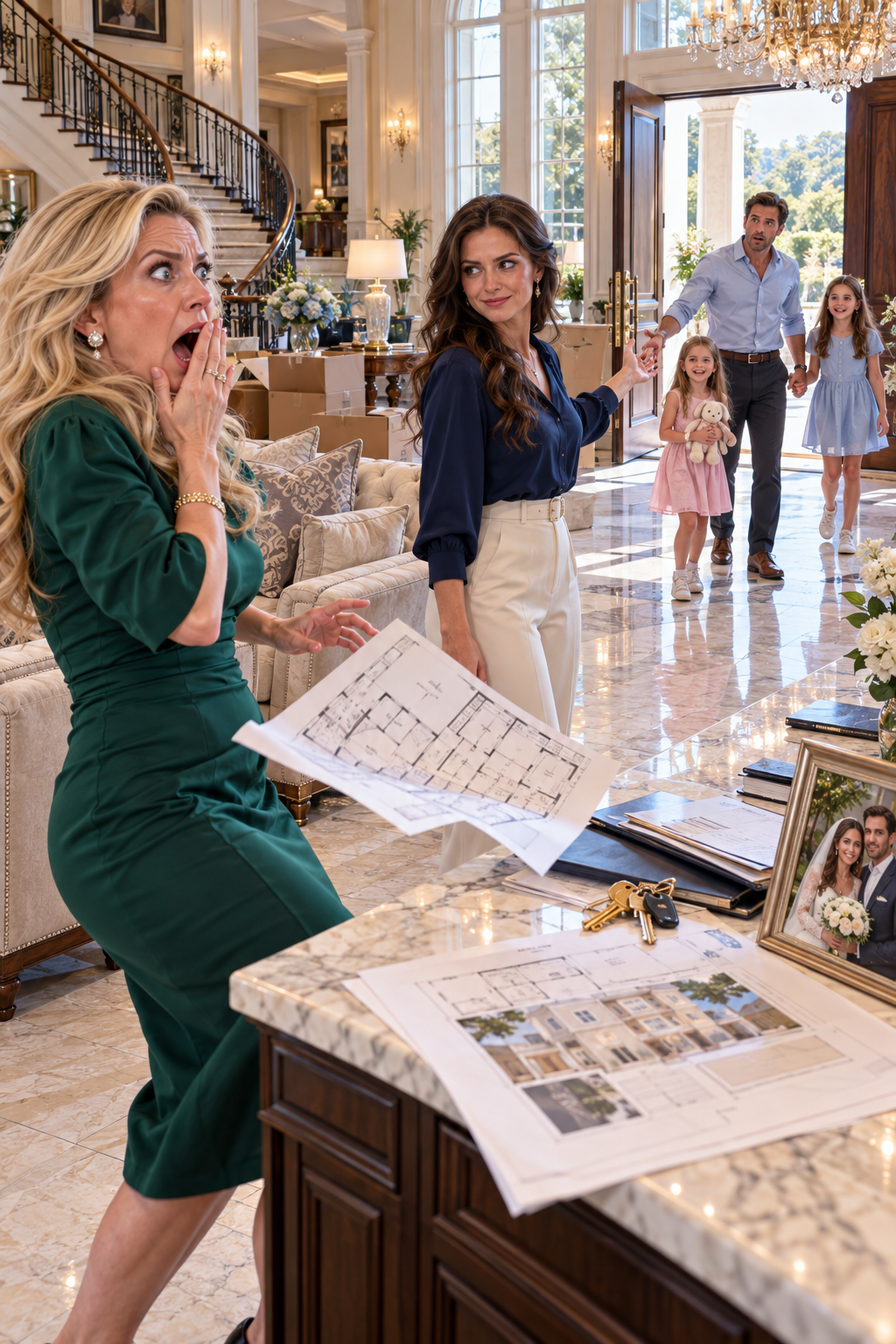
“What A Gorgeous Layout!” Sister Said. “And The Guest Wing—Perfect. Your Brother’s Family Moves In Friday. She Never Comes Home Anyway.” Then My Husband Walked In With Our Two Daughters. Sister Went Pale. “Wait… You’re Married?!”
I heard my sister telling our brother which bedrooms his children could have in my waterfront condo, while my mother assured them I wouldn’t cause trouble. Nobody knew I was standing outside with my husband and our two daughters. I opened the door, calmly told my family the apartment wasn’t theirs to give away, and asked them to leave. Eleven days later, an envelope arrived at my Seattle home containing a property agreement with my signature on it. I had never signed that document.
Part 1
The hallway outside Unit 7C smelled of lemon polish and fresh coffee, exactly as it had on every visit since I bought the place seven years earlier. My husband, Owen, stood beside me with our overnight bag, while our six-year-old daughter, June, pressed her forehead against the window at the end of the corridor. Our youngest, Sadie, was trying to convince her stuffed rabbit that elevators weren’t dangerous, despite having screamed through the entire ride upstairs. I had imagined bringing my family to the lake for a peaceful weekend, but the voices coming through my front door told me our visit would be anything but peaceful.
“Give Noah the room with the big window,” my sister Lydia announced from inside. “The little boys can share the other bedroom until we figure out where to put their bunk beds.”
My brother Daniel answered, but his words were muffled by the heavy oak door. Then I heard Lydia laugh, a bright, confident sound I remembered from childhood. “Mara hasn’t stayed here in months. She probably wouldn’t even notice if we changed the locks.”
Owen looked at me, his fingers resting against the key in his hand. He was a structural engineer who could stay calm while discussing a foundation that might collapse, but I saw his jaw tighten when Lydia mentioned changing my locks. June turned from the window and asked, “Mommy, who’s in our vacation house?” I took her hand, told both girls to stay close to their father, and nodded for Owen to open the door.
The first thing I saw was a cardboard box sitting on my antique entryway table, crushing the lavender stems I’d dried during our last visit. Behind it stood Lydia, wearing an expensive cream-colored pantsuit and holding a clipboard as though she were conducting a professional property showing. Daniel was beside the windows overlooking Lake Oswego, and his wife, Leah, was standing near my kitchen island with a tape measure. Three boys were examining the hallway leading toward the bedrooms, while a stack of moving boxes rested against my carefully painted walls.
Lydia turned toward the opening door with an impatient expression that disappeared the instant she recognized me. Her eyes moved from my face to Owen, then down to June and Sadie, before returning to me with something approaching panic. “Mara?” she whispered. “What are you doing here?”
“I was about to ask you the same question,” I said, setting my purse on the entry table. “Although I think I heard enough through the door to understand.”
Daniel stepped forward, his expression changing as he noticed the girls. “Wait, Mara, are these your kids?” he asked, looking between them and Owen. Before I could answer, June stepped confidently in front of me and announced, “That’s my daddy, and this is Sadie, and Mommy said we could watch the boats.” Daniel stared at her as though she’d started speaking another language.
“You’re married?” Lydia demanded.
“Yes.”
“Since when?”
“Eight years ago.”
For several seconds nobody spoke, except Sadie, who was explaining something complicated to her rabbit. I watched my older sister struggle to process the existence of a husband and children she had never met, standing inside an apartment she had apparently decided to give away. Her confusion might have been satisfying under different circumstances, but all I could think about was the stranger’s measuring tape on my kitchen counter. Someone had been planning a future inside my home without ever bothering to include me.
My name is Mara Ellis, and I was thirty-eight that October. I practiced commercial real estate law in Seattle, where Owen and I lived with our daughters in a modest craftsman house with a crooked front porch and an enormous maple tree. Before the girls were born, I had purchased the Lake Oswego condominium for $340,000 after saving for years and studying the market carefully. The apartment wasn’t an inheritance, a family investment, or a gift from wealthy relatives; every payment, repair, and insurance premium came from my own money.
Lydia knew I owned the condo, but she’d never shown much interest in how I’d managed to buy it. In our family, she was the responsible daughter, the successful real estate professional, the person everyone trusted to make decisions. Daniel was the practical younger brother who worked long hours managing a delivery fleet and rarely questioned our parents. I was the supposedly scattered middle child, forever chasing ambitious ideas that my mother predicted would eventually lead to disappointment.
The label had survived college, law school, and the day I passed the bar examination. At twenty-nine, when I told my mother I’d accepted a position with a respected firm, she asked whether the job included health insurance, then spent twenty minutes discussing Lydia’s new listing. When I purchased the condominium, Lydia congratulated me by saying she’d never expected me to manage something so substantial. Eventually, I stopped discussing my accomplishments with people who treated them as temporary accidents.
My marriage and children were a more complicated secret. Owen and I had married quietly in 2018, with a few close friends attending a small ceremony overlooking Puget Sound. I had intended to introduce him properly to my parents, but one postponed visit became another, and my mother’s dismissive remarks about my ability to maintain a relationship made every attempt feel exhausting. By the time June was born, I had grown protective of the peaceful life we’d built, and I made the imperfect decision to keep that life separate from the family that had never truly listened to me.
Now my two worlds were standing in the same living room, and Lydia seemed considerably more upset about the surprise than about the boxes she’d brought into my home. “You could have called before showing up,” she said, recovering enough confidence to cross her arms. “We’ve been working all morning to get everything ready for Daniel.”
I studied her for a moment, wondering whether she understood how extraordinary that sentence sounded. “I don’t need to announce my arrival at my own property,” I replied. “And you haven’t answered my question about why you’re preparing it for someone else.”
Daniel rubbed the back of his neck. “Lydia said you’d agreed to let us stay until we found another place,” he explained. “Our landlord sold the house, and we’ve got to be out by the end of the month.” Leah lowered the tape measure and looked at me with an expression I couldn’t immediately interpret.
“I’m sorry about your rental,” I told him. “But I never agreed to that arrangement, and Lydia had no authority to make it.”
My sister gave a sharp, irritated laugh. “For heaven’s sake, Mara, you don’t even live here. Daniel has three children and nowhere to go, and you’re acting like we’re taking something away from you.”
“You are taking something away from me,” I said. “You’re deciding who gets to live in my home, using a key I trusted you with, without asking my permission.”
Lydia opened her mouth, but Owen gently moved the girls toward the kitchen before she could continue. I appreciated his judgment, because June had begun watching the adults with the troubled concentration children develop when they sense something frightening beneath ordinary words. Daniel’s boys stood silently in the hallway, their earlier excitement fading. Whatever happened next, I didn’t intend to make five children responsible for understanding their parents’ mistakes.
“Let’s put everything back where it belongs,” I said. “Then we can discuss what happened without the children listening.”
Lydia looked toward Daniel as though expecting him to challenge me, but he simply nodded and asked his sons to return the framed pictures they’d removed from my office. Leah began folding the measuring tape with trembling fingers. My sister remained in the center of the room, looking increasingly furious as her carefully organized moving day came apart. I had expected excuses, guilt, and perhaps tears, but I wasn’t prepared for what Daniel said next.
“Mara, I’m confused,” he admitted, reaching into his jacket. “Lydia didn’t just tell us you agreed.”
He pulled out a folded packet of papers, straightened the pages against my dining table, and turned them toward me. “She gave us a signed lease,” he said. “With your name on it.”
Part 2
I had spent fourteen years reviewing property documents, and I recognized the problem before Daniel finished unfolding the first page. The lease identified me as the property owner, listed Lydia as my authorized representative, and granted Daniel’s family occupancy for twelve months at a rent substantially below the condominium’s market value. A signature resembling mine appeared at the bottom, next to a date from three weeks earlier. I had been attending a conference in Chicago on that date, presenting a seminar about ownership verification and unauthorized property transfers.
“Where did you get this?” I asked, keeping my voice level.
“Lydia emailed it to Leah,” Daniel answered. “We printed it at the library because our printer broke.”
Lydia reached toward the papers. “It’s just a temporary family agreement, Mara. Nobody was trying to steal your apartment.”
I placed my hand over the documents before she could take them. “The signature isn’t mine, and this isn’t a casual favor between relatives,” I said. “You represented yourself as my authorized agent and put a legal agreement in front of people who had every reason to believe you were telling the truth.”
Leah pulled out a chair and sat down heavily. Daniel had been married to her for eleven years, and I had always considered her the most cautious person in our family. She worked as a pediatric dental assistant, tracked every household expense in a spiral notebook, and brought homemade food whenever someone was sick. Seeing her face lose color made me suspect there was something beyond the lease that neither Daniel nor I understood.
“We paid her,” Leah said quietly.
My attention shifted from Lydia to my sister-in-law. “Paid her what?”
“Six thousand dollars,” Daniel answered. “First month, security deposit, and some kind of building registration fee.”
The condominium’s actual monthly association fee was nowhere near the figure they described, and I had never charged Daniel rent in my life. He explained that he and Leah had used almost their entire emergency fund because Lydia insisted the apartment wouldn’t be available unless they handled the paperwork immediately. The payment had gone to a company called Cedar Row Residential Services, a business Lydia said she used to manage family properties. I knew she held a real estate license, but I’d never heard that company’s name before.
“Lydia,” I said, “where is their money?”
“Safe,” she replied too quickly. “It’s in the business account, exactly where it belongs.”
“Then you can refund it today.”
She looked at Daniel, apparently expecting him to recognize how unreasonable I was being. Instead, my brother pulled out his phone and opened the banking application, his thumb hesitating above the screen. “I sent that money because you said Mara had already agreed,” he told her. “You promised me this was settled.”
“It would have been settled if she hadn’t shown up unannounced,” Lydia snapped.
The accusation hung in the air long enough for Leah to look away. I had known Lydia could be arrogant, but I had never heard her state so openly that my presence was the problem with her plan. Owen returned from the kitchen carrying a tray of crackers and sliced apples for the children, glanced at the papers, and understood the situation immediately. Without interrupting, he set the tray on the coffee table and guided the boys toward their cousins, who were already teaching them a game involving Sadie’s rabbit.
“What do you want to do?” he asked me quietly.
“First, everyone puts the apartment back the way they found it,” I answered. “Then Lydia returns the key, and Daniel’s family finds a legitimate housing arrangement.” I looked toward my brother, whose expression had settled into genuine fear, and added, “We can figure out what help you need, but it won’t involve pretending I agreed to something I didn’t.”
Daniel nodded without argument, although I could tell he was thinking about school registrations, moving trucks, and the boxes already filling his rental house. Lydia, however, seemed determined to transform the conversation into a referendum on my character. She reminded me that I’d missed our mother’s birthday, ignored invitations, and hadn’t visited for Thanksgiving in years. Every accusation was familiar, delivered with the polished confidence of someone who had rehearsed it for an audience already inclined to agree.
“That doesn’t give you ownership of my home,” I told her.
“No one said I owned it.”
“You signed a lease on my behalf.”
“For your brother,” she insisted, emphasizing the relationship as though it erased every other consideration.
By midafternoon, Daniel and Leah had packed their belongings back into their vehicles, while Lydia stood near the entryway refusing to surrender the spare key. She claimed she’d need it to arrange cleaning after the move, which might have been amusing if I hadn’t felt so deeply unsettled. I finally told her I would change the locks and disable her building access regardless of whether she returned it. She dropped the key onto the counter with enough force to chip the ceramic bowl beside it.
“You’ve made your point,” she said.
“No,” I answered. “I’ve established a boundary. The point is that you never should have put us in this position.”
She left without saying goodbye to my daughters, whom she’d barely acknowledged since discovering their existence. Daniel apologized before leaving, and Leah quietly asked whether I could recommend a legitimate rental agency near the boys’ schools. I promised to send her names that evening, along with the contact information for a housing counselor who could help them evaluate their options. I didn’t promise them the condominium, and although Daniel looked disappointed, he didn’t ask again.
After everyone departed, the apartment felt unfamiliar. The furniture was back in place, but the air carried the cardboard smell of packing tape, and someone had scratched the paint near the guest bedroom. June asked why Aunt Lydia had been angry, and I explained that adults sometimes make decisions about things that don’t belong to them. She thought about that for several seconds before asking whether we would still get to see the boats.
We walked to the terrace, where autumn sunlight scattered across the lake and turned the water copper. Owen stood with his arm around my shoulders while Sadie counted ducks, occasionally counting the same duck twice. I wanted to stay in that ordinary moment, but my phone had already begun vibrating with calls from my mother. By the fourth call, I knew Lydia had reached her first.
I answered while the girls were inside with Owen. My mother’s opening sentence was so predictable that I almost smiled. “Mara, I understand you created quite a scene this afternoon.”
“Did Lydia tell you she signed a lease using my name?”
“She was trying to help your brother.”
“Did she tell you Daniel paid her six thousand dollars?”
There was a pause, followed by a change in my mother’s voice. “Money between family members isn’t something you need to turn into a legal issue.”
I leaned against the terrace railing and watched a small fishing boat move toward the opposite shore. My mother had always possessed a remarkable ability to make a concrete problem disappear beneath an argument about loyalty. When I was seventeen, she accused me of embarrassing Lydia after I corrected a lie my sister told at a family gathering. At twenty-four, she said I was disrespectful for refusing to lend Daniel money without knowing how he intended to repay it.
“Mom, somebody signed my name on a document without permission,” I said. “Daniel and Leah gave away their savings because they trusted that document.”
“Your sister didn’t mean any harm.”
“Then she should be able to explain where the money went.”
My mother lowered her voice. “After everything Lydia has done for this family, you might show a little gratitude.”
I asked what Lydia had done that entitled her to rent out my apartment, but my mother had already moved on to criticizing me for keeping my marriage and daughters secret. She described my decision as cruel, selfish, and unnecessarily dramatic, while I acknowledged that the distance had hurt people without pretending she’d been entitled to information I wasn’t ready to share. When she demanded the girls’ photographs, I told her we’d discuss introductions another time. She ended the call by telling me that families weren’t supposed to need lawyers.
Later that evening, while Owen bathed the girls, I called the condominium’s building manager, Helen Cho. She had managed the property for nearly a decade and knew me as the woman who always paid association fees early and reported small maintenance problems before they became expensive. When I explained that someone had entered the apartment using an old spare key, her silence lasted several uncomfortable seconds. Then she asked whether I was sitting down.
“We’ve had some questions about your unit,” she told me. “I assumed you were working with a rental company.”
“I’ve never rented this property.”
Helen opened a computer file and began reading entries from the building’s security records. Over the preceding year, multiple visitors had arrived under Lydia’s name, some carrying suitcases and others asking where to collect keys. A cleaning crew had entered the unit seventeen times, and several guests had contacted the management office about parking privileges. Helen admitted the building had never received the required written owner authorization, but Lydia had repeatedly claimed she was my sister and managing the apartment during my absence.
When I asked why nobody had contacted me directly, Helen sounded genuinely embarrassed. Apparently, several messages had been sent to an alternate email address listed on a visitor-registration form. She read the address aloud, and I recognized a variation of my name attached to a domain I didn’t own. The implications made my stomach tighten more than anything I’d heard that afternoon.
Helen promised to preserve the available records, temporarily disable Lydia’s guest credentials, and send me copies of the building notices. Before hanging up, she mentioned an envelope that had arrived for Cedar Row Residential Services and been left in the management office. It was marked for Unit 7C, but the person collecting the mail had never claimed it. When I asked what the envelope contained, Helen read the description written on the delivery receipt.
“Quarterly property-owner income statement,” she said.
I looked through the kitchen doorway at Owen reading a bedtime story to our daughters. My sister hadn’t simply offered my condo to our brother during a family emergency. She appeared to have been collecting money from strangers who believed they were renting it from someone with the authority to do so.
Part 3
By seven the next morning, I was sitting at the dining table with my laptop, a legal pad, and a cup of coffee that had gone cold before I remembered to drink it. Owen had taken the girls downstairs for breakfast at a bakery near the marina, leaving me alone with the faint hum of the refrigerator and the unfamiliar knowledge that strangers had been sleeping in my home. I had spent years helping clients protect commercial properties from precisely the kind of unauthorized arrangements my sister appeared to have created. Somehow, I had never considered that I might need those protections against my own family.
Helen sent the first collection of records shortly after eight. There were photographs of visitors arriving with luggage, copies of handwritten parking requests, and emails from people asking where they could find additional towels or report a leaking shower. Several messages referred to Lydia as their property manager, and one included an attached welcome sheet bearing the Cedar Row logo. The document described my condo as a luxury furnished residence available for executive relocations, extended visits, and temporary corporate housing.
I recognized the photographs immediately. My living room appeared beneath the description, complete with the walnut coffee table Owen had restored and the blue armchair I’d bought during my first year at the law firm. Someone had photographed my bedroom, my private office, and even the small framed picture of June as a newborn that sat on my dresser. The captions called the apartment a professionally managed waterfront retreat, as though everything I’d accumulated through years of work had somehow become Lydia’s inventory.
I printed the photographs and spread them across the table. My hands remained steady until I reached an image of the guest bedroom, where someone had replaced the handwoven quilt my grandmother gave me with generic white bedding. The quilt wasn’t expensive, but my grandmother had stitched it during the final winter before arthritis made sewing impossible for her. I opened the closet and found it compressed inside a plastic storage bag, along with several other personal belongings removed to make the room appear suitable for paying guests.
That was the moment my anger became something heavier. Lydia hadn’t merely borrowed space during my absence; she’d rearranged my belongings, erased signs of my family’s presence, and presented my home as a commercial product. I wondered whether strangers had opened my desk drawers, used our family dishes, or watched sunsets from the terrace where Owen had told me he wanted another child. The financial consequences mattered, but this invasion reached into places a balance sheet couldn’t describe.
I contacted my colleague Simone Patel, an attorney in Portland whose practice focused on real estate disputes and professional responsibility. We had worked together on several complicated transactions, and she was one of the few people who knew how difficult my relationship with my family had become. After reviewing the records, she advised me to preserve everything, communicate through independent counsel, and avoid making promises about money before the full extent of Lydia’s activity became clear. She also reminded me that knowing the law didn’t mean I should represent myself in a dispute involving my sister.
“You’re too close to this,” Simone said during our video call. “And your family knows which buttons to push.”
“I haven’t let them push those buttons in years,” I replied, although neither of us entirely believed it.
“Then don’t give them another opportunity. Make the evidence speak for itself.”
By Monday, Helen had arranged for the building’s security contractor to update the locks and disable the old guest access credentials. We also discovered that someone had installed a small electronic lockbox on a service-door railing, containing a spare key that hadn’t been authorized by building management. Helen photographed the lockbox before it was removed, and I kept the key sealed with the records she provided. It was an ordinary brass key, but knowing Lydia had made copies without permission left me feeling as though the apartment had been quietly opened to the entire world.
The financial records came next. Cedar Row had apparently advertised the condominium through several furnished-housing platforms and arranged stays lasting from two weeks to three months. Over sixteen months, the payments visible in the documents totaled more than forty thousand dollars, although I couldn’t yet determine how much Lydia had retained after cleaning fees and other expenses. Some guests had paid legitimate booking platforms, while others had transferred money directly to the company.
I found no deposits connected to those arrangements in any of my accounts. My mortgage and association fees had continued leaving my checking account every month, just as they always had. Lydia had never offered to reimburse me for utilities, repairs, or maintenance because acknowledging those expenses would have required acknowledging the tenants. She had treated my absence as an opportunity to collect income while allowing me to keep paying the cost of ownership.
That afternoon, Daniel called from the parking lot outside his workplace. I could hear trucks reversing behind him and the electronic warning of a forklift moving nearby. He had spoken to the bank about the payment he made to Cedar Row, but because he’d authorized the transfer, recovering the money wouldn’t be straightforward. His voice sounded different from the confident brother who’d arrived at my condominium expecting to choose bedrooms.
“Did you know she was renting your place to other people?” he asked.
“No. I only found out yesterday.”
He exhaled sharply. “She told us you’d asked her to keep an eye on it because managing property wasn’t really your thing.”
The remark stung more than I expected. I had worked on transactions involving office towers, shopping centers, and industrial properties worth millions, yet Lydia had persuaded our brother that I couldn’t manage a two-bedroom condo. I explained that she’d never had authority to rent the apartment, then asked whether she had offered him any evidence besides the lease. Daniel hesitated before admitting she’d shown him a spreadsheet listing properties Cedar Row supposedly managed.
“Can you send it to me?” I asked.
He agreed, then quietly said something I hadn’t anticipated. “I’m sorry I believed her, Mara. I should’ve called you myself.”
It was the first apology from a member of my family that didn’t come attached to an explanation of why I’d made the situation difficult. I thanked him, but I didn’t tell him everything was fine because it wasn’t. His children still needed a home, and his savings were sitting in an account controlled by the person who had misled him. I promised to help Leah review legitimate listings without making commitments I couldn’t keep.
The spreadsheet arrived while Owen was preparing dinner. It listed several furnished properties, projected rental income, maintenance expenses, and the anticipated start dates for new occupants. My condominium appeared as Unit 7C, Harborview, with income assigned to Cedar Row and an internal note describing me as a nonparticipating family owner. I almost missed the final line because I was searching for my address and hadn’t expected anything else to be familiar.
The property listed beneath mine was a duplex on Wicker Creek Road outside Salem. I recognized the address instantly because my father had inherited that building from his mother, and I’d spent childhood summers helping him repair its porch railings and repaint the kitchen cabinets between tenants. For years, he’d called it his retirement cushion, something that would provide a little income after he stopped working. Then, four years earlier, my mother announced that the duplex had been sold to cover unexpected expenses.
I hadn’t questioned the sale because the property belonged to my father, and he had every right to make decisions about it. Yet Cedar Row’s spreadsheet listed the duplex as an active rental, complete with tenant payments and a reserve account. The projected income was considerably larger than anything my parents had mentioned receiving. I called my father and asked a question I’d never had reason to ask before.
“Dad, who owns the Wicker Creek duplex now?”
He sounded confused. “Your mother said Lydia put that property into some kind of management arrangement before we sold it.”
“Do you know who bought it?”
“No, sweetheart,” he answered. “Lydia handled all that paperwork.”
I stared at the spreadsheet, listening to the television playing faintly behind his voice. My sister hadn’t invented the idea of managing family property when she took over my condominium. She had been practicing some version of it for years, and the property she’d started with might have belonged to our father.
Part 4
The following morning, I searched the Marion County property records before calling Simone. The Wicker Creek duplex had not been sold to an unrelated buyer as my mother had claimed. Instead, a deed recorded in 2022 transferred it from my father to a limited liability company called Cedar Row Holdings. The paperwork contained my father’s signature, but the company’s public filings identified Lydia as its sole managing member.
I checked the dates three times because I wanted to be certain I wasn’t misunderstanding the transaction. My father had owned the duplex outright after paying off its mortgage, and its rental income had helped him and my mother maintain their home through several expensive years. The transfer itself didn’t prove wrongdoing, because property owners sometimes moved real estate into business entities for legitimate reasons. What troubled me was the absence of any document showing that my father retained an ownership interest in the company receiving his property.
Simone reviewed the records with me that afternoon. She pointed out that the deed alone couldn’t establish what my father had understood or whether additional agreements existed. We needed the company documents, financial statements, and communications surrounding the transfer before reaching conclusions. Most importantly, my father needed his own attorney who wasn’t also his daughter’s friend, because the potential dispute involved competing interests within the family.
I drove to my parents’ house with Owen while a trusted babysitter stayed with the girls at our condo. Their home occupied a quiet street in Beaverton, behind an enormous magnolia tree my father planted when Daniel was born. The front porch still had the same uneven step I’d complained about as a teenager, and the wind chimes beside the door made their familiar hollow sound. For a moment, standing outside with a folder in my hands, I wished I were simply arriving for Sunday dinner.
My father opened the door and looked relieved to see me until he noticed the papers. He was seventy-one now, a retired maintenance supervisor with broad hands and a habit of checking every appliance before going to bed. My mother sat at the dining table sorting coupons, wearing the blue cardigan she had owned for at least fifteen years. Her expression hardened when I explained why I’d come.
“Are we really going to turn your sister’s good intentions into a family investigation?” she asked.
“I’m trying to understand what happened to Dad’s duplex.”
“We sold it because maintaining rental property had become too much work.”
“The county records show a transfer to Lydia’s company,” I replied. “That isn’t the same thing.”
My father took the documents from me and examined the first page. His reading glasses were hanging from a cord around his neck, and he fumbled slightly while putting them on. When he reached the company name, he looked toward my mother with a confusion that made my chest ache. “Judith, I thought you said the money was invested,” he murmured.
My mother reached across the table, but he moved the papers out of her grasp. I had never seen him resist her so visibly, and for a moment the room seemed to change shape around that small movement. She explained that Lydia had suggested using a company to protect the duplex from liability, then investing the income in other properties. The idea sounded reasonable until I asked who actually owned the company.
“Lydia manages it,” my mother said.
“That’s not what I asked.”
She frowned. “Mara, you know perfectly well what I mean.”
“I know what the public filings say. Dad doesn’t appear to own any part of it.”
My father lowered himself into a chair. He remembered signing documents at Lydia’s office after she told him the arrangement would simplify taxes and keep the property in the family. He believed the company belonged to all of them, although he’d never received membership certificates, financial statements, or regular distributions. According to my mother, the rental income had been reinvested because property expenses were unusually high.
“What expenses?” he asked.
She began naming repairs, insurance increases, and property taxes, but she couldn’t provide amounts. When I asked for the accounting statements, she said Lydia had them and became irritated that I was asking so many questions. Owen remained silent beside me, watching the interaction with the expression he wore when examining a structure whose visible damage suggested deeper problems. My father folded the deed carefully and placed it in his shirt pocket.
“I want to speak to someone who isn’t Lydia,” he said.
My mother turned toward him. “Walter, don’t be ridiculous. Your daughter has always handled our investments.”
“Then she should have no trouble explaining them.”
The words weren’t loud, but they stopped my mother more effectively than anything I’d said. During my childhood, my father had generally avoided conflict by allowing her decisions to stand, even when he privately disagreed. He wasn’t suddenly transformed into a different man, and I could see how uncomfortable it made him to challenge her. But he was finally asking to understand a transaction involving the retirement asset he’d spent decades maintaining.
My mother followed me into the kitchen while Owen helped Dad collect the old property records from a filing cabinet. She waited until we were alone before lowering her voice. “You don’t understand how much pressure Lydia has been under,” she said. “The market changed, and some of her business arrangements didn’t work out.”
“That doesn’t explain why she rented my condo.”
“She needed temporary income to keep things going.”
I felt a slow, cold realization settle over me. “You knew?”
My mother looked toward the hallway before answering. “I knew she had people staying there occasionally, but I assumed you’d discussed it with her.”
“She didn’t discuss anything with me.”
“You weren’t using it,” my mother said, as though she were explaining something obvious to an unreasonable child. “And Lydia was trying to protect the family from financial problems you didn’t even know we had.”
I rested one hand against the kitchen counter and studied the woman who had spent my childhood insisting that honesty was the foundation of a respectable family. She hadn’t been surprised to learn Lydia was collecting rent from my property. She had known enough to keep quiet while strangers occupied my bedroom and my sister handled money that belonged neither to her nor to my brother. Her concern now wasn’t the unauthorized arrangement but the possibility that questioning it would expose the family’s finances.
“Did any of the rent from my condo come here?” I asked.
She didn’t answer immediately. Then she admitted Lydia had made several deposits into their household account, describing them as reimbursement for old expenses and help with property taxes. My mother claimed she hadn’t asked where the money came from because Lydia had always been good at financial matters. I thought about all the times she’d dismissed my legal career while praising Lydia’s business judgment, and suddenly the comparison felt less like a family habit and more like a convenient justification.
Before leaving, I told my father I would help him find an independent attorney, but I wouldn’t make decisions for him. He walked us to the porch and held the documents against his chest while rain began collecting on the magnolia leaves. “I should’ve paid more attention,” he admitted, glancing through the window where my mother stood alone. I told him he couldn’t change what he’d already signed, but he could insist on knowing exactly what had happened.
That evening, Simone referred him to an attorney who regularly handled disputes involving family-owned businesses. I emailed the relevant public records with Dad’s permission and explained that I would provide any additional information directly related to my condo. We agreed to keep the two matters separate unless the financial evidence demonstrated a connection. The distinction mattered because I didn’t want my father’s interests swallowed by my anger toward Lydia.
Two days later, the attorney contacted my father after reviewing the first available records. He had discovered a loan secured by the duplex, obtained months after the property entered Cedar Row Holdings. The amount was nearly $190,000, and the publicly recorded documents indicated that the company had used the property as collateral. My father called me from his driveway, his voice thin and unsteady.
“Mara, I never borrowed that money,” he said. “I didn’t even know there was a loan.”
I sat down at my kitchen table in Seattle, where the girls were making paper pumpkins for Halloween. The property Lydia had supposedly been protecting now carried a substantial debt, and we didn’t yet know what had happened to the proceeds. For the first time, I understood that giving away my condo hadn’t simply been an impulsive favor for our brother. It might have been one desperate move in a much larger effort to keep an old financial arrangement from collapsing.
Part 5
The next week was filled with phone calls, document requests, and the exhausting business of explaining family secrets to people who needed facts rather than explanations. My father’s attorney began reviewing Cedar Row’s formation documents and financial records, while Simone helped me prepare a formal demand for the accounting related to my condominium. I had already confirmed that the company controlled by Lydia had received payments from unauthorized occupants, but tracing where that money went required access to records I couldn’t simply obtain by searching public databases. Every step had to be documented properly, especially because my sister could no longer be trusted to describe her own actions accurately.
Owen returned to his regular work schedule, taking the girls to school while I worked remotely between conversations with attorneys and building management. He never suggested that I abandon the dispute for the sake of keeping peace, but he did ask whether I was sleeping. I’d been waking at three each morning, mentally reconstructing years of family conversations and searching for warnings I’d overlooked. He reminded me that whatever Lydia had done, I didn’t have to repair every consequence personally.
I knew he was right, but the situation with Daniel kept drawing me back. Leah had found two apartments near the boys’ school, yet neither would hold a unit without a deposit, and Lydia still hadn’t returned their six thousand dollars. Daniel had picked up overtime and arranged for the family to stay temporarily with Leah’s aunt after their rental agreement ended. When I offered to help with application fees, he thanked me but said he wanted to resolve the larger issue before accepting anything.
“I’ve spent my whole life letting Lydia handle things,” he admitted during one phone call. “She always made it sound easier if I just listened to her.”
“That doesn’t mean you’re incapable of making decisions,” I told him.
“I know that now,” he said. “I just wish I’d figured it out before the boys started packing.”
His words made me think about the childhood roles we’d been assigned. Lydia was encouraged to lead, Daniel was praised for cooperating, and I was criticized whenever I questioned the arrangement. It hadn’t occurred to me until recently that our parents’ treatment had limited all three of us, although the consequences weren’t distributed equally. Lydia had learned that confidence could substitute for accountability, while Daniel had learned that keeping peace was safer than demanding answers.
On Thursday, Lydia contacted me directly for the first time since leaving my condo. Her message requested a private meeting and insisted that outsiders were making the situation more complicated than necessary. She wrote that she’d been managing several family emergencies, made a few decisions too quickly, and wanted an opportunity to explain herself. There was no acknowledgment of the unauthorized rentals, the false lease, or the financial arrangements involving our father’s property.
I forwarded the message to Simone before responding. We agreed I could attend a family conversation without negotiating legal claims, provided I made that boundary explicit. Lydia proposed meeting at my parents’ house on Sunday afternoon, where she promised Daniel and Leah would also be present. Owen offered to come with me, but I asked him to stay with our daughters because I didn’t want the conversation turning into another argument about my marriage.
When I arrived, the dining table was set with coffee, sandwiches, and the same floral plates my mother reserved for company. Lydia sat beside her husband, Ryan, who looked considerably less comfortable than he usually did at family gatherings. Daniel and Leah occupied the opposite side, while my father sat at the end with a manila folder resting beside his coffee. My mother greeted me with a stiff embrace and immediately asked when she could meet her granddaughters.
“That’s something Owen and I will decide together,” I replied, taking a seat.
Lydia leaned forward, her hands clasped as though she were about to present a business proposal. She explained that several real estate ventures had performed poorly, leaving Cedar Row with mounting expenses and temporary cash-flow problems. The duplex had provided collateral for a loan intended to finance a renovation project, but construction costs had increased and the expected buyer withdrew. Money from furnished rentals, including my condominium, had been used to make payments while Lydia arranged new financing.
“You took income from a property you don’t own,” I said. “That’s not a cash-flow strategy you were entitled to use.”
“I was going to reimburse you,” she answered.
“When?”
“As soon as the project stabilized.”
I asked what would have happened if it never stabilized, and she looked away. Ryan shifted in his chair, then quietly admitted he’d believed Cedar Row owned the properties it managed or had written authorization from their owners. He had helped Lydia prepare some of the company’s marketing material, but claimed she’d handled its legal documents herself. I couldn’t determine how much he knew, and I wasn’t interested in making accusations I couldn’t prove.
Daniel interrupted before Lydia could continue. “You told us the condo was available for a year,” he said. “Were you planning to move us out when you got another paying customer?”
Lydia frowned. “Of course not.”
Leah placed a printed email on the table. It had come from a prospective tenant who contacted Daniel after finding his number on a forwarded document associated with Cedar Row. The tenant represented a company arranging temporary housing for employees relocating to Portland, and he’d been trying to confirm whether the condo would be ready in January. Apparently, Lydia had promised him a furnished three-month rental beginning less than twelve weeks after Daniel’s family was supposed to move in.
I picked up the email and read it carefully. The prospective tenant referred to an advance payment and a signed reservation agreement, both of which Lydia appeared to have accepted. My sister had offered Daniel a twelve-month lease while simultaneously promising the same property to another occupant beginning in January. Whatever accommodation she imagined making later, she’d placed two households in conflict over an apartment neither had been properly authorized to occupy.
“How were you planning to manage that?” I asked.
Lydia began explaining that corporate reservations often changed and that Daniel’s family might have found another home by then. She spoke as though uncertainty about someone else’s housing were a minor scheduling issue, not a problem affecting five people. Daniel stared at her, and I watched the final traces of his confidence in her disappear. Leah folded her hands on the table and asked for the return of their money without raising her voice.
My mother intervened, saying Lydia had been carrying too much responsibility and that we should all appreciate her willingness to help. My father looked at her for a long moment before asking why she’d never told him Cedar Row had borrowed against the duplex. She answered that she’d believed Lydia had everything under control, but he didn’t look convinced. Then he asked whether she had received statements showing the debt, and her silence became an answer none of us wanted.
“You knew there was a loan,” he said.
“I knew Lydia needed financing.”
“You told me our property was safe.”
“I thought it was.”
He looked down at the folder beside his coffee, his shoulders sagging. Lydia tried to explain that the duplex still had substantial value and that everyone was overreacting to a temporary setback. My father didn’t argue with her; he simply said he’d spent forty years working to own that property without debt, and he hadn’t agreed to risk it on her business. The room became painfully quiet.
My mother turned toward me then, her frustration finally breaking through her practiced composure. “And you, Mara, come back after years of keeping your own family secret and expect everyone to treat you like a victim.”
I felt the familiar pressure to defend every decision I’d made since leaving home. Instead, I acknowledged that hiding Owen and the girls had hurt them, but said that my choices hadn’t authorized Lydia to use my property. My mother shook her head, unconvinced, and I realized she’d rather discuss my private life than the documents sitting on the table. The conversation had reached the point where staying longer would only repeat the arguments we’d been having for twenty years.
I stood, thanked Daniel and Leah for bringing the additional evidence, and told Lydia that future discussions about financial claims would go through our attorneys. She followed me into the hallway, where childhood photographs still covered the walls. For the first time, her expression wasn’t merely angry; she looked frightened. “Mara, if you push this far enough, you’re going to destroy everything,” she whispered.
I looked at the photographs of three children who’d once believed their parents could keep every problem from reaching them. “I didn’t create these debts, Lydia,” I answered. “I didn’t sign those agreements, either.”
As I reached the front door, she said something that stopped me. “You don’t understand. The company already accepted money for that January rental, and they want proof you’re the owner.”
I turned around, suddenly alert to the change in her voice. Until then, she’d been explaining actions that had already happened. Now she was admitting that someone outside the family was still relying on her claim that she had authority over my condominium.
Part 6
I contacted the relocation company’s representative the following morning through Simone, who arranged for all further communications to be documented. The representative was professional and understandably concerned, because his company had paid a substantial advance for an apartment its employees were expecting to occupy. After reviewing the ownership information, he confirmed that Cedar Row had represented itself as an authorized property manager. His company had received an owner-approval document bearing a signature that resembled mine.
The document was dated three weeks before my unexpected arrival at the condo, but it was different from Daniel’s lease. It purported to authorize Cedar Row to manage the property, collect rent, sign occupancy agreements, and communicate with building management on my behalf. The signature appeared beside my printed name, accompanied by an electronic acknowledgment that had supposedly originated from an email address I didn’t recognize. I had never received the document, let alone approved it.
Simone arranged for an independent review of the available electronic records. The information we could obtain suggested that the purported authorization had been completed through an account associated with Cedar Row, not through one I controlled. The signature itself resembled one I’d used on older professional documents, including the slightly unusual way I formed the final letter of my surname. I couldn’t prove immediately where Lydia had obtained the sample, but I knew I’d never authorized her to use it.
The discovery changed the nature of our dispute. Lydia hadn’t merely misunderstood a conversation about family housing or exceeded a limited instruction to check on my apartment. She had created documents designed to persuade outsiders that I had granted authority I never intended to give. Even if she eventually returned every dollar, the false documents would remain evidence of decisions she had made repeatedly and deliberately.
Simone prepared notices to the parties who had relied on those documents, explaining that Cedar Row lacked my authorization and that future occupancy arrangements involving the condominium could not proceed. We also notified the appropriate professional and licensing authorities of the conduct documented so far. I didn’t ask anyone to assume Lydia was guilty of every possible allegation, and I avoided speculating about penalties. My objective was to establish the facts and prevent other people from paying her for promises she couldn’t legally fulfill.
Meanwhile, my father’s attorney obtained additional financial records through a formal request to Cedar Row. The information showed that much of the duplex loan had been directed toward a renovation venture that never produced the expected return. Other funds had covered business expenses and payments on obligations unrelated to the duplex. The rental income from my condo appeared in the same general financial picture, but determining the complete movement of those funds would require a careful accounting.
The most troubling discovery concerned the documents my father had signed in 2022. He had believed he was participating in a property-management arrangement that preserved his ownership and simplified administration. The company agreement produced by Lydia, however, didn’t give him the ownership interest he’d understood would remain his. His attorney advised that the discrepancy could support a civil claim, depending on the evidence surrounding the original transaction.
My father called me after that meeting. He spoke slowly, pausing between sentences as though each required more effort than usual. “I let her handle it because she was my daughter,” he said. “I trusted her, and I trusted your mother when she said everything was fine.”
I sat beside the kitchen window, watching rainwater collect in the flowerpots Owen had forgotten to move under the porch roof. “You trusted people who should’ve been careful with that trust,” I replied. “But you’re asking questions now, and that’s important.”
He was quiet for several seconds before admitting that he’d spent years avoiding arguments because he believed his silence kept the family together. I thought about how often his agreement with my mother had left me feeling isolated during childhood. He didn’t excuse those choices, and I didn’t tell him they hadn’t mattered. Instead, I said that keeping peace wasn’t the same as protecting people.
Daniel and Leah’s housing situation improved after an exhausting search. They found a three-bedroom rental in Milwaukie with an owner willing to review their application despite the money tied up in Cedar Row. Leah’s aunt helped them cover part of the new deposit, and Daniel arranged a repayment schedule directly with her. I paid the application fees as promised, but the larger achievement belonged to them.
The boys weren’t thrilled about changing neighborhoods, yet their parents had managed to keep them in the same school district. When Daniel sent me a photograph of Noah standing beside the new front door, holding a cardboard box labeled DINOSAURS, I found myself smiling for the first time in days. Their home wasn’t perfect, and the family had less financial breathing room than before. But every agreement had been made with the actual property owner, and that mattered more than the apartment’s square footage.
A few weeks later, Simone told me Cedar Row had begun discussing repayment of the money received from my condominium’s unauthorized rentals. Lydia’s attorney proposed a settlement that would acknowledge certain financial obligations without resolving every disputed question about her conduct. I wasn’t surprised by the approach; settlements often involve compromises about money and disputed claims. What I wouldn’t accept was a condition requiring me to withdraw truthful complaints or pretend the unauthorized agreements had never existed.
The company that employed Lydia as an affiliated real estate professional also opened its own review. Its manager contacted Simone after learning that Lydia had been conducting transactions through Cedar Row without the office’s knowledge of the arrangements. I didn’t participate in speculation about whether she would lose her license, and I didn’t celebrate when I learned she’d been separated from the brokerage while the matter was investigated. Losing professional standing was a serious consequence, but it resulted from conduct she’d chosen, not from my decision to preserve the evidence.
My mother saw things differently. She left several voicemails accusing me of humiliating Lydia and putting her family at risk. In one message, she said Ryan was worried about their household finances and that my nephews might have to change schools if Lydia couldn’t continue working. The mention of children was deliberate, and for a moment I felt the familiar urge to solve a problem simply because somebody reminded me innocent people might suffer.
Owen listened to the message with me while folding the girls’ laundry. “You can care about her children without allowing her to keep taking from you,” he said. “Those aren’t opposite choices.”
I looked at the tiny socks scattered across our bed and thought about the people Lydia had made responsible for absorbing her decisions. Daniel’s boys had nearly moved into a house they couldn’t legally occupy, the corporate tenant had paid for accommodations that weren’t available, and our father had discovered debt against the property he’d intended to support his retirement. Lydia’s own children deserved stability, too, but I couldn’t provide it by surrendering the truth.
That evening, my father called to say he had finally spoken to Lydia without my mother beside him. He asked her directly whether she had ever intended to return the duplex to his control. According to Dad, Lydia cried, apologized for how complicated things had become, and said she’d been planning to fix the arrangement once the business recovered. When he asked why she hadn’t told him about the loan, she couldn’t offer an explanation that satisfied him.
I expected him to tell me he was ready to forget the entire dispute, because that was what he’d done for most of my life. Instead, he said he’d instructed his attorney to continue pursuing the property records and any remedies available. His voice was tired but steady when he explained that loving Lydia didn’t require him to leave his retirement in her hands. It was the first time I’d ever heard my father describe a boundary without apologizing for having one.
Two days later, a letter arrived from Lydia’s attorney proposing that we meet privately to resolve the financial claims. I read it twice, noting the language about cooperation, confidentiality, and preserving family relationships. Then I reached the final paragraph, which requested that I personally persuade my father to suspend his claim concerning the duplex. My sister still believed I could be pressured into protecting her from the consequences of a decision that had never been mine.
Part 7
The winter passed slowly, measured less by holidays than by letters, financial statements, and appointments on calendars that seemed permanently full. I returned to Seattle and resumed my regular workload, but my evenings were often occupied by conversations with Simone or updates from my father’s attorney. Owen took on more of the school pickups and weekend errands, never complaining when I needed an hour alone to review another document. Some nights, after the girls were asleep, we sat together on the living-room floor and sorted through old photographs from the years before our marriage.
Those pictures reminded me how much life I’d built without asking my family’s permission. There was Owen standing beside me during our first hike near Mount Rainier, both of us soaked after an unexpected storm. There was June sleeping on his chest during her first Christmas, and Sadie celebrating her second birthday with frosting spread across both cheeks. None of those moments had required my mother’s approval, and none had become less meaningful because Lydia hadn’t been there to witness them.
Yet keeping my husband and daughters secret had consequences I couldn’t entirely dismiss. My parents had missed weddings, births, and years of childhood they would never experience again. I had made those decisions because I wanted to protect my peace, but I also understood that silence could become a habit long after its original purpose had been served. I didn’t regret protecting my family; I regretted allowing fear of another exhausting confrontation to influence so many ordinary choices.
Owen understood the distinction. He’d encouraged me to introduce him to my parents several times, but he’d never demanded it because he’d witnessed enough of their behavior to know why I hesitated. One evening, while we were washing dishes, he asked whether I wanted our daughters to have a relationship with their grandparents eventually. I told him I wanted them to know relatives who could treat them with kindness, but I wasn’t prepared to expose them to a family dynamic that had taken me years to escape.
“Then they can meet people one at a time,” he suggested. “Nobody has to get access to the girls just because they’re related to you.”
We began with my father, who asked permission to visit Seattle shortly after the new year. He arrived carrying a small wooden birdhouse he’d made for June and a set of brightly colored pencils for Sadie. He didn’t insist the girls call him Grandpa or pretend they’d always known one another. Instead, he sat on the floor while Sadie explained her rabbit’s complicated family history, and June showed him how she’d learned to read chapter books.
Watching him with my daughters was unexpectedly painful. He was gentle and attentive, asking questions and listening carefully to answers that wandered far from their original subjects. I remembered wanting that same attention when I was young, and I wondered whether age had changed him or whether he simply found it easier to show affection when my mother wasn’t directing the conversation. Both possibilities could be true, and neither erased the years he’d remained silent when I needed him to speak.
After dinner, Dad helped Owen wash the dishes while I got the girls ready for bed. When I returned, he was standing by the window, watching rain fall across the backyard. He told me he had spent the drive north rehearsing an apology and still couldn’t find the right words. Then he said he’d allowed my mother and Lydia to decide who I was, because disagreeing with them required more courage than he believed he possessed.
“I wasn’t cruel to you the way they were,” he said. “But I let it happen, and that’s something I have to live with.”
I didn’t tell him he was forgiven. I told him I appreciated hearing him take responsibility, and that rebuilding trust would depend on what he did from that point forward. He accepted the answer without arguing, which was more than I would once have expected. Before leaving the next morning, he asked if he could visit again in the spring, and I said we could arrange something.
Meanwhile, the financial dispute continued developing. Lydia’s attorney eventually supplied additional records showing that Cedar Row had used rental income from my condominium to cover operating expenses and payments associated with the troubled renovation project. The company also acknowledged receiving Daniel and Leah’s six thousand dollars, although it disputed some of the other amounts claimed. The documents made clear that Lydia had been depending on money from properties she didn’t personally own to support obligations she’d undertaken through her business.
In March, Simone and I attended a mediation involving Cedar Row and my claims arising from the unauthorized rentals. Lydia was seated across the conference table wearing a gray suit that looked expensive but slightly too large for her. She had lost weight since October, and the confidence that once filled every conversation had been replaced by a strained determination to sound reasonable. For a moment I remembered the sister who used to braid my hair before school, and I felt an old instinct to comfort her.
Then I remembered Daniel’s savings and the false signature on the authorization document. I remembered the strangers who had occupied my bedroom and the conversations in which Lydia had insisted that my absence made her decisions acceptable. Whatever difficulties she was experiencing, they had not happened because I refused to cooperate. They followed years of choices she had made while assuming nobody would hold her accountable.
The mediation lasted most of the day. We discussed accounting records, repayment obligations, disputed expenses, and the costs of restoring the condominium after its unauthorized commercial use. I wasn’t interested in punishing Lydia beyond the legitimate consequences of her conduct, but I would not accept a settlement that required me to retract accurate reports to professional authorities. Eventually, we reached an agreement on the financial claims, with an initial payment and an enforceable repayment schedule for the remaining amount.
Daniel and Leah reached a separate agreement for the return of their six thousand dollars. The corporate housing company also negotiated the return of its advance payment after the promised accommodation proved unavailable. None of those resolutions occurred because Lydia suddenly chose generosity. They happened because the people affected had preserved records, obtained independent advice, and insisted that her promises be examined against what she’d actually done.
My father’s situation was more difficult. The duplex carried a substantial secured debt, and recovering its former unencumbered status was no longer realistic without money that Cedar Row couldn’t immediately provide. After months of negotiation and legal advice, Dad agreed to a sale of the property under terms that directed the remaining proceeds toward him after the secured loan and sale expenses were paid. His attorney preserved additional claims concerning the losses arising from the original arrangement.
Dad received enough money to improve his retirement security, but far less than the value of a debt-free duplex he’d once expected to keep. He would no longer collect rent from the building, and the garden behind it would belong to strangers. When he told me the sale had closed, he sounded relieved and heartbroken at the same time. Lydia hadn’t simply complicated his investment; her actions had permanently changed what he could leave behind.
By late spring, the professional review of Lydia’s conduct had also produced consequences. She was no longer affiliated with her former brokerage, and a state licensing proceeding resulted in a period of suspension under an administrative resolution. I learned the details from public records rather than family gossip, because I had stopped accepting secondhand explanations about what Lydia supposedly deserved. Her career wasn’t necessarily over forever, but the reputation she’d relied on for years had suffered damage she couldn’t dismiss as a misunderstanding.
My mother blamed me for every development. She said the duplex would still be in the family if I hadn’t made everyone suspicious, ignoring the debt that existed before I discovered it. She said Lydia’s marriage was suffering because of the investigation, ignoring the financial arrangements Lydia had concealed from Ryan. And she described my refusal to withdraw the complaints as proof that I’d always resented my sister’s success.
I listened to her final voicemail three times, not because I doubted my decision but because I wanted to understand whether she genuinely believed what she was saying. Eventually, I realized the answer didn’t matter. Whether she misunderstood the facts or preferred a version that protected Lydia, the effect on me was the same. My mother still wanted the person who’d been wronged to become responsible for restoring everyone else’s comfort.
I wrote her a short message explaining that I would not discuss the financial disputes outside the formal process and would not permit her to involve my daughters in the conflict. I also told her I was willing to consider contact in the future if she could acknowledge what had happened without blaming me for bringing it to light. Her reply arrived almost immediately. She wrote that a daughter who loved her family wouldn’t make such demands.
I didn’t answer.
Several weeks later, Daniel sent me a photograph from Noah’s birthday party. The boys were crowded around a chocolate cake in their new kitchen, laughing as the youngest tried to blow out the candles before his older brother. Leah had written a small note on the back of the photograph when she mailed it: Thank you for helping us find our footing again. It was the first family message in years that didn’t ask me to excuse something, provide something, or become someone else.
Then my mother sent an invitation to a late-summer family gathering at her house. It included a handwritten note saying Lydia would be there with Ryan and their children, and that everyone expected me to bring Owen, June, and Sadie. At the bottom, she’d written, “It’s time to put the past behind us.”
I held the invitation for a long moment, recognizing the familiar demand hidden inside those pleasant words. My mother wasn’t asking whether anything had been repaired. She was asking me to behave as though nothing had been broken.
Part 8
I didn’t attend the gathering. Instead, Owen and I took the girls to Lake Oswego on a clear Saturday morning in August, nearly ten months after the day we’d found Lydia assigning bedrooms inside my condominium. We stopped at the same bakery where Owen had taken them during that first terrible weekend, and June insisted on choosing pastries for everyone. Sadie selected a cinnamon roll nearly as large as her face and spent half the drive explaining why rabbits probably shouldn’t eat frosting.
The Harborview building looked unchanged when we arrived. The lobby plants were healthy, the elevator doors gleamed, and the same old wooden trim bordered the seventh-floor hallway. But the locks on Unit 7C were different, the unauthorized lockbox was gone, and the building’s management records once again listed only the people Owen and I had personally approved. I had never imagined feeling so grateful for ordinary administrative accuracy.
Inside, the apartment smelled faintly of fresh paint and the lemon cleaner I’d always used. We’d replaced the scratched hallway trim, restored the guest bedroom, and reorganized the office so the girls could have a comfortable place to play during visits. My grandmother’s quilt was back on the bed, properly cleaned and folded beneath the window. I ran my hand across the stitching and felt a quiet satisfaction that had nothing to do with Lydia’s financial problems.
The condominium had survived, but I didn’t pretend the experience had left everything unchanged. I now required written authorization for anyone managing access to the property, and I arranged for a licensed professional to perform periodic inspections. The building manager had revised procedures concerning visitor registrations after reviewing what had happened. Those precautions weren’t dramatic, and nobody would ever make an exciting family story out of them, but they made it possible for me to enjoy my home again without wondering who else might have a key.
That afternoon, Daniel and Leah joined us for lunch with their boys. The children immediately spread across the living room, building an elaborate harbor out of wooden blocks while Owen supervised a game involving miniature boats. Leah brought homemade sandwiches and a container of strawberries, while Daniel arrived carrying a replacement for the chipped ceramic bowl Lydia had damaged. It wasn’t the same design, but he’d chosen something with small blue waves painted around the rim, and I appreciated the thought.
We ate on the terrace while sailboats moved across the lake. Daniel told me he’d been promoted at work and that their new rental finally felt like home. Leah had started taking evening classes toward a certification that would improve her options at the dental practice. Their life wasn’t magically easier, but it was moving forward because they were making decisions based on their own priorities rather than promises from Lydia.
Daniel asked whether I had spoken to our sister recently. I told him I hadn’t, except through the formal communications required to complete the settlement. He nodded, then admitted Lydia had contacted him several times about organizing a family reconciliation. She wanted everyone to acknowledge that she’d been under extraordinary pressure and that her intentions hadn’t been as bad as the consequences suggested.
“Maybe she believes that,” I said.
“Maybe,” Daniel replied. “But she still talks like we did something terrible by asking questions.”
He looked through the terrace doors at his sons, who were negotiating ownership of the imaginary harbor. “I used to think keeping the family together meant agreeing with whoever sounded most certain,” he continued. “Now I think it means being someone people can actually trust.”
I smiled because the observation sounded unlike the brother I’d known growing up. He hadn’t suddenly become perfect, and neither had I, but we’d begun speaking honestly without Lydia interpreting our conversations for us. That change mattered more than any apology she might eventually offer. Our relationship had become something we were choosing instead of something our mother assigned.
After lunch, my father arrived with a small wooden model of a sailboat he’d made for the girls. Owen helped him attach the mast while June asked questions about sailing that neither man could fully answer. Dad had moved some of his savings into more conservative arrangements after the duplex sale and was taking occasional maintenance jobs for neighbors who needed help. He still missed the old property, especially the garden, but he was no longer allowing other people to manage his affairs without his understanding.
My mother wasn’t with him. She had declined several opportunities to speak with me directly about what happened, although she’d continued sending cards addressed to the girls. I returned the ones that included demands for visits or messages about how much their absence was hurting her. I kept one ordinary birthday card because it contained nothing but a kind wish, but I didn’t hand over my daughters’ private lives simply because their grandmother had learned to write a gentler sentence.
That evening, after our guests left, I found June sitting on the bedroom floor with my grandmother’s quilt across her lap. She was tracing the stitched pattern with one finger, carefully following a line of blue thread around a yellow flower. When I sat beside her, she asked whether the woman who made the quilt had been my grandmother. I told her yes, and explained that Grandma Eleanor used to sew while listening to baseball games on the radio.
June looked up. “Was she nice to you?”
“Very,” I answered. “She listened when I talked, even when I was telling her something silly.”
“Like when Sadie talks about her rabbit?”
“Exactly like that.”
June considered the comparison, then asked why Aunt Lydia had been so angry when we’d visited the apartment the previous fall. I had been expecting the question eventually, but hearing it in my daughter’s small, serious voice made me choose my words carefully. I told her Lydia had made decisions about our home without asking permission, and that she’d hurt people by promising things she couldn’t give them. I explained that adults could care about relatives while still refusing to let those relatives make harmful choices for them.
“Is Aunt Lydia still mad?” June asked.
“I don’t know,” I said. “But being angry doesn’t mean someone gets to do whatever they want.”
June nodded, apparently satisfied, and returned to tracing the quilt’s stitching. A few minutes later, Sadie wandered into the room carrying her rabbit and demanded to know why everyone was sitting on the floor without her. The conversation ended as naturally as it had begun, replaced by an argument about whether the rabbit needed a blanket. I felt relieved that my daughters could learn about boundaries without inheriting the weight of every argument I’d carried from childhood.
Later that night, I received an email from Lydia. It was longer than her previous messages and contained fewer excuses, acknowledging that she had used my apartment without authorization and caused financial harm to Daniel and our father. She wrote that losing the trust of her family had frightened her more than the professional consequences, and she asked whether we might meet privately someday. For the first time, she didn’t accuse me of overreacting or insist her actions had been justified by family obligations.
I read the email carefully. There were sentences I might once have spent years longing to hear, especially her admission that she’d treated me as incapable because it was easier than reconsidering the assumptions we’d grown up with. She also acknowledged that she’d allowed our mother to defend her instead of accepting responsibility directly. The words mattered, but they couldn’t restore the months strangers occupied my home or undo the damage to our father’s retirement.
I didn’t answer immediately. Over the following days, I thought about whether meeting Lydia would serve any purpose beyond giving her an opportunity to feel forgiven. I couldn’t find a reason that outweighed the peace I’d gained by keeping our lives separate. Eventually, I replied that I appreciated her acknowledgment, expected her to honor the remaining settlement obligations, and didn’t want to resume a personal relationship.
She didn’t respond, and I didn’t contact her again.
That decision was easier to explain than the years I’d spent remaining quiet. When I was younger, I’d believed that if I worked hard enough, earned enough respect, or demonstrated enough competence, my family might finally recognize me. I thought every accomplishment would correct some misunderstanding and every polite explanation would persuade my mother to reconsider her judgments. Instead, I learned that people who benefit from a particular story about you can be remarkably reluctant to change it.
Lydia had built much of her identity around being the person who knew what everyone needed. My mother reinforced that identity because it allowed her to believe the family was safest when Lydia made decisions. Daniel and my father had accepted the arrangement because questioning it invited uncomfortable conversations. And I had responded by making my life smaller in their presence, offering fewer details until eventually they knew almost nothing about me.
The condominium exposed those patterns in a way no conversation had managed to do. Lydia looked at an apparently unused apartment and decided its owner didn’t need to participate in decisions about it. My mother knew enough to recognize the arrangement but preferred not to interfere because she believed Lydia was protecting the family. Daniel trusted an agreement without contacting the person whose signature appeared on it, while my father had made an even larger mistake years earlier with a property he’d spent a lifetime maintaining.
The consequences forced each of us to decide whether we would continue playing our assigned roles. Daniel began asking questions and taking responsibility for his household. Dad stopped signing documents he didn’t understand and learned to disagree without apologizing. My mother continued protecting Lydia from criticism, and Lydia lost the automatic trust that had allowed her business arrangements to go unquestioned for years.
As for me, I stopped waiting for my family to recognize a version of myself I’d already become.
In September, Owen and I decided to make the Lake Oswego condominium a regular part of our lives again. We arranged our schedules so we could spend several weekends there each season, exploring the surrounding parks and visiting friends in Portland. June started keeping a notebook of birds she’d spotted from the terrace, while Sadie insisted on bringing a different stuffed animal on every trip. The apartment gradually filled with their drawings, books, and small belongings, reclaiming the space that had once been stripped of anything personal for strangers.
One Sunday morning, I sat on the terrace with Owen while the girls played inside. A light breeze moved across the water, carrying the faint sound of a boat engine from somewhere beyond the trees. Owen handed me a cup of coffee and asked whether I ever wished we’d introduced him to my family years earlier. I thought about the question longer than he expected.
“I wish things had been different,” I told him. “I wish I’d had parents who wanted to know my life without judging it, and a sister who could be happy for me without needing to feel superior.”
“But?”
“But I don’t wish I’d sacrificed what we built just to keep them comfortable.”
He nodded and slipped his hand into mine. We’d spent eight years building a marriage through ordinary days, difficult decisions, and the quiet work of raising children. He’d never needed my family to approve of him, and he’d never asked me to prove my love by tolerating disrespect. Sitting beside him, I understood that the life I’d kept separate from my relatives wasn’t something I had to justify anymore.
My phone vibrated on the table. It was a message from Daniel, asking whether the girls wanted to join his sons for a trip to the pumpkin patch the following month. I showed Owen, and we agreed to look at our schedules before answering. It was a small invitation with no hidden obligation, no demand that I repair someone else’s feelings, and no suggestion that I owed anyone access to my home.
Through the open terrace door, I heard June tell Sadie that they should put away their toys before lunch because their mother liked things returned to the places where they belonged. Sadie objected that her rabbit hadn’t finished playing, and June patiently explained that the rabbit could start again later. Their conversation made me smile, not because my daughters always followed the rules, but because they were learning that respect could be expressed through small, ordinary actions.
For years, my relatives had described me as the daughter who never came home. Yet the people who truly knew me had always understood where my home was, whether we were in Seattle beneath the maple tree or sitting above the lake in Oregon. Home was the place where my children could feel secure, my husband and I could make decisions together, and nobody had to surrender their dignity to be considered part of the family.
My sister had believed an empty apartment was hers to give away because she thought my absence meant I didn’t matter. She lost money, professional standing, and relationships because she acted on that belief, and the consequences revealed how deeply the same habit had damaged our father and brother. I didn’t need to celebrate her losses, forgive her, or invite her back into my life to recognize that the pattern had finally been broken.
That afternoon, I watched June and Sadie race across the living room toward Owen, laughing as he pretended not to see them coming. Sunlight stretched across the wooden floor, the lake glittered beyond the windows, and the apartment sounded like ours again. I closed the terrace door behind me and joined them, grateful that the people I loved most were already home.
THE END!
Disclaimer: Our stories are inspired by real-life events but are carefully rewritten for entertainment. Any resemblance to actual people or situations is purely coincidental.