My Husband Gave My Car Keys To His Pregnant Mistress, And When She Crashed It, My Mother-In-Law Begged Me To Take The Blame. So I Called The Police And Told Them I Had Evidence.
My husband handed my car keys to his pregnant girlfriend without asking me, then expected me to lie when she wrecked it. His mother cornered me at the hospital and demanded that I tell the police I had been driving. I refused, even when my husband threatened to ruin my life. Three hours later, an officer called me back to examine something recovered from the wreck. Inside a black bag was the driver’s license I’d reported missing two months earlier.
## Part 1/5
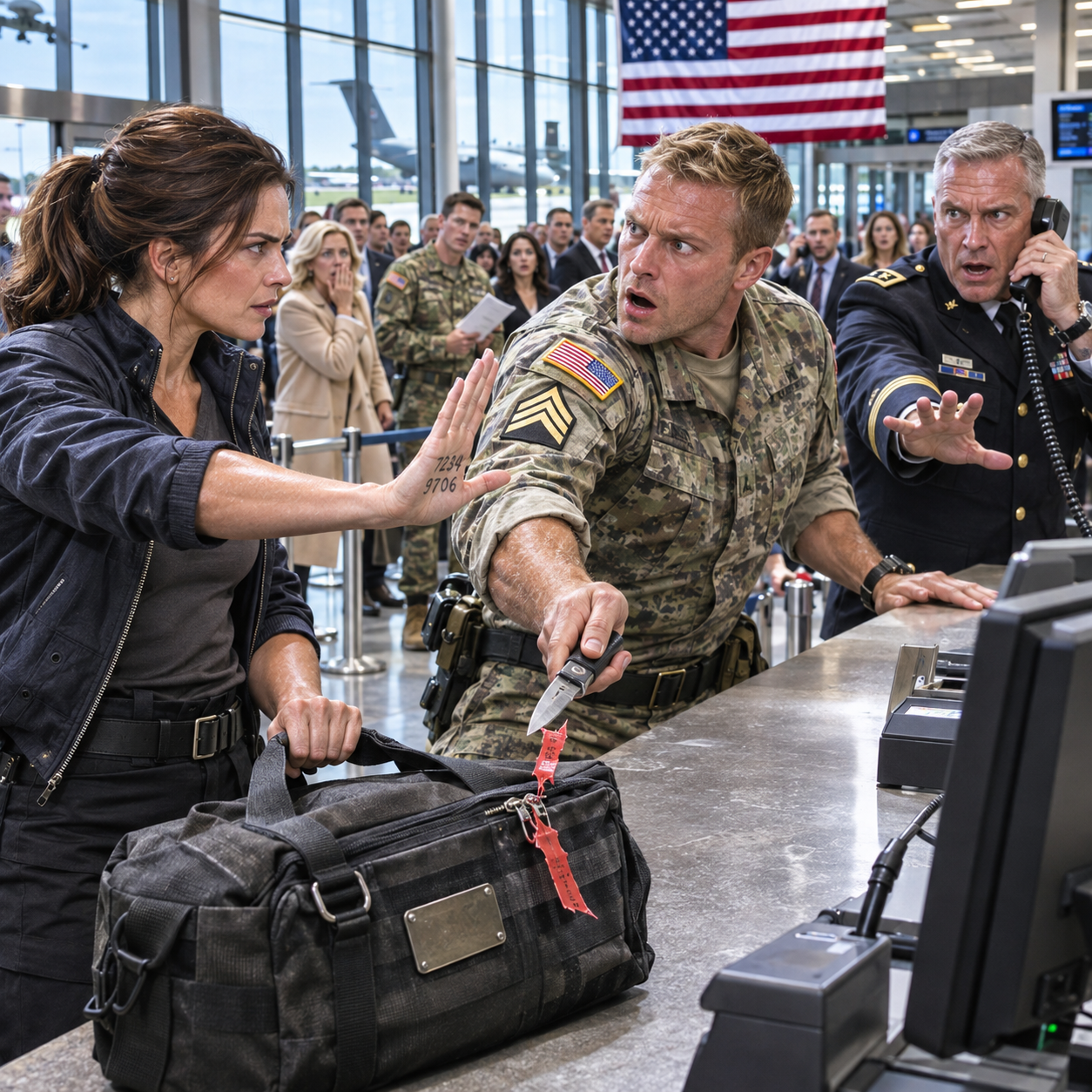
The first thing I noticed about my husband that night wasn’t the woman standing beside him or the handcuffs around his wrists. It was the way he looked at me when the police officer asked who owned the silver Honda Accord sitting outside the hospital’s ambulance entrance. Bennett Weller had spent seven years looking at me like I was the person he could always count on, and now he was looking at me like I was a problem he needed to eliminate. His mother, Doreen, stood beside a woman with a bandage across her forehead and one hand resting protectively on her pregnant belly. “Tessa, sweetheart,” Doreen said, reaching for my arm, “we need you to tell these officers you were driving.”
I stared at her, certain I’d misunderstood something. “I was at work until nine, Doreen, and I haven’t driven my car since yesterday.” Bennett shifted against the officer’s grip, his expensive watch catching the fluorescent light. “Just tell them you borrowed it earlier,” he said, speaking through clenched teeth. “Mara doesn’t need this kind of stress right now.”
That was when I understood who the woman was. I’d seen her name on Bennett’s phone, usually followed by explanations about scheduling, new contracts, or problems with the office payroll. Mara Ellis, twenty-six, supposedly worked part-time handling customer accounts for our commercial cleaning company. Apparently, she’d also been sleeping with my husband long enough for him to become the father of her child. “How far along?” I asked her, and her face changed before she answered. “Almost six months.”
The older officer, whose name tag read Mercer, watched us without interrupting. Doreen stepped closer and lowered her voice as though we were discussing something embarrassing at Thanksgiving dinner. “She’s carrying your husband’s baby, Tessa, whether you like it or not, and somebody needs to think about that child’s future.” I pulled my arm away. “Then perhaps somebody should have thought about it before giving her my keys.”
Bennett tried to move toward me, but the younger officer holding him tightened his grip. He’d already been detained after attempting to interfere with the accident investigation, and apparently his temper hadn’t improved. “You don’t understand what’s at stake,” he snapped. “One statement, Tessa, and all of this goes away.”
I looked toward Officer Mercer. “My husband took my car without permission, gave it to someone else, and now wants me to make a false statement.” Doreen’s mouth fell open, but I continued before she could speak. “I’ll cooperate with the investigation, and I want my car examined.” For the first time that evening, Bennett looked genuinely frightened.
My name is Tessa Weller, although I was already thinking about becoming Tessa Arden again. I was thirty-four, a forensic accountant at a regional consulting firm, and the kind of person who kept every important receipt in clearly labeled folders. I could reconcile a six-figure discrepancy in somebody else’s books without losing my temper, but I’d somehow missed the fact that my husband had built an entirely different life while sleeping beside me. Our marriage had once seemed ordinary enough that its collapse felt almost impossible to explain.
Two years after our wedding, Bennett started Harborcrest Facility Services, a company providing cleaning and maintenance crews to office buildings, medical clinics, and private schools. My father, Henry Arden, invested $60,000 from his retirement savings for a twenty-percent ownership interest. Bennett and I each held forty percent, with Bennett managing operations while I continued working at my accounting firm. Dad believed he was helping us build something that would last, and I believed my husband understood how much that trust mattered.
There had been warnings, although none looked particularly alarming by itself. In March, my driver’s license disappeared from the ceramic dish beside our bedroom closet, and Bennett helped me search for it. He even drove me to the DMV for a replacement, bought us coffee afterward, and joked about my inability to keep track of important things. Around the same time, he began bringing company paperwork home for signatures, usually when I was cooking or answering work emails. Whenever I insisted on reading everything carefully, he became wounded and quiet.
“I thought we were partners,” he’d say, gathering up the papers. Sometimes I apologized, even though I couldn’t have explained what I’d done wrong. Looking back, I realized how thoroughly he’d learned to turn my caution into something that felt like cruelty. I knew better professionally, but at home I wanted to believe him.
Officer Mercer returned from speaking with the accident investigator. “Ms. Ellis, you mentioned a bag in the trunk?” Mara looked toward Bennett, and he shook his head almost imperceptibly. “There’s a black duffel,” she said finally. “Bennett told me to deliver it to his mother, but he said I wasn’t supposed to open it.”
Doreen immediately interrupted. “It’s just some personal belongings.” Mara pressed her hand against the bandage on her forehead, looking exhausted. “Then why did he tell me to call him instead of the police if anything happened?” Bennett said her name sharply, but she kept staring at the floor.
Officer Mercer turned to me. “Mrs. Weller, the car belongs to you?” I confirmed that it did and gave him permission to search it, explaining that I hadn’t authorized Bennett or Mara to use it. He made a note, then asked me to accompany him outside.
My Honda was parked near the ambulance entrance after being recovered from the collision scene. Its hood had folded upward, the driver’s headlight dangled by its wiring, and a strip of rubber hung beneath the damaged bumper. I had bought that car with my first promotion bonus, and my father had helped me choose it because he wanted something dependable for his daughter. Seeing it destroyed hurt more than I expected.
Mercer opened the damaged trunk with some difficulty and lifted out a black canvas duffel. Inside were a sweatshirt, a small envelope, and a blue folder containing several documents. He examined the first page beneath the parking lot lights, then stopped moving. “Mrs. Weller, does this signature belong to you?”
I leaned closer. The document was titled Assignment of Membership Interest, Harborcrest Facility Services LLC, and it stated that I had transferred my entire forty-percent ownership interest to Bennett for one dollar. My name appeared beneath the agreement in handwriting so similar to mine that I felt briefly disoriented. Then I saw the date: March 14.
On March 14, I had been three hundred miles away conducting an audit at a hospital network.
Mercer turned another page and found a second document bearing my father’s signature, followed by a letter from a psychiatrist stating that I suffered from recurring paranoid episodes and wasn’t competent to manage complex financial decisions. I’d never met the doctor whose name appeared at the bottom. Clipped to the back of the folder was a plastic card showing my face, my name, and the driver’s license number I’d reported missing in March.
The final page was a preliminary offer from Kestrel Commercial Services to purchase Harborcrest for $410,000. I stood beside my ruined car, listening to the distant squeak of ambulance wheels, while the officer carefully photographed the documents. Bennett hadn’t simply been cheating on me. Someone had spent months preparing to take away my company, my credibility, and everything my father had helped us build.
And the evidence had been traveling in my own car.
## Part 2/5
Mercer collected the folder and my old license as evidence, documenting the contents before sealing them in separate bags. He gave me a receipt, explained that a detective would contact me, and advised me not to confront Bennett about the documents. When I returned to the hospital, Doreen and Mara had disappeared, and Bennett was being processed on a separate allegation related to his behavior at the accident scene. I drove home in a rental car with the heater running, although the May air was warm enough to leave the windows open.
At 1:20 in the morning, I opened my laptop at the same kitchen table where Bennett had spent years asking me to sign paperwork. My work calendar confirmed that I’d been in Columbus on March 14, reviewing purchasing irregularities for a hospital group. The hotel invoice showed a three-night stay, and my security credentials had recorded every entrance into the client’s accounting offices. At 2:16 that afternoon, only minutes before the supposed notarization, I’d been sitting in a conference room with six executives discussing vendor payments.
I called my father because there was no longer any reason to protect him from the truth. Dad was sixty-eight and still recovering from a heart attack in February, which had left him unusually tired and occasionally unsteady on his feet. He listened without interrupting while I told him about the accident, the pregnancy, and the documents. When I mentioned his signature, he asked me to repeat the date.
“I was at St. Catherine’s cardiac rehabilitation that afternoon,” he said. “Your mother drove me because the doctor wouldn’t let me drive yet.” He took a breath that sounded painful through the telephone. “Tessa, I never approved transferring your shares, and Bennett never even mentioned selling the company.”
I heard my mother asking what was wrong in the background. Dad told her he’d explain in the morning, then asked whether I was somewhere safe. I assured him that Bennett wasn’t home and that I’d locked the doors. Before hanging up, he said something that made me cry harder than I had at the hospital: “I trusted that man with money because I thought he was taking care of you.”
At 9:47 the next morning, Bennett sent a message from his own phone. He’d been released, and Doreen had apparently helped arrange his bond. “You’re making this uglier than it needs to be,” he wrote, followed by instructions to check the company email. Another message arrived almost immediately: “Mom says we can still fix this if you stop talking to the police.”
The email contained a state filing submitted in March, identifying Bennett as Harborcrest’s sole managing member. The ownership agreement he’d supposedly obtained from me was listed among the supporting records, along with my father’s written consent. I called the bank that handled Harborcrest’s operating accounts and eventually reached a security specialist named Priya Desai. She confirmed that I’d been removed as an authorized signer after the amended paperwork was presented.
“I’m disputing the authenticity of those documents,” I explained, keeping my voice as steady as possible. Priya asked whether I’d filed a police report and whether an investigation was active. When I supplied Mercer’s incident number, she initiated an urgent review of the disputed changes. “We can temporarily restrict certain outgoing transactions while our investigations team evaluates the information,” she told me, “but you need legal counsel immediately.”
Before ending the call, Priya mentioned a pending $40,000 wire that had been flagged for review. The beneficiary account was outside our bank, and the request had been submitted the afternoon before the accident. The transfer hadn’t gone through. For several seconds, I couldn’t speak because I was imagining my father’s retirement money disappearing while Bennett and Doreen argued about who should be blamed for a wrecked car.
I contacted a business litigation attorney named Leila Banerjee, recommended by a senior partner at my accounting firm. She was in her early fifties, wore practical black-framed glasses, and had the habit of reading a document twice before asking a question. Her office overlooked a parking garage rather than the river, which somehow made me trust her more. She listened to my explanation, then pushed a yellow legal pad toward me.
“Your husband has created a paper trail that makes his position appear legitimate,” she said. “The bank isn’t a courtroom, the Secretary of State doesn’t determine whether every signature is genuine, and a buyer may initially rely on those filings.” She tapped the photograph of the ownership assignment. “We need evidence from sources he cannot control.”
I showed her my travel records, Dad’s rehabilitation schedule, and a photograph of the psychiatric letter. Leila examined the letterhead, searched for the doctor named on it, and asked me to call the practice while she listened. After speaking with a receptionist, I was connected to Dr. Lillian Firth, who agreed to review the image because someone appeared to be using her professional identity. I emailed it through the secure address her office provided.
Dr. Firth called back less than half an hour later. “That letterhead contains an address I haven’t used in three years,” she said. “The signature isn’t mine, and I have no record of treating anyone under your name.” Her voice hardened when Leila explained how the document was being used. “I’ll speak with the investigator and provide a sworn statement through appropriate channels.”
Leila leaned back after the call and removed her glasses. “Now we have independent evidence that at least one document was manufactured.” She warned me that establishing a false psychiatric letter wouldn’t automatically invalidate the ownership transfer, especially if Bennett produced witnesses claiming they’d seen me sign. We would need to establish exactly who appeared before the notary, how my father’s consent was obtained, and where the missing company money had gone.
That afternoon, I went through financial records I’d retained from Harborcrest’s bookkeeping system. Although Bennett had restricted my banking access, older general ledger exports and transaction reports remained in my archived files. I began comparing expense entries with the original vendor records, highlighting transfers that lacked recognizable invoices. The first twenty irregularities were small enough that a busy manager might have dismissed them as routine reimbursements.
By midnight, I’d found dozens more. Several expenses labeled temporary staffing had been paid to the same personal checking account rather than to a staffing agency. I remembered Mara explaining once that Bennett had hired her to streamline scheduling costs, and I remembered how defensive he’d become when I asked which agency was providing the extra workers. Now I understood why he never wanted me reviewing those files.
I finally stopped working when my father called to say he and Mom had found his old investment agreement. Dad offered to bring it over himself, but I promised to collect it after meeting with the detective. He hesitated before asking whether Bennett had ever loved me, and I told him I didn’t know. It was the first time I’d admitted that aloud.
When I opened my phone again, Doreen had posted a long message on Facebook about her son’s suffering. She described me as emotionally unstable, claimed I’d been receiving psychiatric treatment, and asked our relatives to pray for Bennett and his unborn child. Beneath it were dozens of sympathetic comments, including several from people who had eaten dinner at our house. I showed Leila the post, and she told me to preserve it without responding.
The next morning, the detective assigned to the case requested everything I’d uncovered. Before leaving home, I totaled the suspicious transactions and stared at the number on my spreadsheet. Over twenty-three months, Bennett had moved $81,340 into an account connected to Mara Ellis. The earliest payment had been made nearly a year before I believed they’d even met.
## Part 3/5
Detective Raina Solis worked in a cramped office with two mismatched filing cabinets, a dying fern, and an impressive collection of coffee cups. She wore a navy blazer over a plain gray shirt and examined my spreadsheet with the same skepticism I would have used when reviewing an anonymous financial complaint. “I understand you’re a forensic accountant,” she said, “but you should understand that finding unusual transfers doesn’t automatically prove a crime.” I agreed and showed her the underlying bank exports, accounting entries, and invoices I’d used to build the report.
She scrolled through the transactions, stopping at a series of payments for amounts between $275 and $495. The payments had been entered under different expense categories, but every one led to the same beneficiary account. I explained that our bank’s internal process required an additional approval step for many larger disbursements, a control Bennett appeared to have deliberately avoided. Solis made a note and asked for permission to obtain the original records through the investigation.
Then we reviewed the ownership documents. I provided my travel itinerary, hotel folio, badge activity, and the audit report completed in Columbus on March 14. Dad’s medical records established that he was attending rehabilitation around the alleged signing time, although Solis cautioned that his physical condition alone didn’t disprove his signature. The stronger evidence, she said, would likely come from the notary.
His name was Quentin Vale, and his office operated out of a small building beside an insurance agency outside town. Solis explained that the notarial journal could reveal who presented identification, who signed, and whether a fingerprint or other identifying details had been collected. She would attempt to obtain the records voluntarily, then pursue legal process if necessary. Before I left, she asked whether Bennett or his mother had access to my original license.
“Both of them did,” I answered. “Bennett lived with me, and Doreen had a spare house key for emergencies.” Solis looked down at the photograph of the license recovered from the duffel. “Then we’ll need to establish when it was taken and how it ended up there.” It was the first conversation since the accident that made me feel as though someone was examining the facts rather than deciding which spouse seemed more believable.
At five that afternoon, Solis called with news that made the room feel smaller. Mara had returned to the station accompanied by Doreen and changed her statement. She now claimed she’d personally witnessed me sign the assignment, that I’d voluntarily surrendered my ownership, and that I knew about her relationship with Bennett. Doreen had apparently remained beside her throughout the interview.
“She wasn’t telling you the truth,” I said, standing beside my kitchen sink. Solis agreed that the new account conflicted with substantial documentary evidence, but she couldn’t simply disregard a witness because the circumstances looked suspicious. She mentioned that Mara seemed frightened and repeatedly looked toward Doreen before answering questions. “I need something more concrete than an impression,” Solis said.
Thursday morning brought three problems before breakfast. Bennett’s attorney filed an emergency request to keep me away from Harborcrest’s offices and employees, using the psychiatric letter to suggest I was behaving unpredictably. Priya called to warn that Bennett appeared to be moving business activity to another financial institution, beyond the immediate reach of our bank’s restrictions. Finally, a longtime crew supervisor named Mateo texted that Bennett had summoned the entire staff to a meeting Friday at ten.
According to Mateo, a larger company was buying Harborcrest and every employee would receive updated contracts. Bennett had told everyone I’d stepped away from the business for medical reasons. Mateo had worked for us since the company owned only two industrial floor cleaners, and I’d attended his daughter’s graduation barbecue the previous summer. “I don’t believe what he’s saying,” he wrote, “but people are scared.”
Leila confirmed that Kestrel Commercial Services intended to proceed with its scheduled closing at ten Friday morning. Our emergency court hearing wasn’t until eleven. If the buyer released the purchase funds before we secured an order, Bennett could potentially move the proceeds through accounts we hadn’t identified. Even if we eventually proved the ownership assignment fraudulent, recovering the money could become a separate and expensive battle.
“Can we tell Kestrel’s attorney?” I asked. Leila explained that we could provide truthful, supportable information, but Bennett’s attorney had already threatened a commercial interference lawsuit if we contacted the buyer. The forged psychiatric letter complicated the situation because it gave him a ready-made story about a disgruntled former owner sabotaging a legitimate sale. “I’m not saying we should remain silent,” Leila told me, “but whatever we send must be strictly factual.”
I spent the afternoon assembling documents while my father called twice to ask whether I needed money for legal fees. I reminded him that he’d already invested enough in my marriage. He didn’t laugh, and I regretted the words as soon as I said them. “Tessa,” he replied quietly, “I didn’t invest in your marriage, and I didn’t invest in Bennett; I invested in what you were building.”
That evening, Leila came over with takeout containers and a printed chronology. We reviewed every allegation against the original records, removing anything I couldn’t prove and attaching Dr. Firth’s sworn statement. Leila insisted that we distinguish evidence of a fabricated document from proof that Bennett personally created it. She also warned me not to accuse Kestrel of wrongdoing merely because it had relied on information supplied by the seller.
At 1:58 Friday morning, I sent the completed packet to Kestrel’s general counsel, Erin Cho, copying Leila. My email requested that the company suspend the transaction until the ownership dispute and suspected document falsification could be investigated. I included the police case number and offered to provide authenticated records through counsel. Afterward, I sat alone in the kitchen, listening to the refrigerator compressor turn on and off.
At 3:12 a.m., the doorbell rang. Through the peephole, I saw Mara standing on my porch in a gray sweatshirt, her forehead still bruised and her hands trembling. She glanced behind her several times before I opened the door with the chain attached. “Is Doreen here?” she whispered.
I told her no, and Mara began crying so hard she could barely speak. She said she’d borrowed Doreen’s car while the older woman slept and driven straight to my house. I considered calling the police immediately, but something in her expression made me ask why she’d come. Mara pulled out her phone, looked directly at me, and said, “Because I was the woman who signed your name.”
## Part 4/5
I removed the chain and let Mara inside, although every instinct told me to keep my distance. She sat at my kitchen table with both hands around a mug of tea, staring at the place where Bennett normally sat. When I asked why she’d lied to Detective Solis, she told me Doreen had threatened to report her for stealing company money and warned that Bennett would fight for custody of their child. “She said you’d help him because you hated me,” Mara whispered.
“I don’t know you well enough to hate you,” I answered, which wasn’t entirely true anymore. I was angry with her for sleeping with my husband, driving my car, and helping him take something that belonged to me. But watching her shake across the table, I could also see how thoroughly Bennett had used her. “Tell me what happened on March 14,” I said.
Mara unlocked her phone and opened a video recorded the night before the notarization. The footage showed Bennett sitting at her apartment’s kitchen table with his shirtsleeves rolled up, surrounded by sheets of paper covered in handwriting. My signature appeared dozens of times, each attempt slightly different from the one before. Bennett pointed toward one version and corrected the shape of the final letter.
“She finishes with a straight line,” he said on the recording. “And the first letter needs to be wider.” Mara’s hand entered the frame, holding a pen above another sheet of paper. Then Doreen’s unmistakable voice came from somewhere behind the camera. “Quentin won’t examine everything too closely, especially if you keep your hair around your face.”
The camera shifted as Doreen walked into view holding a glass of wine. She set something on the table, and I recognized my missing driver’s license immediately. Bennett asked whether the notary would question Dad’s consent form. “Your father-in-law’s hands haven’t been steady since his heart attack,” Doreen replied, laughing softly, “so a messy signature is exactly what people will expect.”
I sat completely still while the recording continued. Bennett opened his familiar silver tin of wintergreen mints and instructed Mara to practice another twenty signatures before bed. Doreen discussed the appointment as casually as someone arranging a haircut. When the video ended, I looked at Mara and asked why she’d recorded it.
“Because Bennett kept making promises and then pretending he’d never said them,” she answered. “He told me we would get married after the business sold, and I wanted proof of what he was planning.” She swallowed and looked toward the window. “I didn’t understand how much trouble I was in until I saw that letter about your mental health.”
Mara admitted she’d gone to Quentin Vale’s office with Doreen, presented my stolen license, and signed my name in his journal. She remembered pressing her thumb onto an ink pad because the ink had stained her skin for two days. Quentin barely examined her face, she said, while Doreen distracted him by asking about his grandchildren. When I warned that admitting this could lead to criminal charges, Mara nodded without looking surprised.
“I know I did something terrible,” she said. “But Bennett told me the money was ours after the sale, and Doreen said the papers were just correcting an ownership arrangement.” Her voice broke. “Yesterday, Bennett told me that if anything went wrong, everyone would believe I invented the whole thing.”
I called Detective Solis at 3:31 a.m. and explained that Mara was sitting in my kitchen with a recording of Bennett instructing her to reproduce my signature. Solis arrived shortly after four, wearing jeans beneath her blazer and carrying a sealed evidence bag. She interviewed Mara separately, documented the phone, and arranged for investigators to preserve the original video. Mara agreed to cooperate with the investigation and provide fingerprint samples for comparison.
At 6:10, Solis received authorization to obtain Quentin Vale’s notarial records. By eight, investigators had recovered his journal and were examining the March 14 entry alongside Mara’s fingerprints. Quentin initially claimed he’d followed ordinary identification procedures, but when confronted with the recording and Doreen’s involvement, he acknowledged that he knew her personally. He also admitted he’d been persuaded to accept the identification without properly confirming the signer’s identity.
At 8:37, Solis called me from outside Quentin’s office. “The preliminary fingerprint comparison is consistent with Mara’s admission,” she said. “We’ll need formal forensic confirmation, but the journal gives us an independent record.” She paused before adding that Quentin had mentioned previous paperwork Doreen brought to him. Investigators were now examining whether she’d used the same arrangement in other transactions.
Less than ten minutes later, an email arrived from Erin Cho at Kestrel Commercial Services. The company had reviewed our evidence, spoken with investigators, and suspended the proposed acquisition pending the outcome of the ownership dispute. Its executives would attend the scheduled employee meeting to notify Bennett that the transaction wasn’t proceeding. I forwarded the message to Leila and called Dad.
He insisted on accompanying us to Harborcrest, despite my concerns about his recovery. At 9:52, we arrived outside the modest brick office building where Bennett and I had once assembled our first cleaning crews. Dad remained in the rental car while Leila and I walked toward the entrance. Through the glass, I could see nearly twenty employees gathered around the conference table, where someone had placed a large cake decorated for the company’s new beginning.
Doreen stood beside the cake in a cream-colored suit, smiling as she handed out paper plates. Bennett was addressing the employees, reassuring them that their jobs were secure and praising the business he’d supposedly built by himself. He looked relaxed, almost cheerful, as though the last four days had never happened. Then I opened the door, and every conversation in the room stopped.
## Part 5/5
Bennett’s smile disappeared for a moment before he recovered. “Tessa, honey, this isn’t the place,” he said, adopting the gentle voice he used whenever he wanted strangers to think I was unreasonable. “We’ve talked about your situation, and you know how stressful these meetings can be.” Doreen set down her cake knife and demanded that someone escort me outside. Nobody moved.
Leila stepped beside me and calmly explained that no court order prevented me from entering the business I still legally owned in part. Bennett began protesting, but the door opened again before he finished. Thomas Kestrel, the buyer’s chief executive, entered with Erin Cho and another company representative. Bennett hurried forward with his hand extended, clearly relieved to see someone he believed was on his side.
Thomas didn’t shake his hand. “Mr. Weller, we’ve suspended the acquisition, and we will not be closing today.” The words were delivered without anger, which somehow made them more devastating. Bennett stared at him, then immediately pointed toward me. “My wife has been making allegations because she’s having a difficult time.”
Erin opened her folder and addressed him directly. “We’ve received evidence that material ownership documents may have been falsified, along with a sworn statement from a physician whose identity was improperly used.” She explained that Kestrel couldn’t proceed with a transaction under those circumstances. Bennett tried to interrupt twice, but Thomas stopped him. “Your internal disputes are not ours to resolve, Mr. Weller, and we won’t put our company or your employees at risk by pretending they don’t exist.”
Doreen approached me, her expression shifting from indignation to something almost pleading. “Tessa, think about the people who work here,” she whispered. “Do you really want everyone losing their jobs because you couldn’t forgive one mistake?” I looked past her at Mateo and the other employees, who were listening with frightened expressions. “Nobody should lose a job because of what Bennett did,” I said, “but lying about it won’t protect them.”
The door opened again, and Detective Solis entered with two uniformed officers. She quietly identified Bennett and Doreen, then informed them that investigators had obtained sufficient evidence to make arrests in connection with falsified business documents and related financial offenses. Bennett demanded to call his attorney, while Doreen insisted there had been a misunderstanding. When Solis mentioned Quentin Vale’s journal, Doreen stopped speaking altogether.
Bennett looked directly at me. “Tell them about Mara,” he said desperately. “She signed those documents, not me.” I remembered his hand resting over Mara’s as he demonstrated my signature on the recording. “You taught her how,” I answered. “And your mother helped arrange it.”
The officers escorted Bennett and Doreen away while the employees stood silently around the untouched cake. I had imagined that moment several times during the previous four days, picturing satisfaction or relief. Instead, I felt exhausted and strangely empty. Through the glass entrance, I watched Bennett climb into the patrol vehicle without once looking back at the building he’d spent years trying to take from me.
Leila helped me explain the situation to the employees without discussing evidence that belonged to the ongoing investigation. Harborcrest wasn’t closing that morning, and we would seek court protection for its assets while the ownership dispute was resolved. Mateo asked whether everyone would still receive their paychecks on Friday. I told him I couldn’t promise outcomes I hadn’t verified, but that protecting payroll and existing client services would be our first priorities.
The following months were less dramatic and considerably harder. A court order preserved Harborcrest’s assets while investigators examined the ownership documents and disputed transactions. With Dad’s support and approval through the proper legal process, we appointed an independent operations manager to keep the company functioning. I took unpaid leave from several consulting assignments and worked with outside accountants to reconstruct the financial records.
That investigation uncovered more than the payments to Mara. Bennett had approved nonexistent temporary labor charges, concealed unpaid vendor balances, and manipulated reports to make Harborcrest appear more profitable than it was. Some of the missing money had supported his relationship with Mara, but additional amounts had gone toward personal debts and expenses connected to Doreen. The business he’d presented as a success had been weakened by years of decisions he expected everyone else to finance.
Mara cooperated with prosecutors and accepted responsibility for her part in falsifying the documents. Her pregnancy didn’t erase what she’d done, and I made no effort to excuse it. I also refused to participate in Doreen’s campaign to portray her as the sole architect of the scheme. Whatever consequences Mara faced would be determined through the legal process, not by another story Bennett’s family invented.
Eventually, Bennett entered a guilty plea to charges arising from the financial misconduct and forged records, with his sentence and restitution obligations determined by the court. Doreen also faced criminal consequences for her participation, including the pressure she’d placed on Mara to change her statement. The fraudulent ownership transfer was invalidated, restoring my interest in Harborcrest, while additional civil proceedings addressed the damage to the company. Recovering the missing money took far longer than proving what had happened.
My divorce was finalized eleven months after the accident. Bennett sent a letter through his attorney shortly beforehand, claiming he finally understood how badly he’d hurt me. He wrote about our wedding, the first apartment we’d rented, and the dreams we’d once shared for Harborcrest. Then he asked whether I could find it in my heart to forgive him.
I read the letter once before placing it in the folder marked Divorce. For years, I’d mistaken forgiveness for an obligation to make uncomfortable situations easier for everyone around me. I no longer believed that someone deserved access to my life simply because they regretted losing it. I asked Leila to handle any necessary reply and never contacted Bennett personally again.
Dad recovered enough to return to his Saturday gardening routine, although he still preferred company when he drove long distances. He remained an owner of Harborcrest, and we eventually rebuilt the company with independent financial controls and a smaller, more reliable client base. We never recovered every dollar Bennett had taken, but our employees received their wages, and most chose to stay. I considered that a better measure of success than the sale Bennett had tried to arrange.
One afternoon, Dad visited my new house carrying a small wooden key holder he’d made in his workshop. He installed it beside the kitchen door and handed me a fresh set of keys. “You’ve got a place for them now,” he said, smiling.
I hung my house keys beside the office keys, then looked around the kitchen I’d chosen and paid for myself. There were no unfamiliar documents waiting for my signature, no explanations I had to accept, and no family members demanding that I sacrifice the truth to protect their reputation. Bennett had given away my car keys because he believed anything that belonged to me was his to use.
He had been wrong about that, and he would never have the chance to make that mistake with me again.
THE END!
Disclaimer: Our stories are inspired by real-life events but are carefully rewritten for entertainment. Any resemblance to actual people or situations is purely coincidental.