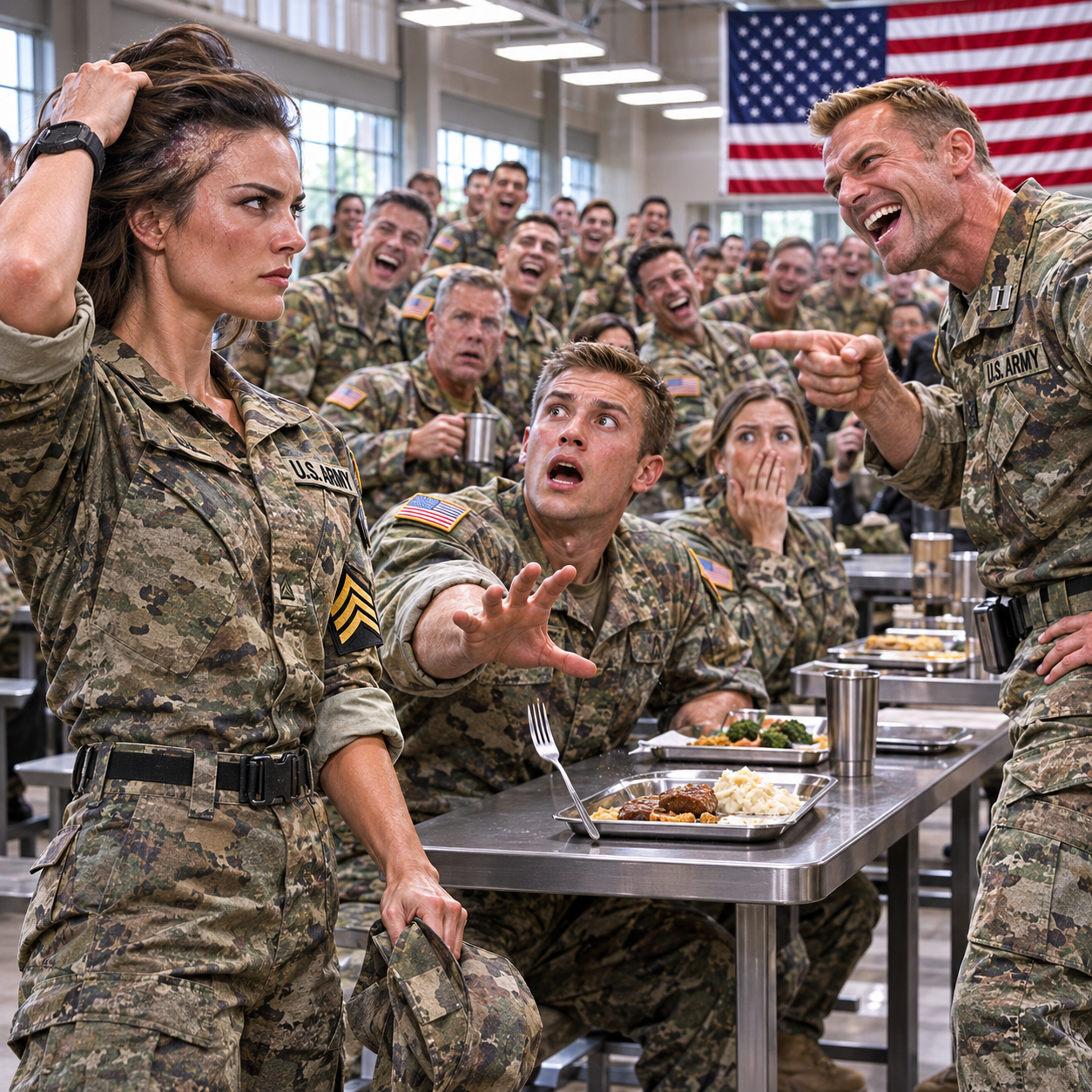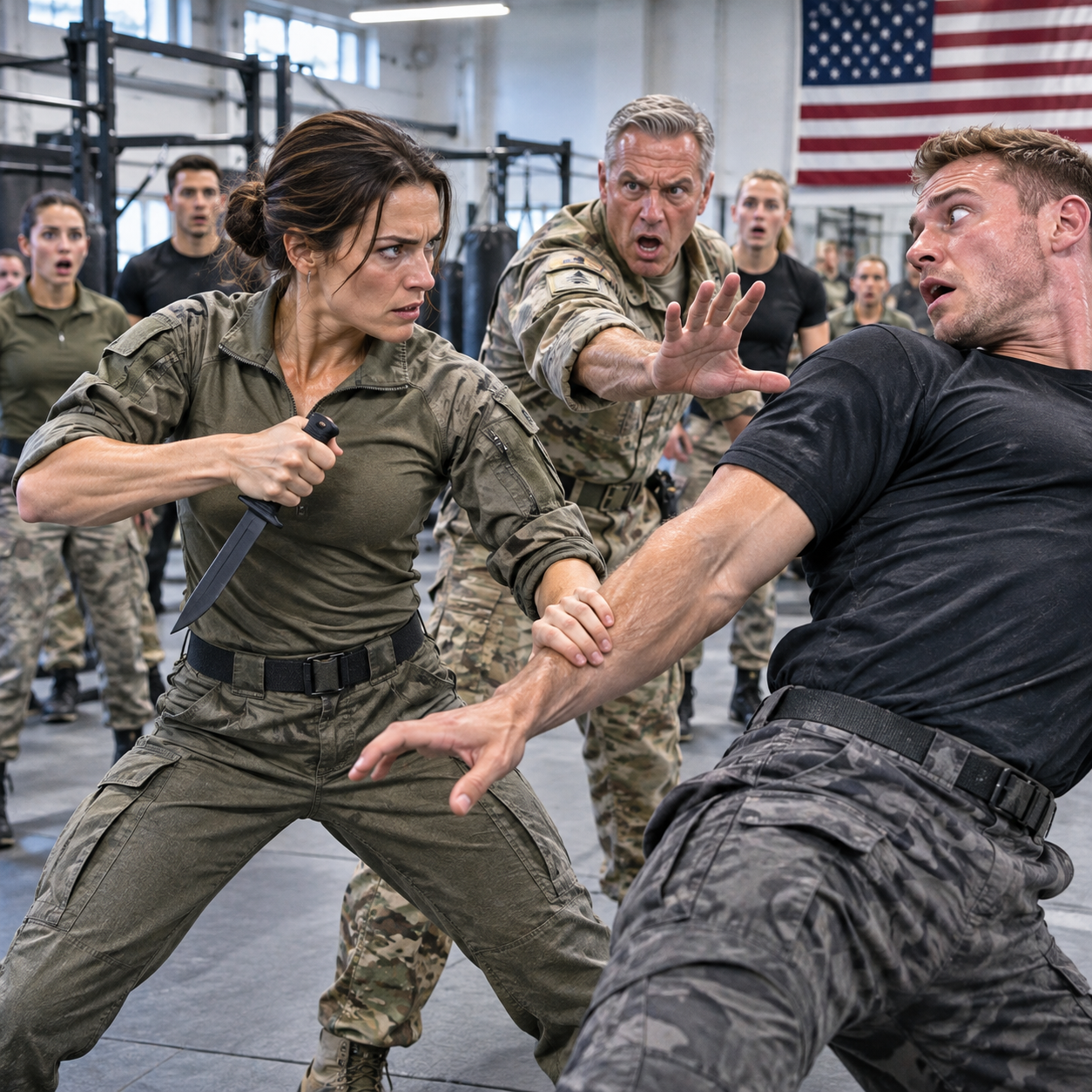
A Cocky Instructor Flicked A Training Blade At My Chest: “Let’s See Those Desk-Job Reflexes, Princess.” I Didn’t Flinch. I Caught The Hilt In A Reverse Lethal Grip And Locked Onto His Carotid Artery. The Commander’s Face Drained Of Color As He Lunged Between Us. “Abort The Drill! Drop Your Hands!” “Idiot! You Just Triggered Her Black-Ops Muscle Memory!”
For six months, I had worked hard to make people forget I had ever served anywhere beyond a logistics office. Then a civilian combat instructor threw a steel training knife toward my throat in front of twenty service members, expecting me to panic. My body reacted before my mind could catch up, and the base commander screamed for me to stop. I thought the incident would end with an investigation. Three days later, an airman brought me a document proving the instructor’s recklessness had a much darker history.
Part 1
The first thing I learned after transferring to the logistics division was that a malfunctioning coffee machine could become the most important event of an entire morning. People gathered around it at seven-thirty, complained about the watery coffee, and debated whether the maintenance department would replace it before Friday. Nobody checked the exits when entering a room. Nobody flinched when a truck backfired outside. Nobody woke up at two in the morning because a sound from ten years ago had suddenly returned with perfect clarity. For the first time in my adult life, I was surrounded by people whose biggest problems were ordinary, and I wanted desperately to become one of them.
My name is Tessa Whitlock. I was thirty-eight years old, a master sergeant in the United States Air Force, and officially assigned to regional logistics coordination at Blackridge Air Base in Virginia. My responsibilities involved equipment manifests, transportation schedules, and making sure expensive military hardware arrived where it was supposed to arrive. Most days, I wore a headset and argued politely with shipping contractors. I liked the fluorescent lighting. I liked knowing exactly where my chair would be tomorrow. I even liked the irritating printer that jammed whenever somebody tried to print more than twenty pages.
Before Blackridge, my career had looked very different. Eight years of deployments had taken me through places I rarely discussed, followed by two years training personnel responsible for recovering isolated service members under dangerous conditions. I had earned commendations, buried friends, and developed reactions that no longer belonged in ordinary life. During my final deployment, a rescue operation ended with three wounded personnel and a young teammate who never returned home. Nothing about that mission was simple enough to explain in a sentence, and I had grown tired of watching people search my face for a heroic version of the truth.
My transfer request had been approved after months of medical appointments and conversations with a patient military physician named Dr. Naomi Fenwick. She never described my exhaustion as weakness. She simply asked what I wanted my days to look like. I told her I wanted to drive home without checking every vehicle behind me. I wanted to sleep through a thunderstorm. Most importantly, I wanted to stop being somebody other people called when everything had already gone wrong. Six months later, I was finally beginning to believe that might be possible.
Then my quarterly combat-readiness recertification appeared on the schedule.
It was a Tuesday morning in October, and Hangar Bay Four smelled of rubber mats, floor disinfectant, and cold concrete. An American flag hung beside the training bay entrance, moving slightly whenever the ventilation system kicked on. Twenty service members from administrative, maintenance, and logistics sections stood in loose formation while a young corporal checked names against a roster. I wore plain gray physical-training clothes, my blond hair secured in a low ponytail, and nothing that immediately identified my rank or previous assignments.
“Whitlock, logistics?” the corporal asked.
“That’s me.”
“Mat three. Instructor should be here shortly.”
I joined the back row beside Senior Airman Owen Kessler, a lanky twenty-four-year-old supply specialist with freckles and an expression that suggested he would rather be undergoing dental surgery. He was rubbing his hands together, repeatedly checking the exits. When I asked whether he was nervous, he gave me a small, embarrassed smile.
“I heard this instructor likes making examples out of people.”
“Then we’ll follow the safety instructions and get through it.”
“That’s what the last group thought.”
Before I could ask what he meant, the instructor entered.
Vaughn Reddick was a civilian contractor in his early forties, broad-shouldered, closely shaved, and dressed in black tactical clothing that looked more appropriate for a promotional photograph than a military training facility. He walked slowly along the mats, measuring everyone with an expression of practiced disappointment. He introduced himself as the lead evaluator from Sentinel Tactical Solutions, then spent ten minutes describing how administrative personnel had supposedly forgotten what military service required.
“Some of you think a computer screen is armor,” he announced. “Today we’re going to correct that misconception.”
I had known instructors who raised their voices because the situation demanded clarity. Reddick raised his because he enjoyed the sound.
He selected Kessler for the first demonstration. The young airman stepped forward, shoulders stiff, and asked whether he should put on the protective headgear stacked beside the wall. Reddick ignored the question. Before Kessler had properly positioned his feet, the instructor caught his arm and threw him hard onto the mat.
The impact echoed beneath the steel rafters.
Kessler rolled onto one elbow, breathing sharply and clutching his shoulder. Nobody laughed, although Reddick clearly expected them to.
“That’s what hesitation gets you,” he said. “Get up.”
I stepped forward instinctively, but Kessler shook his head before I reached him. He was frightened of being embarrassed again, and the effort required to hide it made my stomach tighten.
“He’s hurt,” I said.
Reddick turned toward me.
“Did I ask for a medical opinion?”
“No. But he landed badly.”
“Then he should learn to land better.”
Kessler rose with considerable difficulty and returned to formation. I watched him keep his injured arm close to his body. Reddick continued demonstrating techniques on another trainee, but his eyes kept drifting toward me. I recognized the expression. He had decided my objection was a challenge to his authority, and now he needed an audience while he answered it.
Eventually, he pointed directly at my chest.
“You. The blonde who seems to know everything. Come here.”
I walked to the center mat.
“Name?”
“Whitlock.”
“Well, Whitlock, let’s see whether the logistics office has taught you anything useful.”
I stopped several feet away and waited for instructions. He reached toward the equipment attached to his belt and removed a weighted metal training knife. Its edges were dulled, but the point remained rigid, and the weight was substantial enough to injure somebody.
“Are we using protective equipment?” I asked.
His smile widened.
“Afraid of a little demonstration?”
“I’d like the boundaries and intended contact explained before we begin.”
A couple of people shifted uncomfortably. Reddick glanced toward them, apparently delighted to have witnesses.
“Real threats don’t announce themselves.”
He flicked the knife once in his hand.
Then, without another warning, he threw it at me.
I remember the brief flash of steel against the overhead lights. I remember Kessler making a sound behind me. What happened next occurred faster than conscious thought.
I moved off the line of the throw and caught the handle as the knife passed. My body carried me forward before I could stop it. Reddick lost his balance in the collision and hit the mat, and I ended up above him with the blunt steel resting dangerously close to his throat.
His eyes were enormous.
I could feel his pulse hammering beneath the skin.
For one terrible instant, I wasn’t in a training bay anymore. I was somewhere I had spent six months trying not to remember.
Then the double doors opened.
“ABORT THE DRILL!”
Colonel Jonas Keene, Blackridge’s installation commander, stood just inside the entrance. He had recognized the danger immediately.
“Master Sergeant Whitlock! Stand down! Now!”
His voice reached me through the noise in my head. I released the knife, moved away from Reddick, and stood with my hands visible.
The steel struck the mat with a small, ugly sound.
Reddick scrambled backward, staring at me as though I had become a stranger. Colonel Keene looked from the knife to my face, and I saw something beyond anger in his expression.
It was recognition.
And it frightened me more than the blade had.
Part 2
The medical technician arrived before anybody thought to ask for one. She examined Reddick’s neck, then crossed the mat to where Kessler stood holding his shoulder. Colonel Keene ordered everyone else to remain in place. There was no theatrical speech, no immediate announcement that somebody’s career was finished. He simply told Captain Iris Morrow, the installation safety officer, to secure the equipment, preserve the security recordings, and collect the names of every person who had witnessed the exercise. Watching those instructions unfold, I understood that my quiet morning had become an official incident, complete with consequences I could not control.
Reddick recovered enough confidence to begin shouting.
“She attacked me! You all saw it! I was conducting an authorized evaluation!”
“You threw a metal object at her,” Keene replied.
“It was a controlled reaction test.”
“Who approved it?”
Reddick opened his mouth, then closed it.
Keene waited.
“That’s what I thought. Your authorization to conduct training here is suspended pending review. Leave your equipment where it is.”
Reddick looked toward the trainees, apparently expecting somebody to support him. Instead, he found twenty people studying the floor. He turned his attention back to me, and the hatred in his expression was unmistakable.
“This isn’t finished, Whitlock.”
Colonel Keene stepped between us.
“Yes, Mr. Reddick. For today, it is.”
Twenty minutes later, I was sitting in Keene’s office with my hands folded in my lap. His windows overlooked the runway, where a transport aircraft was preparing for departure. I watched ground personnel move beneath its wings while Captain Morrow arranged three sheets of paper on the desk. She was a compact woman with dark hair and a habit of reading documents twice before speaking. Unlike Reddick, she seemed more interested in establishing facts than impressing anybody.
Keene waited until she finished.
“Sergeant Whitlock, are you injured?”
“No, sir.”
“Did you know the instructor?”
“No, sir.”
“Did he tell you he intended to throw the knife?”
“No.”
“Did you believe you were in immediate danger?”
“Yes, sir.”
He leaned back and studied me. I knew what he was thinking. He had reviewed my transfer package six months earlier, including the medical recommendation that I be assigned to a less demanding environment. He knew enough about my previous duties to understand why my response had been so fast and why I looked more shaken afterward than I had during the confrontation.
“Why didn’t you identify your qualifications before the exercise?” he asked.
“Because I didn’t believe they were relevant, sir.”
“You have spent years teaching advanced recovery personnel.”
“That doesn’t give me an exemption from quarterly training.”
“No. But it changes how I interpret what happened.”
I looked down at the carpet. “I didn’t intend to put that knife against his neck.”
Keene was quiet for a moment.
“I believe you.”
Those three words should have relieved me. Instead, I felt the familiar pressure of a different kind of expectation. People who knew my background often assumed that anything I survived must have been easy. They confused experience with immunity. I wanted to explain that when Reddick threw the knife, I had not felt powerful. I had felt trapped inside an automatic response I had spent months trying to quiet.
Captain Morrow slid a witness statement toward me.
“Write down exactly what you remember. Don’t speculate about his intentions. Don’t leave out anything that makes you uncomfortable.”
I spent nearly forty minutes completing it. I described Kessler’s fall, my objection, the lack of protective equipment, the unannounced throw, and the moment I realized where the steel had ended up. When I finished, I asked whether Kessler was all right. Morrow told me he had been sent for shoulder imaging and would probably be placed on temporary activity restrictions.
“There’s something else,” she added.
I looked up.
“The vendor has submitted an initial complaint alleging excessive force by a participant. His company’s representative is also disputing our authority to suspend the course.”
Keene rubbed his forehead.
“They can dispute it through the contracting office.”
I knew enough about military administration to recognize that this was no longer a simple disagreement between an instructor and a trainee. Statements would be examined. Supervisors would be contacted. Someone would review whether my use of force had ended when the immediate danger passed. I was prepared to answer those questions. What bothered me was how easily Reddick had transformed a training violation into a debate about my conduct.
By the time I returned to logistics, everyone had heard some version of the story.
A civilian clerk asked whether I had really caught a knife. Another wanted to know whether I had broken the instructor’s arm. Somebody had apparently claimed that three armed security officers had escorted me from the hangar. None of those details matched what happened, but correcting every rumor would have required more energy than I possessed.
I closed my office door and spent the rest of the afternoon reconciling transportation invoices.
At five-thirty, my supervisor, Major Celia Hartwell, knocked quietly.
“You can take tomorrow off if you need it,” she said.
“I’d rather work.”
She nodded without arguing.
“Then I’ll make sure nobody bothers you about the incident.”
Hartwell was one of the few people at Blackridge who understood why I had requested the transfer. She never asked for deployment stories. When I had trouble concentrating during my first month, she gave me assignments with predictable deadlines and left a spare desk lamp beside my monitor because the overhead lights bothered me. Her kindness was practical, and I trusted it more than sympathy.
That evening, I drove home through steady rain. My apartment was above a small bookstore near the edge of town. I fed my aging orange cat, Biscuit, heated leftover chicken soup, and tried to read a novel. Every time I closed my eyes, I saw Reddick looking up from the mat. The expression on his face was not what troubled me. It was the fraction of a second before I recognized the commander shouting my name.
The following morning, I arrived at work before seven.
Kessler was waiting outside the logistics office.
His left arm rested in a sling. Beneath his right hand was a folded manila envelope, damp around the corners from the morning mist.
“Sergeant Whitlock, could I speak to you?”
“Of course. How’s your shoulder?”
“Separated. They say it’ll heal.”
He glanced down the hallway.
“Can we go somewhere private?”
I opened my office. He sat opposite my desk but kept the envelope in his lap.
“I reported Reddick once before,” he said.
I waited.
“Fourteen months ago. There was another trainee. Airman First Class Maren Shaw. She got hurt during one of his exercises. Badly enough that she never returned to normal duty.”
“What happened?”
“She told him she didn’t feel safe. He made everybody watch while he proved she was overreacting.”
His voice was trembling.
“I helped her afterward. I wrote a witness statement. A few weeks later, I found out the report said she’d refused safety instructions.”
“Was that true?”
“No, ma’am.”
He handed me the envelope.
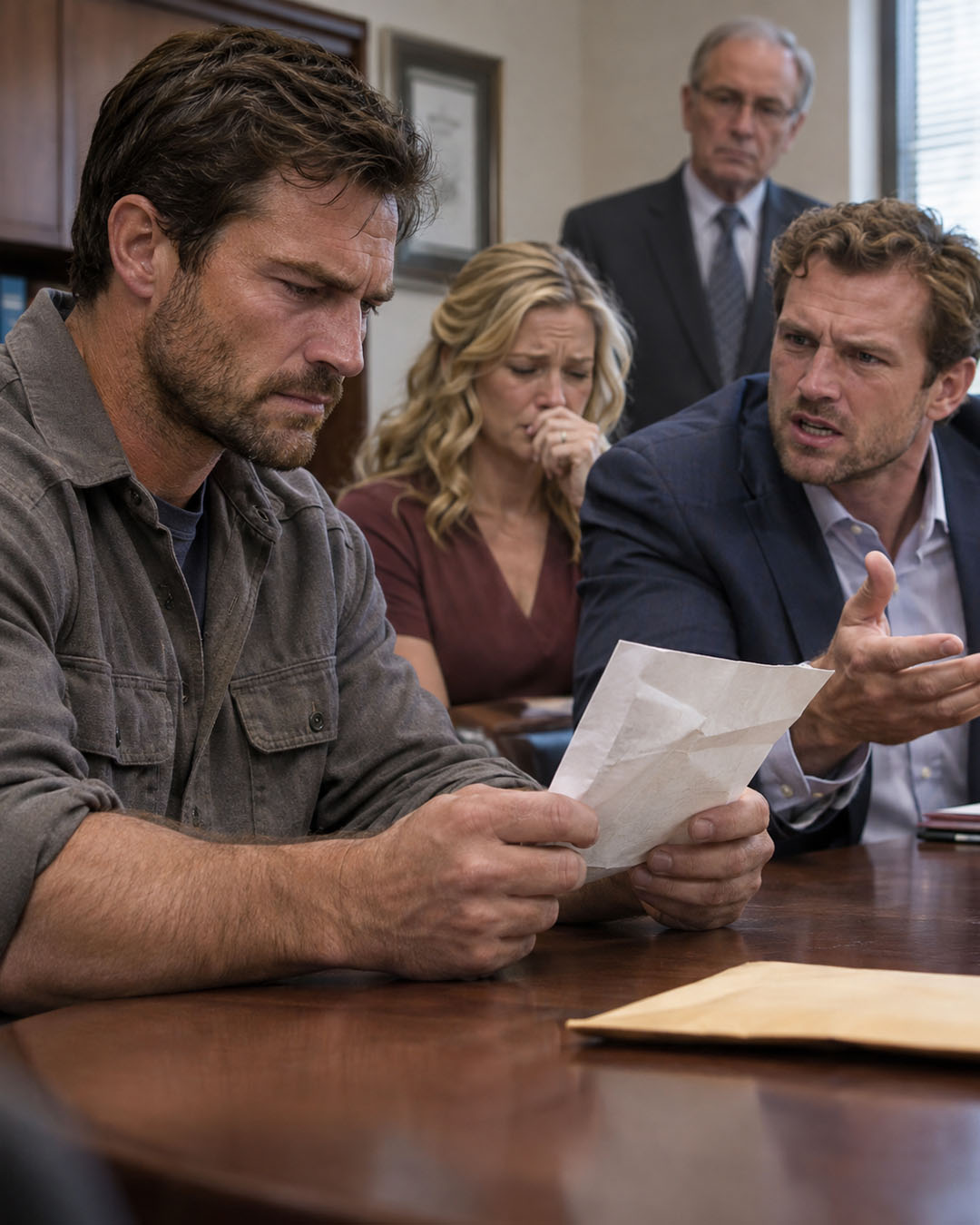
Inside were copies of a safety report and an unsigned draft statement, along with a photograph showing a young woman sitting in a hospital room with her arm immobilized. Her expression was exhausted, but what caught my attention was the final page.
Someone had signed a statement in Maren Shaw’s name claiming that she accepted responsibility for the accident.
Kessler tapped the signature.
“Maren told me she never signed this.”
I looked at the date, fourteen months before Reddick had thrown the knife at me. Then I looked at the official notation indicating that the complaint had been closed because the injured trainee had acknowledged personal error.
The entire finding rested on a statement the supposed author denied making.
Part 3
I asked Kessler where he had obtained the documents. He explained that Maren had sent them to him the previous evening after hearing about the incident. They had stayed in contact since her injury, partly because he was one of the few witnesses who had never accepted the official explanation. When she learned that Reddick had endangered another trainee, she searched through the records she had kept from her complaint. The envelope contained copies of her own documents, and she had asked Kessler to show them to somebody willing to listen.
“Why bring them to me?” I asked.
He stared at his sling.
“Because yesterday you were the only person who told him to stop.”
It was a simple answer, and it made me uncomfortable. I had not stopped Reddick when he hurt Kessler. I had merely challenged him afterward. More importantly, I understood that helping this young airman could draw attention to the very part of my military career I wanted to leave behind.
“I can’t investigate this myself,” I told him. “But I can make sure Captain Morrow receives it.”
“Will Reddick know I gave it to you?”
“Eventually, he might. I won’t promise otherwise.”
Kessler swallowed.
“Then I guess he knows.”
I called Morrow and arranged a meeting that morning. She examined the documents without interrupting as Kessler described the earlier accident. According to him, Shaw had been participating in a controlled defensive exercise when Reddick abruptly changed the drill. Instead of using the padded equipment assigned to the lesson, he introduced a rigid training weapon and demanded that she respond without preparation. When she objected, he accused her of being afraid. During the resulting confusion, she fell awkwardly and sustained a serious shoulder injury.
Kessler remembered the sound she made when she hit the floor. He remembered Reddick telling everyone to remain in formation. Most of all, he remembered Shaw repeatedly asking why nobody had stopped the exercise when she had said she wasn’t ready.
Morrow read the final report.
“Where did the original witness statements go?”
“I don’t know, ma’am,” Kessler answered.
“Did you sign yours?”
“Yes. I submitted it through the training office.”
“Do you have a copy?”
“No. I thought I was supposed to trust the process.”
Morrow’s expression softened, although her voice remained professional.
“You were.”
That afternoon, Blackridge’s safety office reopened the earlier incident for preliminary review and forwarded the new information to the appropriate investigative and contracting authorities. Morrow made it clear that she could not promise what the evidence would establish. The signature might have an innocent explanation, records might be incomplete, and nobody would be accused without proper verification. Still, the discrepancy was serious enough that the previous closure could no longer be accepted at face value.
I returned to my desk, but the normal rhythm of my work had disappeared.
Around three, an unfamiliar number appeared on my phone. I considered ignoring it until a text arrived.
My name is Maren Shaw. Owen said you might be willing to talk.
We spoke after my shift ended. Her voice was gentle, almost hesitant, and she apologized twice for interrupting my evening. She had been medically separated from the Air Force three months earlier and was living with her sister outside Richmond. Her shoulder remained painful, and nerve damage had reduced the strength and sensation in her hand. She had started working part-time at a library because prolonged physical activity aggravated the injury.
“I don’t want revenge,” she told me. “I just want the report to say what happened.”
“Did you ever sign a statement accepting responsibility?”
“No.”
“Did you authorize someone to sign for you?”
“Absolutely not.”
I heard something scrape across the telephone, followed by a long silence.
“They told me my complaint would delay my medical paperwork. They said accepting the finding would help everyone move forward. But when I refused, the investigator stopped returning my calls.”
“Who told you that?”
“A man from the contractor’s office. I have the emails.”
I sat upright.
“Keep those. Captain Morrow may need them.”
“I’ve kept everything,” she replied. “When people tell you something happened differently from the way you remember it, you start saving proof that your memory still works.”
After the call, I sat in my parked car for nearly half an hour. The rain had stopped, and sunlight caught the water running along the windshield. I thought about how often people in uniform were told to endure discomfort without complaint. In a real emergency, that discipline could save lives. In a poorly managed training environment, it could become a convenient weapon for somebody who wanted silence.
The next morning brought another development.
Captain Morrow had received preliminary training records from the contracting office. Several trainees who failed Reddick’s evaluations had been required to attend additional paid sessions, often conducted by the same company. The arrangement was not automatically improper. Supplemental instruction could be legitimate, and a high failure rate was not proof of misconduct. But Morrow had noticed that failure recommendations increased sharply after Sentinel Tactical Solutions received authorization to bill separately for remedial training.
One report described a communications specialist as unwilling to engage under pressure. Another listed an aircraft maintenance technician as demonstrating poor compliance with instruction. Both personnel had submitted complaints about Reddick’s behavior shortly before receiving their evaluations.
Kessler’s record was especially troubling.
Fourteen months earlier, immediately following his witness statement supporting Shaw, he had received his first failing assessment. Before that, his training history contained no similar problems.
“That doesn’t prove retaliation,” Morrow cautioned.
“No,” I agreed. “But it gives us a reason to look at the underlying evaluations.”
She nodded.
“We’ve requested them.”
I went back to my office and discovered a formal notice awaiting me. Sentinel’s legal representative had requested preservation of all materials related to my confrontation with Reddick, alleging that I had used force disproportionate to the exercise. It was written in careful language, with enough technical vocabulary to make a frightened person wonder whether defending herself had become the central problem.
I read it twice, then forwarded it to the designated military legal office.
Major Hartwell appeared in my doorway a few minutes later.
“You look like you’ve swallowed a bolt.”
“Contractor is contesting my response.”
“Let the legal people do their jobs.”
“I know.”
She leaned against the doorframe.
“Then stop behaving like every problem in this building belongs to you.”
I almost smiled. Hartwell had a way of reducing complicated anxieties to sentences that sounded harsh until I thought about them.
But after she left, I noticed something else in the records Morrow had provided.
A summary sheet from the previous year’s contract review showed that multiple safety concerns had been categorized as routine training disputes. The recommendations described Sentinel’s program as effective, with acceptable risk levels and strong corrective-action procedures.
At the bottom was the signature authorizing continuation of the program.
Colonel Jonas Keene.
The same commander who had ordered Reddick to stop had approved the contract renewal after Shaw’s injury.
I stared at his signature until the letters stopped looking familiar.
If Keene had received warnings fourteen months earlier, why had he allowed the same instructor back onto the mats?
Part 4
I requested a meeting with Colonel Keene the following morning. He received me in the same office where I had submitted my statement, although this time I carried a folder instead of sitting with empty hands. Captain Morrow was present at his request. The atmosphere was noticeably different from our first conversation. Keene had removed his jacket, his sleeves were rolled to his forearms, and three separate reports lay open beside his computer.
“I assume this concerns last year’s renewal,” he said.
“Yes, sir.”
“Sit down.”
I remained standing for a moment.
“Sir, I need to understand whether you knew about Maren Shaw’s complaint.”
He looked at me without speaking.
“Because your signature is on the continuation recommendation.”
“I know exactly where my signature is, Sergeant.”
“Then you understand why I’m asking.”
For several seconds, only the ventilation system disturbed the silence. Finally, Keene turned his monitor toward me. On the screen was the executive summary submitted before he endorsed Sentinel’s continued operation. It listed successful course completions, equipment inspections, and overall safety performance. The section describing complaints mentioned three minor disagreements involving trainee participation. Shaw’s injury appeared in an attachment as an individual training accident, without the allegations described in her original correspondence.
Keene opened another document.
“This is what reached my desk,” he said. “The safety office’s initial concern was summarized as resolved. Her signed acceptance was cited as supporting evidence.”
“She says the signature isn’t hers.”
“I’m aware.”
“Did anybody independently verify it?”
“No.”
He said the word without attempting to soften it.
“I approved continuation based on a package that represented the complaints as closed. That doesn’t excuse my failure to question whether they had been investigated properly.”
I had expected defensiveness. His willingness to acknowledge the oversight made the room feel strangely heavier. It was easier to argue with somebody who denied everything than with somebody who understood the consequences of his decisions.
Captain Morrow explained that the installation was requesting an independent review of the earlier complaint, the accuracy of the contractor’s reports, and the administration of remedial training fees. Keene had also notified the inspector general and directed preservation of relevant records. Because his endorsement was part of the history under review, he would not oversee the contracting determination.
“Reddick says I endangered him,” I said.
Keene nodded.
“Your response is being evaluated separately. That’s appropriate. The contractor’s conduct doesn’t mean your actions become immune to examination.”
“I agree, sir.”
“Good. Because I don’t intend to replace one kind of unfairness with another.”
That conversation stayed with me throughout the day. For years, I had worked in environments where identifying a mistake early could prevent catastrophic consequences. Yet even there, people sometimes treated admitting an error as more dangerous than the error itself. Keene had failed to ask enough questions fourteen months earlier. Now he was allowing that failure to become part of the investigation, rather than hiding behind his rank.
It didn’t undo Shaw’s injury.
But it mattered.
On Friday, Kessler received a notice stating that his latest combat-readiness assessment remained incomplete, and that an older failure recorded by Reddick was still active in the training system. The old rating was enough to interfere with a qualification he needed for a planned assignment. Nobody had formally accused him of wrongdoing, yet an evaluation completed by the man he had reported was still controlling an important part of his career.
He brought the notice to my office, his face pale with frustration.
“I did everything they told me to do,” he said. “I showed up. I reported what happened. I kept trying to pass his course.”
“Has your supervisor seen this?”
“Yes. She’s asking the training office to review it.”
“Then we’ll make sure the safety office knows it’s connected to the complaint.”
His eyes filled unexpectedly.
“I wanted to work aircraft maintenance when I enlisted. I spent two years getting qualified for this assignment. I can’t lose it because that man doesn’t like me.”
I thought of Shaw sitting at home with an injured shoulder, studying paperwork that blamed her for what happened.
“Don’t accept an inaccurate record just because correcting it is difficult,” I told him. “But let your chain of command and the reviewers handle the correction properly.”
That evening, I drove to Richmond to meet Shaw.
She had invited me to her sister’s townhouse, where autumn decorations lined the front porch and children’s bicycles leaned against the garage. Inside, a pot of vegetable soup simmered on the stove. Shaw was younger than I expected, with short auburn hair and a careful way of moving her right arm. She welcomed me warmly, but I noticed how she used her left hand to close the door.
We sat at the kitchen table while her sister entertained two children upstairs. Shaw had organized her records into labeled folders. There were medical appointments, emails, handwritten notes, and photographs taken during physical therapy. On the refrigerator was a picture of her in uniform, smiling beside her parents at a ceremony.
“That was before the accident,” she said when she caught me looking.
“Do you miss it?”
“Every day.”
She touched the edge of a folder.
“I wasn’t especially brave. I wasn’t trying to be some elite operator. I worked communications, and I was good at my job. I thought that should have been enough.”
“It was enough.”
She smiled sadly.
“Reddick made it sound like people who didn’t enjoy getting hurt didn’t deserve to wear the uniform.”
I wanted to tell her that she had nothing to prove. Instead, I listened while she explained the months that followed her injury. Her original complaint had included Kessler’s statement and a request to preserve the training footage. She was told the bay’s normal security recordings had already been overwritten by the time her appeal was reviewed. When she requested the instructor’s training records, the contractor said those were proprietary materials.
“Did they ever tell you whether a separate instructional recording existed?” I asked.
She frowned.
“What do you mean?”
“Some courses record demonstrations for instructor evaluations. Those recordings don’t always follow the same retention schedule as security cameras.”
She stared at me.
“There was a camera on a tripod. I remember because he kept telling people not to block it.”
I called Morrow from the parking lot after leaving. She took down every detail and promised to ask the investigators to preserve any remaining instructional recordings. By Monday, the review team had confirmed that Sentinel’s accreditation materials included archived demonstration files from the previous year.
The footage had not been destroyed.
It had simply never been requested during Shaw’s original review.
When investigators examined the recording, they found Shaw asking for the exercise to stop before she was injured. The camera captured Reddick dismissing her objection and continuing the demonstration. It also showed his company’s training supervisor watching from the sideline.
That evidence contradicted the official account.
But the most troubling discovery came from a separate audit of the contractor’s electronic evaluation system.
Several trainees had been assigned failing preliminary ratings before their scheduled sessions began. Some had also been entered into proposed remedial courses before they had demonstrated any deficiency. The records did not establish who had authorized every entry, but they showed that the system had been used in a way that undermined the integrity of the assessments.
Kessler’s name appeared on the list.
His failure designation had been entered three days before Reddick threw him onto the mat.
And two additional paid sessions had already been proposed under his trainee number.
The review had uncovered something worse than an instructor with a violent temper.
Someone had been making training decisions before the training happened.
Part 5
The independent review lasted nearly seven weeks. During that time, Sentinel Tactical Solutions continued to challenge the suspension of its Blackridge training activities, while Reddick maintained that my reaction had been unnecessarily aggressive. His attorney requested a formal examination of my previous combat training, apparently hoping to establish that I should have anticipated and controlled every movement I made. I provided the requested information through military legal counsel and attended the interviews without complaint. I had no interest in concealing what happened on the mat. My response had frightened me, too, and I wanted the investigators to consider it honestly.
What I refused to accept was the suggestion that my training experience somehow excused Reddick from basic safety responsibilities.
Captain Morrow explained that the review had uncovered three separate problems: unsafe instruction, unreliable evaluation procedures, and failures in the handling of complaints. The contract records showed that a Sentinel supervisor had approved proposed remedial sessions based on preliminary failure designations before instructors had completed the required assessments. A civilian contract monitor at Blackridge, Everett Dain, had repeatedly accepted those entries without the supporting documentation required under the agreement.
Investigators also found that Sentinel’s training supervisor had prepared the summary used to close Shaw’s complaint. The document omitted her objections and relied on an acknowledgment bearing a signature she denied providing. The recording from the training camera supported her account of the exercise, while evidence concerning the disputed signature was referred for further examination.
For the first time, the problem was no longer being described as a disagreement between an inexperienced trainee and a demanding instructor.
It was a documented failure of the system responsible for keeping people safe.
The morning I gave my final interview, I sat across from two investigators and a civilian attorney in a small conference room. They asked me to describe the knife throw again, including the exact moment I recognized the danger had ended. I answered as precisely as I could. I admitted that I could not clearly remember every movement between catching the knife and hearing Colonel Keene’s order. One investigator asked whether I believed I could have killed Reddick.
I looked at the photograph of the training mat lying between us.
“Yes,” I said. “That’s why I’m grateful the commander was there.”
The investigator waited.
“Are you saying you lost control?”
“I’m saying my response went further than I consciously intended. That’s something I’m responsible for understanding. But Mr. Reddick created an unnecessary danger without warning, during a course where the participants had been told they were safe.”
The attorney wrote something in her notebook.
“Would you participate in another course led by him?”
“No.”
“Even if he apologized?”
“An apology wouldn’t make his training safe.”
Nobody asked the question again.
The official review eventually determined that my actions had occurred in response to an immediate, unauthorized threat and that I had disengaged when ordered. No disciplinary action was recommended against me. The review also acknowledged the danger created by the proximity of the training weapon to Reddick’s neck and recommended additional support for personnel returning from demanding operational assignments.
I accepted that recommendation without embarrassment. Dr. Fenwick helped me understand why the incident had disturbed my sleep long after the physical danger passed. We worked on recognizing when ordinary stress was drawing my attention back to places I no longer wanted to live in mentally. Healing did not follow a perfect schedule, but I stopped treating every difficult night as evidence that my transfer had failed.
The contractor’s situation was different.
Blackridge permanently removed Reddick from its training program. Following the contracting review, the government terminated Sentinel’s active training order at the installation and referred the disputed billing and reporting practices for further examination. The company challenged some of the findings, but it could not explain away the archived video, inconsistent records, or assessments entered before the training occurred.
Everett Dain was removed from contract-monitoring duties pending separate administrative action. The investigation into Shaw’s disputed signature continued through the appropriate authorities. I never received a dramatic announcement that everybody responsible had been punished. Real investigations rarely provided that kind of neat conclusion.
But the unsafe program had stopped, the inaccurate records were being corrected, and the people who had raised concerns were finally being heard.
Kessler returned to my office in December, no longer wearing a sling.
He carried a new qualification report, completed under an active-duty instructor who followed the approved training procedures. His earlier disputed failure had been removed from the record after review, and his planned assignment was moving forward.
“I passed,” he said, looking almost surprised.
I smiled.
“Congratulations.”
“The new instructor actually explained everything before we started. We practiced it slowly. Nobody got thrown around to make a point.”
“Sounds like a good instructor.”
“He was.”
Kessler hesitated, then placed a small envelope on my desk.
Inside was a handwritten card from Shaw.
She thanked me for listening and said her official training record had finally been amended to reflect that she had objected to the unsafe exercise. She was continuing physical therapy and had been offered a full-time position coordinating community programs at the library. The correction could not restore her lost military career or eliminate her pain, but it removed an accusation that had followed her throughout her recovery.
Near the bottom, she had written, “I thought everyone had decided my account didn’t matter. Now I know some people simply hadn’t heard it yet.”
I read that sentence several times.
A few days before Christmas, Colonel Keene visited the logistics office. He found me repairing a spreadsheet formula that had mysteriously doubled the number of generators scheduled for shipment.
“Still enjoying the quiet life, Master Sergeant?”
“Most days, sir.”
He placed my completed recertification paperwork on the desk. I had passed an independently supervised evaluation without further incident, and my qualification was current.
Then his expression became serious.
“The revised training procedures are being implemented across the installation. Trainees now receive a clear safety briefing, instructors are required to document changes to approved exercises, and complaints involving injuries are reviewed outside the training contractor’s own management.”
“That’s good to hear, sir.”
“We should have caught this earlier.”
I didn’t offer him easy reassurance.
“Yes, sir. You should have.”
He accepted the answer.
“I intend to make sure we don’t repeat it.”
After he left, I placed the qualification document in my personnel folder and returned to the spreadsheet. There was no ceremony, no photograph, and no reason for anybody else in the office to stop working. The generators still needed to reach their destinations, and the computer was still producing numbers that made no sense.
That evening, I drove home beneath a pale winter sky. The roads were crowded with holiday shoppers, and a radio station played Christmas music through a weak signal. I stopped at a grocery store for cat food, milk, and a loaf of bread. At the checkout, an elderly man dropped his keys, and I picked them up for him. He thanked me, and we exchanged the kind of ordinary smile that lasts barely a second.
For years, I had measured my days by what I managed to survive. Now I was learning to measure them by what I could enjoy without fear.
I had not returned to Blackridge to become an example of exceptional military skill. I had transferred there because I was tired, because I wanted a quieter life, and because I needed to believe that my usefulness was not limited to dangerous situations.
Reddick had tried to demonstrate that people doing ordinary work were somehow less worthy of respect. His decision to endanger his trainees exposed a program that had been treating their safety, careers, and complaints as inconveniences. He had caused his own downfall, and the investigation had finally given others the opportunity to correct what his arrogance had concealed.
I never heard from him personally again. I had no desire to.
That night, Biscuit greeted me at the apartment door, complaining loudly about his empty food bowl. I fed him, changed into comfortable clothes, and sat beside the window with a mug of tea. Somewhere outside, a car alarm sounded briefly. I noticed it, then returned to my book.
The next morning, I would go to work, answer emails, and probably argue with somebody about a shipment that had been sent to the wrong warehouse.
And for the first time in a very long while, I was genuinely looking forward to it.
THE END!
Disclaimer: Our stories are inspired by real-life events but are carefully rewritten for entertainment. Any resemblance to actual people or situations is purely coincidental.