
Part 2: A Broken Sewer Line Revealed Who Actually Owned The House
The real estate agent, Marissa Bell, had evaluated the property eight months earlier, when I’d first wondered whether renting it to strangers might be simpler than sharing it with family. She remembered the hardwood floors, the finished basement, and the enormous cottonwood tree that shaded the backyard. When I explained that the occupants were my sister and brother-in-law, her cheerful voice became more measured. “We can discuss a sale,” she said, “but you’ll need a clear plan for delivering the property vacant, and any outstanding repairs will have to be disclosed.”
Meanwhile, Gil sent formal correspondence to Trina explaining my ownership and requesting that she restore my access. She answered with a long email about her emotional investment in the house, the improvements Dex had made, and the years she’d lived there. She didn’t mention changing the locks until the final paragraph, where she called it a temporary decision made during an argument. Gil forwarded it with a brief note pointing out that I hadn’t actually been present for any argument the night she locked me out.
By early December, an old plumbing problem made the situation considerably more urgent. The original home inspection had identified deterioration in the sewer lateral beneath the backyard, and I’d been saving for the eventual replacement. After a neighborhood infrastructure inspection brought the problem to the city’s attention, an inspector determined that a section had partially collapsed and needed prompt repair. The official notice came to me as owner, while Trina received a copy at the property warning that continued use of the damaged system could lead to restrictions if the issue wasn’t resolved.
My phone began ringing at 8:15 on a Wednesday morning, just as I was preparing for a meeting. Trina left two voicemails before sending a photograph of the notice alongside a contractor’s estimate for $9,400. “This is your responsibility,” she wrote. “We can’t afford this, and nobody warned us there was something wrong underground.” I stared at the message for several seconds, remembering how firmly she’d insisted I no longer had any place in the house.
I wasn’t going to neglect a dangerous repair simply because my sister had mistreated me. I instructed Gil to arrange access for a licensed contractor and to communicate the repair schedule through counsel, so there would be no confusion about permissions or responsibility. When Trina asked whether paying for the sewer meant I’d decided to let them remain indefinitely, he explained that the plumbing work and the occupancy dispute were separate matters. Apparently, that answer was not the reassurance she had hoped to receive.
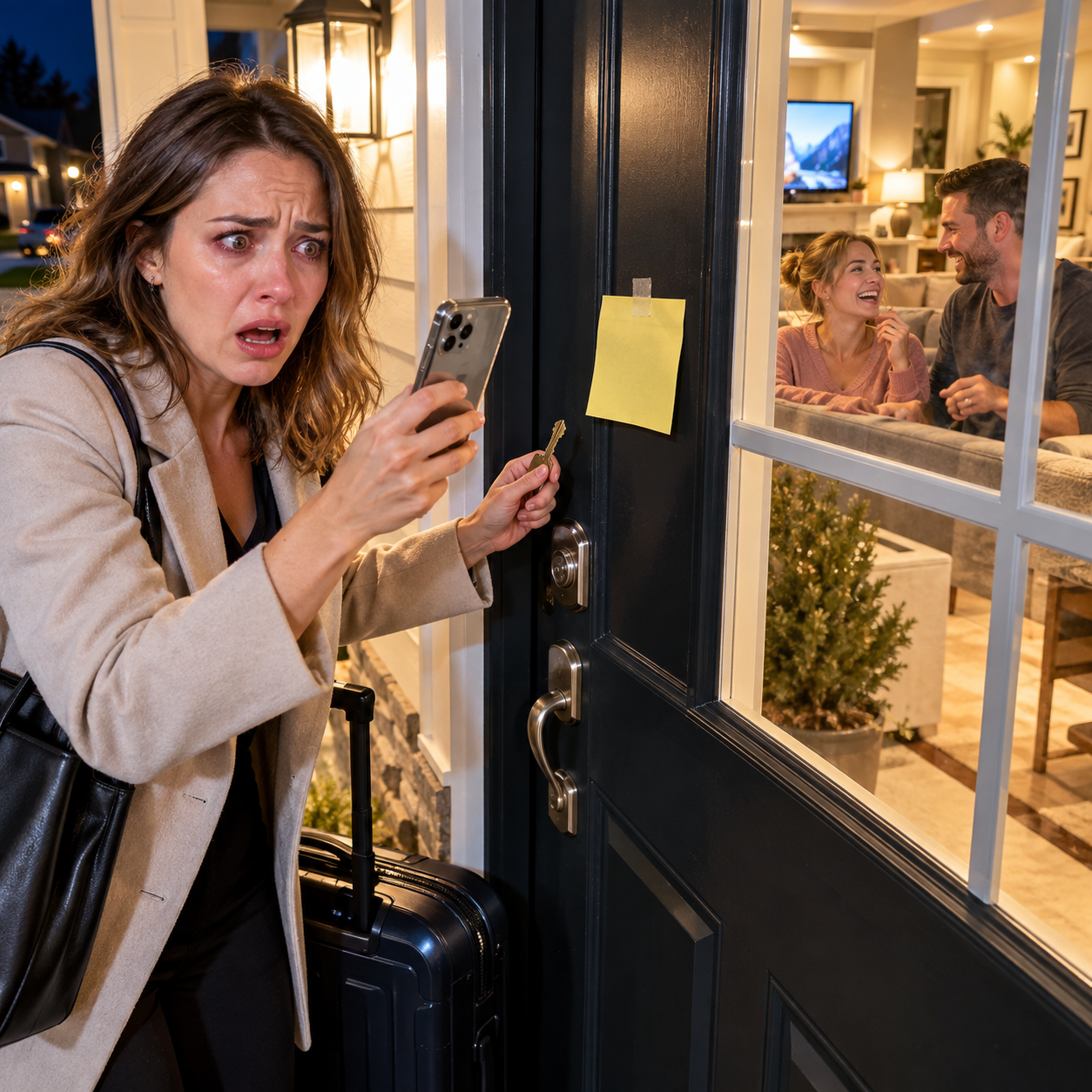
My mother called the following afternoon. “Honey, Trina says you’re trying to put them out while the house is falling apart,” she began, her voice strained with the exhaustion of somebody who had already listened to a lengthy complaint. I asked whether Trina had mentioned replacing the locks, and my mother hesitated before saying, “She told me you moved out because you wanted your own space.” I emailed her the photograph of the note and waited while she opened it. After nearly a minute, she said, “She put your grandmother’s dishes in the garage?”
“Along with my books, my coats, and the things from my bedroom,” I answered. My mother asked why I hadn’t called her that night, and I told her I was tired of asking her to referee problems she preferred not to acknowledge. She didn’t defend Trina this time, but she did say she wished the two of us could sit down together. “I wish she’d called me before touching my things,” I replied, and for once my mother had no easy suggestion.
A few days later, Dex tried to secure financing against the house to cover the sewer repair and several other expenses. Without ownership or equity, he couldn’t obtain the home equity loan he’d hoped for, and Trina called Gil to argue that living somewhere for years ought to count for something. Gil acknowledged that occupants could have legal protections even without a traditional lease, but explained that living there didn’t give them ownership, borrowing rights, or permission to exclude the titleholder. After that conversation, Trina stopped describing the property as an asset she and Dex could borrow against.
On December 12, Marissa brought me an offer from a family relocating to Colorado. The purchase price matched our asking price, and the buyers were willing to proceed with an appropriate repair escrow for the sewer work, provided the house would be vacant before closing. I sat at my condominium’s small dining table, studying the proposed January 15 closing date while Gil reviewed the terms and the requirements for a lawful move-out. Then I signed the agreement, placed the papers inside my Aurora folder, and asked Gil to prepare the written communication my sister would receive before Christmas.
Part 3: The Sale Forces My Sister To Confront Her Choices
I called Trina on December 19, after Gil confirmed that the necessary paperwork had been delivered. She answered immediately, sounding exhausted, and began telling me how difficult the past few weeks had been. I listened until she finished, then explained that I’d accepted an offer on the property, with closing scheduled for January 15. “The buyers need vacant possession,” I told her. “If you and Dex leave voluntarily by January 10, we can finish this without dragging everyone through another legal dispute.”
For several seconds, all I heard was the hum of something running in her kitchen. “You’re actually selling Mom and Dad’s house?” she asked, sounding less angry than disbelieving. I reminded her that I’d purchased it to prevent foreclosure, not to guarantee her a permanent residence, but she insisted I’d always had better opportunities than she did. “You have money and another place to live,” she said. “We were finally starting to feel secure here.” I asked her how secure she’d expected me to feel standing outside a locked door after midnight.
Dex took the phone and offered to begin paying rent, even suggesting a formal lease at something approaching market value. Two months earlier, I might have considered that proposal, but he’d helped remove my belongings and hadn’t contacted me once to question what happened. I told him the decision was made and that Marissa could provide information about available rentals if they wanted assistance locating another place. When Trina came back on the line, her voice trembled as she said, “I didn’t think you’d really take it this far.”
My parents called separately that evening. My father admitted he’d known Trina wanted to buy the house, but said he’d never imagined she would claim it without my agreement. My mother asked whether I could extend the deadline, then stopped herself and said, “No, I suppose you’ve already given them more time than you had to.” It was the first conversation we’d had about Trina in years that didn’t end with me being asked to make myself smaller so everyone else could remain comfortable.
Trina and Dex moved out on January 8, two days before the agreed deadline. Marissa called after collecting the keys, and I drove over that afternoon with a cleaning kit and several empty boxes. The place was tidier than I’d expected, although the upstairs bedroom door still had the replacement lock Dex had installed. Inside the pantry, our childhood height marks remained beneath the faded paint, and I ran my finger over the highest one beside Trina’s name before closing the door.
The house felt unfamiliar without furniture, but I could still remember my mother humming while she cooked and my father scraping snow from the front steps. I discovered a shoebox of photographs in the garage, along with a lamp and several of my old college textbooks. Beneath the photographs was one of Trina and me sitting in the cottonwood tree, both grinning because we’d climbed higher than our mother allowed. I took the picture home rather than leaving it behind, though I couldn’t yet decide where I wanted to display it.
At closing, the buyers were a couple with two children who had recently relocated from out of state. They asked about the condition of the sewer line, reviewed the repair arrangements, and seemed pleased that the remaining work had been addressed in the transaction. Their youngest child wanted to know whether the cottonwood tree was good for climbing, and I smiled before telling him it had certainly been good for that when I was little. After the mortgage payoff, closing expenses, commissions, taxes, and repair escrow, my net proceeds came to approximately $280,000.
I deposited the money into an investment account and later used part of it toward a modest two-bedroom townhouse several miles away. For the first time in years, every cabinet contained only my things, and I could leave a suitcase in the hallway without wondering whether someone would resent its presence. My mother visited in February, carrying a rosemary plant in a terracotta pot that she placed carefully on the kitchen windowsill. She looked around at the new furniture, the freshly painted walls, and the photographs I’d finally hung, then said, “I should have told Trina that saving our home didn’t mean you owed her the rest of your life.”
I didn’t answer immediately, because it was an apology I’d wanted for a long time, and I wasn’t sure what to do with it now that it had arrived. Eventually, I reached across the counter and squeezed her hand, then asked whether she wanted coffee. She stayed until late afternoon, and we talked about my father’s health, my aunt’s recovery, and the garden my mother hoped to plant in spring. We didn’t pretend the family was repaired, but for once we weren’t pretending nothing had happened either.
In March, Trina sent a brief text saying she hoped I was doing well. I read it while sitting on my townhouse steps, watching the last patches of snow melt along the sidewalk, and I thought about the girl who used to save me the bigger half of her birthday cake. I also remembered standing on that November porch, hearing her laughter from inside a house I’d sacrificed years of savings to protect. Both memories belonged to the same sister, and I didn’t have to erase either one to recognize that I needed distance.
I haven’t answered her message, although I haven’t deleted it. Perhaps someday we’ll have a conversation in which she can acknowledge what she did without asking me to excuse it because life was difficult for her. For now, I have a home where my key fits the lock, my belongings stay where I leave them, and no one expects me to purchase their affection by surrendering my own peace. Sometimes I still miss the old house, especially the cottonwood tree, but I no longer confuse protecting a family memory with allowing someone to take advantage of the person who kept it alive.
The End .
All characters and events in this story are fictional, created for storytelling and entertainment purposes. Thank you sincerely for reading. Your feedback and support are invaluable and motivate me to continue sharing more stories with you.

