Part 2: Nineteen Years Of Silence Ended Inside A Sheriff’s Interview Room
That night, I drove to the hospital in Eagle River while Leszek took Zofia home. A nurse said Babcia was resting comfortably but refusing visitors, so I sat beneath a television playing a Christmas movie without sound. At ten o’clock, Wally appeared through the emergency department doors and stopped when he recognized me. “Whatever she tells you,” he said, keeping his distance, “remember she’s old and confused. Nobody will believe her.”
I hadn’t stood alone near him since childhood, yet my body remembered the fear before my mind could control it. I walked past him without answering, made it into the parking lot, and sat shaking behind my steering wheel. He hadn’t asked whether Babcia was injured or whether anyone had been hurt in the fire. He had only wanted to make sure I wouldn’t believe whatever she planned to say.
Christmas morning, Zofia woke beside me instead of in a cabin full of cousins. We baked cinnamon rolls, watched a silly movie, and avoided the family group chat, where relatives exchanged theories about Babcia’s supposed dementia. Wally posted a long tribute to his father’s craftsmanship, collecting dozens of sympathetic replies. When Zofia asked why her great-grandmother had burned the cabin, I admitted I didn’t know, because even then I couldn’t imagine the truth.
At seven on December 26, Babcia called and instructed me to collect her at nine. “We’re going to Eagle River,” she said. During the ninety-minute drive, she sat upright with her purse on her knees and her rosary wrapped around her fingers. Once, without looking at me, she reached across the seat and rested her hand on my arm. Neither of us spoke until we reached the sheriff’s office.
Detective Marciniak recognized me immediately, although six years had passed since my original statement. Babcia introduced herself, then asked him to record what she knew about her son. We sat around a small interview table with a box of tissues between us, and I watched the detective activate his recorder. My grandmother folded her hands, looked directly into the microphone, and began describing a morning in July 2006.
She had carried clean sheets upstairs before sunrise, intending to change a mattress before the children woke. When she reached the top of the ladder, she saw Wally beside me on a mattress beneath the far window, doing something that left no possible innocent explanation. He never noticed her. She backed down the ladder, carried the sheets outside, and sat on the dock until daylight, knowing she had witnessed something terrible.
“Two weeks later, Ewa told her mother,” Babcia said, staring at her folded hands. “At the family meeting, my son cried and denied everything, and my husband said children have bad dreams.” She finally looked at me, and I could see nineteen years of shame behind her eyes. “I knew she was telling the truth because I saw it myself, and I let everybody call her a liar.”
Detective Marciniak asked why she had remained silent. Babcia spoke about loving her son, fearing her husband’s heartbreak, and growing up in a family where terrible things were handled through prayers instead of conversations. She admitted she had convinced herself she could protect the children by watching Wally, which was why she had spent that entire night beside the ladder. “I was a coward,” she told me. “I protected the person who hurt you instead of the little girl who needed me.”
Then she explained December 22, when I had begged her to stop Zofia from sleeping upstairs. She knew I had exhausted every legal option, and she understood that another child was being brought into the same situation while the family refused to listen. “I am the witness you needed,” she told Marciniak. “I should have spoken nineteen years ago. On Christmas Eve, I destroyed the place where it happened, and today I am here to tell the truth about the man.”
The detective stopped writing and sat motionless for several seconds before thanking her. I couldn’t speak either, because I had waited most of my life for someone to say they believed me, and Babcia had finally offered something stronger: an eyewitness account. She reached for my hand, just as she had four days earlier in her apartment. This time I understood that her silence that afternoon had not been indifference, though it could never erase the silence that came before.
On the drive home, I asked why she hadn’t warned me about her intentions. “You would have stopped me,” she answered. “You would have worried about the law, about me, about your grandfather’s cabin, and you would have been right to worry.” She watched the snowy trees pass before adding, “I spent nineteen years being silent for the wrong person. I wanted those last few days of silence to protect the right one.”
Part 3: Uncle Wally Tried To Silence Grandma Until Another Survivor Spoke
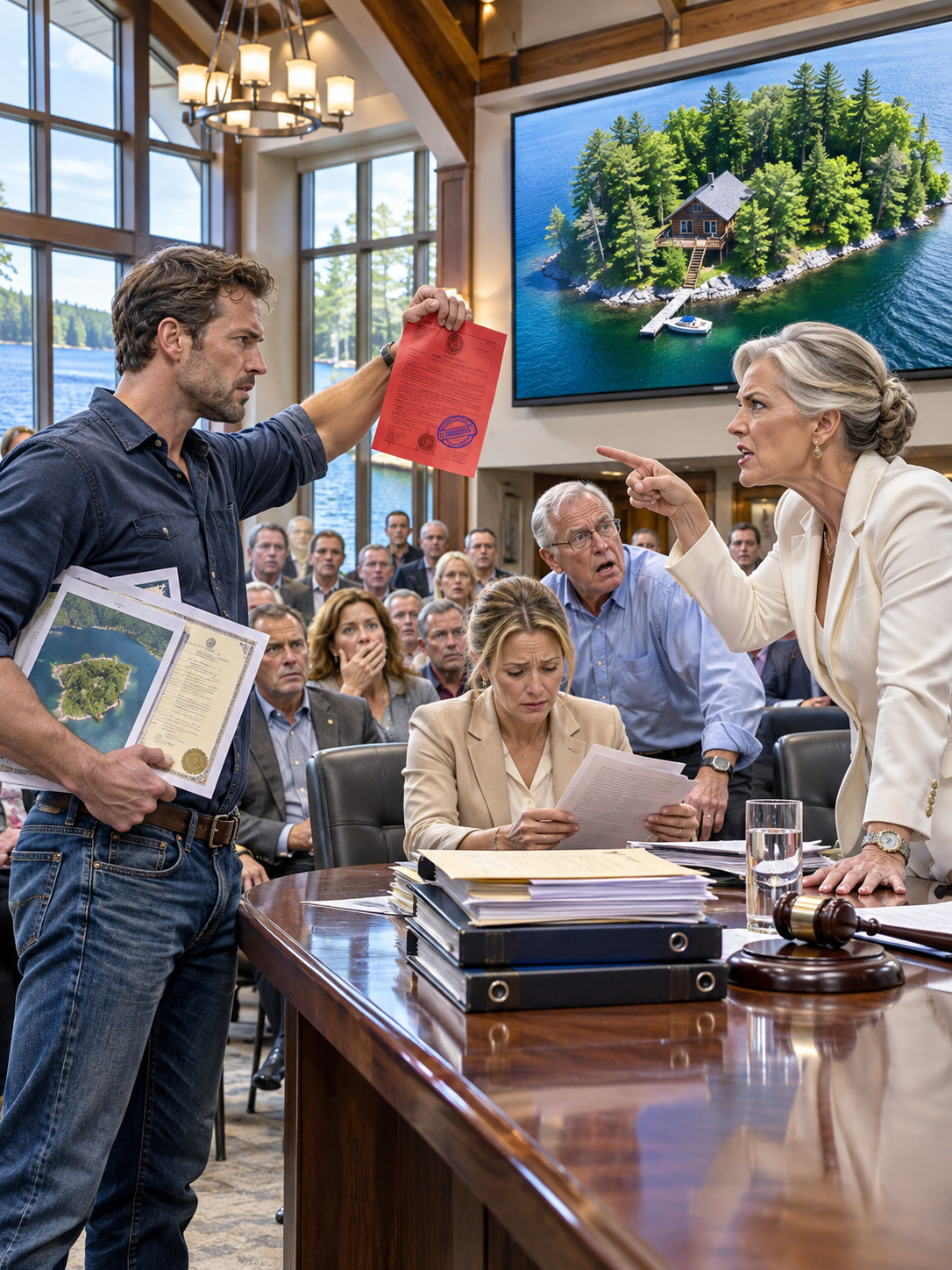
On January 2, Detective Marciniak contacted Wally, who refused to answer questions without an attorney. Within hours, the family knew Babcia had identified him as the man who harmed me. I expected furious calls and demands that she recant, but Wally chose something more calculated. On January 5, his attorney filed a petition asking the court to declare Babcia incapable of managing her own affairs and appoint him as her guardian.
My mother supported the petition. Its central claim was that Babcia’s decision to burn the cabin proved she was suffering from severe cognitive decline, and that her allegations were the product of a confused mind. I read the papers at my kitchen table, realizing what Wally hoped to accomplish. If he could convince a court his mother was incompetent, he could undermine the witness who had finally exposed him.
When my mother called to defend her signature, I asked whether she had considered that Babcia was telling the truth. “She saw what happened, Mom,” I said. Silence filled the line before my mother whispered, “If she saw it, what does that make me?” She hung up before I could answer, leaving me staring at a question she should have asked herself nineteen years earlier.
Babcia, however, wasn’t frightened by the petition. She hired Mr. Adamczyk, the lawyer who had handled her family’s wills for decades, and insisted on an independent medical evaluation. On January 29, a geriatric psychiatrist tested her memory, reasoning, judgment, and ability to manage her own finances, then questioned her extensively about the fire. His eleven-page report found no evidence of dementia, psychosis, or significant impairment. He concluded that her actions had been deliberate, coherent, and fully understood, and the guardianship petition was dismissed.
While Wally’s attempt to discredit her was collapsing, I received a message from my cousin Malgorzata, whom I hadn’t spoken to in nearly ten years. We met at a coffee shop in Plover, where she sat twisting a paper sleeve around an untouched cup. She was thirty-four now, a mother of two with a steady job and a tired face. Finally she looked up and whispered, “Ewa, it happened to me too.”
She told me Wally had harmed her during the summers of 2001 and 2002, when she was ten and eleven, inside the same loft. She had never told her parents or her husband, especially after watching the family turn against me in 2019. “I saw what they did to you,” she said, her eyes filling. “I was terrified they’d do the same to me, so I stayed quiet and let you face it alone.”
I reached across the table and held her trembling hands. “We were children,” I told her. “Neither of us caused this.” She nodded, wiped her eyes, and said she wasn’t a child anymore. That afternoon, sitting in her minivan outside the coffee shop, she called Detective Marciniak and offered to give a formal statement.
Her testimony changed the investigation. Marciniak reopened my old file, interviewed both of us again, and presented our accounts alongside Babcia’s eyewitness statement and psychiatric evaluation. In February, prosecutors charged Waldemar Jaworski with two counts of first-degree sexual assault of a child. He was arrested at his Stevens Point home without incident, and the detective called me personally before the news reached my family.
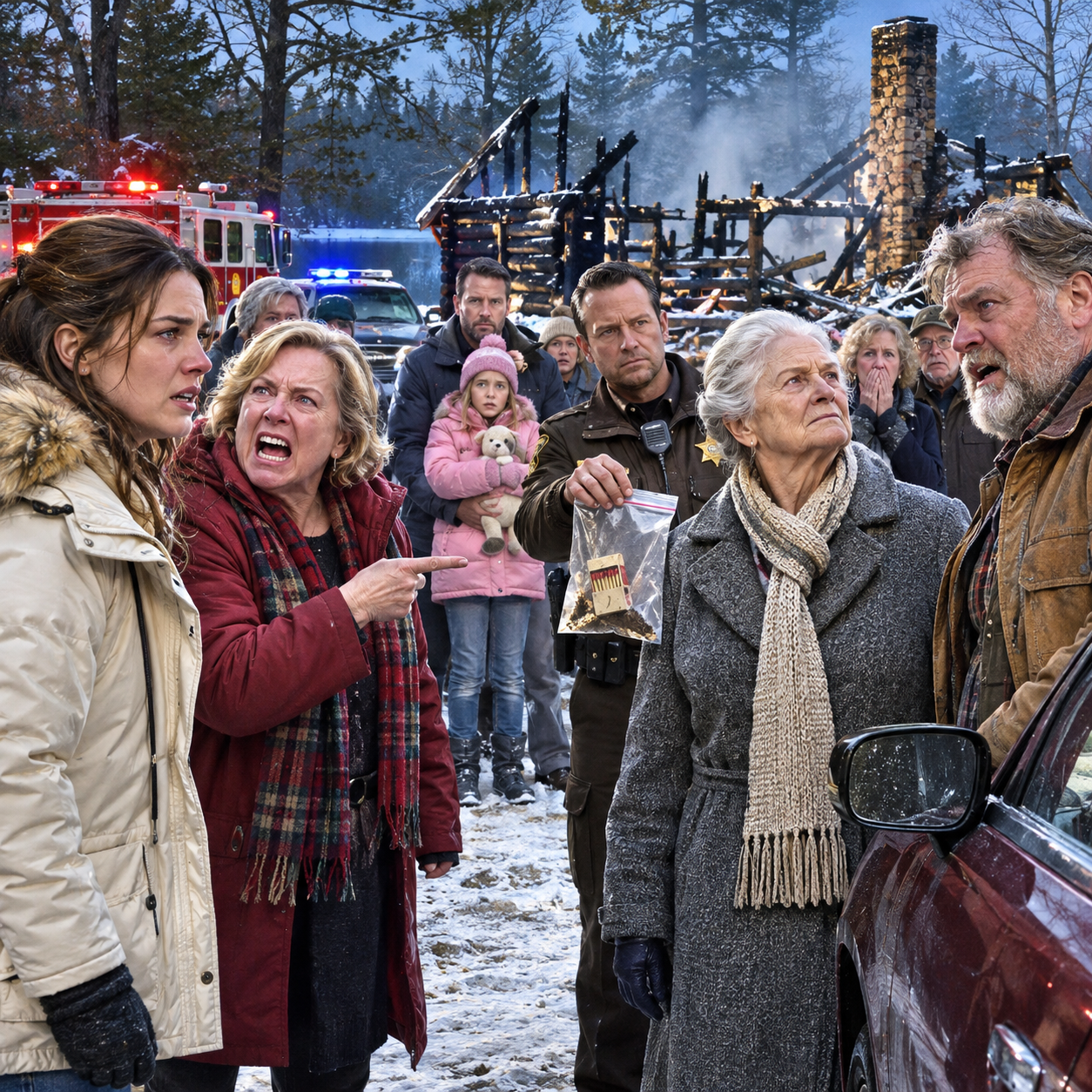
Meanwhile, investigators confirmed that Babcia had intentionally destroyed the cabin, which she owned outright. She had summoned firefighters herself, no one had been inside, and she had made no insurance claim. After reviewing the circumstances, the district attorney declined to bring arson charges, although the fire department billed her $4,100 for its Christmas Eve response. She paid promptly and enclosed a handwritten apology for making the crews work on the holiday.
That evening, I explained to Zofia, in words appropriate for an eight-year-old, that Wally had hurt children long ago and that one of those children had been me. She listened without interrupting, her stuffed otter tucked beneath one arm. “Is that why Great-Babcia burned the cabin?” she asked. I nodded, and she hugged me before quietly saying, “I’m glad you told me, Mama.”
Part 4: Justice Finally Came, And Our Family Learned The Price Of Silence
In February, Leszek came to my house after Zofia was asleep and confessed something that made my stomach turn. Wally had texted him three times before Christmas, insisting that Zofia should sleep in the loft and warning him not to let me spoil her holiday. “I promised the judge she’d stay beside me,” Leszek admitted, crying. “But I was going to let her upstairs after midnight Mass. You warned me, and I didn’t listen.”
My mother visited that spring carrying homemade pierogi. Standing on my porch, she admitted that she had refused to believe me because accepting the truth meant confronting her own failure as a parent. Her apology wasn’t complete, but I invited her inside. Forgiveness would take longer than one afternoon, and she understood that.
Babcia moved into my spare bedroom in March. Soon, her rosaries hung from the doorknobs, labeled bags of pierogi filled my freezer, and Zofia was teaching her to cheat at Uno. One April evening, Babcia admitted she regretted not speaking in 2006. “You don’t become a hero at the end because you were a coward in the middle,” she whispered, and I rested my head against her shoulder.
In June, she had my grandfather’s surviving stone chimney demolished and sold the empty lakeside property to a young family from Madison. She asked them for one promise: no sleeping loft. In July, Wally pleaded guilty to both charges rather than face the testimony of three women who knew what had happened.
At his September sentencing, the judge imposed fifteen years in prison followed by ten years of extended supervision. I had prepared four pages to read aloud, but when I stood before the courtroom, one sentence was enough. “For nineteen years, my family insisted nobody saw anything, and I want this court to know that somebody did, and she’s sitting right behind me.” Babcia reached forward from the second row and placed her hand on my shoulder.
That Christmas, our family gathering was smaller, quieter, and finally safe. Zofia helped Babcia fold pierogi while I watched from the kitchen doorway, listening to their laughter. We had lost a cabin, and we could never recover the years stolen by fear and silence. But my daughter would grow up knowing that when she told the truth, someone would listen.
And that was the greatest gift my grandmother ever gave us.
THE END.
All characters and events in this story are fictional, created for storytelling and entertainment purposes. Thank you sincerely for reading. Your feedback and support are invaluable and motivate me to continue sharing more stories with you.