
## Part 2: Two Paid Parties Reveal the Lies Behind Karen’s Invitations
Dale agreed to suspend the delivery until he received authorization directly from me. Within minutes, Karen called, furious that I had interfered with her supplier. “You’re making a simple arrangement unnecessarily difficult,” she complained. I told her there was no arrangement and followed up with another written notice specifically prohibiting Saturday’s gathering. On Thursday, Paula, the woman managing the HOA office, called to confirm she was removing my property from their event calendar. When I asked how many reservations existed, her hesitation told me more than her answer.
She could see a birthday party scheduled for Saturday, and shortly afterward, its organizer called me. Her name was Natalie, and she sounded frightened when I explained that her mother’s seventy-fifth birthday celebration could not take place at my lake. “Karen said you personally approved everything,” she whispered. “My relatives are driving from three states.” I asked her to forward the instructions she had received. Within a minute, a document appeared on my screen showing a photograph of my dock, my street address, and the gate code Karen had distributed.
One sentence made my hands turn cold: “Owner is aware of the event and prefers not to be disturbed. Do not knock at the house.” Beneath it were two reservations, not one. Natalie’s birthday luncheon was scheduled to continue until six, while a separate lakeside reception was supposed to begin at five. Both groups had been promised exclusive use of my shoreline. Karen hadn’t merely shared my gate code; she had deliberately instructed paying strangers to avoid the one person who could expose her deception.
Natalie sent me her receipt. She had paid $1,200 through a checkout labeled Briar Cove Community Events for venue access, setup, and cleanup. The document claimed the proceeds would support neighborhood improvements. “Karen told us you were donating your rental income,” Natalie explained. “I never rented anything,” I said, staring at my father’s old chair through the window. “And I haven’t received a penny.”
I couldn’t give Natalie my lake, but I refused to let Karen ruin an elderly woman’s birthday. I contacted a community hall whose manager I knew, secured an available Saturday afternoon reservation, and helped Natalie arrange the move. The hall had an accessible entrance, a kitchen, and enough room for her family. Natalie paid another deposit while still waiting for her HOA refund. Before we hung up, she thanked me, then quietly admitted she had never imagined someone would sell access to another person’s home.
The HOA treasurer, Stewart, called that evening after reviewing the receipts and messages I forwarded. He confirmed both payments had entered the association’s event account, including money from an evening reception intended to raise funds for a clubhouse patio. The second gathering involved approximately forty people. “Then the association needs to refund them and notify everyone immediately,” I told him. Stewart agreed to inform the board, but he warned that some event expenses had already been paid. “Those expenses weren’t authorized by me,” I answered.
On Friday morning, Mom finished her swim while I adjusted the latch on the boathouse for the third time. “Tom, you’re going to wear that screwdriver out,” she said, settling into her chair. I admitted that I was worried someone might arrive unexpectedly. She touched the pale wooden repair my father had made and looked toward the gate. “I don’t want you giving away this place just to keep people happy. But I don’t want you spending your life guarding it, either.”
I posted a clear sign at the entrance stating that the property was private and directing confused guests to contact their organizers. Stewart circulated an official cancellation notice, and Natalie notified relatives of the new location. By Friday evening, I had printed directions to the community hall for anyone who missed her messages. I believed the worst was over until a neighbor forwarded me a post Karen had published in the Briar Cove community group.
She claimed the confusion over Saturday’s lake events had been resolved and instructed guests to follow their original arrival directions. I immediately called Stewart, who confirmed that nobody had authorized any change. He promised to correct the announcement, but Karen’s post had already reached people traveling from out of town. At 10:40 Saturday morning, my security camera showed her stepping out of her car with a clipboard, a box of wristbands, and a sign reading “Event Check-In.” As I walked toward the locked gate, another vehicle pulled in behind her.
Inside it was a woman balancing a large birthday cake.
## Part 3: A Birthday Cake and Five Failed Codes Expose Karen’s Deception
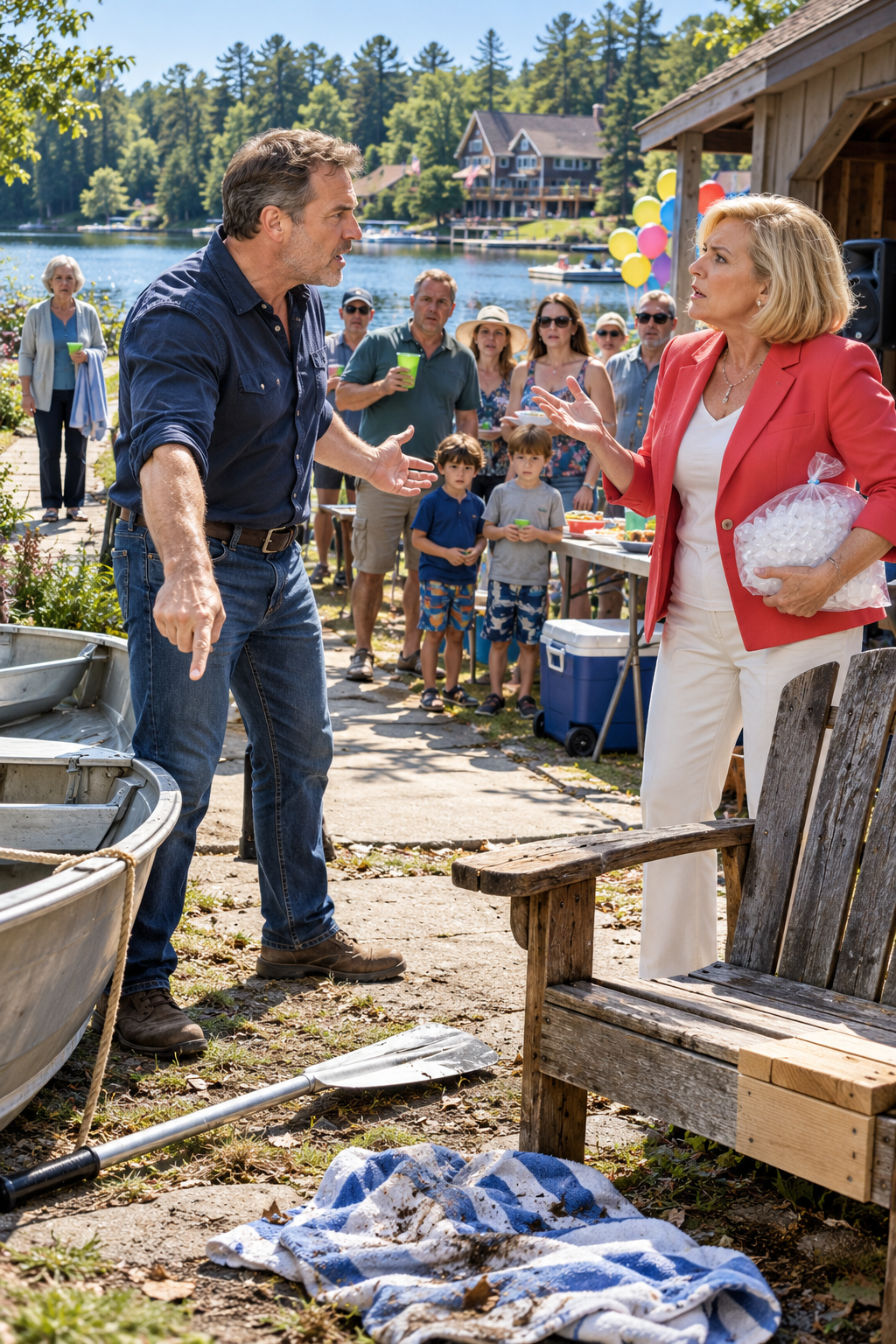
Karen planted her check-in sign beside my keypad before I reached the gate. “You’re really going to keep this up?” she demanded, straightening her jacket. I pointed to the cancellation notice attached to the fence, but she ignored it and smiled at the arriving couple. The woman introduced herself as Beth, Natalie’s cousin, explaining that her phone had died during the drive. Her husband carefully lifted the cake from the passenger seat while Karen instructed her to enter the code printed on her invitation.
The first attempt failed. So did the second, third, and fourth. After the fifth red flash, Beth looked at Karen with growing alarm. “You told me this number would work.” Karen snatched the arrival sheet, punched the numbers herself, and turned toward me. “Open the gate, Tom. You’re embarrassing everyone.” A catering van pulled into the turnout behind Beth’s car. Its driver climbed out holding a clipboard and asked where he should unload the food.
Before Karen could answer, Beth reached into her handbag and produced the printed receipt I had seen in the opening moments of this nightmare. “Natalie sent me this when I helped her pay,” she said, pushing it toward me through the bars. Karen immediately reached for the paper, insisting it contained private information. Beth folded her arms. “I paid part of that bill. He can read it.” I showed her the community hall directions and explained that her aunt’s birthday celebration was already being prepared there.
Beth’s expression changed from confusion to disbelief. “Then why did you keep telling me to try the code?” she asked Karen. For once, Karen had no convenient answer. I helped the caterer contact Natalie, then watched his van turn around and head toward the correct venue. Beth’s husband carefully carried the cake back to their car. Before leaving, Beth pointed at Karen’s sign and said, “Take that down before you fool somebody else.”
Karen glared through the fence as their car disappeared. “You’ve destroyed a fundraiser that could have benefited everyone.” I reminded her that generosity required permission and that a stranger’s property wasn’t a community donation. She called my shoreline nothing more than a dock and some grass. Behind me, Mom appeared carrying her swimming bag, saw the growing gathering outside the gate, and quietly returned to the house. Karen never noticed, but watching my mother retreat from her own lake hurt worse than anything Karen said.
Stewart arrived before noon and immediately challenged Karen about her misleading announcement. She claimed she had expected me to reconsider, then reluctantly admitted she had written the instructions telling visitors not to approach my house. Stewart asked for the names of everyone invited to the evening reception, but she tried directing him to Roger, the organizer. Roger had already contacted his guests and arranged for his group to meet at a restaurant. The remaining invitations, however, had been handled by Karen herself.
We spent the afternoon redirecting confused visitors without humiliating them. I brought water to a couple who had driven more than an hour, while Stewart helped them contact Roger. No one entered my property. Eventually, Karen loaded her clipboard into her car, but Stewart stopped her from taking the wristbands because the association had paid for them. When she finally left, I noticed the unopened rolls had sequential numbers.
“How many did she order?” I asked. Stewart checked the invoice and frowned. “Five hundred.” I refused to assume that meant five hundred unauthorized visitors, but it was enough to justify reviewing every event connected with my address. Stewart agreed to examine the full booking history, and I contacted a local attorney about protecting my property and correcting the false claims. The following morning, Stewart called with the preliminary findings.
Twelve paid bookings had been entered under Reed Lake House. Three were earlier gatherings, two were Saturday’s canceled parties, and seven were scheduled for future dates. Among them was a wedding planned for the following Saturday. The bride and groom had already sent invitations, arranged catering, and paid for a ceremony on my dock. When Stewart contacted them, they insisted Karen had shown them written permission bearing my name.
The bride, Rachel, called with her fiancé, Ben, listening beside her. “We chose your dock because my father has trouble walking,” she explained, her voice trembling. “Karen promised there would be no problem.” When I told her I had never approved a wedding, Ben insisted they possessed proof. A photograph appeared on my phone showing a cropped conversation between Karen and me. It contained my message allowing her trailer through the gate and the old access code.
But the image ended before the sentence that mattered most.
I opened the complete conversation and sent Rachel and Ben the missing words: “Just for the pickup.”
Karen hadn’t misunderstood my permission. She had cut away the restriction and sold the remaining words as an agreement.
## Part 4: One Cropped Message Destroys Karen’s Authority and Restores Our Peace
Rachel went silent after seeing the complete conversation. Then Ben asked a question that made my chest ache. “So you’ve never received any of the money we paid?” I told him I hadn’t, and explained that the twelve bookings belonged entirely to an association system I had never agreed to join. I wanted to rescue their wedding, but letting it proceed at my lake would turn Karen’s manufactured permission into reality. “I can’t host the ceremony,” I said. “But I’ll help you find somewhere that actually welcomes you.”
On Monday, my attorney helped me prepare a formal demand requiring the HOA to remove my address, cancel unauthorized bookings, preserve its records, and notify customers that I had never approved or profited from the events. Meanwhile, Paula saved the booking page and its revision history before taking it offline. Those records showed Karen had personally added my property as a rentable location. The board immediately restricted her access to the reservation system and assigned other directors to handle the refunds. Every payment had gone into the association account, but money spent on decorations, signs, and vendors meant the HOA now faced a financial loss.
Stewart found that the neighborhood clubhouse was available for Rachel and Ben’s wedding, although a step near the lawn created a problem for Rachel’s father. I remembered a rental supplier who provided portable access ramps and suggested Stewart speak with Dale. After inspecting the entrance, Dale confirmed that an appropriate ramp could provide access along a firm, level approach. The couple agreed to move their ceremony, and the association refunded their lake rental payment while covering the extra delivery expense. Their wedding wouldn’t have the waterfront view they had imagined, but it would happen somewhere they were genuinely invited.
On Wednesday, I attended a special HOA board meeting carrying a thin folder containing the original text conversation, the altered screenshot, the event instructions, and my written objections. Karen sat across from me, looking unusually composed. She opened by reminding everyone how generously I had supported neighborhood projects. “I helped collect litter from a ditch,” I replied. “That doesn’t mean I donated my lake.” When she insisted the arrangement could have been misunderstood, I placed the complete conversation beside the version she had supplied to Rachel.
“Why did you cut off the message before my restriction?” I asked. Karen studied the papers, then said she had shortened the exchange to avoid confusing guests. One director leaned forward. “You removed the only words explaining what he actually agreed to.” Stewart then presented Karen’s acknowledgment of my written refusal, followed by her public announcement falsely claiming everything had been resolved. Her own documents showed she had continued sending people to my gate after receiving clear instructions to stop.
For several uncomfortable seconds, nobody spoke. Karen finally looked around the table and said, “I thought once Tom saw what these events could accomplish, he’d cooperate.” The admission hung in the room. She hadn’t believed she already had my permission. She had expected that once enough people paid money and made plans, I would be too embarrassed to refuse.
I thought of Beth standing beside the birthday cake, Rachel fearing her wedding was ruined, and Mom turning around with her swimming bag because strangers had gathered outside her own home. “You didn’t just borrow my gate code,” I told Karen. “You used people’s trust to force a decision you had no right to make.” She lowered her eyes. I left my written requests with the board and walked out without asking for a public apology.
Two days later, Stewart called with the results. The directors had voted to remove Karen as association president under their governing rules, and she subsequently resigned from the board. The HOA signed a written acknowledgment confirming it held no ownership or access rights to my gate, road, dock, or shoreline. It also adopted a requirement that event locations have documented permission from their owners before accepting reservations or payments. The twelve unauthorized bookings were addressed, with customers refunded as applicable and prior complaints handled individually.
The refunds consumed money originally intended for the clubhouse patio, and some neighbors were unhappy about the financial setback. A few even suggested I should have opened the gate rather than causing so much trouble. Mrs. Harris, who lived near Briar Cove’s entrance, overheard one such complaint and replied, “You’re welcome to offer your own backyard for their next fundraiser.” That ended the conversation. I submitted receipts for the damaged paddle and my attorney’s letter, and the board reimbursed those actual expenses.
There was one final correction I insisted upon. The HOA’s first public notice described the scandal as a misunderstanding about lake access. I sent it back, asking them to state plainly that I had never authorized the rentals, accepted payments, or offered to donate my property. The revised statement went to residents and customers, including Rachel and Natalie. For the first time, the people Karen had misled could see the truth in writing.
A week after the wedding, Rachel sent me a photograph. Her father sat comfortably near the clubhouse windows while Ben stood beside him holding cake, and Rachel was laughing with relatives just outside the frame. Beneath the picture, she had written, “Dad stayed for the entire reception. Thank you for helping us find the ramp.” I showed Mom, who smiled, handed back my phone, and told me to stop staring at it. She was sitting on her familiar dock chair, with her clean towel folded over the repaired wooden arm.
I kept the private-property sign and separate gate codes, but I stopped checking the cameras whenever a car passed on the county road. The lake became quiet again. One Saturday, Mom invited two friends over for a swim, and I made them a temporary access code that worked only for their visit. From the kitchen window, I watched their car enter without hesitation, then heard laughter drifting up from the water.
An hour later, Mom climbed the path carrying her empty coffee mug. “Your coffee is still too weak,” she complained, exactly as she had before Karen ever appeared. “I thought you came up to thank me,” I teased. Mom looked toward the dock, where her friends were folding their towels, and gently squeezed my arm. “I think you know what I’m thankful for.”
After she went inside, I stood at the kitchen window for another moment. The gate was closed, the dock belonged to us again, and the only people laughing beside the lake were the ones we had chosen to welcome.
For the first time in weeks, I didn’t reach for my phone.
THE END.
All characters and events in this story are fictional, created for storytelling and entertainment purposes. Thank you sincerely for reading. Your feedback and support are invaluable and motivate me to continue sharing more stories with you.


